无机材料学报 ›› 2026, Vol. 41 ›› Issue (6): 751-763.DOI: 10.15541/jim20250441 CSTR: 32189.14.10.15541/jim20250441
所属专题: 【生物材料】骨骼与齿类组织修复(202606)
王金文1,2( ), 杨振2, 周欢2, 夏丹1(), 杨磊1,2()
收稿日期:2025-10-31
修回日期:2026-01-19
出版日期:2026-06-20
网络出版日期:2026-01-22
通讯作者:
夏 丹, 副教授. E-mail: xiad@hebut.edu.cn;作者简介:王金文(1997-), 男, 博士研究生. E-mail: wangjinwen166@126.com
基金资助:
WANG Jinwen1,2(), YANG Zhen2, ZHOU Huan2, XIA Dan1(), YANG Lei1,2()
Received:2025-10-31
Revised:2026-01-19
Published:2026-06-20
Online:2026-01-22
Contact:
XIA Dan, associate professor. E-mail: xiad@hebut.edu.cn;About author:WANG Jinwen (1997-), male, PhD candidate. E-mail: wangjinwen166@126.com
Supported by:摘要:
随着医工交叉领域和生物医学新兴研究方向的迅速发展, 可注射医用材料因其在微创手术等领域的应用优势, 在组织修复与再生、医学影像、疾病精准诊疗及微创化治疗等前沿领域得到广泛关注, 并形成了一系列创新性医疗器械产品。在各类可注射医用材料中, 无机材料因其独特的材料生物学特性、流变学性能以及自固化等特点, 在微创骨科、肿瘤诊疗、组织替代与修复等领域展现出巨大的应用潜力和前景。本文综述了可注射无机材料的相关概念、原理及其在生物医学领域的最新进展。首先, 介绍了无机材料可注射性的基本概念、原理及其调控因素(包括无机材料颗粒的几何特征、体系的液固比、液相黏度及材料体系的物理化学反应等); 然后, 从临床应用角度阐述了可注射无机材料在硬组织修复、医学影像诊断、肿瘤治疗、皮肤和整形等领域的应用现状和研究进展, 并分析了其优势和不足; 最后, 探讨了当前面临的挑战及未来发展趋势。本文有望为推动医用无机材料的应用研究和临床转化提供有益参考, 进而促进相关医疗器械产品的技术创新和研发。
中图分类号:
王金文, 杨振, 周欢, 夏丹, 杨磊. 可注射无机材料及其生物医学应用[J]. 无机材料学报, 2026, 41(6): 751-763.
WANG Jinwen, YANG Zhen, ZHOU Huan, XIA Dan, YANG Lei. Biomedical Applications of Injectable Inorganic Biomaterials[J]. Journal of Inorganic Materials, 2026, 41(6): 751-763.
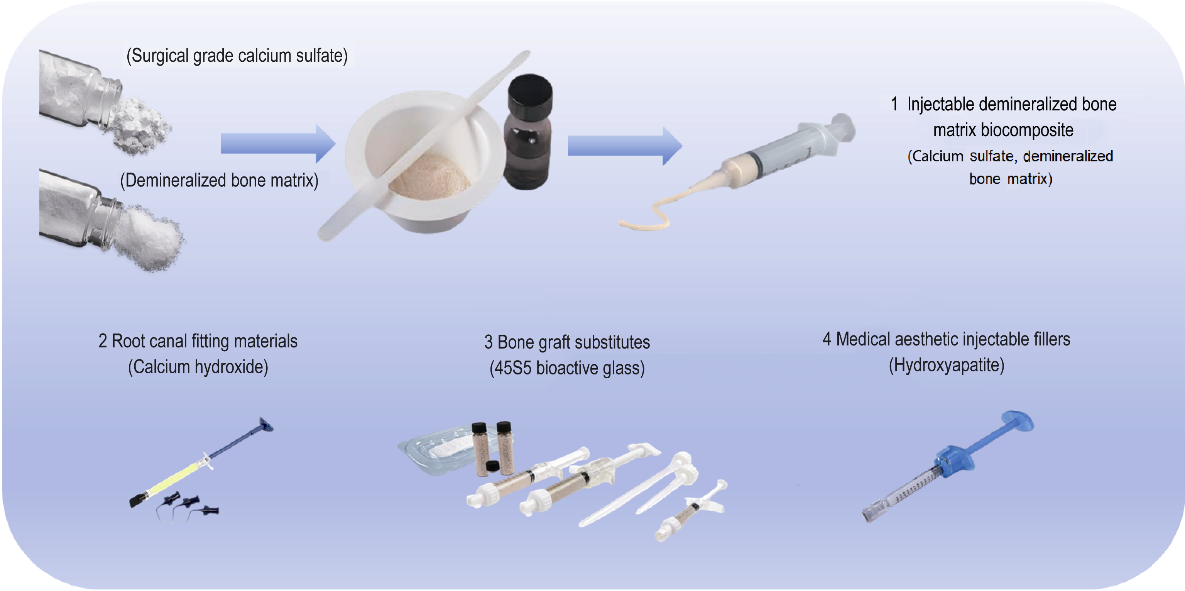
图1 目前临床使用的可注射无机材料产品及其典型成分
Fig. 1 Current injectable inorganic materials for clinical use and their typical components
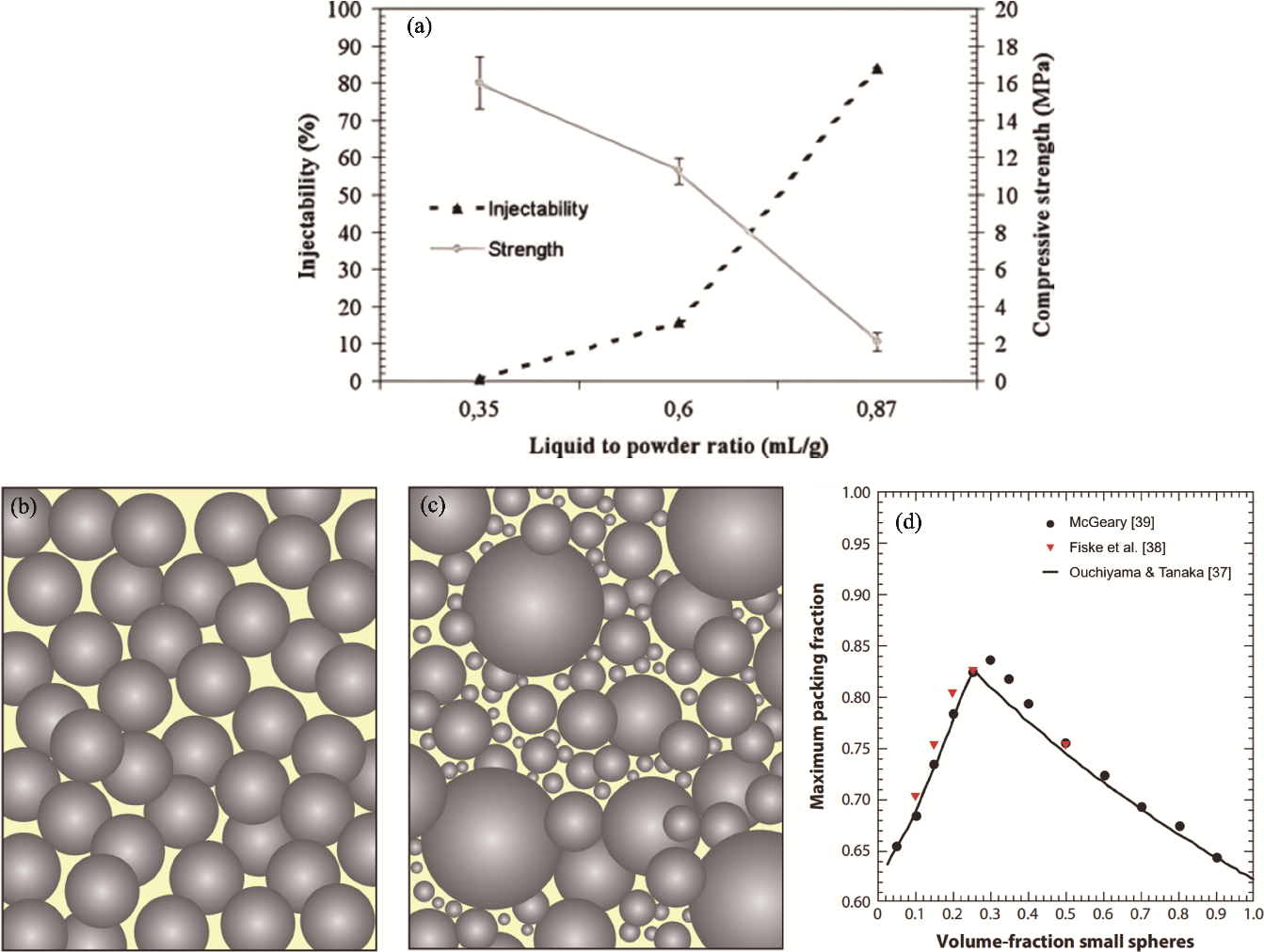
图2 无机材料体系的液固比及颗粒堆积状态对可注射性的影响[35-39]
Fig. 2 Effects of liquid-to-solid ratio and particle packing on the injectability of inorganic materials[35-39] (a) Effect of liquid-to-solid ratio on injectability[35]; (b) Packing state of particles of a single size[36]; (c) Packing state of particles of multiple sizes[36]; (d) Bimodal size distribution versus ϕmax[36]. Experimental maximum packing fraction data from Fiske et al.[38] and McGeary[39] for a bimodal size distribution (diameter ratio αp = D2/D1 = 20 (D1: diameter of small particles; D2: diameter of large particles; αp: diameter ratio of particles)) versus the small-to-large particle concentration ratio were compared with the predictions of the Ouchiyama & Tanaka[37] model
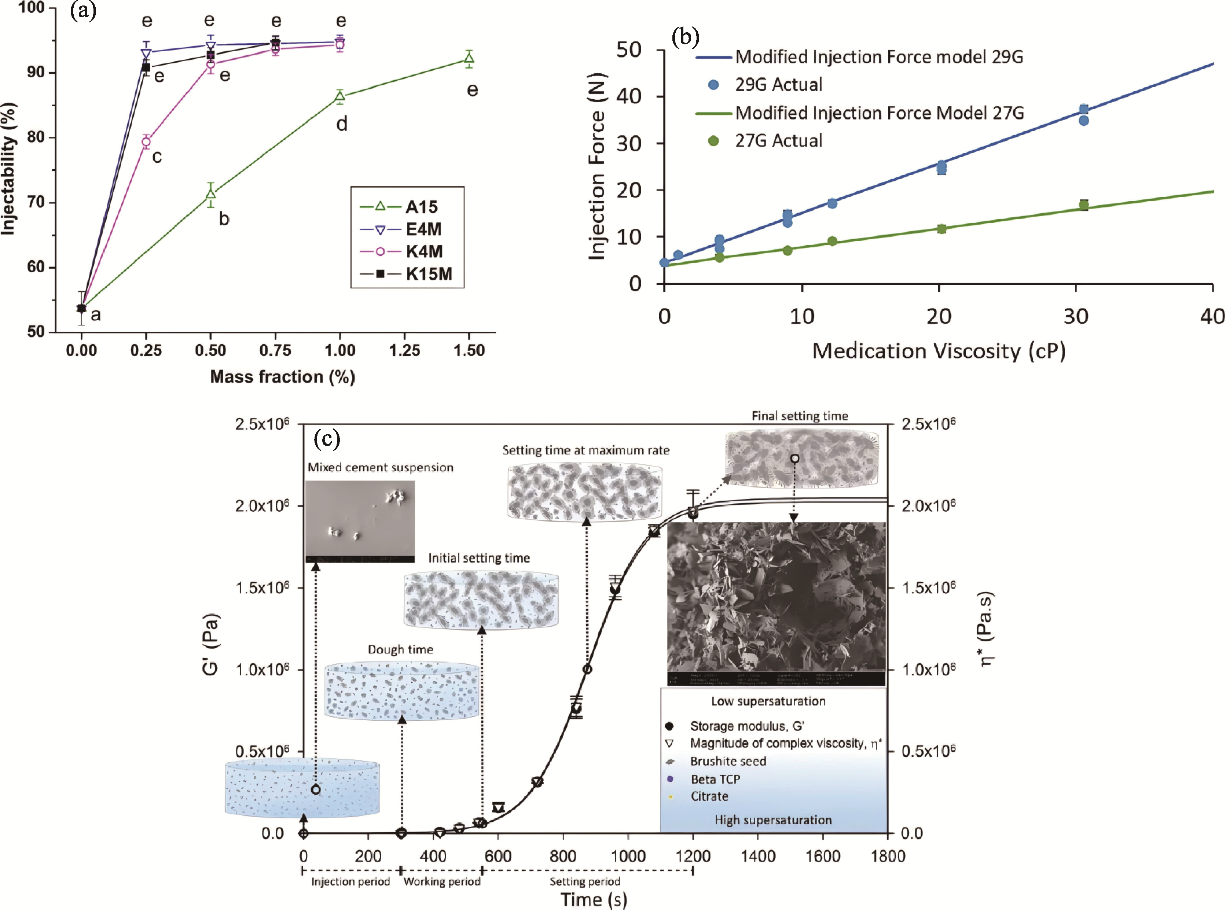
图3 液相黏度对无机材料可注射性的影响及磷酸钙骨水泥在固化过程中的流变学行为[44,46,49]
Fig. 3 Effect of liquid-phase viscosity on the injectability of inorganic materials and the rheological behavior of calcium phosphate bone cement during setting[44,46,49] (a) Injectability of calcium phosphate bone cement with different cellulose ether composites (A15, E4M, K4M, and K15M represent different grades of cellulose ether, with the viscosity relationship of A15 < E4M = K4M < K15M)[44]; (b) Injection force of solutions with varying viscosities in 27G and 29G-1 mL syringes[46]; (c) Schematic of calcium phosphate bone cement setting kinetics and linear viscoelastic properties over time[49]
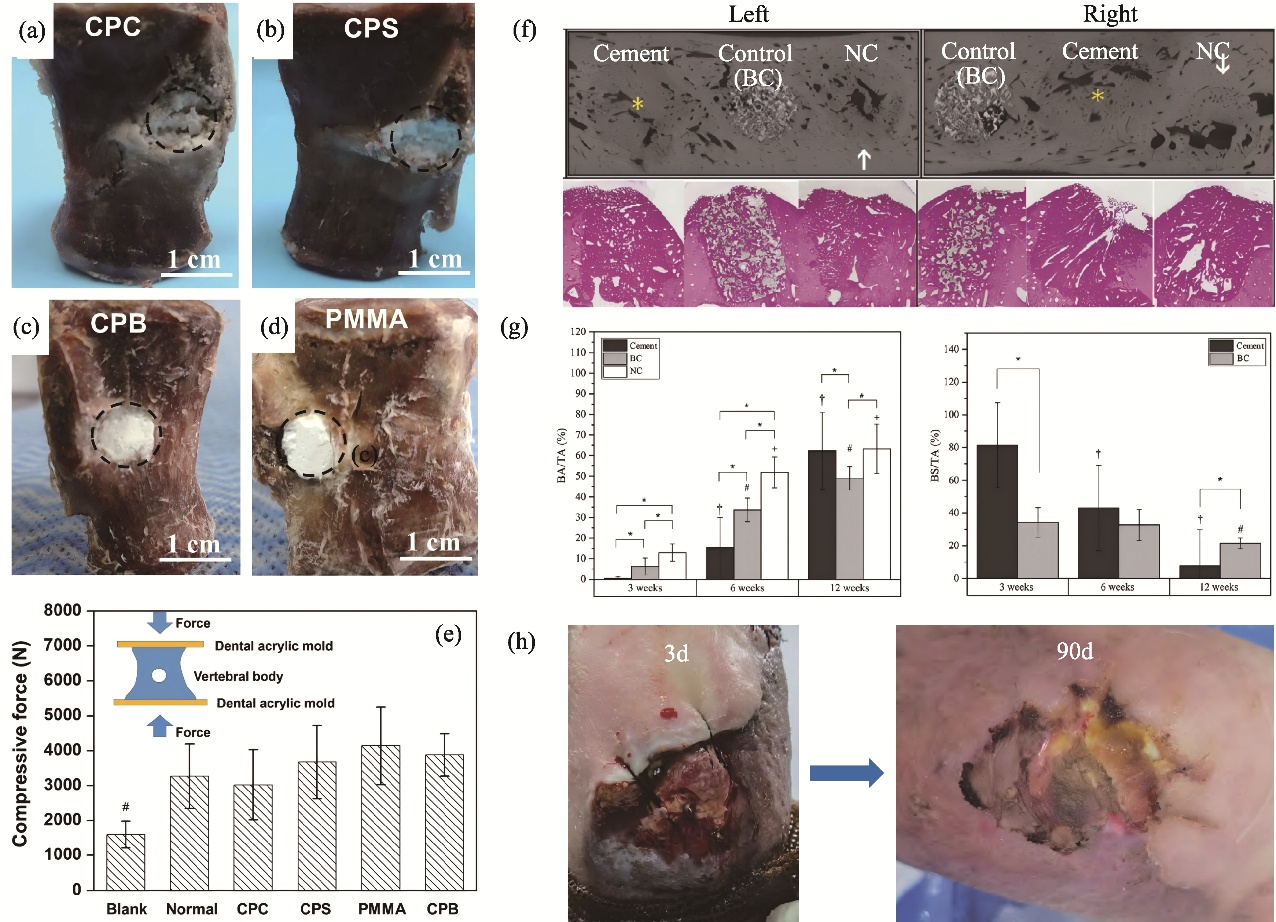
图4 可注射无机材料在骨及口腔修复中的应用[55-57]
Fig. 4 Applications of injectable inorganic materials in orthopedics and dentistry[55-57] (a-d) Filling of sheep vertebrae with different bone cements (CPC is calcium phosphate bone cement, CPS is a composite bone cement of CPC and starch, CPB is a composite bone cement of CPS and barium sulfate, and PMMA is polymethyl methacrylate bone cement)[55]; (e) Compressive strength of a complete vertebra and vertebrae filled with different bone cements[55]; (f) XMT axial view of the 12 weeks mandibular specimen (top) and corresponding buccal-lingual section histological images (down)[56]; (g) Percentage of bone area to tissue area (BA/TA) at different time points (left), and the percentage of bone substitute to tissue area (BS/TA) (right)[56]; (h) Recovery of the affected area in a pediatric patient after combined treatment with a rational skin flap repair and absorbable calcium sulfate load-bearing medication[57]
| Product | Major component | Application |
|---|---|---|
| Self-setting calcium phosphate cement (Rebone)[ | Calcium phosphate | Non-load-bearing bone filling and root canal filling |
| HydroSet (Stryker)[ | Calcium phosphate | Cranial defect filling |
| Pro-Dense (Stryker)[ | Calcium phosphate, calcium sulfate | Bone defect filling and repair |
| AlloMatrix (Stryker)[ | Demineralized bone matrix, calcium sulfate | Bone defect filling and repair |
| DBX®Putty (DePuy Synthes)[ | Demineralized bone matrix | Bone defect filling and repair |
| Drillable bone void filler (DePuy Synthes)[ | Calcium phosphate | Bone defect filling and repair |
| FIBERGRAFT™ Bioactive glass (DePuy Synthes)[ | 45S5 bioactive glass | Bone graft substitute |
| Calcium sulfate bone substitute (R&L Medical)[ | Calcium sulfate | Bone defect filling and repair |
| Inductigraft (Baxter)[ | Calcium phosphate, silicate | Bone graft substitute |
| Bone graft material-boneswift (Medgen Life Sciences)[ | Hydroxyapatite | Filling of orthopedic trauma and non-structural spinal defects |
| Vitapex (Morita)[ | Calcium hydroxide | Root canal filling |
| KP-Root SP (Kevin Peter)[ | Zirconia, silicate, calcium phosphate, calcium hydroxide | Root canal filling |
表1 骨科及口腔科硬组织修复领域中的可注射无机材料产品示例[63-74]
Table 1 Examples of injectable inorganic materials for hard tissue repair in orthopedics and dentistry[63-74]
| Product | Major component | Application |
|---|---|---|
| Self-setting calcium phosphate cement (Rebone)[ | Calcium phosphate | Non-load-bearing bone filling and root canal filling |
| HydroSet (Stryker)[ | Calcium phosphate | Cranial defect filling |
| Pro-Dense (Stryker)[ | Calcium phosphate, calcium sulfate | Bone defect filling and repair |
| AlloMatrix (Stryker)[ | Demineralized bone matrix, calcium sulfate | Bone defect filling and repair |
| DBX®Putty (DePuy Synthes)[ | Demineralized bone matrix | Bone defect filling and repair |
| Drillable bone void filler (DePuy Synthes)[ | Calcium phosphate | Bone defect filling and repair |
| FIBERGRAFT™ Bioactive glass (DePuy Synthes)[ | 45S5 bioactive glass | Bone graft substitute |
| Calcium sulfate bone substitute (R&L Medical)[ | Calcium sulfate | Bone defect filling and repair |
| Inductigraft (Baxter)[ | Calcium phosphate, silicate | Bone graft substitute |
| Bone graft material-boneswift (Medgen Life Sciences)[ | Hydroxyapatite | Filling of orthopedic trauma and non-structural spinal defects |
| Vitapex (Morita)[ | Calcium hydroxide | Root canal filling |
| KP-Root SP (Kevin Peter)[ | Zirconia, silicate, calcium phosphate, calcium hydroxide | Root canal filling |
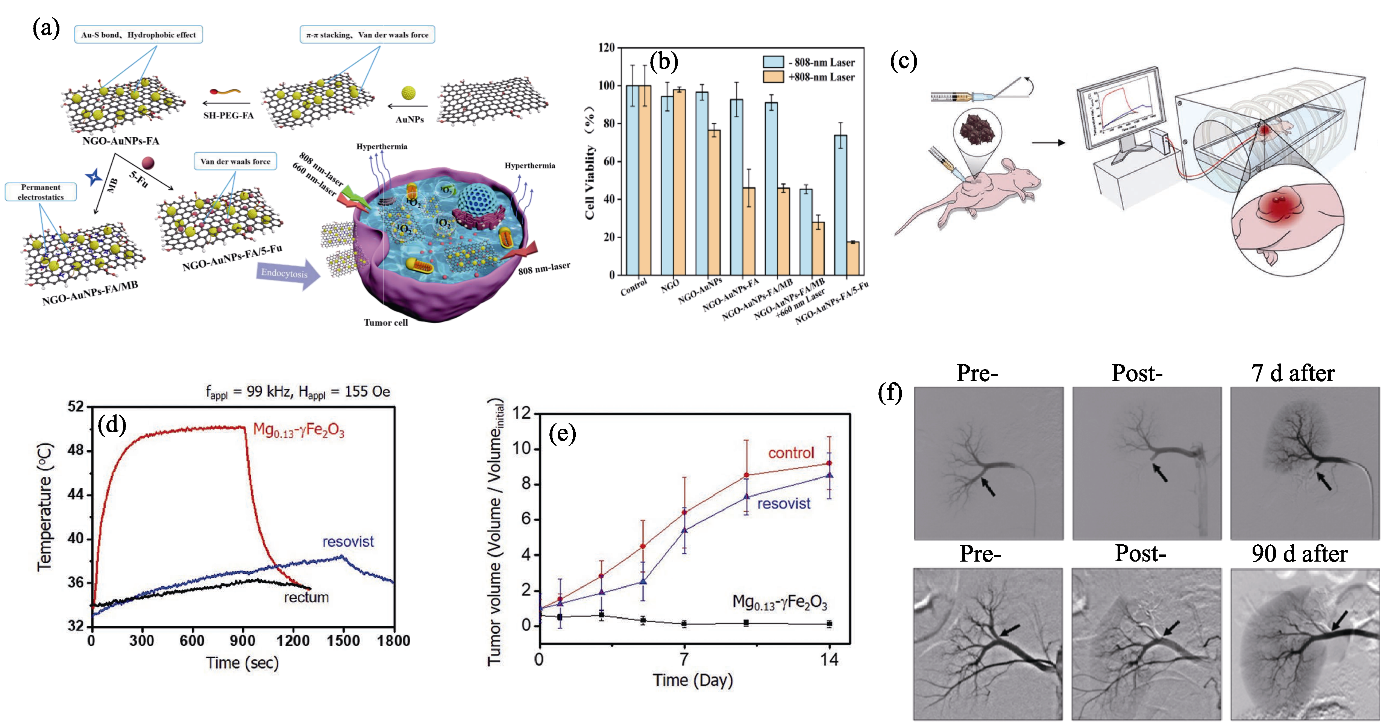
图5 可注射无机材料在肿瘤治疗中的应用[81,83 -84]
Fig. 5 Applications of injectable inorganic materials in tumor therapy[81,83 -84] (a) Schematic of the preparation process and synergistic therapy for NGO-AuNPs-FA/MB and NGO-AuNPs-FA/5-Fu[81]; (b) Viability of HeLa cells with or without near-infrared (NIR) irradiation[81]; (c) Magnetic hyperthermia of tumors using Mg0.13-γFe2O3[83]; (d) Temperature-rise profiles under different treatments[83]; (e) Relative tumor volumes under different treatments[83]; (f) Embolization performance of the NeoCast embolic agent in porcine renal vasculature after 7 and 90 d[84]
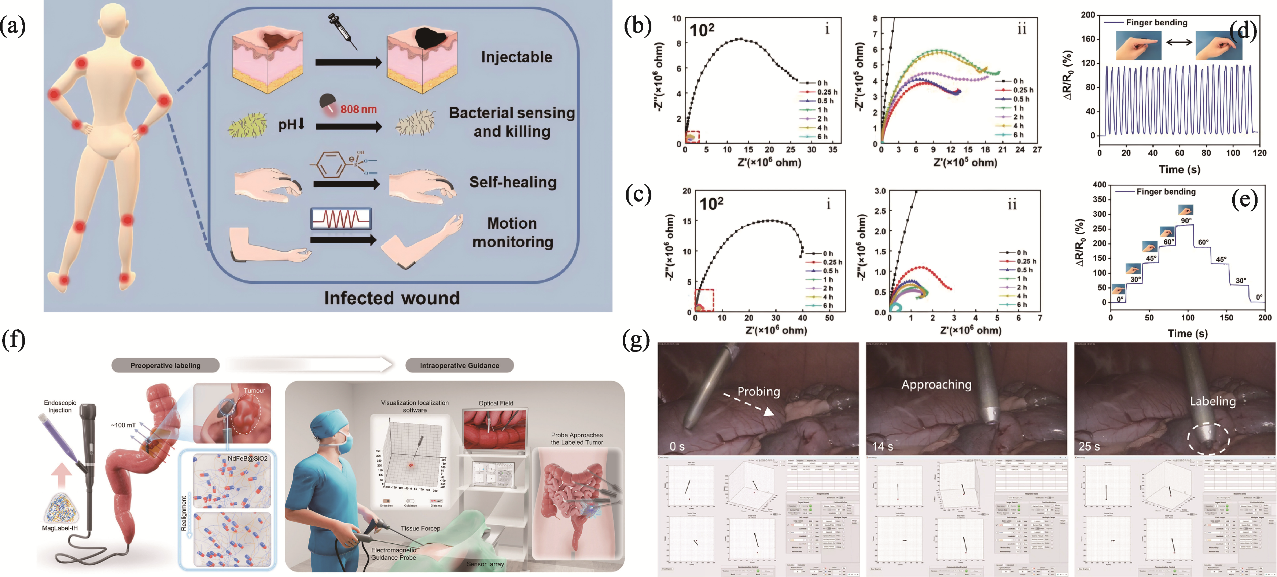
图6 可注射无机材料在医学监测和诊断中的应用[92-93]
Fig. 6 Applications of injectable inorganic materials in medical sensing and diagnostics[92-93] (a) Schematic illustration of the functions of the Alg-PBA/PVA/GOH hydrogel[92]; (b, c) Impedance spectra of Alg-PBA/PVA/GOH hydrogel after incubation with E. coli (b) and S. aureus (c) suspensions for different times[92]; (d, e) Alg-PBA/PVA/GOH hydrogel monitoring human finger bending (d) and index finger bending from 0° to 90° (e)[92]; (f) Surgical electromagnetic localization of intraluminal gastrointestinal neoplasms using MagLabel-IH[93]; (g) Electromagnetic guidance probe used to gradually approach the tumor site labeled with MagLabel-IH, and ultimately mark the intestinal segment containing the tumor during laparoscopic procedure in rabbits[93]
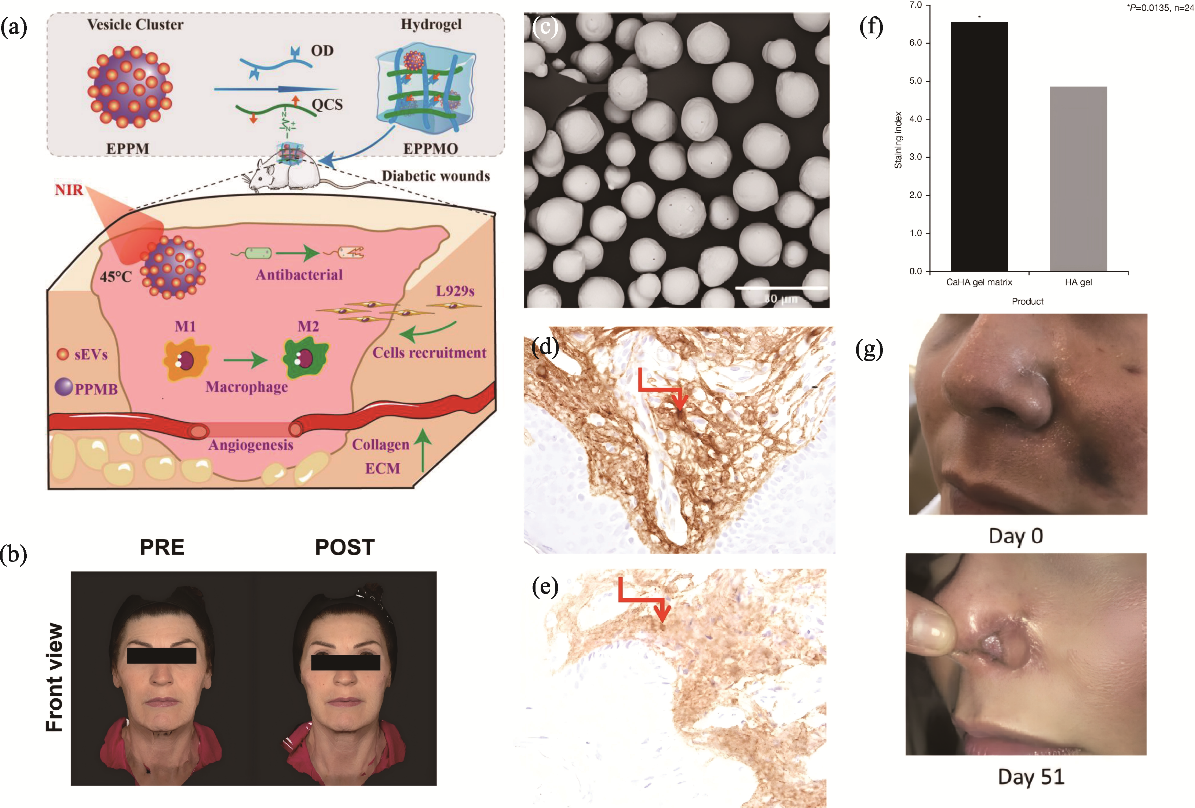
图7 可注射无机材料在皮肤修复及面部填充中的应用[98,102 -104,107]
Fig. 7 Applications of injectable inorganic materials in skin repair and facial filling[98,102 -104,107] (a) Schematic diagram of the preparation process of EPPMO hydrogel[98]; (b) Before-and-after comparison using a calcium hydroxylapatite facial filler[102]; (c) Calcium hydroxylapatite microspheres[103]; (d, e) Type I collagen staining 9 months after treatment with calcium hydroxylapatite filler (d) and hyaluronic acid gel (e)[104]; (f) Intensity of type I collagen staining 9 months after treatment with calcium hydroxylapatite filler or hyaluronic acid gel[104]; (g) Facial artery embolization with ischemia of the nasal ala following injection of calcium hydroxylapatite filler in the nasolabial fold near the pyriform aperture[107]
| [1] | LI N Y, WANG J Y, FENG G X, et al. Advances in biomaterials for oral-maxillofacial bone regeneration: spotlight on periodontal and alveolar bone strategies. Regenerative Biomaterials, 2024, 11: rbae078. |
| [2] | LU G H, ZHAO G, WANG S, et al. Injectable nano-micro composites with anti-bacterial and osteogenic capabilities for minimally invasive treatment of osteomyelitis. Advanced Science, 2024, 11(12): 2306964. |
| [3] | MOFARRAH M, JAFARI-GHARABAGHLOU D, FARHOUDI- SEFIDAN-JADID M, et al. Potential application of inorganic nano-materials in modulation of macrophage function: possible application in bone tissue engineering. Heliyon, 2023, 9(6): e16309. |
| [4] | VOLPONI A A, ZAUGG L K, NEVES V, et al. Tooth repair and regeneration. Current Oral Health Reports, 2018, 5(4): 295. |
| [5] | ALMULHIM K S, SYED M R, ALQAHTANI N, et al. Bioactive inorganic materials for dental applications: a narrative review. Materials, 2022, 15(19): 6864. |
| [6] | MA J G, WU C T. Bioactive inorganic particles-based biomaterials for skin tissue engineering. Exploration, 2022, 2(5): 20210083. |
| [7] | LUO X M, QIAO Z H, LIU Y, et al. Inorganic bioactive materials regulating myocardial regeneration. Journal of Inorganic Materials, 2025, 40(8): 871. |
| [8] | SUHAG D. Handbook of biomaterials for medical applications, Volume 2. Singapore: Springer Nature, 2024: 105-139. |
| [9] | HAN F, LIU Z, WEI Q, et al. Minimally invasive implantable biomaterials for bone reconstruction. Engineering, 2025, 46: 23. |
| [10] | NGUYEN M, KARKANITSA M, CHRISTMAN K L. Design and translation of injectable biomaterials. Nature Reviews Bioengineering, 2024, 2(10): 810. |
| [11] | SCARDUA N, ROVARIS D P, MOREIRA K M S, et al. Supraperiosteal technique protocol for forehead filling with a mixture of calcium hydroxyapatite and hyaluronic acid: double- blind, randomized controlled clinical trial. Journal of Cosmetic Dermatology, 2024, 23(12): 4116. |
| [12] | ZERBINATI N, RAUSO R, GONZALEZ P, et al. In vitro evaluation of collagen production on human fibroblasts treated with hyaluronic acid peg cross-linked with micromolecules of calcium hydroxyapatite in low concentration. Journal of Biological Regulators and Homeostatic Agents, 2017, 31(2 Suppl. 2): 87. |
| [13] | LI C, WANG J C, WANG Y G, et al. Recent progress in drug delivery. Acta Pharmaceutica Sinica B, 2019, 9(6): 1145. |
| [14] | KHAN M, ONG Z Y, WIRADHARMA N, et al. Advanced materials for co-delivery of drugs and genes in cancer therapy. Advanced Healthcare Materials, 2012, 1(4): 373. |
| [15] | CHENG Z S, QUE H Y, CHEN L, et al. Nanomaterial-based drug delivery system targeting lymph nodes. Pharmaceutics, 2022, 14(7): 1372. |
| [16] | TANG C Y, ZHOU K X, WU D, et al. Nanoparticles as a novel platform for cardiovascular disease diagnosis and therapy. International Journal of Nanomedicine, 2024, 19: 8831. |
| [17] | XU H H, WANG P, WANG L, et al. Calcium phosphate cements for bone engineering and their biological properties. Bone Research, 2017, 5(1): 17056. |
| [18] | FATHI M, KHOLTEI A, YOUBI S E, et al. Setting properties of calcium phosphate bone cement. Materials Today: Proceedings, 2019, 13: 876. |
| [19] | SHARMA A, KOKIL G R, HE Y, et al. Inorganic/organic combination: inorganic particles/polymer composites for tissue engineering applications. Bioactive Materials, 2023, 24: 535. |
| [20] | HOUAOUI A, SZCZODRA A, LALLUKKA M, et al. New generation of hybrid materials based on gelatin and bioactive glass particles for bone tissue regeneration. Biomolecules, 2021, 11(3): 444. |
| [21] | OSADA N, TERADA A, MAEDA H, et al. Tuning of ion-release capability from bio-ceramic-polymer composites for enhancing cellular activity. Royal Society Open Science, 2019, 6(9): 190612. |
| [22] | MÎRȚ A L, FICAI D, OPREA O C, et al. Current and future perspectives of bioactive glasses as injectable material. Nanomaterials, 2024, 14(14): 1196. |
| [23] | ABBASI R, SHINEH G, MOBARAKI M, et al. Structural parameters of nanoparticles affecting their toxicity for biomedical applications: a review. Journal of Nanoparticle Research, 2023, 25(3): 43. |
| [24] | YI G, HONG S H, SON J, et al. Recent advances in nanoparticle carriers for photodynamic therapy. Quantitative Imaging in Medicine and Surgery, 2018, 8(4): 433. |
| [25] | HUANG K W, HSU F F, QIU J T, et al. Highly efficient and tumor-selective nanoparticles for dual-targeted immunogene therapy against cancer. Science Advances, 2020, 6(3): eaax5032. |
| [26] | GAO J J, XIA Z T, GUNASEKAR S, et al. Precision drug delivery to the central nervous system using engineered nanoparticles. Nature Reviews Materials, 2024, 9(8): 567. |
| [27] | WEI H P, CUI J J, LIN K L, et al. Recent advances in smart stimuli-responsive biomaterials for bone therapeutics and regeneration. Bone Research, 2022, 10(1): 17. |
| [28] | ZHANG Y G, HABIBOVIC P. Delivering mechanical stimulation to cells: state of the art in materials and devices design. Advanced Materials, 2022, 34(32): 2110267. |
| [29] | BOHNER M, BAROUD G. Injectability of calcium phosphate pastes. Biomaterials, 2005, 26(13): 1553. |
| [30] | HABIB M, BAROUD G, GITZHOFER F, et al. Mechanisms underlying the limited injectability of hydraulic calcium phosphate paste. Acta Biomaterialia, 2008, 4(5): 1465. |
| [31] | O’NEILL R, MCCARTHY H O, CUNNINGHAM E, et al. Extent and mechanism of phase separation during the extrusion of calcium phosphate pastes. Journal of Materials Science: Materials in Medicine, 2016, 27(2): 29. |
| [32] | MONTUFAR E B, MAAZOUZ Y, GINEBRA M P. Relevance of the setting reaction to the injectability of tricalcium phosphate pastes. Acta Biomaterialia, 2013, 9(4): 6188. |
| [33] | ROBINSON T E, HUGHES E A B, BOSE A, et al. Filling the gap: a correlation between objective and subjective measures of injectability. Advanced Healthcare Materials, 2020, 9(5): 1901521. |
| [34] | O’NEILL R, MCCARTHY H O, MONTUFAR E B, et al. Critical review: injectability of calcium phosphate pastes and cements. Acta Biomaterialia, 2017, 50: 1. |
| [35] | ALVES H L R, DOS SANTOS L A, BERGMANN C P. Injectability evaluation of tricalcium phosphate bone cement. Journal of Materials Science: Materials in Medicine, 2008, 19(5): 2241. |
| [36] | KALYON D M, AKTAŞ S. Factors affecting the rheology and processability of highly filled suspensions. Annual Review of Chemical and Biomolecular Engineering, 2014, 5: 229. |
| [37] | OUCHIYAMA N, TANAKA T. Porosity of a mass of solid particles having a range of sizes. Industrial & Engineering Chemistry Fundamentals, 1981, 20(1): 66. |
| [38] | FISKE T J, RAILKAR S B, KALYON D M. Effects of segregation on the packing of spherical and nonspherical particles. Powder Technology, 1994, 81(1): 57. |
| [39] | MCGEARY R K. Mechanical packing of spherical particles. Journal of the American Ceramic Society, 1961, 44(10): 513. |
| [40] | TADIER S, GALEA L, CHARBONNIER B, et al. Phase and size separations occurring during the injection of model pastes composed of β-tricalcium phosphate powder, glass beads and aqueous solutions. Acta Biomaterialia, 2014, 10(5): 2259. |
| [41] | JACK V, BUCHANAN F J, DUNNE N J. Particle attrition of α-tricalcium phosphate: effect on mechanical, handling, and injectability properties of calcium phosphate cements. Proceedings of the Institution of Mechanical Engineers Part H: Journal of Engineering in Medicine, 2008, 222(1): 19. |
| [42] | ISHIKAWA K. Effects of spherical tetracalcium phosphate on injectability and basic properties of apatitic cement. Key Engineering Materials, 2003, 240/241/242: 369. |
| [43] | RUBIO-HERNÁNDEZ F J, CEREZO-AIZPÚN I, VELÁZQUEZ- AVARRO J F. Mineral additives geometry influence in cement pastes flow. Advances in Cement Research, 2011, 23(2): 55. |
| [44] | LIU W Z, ZHANG J T, WEISS P, et al. The influence of different cellulose ethers on both the handling and mechanical properties of calcium phosphate cements for bone substitution. Acta Biomaterialia, 2013, 9(3): 5740. |
| [45] | LIU H L, GUAN Y, WEI D L, et al. Reinforcement of injectable calcium phosphate cement by gelatinized starches. Journal of Biomedical Materials Research Part B: Applied Biomaterials, 2016, 104(3): 615. |
| [46] | WU L K, LI H, WANG Y Y, et al. Advancing injection force modeling and viscosity-dependent injectability evaluation for prefilled syringes. European Journal of Pharmaceutics and Biopharmaceutics, 2024, 197: 114221. |
| [47] | KHAIROUN I, BOLTONG M G, DRIESSENS F C, et al. Some factors controlling the injectability of calcium phosphate bone cements. Journal of Materials Science: Materials in Medicine, 1998, 9(8): 425. |
| [48] | DESPAS C, SCHNITZLER V, JANVIER P, et al. High-frequency impedance measurement as a relevant tool for monitoring the apatitic cement setting reaction. Acta Biomaterialia, 2014, 10(2): 940. |
| [49] | ŞAHIN E, KALYON D M. The rheological behavior of a fast-setting calcium phosphate bone cement and its dependence on deformation conditions. Journal of the Mechanical Behavior of Biomedical Materials, 2017, 72: 252. |
| [50] | ZHANG J T, LIU W Z, SCHNITZLER V, et al. Calcium phosphate cements for bone substitution: chemistry, handling and mechanical properties. Acta Biomaterialia, 2014, 10(3): 1035. |
| [51] | MELLATI A, AKHTARI J. Injectable hydrogels: a review of injectability mechanisms and biomedical applications. Research in Molecular Medicine, 2018, 6(4): 1. |
| [52] | CHEN X, YUAN Y, TAN Y Q, et al. Strategic study on the development of inorganic non-metallic biomaterials. Journal of Inorganic Materials, 2025, 40(5): 449. |
| [53] | DAI H, HOSSEINPOUR S, HUA S, et al. Advances in porous inorganic nanomaterials for bone regeneration. Nano TransMed, 2022, 1(1): e9130005. |
| [54] | GAO C X, LIU H L, YANG H L, et al. Fabrication and characterization of injectable calcium phosphate-based cements for kyphoplasty. Materials Technology, 2015, 30(B4): B256. |
| [55] | LIU H L, LIU B, GAO C X, et al. Injectable, biomechanically robust, biodegradable and osseointegrative bone cement for percutaneous kyphoplasty and vertebroplasty. International Orthopaedics, 2018, 42(1): 125. |
| [56] | D’ONOFRIO A, HILL R G, KENT N W, et al. Development of a novel formulation of bioactive glass based calcium phosphate cement for bone grafting. Advanced Functional Materials, 2024, 34(36): 2401953. |
| [57] | 宋东建, 甘君龄, 苏萌, 等. 可吸收载抗菌药物硫酸钙与生物骨水泥链珠膜诱导在儿童足跟组织缺损合并创伤性跟骨骨髓炎中的效果比较. 中国合理用药探索, 2024, 21(7): 61. |
| [58] | BEST S, AMMONS C L, KARUNANAYAKE G A, et al. Outcome assessment of teeth with necrotic pulps and apical periodontitis treated with long-term calcium hydroxide. Journal of Endodontics, 2021, 47(1): 11. |
| [59] | WEI S, MA J X, XU L, et al. Biodegradable materials for bone defect repair. Military Medical Research, 2020, 7(1): 54. |
| [60] | LI X D, YAN D W, REN H H, et al. Fabricating biodegradable calcium phosphate/calcium sulfate cement reinforced with cellulose: in vitro and in vivo studies. Journal of Materials Chemistry B, 2023, 11(2): 303. |
| [61] | WANG W W, ZHOU X Q, WANG H Y, et al. Fabrication and evaluation of PCL/PLGA/β-TCP spiral-structured scaffolds for bone tissue engineering. Bioengineering, 2024, 11(7): 732. |
| [62] | FAN M K, LIU C Y, ZHANG Y Y, et al. A strategy for challenging tumorous bone regeneration by borosilicate bioactive glass boosting moderate magnetic hyperthermia. Nature Communications, 2025, 16: 8057. |
| [63] | 自固化磷酸人工骨-自固化磷酸钙骨水泥. [2026-01-15]. https://www.weigaoholding.com/Product/info.html?cate=48&id=269. |
| [64] | HydroSet. [2026-01-15]. https:www.stryker.com/us/en/craniomaxillofacial/products/hydroset.html. |
| [65] | Pro-Dense. [2026-01-15]. https://www.stryker.com/us/en/trauma-and-extremities/products/prodense.html. |
| [66] | AlloMatrix. [2026-01-15]. https:/www.stryker.com/us/en/trauma-and-extremities/products/allomatrix.html. |
| [67] | DBX® Demineralized Bone Matrix. [2026-01-15]. https://www.jnjmedtech.com/en-US/product/dbx-demineralized-bone-matrix-trauma. |
| [68] | Drillable Bone Void Filler. [2026-01-15]. https://www.jnjmedtech.com/en-US/product/drillable-bone-void-filler. |
| [69] | FIBERGRAFTTM Bioactive Glass. [2026-01-15]. https://www.jnjmedtech.com/en-US/product/fibergraft-bioactive-glass. |
| [70] | Calcium Sulphate. [2026-01-15]. https://rnlmedical.com/product/calcium-sulphate-antibiotic-carrier/. |
| [71] | INDUCTIGRAFT. [2026-01-15]. https://advancedsurgery.baxterhealthcare.co.uk/inductigraft. |
| [72] | COD医材汇. [2026-01-15]. https://mp.weixin.qq.com/s/CxeJ_POLKJSI-rTwIqnOQ. |
| [73] | 森田Vitapex. [2026-01-15]. https://www.yae920.com/p/goods/etails?goodsId=198. |
| [74] | KP-Root SP. [2026-01-15]. https://kevinpetertech.com/zh/rticular?case=productDetails&id=158. |
| [75] | LIU J L, LIU J Y, WANG Y X, et al. Bioactive mesoporous silica materials-assisted cancer immunotherapy. Biomaterials, 2025, 315: 122919. |
| [76] | ZHOU S, ZHONG Q, WANG Y, et al. Chemically engineered mesoporous silica nanoparticles-based intelligent delivery systems for theranostic applications in multiple cancerous/non-cancerous diseases. Coordination Chemistry Reviews, 2022, 452: 214309. |
| [77] | GU Z J, ZHU S, YAN L, et al. Graphene-based smart platforms for combined cancer therapy. Advanced Materials, 2019, 31(9): 1800662. |
| [78] | SHI Z Q, ZHOU Y, FAN T J, et al. Inorganic nano-carriers based smart drug delivery systems for tumor therapy. Smart Materials in Medicine, 2020, 1: 32. |
| [79] | DU W, DU S B, DONG X, et al. Biodegradable silica nanocapsules enable efficient nuclear-targeted delivery of native proteins for cancer therapy. Biomaterials, 2023, 294: 122000. |
| [80] | ZHANG X, WANG S, CHENG G H, et al. Light-responsive nanomaterials for cancer therapy. Engineering, 2022, 13: 18. |
| [81] | LIU F, XU C F, LI J L, et al. Nanoarchitectonics of versatile platform based on graphene oxide for precise and enhanced synergistic cancer photothermal-photodynamic/chemotherapy. Journal of Molecular Structure, 2023, 1294: 136499. |
| [82] | SUN X X, LIANG X Y, WANG Y K, et al. A tumor microenvironment-activatable nanoplatform with phycocyanin- assisted in-situ nanoagent generation for synergistic treatment of colorectal cancer. Biomaterials, 2023, 301: 122263. |
| [83] | JANG J T, LEE J, SEON J, et al. Giant magnetic heat induction of magnesium-doped γ-Fe2O3 superparamagnetic nanoparticles for completely killing tumors. Advanced Materials, 2018, 30(6): 1704362. |
| [84] | PHAM Q P, GROOM II J V, SADASIVAN C, et al. An in situ curing, shear-responsive biomaterial designed for durable embolization of microvasculature. Advanced Healthcare Materials, 2025, 14(15): 2404011. |
| [85] | ZHANG D M, ZHANG J, BIAN X L, et al. Iron oxide nanoparticle-based T1 contrast agents for magnetic resonance imaging: a review. Nanomaterials, 2024, 15(1): 33. |
| [86] | STAMPFL U, SOMMER C M, BELLEMANN N, et al. Multimodal visibility of a modified polyzene-F-coated spherical embolic agent for liver embolization: feasibility study in a porcine model. Journal of Vascular and Interventional Radiology, 2012, 23(9): 1225. |
| [87] | WANG Z L, QIAO R R, TANG N, et al. Active targeting theranostic iron oxide nanoparticles for MRI and magnetic resonance-guided focused ultrasound ablation of lung cancer. Biomaterials, 2017, 127: 25. |
| [88] | LUSIC H, GRINSTAFF M W. X-ray-computed tomography contrast agents. Chemical Reviews, 2013, 113(3): 1641. |
| [89] | HSU J C, NIEVES L M, BETZER O, et al. Nanoparticle contrast agents for X-ray imaging applications. Wiley Interdisciplinary Reviews- Nanomedicine and Nanobiotechnology, 2020, 12(6): e1642. |
| [90] | TIAN Y X, LIU H L, HE L W, et al. Calcium phosphate-based composite cement: impact of starch type and starch pregelatinization on its physicochemical properties and performance in the vertebral fracture surgical models in vitro. Journal of Biomedical Materials Research Part B: Applied Biomaterials, 2021, 109(12): 2068. |
| [91] | 唐子牛, 褚凤成, 吴康, 等. 兼具显影与成骨功能多聚磷酸锶在磷酸钙骨水泥中的应用. 中国组织工程研究, 2024, 28(22): 3539. |
| [92] | SHAN M Y, CHEN X, ZHANG X Y, et al. Injectable conductive hydrogel with self-healing, motion monitoring, and bacteria theranostics for bioelectronic wound dressing. Advanced Healthcare Materials, 2024, 13(11): e2303876. |
| [93] | GU J N, SUN Y X, ZHANG T Y, et al. Enhancing remanent magnetization of injectable hydrogels improves realtime transluminal localization of tumor in hollow soft viscera. Bioactive Materials, 2026, 55: 410. |
| [94] | KAWAI K, LARSON B J, ISHISE H, et al. Calcium-based nanoparticles accelerate skin wound healing. Public Library of Science One, 2011, 6(11): e27106. |
| [95] | DUAN W, GAO Y, XU R R, et al. Engineering dual-driven pro-angiogenic nanozyme based on porous silicon for synergistic acceleration of burn infected wound healing. Materials Today Bio, 2025, 31: 101522. |
| [96] | WANG R Y, LI C Y, ZHANG Y X, et al. Injectable, conductive MXene@Mg2+ hydrogel with photothermal antibacterial and angiogenic properties for bacteria-infected wound healing. Chemical Engineering Journal, 2025, 514: 163472. |
| [97] | QIAN Y N, ZHENG Y J, JIN J, et al. Immunoregulation in diabetic wound repair with a photoenhanced glycyrrhizic acid hydrogel scaffold. Advanced Materials, 2022, 34(29): 2200521. |
| [98] | WANG Z T, SUN Z P, ZHU S L, et al. A multifunctional hydrogel loaded with magnesium-doped bioactive glass-induced vesicle clusters enhances diabetic wound healing by promoting intracellular delivery of extracellular vesicles. Bioactive Materials, 2025, 50: 30. |
| [99] | JIA Q, DING Y J, SU Z W, et al. Cell membrane-camouflaged nanoparticles activate fibroblast-myofibroblast transition to promote skin wound healing. Biofabrication, 2025, 17(1): 015036. |
| [100] | LIU S, SONG L, HUANG S W, et al. Hydroxyapatite microspheres encapsulated within hybrid hydrogel promote skin regeneration through the activation of calcium signaling and motor protein pathway. Bioactive Materials, 2025, 50: 287. |
| [101] | PAVICIC T, SATTLER G, FISCHER T, et al. Calcium hydroxyapatite filler with integral lidocaine CaHA (+) for soft tissue augmentation: results from an open-label multicenter clinical study. Journal of Drugs in Dermatology, 2022, 21(5): 481. |
| [102] | PROIETTI I, SPAGNOLI A, FAVARONI A, et al. HArmonyCa™ hybrid filler to restore connective tissue: an Italian real-life retrospective study. Journal of Cosmetic Dermatology, 2024, 23(12): 3883. |
| [103] | AGUILERA S B, MCCARTHY A, KHALIFIAN S, et al. The role of calcium hydroxylapatite (radiesse) as a regenerative aesthetic treatment: a narrative review. Aesthetic Surgery Journal, 2023, 43(10): 1063. |
| [104] | YUTSKOVSKAYA Y, KOGAN E, LESHUNOV E. A randomized, split-face, histomorphologic study comparing a volumetric calcium hydroxylapatite and a hyaluronic acid-based dermal filler. Journal of Drugs in Dermatology, 2014, 13(9): 1047. |
| [105] | WANG Q, YAN H Y, XIAO J X. Recent progress of dermal implants for aged skin rejuvenation: a review. Journal of Materials Chemistry B, 2025, 13(36): 11126. |
| [106] | KARATAS E, KOC K, YILMAZ M, et al. Characterization and comparative investigation of hydroxyapatite/carboxymethyl cellulose (CaHA/CMC) matrix for soft tissue augmentation in a rat model. ACS Omega, 2024, 9(29): 31586. |
| [107] | VAN LOGHEM J, FUNT D, PAVICIC T, et al. Managing intravascular complications following treatment with calcium hydroxylapatite: an expert consensus. Journal of Cosmetic Dermatology, 2020, 19(11): 2845. |
| [1] | 覃善丽, 郭佳文, 陈燕萌, 聚安安, 韦毅, 黄科林, 侯向华, 吕思师, 文志朋, 吴炼. 二维层状材料构筑电化学储能定向离子传输通道的研究进展[J]. 无机材料学报, 2026, 41(7): 883-898. |
| [2] | 余飞宇, 王文清, 张学勤, 何汝杰. 基于增材制造陶瓷点阵的双相网络互穿复合材料的研究进展与挑战[J]. 无机材料学报, 2026, 41(7): 849-866. |
| [3] | 周翠, 李捷, 孙鲁超, 苏海军, 王京阳. 氧化铝基定向凝固共晶陶瓷的组织特性、调控方法及环境稳定性[J]. 无机材料学报, 2026, 41(7): 899-914. |
| [4] | 费文龙, 王亚坤, 廖良生. 蓝光ZnSeTe量子点的可控制备及其量子点发光二极管器件研究进展[J]. 无机材料学报, 2026, 41(7): 867-882. |
| [5] | 陈明俊, 缪洪康, 肖英俊, 邓建波, 张翔, 赵九蓬, 李垚. 光-热双响应材料研究进展: 从设计策略到智能窗应用[J]. 无机材料学报, 2026, 41(6): 723-738. |
| [6] | 宋坤洁, 解荣军. 机器学习驱动新型发光材料的研究进展[J]. 无机材料学报, 2026, 41(6): 689-703. |
| [7] | 胡钰晴, 朱一新, 乐先浩, 万青. 钽酸锂晶圆减薄技术及其热释电红外探测器应用进展[J]. 无机材料学报, 2026, 41(6): 764-774. |
| [8] | 刘春帆, 陈科, 葛芳芳, 黄庆. 核用耐铅铋腐蚀涂层的研究进展[J]. 无机材料学报, 2026, 41(6): 775-786. |
| [9] | 胡扬, 谢敏, 张筱怡, 李想, 郭新伟, 姜南, 周文瀚, 张胜利, 曾海波. 计算与数据驱动环保型发光材料的研究进展[J]. 无机材料学报, 2026, 41(6): 704-722. |
| [10] | 王俊卜, 黄泽皑, 杨茗凯, 蒙颖, 周明炜, 周莹. 甲烷转化用抗积碳催化材料研究进展[J]. 无机材料学报, 2026, 41(6): 739-750. |
| [11] | 李涵涛, 沈强, 罗国强, 王雪飞, 高明, 陈晨. 机械球磨法调控硅基负极材料结构与性能的研究进展[J]. 无机材料学报, 2026, 41(5): 561-572. |
| [12] | 解陈一, 缪花明, 张蔚然, 刘荣军, 王衍飞, 李端. 理论计算在高熵陶瓷领域的研究进展[J]. 无机材料学报, 2026, 41(5): 545-560. |
| [13] | 李璇, 叶奎材, 冯佳音, 邱家军, 钱文昊, 邢敏. 钛基牙种植体表面改性促进软组织封闭的研究进展[J]. 无机材料学报, 2026, 41(4): 432-444. |
| [14] | 彭德招, 李瑞, 王文鸿, 王梓瑞, 章志珍. 钠氯化物固态电解质研究进展[J]. 无机材料学报, 2026, 41(4): 409-420. |
| [15] | 陈坤, 姜勇刚, 冯军宗, 李良军, 胡艺洁, 冯坚. 锆酸镧多孔隔热材料研究进展[J]. 无机材料学报, 2026, 41(4): 421-431. |
| 阅读次数 | ||||||
|
全文 |
|
|||||
|
摘要 |
|
|||||