无机材料学报 ›› 2026, Vol. 41 ›› Issue (7): 849-866.DOI: 10.15541/jim20250436 CSTR: 32189.14.10.15541/jim20250436
余飞宇1( ), 王文清2, 张学勤3(), 何汝杰1,2()
收稿日期:2025-10-30
修回日期:2025-12-24
出版日期:2026-07-20
网络出版日期:2026-01-06
通讯作者:
张学勤, 讲师. E-mail: zhangxueqin@tyut.edu.cn;作者简介:余飞宇(2001-), 男, 硕士研究生. E-mail: 15055452608@163.com
基金资助:
YU Feiyu1(), WANG Wenqing2, ZHANG Xueqin3(), HE Rujie1,2()
Received:2025-10-30
Revised:2025-12-24
Published:2026-07-20
Online:2026-01-06
Contact:
ZHANG Xueqin, lecturer. E-mail: zhangxueqin@tyut.edu.cn;About author:Yu Feiyu (2001-), male, Master candidate. E-mail: 15055452608@163.com
Supported by:摘要:
双相网络互穿复合材料(Interpenetrating phase composites, IPCs)通过陶瓷骨架与聚合物或金属在三维空间的连续贯通, 突破了陶瓷材料固有脆性瓶颈, 为开发下一代抗冲击、耐损伤的先进陶瓷材料开辟了新可能。尤其是陶瓷材料增材制造(Additive manufacturing, AM)技术的发展为IPCs的研制提供了创新途径。因此, 本文系统综述了基于AM陶瓷点阵结构的IPCs研究进展。首先简述了适用于陶瓷材料的常见AM技术, 包括光固化、粉末床熔融、材料挤出及黏结剂喷射等, 阐明其各自的技术特点与适用范围。其次, 归纳与分类了以蜂窝、桁架、板晶格和壳结构等为代表的典型陶瓷点阵结构, 并阐述了其在力学性能方面的独特优势。随后, 重点聚焦于聚合物/陶瓷与金属/陶瓷两类关键IPCs体系, 深入概述了其核心复合工艺(如熔渗、电沉积等), 并系统分析了陶瓷点阵结构的构型设计、体积分数调控与梯度化设计等关键参数对IPCs力学性能的影响规律。最后, 基于当前研究现状, 总结并分析了IPCs在复合工艺、多尺度结构优化设计, 以及实现结构功能一体化应用等方面面临的核心挑战与未来潜在发展机遇。
中图分类号:
余飞宇, 王文清, 张学勤, 何汝杰. 基于增材制造陶瓷点阵的双相网络互穿复合材料的研究进展与挑战[J]. 无机材料学报, 2026, 41(7): 849-866.
YU Feiyu, WANG Wenqing, ZHANG Xueqin, HE Rujie. Additively Manufactured Ceramic Lattice-based Interpenetrating Phase Composites: Progress and Challenges[J]. Journal of Inorganic Materials, 2026, 41(7): 849-866.
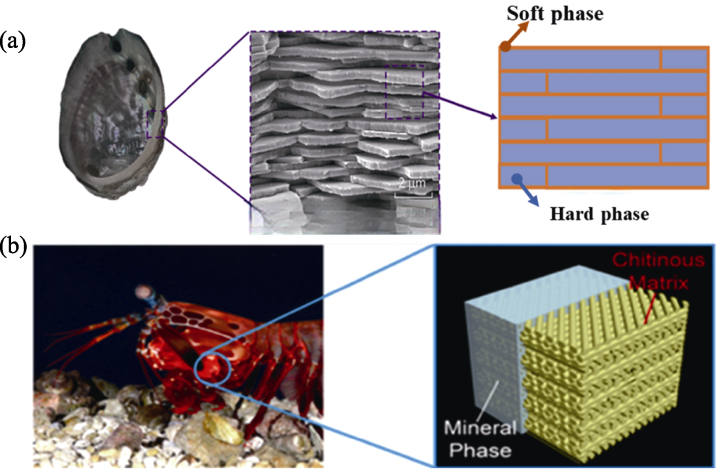
图1 生物材料中的双相网络互穿结构[1-2]
Fig. 1 Interpenetrating phase structures in biomaterials[1-2] (a) Brick and mortar in shell[1]; (b) Bouligand structure in mantis shrimp’s dactyl club[2]
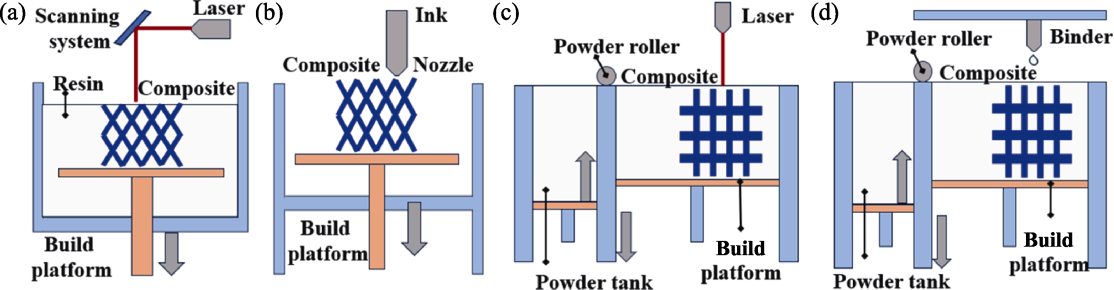
图2 常见的陶瓷AM技术
Fig. 2 Commonly used AM technologies for ceramics (a) VPP; (b) PBF; (c) ME; (d) BJ
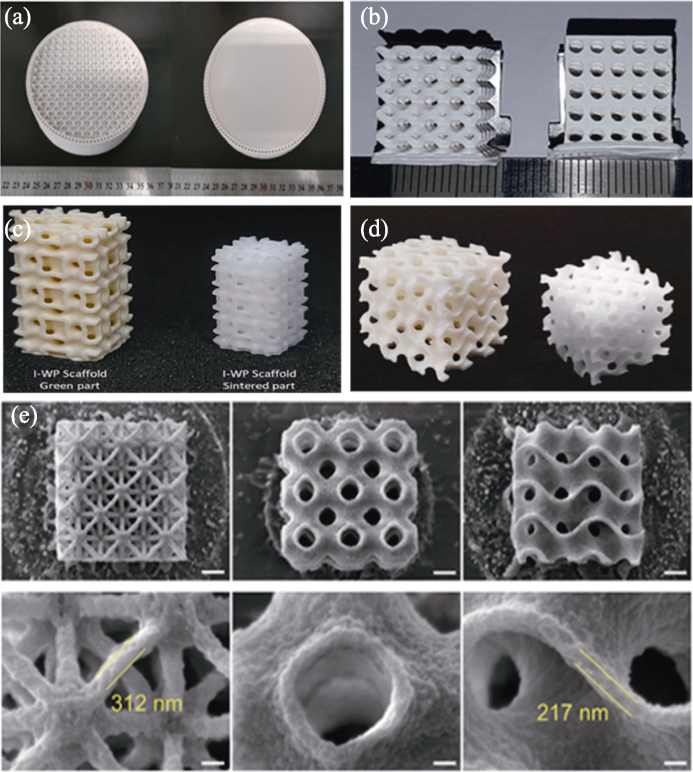
图3 VPP制备的陶瓷材料[7-11]
Fig. 3 Ceramics printed by VPP[7-11] (a) Al2O3 by SLA[7]; (b) Hydroxyapatite (HA) by SLA[8]; (c) Calcium phosphate (CP) by DLP[9]; (d) Tricalcium phosphate (TCP) by DLP[10]; (e) SiOC by TPP[11]
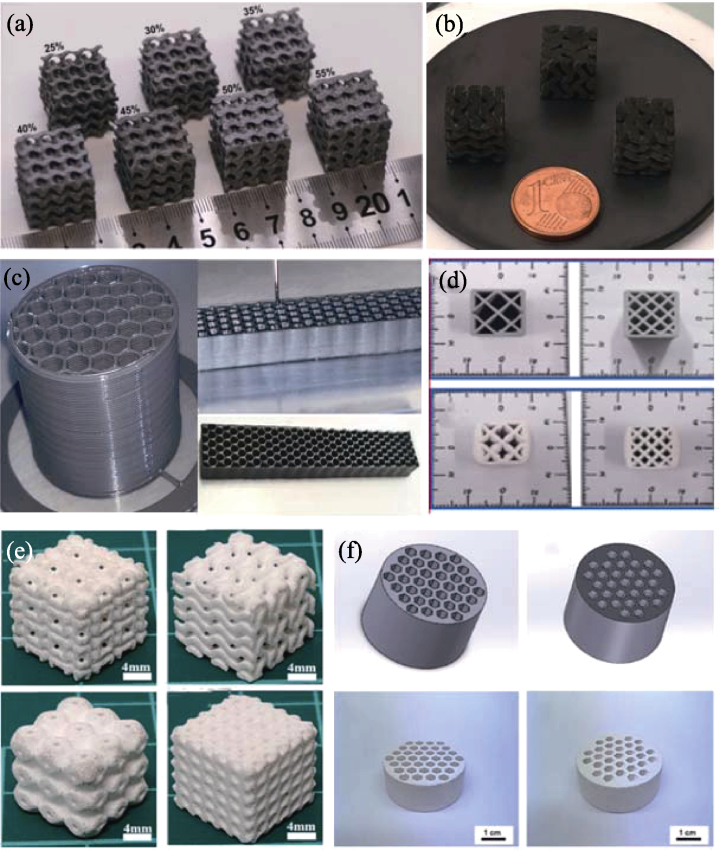
图4 PBF、SLS、ME、BJ制备的陶瓷材料[12-17]
Fig. 4 Ceramics printed by PBF, SLS, ME and BJ[12-17] (a) Si/SiC by PBF[12]; (b) SiC by SLS[13]; (c) ZrB2 by ME[14]; (d) Al2O3 by ME[15]; (e) Al2O3 by BJ[16]; (f) Al2O3 by BJ[17]
| AM technique | Layer thickness/μm | Advantage | Disadvantage | Application |
|---|---|---|---|---|
| VPP | 10-25 | Extremely high sample quality | Low efficiency | Complex precision parts |
| PBF | 20-60 | High sample quality | Prone to defects | High-density parts |
| ME | 100-200 | High efficient and low cost | Prone to porosity | Lightweight structural ceramics |
| BJ | 50-100 | High efficiency and wide applicability | Poor sample quality | Large size parts |
表1 AM技术总结
Table 1 Summary of AM techniques
| AM technique | Layer thickness/μm | Advantage | Disadvantage | Application |
|---|---|---|---|---|
| VPP | 10-25 | Extremely high sample quality | Low efficiency | Complex precision parts |
| PBF | 20-60 | High sample quality | Prone to defects | High-density parts |
| ME | 100-200 | High efficient and low cost | Prone to porosity | Lightweight structural ceramics |
| BJ | 50-100 | High efficiency and wide applicability | Poor sample quality | Large size parts |
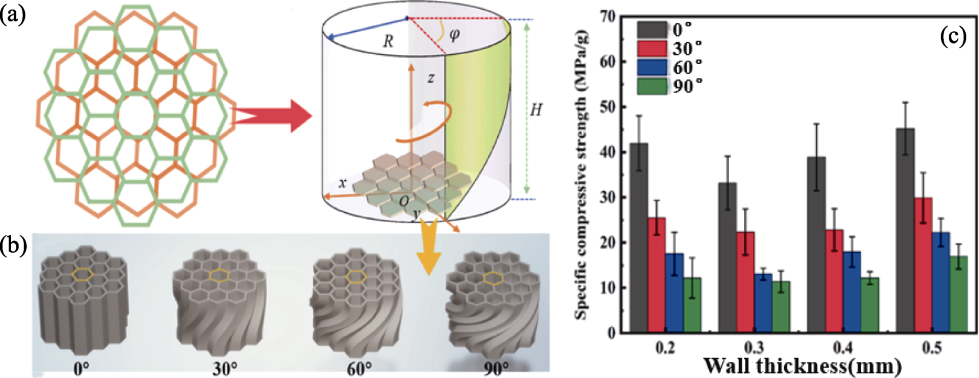
图5 Al2O3陶瓷蜂窝结构的力学性能[20]
Fig. 5 Mechanical properties of Al2O3 honeycombs[20] (a) Section of the honeycomb; (b) Schematic illustration of the twist angle; (c) Effect of torsion angle on specific compressive strength of honeycomb structures with different wall thicknesses
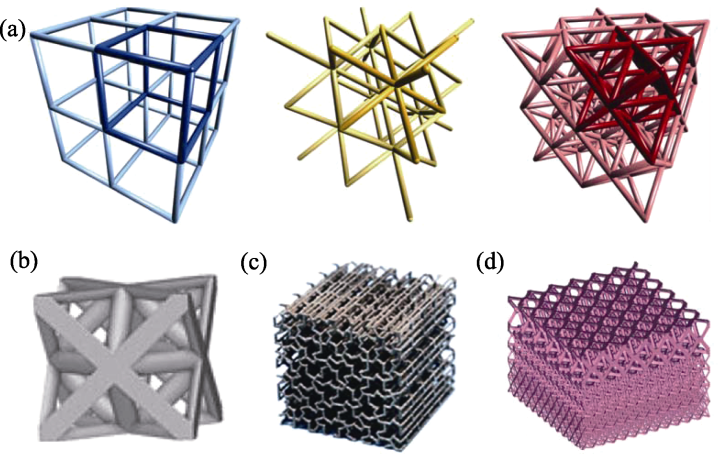
图6 常见的桁架结构[7,21 -23]
Fig. 6 Common truss structures[7,21 -23] (a) SC, BCC and FCC[21]; (b) OCT[22]; (c) Porous irregular truss[23]; (d) Graded truss[7]
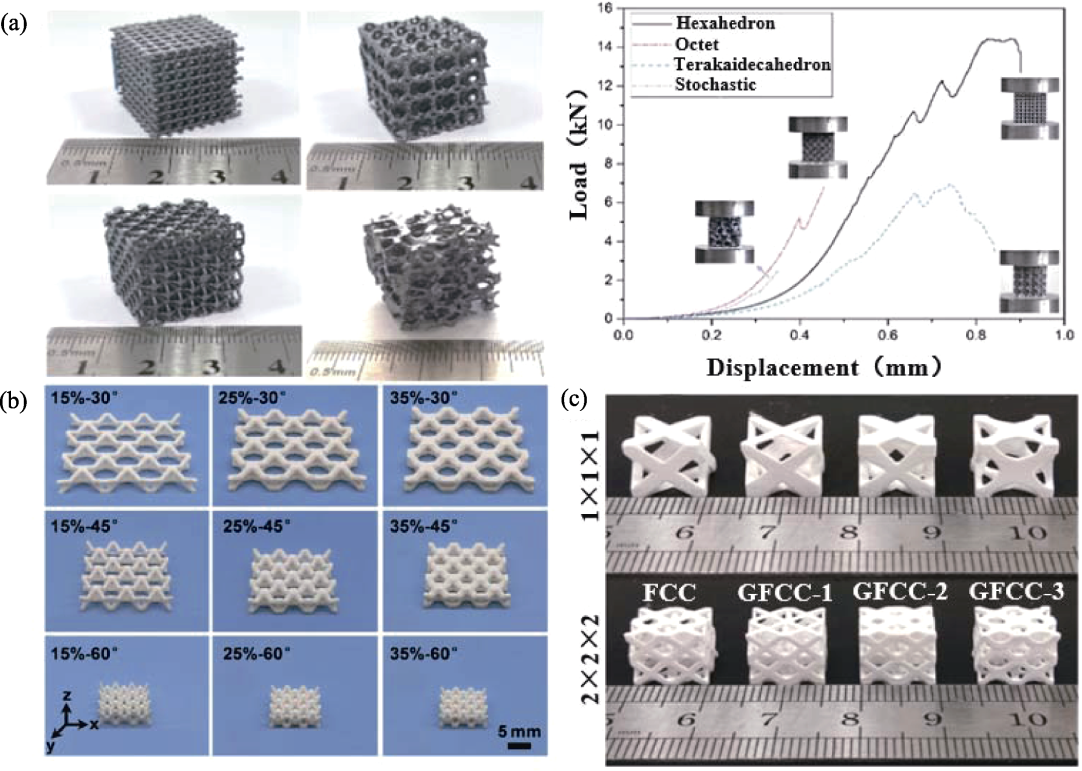
图7 桁架的结构参数[24-26]
Fig. 7 Structure parameters of truss[24-26] (a) Lattices with different structural configurations (left) and their load-displacement curves (right)[24]; (b) Lattices with different volume fractions and tilt angles[25]; (c) Gradient lattices with different numbers of cells[26]
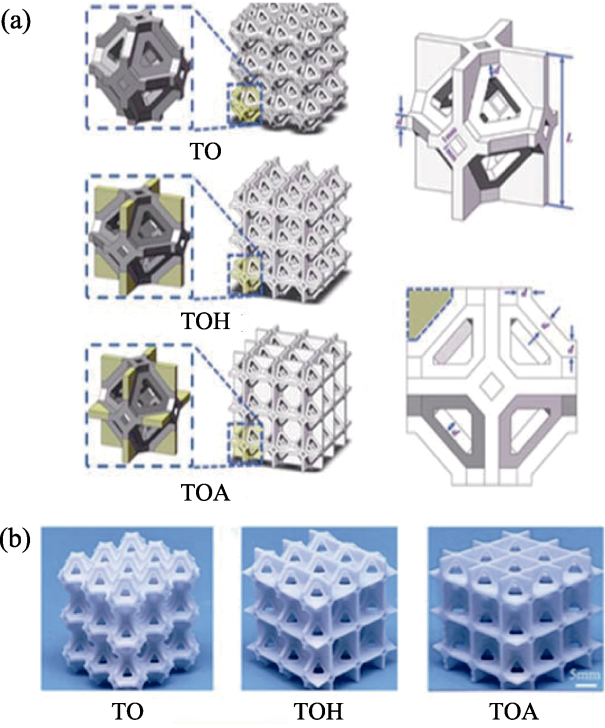
图8 截断八面体板晶格[28]
Fig. 8 Truncated octahedral plate lattice[28] (a) Schematic diagrams of plate lattice design and unit cell size; (b) Ceramic samples
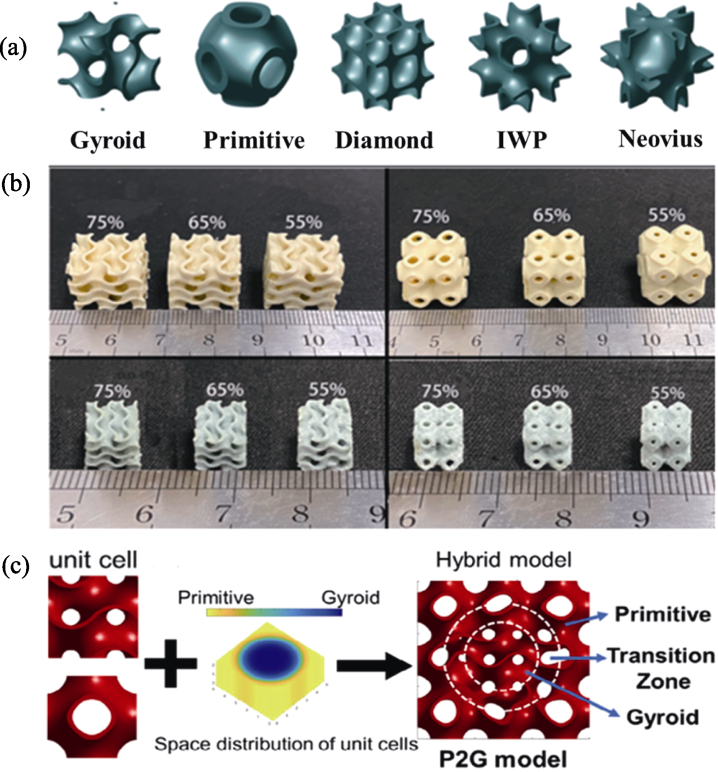
图9 TPMS的结构参数和设计策略[29-30,32]
Fig. 9 Structural parameters and design strategies of TPMS[29-30,32] (a) Common configurations of TPMS[29]; (b) TPMS with different structural configurations and volume fractions[30]; (c) Design strategies for hybrid TPMS[32]
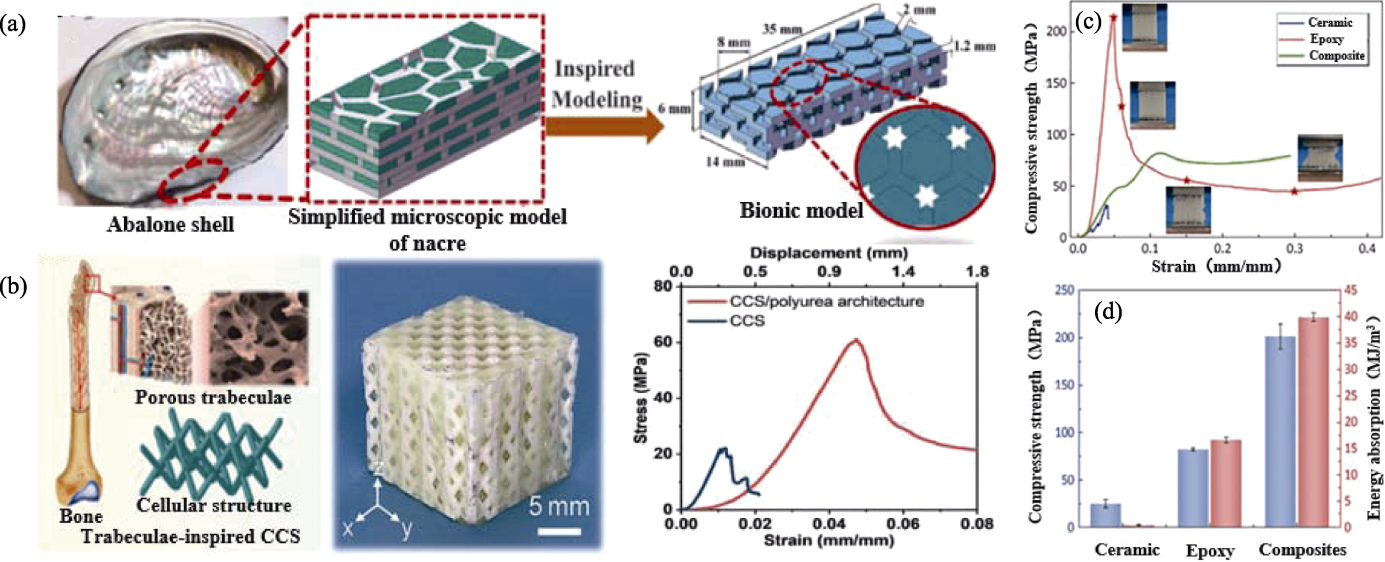
图10 聚合物/陶瓷IPCs的力学性能[44-46]
Fig. 10 Mechanical properties of polymer/ceramic IPCs[44-46] (a) Nacre-inspired ceramic scaffold[44]; (b) IPC inspired by trabecular bone and its mechanical properties[45]; (c) Stress-strain curves of single-phase components and IPC[46]; (d) Comparison of compressive strength and energy absorption of single-phase compositions and IPC[46]
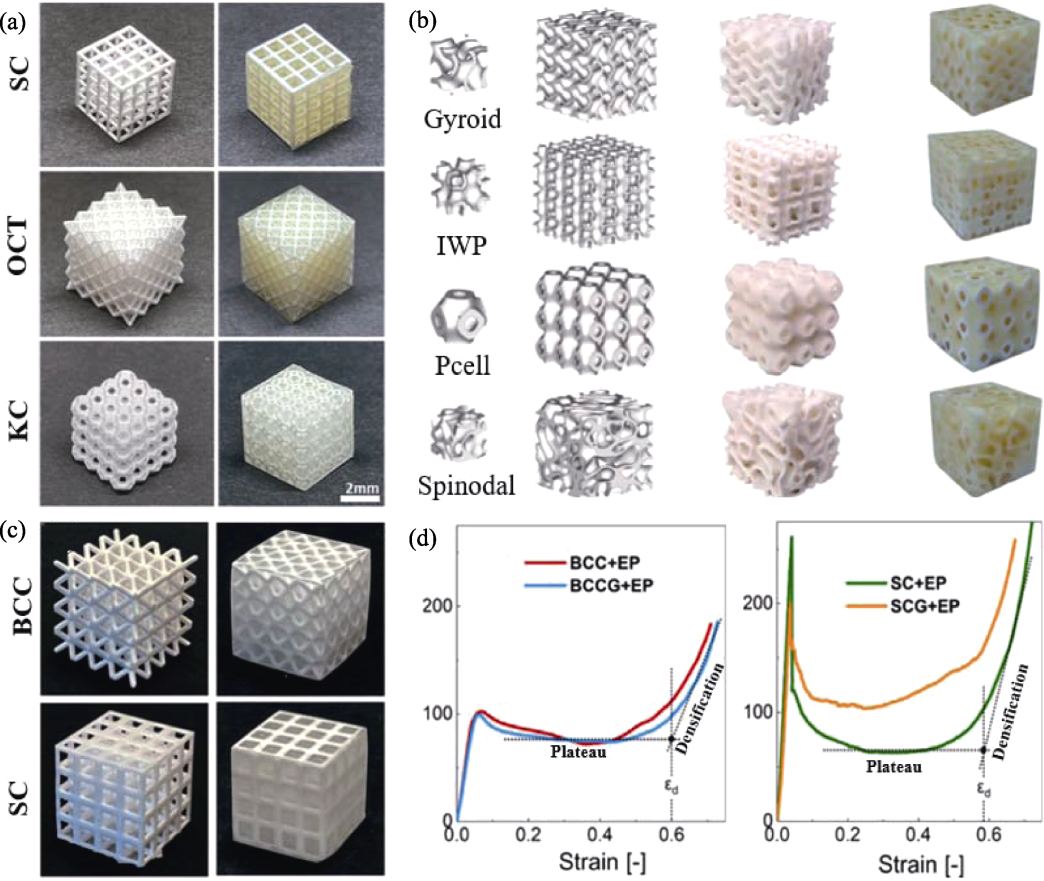
图11 聚合物/陶瓷IPCs的结构构型及其力学性能[43,47 -48]
Fig. 11 Structural configuration and mechanical properties of polymer/ceramic IPCs[43,47 -48] (a) Trusses and IPCs with different spatial configurations[47]; (b) IPCs of periodic/random shell structures[43]; (c) IPCs of the same truss type[48]; (d) Stress-strain curves of IPCs of the same truss type[48]
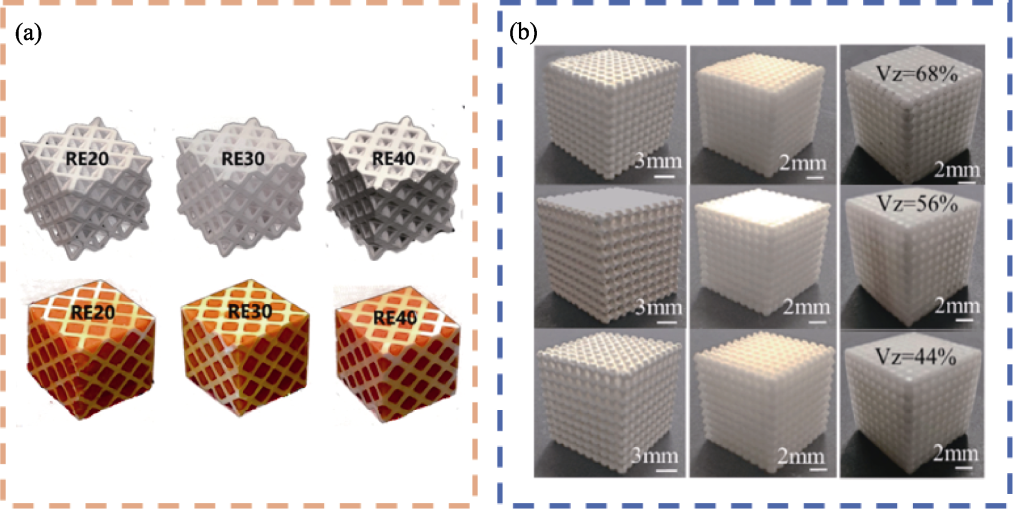
图12 不同体积分数的聚合物/陶瓷IPCs[49-50]
Fig. 12 Polymer/ceramic IPCs with different volume fractions[49-50] (a) 20%-40% (in volume) phenol-formaldehyde (PF)/Al2O3 IPCs[49]; (b) 44%-68% (in volume) epoxy resin/ZrO2 IPCs[50]
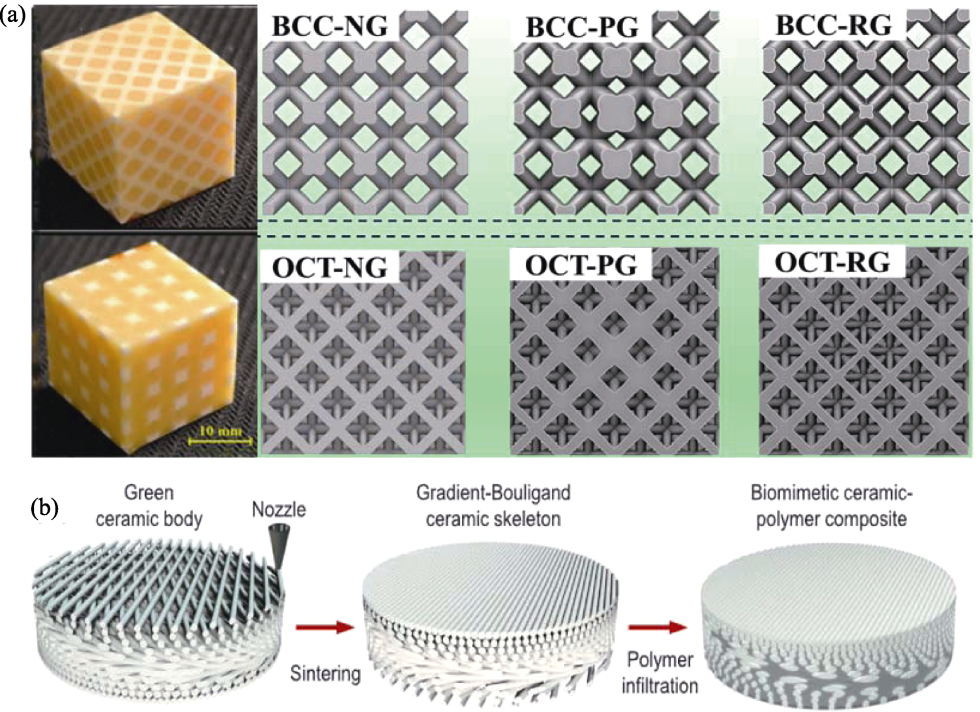
图13 梯度设计的聚合物/陶瓷IPCs[54-55]
Fig. 13 Gradient designed polymer/ceramic IPCs[54-55] (a) Macro-morphologies of IPCs and cross section of gradient structure[54]; (b) IPCs of biomimetic gradient Bouligand structures[55]
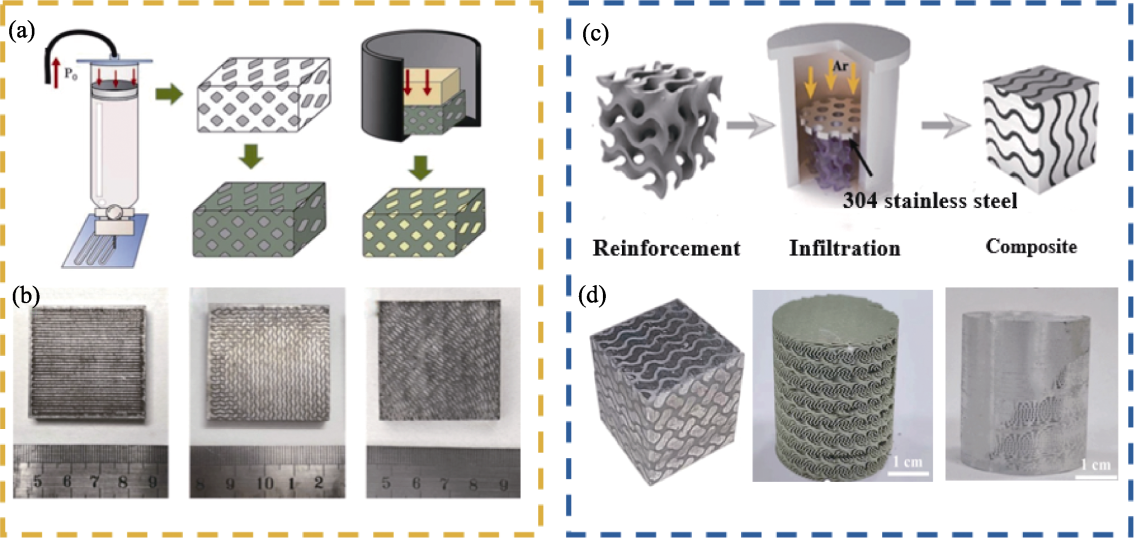
图14 无压/压力辅助渗透[56,58 -60]
Fig. 14 Pressureless/pressure assisted infiltration[56,58 -60] (a) Pressureless infiltration[56]; (b) Metal/ceramic IPCs by pressureless infiltration[56]; (c) Pressure assisted infiltration[58]; (d) Metal/ceramic IPCs by pressure assisted infiltration[59-60]
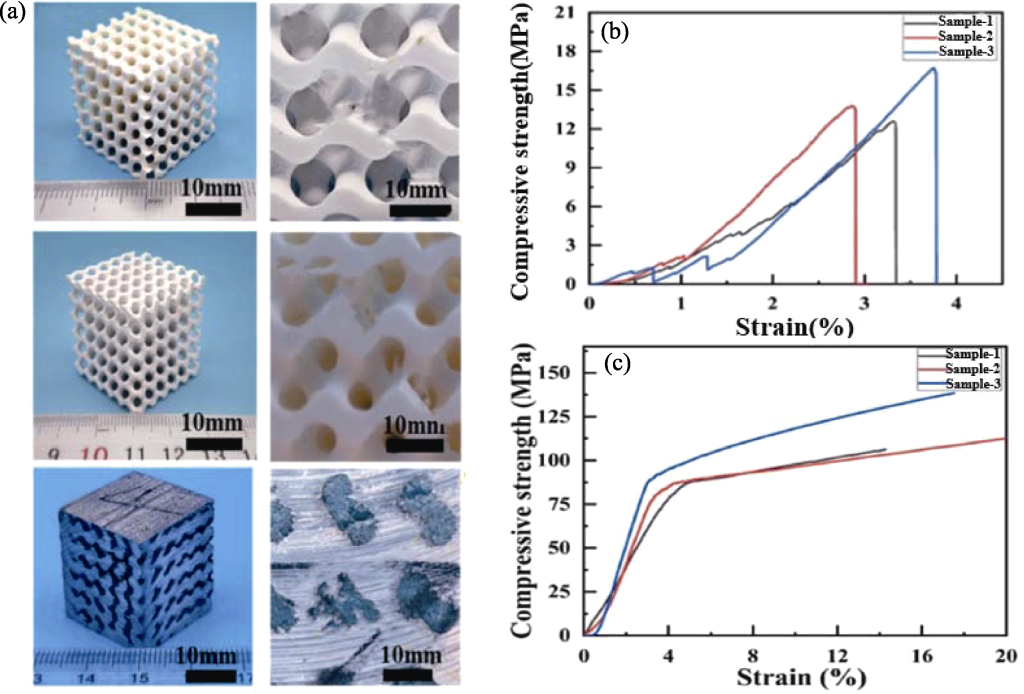
图15 金属/陶瓷IPCs的力学性能[64]
Fig. 15 Mechanical properties of metal/ceramic IPCs[64] (a) Macroscopic morphologies of ceramic lattices and metal/ceramic IPCs; (b) Stress-strain curves of ceramic lattices; (c) Stress-strain curves of metal/ceramic IPCs
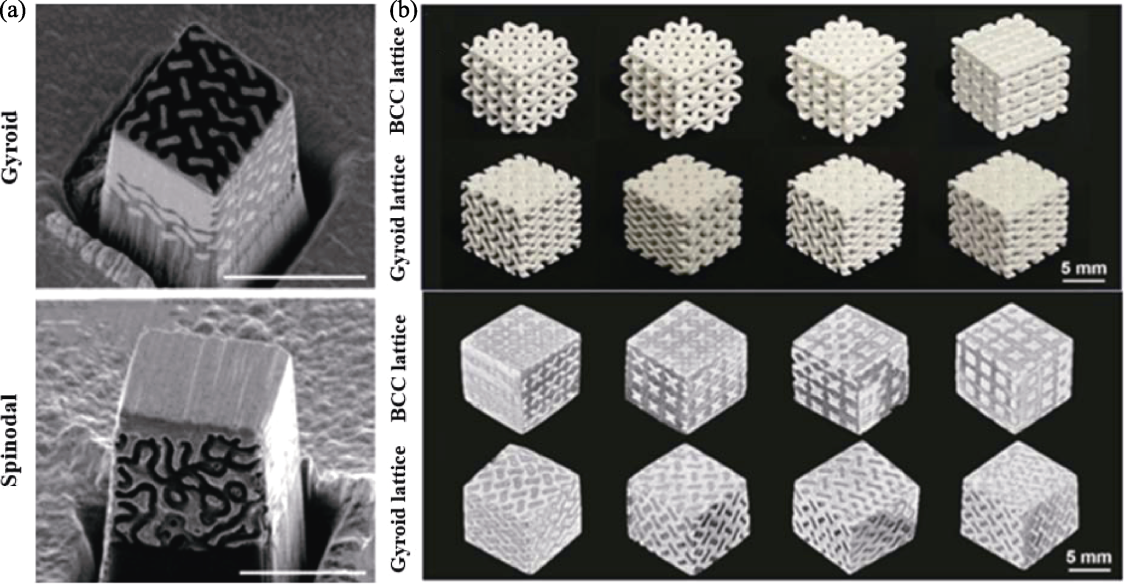
图16 不同结构构型的金属/陶瓷IPCs[66-67]
Fig. 16 Metal/ceramic IPCs with different structural configurations[66-67] (a) Metal/ceramic IPCs with gyroid and spinodal structures[66]; (b) Metal/ceramic IPCs with BCC and gyroid structures[67]
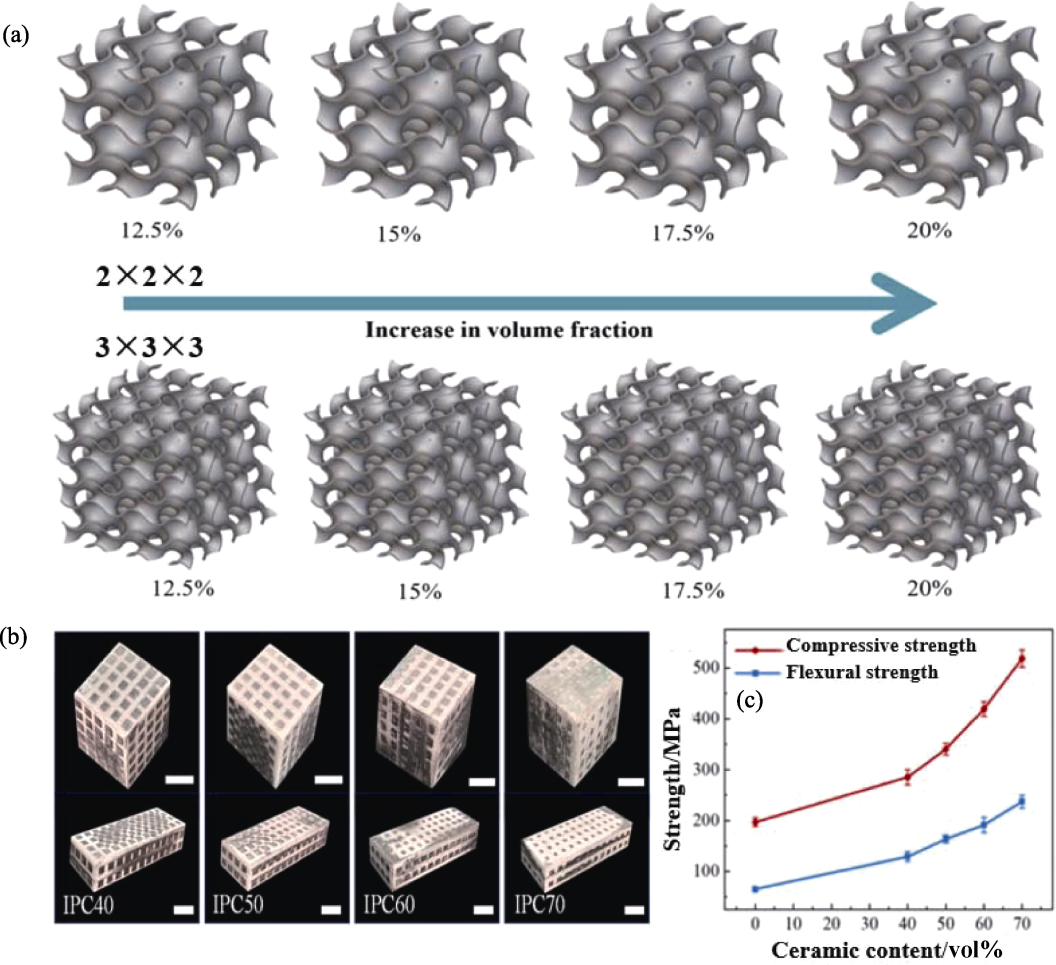
图17 不同体积分数的金属/陶瓷IPCs[68,70]
Fig. 17 Metal/ceramic IPCs with different volume fractions[68,70] (a) Design of gyroid scaffold with different volume fractions[68]; (b) Macroscopic morphologies of Al/Al2O3 IPCs[70]; (c) Compressive strength and flexural strength of Al/Al2O3 IPCs under different volume fractions[70]
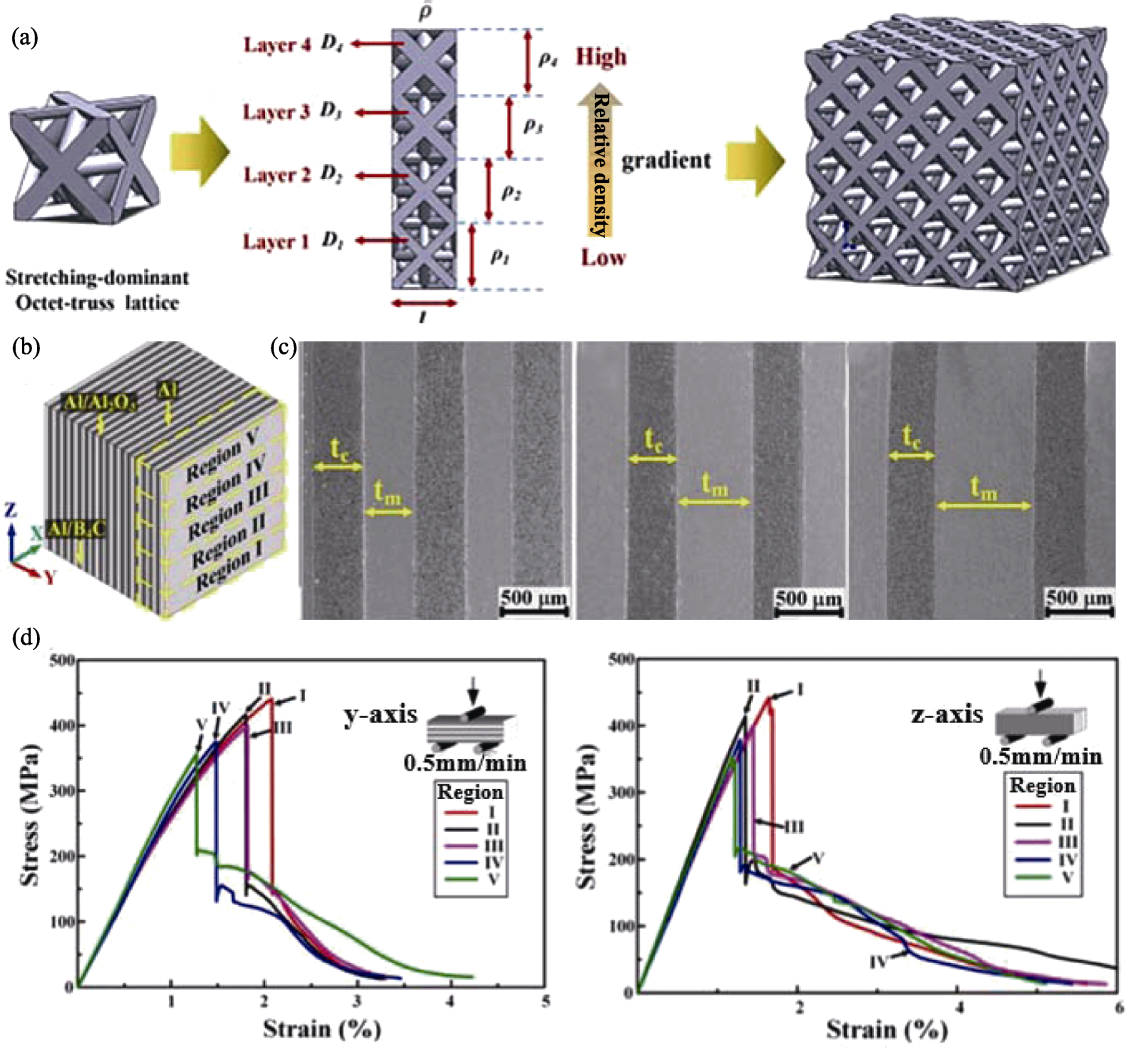
图18 梯度设计的金属/陶瓷IPCs[71-72]
Fig. 18 Gradient designed metal/ceramic IPCs[71-72] (a) Gradient volume fraction[71]; (b) Schematic image of Al/Al2O3-B4C green bodies with compositional gradients[72]; (c) Gradient pitch ceramic scaffold[72]; (d) Three-point bending stress-strain curves along the y and z axis directions respectively[72]
| Type | Composition | Compressive strength/ MPa | Specific energy absorption/ (J·g-1) | Ref. |
|---|---|---|---|---|
| Polymer/ ceramic IPCs | Polyurea/Al2O3 | 14.79 | 2.97 | [ |
| Epoxy resin/Al2O3 | 135.00 | 18.00 | [ | |
| Polyurea/Al2O3 | 61.03 | 6.85 | [ | |
| Resin/Al2O3 | 40.01 | 17.30 | [ | |
| Epoxy resin/Al2O3 | 453.30 | 12.00 | [ | |
| Phenolic/Al2O3 | 101.09 | 2.70 | [ | |
| Phenolic/Al2O3 | 114.86 | 2.73 | [ | |
| Metal/ ceramic IPCs | Al/ZTA | 517.40 | 13.00 | [ |
| Al-Si/ZrO2 | 343.00 | 1.66 | [ | |
| Al/Al2O3 | 89.01 | 0.96 | [ | |
| Al/Al2O3 | 240.00 | 0.71 | [ | |
| Al/Al2O3 | 176.10 | 1.61 | [ |
表2 聚合物/陶瓷和金属/陶瓷IPCs的力学性能对比
Table 2 Comparison of mechanical properties of polymer/ceramic and metal/ceramic IPCs
| Type | Composition | Compressive strength/ MPa | Specific energy absorption/ (J·g-1) | Ref. |
|---|---|---|---|---|
| Polymer/ ceramic IPCs | Polyurea/Al2O3 | 14.79 | 2.97 | [ |
| Epoxy resin/Al2O3 | 135.00 | 18.00 | [ | |
| Polyurea/Al2O3 | 61.03 | 6.85 | [ | |
| Resin/Al2O3 | 40.01 | 17.30 | [ | |
| Epoxy resin/Al2O3 | 453.30 | 12.00 | [ | |
| Phenolic/Al2O3 | 101.09 | 2.70 | [ | |
| Phenolic/Al2O3 | 114.86 | 2.73 | [ | |
| Metal/ ceramic IPCs | Al/ZTA | 517.40 | 13.00 | [ |
| Al-Si/ZrO2 | 343.00 | 1.66 | [ | |
| Al/Al2O3 | 89.01 | 0.96 | [ | |
| Al/Al2O3 | 240.00 | 0.71 | [ | |
| Al/Al2O3 | 176.10 | 1.61 | [ |
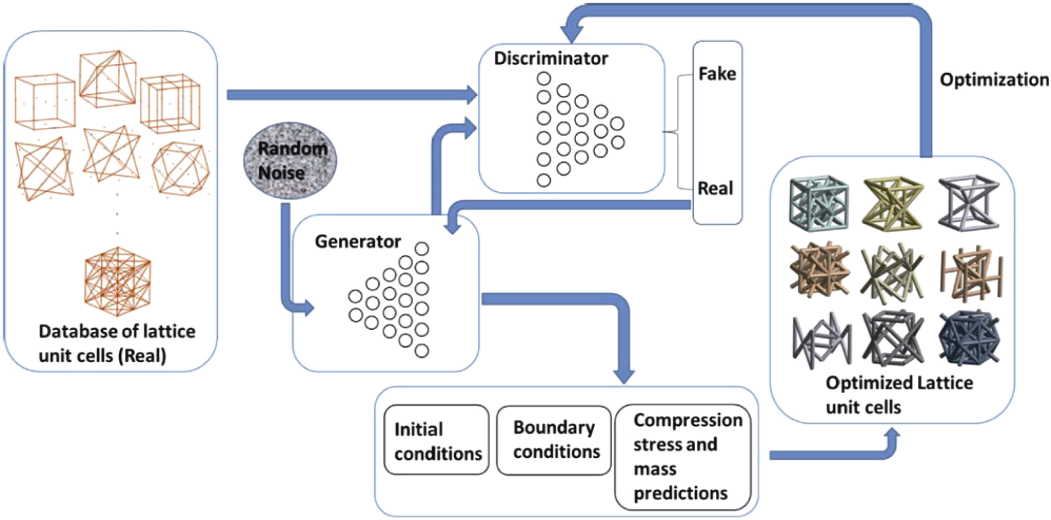
图19 算法辅助的晶格优化设计流程[77]
Fig. 19 Algorithm-assisted lattice optimization design process[77]
| [1] |
LIU Z Q, JIAO D, MEYERS M A, et al. Structure and mechanical properties of naturally occurring lightweight foam-filled cylinder-the peacock’s tail coverts shaft and its components. Acta Biomaterialia, 2015, 17: 137.
DOI URL |
| [2] |
LIU X, ZHANG F, ZOU J, et al. Biomimetic multi-layered protective materials with prestress and a periodic laminated structure. Journal of Materiomics, 2026, 12(1): 101095.
DOI URL |
| [3] | YANG T, CHEN H S, JIA Z A, et al. A damage-tolerant, dual-scale, single-crystalline microlattice in the knobby starfish, Protoreaster nodosus. Science, 2022, 375(6581): 647. |
| [4] |
YANG T, JIA Z A, WU Z L, et al. High strength and damage- tolerance in echinoderm stereom as a natural bicontinuous ceramic cellular solid. Nature Communications, 2022, 13: 6083.
DOI |
| [5] |
GAO Y C, QIN B, WEN S M, et al. Ambient pressure drying of freeze-cast ceramics from aqueous suspension. Nano Letters, 2023, 23(19): 9011.
DOI URL |
| [6] |
ZHAI X F, CHEN J Y, WANG Y R, et al. Fabrication of Al2O3 ceramic cores with high porosity and high strength by vat photopolymerization 3D printing and sacrificial templating. Ceramics International, 2023, 49(19): 32096.
DOI URL |
| [7] |
ZHANG G X, ZOU B, WANG X F, et al. The 3D-printed building and performance of Al2O3 ceramic filters with gradient hole density structures. Ceramics International, 2023, 49(19): 31496.
DOI URL |
| [8] | KANG J H, SAKTHIABIRAMI K, JANG K J, et al. Mechanical and biological evaluation of lattice structured hydroxyapatite scaffolds produced via stereolithography additive manufacturing. Materials & Design, 2022, 214: 110372. |
| [9] |
BUTLER N, ZHAO Y, LU S, et al. Effects of light exposure intensity and time on printing quality and compressive strength of β-TCP scaffolds fabricated with digital light processing. Journal of the European Ceramic Society, 2024, 44(4): 2581.
DOI URL |
| [10] |
WANG Y, CHEN S S, LIANG H W, et al. Digital light processing (DLP) of nano biphasic calcium phosphate bioceramic for making bone tissue engineering scaffolds. Ceramics International, 2022, 48(19): 27681.
DOI URL |
| [11] |
BAUER J, CROOK C, IZARD A G, et al. Additive manufacturing of ductile, ultrastrong polymer-derived nanoceramics. Matter, 2019, 1(6): 1547.
DOI URL |
| [12] |
WU S Q, YANG L, WANG C S, et al. Si/SiC ceramic lattices with a triply periodic minimal surface structure prepared by laser powder bed fusion. Additive Manufacturing, 2022, 56: 102910.
DOI URL |
| [13] |
ABDELMOULA M, KÜÇÜKTÜRK G, GROSSIN D, et al. Direct selective laser sintering of silicon carbide: realizing the full potential through process parameter optimization. Ceramics International, 2023, 49(20): 32426.
DOI URL |
| [14] |
KIM S Y, SESSO M L, FRANKS G V. Effect of internal lattice structure on the flexural strength of 3D printed hierarchical porous ultra-high temperature ceramic (ZrB2). Journal of the European Ceramic Society, 2023, 43(5): 1762.
DOI URL |
| [15] |
ZHAO Q X, CHEN R, WANG S S, et al. Utilization of fused deposition modeling in the fabrication of lattice structural Al2O3 ceramics. Ceramics International, 2024, 50(19): 35193.
DOI URL |
| [16] | WU H D, JIANG C, TANG C, et al. Binder jetting printed in situ mullite strengthened alumina ceramics with excellent mechanical and thermal properties through multi-phase infiltration. Virtual and Physical Prototyping, 2024, 19(1): e2427240. |
| [17] |
CHOI J H, KWON M, HWANG K T, et al. Mechanical reinforcement of complex shaped ceramic filter fabricated using binder jetting process with photocurable composite ink. Journal of Materials Research and Technology, 2025, 35: 5514.
DOI URL |
| [18] |
YILDIZ B K, YILDIZ A S, KUL M, et al. Mechanical properties of 3D-printed Al2O3 honeycomb sandwich structures prepared using the SLA method with different core geometries. Ceramics International, 2024, 50(2): 2901.
DOI URL |
| [19] |
HUANG Z Y, LIU L Y, YUAN J M, et al. Stereolithography 3D printing of Si3N4 cellular ceramics with ultrahigh strength by using highly viscous paste. Ceramics International, 2023, 49(4): 6984.
DOI URL |
| [20] |
SHEN M H, FU R L, LIU Y N, et al. Mechanical characterization of Al2O3 twisted honeycomb structures fabricated by digital light processing 3D printing. Ceramics International, 2023, 49(17): 29348.
DOI URL |
| [21] |
ZOK F W, LATTURE R M, BEGLEY M R. Periodic truss structures. Journal of the Mechanics and Physics of Solids, 2016, 96: 184.
DOI URL |
| [22] | KARRI C P, KAMBAGOWNI V. Finite element analysis approach for optimal design and mechanical performance prediction of additive manufactured sandwich lattice structures. Journal of the Institution of Engineers: India: Series D, 2025, 106(1): 353. |
| [23] |
WANG X X, LI Z D, DENG J J, et al. Unprecedented strength enhancement observed in interpenetrating phase composites of aperiodic lattice metamaterials. Advanced Functional Materials, 2025, 35(1): 2406890.
DOI URL |
| [24] |
XU Y C, GAO Y, YANG X D, et al. Relationship between topological structures and mechanical properties of artificially architected SiC cellular ceramics: experimental and numerical study. Journal of the European Ceramic Society, 2023, 43(10): 4263.
DOI URL |
| [25] |
ZHANG X Q, ZHANG K Q, ZHANG B, et al. Additive manufacturing, quasi-static and dynamic compressive behaviours of ceramic lattice structures. Journal of the European Ceramic Society, 2022, 42(15): 7102.
DOI URL |
| [26] |
ZENG Y, SUN L J, YAO H H, et al. Fabrication of alumina ceramics with functional gradient structures by digital light processing 3D printing technology. Ceramics International, 2022, 48(8): 10613.
DOI URL |
| [27] |
CROOK C, BAUER J, GUELL IZARD A, et al. Plate-nanolattices at the theoretical limit of stiffness and strength. Nature Communications, 2020, 11: 1579.
DOI PMID |
| [28] |
ZHANG B, ZHANG X Q, WANG W Q, et al. Mechanical properties of additively manufactured Al2O3 ceramic plate-lattice structures: experiments & simulations. Composite Structures, 2023, 311: 116792.
DOI URL |
| [29] | AL-KETAN O, AL-RUB R K A. MSLattice: a free software for generating uniform and graded lattices based on triply periodic minimal surfaces. Material Design & Processing Communications, 2021, 3(6): e205. |
| [30] |
LU J X, DONG P, ZHAO Y T, et al. 3D printing of TPMS structural ZnO ceramics with good mechanical properties. Ceramics International, 2021, 47(9): 12897.
DOI URL |
| [31] | VIJAYAVENKATARAMAN S, KUAN L Y, LU W F. 3D-printed ceramic triply periodic minimal surface structures for design of functionally graded bone implants. Materials & Design, 2020, 191: 108602. |
| [32] |
LU C X, DING J, JIANG X, et al. Enhancing mechanical properties and damage tolerance of additive manufactured ceramic TPMS lattices by hybrid design. Journal of the American Ceramic Society, 2024, 107(10): 6524.
DOI URL |
| [33] |
IZARD A G, BAUER J, CROOK C, et al. Ultrahigh energy absorption multifunctional spinodal nanoarchitectures. Small, 2019, 15(45): 1903834.
DOI URL |
| [34] |
ANANDAN N, WILSON C G, MEZA L R. Functionally graded spinodal nanoarchitected ceramics with unprecedented recoverability. International Journal of Mechanical Sciences, 2025, 301: 110453.
DOI URL |
| [35] |
BRODNIK N R, SCHMIDT J, COLOMBO P, et al. Analysis of multi-scale mechanical properties of ceramic trusses prepared from preceramic polymers. Additive Manufacturing, 2020, 31: 100957.
DOI URL |
| [36] |
LEE E, JIA Z A, YANG T, et al. Multiscale mechanical design of the lightweight, stiff, and damage-tolerant cuttlebone: a computational study. Acta Biomaterialia, 2022, 154: 312.
DOI URL |
| [37] | MAO A R, ZHOU S T, HONG Y L, et al. Three-dimensional printing of cuttlebone-inspired porous ceramic materials. ACS Applied Materials & Interfaces, 2024, 16(31): 41202. |
| [38] |
THAKUR M S H, NATH M D, AJAYAN P M, et al. Macroscale ceramic origami structures with hyper-elastic coating. Advanced Composites and Hybrid Materials, 2025, 8(2): 226.
DOI |
| [39] |
ZHANG X Q, SU R Y, GAO X, et al. Circumventing brittleness of 3D-printed Al2O3 cellular ceramic structures via compositing with polyurea. Rare Metals, 2024, 43(11): 5994.
DOI URL |
| [40] | SAJADI S M, VÁSÁRHELYI L, MOUSAVI R, et al. Damage- tolerant 3D-printed ceramics via conformal coating. Science Advances, 2021, 7(28): eabc5028. |
| [41] |
WANG G S. Influence of polydopamine/polylactic acid coating on mechanical properties and cell behavior of 3D-printed calcium silicate scaffolds. Materials Letters, 2020, 275: 128131.
DOI URL |
| [42] |
SUN J X, YU S X, WADE-ZHU J, et al. 3D printing of ceramic composite with biomimetic toughening design. Additive Manufacturing, 2022, 58: 103027.
DOI URL |
| [43] |
SINGH A, KARATHANASOPOULOS N. Mechanics of ceramic- epoxy interpenetrating phase composites engineered with TPMS and spinodal topologies. Composites Science and Technology, 2024, 253: 110632.
DOI URL |
| [44] |
WU H L, GUO A F, KONG D K, et al. Nacre-like carbon fiber- reinforced biomimetic ceramic composites: fabrication, microstructure, and mechanical performance. Ceramics International, 2024, 50(14): 25388.
DOI URL |
| [45] |
ZHANG X Q, MENG Q Y, ZHANG K Q, et al. 3D-printed bioinspired Al2O3/polyurea dual-phase architecture with high robustness, energy absorption, and cyclic life. Chemical Engineering Journal, 2023, 463: 142378.
DOI URL |
| [46] |
LI W Y, ZHANG K Q, ZHANG Z J, et al. Damage tolerance and cyclic stability of 3D-architected Al2O3/polymer composites. Journal of Materiomics, 2026, 12(1): 101112.
DOI URL |
| [47] |
ZHAO Y D, YAP X Y, YE P C, et al. Enhanced mechanical and thermal properties in 3D printed Al2O3 lattice/epoxy interpenetrating phase composites. Mechanics of Materials, 2024, 190: 104930.
DOI URL |
| [48] | LI X W, KIM M, ZHAI W. Ceramic microlattice and epoxy interpenetrating phase composites with simultaneous high specific strength and specific energy absorption. Materials & Design, 2022, 223: 111206. |
| [49] |
ZHONG K, WANG Z G, CUI J, et al. Mechanical behavior of reinforced Al2O3 lattice structures: effects of structural parameters from experiments and simulations. Thin-Walled Structures, 2025, 207: 112753.
DOI URL |
| [50] |
DONG X S, WANG G Q, WANG S R, et al. Designing and additive manufacturing of biomimetic interpenetrating phase zirconia-resin composite dental restorations with TPMS structure. Journal of the Mechanical Behavior of Biomedical Materials, 2024, 160: 106718.
DOI URL |
| [51] |
EDER M, JUNGNIKL K, BURGERT I. A close-up view of wood structure and properties across a growth ring of Norway spruce (Picea abies [L] Karst.). Trees, 2009, 23: 79.
DOI URL |
| [52] |
HABIBI M K, SAMAEI A T, GHESHLAGHI B, et al. Asymmetric flexural behavior from bamboo’s functionally graded hierarchical structure: underlying mechanisms. Acta Biomaterialia, 2015, 16: 178.
DOI URL |
| [53] |
SU J M, GUO L, ZHU H J, et al. High toughness of 3D printed ceramic/polymer interpenetrating phase composite with gradient structures under multi-directional stresses. Journal of Materials Science, 2025, 60(9): 4197.
DOI |
| [54] |
ZHONG K, CUI J, WANG Z G, et al. Synergistic gradient- composite effects on mechanical reinforcement of ceramic lattice structures. Thin-Walled Structures, 2025, 216: 113729.
DOI URL |
| [55] | WEN S M, CHEN S M, GAO W T, et al. Biomimetic gradient bouligand structure enhances impact resistance of ceramic-polymer composites. Advanced Materials, 2023, 35(21): e2211175. |
| [56] |
CHENG D X, XIA Y F, YAO D X, et al. Quasi-static and dynamic mechanical properties of interpenetrating zirconia-toughened alumina-aluminum alloy composite material. Materials Today Communications, 2024, 41: 110929.
DOI URL |
| [57] |
LI S, LI Y F, WANG Q W, et al. Fabrication of 3D-SiC/aluminum alloy interpenetrating composites by DIW and pressureless infiltration. Ceramics International, 2021, 47(17): 24340.
DOI URL |
| [58] |
ZHANG Z J, LI W Y, FENG Y J, et al. Strongly improved mechanical properties of aluminum composites by designed ceramic lattice. Journal of Materials Research and Technology, 2025, 35: 2637.
DOI URL |
| [59] |
ZHANG Z, FENG Y, LI W, et al. Stiff and ductile 3D-architectured metal/ceramic composites. Composites Part A: Applied Science and Manufacturing, 2025, 194: 108904.
DOI URL |
| [60] |
LI Y, ZHONG S J, QIAN M F, et al. Design and fabrication of bionic Bouligand-structured SiC/2024Al composites via binder jetting additive manufacturing and pressure infiltration. Composites Part B: Engineering, 2025, 301: 112526.
DOI URL |
| [61] |
CASAS-LUNA M, MONTUFAR E B, HORT N, et al. Degradable magnesium-hydroxyapatite interpenetrating phase composites processed by current assisted metal infiltration in additive- manufactured porous preforms. Journal of Magnesium and Alloys, 2022, 10(12): 3641.
DOI URL |
| [62] | HUANG J C, DARYADEL S, MINARY-JOLANDAN M. Low-cost manufacturing of metal-ceramic composites through electrodeposition of metal into ceramic scaffold. ACS Applied Materials & Interfaces, 2019, 11(4): 4364. |
| [63] |
KHAKZAD M, KHADEMI M, PERRUCI G F, et al. Hybrid manufacturing of ceramic-metal composites by vat polymerization 3D printing and pulse electroplating. Journal of Manufacturing Processes, 2025, 144: 157.
DOI URL |
| [64] |
LU J J, WANG D, ZHANG K Q, et al. Mechanical properties of Al2O3 and Al2O3/Al with Gyroid structure obtained by stereolithographic additive manufacturing and melt infiltration. Ceramics International, 2022, 48(16): 23051.
DOI URL |
| [65] |
ZHU M M, DENG C Z, ZHANG Z F, et al. Stereolithography 3D printing ceramics for ultrahigh strength aluminum matrix composites. Journal of Manufacturing Processes, 2025, 139: 126.
DOI URL |
| [66] | BAUER J, SALA-CASANOVAS M, AMIRI M, et al. Nanoarchitected metal/ceramic interpenetrating phase composites. Science Advances, 2022, 8(33): eabo3080. |
| [67] |
CHEN F, DING J, JIA M Y, et al. 3D bi-continuous interpenetrating networks enables Al-matrix composites with enhanced mechanical energy absorption capacity. Composite Structures, 2025, 368: 119293.
DOI URL |
| [68] |
SANTOS S, MATOS C, DUARTE I, et al. Effect of TPMS reinforcement on the mechanical properties of aluminium-alumina interpenetrating phase composites. Progress in Additive Manufacturing, 2025, 10(2): 1187.
DOI |
| [69] |
CHENG D, XIA Y, YAO D, et al. The dynamic protective performance of interpenetrating zirconia toughened alumina- aluminum alloy composite material prepared by 3D printing and metal infiltration. Journal of Alloys and Compounds, 2025, 1022: 179953.
DOI URL |
| [70] |
SUN J X, WANG Y D, ZOU J, et al. Ceramic/metal composites fabricated via 3D printing and ultrasonic-assisted infiltration for high specific strength and energy absorption. Journal of Alloys and Compounds, 2024, 1006: 176216.
DOI URL |
| [71] |
LI S W, WANG G, ZHANG K Q, et al. Mechanical properties of Al2O3 and Al2O3/Al interpenetrated functional gradient structures by 3D printing and melt infiltration. Journal of Alloys and Compounds, 2023, 950: 169948.
DOI URL |
| [72] | HU Y B, JIANG M Y, SHEN P. Compositionally gradient Al2O3-B4C/Al composites with interpenetrating structure and tailored properties via material extrusion-based additive manufacturing and pressure infiltration. Virtual and Physical Prototyping, 2025, 20(1): e2450101. |
| [73] |
WU Y, ZHAO R D, LIANG B, et al. Construction of C/SiC- Cu3Si-Cu interpenetrating composites for long-duration thermal protection at 2500 ℃ by cooperative active-passive cooling. Composites Part B: Engineering, 2023, 266: 111015.
DOI URL |
| [74] |
JIN Y, DU J K, HE Y. Optimization of process planning for reducing material consumption in additive manufacturing. Journal of Manufacturing Systems, 2017, 44: 65.
DOI URL |
| [75] |
SRIDHAR S, VENKATESH K, REVATHY G, et al. Adaptive fabrication of material extrusion-AM process using machine learning algorithms for print process optimization. Journal of Intelligent Manufacturing, 2025, 36(7): 5087.
DOI |
| [76] |
LI S Y, WEI H K, YUAN S Q, et al. Collaborative optimization design of process parameter and structural topology for laser additive manufacturing. Chinese Journal of Aeronautics, 2023, 36(1): 456.
DOI URL |
| [77] | CHALLAPALLI A, PATEL D, LI G Q. Inverse machine learning framework for optimizing lightweight metamaterials. Materials & Design, 2021, 208: 109937. |
| [78] |
WU C, LUO J J, ZHONG J X, et al. Topology optimisation for design and additive manufacturing of functionally graded lattice structures using derivative-aware machine learning algorithms. Additive Manufacturing, 2023, 78: 103833.
DOI URL |
| [1] | 彭裕超, 董源, 董顺, 夏莲森, 胡佩涛, 张幸红, 周延春. SiC颗粒含量对(Ti,Zr,Hf,Ta,Cr)(C,N)-SiC陶瓷力学性能及耐烧蚀性能的影响[J]. 无机材料学报, 2026, 41(7): 947-954. |
| [2] | 覃善丽, 郭佳文, 陈燕萌, 聚安安, 韦毅, 黄科林, 侯向华, 吕思师, 文志朋, 吴炼. 二维层状材料构筑电化学储能定向离子传输通道的研究进展[J]. 无机材料学报, 2026, 41(7): 883-898. |
| [3] | 周翠, 李捷, 孙鲁超, 苏海军, 王京阳. 氧化铝基定向凝固共晶陶瓷的组织特性、调控方法及环境稳定性[J]. 无机材料学报, 2026, 41(7): 899-914. |
| [4] | 费文龙, 王亚坤, 廖良生. 蓝光ZnSeTe量子点的可控制备及其量子点发光二极管器件研究进展[J]. 无机材料学报, 2026, 41(7): 867-882. |
| [5] | 陈明俊, 缪洪康, 肖英俊, 邓建波, 张翔, 赵九蓬, 李垚. 光-热双响应材料研究进展: 从设计策略到智能窗应用[J]. 无机材料学报, 2026, 41(6): 723-738. |
| [6] | 宋坤洁, 解荣军. 机器学习驱动新型发光材料的研究进展[J]. 无机材料学报, 2026, 41(6): 689-703. |
| [7] | 胡钰晴, 朱一新, 乐先浩, 万青. 钽酸锂晶圆减薄技术及其热释电红外探测器应用进展[J]. 无机材料学报, 2026, 41(6): 764-774. |
| [8] | 刘春帆, 陈科, 葛芳芳, 黄庆. 核用耐铅铋腐蚀涂层的研究进展[J]. 无机材料学报, 2026, 41(6): 775-786. |
| [9] | 胡扬, 谢敏, 张筱怡, 李想, 郭新伟, 姜南, 周文瀚, 张胜利, 曾海波. 计算与数据驱动环保型发光材料的研究进展[J]. 无机材料学报, 2026, 41(6): 704-722. |
| [10] | 王俊卜, 黄泽皑, 杨茗凯, 蒙颖, 周明炜, 周莹. 甲烷转化用抗积碳催化材料研究进展[J]. 无机材料学报, 2026, 41(6): 739-750. |
| [11] | 王金文, 杨振, 周欢, 夏丹, 杨磊. 可注射无机材料及其生物医学应用[J]. 无机材料学报, 2026, 41(6): 751-763. |
| [12] | 高科丰, 何昕昕, 刘增乾, 张哲峰. 多尺度类贝壳珍珠质层状与梯度结构仿生陶瓷-树脂复合材料[J]. 无机材料学报, 2026, 41(5): 573-582. |
| [13] | 李涵涛, 沈强, 罗国强, 王雪飞, 高明, 陈晨. 机械球磨法调控硅基负极材料结构与性能的研究进展[J]. 无机材料学报, 2026, 41(5): 561-572. |
| [14] | 解陈一, 缪花明, 张蔚然, 刘荣军, 王衍飞, 李端. 理论计算在高熵陶瓷领域的研究进展[J]. 无机材料学报, 2026, 41(5): 545-560. |
| [15] | 李璇, 叶奎材, 冯佳音, 邱家军, 钱文昊, 邢敏. 钛基牙种植体表面改性促进软组织封闭的研究进展[J]. 无机材料学报, 2026, 41(4): 432-444. |
| 阅读次数 | ||||||
|
全文 |
|
|||||
|
摘要 |
|
|||||