无机材料学报 ›› 2026, Vol. 41 ›› Issue (4): 421-431.DOI: 10.15541/jim20250364 CSTR: 32189.14.10.15541/jim20250364
陈坤( ), 姜勇刚(), 冯军宗, 李良军, 胡艺洁, 冯坚()
收稿日期:2025-09-19
修回日期:2025-11-03
出版日期:2026-04-20
网络出版日期:2025-11-26
通讯作者:
姜勇刚, 副研究员. E-mail: jygemail@nudt.edu.cn;作者简介:陈 坤(1999-), 男, 博士研究生. E-mail: chenkun17@nudt.edu.cn
基金资助:
CHEN Kun(), JIANG Yonggang(), FENG Junzong, LI Liangjun, HU Yijie, FENG Jian()
Received:2025-09-19
Revised:2025-11-03
Published:2026-04-20
Online:2025-11-26
Contact:
JIANG Yonggang, associate professor. E-mail: jygemail@nudt.edu.cn;About author:CHEN Kun (1999-), male, PhD candidate. E-mail: chenkun17@nudt.edu.cn
Supported by:摘要:
锆酸镧多孔材料是一类以纳米或微米尺度锆酸镧颗粒为结构单元构成的高孔隙率材料, 具有低热导率和熔点前不发生相变的优点, 作为隔热材料在航空航天领域应用前景广阔。然而, 锆酸镧多孔材料受热后微纳结构单元易烧结, 导致其孔结构塌陷, 隔热和耐温性能下降。研究人员通过以模板法为主的工艺在微纳米尺度改变孔径尺寸, 通过溶胶-凝胶法结合不同的干燥工艺调节粒径尺寸, 实现了介观结构调控并有效降低了热导率; 采用单元素或多元素掺杂实现晶格畸变, 减弱热力学扩散作用, 从而抑制晶粒高温生长, 并显著提升锆酸镧多孔材料的隔热和耐温性能。本文介绍了锆酸镧的晶体结构、物相稳定性和掺杂改性优势, 综述了近年来国内外锆酸镧多孔隔热材料在介观结构调控和元素掺杂方面的研究进展, 总结了二者在降低热导率和提高耐温性能中的不同作用机制, 并对未来研究方向进行了展望。
中图分类号:
陈坤, 姜勇刚, 冯军宗, 李良军, 胡艺洁, 冯坚. 锆酸镧多孔隔热材料研究进展[J]. 无机材料学报, 2026, 41(4): 421-431.
CHEN Kun, JIANG Yonggang, FENG Junzong, LI Liangjun, HU Yijie, FENG Jian. Research Progress on Lanthanum Zirconate Porous Materials for Thermal Insulation[J]. Journal of Inorganic Materials, 2026, 41(4): 421-431.
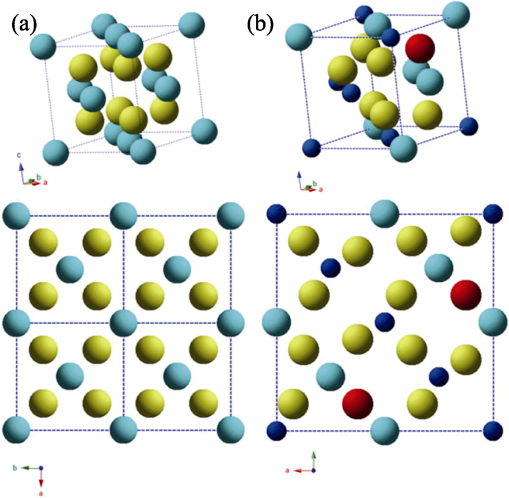
图1 (a)萤石结构和(b)烧绿石结构示意图[20]
Fig. 1 Schematic diagrams of (a) fluorite and (b) pyrochlore structures[20]
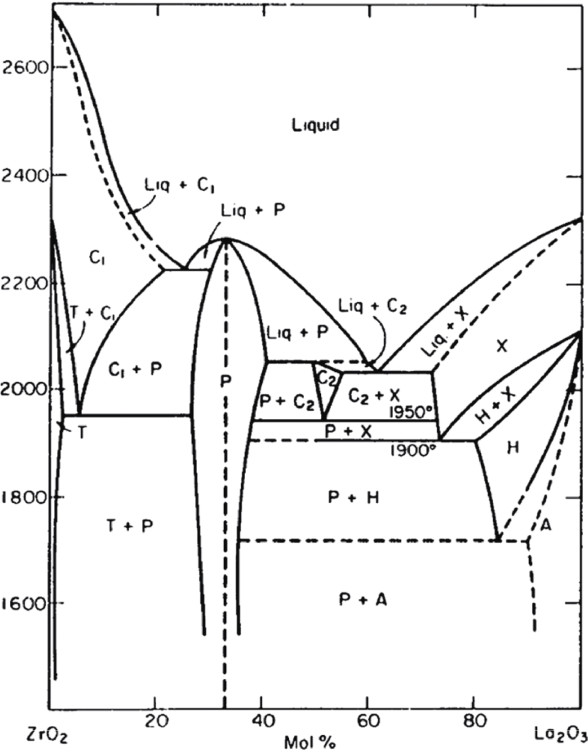
图2 La2O3-ZrO2相图[27]
Fig. 2 Phase diagram of the La2O3-ZrO2 system[27]
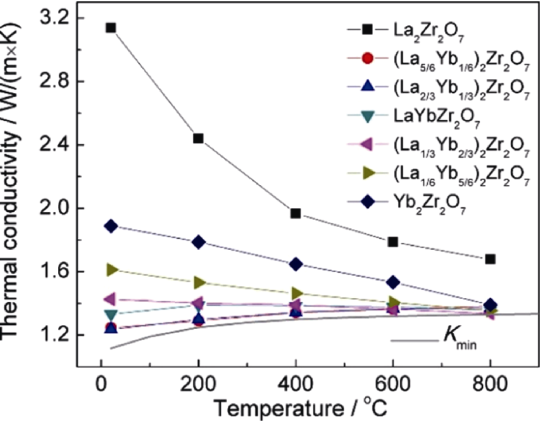
图3 二元稀土改性锆酸镧热导率与温度的关系[31]
Fig. 3 Thermal conductivity of LZO modified by binary rare earths as a function of temperature[31]
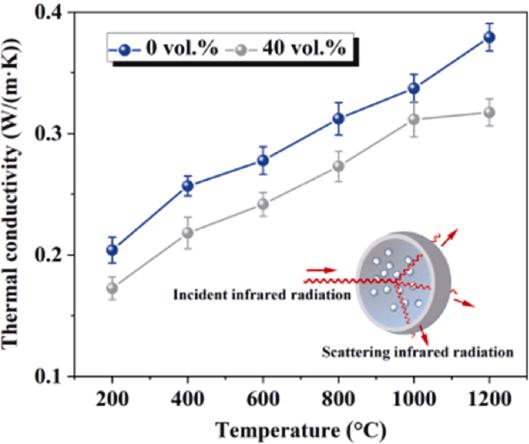
图4 锆酸镧多孔陶瓷200~1200 ℃下的热导率[40]
Fig. 4 Thermal conductivity of porous LZO ceramics at 200-1200 ℃[40]
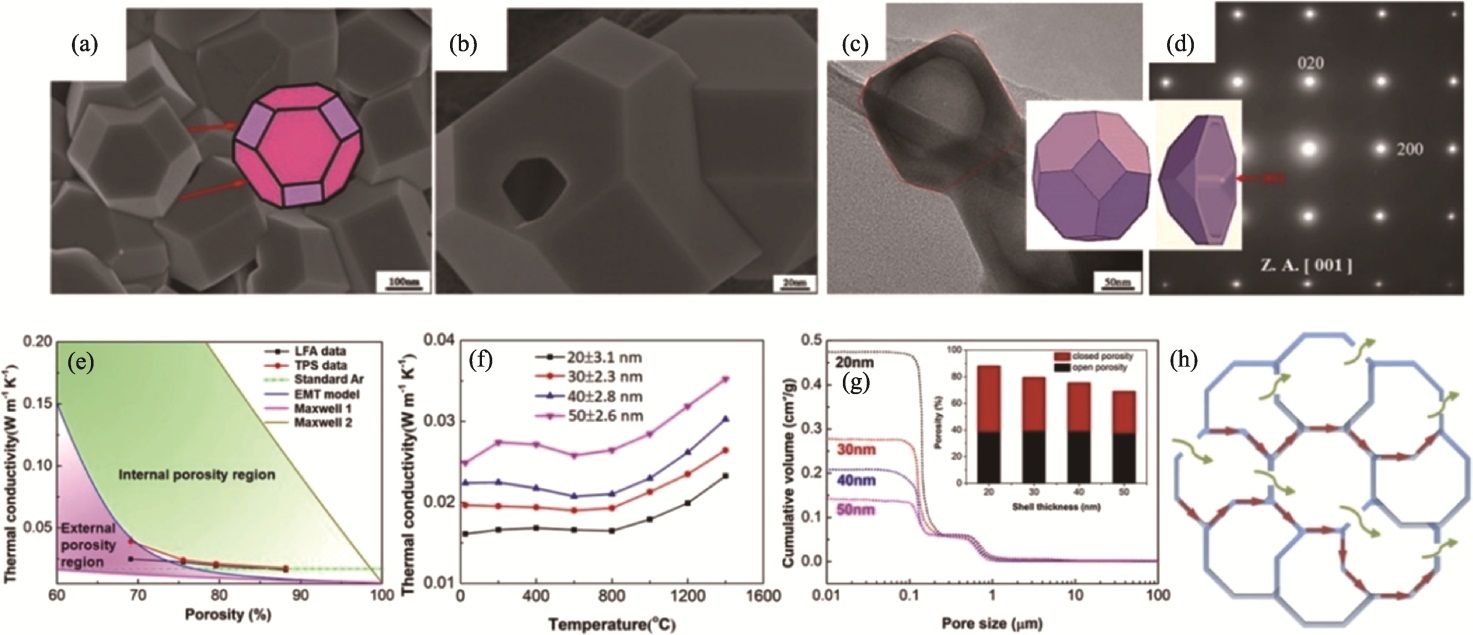
图5 核壳结构锆酸镧多孔材料[41]
Fig. 5 Hollow-grained La2Zr2O7 ceramics[41] (a-c) Microstructures of hollow-grained La2Zr2O7 ceramics and (d) corresponding selected area electron diffraction pattern of the bulk; (e) Thermal performance of hollow-grained La2Zr2O7 ceramics; (f) Thermal conductivity of La2Zr2O7 ceramics at various temperatures; (g) Mercury intrusion results with inset showing stacked column chart; (h) Illustration of heat transfer paths
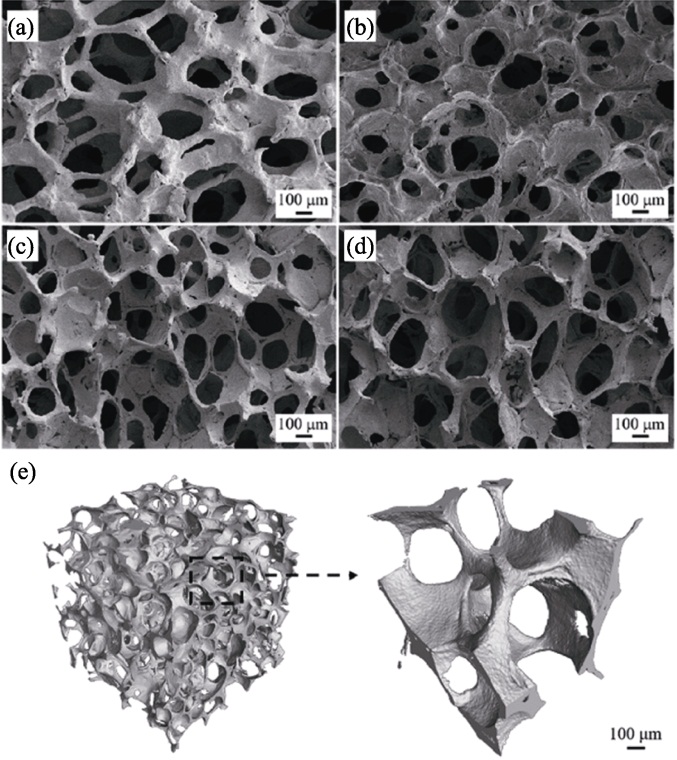
图6 不同浆料涂覆量锆酸镧多孔陶瓷的显微形貌[45]
Fig. 6 Microstructures of LZO porous ceramics with different coating contents[45] (a) 13.7%; (b) 10.5%; (c) 6.4%; (d) 4.6%; (e) Micro-computed tomography of LZO porous ceramics (sample with coating content of 10.5%, in volume)
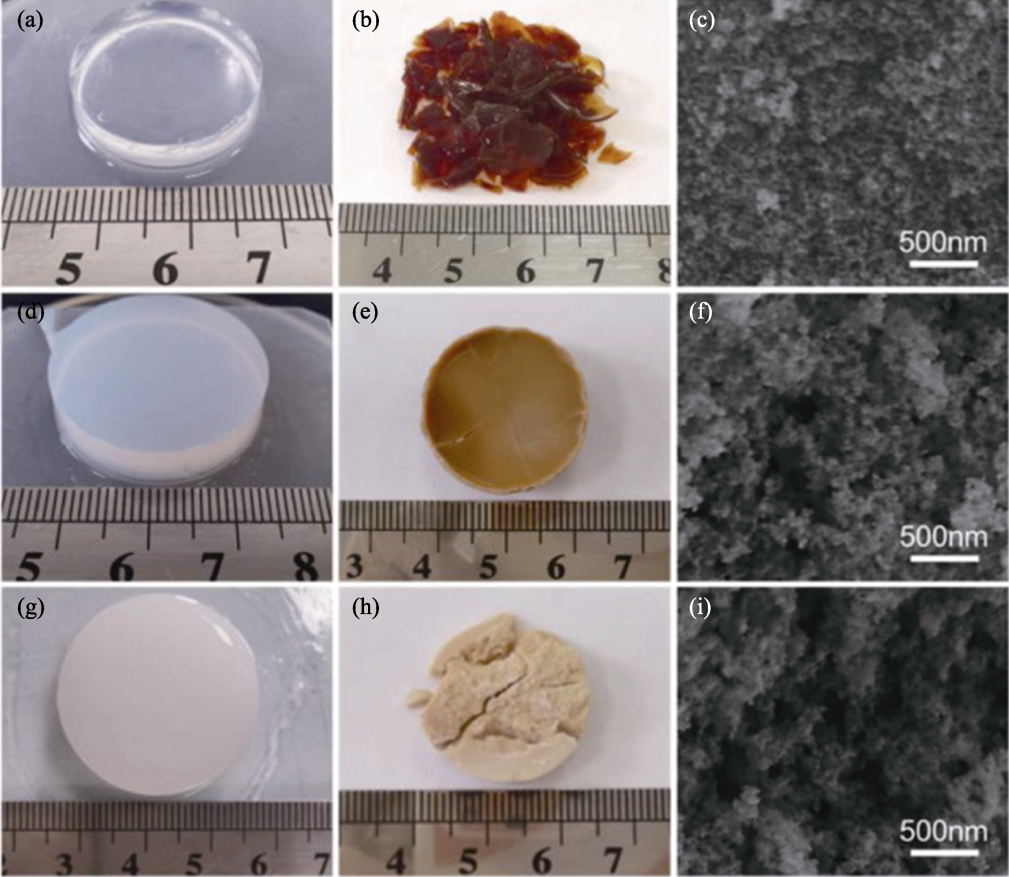
图7 不同乙醇含量合成的湿凝胶和气凝胶的照片和显微图像[51]
Fig. 7 Pictures and microstructures of the wet gel and aerogels synthesized with different ethanol contents[51] (a-c) E20; (d-f) E40; (g-i) E60
| Precursor | Drying process* | Specific surface area/(m2·g-1) | Average pore size/nm | Nanoparticle size/nm | Thermal conductivity/ (W·m-1·K-1) | Density/ (g·cm-3) | Ref. |
|---|---|---|---|---|---|---|---|
| Zr(NO3)4·5H2O La(NO3)3·6H2O | EtOH | 413.2 | 12.3 | 14.5 | - | - | [ |
| Zr(NO3)4·5H2O La(NO3)3·6H2O | Ambient pressure drying | 302.9 | 22.2 | 90.9 | - | - | [ |
| Zr(CH3COO)4 La(NO3)3·6H2O | EtOH | 325.17 | 40-50 | 25-35 | 0.071 (RT) | 1.78 | [ |
| ZrOCl2·8H2O La(NO3)3·6H2O | Ambient pressure drying | - | - | 40-100 | - | - | [ |
| Zr(NO3)4·5H2O La(NO3)3·6H2O | Freeze drying | 594.85 | 36-45 | 20-28 | 0.033 (RT) 0.051 (800 ℃) | - | [ |
| Zr(OPr)4 La(NO3)3·6H2O | CO2 | 100 | 40 | 70 | - | - | [ |
| Zr(NO3)4·5H2O La(NO3)3·6H2O | Ambient pressure drying | 89 | 3.7 | 70 | - | - | [ |
| Zr(NO3)4·5H2O La(NO3)3·6H2O | EtOH | 470.8 | 22.3 | 12.74 | - | - | [ |
表1
Table 1 Basic properties of lanthanum zirconate porous materials for thermal insulation[47,51 -57]
| Precursor | Drying process* | Specific surface area/(m2·g-1) | Average pore size/nm | Nanoparticle size/nm | Thermal conductivity/ (W·m-1·K-1) | Density/ (g·cm-3) | Ref. |
|---|---|---|---|---|---|---|---|
| Zr(NO3)4·5H2O La(NO3)3·6H2O | EtOH | 413.2 | 12.3 | 14.5 | - | - | [ |
| Zr(NO3)4·5H2O La(NO3)3·6H2O | Ambient pressure drying | 302.9 | 22.2 | 90.9 | - | - | [ |
| Zr(CH3COO)4 La(NO3)3·6H2O | EtOH | 325.17 | 40-50 | 25-35 | 0.071 (RT) | 1.78 | [ |
| ZrOCl2·8H2O La(NO3)3·6H2O | Ambient pressure drying | - | - | 40-100 | - | - | [ |
| Zr(NO3)4·5H2O La(NO3)3·6H2O | Freeze drying | 594.85 | 36-45 | 20-28 | 0.033 (RT) 0.051 (800 ℃) | - | [ |
| Zr(OPr)4 La(NO3)3·6H2O | CO2 | 100 | 40 | 70 | - | - | [ |
| Zr(NO3)4·5H2O La(NO3)3·6H2O | Ambient pressure drying | 89 | 3.7 | 70 | - | - | [ |
| Zr(NO3)4·5H2O La(NO3)3·6H2O | EtOH | 470.8 | 22.3 | 12.74 | - | - | [ |
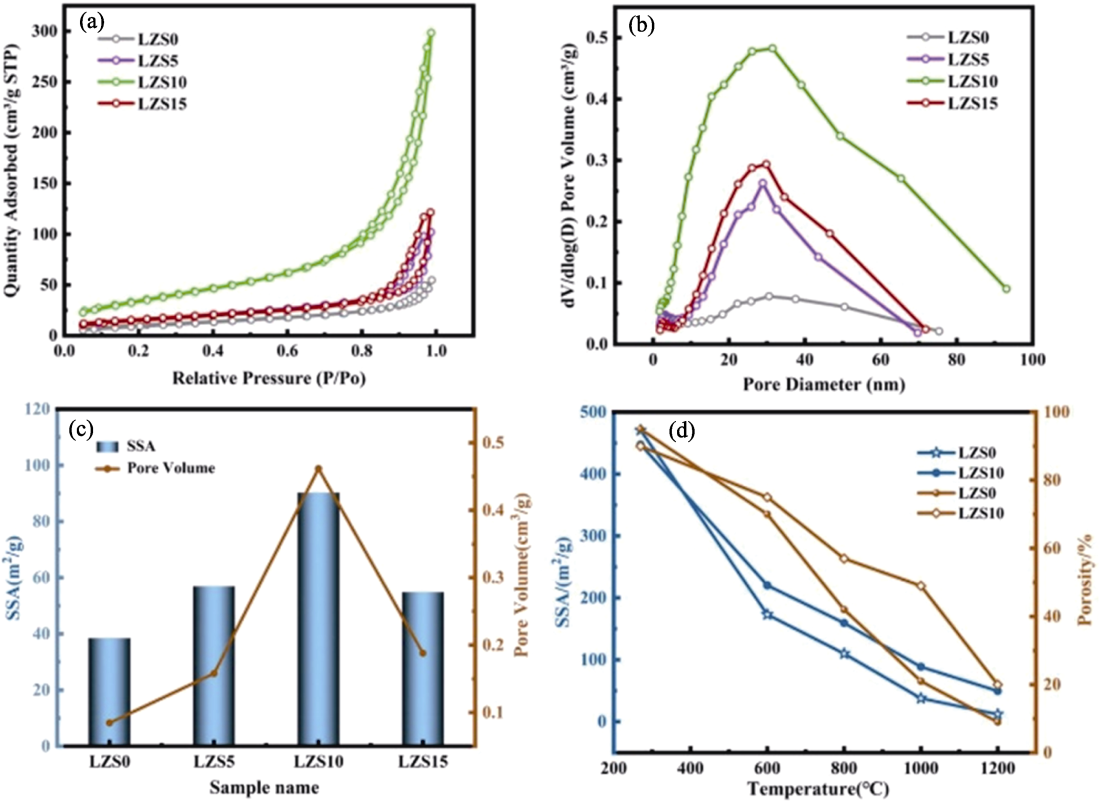
图8 硅元素掺杂锆酸镧气凝胶的比表面积和孔结构[57]
Fig. 8 Specific surface area and pore structure of silicon-doped LZS aerogels[57] (a) N2 adsorption-desorption isotherms; (b) Pore size distribution curves; (c) Specific surface area and pore volume of LZS aerogels at 1000 ℃ heat treatment; (d) Specific surface area and porosity of LZS0 and LZS10 aerogels at different heat temperatures
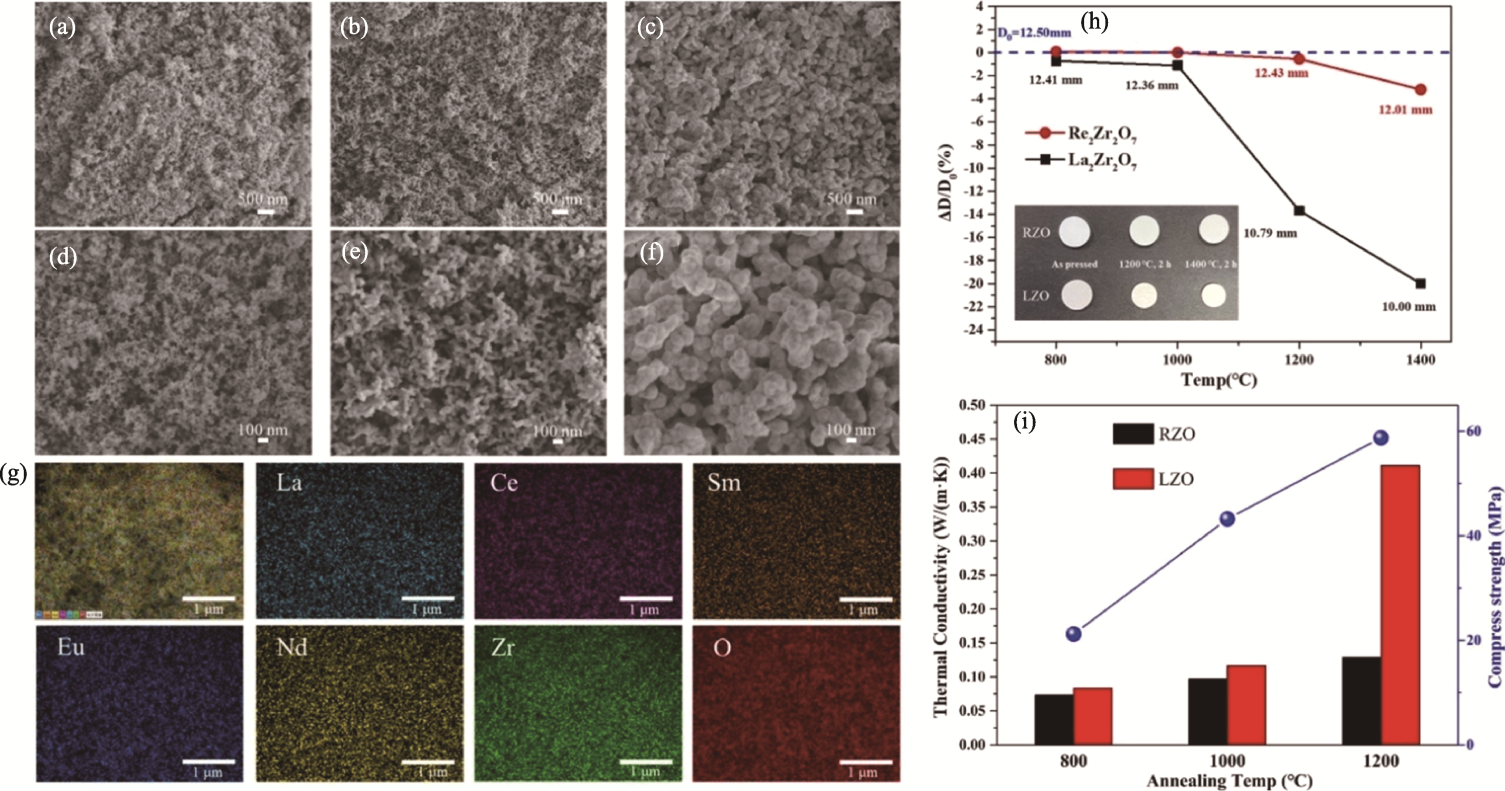
图9 (LaCeSmEuNd)2Zr2O7气凝胶的组成、结构和性能[61]
Fig. 9 Compositions, structures and properties of (LaCeSmEuNd)2Zr2O7 aerogels[61] (a-f) SEM images of (LaCeNdSmEu)2Zr2O7 ceramics calcined at (a, d) 750, (b, e) 950 and (c, f) 1150 ℃; (g) EDS-mappings of the sample calcined at 950 ℃; (h) Diameter shrinkage of cylindrical samples and photographs of LZO and RZO as pressed and annealed at 1200 and 1400 ℃ for 2 h; (i) Thermal conductivities of RZO and LZO at 25 ℃ and compressive strength of RZO
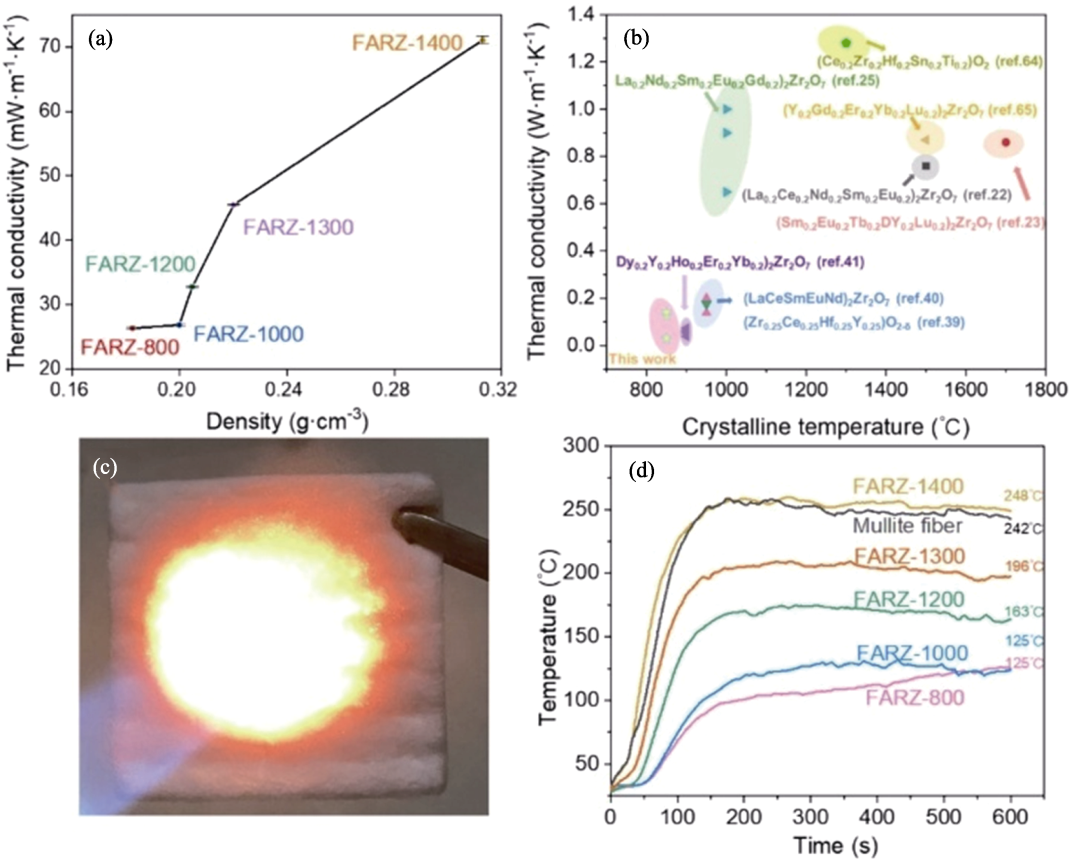
图10 FARZ材料的热导率和隔热性能[63]
Fig. 10 Thermal conductivities and insulating properties of FARZ[63] (a) Thermal conductivities of FARZ as a function of density; (b) Thermal conductivities at room temperature in air and crystalline temperature for high entropy materials; (c) Optical image and (d) time-dependent temperature evolution on the back side of FARZ mullite fiber exposed to a butane blowtorch flame
| [1] |
CHANG X, CHENG X, ZHANG H, et al. Superelastic carbon aerogels: an emerging material for advanced thermal protection in extreme environments. Advanced Functional Materials, 2023, 33(26): 2215168.
DOI URL |
| [2] |
JIN R, ZHOU Z, LIU J, et al. Aerogels for thermal protection and their application in aerospace. Gels, 2023, 9(8): 606.
DOI URL |
| [3] | JING T, XIN Y, ZHANG L, et al. Application of carbon fiber-reinforced ceramic composites in active thermal protection of advanced propulsion systems: a review. Chemical Record, 2023, 23(4): e202300022. |
| [4] |
ZHANG L, YUAN F, WANG W, et al. Progress and challenges in lightweight ceramic matrix composite structures towards integrated thermal protection structure. Journal of Materials Engineering, 2022, 50(10): 15.
DOI |
| [5] |
ZHANG S, LI X, ZUO J, et al. Research progress on active thermal protection for hypersonic vehicles. Progress in Aerospace Sciences, 2020, 119: 100646.
DOI URL |
| [6] | 卢天健, 何德坪, 陈常青, 等. 超轻多孔金属材料的多功能特性及应用. 力学进展, 2006, 36(4): 517. |
| [7] | 朱小龙, 苏雪筠. 多孔陶瓷材料. 中国陶瓷, 2000, 36(4): 36. |
| [8] |
SAM D K, CAO Y. Porous carbon materials for adsorption: a mini-review. Fullerenes Nanotubes and Carbon Nanostructures, 2024, 32(8): 721.
DOI URL |
| [9] |
LU X, ARDUINI-SCHUSTER M C, KUHN J, et al. Thermal conductivity of monolithic organic aerogels. Science, 1992, 255(5047): 971.
PMID |
| [10] |
BRAGIN D M, POPOV A I, EREMIN A V. The thermal conductivity properties of porous materials based on TPMS. International Journal of Heat and Mass Transfer, 2024, 231: 125863.
DOI URL |
| [11] |
LIAN X, TIAN L, LI Z, et al. Thermal conductivity analysis of natural fiber-derived porous thermal insulation materials. International Journal of Heat and Mass Transfer, 2024, 220: 124941.
DOI URL |
| [12] | 曲肖夫, 谢敏, 宋晓炜, 等. Gd掺杂La2(Zr0.7Ce0.3)2O7陶瓷材料抗V2O5+Na2SO4熔盐腐蚀行为. 硅酸盐学报, 2025, 53(3): 620. |
| [13] |
王衍飞, 江堤, 王思青, 等. 锆酸镧涂层高温结构演变及热导性能. 航空材料学报, 2019, 39(4): 26.
DOI |
| [14] |
WU J, WEI X Z, PADTURE N P, et al. Low-thermal-conductivity rare-earth zirconates for potential thermal-barrier-coating applications. Journal of the American Ceramic Society, 2002, 85(12): 3031.
DOI URL |
| [15] |
WANG C, WANG Y. Thermophysical properties of La2(Zr0.7Ce0.3)2O7 prepared by hydrothermal synthesis for nano-sized thermal barrier coatings. Ceramics International, 2015, 41(3): 4601.
DOI URL |
| [16] | 王生学, 李伟, 王松, 等. 凝胶促进剂对分级多孔锆酸镧孔结构的影响. 稀有金属材料与工程, 2016, 45(S1): 462. |
| [17] | WANG H, XU J, WEI M, et al. Low thermal conductivity lanthanum zirconate nanofibrous membranes for thermal insulation. International Journal of Ceramic Engineering & Science, 2023, 5(4): e10181. |
| [18] |
WANG X, CUI X, CHEN Z, et al. Study of the relationship between entropy value and properties of lanthanum zirconate ceramics. Ceramics International, 2024, 50(5): 7383.
DOI URL |
| [19] |
SUBRAMANIAN M A, ARAVAMUDAN G, SUBBA RAO G V. Oxide pyrochlores — a review. Progress in Solid State Chemistry, 1983, 15(2): 55.
DOI URL |
| [20] |
FUENTES A F, O'QUINN E C, MONTEMAYOR S M, et al. Pyrochlore-type lanthanide titanates and zirconates: synthesis, structural peculiarities, and properties. Applied Physics Reviews, 2024, 11(2): 021337.
DOI URL |
| [21] | TEYMOURINIA H. Rare earth zirconate (Re2Zr2O7) ceramic nanomaterials//ZINATLOO-AJABSHIR S. Advanced rare earth-based ceramic nanomaterials. Elsevier, 2022: 77-103. |
| [22] |
WANG C, WANG Y, CHENG Y, et al. Preparation and thermophysical properties of nano-sized Ln2Zr2O7 (Ln=La, Nd, Sm, and Gd) ceramics with pyrochlore structure. Journal of Materials Science, 2012, 47(10): 4392.
DOI URL |
| [23] | 王璟. 锆酸镧热障涂层研究. 长沙: 国防科学技术大学博士学位论文, 2009. |
| [24] | 徐春辉. 锆酸镧基热障涂层的制备及性能研究. 北京: 中国地质大学博士学位论文, 2018. |
| [25] |
UNO M, KOSUGA A, OKUI M, et al. Photoelectrochemical study of lanthanide zirconium oxides, Ln2Zr2O7 (Ln=La, Ce, Nd and Sm). Journal of Alloys and Compounds, 2006, 420(1): 291.
DOI URL |
| [26] |
SIMEONE D, THOROGOOD G J, HUO D, et al. Intricate disorder in defect fluorite/pyrochlore: a concord of chemistry and crystallography. Scientific Reports, 2017, 7: 3727.
DOI PMID |
| [27] |
SHUGUROV S M, KURAPOVA O Y, LOPATIN S I, et al. Thermodynamic properties of the La2O3-ZrO2 system by Knudsen effusion mass spectrometry at high temperature. Rapid Communications in Mass Spectrometry, 2017, 31(23): 2021.
DOI URL |
| [28] |
MOAVENI M J, OMIDVAR H, FARVIZI M, et al. Effect of Y2O3 doping on thermophysical properties and grain growth rate of lanthanum zirconate. Ceramics International, 2024, 50(15): 26410.
DOI URL |
| [29] |
PATIL A R, VAGGE S T. Oxidation and hot corrosion behaviour of functionally graded yttria stabilized zirconia and lanthanum zirconate thermal barrier coatings. Surface and Coatings Technology, 2023, 474: 130059.
DOI URL |
| [30] |
WAN C L, PAN W, XU Q, et al. Effect of point defects on the thermal transport properties of (LaxGd1-x)2Zr2O7: experiment and theoretical model. Physical Review B, 2006, 74(14): 144109.
DOI URL |
| [31] |
REN X, WAN C, ZHAO M, et al. Mechanical and thermal properties of fine-grained quasi-eutectoid (La1-xYbx)2Zr2O7 ceramics. Journal of the European Ceramic Society, 2015, 35(11): 3145.
DOI URL |
| [32] |
XIANG J, CHEN S, HUANG J, et al. Phase structure and thermophysical properties of co-doped La2Zr2O7 ceramics for thermal barrier coatings. Ceramics International, 2012, 38(5): 3607.
DOI URL |
| [33] | 陈彰旭, 郑炳云, 李先学, 等. 模板法制备纳米材料研究进展. 化工进展, 2010, 29(1): 94. |
| [34] |
MARCHESINI S, MCGILVERY C M, BAILEY J, et al. Template-free synthesis of highly porous boron nitride: insights into pore network design and impact on gas sorption. ACS Nano, 2017, 11(10): 10003.
DOI PMID |
| [35] |
PARASHAR M, SHUKLA V K, SINGH R. Metal oxides nanoparticles via Sol-Gel method: a review on synthesis, characterization and applications. Journal of Materials Science: Materials in Electronics, 2020, 31(5): 3729.
DOI |
| [36] |
LIU X, YU C, QU D, et al. Preparation of porous β-SiAlON ceramics using corn starch as pore-forming agent. Journal of the Australian Ceramic Society, 2022, 58(2): 531.
DOI |
| [37] | MIAO J, SONG X, XU J, et al. Ultralight, elastic, thermally insulating, and high-temperature resistant Al2O3-SiO2-B2O3 nanofibrous aerogels prepared via the direct foaming method. ACS Applied Materials & Interfaces, 2025, 17(8): 12402. |
| [38] |
XU X, SHU X, PEI Q, et al. Effects of porosity on the tribological and mechanical properties of oil-impregnated polyimide. Tribology International, 2022, 170: 107502.
DOI URL |
| [39] |
OHJI T, FUKUSHIMA M. Macro-porous ceramics: processing and properties. International Materials Reviews, 2012, 57(2): 115.
DOI URL |
| [40] |
MENG X, XU J, YANG R, et al. Lanthanum zirconate porous ceramics with controllable secondary pores for high-temperature thermal insulation. Ceramics International, 2022, 48(22): 33976.
DOI URL |
| [41] |
LI S, WANG C A, YANG F, et al. Hollow-grained “Voronoi foam” ceramics with high strength and thermal superinsulation up to 1400 ℃. Materials Today, 2021, 46: 35.
DOI URL |
| [42] | GUAN L, HU H, TENG X L, et al. Templating synthesis of porous carbons for energy-related applications: a review. Carbon, 2022, 192: 483. |
| [43] |
LAI M, RILEY D J. Templated electrosynthesis of nanomaterials and porous structures. Journal of Colloid and Interface Science, 2008, 323(2): 203.
DOI PMID |
| [44] |
WANG H, DU G, JIA J, et al. Hierarchically porous zeolites synthesized with carbon materials as templates. Frontiers of Chemical Science and Engineering, 2021, 15(6): 1444.
DOI |
| [45] |
LIN L, XU J, MENG X, et al. High porosity and low thermal conductivity lanthanum zirconate porous ceramics via replica method. Journal of Asian Ceramic Societies, 2024, 12(2): 172.
DOI URL |
| [46] |
MENG X, XU J, ZHU J, et al. Enhancing the thermal insulating properties of lanthanum zirconate porous ceramics via pore structure tailoring. Journal of the European Ceramic Society, 2021, 41(12): 6010.
DOI URL |
| [47] |
WANG S, LI W, WANG S, et al. Synthesis of well-defined hierarchical porous La2Zr2O7 monoliths via non-alkoxide Sol-Gel process accompanied by phase separation. Microporous and Mesoporous Materials, 2016, 221: 32.
DOI URL |
| [48] |
GUO X, ZHANG Q, DING X, et al. Synthesis and application of several Sol-Gel-derived materials via Sol-Gel process combining with other technologies: a review. Journal of Sol-gel Science and Technology, 2016, 79(2): 328.
DOI URL |
| [49] |
MYASOEDOVA T N, KALUSULINGAM R, MIKHAILOVA T S. Sol-gel materials for electrochemical applications: recent advances. Coatings, 2022, 12(11): 1625.
DOI URL |
| [50] |
WARREN S C, PERKINS M R, ADAMS A M, et al. A silica Sol-Gel design strategy for nanostructured metallic materials. Nature Materials, 2012, 11(5): 460.
DOI PMID |
| [51] |
ZHAO G, HUANG L, YU Y, et al. Preparation of mesoporous La2Zr2O7 aerogel via non-alkoxide Sol-Gel process with different solvent systems. Journal of Non-Crystalline Solids, 2023, 604: 122140.
DOI URL |
| [52] |
WANG S X, LI W, WANG S, et al. Synthesis of mesoporous La2Zr2O7 with high surface area by combining epoxide-mediated Sol-Gel process and solvothermal treatment. Microporous and Mesoporous Materials, 2016, 234: 137.
DOI URL |
| [53] |
LIU D, ZHANG C, XUE Y. Synthesis and characterization of Sol-Gel derived lanthanum zirconate ceramic aerogels toward ultralow thermal conductivity. Materials Science and Engineering: B, 2023, 287: 116127.
DOI URL |
| [54] |
LIU D B, ZHOU F F, QU L J, et al. A novel porous La2Zr2O7 ceramic aerogels with ultralow thermal conductivity and photocatalytic property. Journal of the American Ceramic Society, 2022, 105(4): 2772.
DOI URL |
| [55] |
WANG S, LI W, WANG S, et al. Synthesis of nanostructured La2Zr2O7 by a non-alkoxide Sol-Gel method: from gel to crystalline powders. Journal of the European Ceramic Society. 2015, 35(1): 105.
DOI URL |
| [56] |
TORRES-RODRIGUEZ J, GUTIERREZ-CANO V, MENELAOU M, et al. Rare-earth zirconate Ln2Zr2O7 (Ln: La, Nd, Gd, and Dy) powders, xerogels, and aerogels: preparation, structure, and properties. Inorganic Chemistry, 2019, 58(21): 14467.
DOI URL |
| [57] |
WANG Y, YU Y, TU F, et al. Preparation of La2Zr2O7 composite SiO2 aerogels and their fiber-reinforced materials for thermal insulation applications. Journal of Non-Crystalline Solids, 2024, 625: 122772.
DOI URL |
| [58] |
PAKHARUKOVA V P, SHALYGIN A S, GERASIMOV E Y, et al. Structure and morphology evolution of silica-modified pseudoboehmite aerogels during heat treatment. Journal of Solid State Chemistry, 2016, 233: 294.
DOI URL |
| [59] | ZHAO Z, XIANG H, DAI F Z, et al. (La0.2Ce0.2Nd0.2Sm0.2Eu0.2)2Zr2O7: a novel high-entropy ceramic with low thermal conductivity and sluggish grain growth rate. Journal of Materials Science & Technology, 2019, 35(11): 2647. |
| [60] | 周林. A2B2O7型高熵氧化物陶瓷的制备及性能研究. 上海: 东华大学博士学位论文, 2022. |
| [61] |
LIU X, SU C, ZHONG Y, et al. High entropy (LaCeSmEuNd)2Zr2O7 ceramic aerogel with low thermal conductivity and excellent structural heat resistance. Journal of the European Ceramic Society, 2022, 42(13): 5964.
DOI URL |
| [62] |
HAN Y, WU Y, HUANG S, et al. High-temperature thermal stability modification of (La0.2Y0.2Sm0.2Eu0.2Nd0.2)2Zr2O7 ceramic aerogel for enhanced thermal insulation performance. Ceramics International, 2024, 50(12): 22010.
DOI URL |
| [63] |
SHANG S, WANG J, YUAN M, et al. Characterization and thermal properties of (YErYbGdLa)2Zr2O7 high entropy ceramic aerogel. Materials Characterization, 2024, 217: 114392.
DOI URL |
| [64] | WANG D, SONG C, DANG S, et al. High-entropy ceramic aerogel with ultrahigh thermomechanical properties. ACS Applied Materials & Interfaces, 2025, 17(12): 18636. |
| [1] | 陈明俊, 缪洪康, 肖英俊, 邓建波, 张翔, 赵九蓬, 李垚. 光-热双响应材料研究进展: 从设计策略到智能窗应用[J]. 无机材料学报, 2026, 41(6): 723-738. |
| [2] | 宋坤洁, 解荣军. 机器学习驱动新型发光材料的研究进展[J]. 无机材料学报, 2026, 41(6): 689-703. |
| [3] | 胡钰晴, 朱一新, 乐先浩, 万青. 钽酸锂晶圆减薄技术及其热释电红外探测器应用进展[J]. 无机材料学报, 2026, 41(6): 764-774. |
| [4] | 刘春帆, 陈科, 葛芳芳, 黄庆. 核用耐铅铋腐蚀涂层的研究进展[J]. 无机材料学报, 2026, 41(6): 775-786. |
| [5] | 胡扬, 谢敏, 张筱怡, 李想, 郭新伟, 姜南, 周文瀚, 张胜利, 曾海波. 计算与数据驱动环保型发光材料的研究进展[J]. 无机材料学报, 2026, 41(6): 704-722. |
| [6] | 王俊卜, 黄泽皑, 杨茗凯, 蒙颖, 周明炜, 周莹. 甲烷转化用抗积碳催化材料研究进展[J]. 无机材料学报, 2026, 41(6): 739-750. |
| [7] | 王金文, 杨振, 周欢, 夏丹, 杨磊. 可注射无机材料及其生物医学应用[J]. 无机材料学报, 2026, 41(6): 751-763. |
| [8] | 李涵涛, 沈强, 罗国强, 王雪飞, 高明, 陈晨. 机械球磨法调控硅基负极材料结构与性能的研究进展[J]. 无机材料学报, 2026, 41(5): 561-572. |
| [9] | 解陈一, 缪花明, 张蔚然, 刘荣军, 王衍飞, 李端. 理论计算在高熵陶瓷领域的研究进展[J]. 无机材料学报, 2026, 41(5): 545-560. |
| [10] | 李璇, 叶奎材, 冯佳音, 邱家军, 钱文昊, 邢敏. 钛基牙种植体表面改性促进软组织封闭的研究进展[J]. 无机材料学报, 2026, 41(4): 432-444. |
| [11] | 徐浩, 顾海涛, 吴鸿辉, 岳晓飞, 林思琪, 金敏. Bi掺杂InSe晶体生长及性能研究[J]. 无机材料学报, 2026, 41(4): 493-499. |
| [12] | 彭德招, 李瑞, 王文鸿, 王梓瑞, 章志珍. 钠氯化物固态电解质研究进展[J]. 无机材料学报, 2026, 41(4): 409-420. |
| [13] | 韦连金, 齐志杰, 汪信, 朱俊武, 付永胜. 纳米金刚石改性及其在电催化氧还原反应中的应用[J]. 无机材料学报, 2026, 41(3): 273-288. |
| [14] | 刘占一, 李勉, 欧阳晓平, 柴之芳, 黄庆. 干法后处理熔盐中Sr/Cs去除方法的研究进展[J]. 无机材料学报, 2026, 41(2): 150-158. |
| [15] | 孙炼, 张磊磊, 薛泽旭, 吴坤, 陈晔, 李志远, 王鲁凯, 王尊刚. 面向辐射探测应用的零维金属卤化物闪烁体研究进展[J]. 无机材料学报, 2026, 41(2): 159-176. |
| 阅读次数 | ||||||
|
全文 |
|
|||||
|
摘要 |
|
|||||