无机材料学报 ›› 2026, Vol. 41 ›› Issue (6): 775-786.DOI: 10.15541/jim20250372 CSTR: 32189.14.10.15541/jim20250372
所属专题: 【结构材料】核用陶瓷(202606)
刘春帆1,3( ), 陈科1,2, 葛芳芳1,2(), 黄庆1,2
收稿日期:2025-09-24
修回日期:2025-12-04
出版日期:2026-06-20
网络出版日期:2026-01-21
通讯作者:
葛芳芳, 研究员. E-mail: gefangfang@nimte.ac.cn作者简介:刘春帆(2001-), 男, 硕士研究生. E-mail: liuchunfan@nimte.ac.cn
基金资助:
LIU Chunfan1,3(), CHEN Ke1,2, GE Fangfang1,2(), HUANG Qing1,2
Received:2025-09-24
Revised:2025-12-04
Published:2026-06-20
Online:2026-01-21
Contact:
GE Fangfang, professor. E-mail: gefangfang@nimte.ac.cnAbout author:LIU Chunfan (2001-), male, Master candidate. E-mail: liuchunfan@nimte.ac.cn
Supported by:摘要:
铅铋共晶(LBE)凭借其高沸点、高导热性及优良安全性能, 已成为加速器驱动先进核能系统(ADANES)和铅冷快堆(LFR)的核心冷却剂, 但其在高温环境下引发的氧化腐蚀、溶解腐蚀及冲刷腐蚀耦合问题, 严重威胁结构材料的服役寿命, 制约了先进核能技术的工程化应用。表面涂层技术可在保留基体固有性能的基础上提升耐蚀性, 是缓解LBE腐蚀的关键技术途径之一。本文系统综述了核用耐LBE腐蚀涂层的研究进展, 首先从腐蚀机理入手, 阐明了溶解氧、温度、流速与辐照等多因素协同作用对材料腐蚀的影响规律; 进而按金属、陶瓷及复合三大体系, 分析了FeCrAl(Y)、高熵合金、Al2O3、MAX相及梯度复合涂层的耐蚀机制、性能优势与失效行为。研究表明: FeCrAl(Y)涂层通过“基体-氧化膜”协同作用形成连续Al2O3隔离层, 其耐蚀性和力学性能与Cr、Al含量相关; 高熵合金涂层利用晶格畸变与多组元协同氧化抑制腐蚀介质的内扩散, 但面临高温相分解与辐照脆化等问题; Al2O3等陶瓷涂层热力学稳定, 可为基底提供有效防护, 但在高温环境中容易因非晶化、界面匹配及自修复缺失等失效。复合结构涂层通过“金属过渡层+陶瓷功能层”梯度设计, 有望实现高结合、高韧性、高阻隔等功能一体化。未来研究需聚焦环境-成分-工艺的耦合调控、多因素服役评价与寿命预测模型, 为先进核能系统提供长时可靠防护解决方案。
中图分类号:
刘春帆, 陈科, 葛芳芳, 黄庆. 核用耐铅铋腐蚀涂层的研究进展[J]. 无机材料学报, 2026, 41(6): 775-786.
LIU Chunfan, CHEN Ke, GE Fangfang, HUANG Qing. Research Progress on Lead-bismuth Eutectic Corrosion Resistant Coatings[J]. Journal of Inorganic Materials, 2026, 41(6): 775-786.
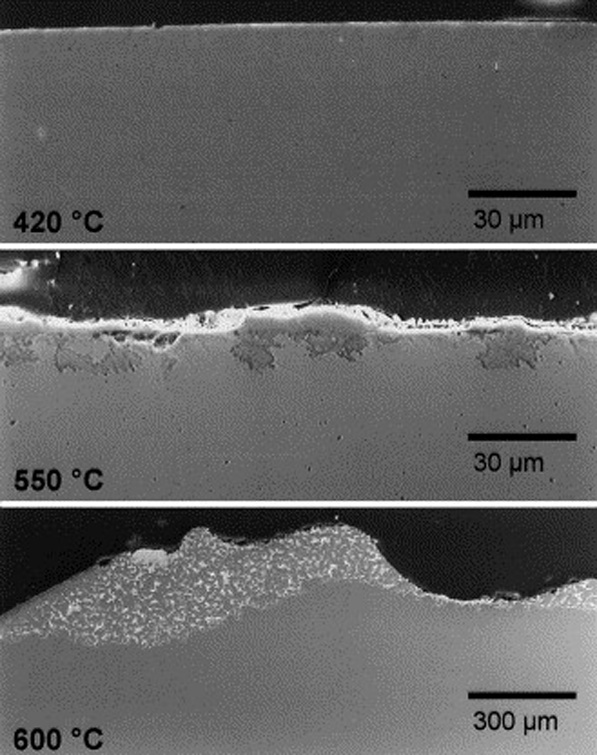
图1 AISI 316L钢经动态LBE腐蚀后(420/550/600 ℃, 2000 h, 2 m/s)的截面腐蚀形貌[8]
Fig. 1 Cross-sectional morphologies of AISI 316L after dynamic LBE corrosion (420/550/600 ℃, 2000 h, 2 m/s)[8]
| Coating | Base material | Deposition method | Thickness/ μm | LBE corrosion test | Ref. | ||
|---|---|---|---|---|---|---|---|
| O2 concentration (mass fraction) | Temperature/℃ | Duration/h | |||||
| FeCrAl | T91 | GESA | 30 | 10-6% | 480−600 | 2000 | [ |
| T91 | GESA | 30 | Saturated | 400 | 900 | [ | |
| T91 | LPPS/GESA | 30 | 10-6%/10-8% | 400−550 | 900 | [ | |
| F/M steel | MS | 1.7−7.1 | 6.6×10⁻³% | 500−650 | 1000 | [ | |
| FeCrAlSi | F/M steel | MS | 2.6−3.9 | 8.1×10⁻⁴%/1.8×10−3%/ 4.0×10⁻³% | 500/550/600 | 1000 | [ |
| FeCrAlWx | F/M steel | SLM | 5.1 | 1.37×10⁻⁴% | 550 | 500/1000/2000 | [ |
| FeCrAlY | F/M steel | MS | 6 | 1.7×10⁻³% | 550 | 40 | [ |
| FeCrMoWCBY | F/M steel | Arc melting | 40 | 2.1×10⁻³% | 500 | 1000 | [ |
| AlCrFeMoTi | F/M steel | MS | 3.6 | Saturated | 450-650 | 1000 | [ |
| F/M steel | MS | 4.1 | 6.04×10⁻³% | 650 | 1000 | [ | |
| AlCrFeMoTiSix | F/M steel | MS | 10 | 6.04×10⁻³% | 650 | 1000 | [ |
| FeCrAlTiNb | F/M steel | MS | 3 | 1.8×10⁻³%/6.8×10−3% | 550/650 | 500−1500 | [ |
| F/M steel | MS | 5−15 | 8×10⁻⁴% | 500 | 500 | [ | |
| F/M steel | MS | 4.5 | 10−4%/10−7% | 500 | 1000 | [ | |
| TiNbZrMoV | F/M steel | MS | 3.9 | 6.8×10⁻³% | 650 | 100−1000 | [ |
| FeAl | 316L | Slurry aluminizing | 48.8 | 10-7%/1.8×10−3% | 550 | 1500 | [ |
表1
Table 1 Lead-bismuth corrosion resistance of various alloy coatings[9,18 -32]
| Coating | Base material | Deposition method | Thickness/ μm | LBE corrosion test | Ref. | ||
|---|---|---|---|---|---|---|---|
| O2 concentration (mass fraction) | Temperature/℃ | Duration/h | |||||
| FeCrAl | T91 | GESA | 30 | 10-6% | 480−600 | 2000 | [ |
| T91 | GESA | 30 | Saturated | 400 | 900 | [ | |
| T91 | LPPS/GESA | 30 | 10-6%/10-8% | 400−550 | 900 | [ | |
| F/M steel | MS | 1.7−7.1 | 6.6×10⁻³% | 500−650 | 1000 | [ | |
| FeCrAlSi | F/M steel | MS | 2.6−3.9 | 8.1×10⁻⁴%/1.8×10−3%/ 4.0×10⁻³% | 500/550/600 | 1000 | [ |
| FeCrAlWx | F/M steel | SLM | 5.1 | 1.37×10⁻⁴% | 550 | 500/1000/2000 | [ |
| FeCrAlY | F/M steel | MS | 6 | 1.7×10⁻³% | 550 | 40 | [ |
| FeCrMoWCBY | F/M steel | Arc melting | 40 | 2.1×10⁻³% | 500 | 1000 | [ |
| AlCrFeMoTi | F/M steel | MS | 3.6 | Saturated | 450-650 | 1000 | [ |
| F/M steel | MS | 4.1 | 6.04×10⁻³% | 650 | 1000 | [ | |
| AlCrFeMoTiSix | F/M steel | MS | 10 | 6.04×10⁻³% | 650 | 1000 | [ |
| FeCrAlTiNb | F/M steel | MS | 3 | 1.8×10⁻³%/6.8×10−3% | 550/650 | 500−1500 | [ |
| F/M steel | MS | 5−15 | 8×10⁻⁴% | 500 | 500 | [ | |
| F/M steel | MS | 4.5 | 10−4%/10−7% | 500 | 1000 | [ | |
| TiNbZrMoV | F/M steel | MS | 3.9 | 6.8×10⁻³% | 650 | 100−1000 | [ |
| FeAl | 316L | Slurry aluminizing | 48.8 | 10-7%/1.8×10−3% | 550 | 1500 | [ |
| Coating | Base material | Deposition method | Thickness/ μm | LBE corrosion test | Ref. | ||
|---|---|---|---|---|---|---|---|
| O2 concentration (mass fraction) | Temperature/℃ | Duration/h | |||||
| Al2O3 | 316L | PLD | 1 | 10-8% | 550 | 1000/4000 | [ |
| CrNiFe600 | Sol-Gel | 10 | 7.88×10⁻⁴% | 500 | 200 | [ | |
| Inconel 600 | Sol-Gel | 10 | No mention | 650 | 100 | [ | |
| T91 | MS | 1.5 | 10-6% | 550 | 1200 | [ | |
| F/M steel | MS | 3.3 | 1.79×10⁻³% | 550 | 1000 | [ | |
| 9Cr1Mo steel | PLD | 2-8 | No mention | 550 | 500 | [ | |
| ZrO2 | F/M steel | MS | 0.5 | 3.25×10⁻⁴% | 450−650 | 1000 | [ |
| AlTiN | 316L | CAIP | 4.35 | 1.61×10⁻³% (550 ℃)/3.21×10-3% (600 ℃) | 550/600 | 500 | [ |
| TiAlN | T91 | HIPIMS | 2.2 | 10-6% | 550 | 1200 | [ |
| WNiFe alloy | CAIP | 3.7 | Saturated oxygen | 450 | 3000 | [ | |
| TiSiN | 316L | CAIP | 2-2.5 | 2.15×10⁻²% | 550 | 500 | [ |
| TiC | SIMP steel | CAIP | 5.1 | 2.0×10⁻³% | 600 | 2000 | [ |
| Ti3AlC2 | Al2O3 | MS | 3 | 1×10⁻⁶% | 600 | 3200 | [ |
| Ti2AlC | |||||||
| V2AlC | |||||||
| Cr2AlC | |||||||
| (CrAlTiNbV)Nx | F/M steel | MS | 0.8/0.9 | 7.0×10⁻³% | 550 | 1200 | [ |
表2
Table 2 Lead-bismuth corrosion resistance of various ceramic coatings[33-45]
| Coating | Base material | Deposition method | Thickness/ μm | LBE corrosion test | Ref. | ||
|---|---|---|---|---|---|---|---|
| O2 concentration (mass fraction) | Temperature/℃ | Duration/h | |||||
| Al2O3 | 316L | PLD | 1 | 10-8% | 550 | 1000/4000 | [ |
| CrNiFe600 | Sol-Gel | 10 | 7.88×10⁻⁴% | 500 | 200 | [ | |
| Inconel 600 | Sol-Gel | 10 | No mention | 650 | 100 | [ | |
| T91 | MS | 1.5 | 10-6% | 550 | 1200 | [ | |
| F/M steel | MS | 3.3 | 1.79×10⁻³% | 550 | 1000 | [ | |
| 9Cr1Mo steel | PLD | 2-8 | No mention | 550 | 500 | [ | |
| ZrO2 | F/M steel | MS | 0.5 | 3.25×10⁻⁴% | 450−650 | 1000 | [ |
| AlTiN | 316L | CAIP | 4.35 | 1.61×10⁻³% (550 ℃)/3.21×10-3% (600 ℃) | 550/600 | 500 | [ |
| TiAlN | T91 | HIPIMS | 2.2 | 10-6% | 550 | 1200 | [ |
| WNiFe alloy | CAIP | 3.7 | Saturated oxygen | 450 | 3000 | [ | |
| TiSiN | 316L | CAIP | 2-2.5 | 2.15×10⁻²% | 550 | 500 | [ |
| TiC | SIMP steel | CAIP | 5.1 | 2.0×10⁻³% | 600 | 2000 | [ |
| Ti3AlC2 | Al2O3 | MS | 3 | 1×10⁻⁶% | 600 | 3200 | [ |
| Ti2AlC | |||||||
| V2AlC | |||||||
| Cr2AlC | |||||||
| (CrAlTiNbV)Nx | F/M steel | MS | 0.8/0.9 | 7.0×10⁻³% | 550 | 1200 | [ |
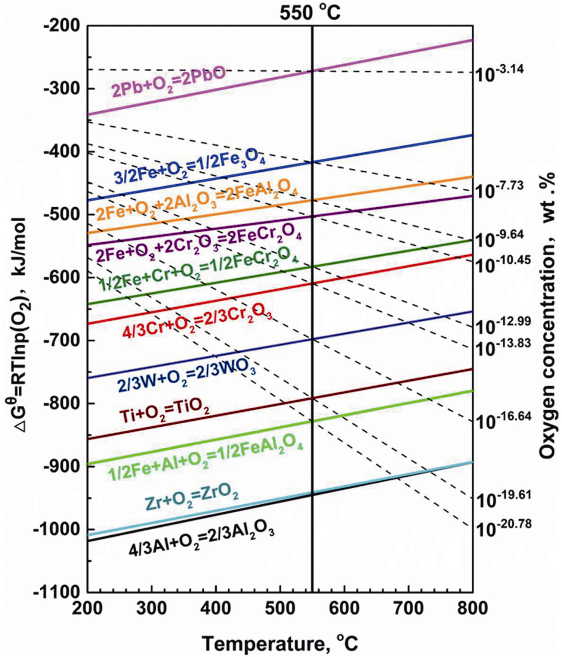
图2 550 ℃下暴露于液态LBE中的氧化物弥散强化型铁铬铝(ODS-FeCrAl)合金的金属氧化物吉布斯自由能-温度变化图[46]
Fig. 2 Gibbs free energy change-temperature diagram of metal oxides for ODS-FeCrAl exposed to liquid LBE at 550 ℃[46]
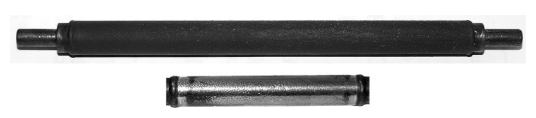
图3 试管在550 ℃下经1~1.2 m/s流速LBE腐蚀2000 h对比(上: 未涂覆涂层; 下: 涂覆涂层)[47]
Fig. 3 Original (above) and surface coated (below) test tubes after 2000 h LBE corrosion at 550 ℃ with a flow rate of 1-1.2 m/s[47]
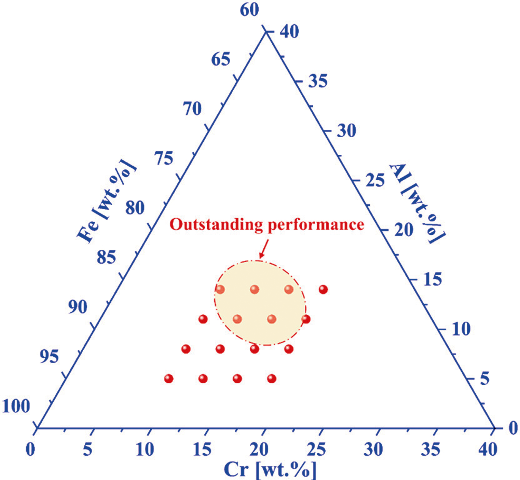
图4 FeCrAl涂层成分的三元相图[19]
Fig. 4 Ternary phase diagram with the composition of FeCrAl coatings[19]
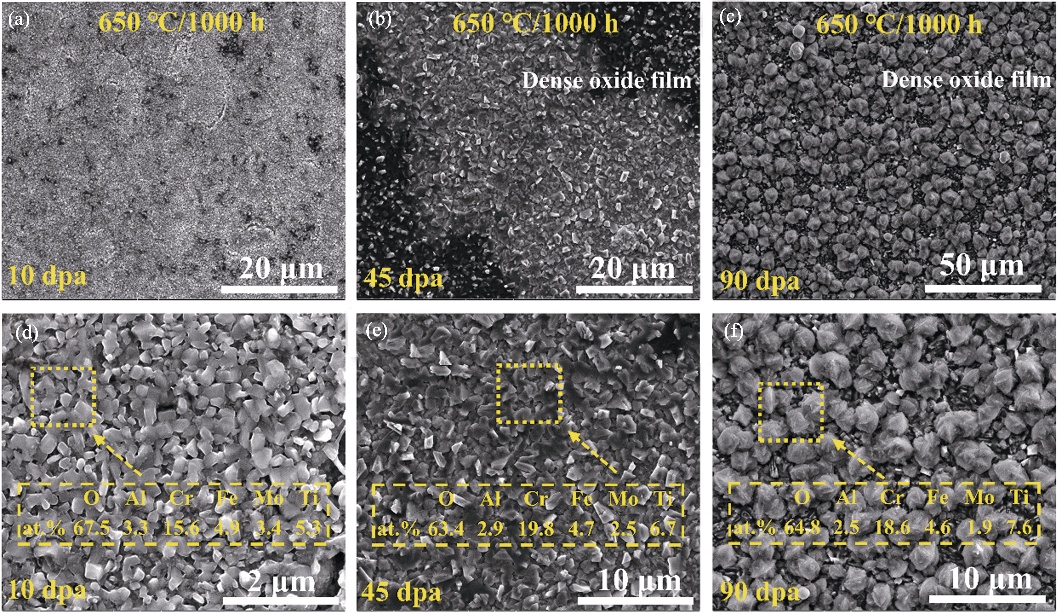
图5 经650 ℃ LBE腐蚀试验1000 h后, 不同辐照损伤剂量的AlCrFeMoTi高合金化钢涂层表面的扫描电子显微镜(SEM)形貌[26]
Fig. 5 Surface scanning electron microscope (SEM) images of the irradiated AlCrFeMoTi HEA coatings with different irradiation damage doses after static LBE corrosion tests at 650 ℃ for 1000 h[26] (a, d) 10 dpa; (b, e) 45 dpa; (c, f) 90 dpa
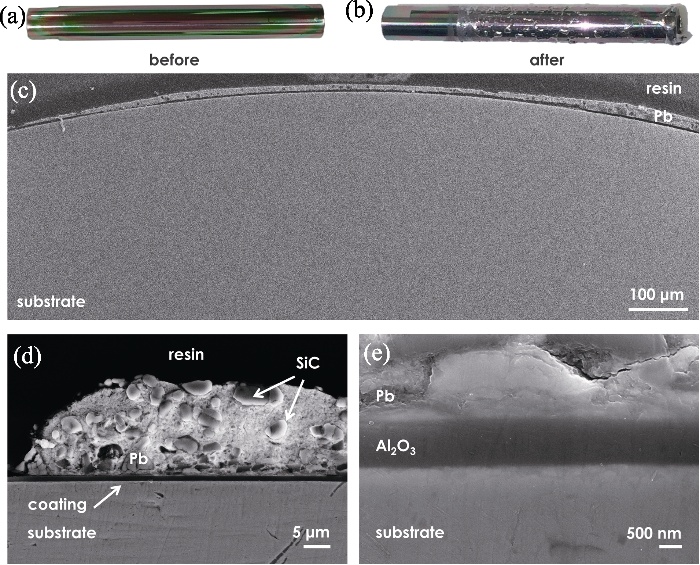
图6 (a, b)涂覆涂层的1515Ti圆柱体在腐蚀试验(550 ℃, 4000 h, 溶解氧质量分数10−8%)前(a)、后(b)的状态; (c)宏观和(d, e)微观尺度的基体形貌[33]
Fig. 6 (a, b) Coated 1515Ti cylinders before (a) and after (b) the corrosion tests (stagnant lead, 550 ℃, 4000 h, 10−8% (in mass) O); (c) Macroscopic and (d, e) microscopic scale of the matrix morphology[33]
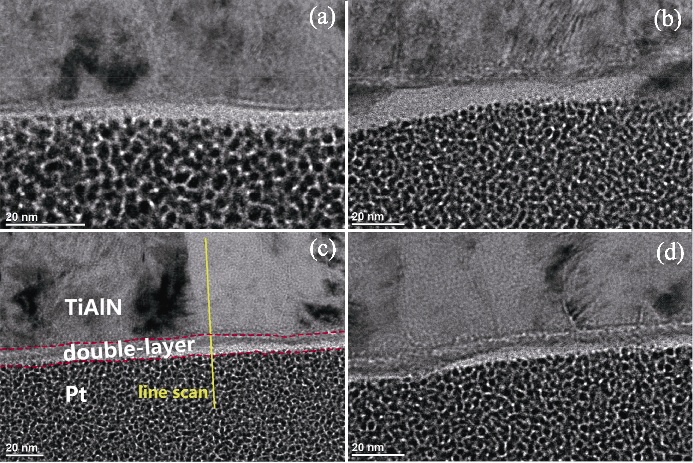
图7 TiAlN横截面透射电子显微镜(TEM)形貌[41]
Fig. 7 Transmission electron microscope (TEM) images of TiAlN coating[41] (a) Original sample; (b-d) After corrosion for 3000 h of (b) samples unirradiated, (c) pre-irradiated with 4×10¹⁵ ions/cm2, and (d) irradiated with 2×10¹⁶ ions/cm2
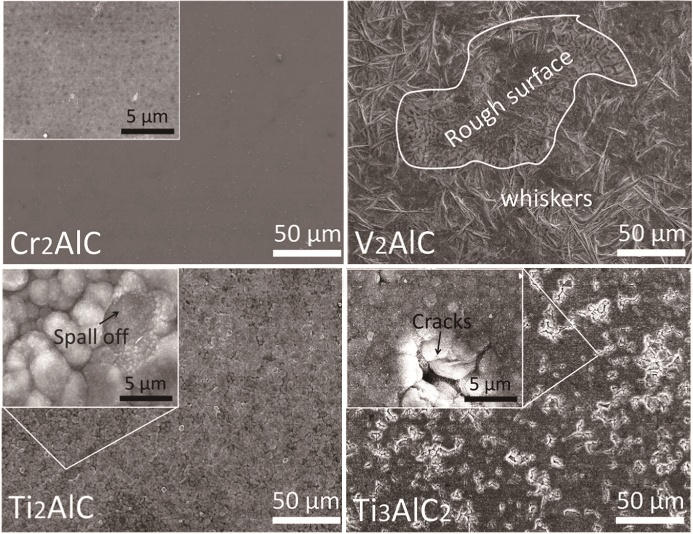
图8 腐蚀试验后MAX相涂层(Cr2AlC、V2AlC、Ti2AlC和Ti3AlC2)的SEM照片[44]
Fig. 8 SEM images of MAX-phase coatings (Cr2AlC, V2AlC, Ti2AlC, and Ti3AlC2) after the corrosion test[44]
| [1] | YANG L, ZHAN W. A closed nuclear energy system by accelerator-driven ceramic reactor and extend AIROX reprocessing. Science China Technological Sciences, 2017, 60(11): 1702. |
| [2] | LORUSSO P, BASSINI S, DEL NEVO A, et al. GEN-IV LFR development: status & perspectives. Progress in Nuclear Energy, 2018, 105: 318. |
| [3] | FIORI F, ZHOU Z. A study on the Chinese nuclear energy options and the role of ADS reactor in the Chinese nuclear expansion. Progress in Nuclear Energy, 2016, 91: 159. |
| [4] | ZHANG J. A review of steel corrosion by liquid lead and lead-bismuth. Corrosion Science, 2009, 51(6): 1207. |
| [5] | ZHANG J, LI N. Review of the studies on fundamental issues in LBE corrosion. Journal of Nuclear Materials, 2008, 373(1): 351. |
| [6] | AUGER T, LORANG G, GUÉRIN S, et al. Effect of contact conditions on embrittlement of T 91 steel by lead-bismuth. Journal of Nuclear Materials, 2004, 335(2): 227. |
| [7] | GONG X, SHORT M P, AUGER T, et al. Environmental degradation of structural materials in liquid lead- and lead-bismuth eutectic-cooled reactors. Progress in Materials Science, 2022, 126: 100920. |
| [8] | MÜLLER G, HEINZEL A, KONYS J, et al. Results of steel corrosion tests in flowing liquid Pb/Bi at 420-600 ℃ after 2000 h. Journal of Nuclear Materials, 2002, 301(1): 40. |
| [9] | FETZER R, WEISENBURGER A, JIANU A, et al. Oxide scale formation of modified FeCrAl coatings exposed to liquid lead. Corrosion Science, 2012, 55: 213. |
| [10] | CHEN Q, BAI F, WANG P, et al. Microstructure response and lead-bismuth eutectic corrosion behavior of 11Cr1Si ferritic/ martensitic steel after Au-ion irradiation. Corrosion Science, 2022, 198: 110101. |
| [11] | FRAZER D, QVIST S, PARKER S, et al. Degradation of HT9 under simultaneous ion beam irradiation and liquid metal corrosion. Journal of Nuclear Materials, 2016, 479: 382. |
| [12] | YAO C, ZHANG H, CHANG H, et al. Structure of surface oxides on martensitic steel under simultaneous ion irradiation and molten LBE corrosion. Corrosion Science, 2022, 195: 109953. |
| [13] | SHI H, WANG H, FETZER R, et al. Influence of Si addition on the corrosion behavior of 9 wt.% Cr ferritic/martensitic steels exposed to oxygen-controlled molten Pb-Bi eutectic at 550 and 600 ℃. Corrosion Science, 2021, 193: 109871. |
| [14] | ZHANG H, LIU X, XU Y, et al. Comparison investigation on corrosion of SIMP and T 91 steels exposed to liquid LBE at 450 ℃: the role of Si on reducing oxidation rate. Corrosion Science, 2023, 225: 111553. |
| [15] | ZHUANG Y, ZHANG X, ZENG X, et al. The influence of Y addition on oxide layers of 15-15Ti-Y steel exposed to static Pb-Bi alloys with containing oxygen. Journal of Nuclear Materials, 2024, 588: 154806. |
| [16] | LUO W, HUANG Q, LUO L, et al. Effect of minor addition of Ce on microstructure and LBE corrosion resistance for CLAM steel. Corrosion Science, 2022, 209: 110796. |
| [17] | VAN DEN BOSCH J, HOSEMANN P, ALMAZOUZI A, et al. Liquid metal embrittlement of silicon enriched steel for nuclear applications. Journal of Nuclear Materials, 2010, 398(1): 116. |
| [18] | DAI Y, BOUTELLIER V, GAVILLET D, et al. FeCrAlY and TiN coatings on T91 steel after irradiation with 72 MeV protons in flowing LBE. Journal of Nuclear Materials, 2012, 431(1): 66. |
| [19] | ZHANG W, ZHONG Y, QIU X, et al. Screening of the FeCrAl LBE corrosion-resistant coatings: the effect of Cr and Al contents. Surface and Coatings Technology, 2023, 462: 129477. |
| [20] | PALM M. Concepts derived from phase diagram studies for the strengthening of Fe-Al-based alloys. Intermetallics, 2005, 13(12): 1286. |
| [21] | ZHANG W, ZHOU M, DENG J, et al. Improved LBE corrosion resistance of the FeCrAl coating by the addition of trace Si element. Intermetallics, 2024, 166: 108197. |
| [22] | ZHANG P, YAO Z, WANG X, et al. A novel FeCrAlWx high entropy alloy coating for enhancing lead-bismuth eutectic corrosion resistance. Journal of Nuclear Materials, 2024, 589: 154844. |
| [23] | ZHANG W, DENG J, ZHOU M, et al. Synergistic effect of simultaneous proton irradiation and LBE corrosion on the microstructure of the FeCrAl(Y) coatings. Corrosion Science, 2024, 229: 111874. |
| [24] | WEI X S, JIN J L, JIANG Z Z, et al. FeCrMoWCBY metallic glass with high corrosion resistance in molten lead-bismuth eutectic alloy. Corrosion Science, 2021, 190: 109688. |
| [25] | YANG J, SHI K, ZHANG W, et al. A novel AlCrFeMoTi high-entropy alloy coating with a high corrosion-resistance in lead-bismuth eutectic alloy. Corrosion Science, 2021, 187: 109524. |
| [26] | YANG J, ZHANG F, CHEN Q, et al. Effect of Au-ions irradiation on mechanical and LBE corrosion properties of amorphous AlCrFeMoTi HEA coating: enhanced or deteriorated? Corrosion Science, 2021, 192: 109862. |
| [27] | YANG J, ZHOU M, LV L, et al. Influence of Si addition on the microstructure, mechanical and lead-bismuth eutectic corrosion properties of an amorphous AlCrFeMoTiSix high-entropy alloy coating. Intermetallics, 2022, 148: 107649. |
| [28] | SHORT M P, BALLINGER R G. A functionally graded composite for service in high-temperature lead- and lead-bismuth-cooled nuclear reactors—I: design. Nuclear Technology, 2012, 177(3): 366. |
| [29] | YANG J, LIANG J, WANG G, et al. Microstructure, mechanical properties and lead-bismuth eutectic corrosion behavior of FeCrAlTiNb high-entropy alloy coatings. Corrosion Science, 2023, 222: 111407. |
| [30] | YANG J, ZHAO K, WANG G, et al. Influence of coating thickness on microstructure, mechanical and LBE corrosion performance of amorphous AlCrFeTiNb high-entropy alloy coatings. Surface and Coatings Technology, 2022, 441: 128502. |
| [31] | DENG J, YANG J, LV L, et al. Corrosion behavior of refractory TiNbZrMoV high-entropy alloy coating in static lead-bismuth eutectic alloy: a novel design strategy of LBE corrosion-resistant coating? Surface and Coatings Technology, 2022, 448: 128884. |
| [32] | WANG W, ZHU Z, YANG L, et al. Superior corrosion resistance of a slurry FeAl coating on 316LN stainless steel in 550 ℃ liquid lead-bismuth eutectic. Corrosion Science, 2024, 227: 111757. |
| [33] | FERRÉ F G, MAIROV A, IADICICCO D, et al. Corrosion and radiation resistant nanoceramic coatings for lead fast reactors. Corrosion Science, 2017, 124: 80. |
| [34] | DOU P, KASADA R. Preliminary study on nano- and micro-composite Sol-Gel based alumina coatings on structural components of lead-bismuth eutectic cooled fast breeder reactors. Journal of Nuclear Materials, 2011, 409(3): 177. |
| [35] | KASADA R, DOU P. Sol-Gel composite coatings as anti-corrosion barrier for structural materials of lead-bismuth eutectic cooled fast reactor. Journal of Nuclear Materials, 2013, 440(1): 647. |
| [36] | MIORIN E, MONTAGNER F, ZIN V, et al. Al rich PVD protective coatings: a promising approach to prevent T91 steel corrosion in stagnant liquid lead. Surface and Coatings Technology, 2019, 377: 124890. |
| [37] | ZHONG Y, ZHANG W, CHEN Q, et al. Effect of LBE corrosion on microstructure of amorphous Al2O3 coating by magnetron sputtering. Surface and Coatings Technology, 2022, 443: 128598. |
| [38] | FERRÉ F G, ORMELLESE M, FONZO F D, et al. Advanced Al2O3 coatings for high temperature operation of steels in heavy liquid metals: a preliminary study. Corrosion Science, 2013, 77: 375. |
| [39] | ZHU C, ZHOU M, LI Q, et al. Microstructural evolution and corrosion resistance of ZrO2 coated ferrite/martensite steel in liquid lead- bismuth eutectic. Materials Today Communications, 2023, 35: 105603. |
| [40] | WU Z Y, ZHAO X, LIU Y, et al. Lead-bismuth eutectic (LBE) corrosion behavior of AlTiN coatings at 550 and 600 ℃. Journal of Nuclear Materials, 2020, 539: 152280. |
| [41] | HUANG S, PANG L, TAI P, et al. Lead-bismuth eutectic corrosion resistance of TiAlN coating after N5+ ion irradiation. Thin Solid Films, 2024, 791: 140224. |
| [42] | WAN Q, WU Z Y, LIU Y, et al. Lead-bismuth eutectic (LBE) corrosion mechanism of nano-amorphous composite TiSiN coatings synthesized by cathodic arc ion plating. Corrosion Science, 2021, 183: 109264. |
| [43] | SHI Q Q, YAN W, SHA W, et al. Corrosion resistance of self-growing TiC coating on SIMP steel in LBE at 600 ℃. Materials and Corrosion, 2016, 67(11): 1204. |
| [44] | SHI H, AZMI R, HAN L, et al. Corrosion behavior of Al-containing MAX-phase coatings exposed to oxygen containing molten Pb at 600 ℃. Corrosion Science, 2022, 201: 110275. |
| [45] | YIN X, WANG H, XIAO J, et al. A high-entropy alloy nitride protective coating for fuel cladding in high temperature lead-bismuth eutectic alloy. Journal of Nuclear Materials, 2022, 568: 153888. |
| [46] | ZHU Z, TAN J, ZHANG Z, et al. Corrosion behaviors of ODS-FeCrAl in oxygen-saturated lead-bismuth eutectic at 550 ℃: effects of grain boundaries and minor elements. Journal of Nuclear Materials, 2023, 587: 154710. |
| [47] | WEISENBURGER A, HEINZEL A, MÜLLER G, et al. T91 cladding tubes with and without modified FeCrAlY coatings exposed in LBE at different flow, stress and temperature conditions. Journal of Nuclear Materials, 2008, 376(3): 274. |
| [48] | POPOVIC M P, CHEN K, SHEN H, et al. A study of deformation and strain induced in bulk by the oxide layers formation on a Fe-Cr-Al alloy in high-temperature liquid Pb-Bi eutectic. Acta Materialia, 2018, 151: 301. |
| [49] | WEISENBURGER A, JIANU A, DOYLE S, et al. Oxide scales formed on Fe-Cr-Al-based model alloys exposed to oxygen containing molten lead. Journal of Nuclear Materials, 2013, 437(1): 282. |
| [50] | KIM S, LEE C H, KIM T, et al. Effects of yttrium on the oxidation behavior of Fe13Cr6AlY alloys under 1200 ℃ steam. Journal of Alloys and Compounds, 2023, 960: 170642. |
| [51] | LIANG J, YANG J, ZHANG W, et al. Corrosion behavior of magnetron sputtering Fe31Cr20Al17Ti16Nb16 high entropy coating in liquid lead-bismuth eutectic with different oxygen concentration at 500 ℃. Surface and Coatings Technology, 2024, 480: 130579. |
| [52] | ALI S, AHMED M, LIU B, et al. Microstructural stability and mechanical property of AlCrFeMoTi high-entropy amorphous alloy thin films under He+ ions irradiation. Surface and Coatings Technology, 2024, 487: 130952. |
| [53] | CHARALAMPOPOULOU E, LAMBRINOU K, VAN DER DONCK T, et al. Early stages of dissolution corrosion in 316L and DIN 1.4970 austenitic stainless steels with and without anticorrosion coatings in static liquid lead-bismuth eutectic (LBE) at 500 ℃. Materials Characterization, 2021, 178: 111234. |
| [54] | ZHANG T, MA J, LIU W, et al. Corrosion behavior of Al-O coating in oxygen-saturated lead-bismuth eutectic at 550 ℃. Journal of Materials Research and Technology, 2024, 30: 4123. |
| [55] | ZHANG Z, DUAN X, JIA D, et al. On the formation mechanisms and properties of MAX phases: a review. Journal of the European Ceramic Society, 2021, 41(7): 3851. |
| [56] | BARSOUM M W. The MN+1AXN phases: a new class of solids: thermodynamically stable nanolaminates. Progress in Solid State Chemistry, 2000, 28(1): 201. |
| [57] | SOKOL M, NATU V, KOTA S, et al. On the chemical diversity of the MAX phases. Trends in Chemistry, 2019, 1(2): 210. |
| [58] | GONZALEZ-JULIAN J. Processing of MAX phases: from synthesis to applications. Journal of the American Ceramic Society, 2020, 104(2): 659. |
| [59] | BARNES L A, RAGO N L D, LEIBOWITZ L. Corrosion of ternary carbides by molten lead. Journal of Nuclear Materials, 2008, 373(1): 424. |
| [60] | HEINZEL A, WEISENBURGER A, MÜLLER G. Long-term corrosion tests of Ti3SiC2 and Ti2AlC in oxygen containing LBE at temperatures up to 700 ℃. Journal of Nuclear Materials, 2016, 482: 114. |
| [61] | LAPAUW T, TUNCA B, JORIS J, et al. Interaction of Mn+1AXn phases with oxygen-poor, static and fast-flowing liquid lead- bismuth eutectic. Journal of Nuclear Materials, 2019, 520: 258. |
| [62] | LYU L, QIU X, YUE H, et al. Corrosion behavior of Ti3SiC2 in flowing liquid lead-bismuth eutectic at 500 ℃. Materials, 2022, 15(21): 7406. |
| [63] | HEINZEL A, MÜLLER G, WEISENBURGER A. Compatibility of Ti3SiC2 with liquid Pb and PbBi containing oxygen. Journal of Nuclear Materials, 2009, 392(2): 255. |
| [64] | UTILI M, AGOSTINI M, COCCOLUTO G, et al. Ti3SiC2 as a candidate material for lead cooled fast reactor. Nuclear Engineering and Design, 2011, 241(5): 1295. |
| [65] | LI Q, ZHONG Y, ZHANG W, et al. Microstructure, mechanical properties, and lead-bismuth eutectic corrosion behaviors of FeCrAlY-Al2O3 nanoceramic composite coatings. Coatings, 2024, 14(4): 393. |
| [66] | 张顺蔺, 潘东, 尹星, 等. 多弧离子镀Al2O3-TiO2/FeCrAl涂层的热冲击性能及在静态铅铋中的耐腐蚀行为研究. 核动力工程, 2024, 45(1): 90. |
| [67] | HUANG S, PANG L, TAI P, et al. Study on Al2O3/Fe-Al gradient coating assisted prepared by ionic liquid for lead-bismuth eutectic corrosion resistance. Nuclear Materials and Energy, 2024, 38: 101623. |
| [1] | 覃善丽, 郭佳文, 陈燕萌, 聚安安, 韦毅, 黄科林, 侯向华, 吕思师, 文志朋, 吴炼. 二维层状材料构筑电化学储能定向离子传输通道的研究进展[J]. 无机材料学报, 2026, 41(7): 883-898. |
| [2] | 余飞宇, 王文清, 张学勤, 何汝杰. 基于增材制造陶瓷点阵的双相网络互穿复合材料的研究进展与挑战[J]. 无机材料学报, 2026, 41(7): 849-866. |
| [3] | 周翠, 李捷, 孙鲁超, 苏海军, 王京阳. 氧化铝基定向凝固共晶陶瓷的组织特性、调控方法及环境稳定性[J]. 无机材料学报, 2026, 41(7): 899-914. |
| [4] | 商森, 姜林文, 董浩, 戴睿, 吴健, 卓学士, 张军贵, 张小锋. Al表面改性Si-HfO2/YbDS/GYYZO热/环境障涂层的抗CMAS腐蚀性能[J]. 无机材料学报, 2026, 41(7): 923-929. |
| [5] | 费文龙, 王亚坤, 廖良生. 蓝光ZnSeTe量子点的可控制备及其量子点发光二极管器件研究进展[J]. 无机材料学报, 2026, 41(7): 867-882. |
| [6] | 陈明俊, 缪洪康, 肖英俊, 邓建波, 张翔, 赵九蓬, 李垚. 光-热双响应材料研究进展: 从设计策略到智能窗应用[J]. 无机材料学报, 2026, 41(6): 723-738. |
| [7] | 宋坤洁, 解荣军. 机器学习驱动新型发光材料的研究进展[J]. 无机材料学报, 2026, 41(6): 689-703. |
| [8] | 胡钰晴, 朱一新, 乐先浩, 万青. 钽酸锂晶圆减薄技术及其热释电红外探测器应用进展[J]. 无机材料学报, 2026, 41(6): 764-774. |
| [9] | 胡扬, 谢敏, 张筱怡, 李想, 郭新伟, 姜南, 周文瀚, 张胜利, 曾海波. 计算与数据驱动环保型发光材料的研究进展[J]. 无机材料学报, 2026, 41(6): 704-722. |
| [10] | 王俊卜, 黄泽皑, 杨茗凯, 蒙颖, 周明炜, 周莹. 甲烷转化用抗积碳催化材料研究进展[J]. 无机材料学报, 2026, 41(6): 739-750. |
| [11] | 王金文, 杨振, 周欢, 夏丹, 杨磊. 可注射无机材料及其生物医学应用[J]. 无机材料学报, 2026, 41(6): 751-763. |
| [12] | 李涵涛, 沈强, 罗国强, 王雪飞, 高明, 陈晨. 机械球磨法调控硅基负极材料结构与性能的研究进展[J]. 无机材料学报, 2026, 41(5): 561-572. |
| [13] | 解陈一, 缪花明, 张蔚然, 刘荣军, 王衍飞, 李端. 理论计算在高熵陶瓷领域的研究进展[J]. 无机材料学报, 2026, 41(5): 545-560. |
| [14] | 赵彤彤, 代吉祥, 苏成, 师艳, 沙建军. 反应熔渗法制备Hf-Si基涂层-基体一体化改性C/C复合材料的微观结构及烧蚀性能[J]. 无机材料学报, 2026, 41(5): 583-594. |
| [15] | 李璇, 叶奎材, 冯佳音, 邱家军, 钱文昊, 邢敏. 钛基牙种植体表面改性促进软组织封闭的研究进展[J]. 无机材料学报, 2026, 41(4): 432-444. |
| 阅读次数 | ||||||
|
全文 |
|
|||||
|
摘要 |
|
|||||