无机材料学报 ›› 2026, Vol. 41 ›› Issue (6): 704-722.DOI: 10.15541/jim20250425 CSTR: 32189.14.10.15541/jim20250425
所属专题: 【信息功能】发光材料与器件(202606); 【AI4材料】Al4材料(202606)
胡扬( ), 谢敏, 张筱怡, 李想, 郭新伟, 姜南, 周文瀚, 张胜利(), 曾海波()
收稿日期:2025-10-27
修回日期:2026-01-07
出版日期:2026-06-20
网络出版日期:2026-01-22
通讯作者:
张胜利, 教授. E-mail: zhangslvip@njust.edu.cn;作者简介:胡 扬(1996-), 女, 博士. E-mail: hudfyang@njust.edu.cn
基金资助:
HU Yang(), XIE Min, ZHANG Xiaoyi, LI Xiang, GUO Xinwei, JIANG Nan, ZHOU Wenhan, ZHANG Shengli(), ZENG Haibo()
Received:2025-10-27
Revised:2026-01-07
Published:2026-06-20
Online:2026-01-22
Contact:
ZHANG Shengli, professor. E-mail: zhangslvip@njust.edu.cn;About author:HU Yang (1996-), female, PhD. E-mail: hudfyang@njust.edu.cn
Supported by:摘要:
传统发光材料(如镉系量子点、铅卤化物钙钛矿)因含Cd、Pb等重金属元素, 在其全生命周期存在显著的环境与健康风险。因此, 开发无镉量子点、无铅卤化物钙钛矿、稀土掺杂荧光粉等环保型发光材料成为核心科研方向。然而, 当前环保型发光材料的研发仍高度依赖“试错式”实验模式, 不仅效率低, 也难以突破发光效率、环境稳定性与界面相容性的核心瓶颈。本文系统梳理了环保型发光材料的研究现状与现存挑战, 并阐明了密度泛函理论等计算技术可精准预测量子点核壳结构光电特性、解析缺陷致非辐射复合机制等, 从而定向预测并优化材料的发光效率与稳定性。数据驱动技术可通过构建标准化材料数据库与机器学习模型, 进一步加速材料筛选与设计, 已成功指导开发出高稳定性荧光粉、高效率窄带发射材料等。展望未来, 计算与数据驱动技术协同可破解环保型发光材料的研发困境。通过进一步推动两类技术的协同和融合, 有望加速环保型发光材料在显示、照明等领域的实际应用, 助力光电产业绿色转型。
中图分类号:
胡扬, 谢敏, 张筱怡, 李想, 郭新伟, 姜南, 周文瀚, 张胜利, 曾海波. 计算与数据驱动环保型发光材料的研究进展[J]. 无机材料学报, 2026, 41(6): 704-722.
HU Yang, XIE Min, ZHANG Xiaoyi, LI Xiang, GUO Xinwei, JIANG Nan, ZHOU Wenhan, ZHANG Shengli, ZENG Haibo. Research Progress on Computational and Data-driven Environmental-friendly Luminescent Materials[J]. Journal of Inorganic Materials, 2026, 41(6): 704-722.
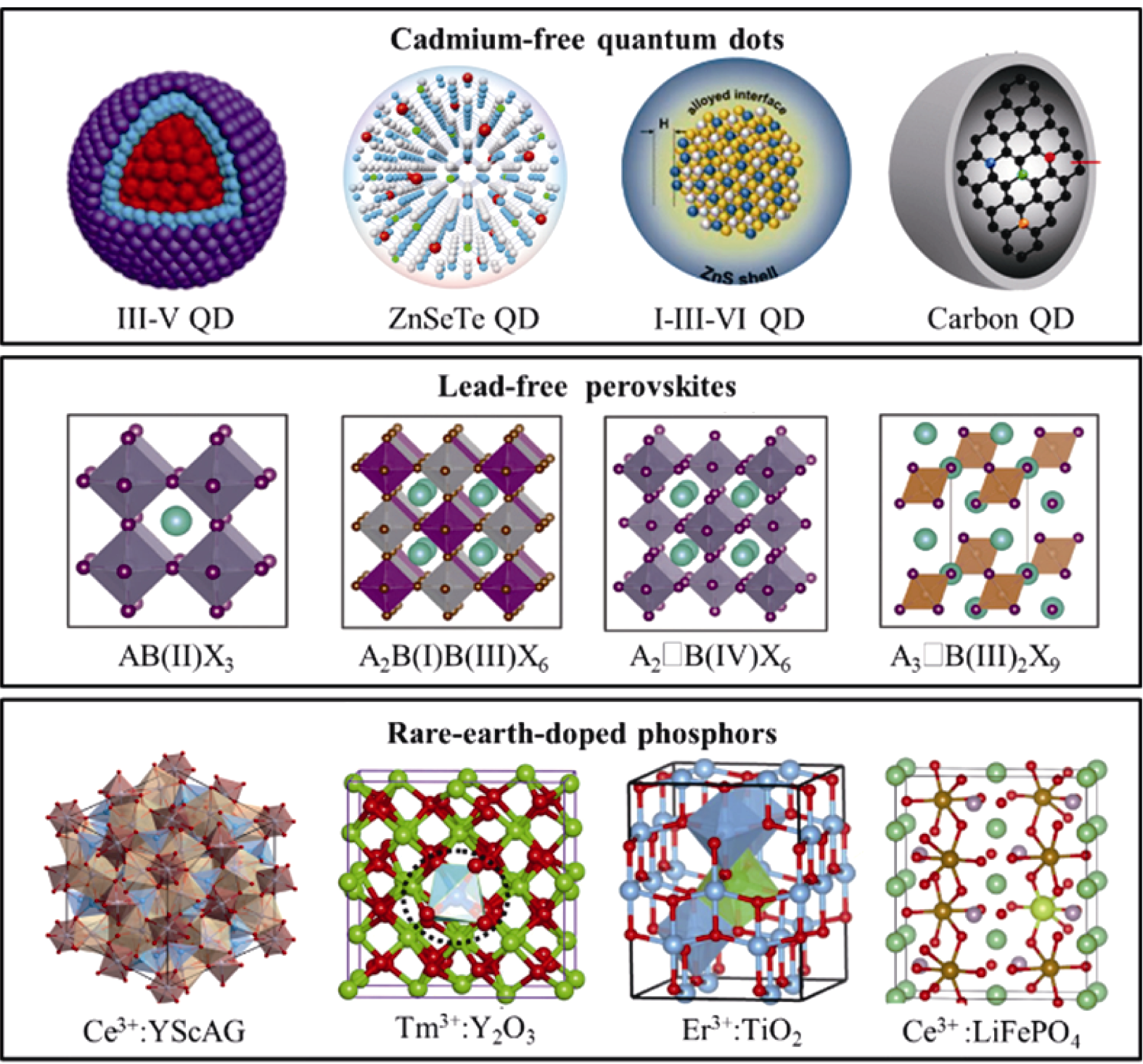
图1 环保型发光材料概述
Fig. 1 Overview of environmental-friendly luminescent materials QD: quantum dot
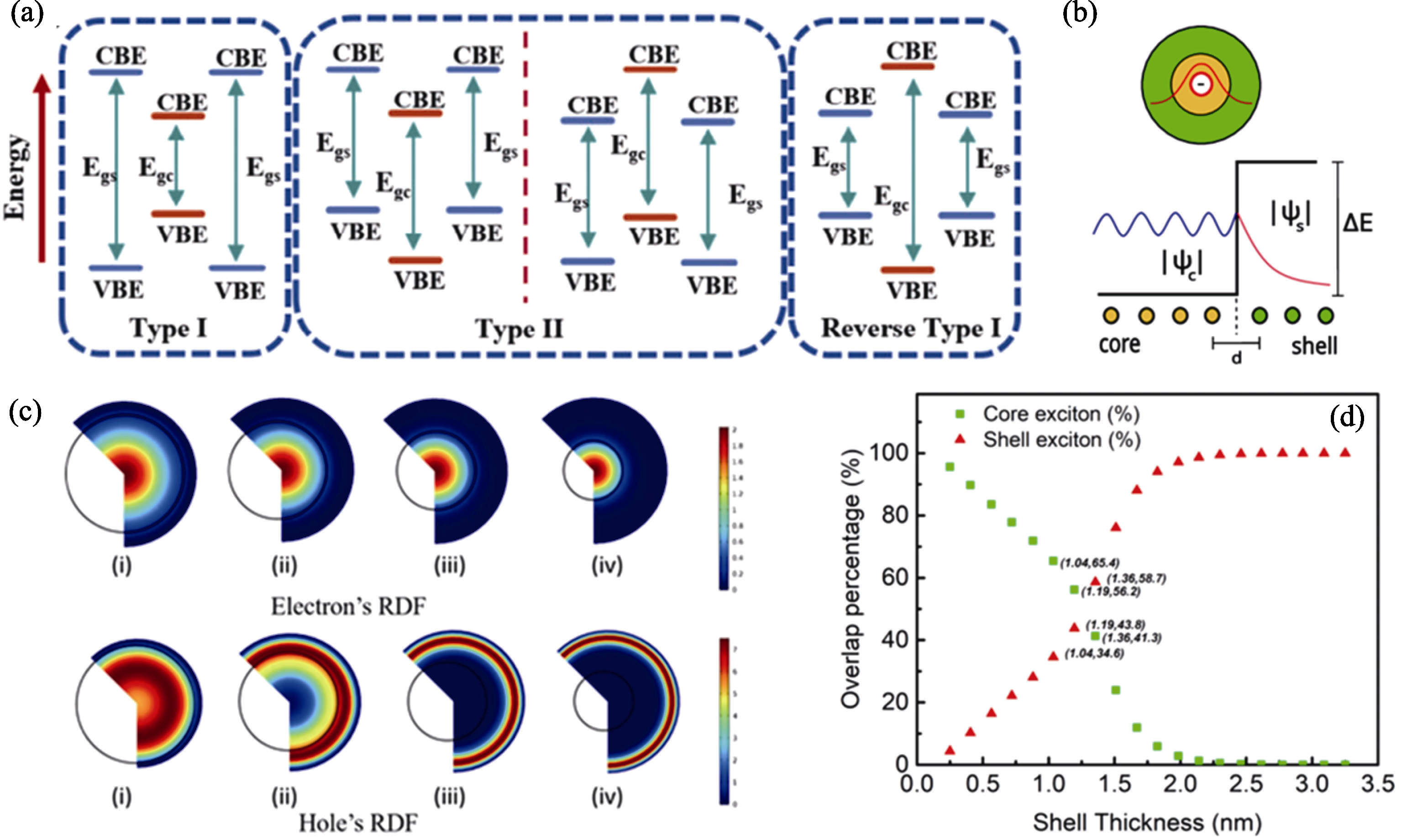
图2 核壳量子点的能带对齐类型及壳层厚度依赖的激子分布特性[3,73 -74]
Fig. 2 Band alignment types and shell-thickness-dependent exciton distribution characteristics in core/shell quantum dots[3,73 -74] (a) Type I, type II and reverse type I band alignment (CBE: conduction band edge, VBE: valence band edge, Egc: energy band gap of core, Egs: energy band gap of shell)[3]; (b) Schematic diagram of the wave function tunneling probability estimation method[73]; (c) Electron-hole radial distribution function (RDF) of 1.75 nm CdSe core with different shell thicknesses; (d) Single exciton probability distribution vs. shell thickness (with core/shell exciton coverage)[74]
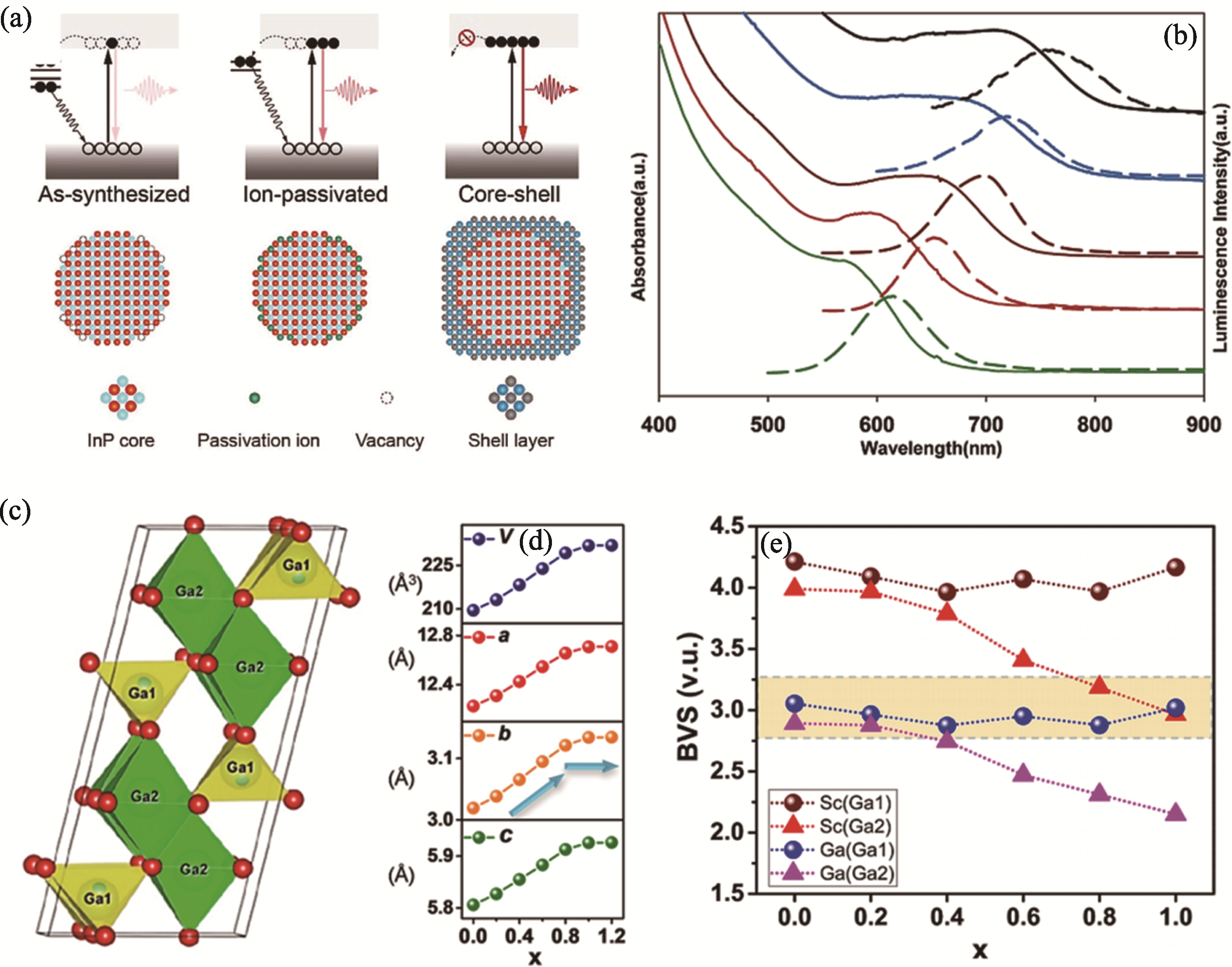
图3 InP量子点的表面化学效应、光学性质及Ga2O3晶体结构特性[34,76 -78]
Fig. 3 Surface chemistry effects and optical properties of InP QDs and crystal structure characteristics of Ga2O3[34,76 -78] (a) Influence of different surface chemistries on carrier trapping in InP QDs[76]; (b) Absorbance and emission spectra of QDs with different compositions[77]; (c) Crystal structure of Ga2O3[34]; (d) Refined lattice parameters[78]; (e) BVS[78]
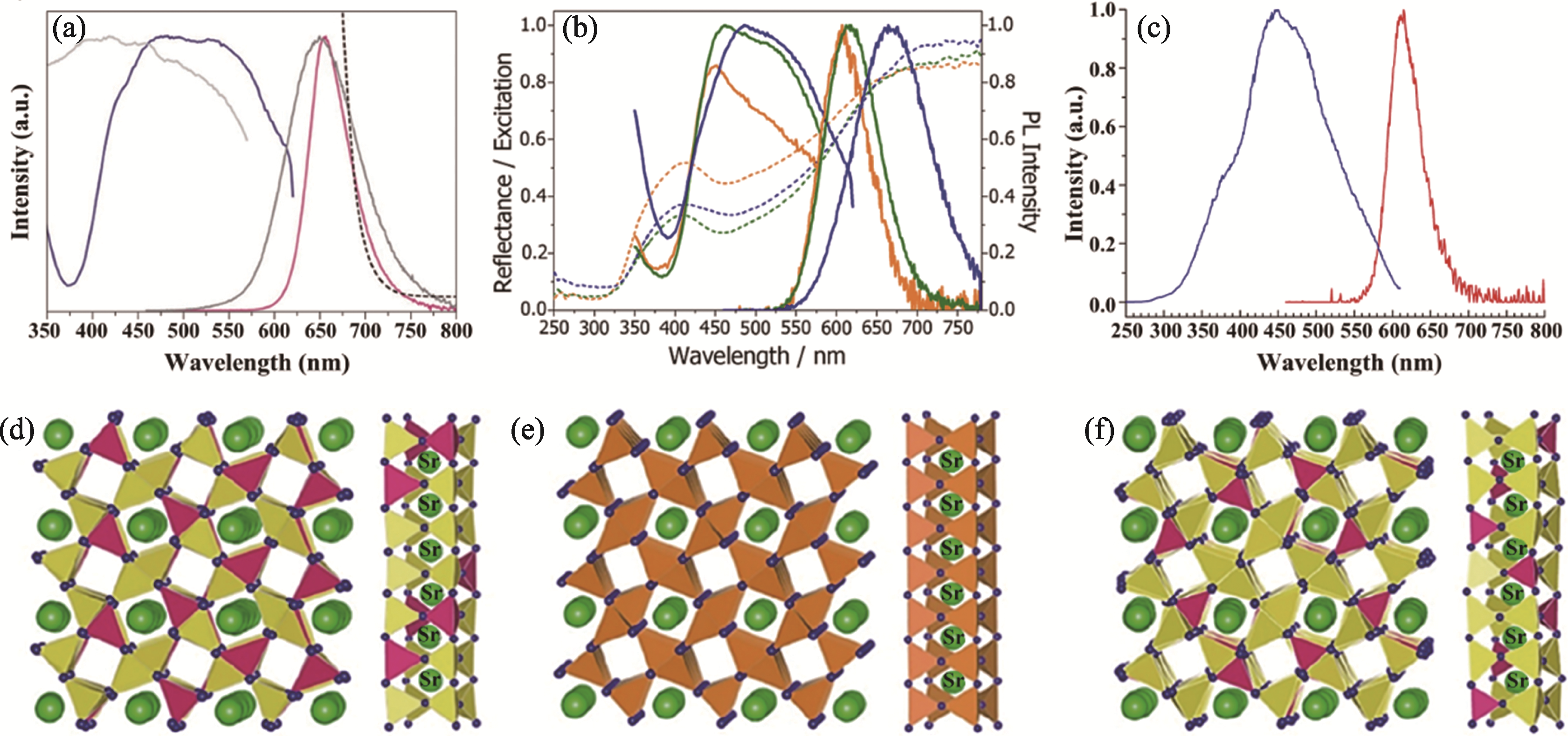
图4 几种氮化物荧光粉的晶体结构及发光性能[34,80 -82]
Fig. 4 Crystal structures and luminescence properties of several nitride phosphors[34,80 -82] (a) Excitation/emission spectra of SLA and CaAlSiN3:Eu2+[80]; (b) Excitation, reflectance and emission spectra of M[Mg2Al2N4]:Eu2+ (M=Ca, Sr, Ba)[81]; (c) Excitation/emission spectra of Sr[Mg3SiN4]:Eu2+[82]; (d-f) Crystal structures of (d) SrLiAl3N4, (e) SrMg2Al2N4, and (f) SrMg3SiN4[34]
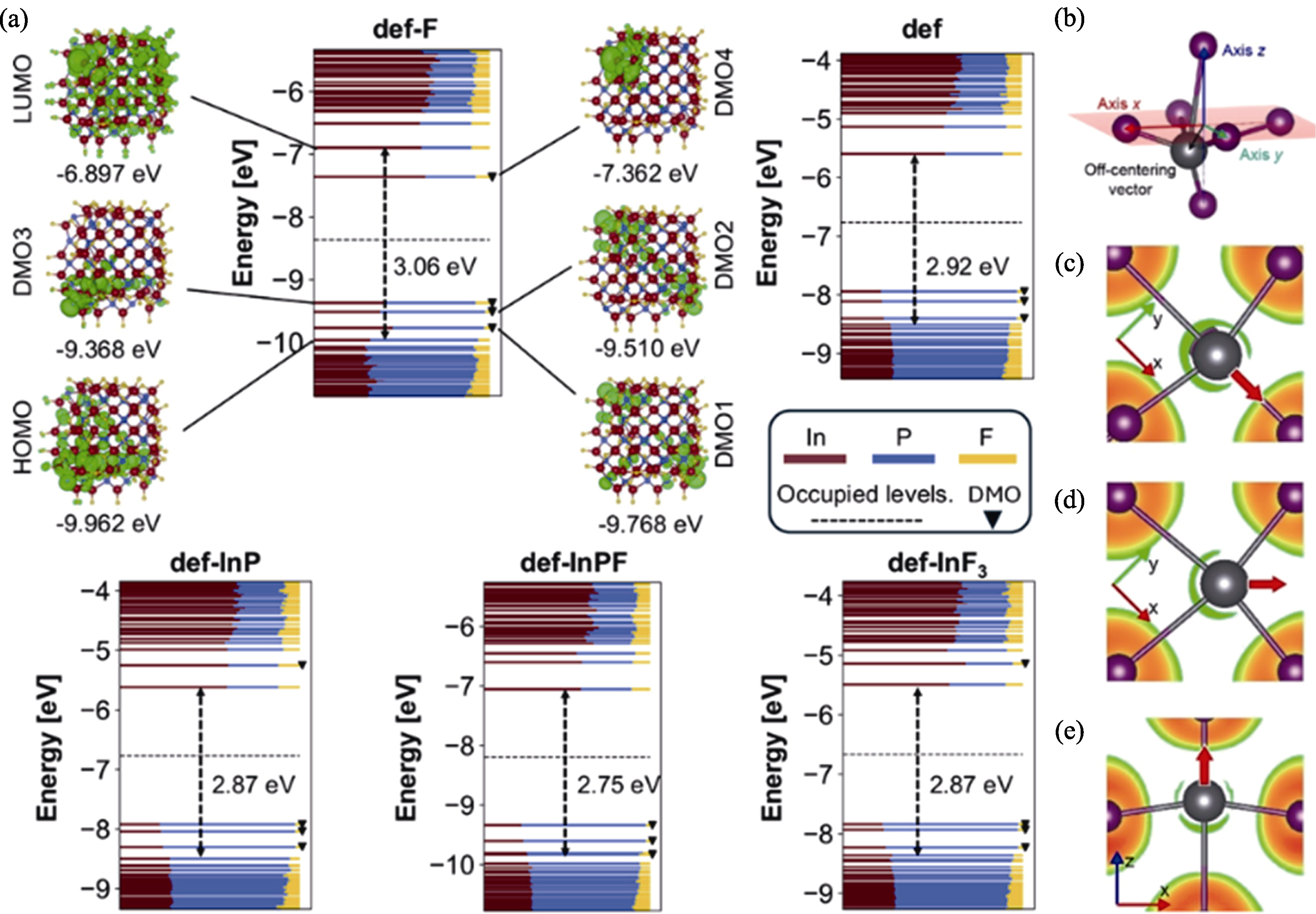
图5 InP量子点的电子结构计算及二维钙钛矿的结构畸变与电子定位分析[83-84]
Fig. 5 Electronic structure calculations of InP QDs and structural distortion with electron localization analysis of 2D perovskites[83-84] (a) Molecular orbital energy and electron density of InP QDs in the screened configuration interaction singles (SCIS) calculations[83]; (b) Schematic of octahedral coordinate system and off-centering vector[84]; (c-e) Electron localization function contour plots under different stretchings[84]
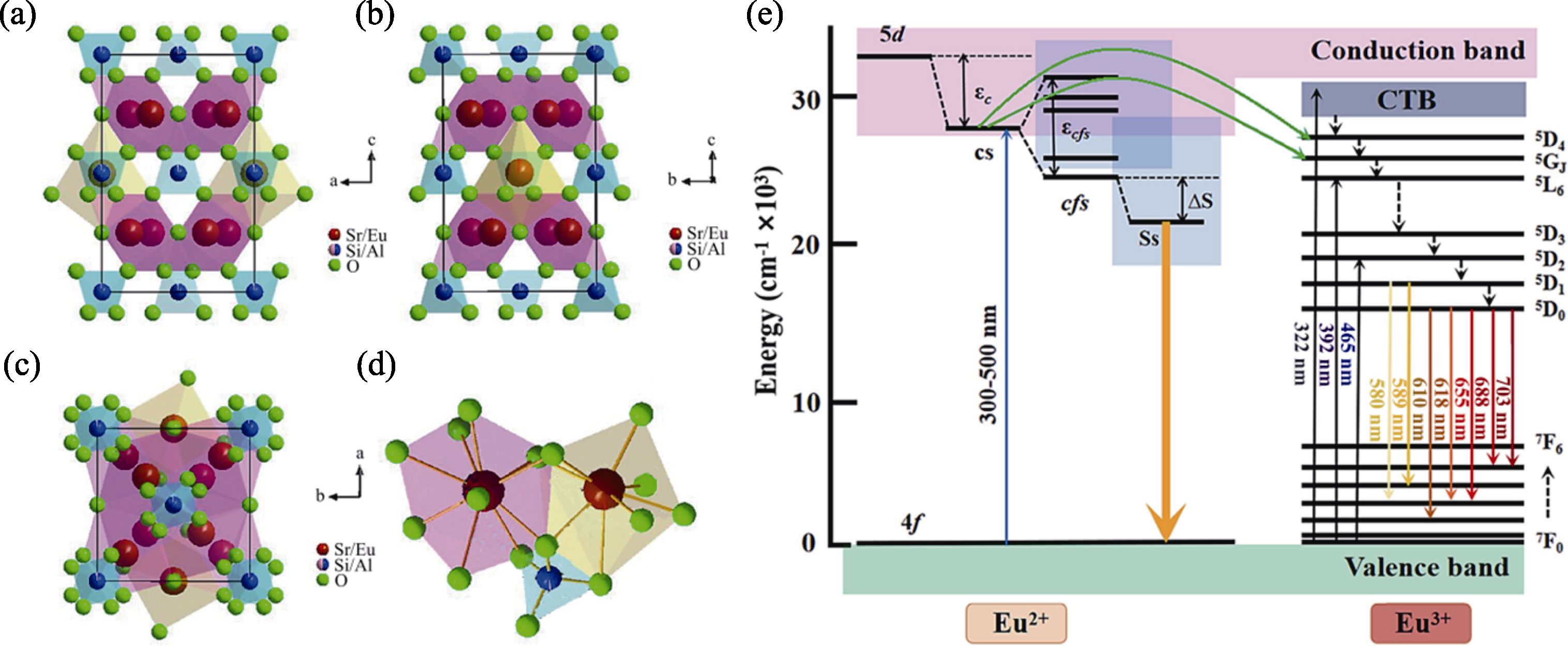
图6 Sr2.945Al0.025Si0.975O5:0.03Eu2+的晶体结构特征及La1-xSr2+xAl1-xSixO5:Eu荧光粉的能量转移机制[88]
Fig. 6 Crystal structural characteristics of Sr2.945Al0.025Si0.975O5:0.03Eu2+ and energy transfer mechanism of La1-xSr2+xAl1-xSixO5:Eu phosphors[88] (a-c) Crystal structure of Sr2.945Al0.025Si0.975O5:0.03Eu2+ (different views); (d) Corresponding coordination polyhedra; (e) Schematic of Eu ion transition and energy transfer in La1-xSr2+xAl1-xSixO5:Eu
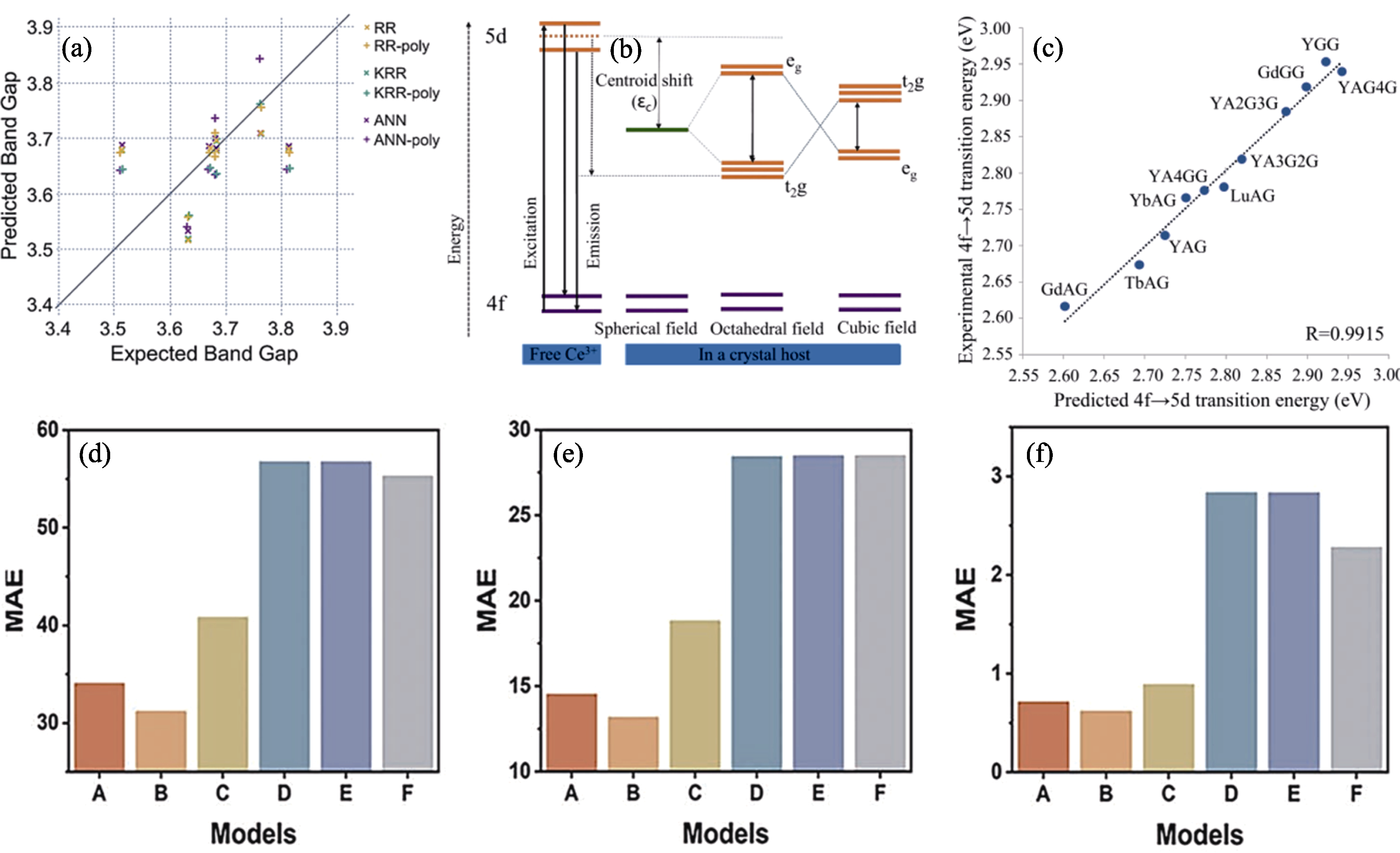
图7 机器学习在带隙预测、Ce3+掺杂晶体光学性能及碳点发光性能预测中的应用[107,115,117]
Fig. 7 Machine learning applications in band gap prediction, optical properties of Ce3+-doped crystals, and luminescence performance prediction of carbon dots[107,115,117] (a) Band gap prediction comparison of different machine learning models[107]; (b) 4f-5d energy level diagram of Ce3+ in crystals[115]; (c) Correlation between predicted and experimental Ce3+ 4f-5d transition energy[115]; (d-f) Mean absolute error (MAE) optimization of emission wavelength, quantum yield (QY) and Stokes shift by different models[117]
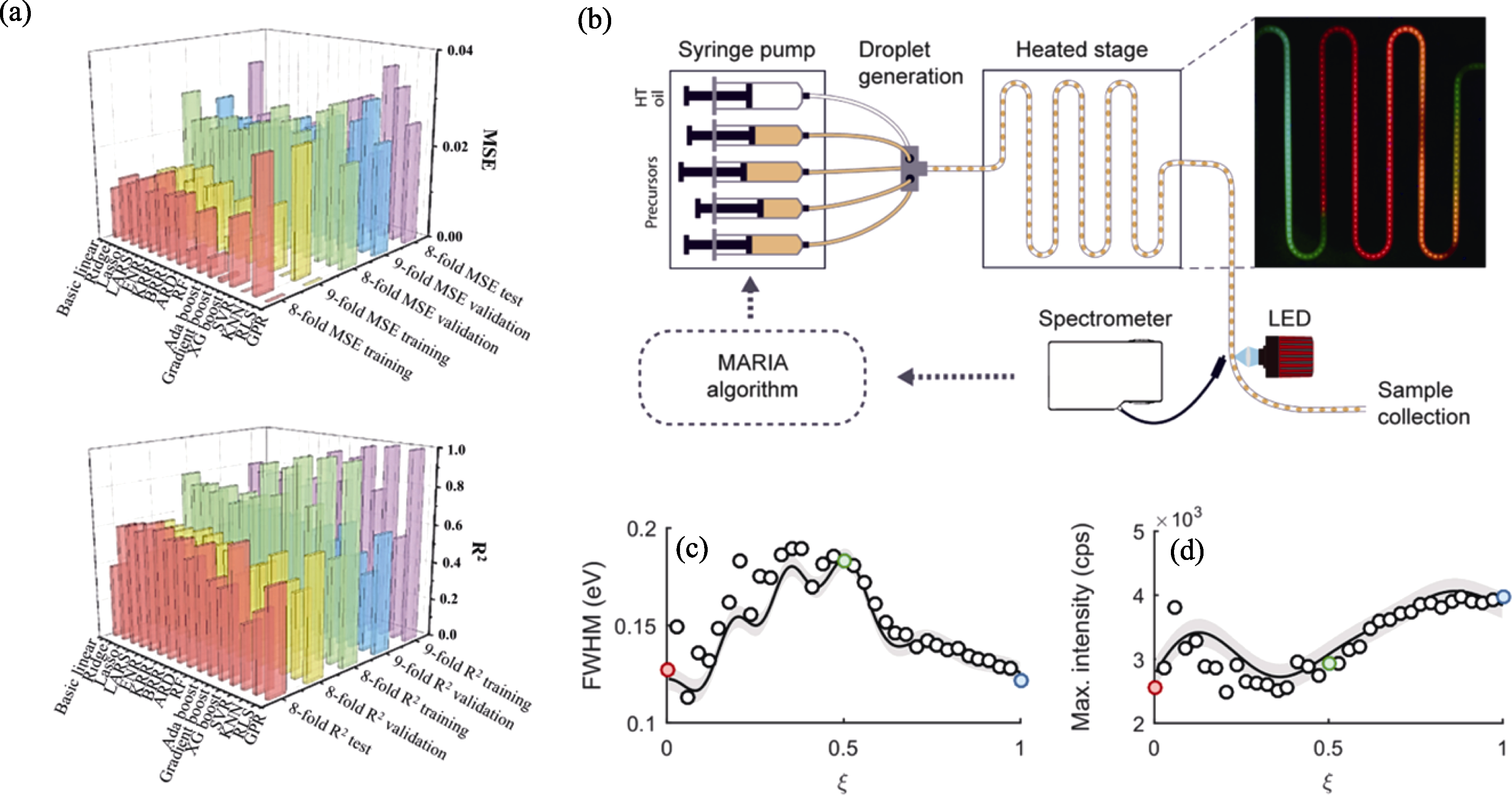
图8 机器学习在Eu2+激活荧光粉发射波长预测及钙钛矿纳米晶自适应合成优化中的应用[118-119]
Fig. 8 Machine learning for emission wavelength prediction of Eu2+-activated phosphors and adaptive synthesis optimization of perovskite nanocrystals[118-119] (a) Training, validation and test results of peak emission wavelength (PEW) prediction[118]; (b) Synthesis setup and adaptive sampling of (Cs/FA)Pb(I/Br)3 NCs[119]; (c, d) Full width at half maximum (FWHM) and maximum intensity prediction under 680 nm emission[119]
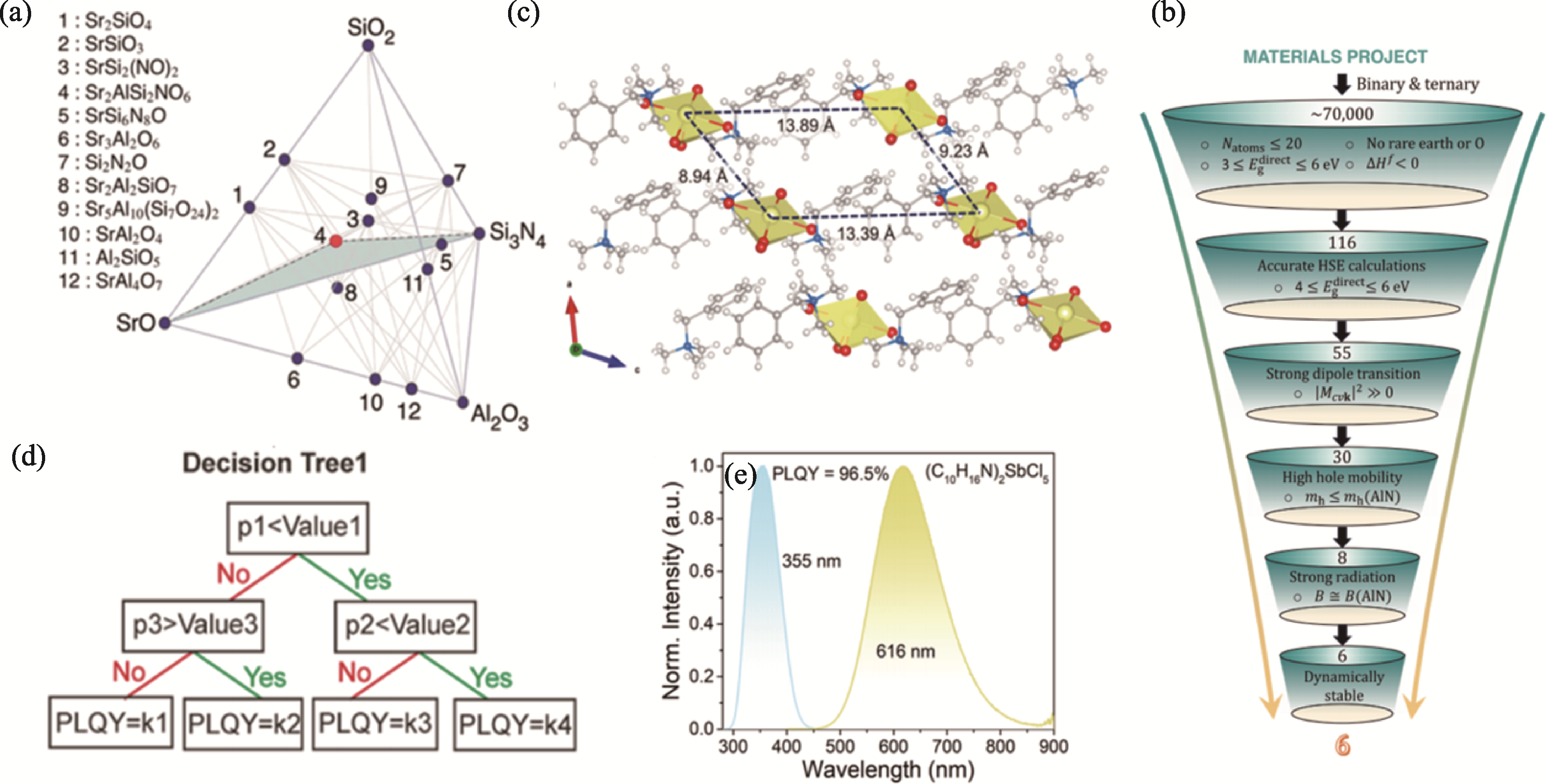
图9 新型发光材料的相图分析、晶体结构表征及计算筛选策略[125-127]
Fig. 9 Phase diagram analysis, crystal structure characterization, and computational screening strategies for novel luminescent materials[125-127] (a) 3D phase diagram of SrO-SiO2-Si3N4-Al2O3 (with new phase Sr2AlSi2O6N)[125]; (b) Computational screening workflow of deep-ultraviolet light emitters[126]; (c) Crystal structure of (C10H16N)2SbCl5[127]; (d) Schematic of random forest algorithm[127]; (e) Photoluminescence excitation (PLE) and PL spectrum of (C10H16N)2SbCl5[127]
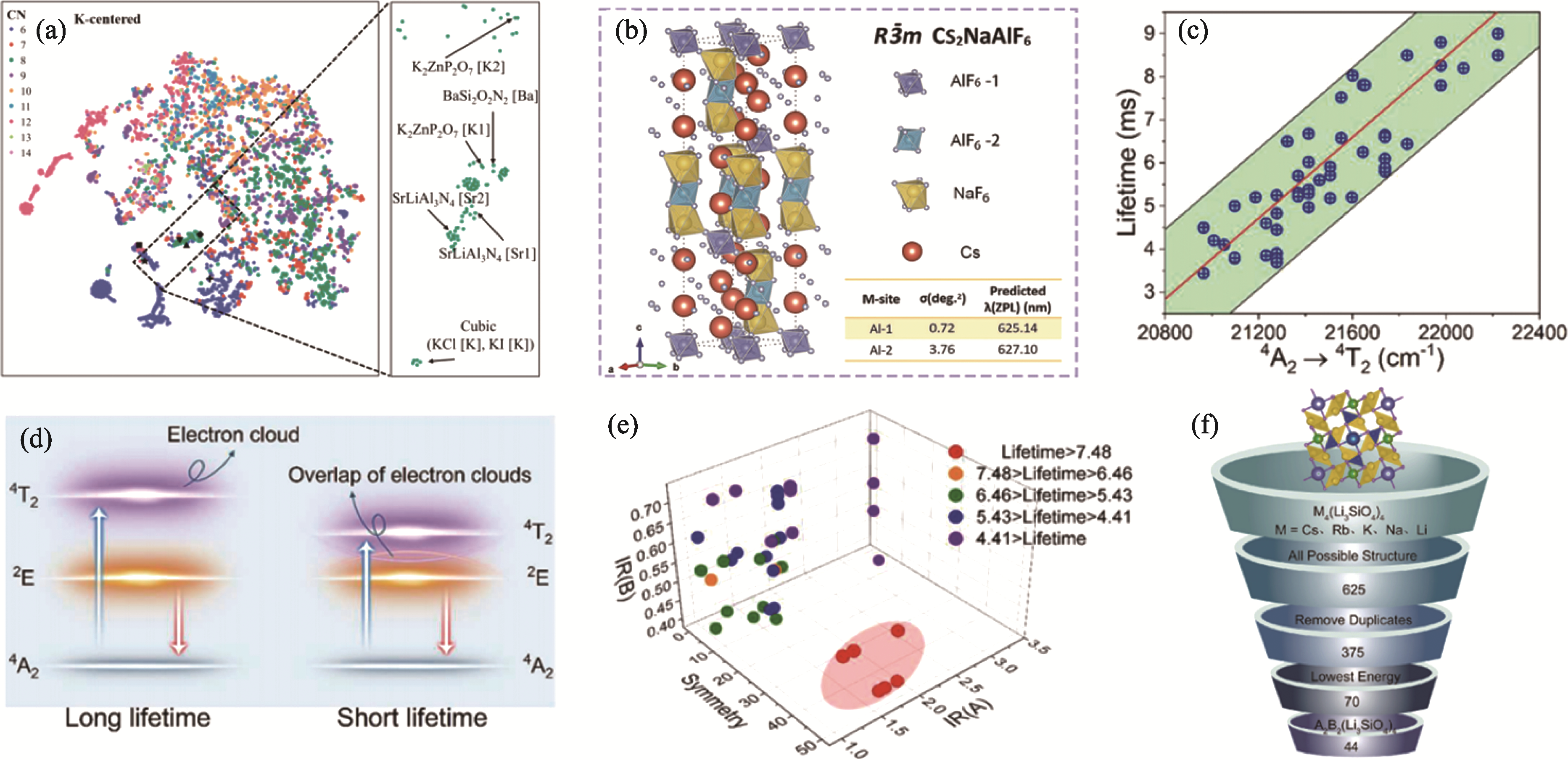
图10 数据驱动在Eu2+及Mn4+掺杂荧光粉结构筛选与性能分析中的应用[129,131,134,137]
Fig. 10 Data-driven structural screening and property analysis of Eu2+-doped and Mn4+-doped phosphors[129,131,134,137] (a) 2D t-SNE plots of K-centered local structures[129]; (b) Lattice structure of the candidate CNAF[131]; (c) ESL vs. 4A2→4T2 transition energy of Mn4+-doped fluorides[134]; (d) Energy level diagram of Mn4+-activated systems (long/short ESL)[134]; (e) 3D feature space distribution of high-lifetime samples[134]; (f) Schematic of ML-based screening for narrow-band green emission candidates[137]
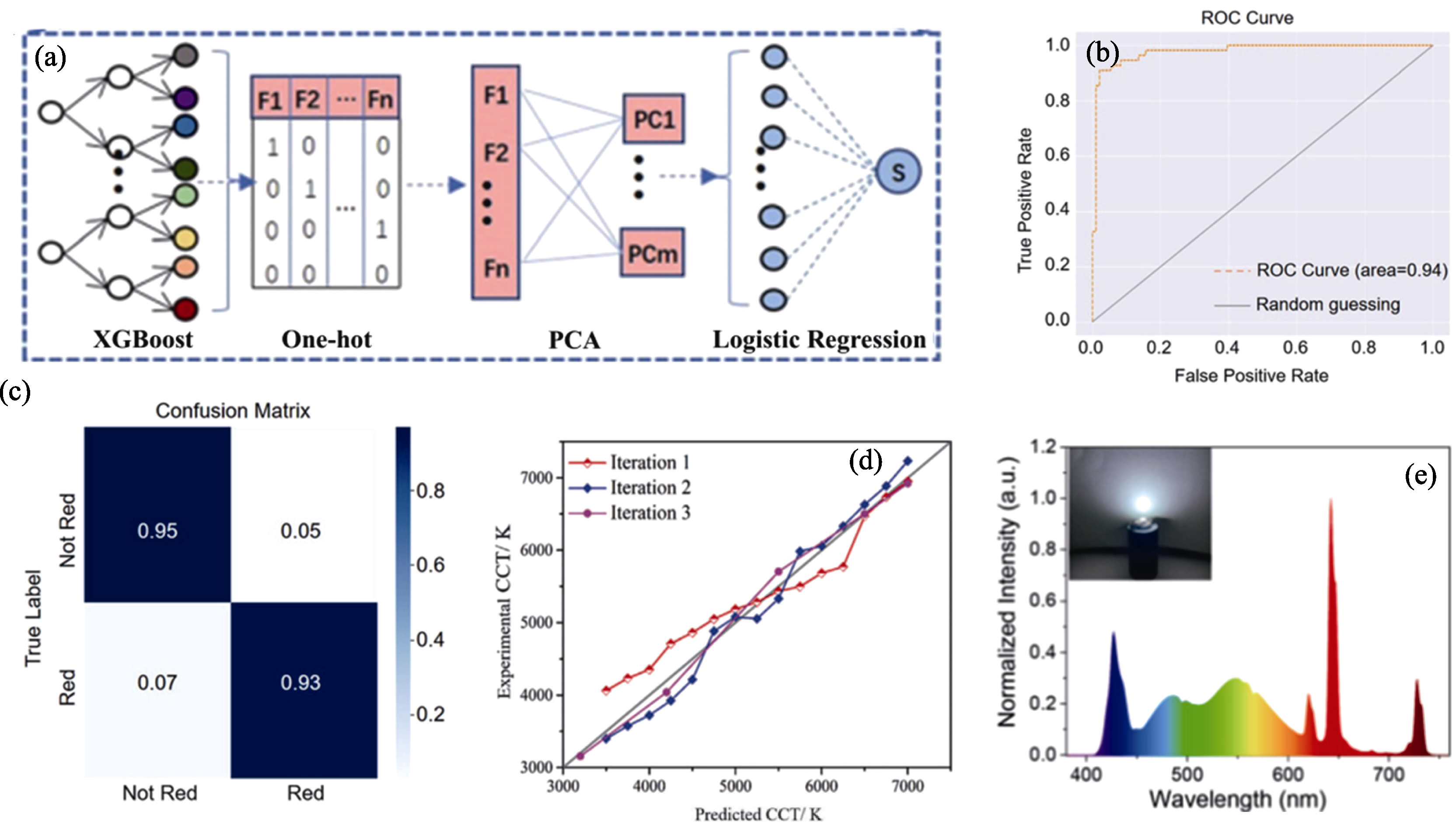
图11 机器学习模型在发光材料性能预测及LED器件优化中的应用评估[138,141 -142]
Fig. 11 Evaluation of machine learning models in property prediction of luminescent materials and LED device optimization[138,141 -142] (a) Data processing pipeline of ML model[138]; (b) Receiver operating characteristic (ROC) curve and area under the curve (AUC) of logistic regression classifier[138]; (c) Confusion matrix of the model on cross-validation[138]; (d) Comparison of predicted and experimental CCT[141]; (e) Structure and luminescence photo of white phosphor-converted light-emitting diode (pc-LED)[142]
| [1] | SHAN Q, DONG Y, XIANG H, et al. Perovskite quantum dots for the next-generation displays: progress and prospect. Advanced Functional Materials, 2024, 34(36): 2401284. |
| [2] | CHEN F, ZHENG J, XING C, et al. Applications of liquid crystal planer optical elements based on photoalignment technology in display and photonic devices. Displays, 2024, 82: 102632. |
| [3] | FAN J, HAN C, YANG G, et al. Recent progress of quantum dots light-emitting diodes: materials, device structures, and display applications. Advanced Materials, 2024, 36(37): 2312948. |
| [4] | AHMED T, SETH S, SAMANTA A. Boosting the photoluminescence of CsPbX3 (X=Cl, Br, I) perovskite nanocrystals covering a wide wavelength range by postsynthetic treatment with tetrafluoroborate salts. Chemistry of Materials, 2018, 30(11): 3633. |
| [5] | YIN J, ZHANG J, PAN W, et al. Fully aqua-mediated ripening of perovskite quantum dots with 98% PLQY and self-assembly into bioimaging nanoparticles. Advanced Functional Materials, 2026, 36(7): e14590. |
| [6] | VARNAKAVI N, VELPUGONDA J L, LEE N, et al. In situ synthesis of Br-rich CsPbBr3 nanoplatelets: enhanced stability and high PLQY for wide color gamut displays. Advanced Functional Materials, 2025, 35(3): 2413320. |
| [7] | AFTABUZZAMAN M, BHOYAR T, JEONG S, et al. Near-unity PLQY in lead-free halide perovskites and perovskite-inspired halides for light-emitting diode applications. ACS Energy Letters, 2025, 10(9): 4439. |
| [8] | WANG P J, MORALES-MÁRQUEZ R, CERVÁS G, et al. The role of temperature in the photoluminescence quantum yield (PLQY) of Ag2S-based nanocrystals. Materials Horizons, 2024, 11(23): 6158. |
| [9] | YUAN G, LI M, YU M, et al. , In situ synthesis enhanced luminescence and application in dye sensitized solar cells of Y2O3/Y2O2S:Eu3+ nanocomposites by reduction of Y2O3:Eu3+. Scientific Reports, 2016, 6: 37133. |
| [10] | HOU L, HU S, ZHANG B, et al. Spacing controlled quantum resonance in colloidal CdSe quantum dot superlattices. The Journal of Physical Chemistry Letters, 2025, 16(32): 8290. |
| [11] | NGUYEN H A, HAMMEL B F, SHARP D, et al. Colossal core/shell CdSe/CdS quantum dot emitters. ACS Nano, 2024, 18(31): 20726. |
| [12] | DOU W, GONG Y, HUANG X, et al. CdSe quantum dots enable high thermoelectric performance in solution-processed polycrystalline SnSe. Small, 2024, 20(28): 2311153. |
| [13] | YANG Z, YAO J, XU L, et al. Designer bright and fast CsPbBr3 perovskite nanocrystal scintillators for high-speed X-ray imaging. Nature Communications, 2024, 15: 8870. |
| [14] | MEHRA S, PANDEY R, MADAN J, et al. Experimental and theoretical investigations of MAPbX3-based perovskites (X=Cl, Br, I) for photovoltaic applications. ChemistryOpen, 2024, 13(2): e202300055. |
| [15] | TORRENCE C E, LIBBY C S, NIE W, et al. Environmental and health risks of perovskite solar modules: case for better test standards and risk mitigation solutions. iScience, 2022, 26(1): 105807. |
| [16] | HE H, DENG S, LIU Y. Environmentally friendly synthesis of quantum dots and their applications in diverse fields from the perspective of environmental compliance: a review. Discover Nano, 2025, 20(1): 132. |
| [17] | MEI L, XIE R, ZHU S, et al. Neurotoxicity study of lead-based perovskite nanoparticles. Nano Today, 2023, 50: 101830. |
| [18] | FAUSIA K H, NHARANGATT B, VINAYAKAN R N, et al. Probing the structural degradation of CsPbBr3 perovskite nanocrystals in the presence of H2O and H2S: how weak interactions and HSAB matter. ACS Omega, 2024, 9(7): 8417. |
| [19] | KALNAITYTĖ-VENGELIENĖ A, MONTVYDIENĖ D, JANUŠKAITĖ E, et al. The effects of CdSe/ZnS quantum dots on autofluorescence properties and growth of algae Desmodesmus communis: dependence on cultivation medium. Environmental Science: Nano, 2024, 11(4): 1701. |
| [20] | HU L, ZHONG H, HE Z. Toxicity evaluation of cadmium- containing quantum dots: a review of optimizing physicochemical properties to diminish toxicity. Colloids and Surfaces B: Biointerfaces, 2021, 200: 111609. |
| [21] | YUE Z, GUO H, CHENG Y. Toxicity of perovskite solar cells. Energies, 2023, 16(10): 4007. |
| [22] | SABAHI N, SHAHROOSVAND H. Shedding light on the environmental impact of the decomposition of perovskite solar cell. Scientific Reports, 2023, 13: 18004. |
| [23] | GIROUX M S, ZAHRA Z, SALAWU O A, et al. Assessing the environmental effects related to quantum dot structure, function, synthesis and exposure. Environmental Science: Nano, 2022, 9(3): 867. |
| [24] | DOWNIE D H, ELING C J, CHARLTON B K, et al. Recycling self-assembled colloidal quantum dot supraparticle lasers. Optical Materials Express, 2024, 14(12): 2982. |
| [25] | JANG E, JANG H. Review: quantum dot light-emitting diodes. Chemical Reviews, 2023, 123(8): 4663. |
| [26] | PAN Y Y, PAN J L, WANG Y K, et al. III-V quantum dots: a multidimensional exploration from eco-friendly materials to near infrared optoelectronic applications. Materials Today, 2025, 85: 171. |
| [27] | CHEN T, CHEN Y, LI Y, et al. A review on multiple I-III-VI quantum dots: preparation and enhanced luminescence properties. Materials, 2023, 16(14): 5039. |
| [28] | JIN L, SELOPAL G S, TONG X, et al. Heavy-metal-free colloidal quantum dots: progress and opportunities in solar technologies. Advanced Materials, 2024, 36(33): 2402912. |
| [29] | JAIN S, BHARTI S, BHULLAR G K, et al. I-III-VI core/shell QDs: synthesis, characterizations and applications. Journal of Luminescence, 2020, 219: 116912. |
| [30] | TEKIN A, KALPAR M, TEKIN E. Exploring the potential of Sn-Ge based hybrid organic-inorganic perovskites: a density functional theory based computational screening study. The Journal of Chemical Physics, 2024, 161(7): 074703. |
| [31] | JI Y, LIN P, REN X, et al. Geometric and electronic structures of Cs2BB′X6 double perovskites: the importance of exact exchange. Physical Review Research, 2024, 6(3): 033172. |
| [32] | LI X, DU X, ZHANG P, et al. Lead-free halide perovskite Cs3Bi2Br9 single crystals for high-performance X-ray detection. Science China Materials, 2021, 64(6): 1427. |
| [33] | MENG X, JIANG J, YANG X, et al. Organic-inorganic hybrid cuprous-based metal halides with unique two-dimensional crystal structure for white light-emitting diodes. Angewandte Chemie International Edition, 2024, 63(43): e202411047. |
| [34] | FANG M H, BAO Z, HUANG W T, et al. Evolutionary generation of phosphor materials and their progress in future applications for light-emitting diodes. Chemical Reviews, 2022, 122(13): 11474. |
| [35] | MAI H, WEN X, LI X, et al. Data driven high quantum yield halide perovskite phosphors design and fabrication. Materials Today, 2024, 74: 12. |
| [36] | KUMAR U, KIM H W, SINGH S, et al. Designing Pr-based advanced photoluminescent materials using machine learning and density functional theory. Journal of Materials Science, 2024, 59: 1433. |
| [37] | XIONG Z, WANG Z, JIANG J, et al. Exploration of double perovskite luminescent materials accelerated by explainable machine learning. Physical Review Applied, 2025, 24: 014050. |
| [38] | HAN P, ZHOU W, ZHENG D, et al. Lead-free all-inorganic indium chloride perovskite variant nanocrystals for efficient luminescence. Advanced Optical Materials, 2022, 10(1): 2101344. |
| [39] | LI H, ZHANG W, BIAN Y, et al. ZnF2-assisted synthesis of highly luminescent InP/ZnSe/ZnS quantum dots for efficient and stable electroluminescence. Nano Letters, 2022, 22(10): 4067. |
| [40] | GAO M, YANG H, SHEN H, et al. Bulk-like ZnSe quantum dots enabling efficient ultranarrow blue light-emitting diodes. Nano Letters, 2021, 21(17): 7252. |
| [41] | WU Z, LIU P, ZHANG W, et al. Development of InP quantum dot-based light-emitting diodes. ACS Energy Letters, 2020, 5(4): 1095. |
| [42] | WU Q, CAO F, YU W, et al. Homogeneous ZnSeTeS quantum dots for efficient and stable pure-blue LEDs. Nature, 2025, 639(8055): 633. |
| [43] | JIANG C, TOZAWA M, AKIYOSHI K, et al. Development of Cu-In-Ga-S quantum dots with a narrow emission peak for red electroluminescence. The Journal of Chemical Physics, 2023, 158(16): 164708. |
| [44] | KIM T, KIM K H, KIM S, et al. Efficient and stable blue quantum dot light-emitting diode. Nature, 2020, 586(7829): 385. |
| [45] | WANG S, WANG C, WANG Y, et al. Local lattice softening in semiconductor quantum dots for efficient white light-emitting diodes. Nature Photonics, 2025, 19(9): 952. |
| [46] | HUANG Y, HSIANG E L, DENG M Y, et al. Mini-LED, micro-LED and OLED displays: present status and future perspectives. Light: Science & Applications, 2020, 9(1): 105. |
| [47] | LIN J Y, JIANG H X. Development of microLED. Applied Physics Letters, 2020, 116(10): 100502. |
| [48] | HSIANG E L, YANG Z, YANG Q, et al. Prospects and challenges of mini-LED, OLED, and micro-LED displays. Journal of the Society for Information Display, 2021, 29(6): 446. |
| [49] | TANG X, WENG S, HAO W, et al. Aqueous synthesis of ultrastable dual-color-emitting lead-free double-perovskite Cs2SnI6 with a wide emission span enabled by the size effect. ACS Sustainable Chemistry & Engineering, 2023, 11(24): 9121. |
| [50] | JIA H, SHI H, YU R, et al. Biuret induced tin-anchoring and crystallization-regulating for efficient lead-free tin halide perovskite light-emitting diodes. Small, 2022, 18(17): 2200036. |
| [51] | LIN H, TALEBI S, MACSWAIN W, et al. Tailoring substitutional sites for efficient lanthanide doping in lead-free perovskite nanocrystals with enhanced near-infrared photoluminescence. ACS Nano, 2025, 19(15): 14941. |
| [52] | LENG M, YANG Y, ZENG K, et al. All-inorganic bismuth-based perovskite quantum dots with bright blue photoluminescence and excellent stability. Advanced Functional Materials, 2018, 28(1): 1704446. |
| [53] | ZENG X, YIN Q, PAN L, et al. Hole delayed-release effect of inorganic interfacial dipole layer on charge balance for boosting CsCu2I3 light-emitting diodes. ACS Nano, 2025, 19(12): 11878. |
| [54] | YUAN X R, ZHANG X S, ZHAO X Y, et al. Achieving high quantum efficiency in Cs3Cu2I5 nanocrystals by the A-site ion substitution for flexible blue electroluminescence devices and enhanced photovoltaic cells. ACS Applied Nano Materials, 2024, 7(19): 23214. |
| [55] | LIU S, LIU H, ZHOU G, et al. Water-induced crystal phase transformation of stable lead-free Cu-based perovskite nanocrystals prepared by one-pot method. Chemical Engineering Journal, 2022, 427: 131430. |
| [56] | GAO F, ZHU X, FENG Q, et al. Deep-blue emissive Cs3Cu2I5 perovskites nanocrystals with 96.6% quantum yield via InI3-assisted synthesis for light-emitting device and fluorescent ink applications. Nano Energy, 2022, 98: 107270. |
| [57] | MA Z, JI X, WANG M, et al. Carbazole-containing polymer- assisted trap passivation and hole-injection promotion for efficient and stable CsCu2I3-based yellow LEDs. Advanced Science, 2022, 9(27): 2202408. |
| [58] | DING H, LIU Z, HU P, et al. High efficiency green-emitting LuAG:Ce ceramic phosphors for laser diode lighting. Advanced Optical Materials, 2021, 9(8): 2002141. |
| [59] | LI Y, LUO Z, LIU Y, et al. Ce:YScAG phosphor-converted transparent ceramics with high thermal saturation and weak concentration quenching for LED and LD white lighting. Ceramics International, 2023, 49(2): 2051. |
| [60] | INFANTE I, MANNA L. Are there good alternatives to lead halide perovskite nanocrystals? Nano Letters, 2021, 21(1): 6. |
| [61] | DE FRANCO M, ZHU D X, ASAITHAMBI A, et al. Near-infrared light-emitting diodes based on RoHS-compliant InAs/ZnSe colloidal quantum dots. ACS Energy Letters, 2022, 7(11): 3788. |
| [62] | JALALI H B, DE TRIZIO L, MANNA L, et al. Indium arsenide quantum dots: an alternative to lead-based infrared emitting nanomaterials. Chemical Society Reviews, 2022, 51(24): 9861. |
| [63] | PAN Q Y, ZHAO Q, WEI P X, et al. Surface ligands for perovskite quantum dots. ChemSusChem, 2025, 18(4): e202401875. |
| [64] | LIU J H, YANG Z X, YE B Q, et al. A review of stability- enhanced luminescent materials: fabrication and optoelectronic applications. Journal of Materials Chemistry C, 2019, 7(17): 4934. |
| [65] | LI M, ZHANG X, YANG P. Controlling the growth of a SiO2 coating on hydrophobic CsPbBr3 nanocrystals towards aqueous transfer and high luminescence. Nanoscale, 2021, 13(8): 3860. |
| [66] | WANG Q Q, ZHANG X Y, QIAN L, et al. Improving perovskite green quantum dot light-emitting diode performance by hole interface buffer layers. ACS Applied Materials & Interfaces, 2023, 15(23): 28833. |
| [67] | WANG Z T, CHEN C, LIAN K, et al. Double-matrix encapsulation of cyan perovskite nanomaterials for high-efficiency full-spectrum white light-emitting diodes. ACS Applied Nano Materials, 2024, 7(23): 27154. |
| [68] | XUAN T T, HUANG J J, LIU H, et al. Super-hydrophobic cesium lead halide perovskite quantum dot-polymer composites with high stability and luminescent efficiency for wide color gamut white light-emitting diodes. Chemistry of Materials, 2019, 31(3): 1042. |
| [69] | GUO T H, WANG H, HAN W H, et al. Designed p-type graphene quantum dots to heal interface charge transfer in Sn-Pb perovskite solar cells. Nano Energy, 2022, 98: 107298. |
| [70] | ZHANG W D, DUAN X J, TAN Y Z, et al. Giant pyramidal near-infrared InP/ZnS quantum dots with size over 15 nm for cell imaging. Laser & Photonics Reviews, 2024, 18(10): 2400367. |
| [71] | WANG J F, BA G H, MENG J, et al. Transition layer assisted synthesis of defect free amine-phosphine based InP QDs. Nano Letters, 2024, 24(29): 8894. |
| [72] | IVANOV S A, PIRYATINSKI A, NANDA J, et al. Type-II core/shell CdS/ZnSe nanocrystals: synthesis, electronic structures, and spectroscopic properties. Journal of the American Chemical Society, 2007, 129(38): 11708. |
| [73] | KICK M, ALEXANDER E, VAN VOORHIS T. Band alignment in core-shell nanocrystals by estimating wave function tunneling probabilities. Nano Letters, 2025, 25(42): 15272. |
| [74] | NANDAN Y, MEHATA M S. Wavefunction engineering of type-I/type-II excitons of CdSe/CdS core-shell quantum dots. Scientific Reports, 2019, 9: 2. |
| [75] | CAO Y W, BANIN U. Growth and properties of semiconductor core/shell nanocrystals with InAs cores. Journal of the American Chemical Society, 2000, 122(40): 9692. |
| [76] | CHEN B, LI D Y, WANG F. InP quantum dots: synthesis and lighting applications. Small, 2020, 16(32): 2002454. |
| [77] | KIM S W, ZIMMER J P, OHNISHI S, et al. Engineering InAsxP1-x/InP/ZnSe III-V alloyed core/shell quantum dots for the near-infrared. Journal of the American Chemical Society, 2005, 127(30): 10526. |
| [78] | FANG M H, CHEN K C, MAJEWSKA N, et al. Hidden structural evolution and bond valence control in near-infrared phosphors for light-emitting diodes. ACS Energy Letters, 2021, 6(1): 109. |
| [79] | KIMOTO K, XIE R J, MATSUI Y, et al. Direct observation of single dopant atom in light-emitting phosphor of β-SiAlON:Eu2+. Applied Physics Letters, 2009, 94(4): 041908. |
| [80] | PUST P, WEILER V, HECHT C, et al. Narrow-band red-emitting Sr[LiAl3N4]:Eu2+ as a next-generation LED-phosphor material. Nature Materials, 2014, 13: 891. |
| [81] | PUST P, HINTZE F, HECHT C, et al. Group (III) nitrides M[Mg2Al2N4] (M=Ca, Sr, Ba, Eu) and Ba[Mg2Ga2N4]—structural relation and nontypical luminescence properties of Eu2+ doped samples. Chemistry of Materials, 2014, 26(21): 6113. |
| [82] | SCHMIECHEN S, SCHNEIDER H, WAGATHA P, et al. Toward new phosphors for application in illumination-grade white pc-LEDs: the nitridomagnesosilicates Ca[Mg3SiN4]:Ce3+Sr[Mg3SiN4]:Eu2+and Eu[Mg3SiN4]. Chemistry of Materials, 2014, 26(8): 2712. |
| [83] | KUMAR S, COCCHI C, STEENBOCK T. Surface defects and symmetry breaking impact on the photoluminescence of InP quantum dots. Nano Letters, 2025, 25(26): 10588. |
| [84] | GU J Z, TAO Y, FU T H, et al. Correlating photophysical properties with stereochemical expression of 6s2 lone pairs in two-dimensional lead halide perovskites. Angewandte Chemie International Edition, 2023, 62(30): e202304515. |
| [85] | XU N, QI X, SHEN Z, et al. Point defects in metal halide perovskites. Nature Reviews Physics, 2025, 7: 554. |
| [86] | ZOU Y, YUAN Z, BAI S, et al. Recent progress toward perovskite light-emitting diodes with enhanced spectral and operational stability. Materials Today Nano, 2019, 5: 100028. |
| [87] | TSAI Y T, CHIANG C Y, ZHOU W, et al. Structural ordering and charge variation induced by cation substitution in (Sr,Ca)AlSiN3:Eu phosphor. Journal of the American Chemical Society, 2015, 137(28): 8936. |
| [88] | MAO A, GUO Y, ZHOU W, et al. Crystal field engineering inducing transformation from narrow band of Eu3+ to broadband of Eu2+. Inorganic Chemistry, 2024, 63(35): 16134. |
| [89] | XU L L, LIU G Y, XIANG H Y, et al. Charge-carrier dynamics and regulation strategies in perovskite light-emitting diodes: from materials to devices. Applied Physics Reviews, 2022, 9(2): 021308. |
| [90] | BOGO N, STEIN C J. Benchmarking DFT-based excited-state methods for intermolecular charge-transfer excitations. Physical Chemistry Chemical Physics, 2024, 26(32): 21575. |
| [91] | BERTONI A I, SÁNCHEZ C G. Data-driven approach for benchmarking DFTB-approximate excited state methods. Physical Chemistry Chemical Physics, 2023, 25(5): 3789. |
| [92] | DE WERGIFOSSE M. Computing excited states of very large systems with range-separated hybrid functionals and the exact integral simplified time-dependent density functional theory (XsTD-DFT). The Journal of Physical Chemistry Letters, 2024, 15(51): 12628. |
| [93] | LEE S, PARK W, CHOI C H. Expanding horizons in quantum chemical studies: the versatile power of MRSF-TDDFT. Accounts of Chemical Research, 2025, 58(2): 208. |
| [94] | SINYAVSKIY A, MALIŠ M, LUBER S. Bridging the gap between variational and perturbational DFT-based methods for calculating excited states. Journal of Chemical Theory and Computation, 2025, 21(15): 7430. |
| [95] | CASTRO A, MARQUES M A L, RUBIO A. Propagators for the time-dependent Kohn-Sham equations. The Journal of Chemical Physics, 2004, 121(8): 3425. |
| [96] | GROSS E K U, KOHN W. Time-dependent density-functional theory. Advances in Quantum Chemistry, 1990, 21: 255. |
| [97] | ZHU Y F, PENG J W, XU C, et al. Unsupervised machine learning in the analysis of nonadiabatic molecular dynamics simulation. The Journal of Physical Chemistry Letters, 2024, 15(38): 9601. |
| [98] | KÜHNE T D, IANNUZZI M, DEL BEN M, et al. CP2K: an electronic structure and molecular dynamics software package- quickstep: efficient and accurate electronic structure calculations. The Journal of Chemical Physics, 2020, 152(19): 194103. |
| [99] | JIA W L, CAO Z Y, WANG L, et al. The analysis of a plane wave pseudopotential density functional theory code on a GPU machine. Computer Physics Communications, 2013, 184(1): 9. |
| [100] | HAN P P, MIN J J, ZENG Z P, et al. Excitonic characteristics of blue-emitting quantum dot materials in group II-VI using hybrid time-dependent density functional theory. Physical Review B, 2021, 104(4): 045404. |
| [101] | ZHANG B F, ZHANG H, LIN J H, et al. A time-dependent density functional study on optical response in all-inorganic lead-halide perovskite nanostructures. International Journal of Quantum Chemistry, 2020, 120(13): e26232. |
| [102] | GRIMME S, BANNWARTH C. Ultra-fast computation of electronic spectra for large systems by tight-binding based simplified Tamm-Dancoff approximation (sTDA-xTB). The Journal of Chemical Physics, 2016, 145(5): 054103. |
| [103] | AKKERMAN Q A, BLADT E, PETRALANDA U, et al. Fully inorganic Ruddlesden-Popper double Cl-I and triple Cl-Br-I lead halide perovskite nanocrystals. Chemistry of Materials, 2019, 31(6): 2182. |
| [104] | FILATOV M, HUIX-ROTLLANT M. Assessment of density functional theory based ΔSCF (self-consistent field) and linear response methods for longest wavelength excited states of extended π-conjugated molecular systems. The Journal of Chemical Physics, 2014, 141(2): 024112. |
| [105] | HEAD-GORDON M, RICO R J, OUMI M, et al. A doubles correction to electronic excited states from configuration interaction in the space of single substitutions. Chemical Physics Letters, 1994, 219(1/2): 21. |
| [106] | JI Z M, SONG Z G. Exciton radiative lifetime in CdSe quantum dots. Journal of Semiconductors, 2023, 44(3): 032702. |
| [107] | REGONIA P R, PELICANO C M, TANI R, et al. Predicting the band gap of ZnO quantum dots via supervised machine learning models. Optik, 2020, 207: 164469. |
| [108] | JIANG L, JIANG X, ZHANG Y, et al. Multiobjective machine learning-assisted discovery of a novel cyan-green garnet: Ce phosphors with excellent thermal stability. ACS Applied Materials & Interfaces, 2022, 14(13): 15426. |
| [109] | WANG X, WANG B, WANG H S, et al. Carbon-dot-based white-light-emitting diodes with adjustable correlated color temperature guided by machine learning. Angewandte Chemie International Edition, 2021, 60(22): 12585. |
| [110] | SETYAWAN W, GAUME R M, LAM S, et al. High-throughput combinatorial database of electronic band structures for inorganic scintillator materials. ACS Combinatorial Science, 2011, 13(4): 382. |
| [111] | MARCHENKO E I, FATEEV S A, PETROV A A, et al. Database of two-dimensional hybrid perovskite materials: open-access collection of crystal structures, band gaps, and atomic partial charges predicted by machine learning. Chemistry of Materials, 2020, 32(17): 7383. |
| [112] | SIVONXAY E, ATTIA L, SPOTTE-SMITH E W C, et al. Gradient-based optimization of complex nanoparticle heterostructures enabled by deep learning on heterogeneous graphs. Nature Computational Science, 2026, 6: 83. |
| [113] | DRAXL C, SCHEFFLER M. NOMAD: the FAIR concept for big data-driven materials science. MRS Bulletin, 2018, 43(9): 676. |
| [114] | KIRKLIN S, SAAL J E, MEREDIG B, et al. The open quantum materials database (OQMD): assessing the accuracy of DFT formation energies. npj Computational Materials, 2015, 1: 15010. |
| [115] | MOHD R N I B, NOVITA M, OGASAWARA K. Two-step model for predicting 4f→5d transition energies of Ce3+ in garnet-type oxides based on first-principles calculations and machine learning. Optical Materials, 2025, 159: 116653. |
| [116] | ZHUO Y, HARIYANI S, YOU S, et al. Machine learning 5d-level centroid shift of Ce3+ inorganic phosphors. Journal of Applied Physics, 2020, 128(1): 013104. |
| [117] | CHEN J, LUO J B, HU M Y, et al. Controlled synthesis of multicolor carbon dots assisted by machine learning. Advanced Functional Materials, 2023, 33(2): 2210095. |
| [118] | PARK C, LEE J W, KIM M, et al. A data-driven approach to predicting band gap, excitation, and emission energies for Eu2+- activated phosphors. Inorganic Chemistry Frontiers, 2021, 8(21): 4610. |
| [119] | BEZINGE L, MACEICZYK R M, LIGNOS I, et al. Pick a color MARIA: adaptive sampling enables the rapid identification of complex perovskite nanocrystal compositions with defined emission characteristics. ACS Applied Materials & Interfaces, 2018, 10(22): 18869. |
| [120] | WANG X, WANG B, WANG H, et al. Carbon-dot-based white- light-emitting diodes with adjustable correlated color temperature guided by machine learning. Angewandte Chemie International Edition, 2021, 60(22): 12585. |
| [121] | KRUGLOV I A, BEREZNIKOVA L A, XIE C, et al. Graph neural network guided design of novel deep-ultraviolet optical materials with high birefringence. Science China Materials, 2024, 67(12): 3941. |
| [122] | TAN Z, LI Y, WU X, et al. De novo creation of fluorescent molecules via adversarial generative modeling. RSC Advances, 2023, 13(2): 1031. |
| [123] | XIE A L, ZHANG Z Q, GUAN J H, et al. Self-supervised learning with chemistry-aware fragmentation for effective molecular property prediction. Briefings in Bioinformatics, 2023, 24(5): bbad296. |
| [124] | MOORE G J, BARDAGOT O, BANERJI N. Deep transfer learning: a fast and accurate tool to predict the energy levels of donor molecules for organic photovoltaics. Advanced Theory and Simulations, 2022, 5(5): 2100511. |
| [125] | LI S, XIA Y, AMACHRAA M, et al. Data-driven discovery of full-visible-spectrum phosphor. Chemistry of Materials, 2019, 31(16): 6286. |
| [126] | XU X, LIANG H P, HUANG Q S, et al. Computational screening of promising deep-ultraviolet light emitters. Journal of the American Chemical Society, 2024, 146(18): 12864. |
| [127] | MOLOKEEV M S, SU B, ALEKSANDROVSKY A S, et al. Machine learning analysis and discovery of zero-dimensional ns2 metal halides toward enhanced photoluminescence quantum yield. Chemistry of Materials, 2022, 34(2): 537. |
| [128] | ZHUO Y, TEHRANI A M, OLIYNYK A O, et al. Identifying an efficient, thermally robust inorganic phosphor host via machine learning. Nature Communications, 2018, 9: 4377. |
| [129] | TAKEMURA S, KOYAMA Y, NAKANISHI T, et al. Narrow-band phosphor K2ZnP2O7:Eu2+ discovered using local structure similarity. Scripta Materialia, 2022, 215: 114686. |
| [130] | TAKEMURA S, KOYAMA Y, NAKANISHI T, et al. Narrow- band emitting phosphor Na2Cs2Sr(B9O15)2:Eu2+ discovered from local structure similarity with sulfate phosphor. The Journal of Physical Chemistry Letters, 2022, 13(51): 11878. |
| [131] | WANG Y, TANG W, ZHANG C, et al. Structure-based machine learning enables discovery of Mn4+-activated red-light fluorides for ultrawide-gamut mini-light-emitting diodes. Advanced Functional Materials, 2024, 34(14): 2313490. |
| [132] | KOYAMA Y, IKENO H, HARADA M, et al. Rapid discovery of new Eu2+-activated phosphors with a designed luminescence color using a data-driven approach. Materials Advances, 2023, 4(1): 231. |
| [133] | DING C, LI Z, ZHANG W, et al. Machine learning the peak emission wavelength of Mn4+-activated inorganic phosphors. New Journal of Chemistry, 2023, 47(22): 10875. |
| [134] | MING H, ZHOU Y, MOLOKEEV M S, et al. Machine- learning-driven discovery of Mn4+-doped red-emitting fluorides with short excited-state lifetime and high efficiency for mini light- emitting diode displays. ACS Materials Letters, 2024, 6(5): 1790. |
| [135] | JIANG L, JIANG X, YANG M, et al. Developing and optimizing novel Cr3+-activated inorganic NIR phosphors by combining triple-objective optimization and crystal field engineering. Inorganic Chemistry Frontiers, 2024, 11(2): 487. |
| [136] | BI H, JIANG J, CHEN J, et al. Machine learning prediction of quantum yields and wavelengths of aggregation-induced emission molecules. Materials, 2024, 17(7): 1664. |
| [137] | LIU S, SONG K, LI S, et al. Machine learning-driven discovery of efficient narrow-band green phosphor for wide-color-gamut backlight displays. Chemical Engineering Journal, 2025, 520: 165719. |
| [138] | LUO J B, CHEN J, LIU H, et al. High-efficiency synthesis of red carbon dots using machine learning. Chemical Communications, 2022, 58(64): 9014. |
| [139] | HAN Y, TANG B, WANG L, et al. Machine-learning-driven synthesis of carbon dots with enhanced quantum yields. ACS Nano, 2020, 14(11): 14761. |
| [140] | MUYASSIROH D A M, PERMATASARI F A, HIRANO T, et al. Machine learning-guided synthesis of room-temperature phosphorescent carbon dots for enhanced phosphorescence lifetime and information encryption. ACS Applied Nano Materials, 2024, 7(5): 5465. |
| [141] | YUAN H L, QI L Y, PARIS M, et al. Machine learning guided design of single-phase hybrid lead halide white phosphors. Advanced Science, 2021, 8(19): 2101407. |
| [142] | ZHANG S, LV Y, LI Z, et al. Explainable machine learning- enabled discovery for high-efficiency red-emitting phosphor under data constraints. Chemical Engineering Journal, 2025, 522: 167046. |
| [1] | 覃善丽, 郭佳文, 陈燕萌, 聚安安, 韦毅, 黄科林, 侯向华, 吕思师, 文志朋, 吴炼. 二维层状材料构筑电化学储能定向离子传输通道的研究进展[J]. 无机材料学报, 2026, 41(7): 883-898. |
| [2] | 余飞宇, 王文清, 张学勤, 何汝杰. 基于增材制造陶瓷点阵的双相网络互穿复合材料的研究进展与挑战[J]. 无机材料学报, 2026, 41(7): 849-866. |
| [3] | 周翠, 李捷, 孙鲁超, 苏海军, 王京阳. 氧化铝基定向凝固共晶陶瓷的组织特性、调控方法及环境稳定性[J]. 无机材料学报, 2026, 41(7): 899-914. |
| [4] | 左致平, 郭春, 周志勇. 基于机器学习的高温BSPT基压电陶瓷双重性能协同增强[J]. 无机材料学报, 2026, 41(7): 1001-1010. |
| [5] | 费文龙, 王亚坤, 廖良生. 蓝光ZnSeTe量子点的可控制备及其量子点发光二极管器件研究进展[J]. 无机材料学报, 2026, 41(7): 867-882. |
| [6] | 陈明俊, 缪洪康, 肖英俊, 邓建波, 张翔, 赵九蓬, 李垚. 光-热双响应材料研究进展: 从设计策略到智能窗应用[J]. 无机材料学报, 2026, 41(6): 723-738. |
| [7] | 宋坤洁, 解荣军. 机器学习驱动新型发光材料的研究进展[J]. 无机材料学报, 2026, 41(6): 689-703. |
| [8] | 胡钰晴, 朱一新, 乐先浩, 万青. 钽酸锂晶圆减薄技术及其热释电红外探测器应用进展[J]. 无机材料学报, 2026, 41(6): 764-774. |
| [9] | 刘春帆, 陈科, 葛芳芳, 黄庆. 核用耐铅铋腐蚀涂层的研究进展[J]. 无机材料学报, 2026, 41(6): 775-786. |
| [10] | 王俊卜, 黄泽皑, 杨茗凯, 蒙颖, 周明炜, 周莹. 甲烷转化用抗积碳催化材料研究进展[J]. 无机材料学报, 2026, 41(6): 739-750. |
| [11] | 王金文, 杨振, 周欢, 夏丹, 杨磊. 可注射无机材料及其生物医学应用[J]. 无机材料学报, 2026, 41(6): 751-763. |
| [12] | 李涵涛, 沈强, 罗国强, 王雪飞, 高明, 陈晨. 机械球磨法调控硅基负极材料结构与性能的研究进展[J]. 无机材料学报, 2026, 41(5): 561-572. |
| [13] | 解陈一, 缪花明, 张蔚然, 刘荣军, 王衍飞, 李端. 理论计算在高熵陶瓷领域的研究进展[J]. 无机材料学报, 2026, 41(5): 545-560. |
| [14] | 李璇, 叶奎材, 冯佳音, 邱家军, 钱文昊, 邢敏. 钛基牙种植体表面改性促进软组织封闭的研究进展[J]. 无机材料学报, 2026, 41(4): 432-444. |
| [15] | 彭德招, 李瑞, 王文鸿, 王梓瑞, 章志珍. 钠氯化物固态电解质研究进展[J]. 无机材料学报, 2026, 41(4): 409-420. |
| 阅读次数 | ||||||
|
全文 |
|
|||||
|
摘要 |
|
|||||