
Journal of Inorganic Materials ›› 2026, Vol. 41 ›› Issue (5): 583-594.DOI: 10.15541/jim20250424
• RESEARCH ARTICLE • Previous Articles Next Articles
ZHAO Tongtong1( ), DAI Jixiang1(), SU Cheng1, SHI Yan1, SHA Jianjun1,2
Received:2025-10-27
Revised:2025-11-27
Published:2026-05-20
Online:2025-12-19
Contact:
DAI Jixiang, associate professor. E-mail: jxdai@dlut.edu.cnAbout author:ZHAO Tongtong (1998-), female, PhD candidate. E-mail: zttz@mail.dlut.edu.cn
Supported by:CLC Number:
ZHAO Tongtong, DAI Jixiang, SU Cheng, SHI Yan, SHA Jianjun. Microstructure and Ablation Resistance of C/C Composites Modified by Hf-Si-based Coating-matrix Integrated Structure Fabricated by Reactive Melt Infiltration[J]. Journal of Inorganic Materials, 2026, 41(5): 583-594.
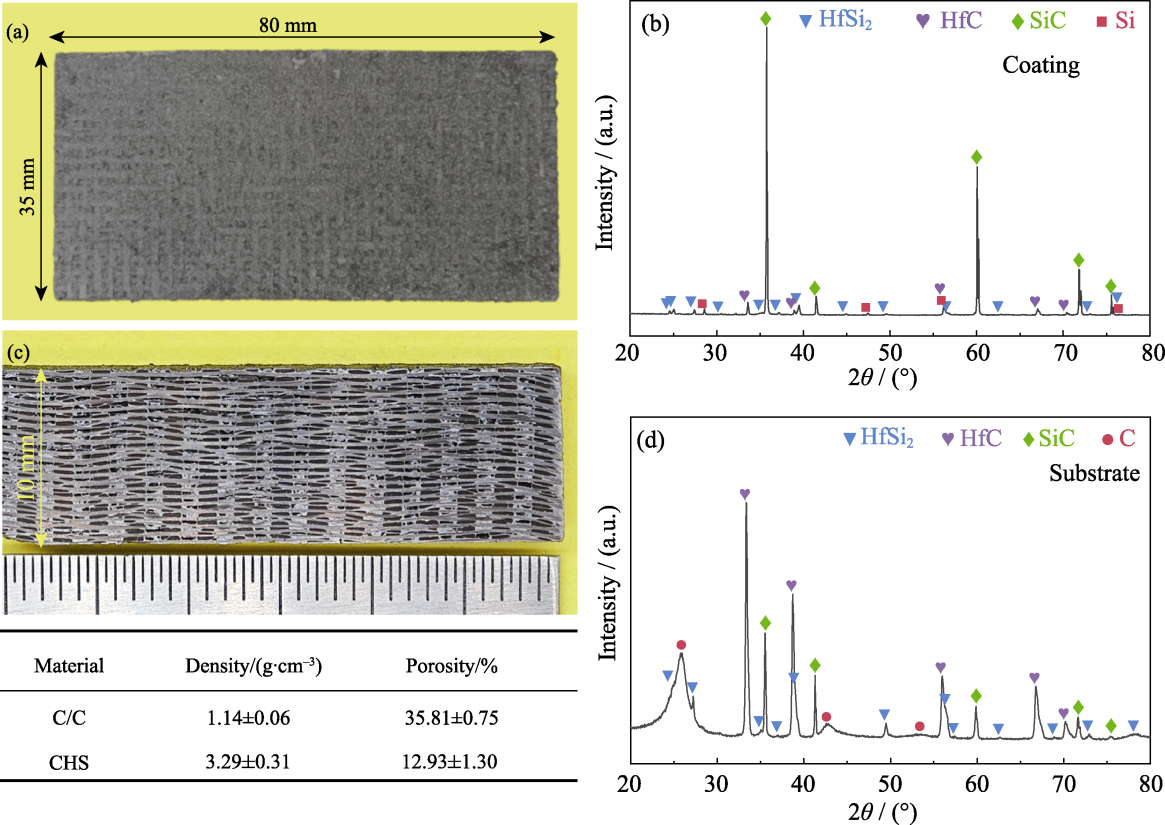
Fig. 1 (a, c) Macroscopic photographs of the upper surface and cross-section of CHS; (b, d) XRD patterns of the coating and substrate
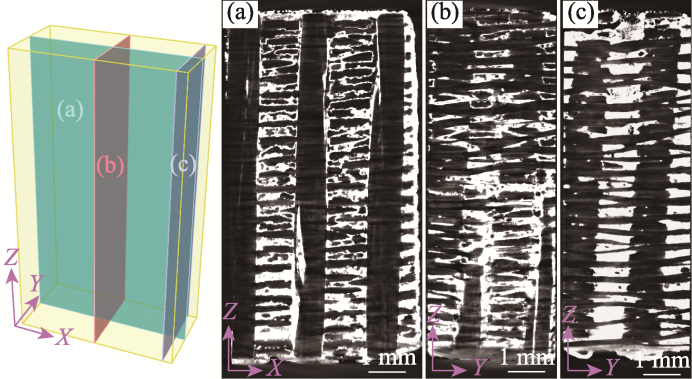
Fig. 2 XRM image slices of CHS (a) XZ plane; (b, c) YZ plane
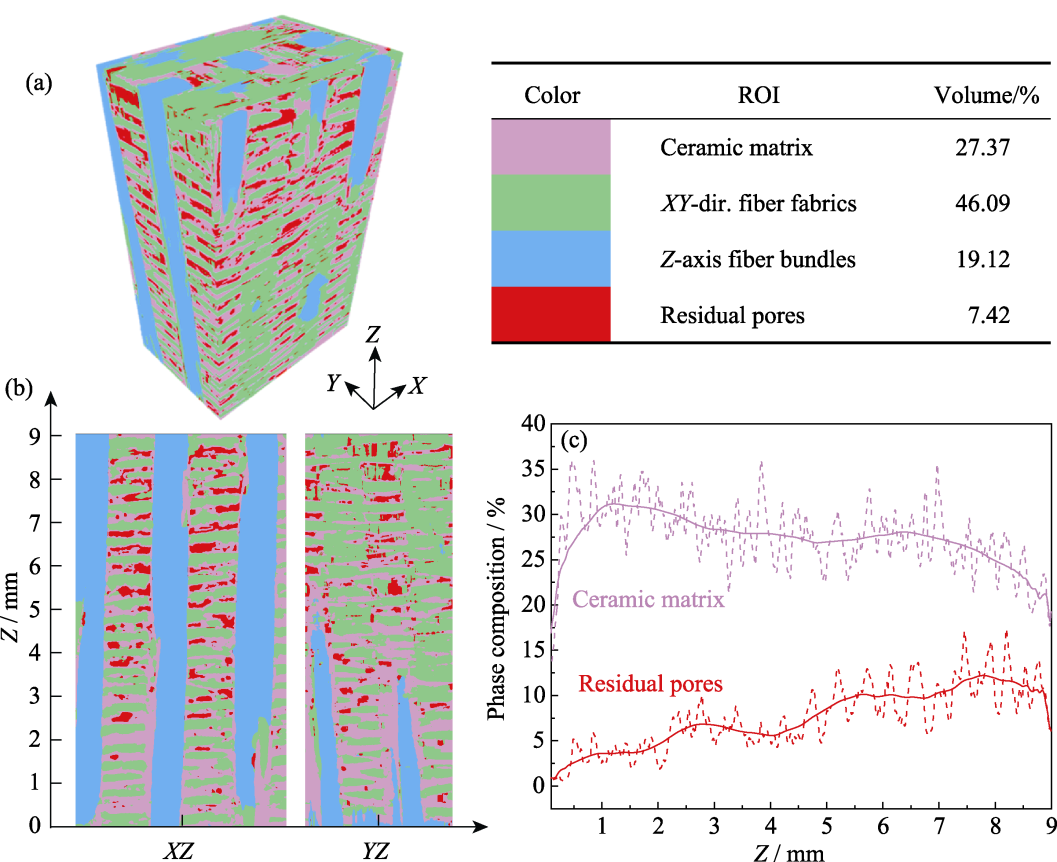
Fig. 3 3D XRM image (a) and typical 2D image slices (b) of CHS processed using deep learning, along with the variation curves of ceramic matrix and residual pore content with penetration depth (c) Colorful figures are available on website
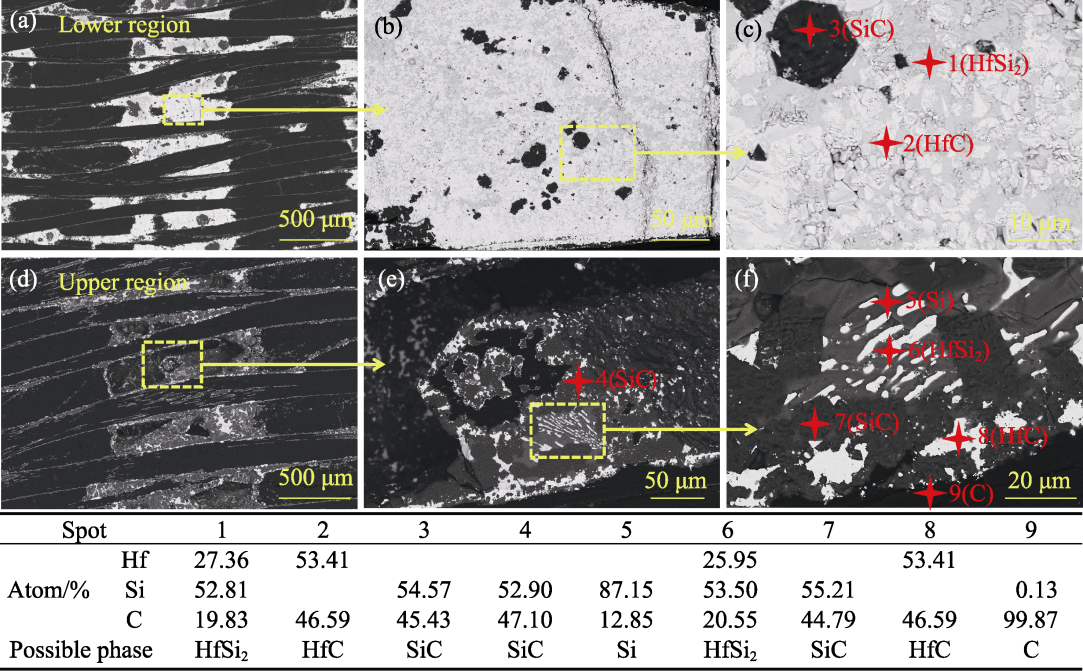
Fig. 4 Microstructure and EDS results of the CHS internal matrix (a-c) Lower end region; (d-f) Upper end region
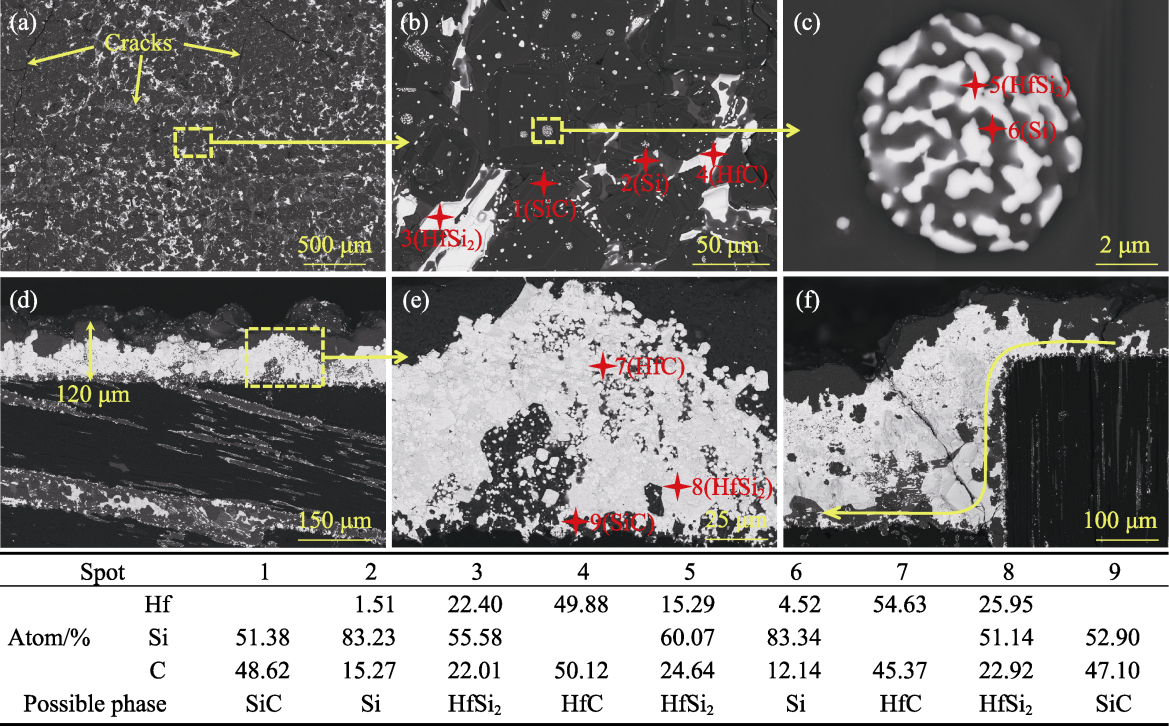
Fig. 5 Microstructure and EDS results of the top surface coating on CHS (a-c) Coating surface; (d-f) Coating cross-section
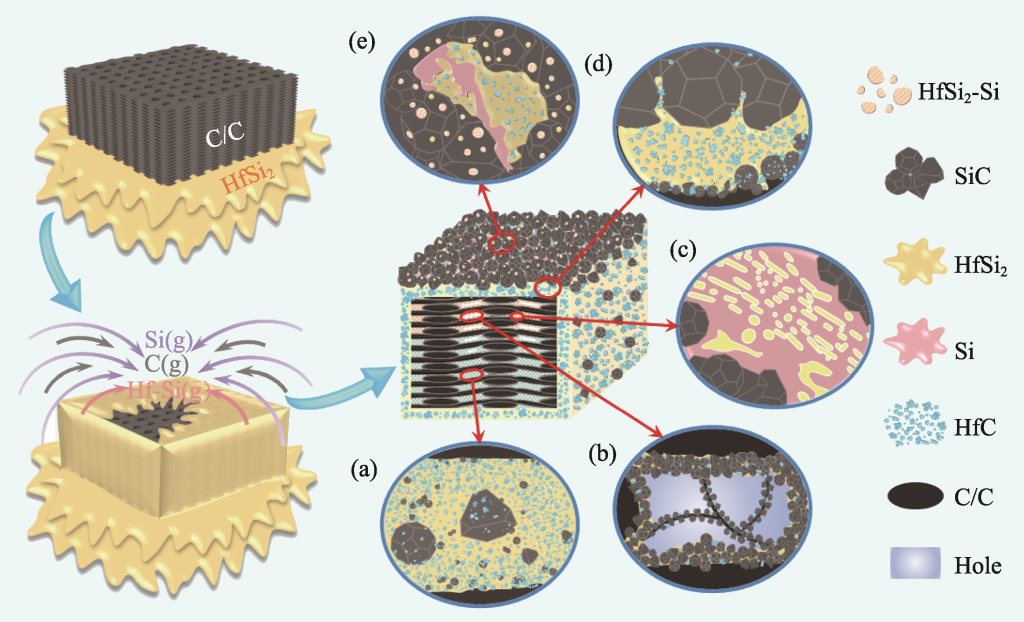
Fig. 6 Formation mechanism diagram of HfC-SiC-HfSi2 coating-matrix integrated modified C/C composites
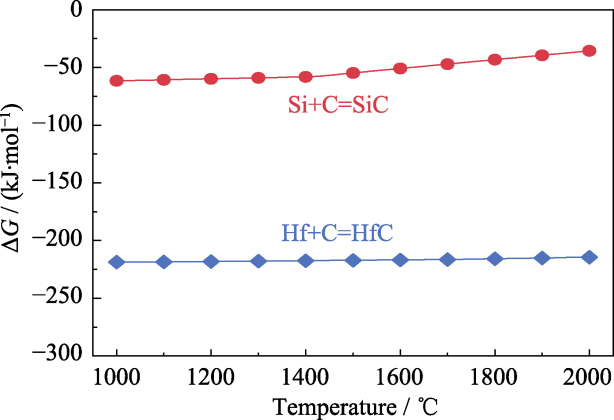
Fig. 7 Gibbs free energy changes as a function of temperature for the Hf-C and Si-C reactions
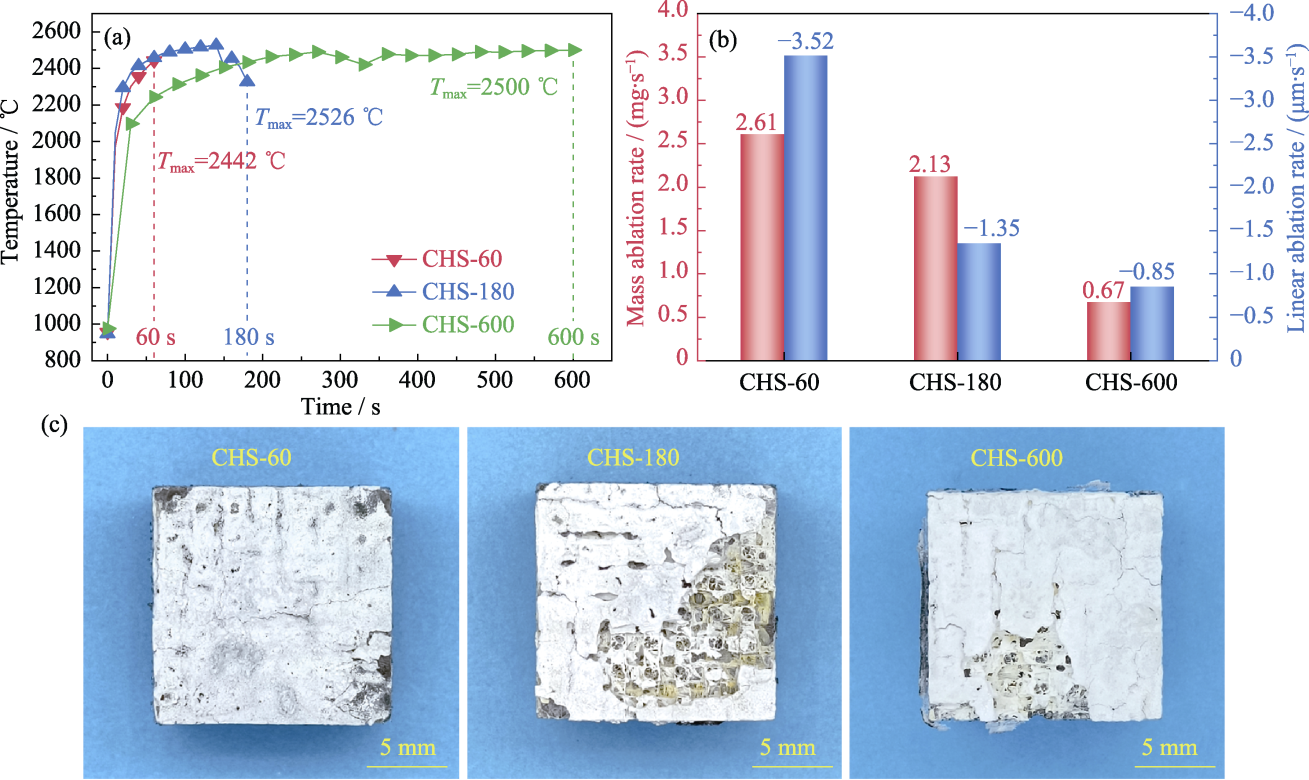
Fig. 8 (a) Temperature curves at the ablation center of the samples; (b) Mass and linear ablation rates; (c) Surface morphologies of the samples after ablation
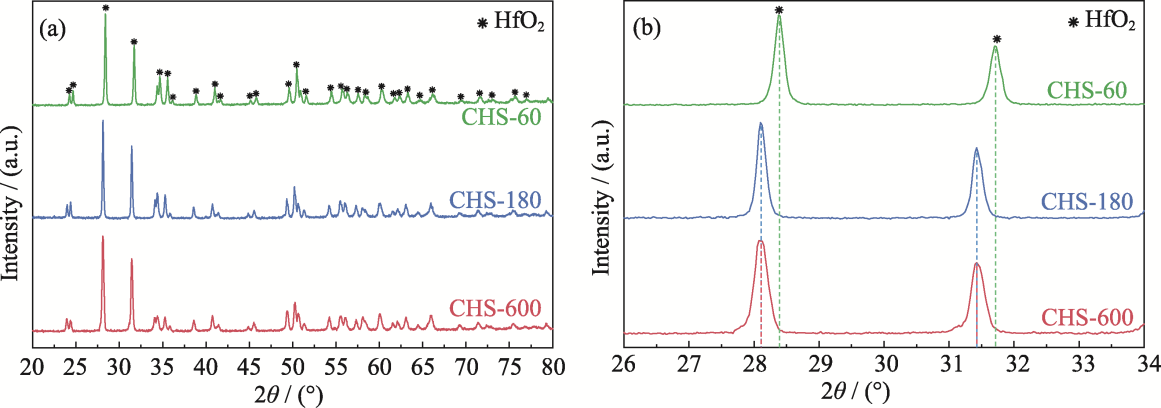
Fig. 9 XRD patterns of the ablated samples surface (a) and enlarged patterns in the range of 2θ=26°-34° (b)
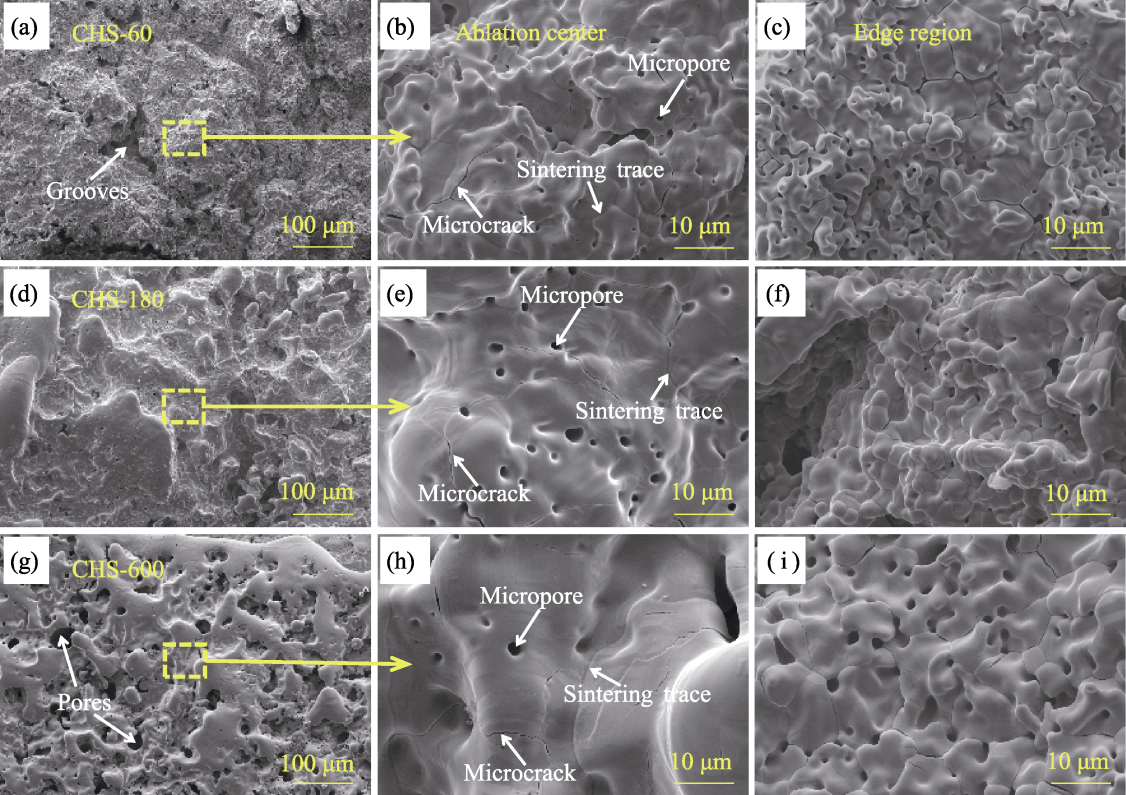
Fig. 10 Micro-morphologies of the center and edge regions of the ablated samples surface (a-c) CHS-60; (d-f) CHS-180; (g-i) CHS-600
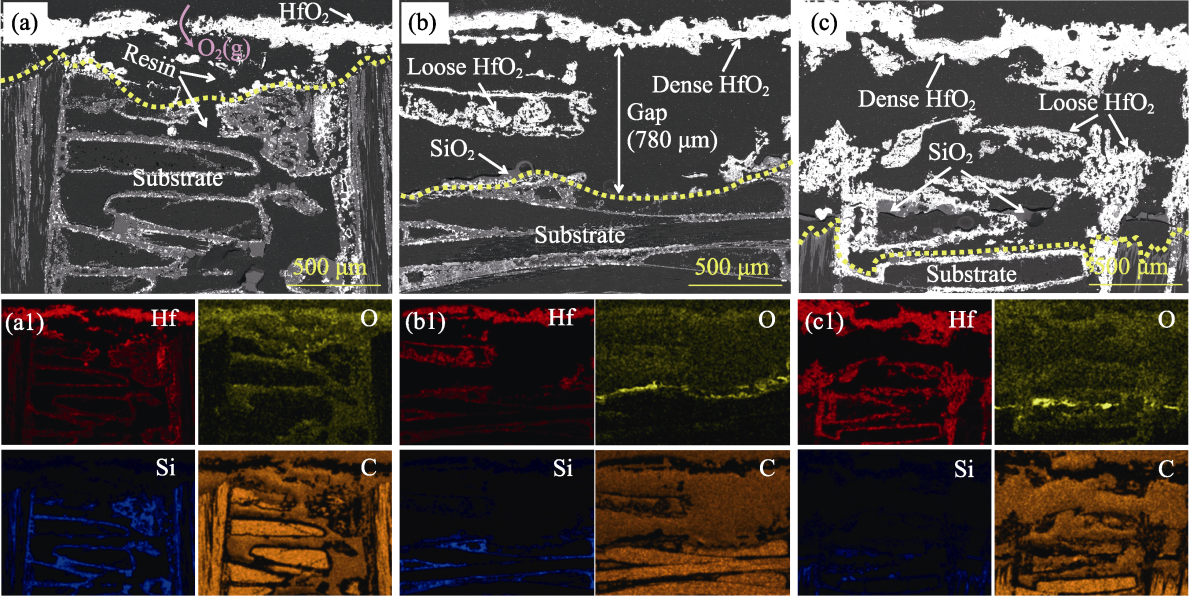
Fig. 11 Micro-morphologies and EDS elemental mappings of the cross-section at the ablation center of the samples (a, a1) CHS-60; (b, b1) CHS-180; (c, c1) CHS-600
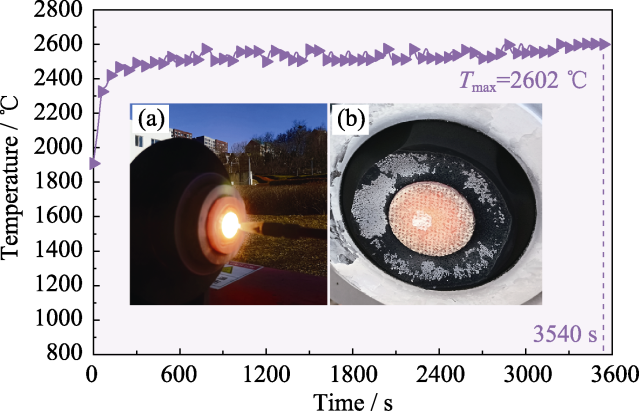
Fig. 12 Temperature curve at the ablation center of CHS-3540 and state diagrams of the sample and graphite fixture during (a) and after (b) ablation
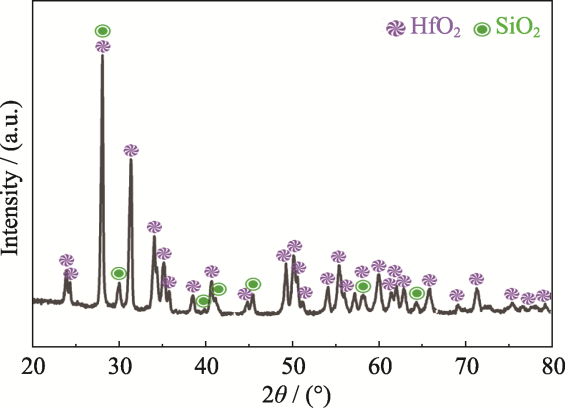
Fig. 13 XRD pattern of the CHS-3540 ablation surface
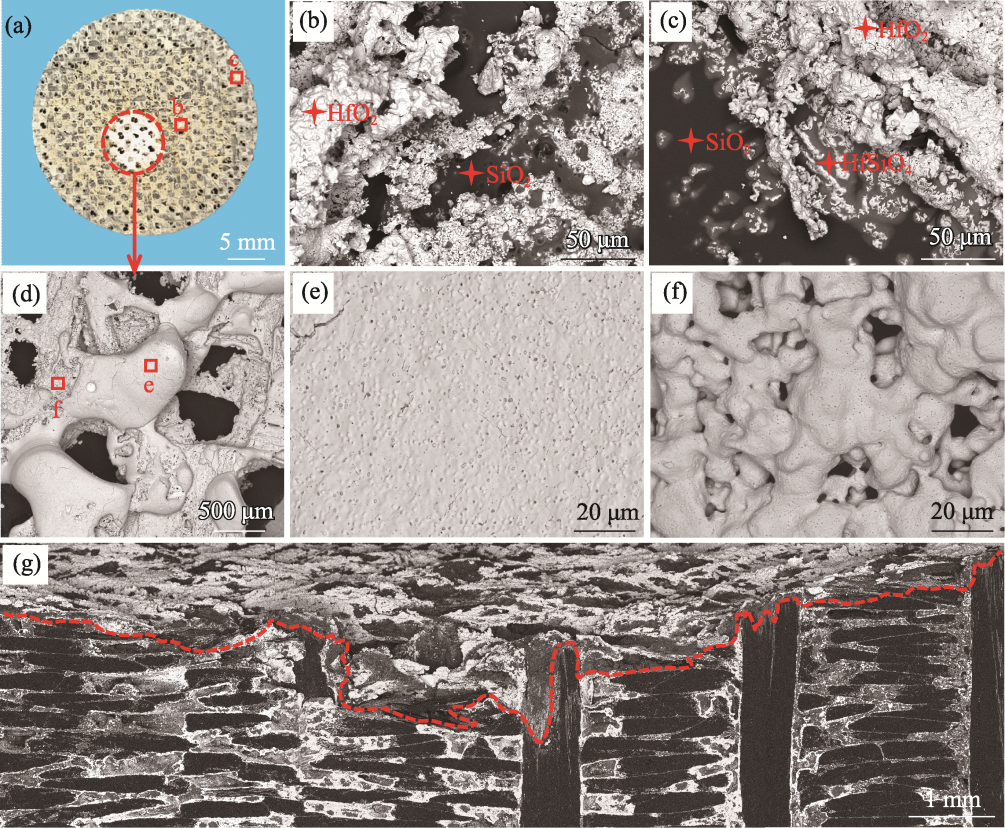
Fig. 14 Macroscopic morphology (a) and microstructures (b-g) of CHS-3540 after ablation (b) Transition region; (c) Edge region; (d-f) HfO2 layer at ablation center; (g) Cross-section
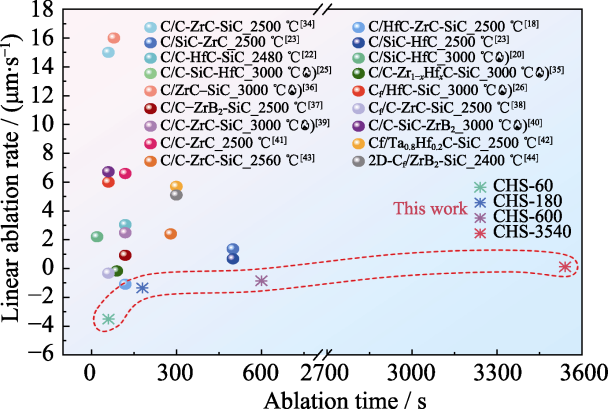
Fig. 15 Comparison of line ablation rates between this work and related literature[18,20,22 -23,25 -26,34 -44] Colorful figure is available on website
| [1] |
ZENG Y, WANG D, XIONG X, et al. Ablation-resistant carbide Zr0.8Ti0.2C0.74B0.26 for oxidizing environments up to 3,000 ℃. Nature Communications, 2017, 8: 15836.
DOI URL |
| [2] |
SCITI D, ZOLI L, REIMER T, et al. A systematic approach for horizontal and vertical scale up of sintered ultra-high temperature ceramic matrix composites for aerospace—advances and perspectives. Composites Part B: Engineering, 2022, 234: 109709.
DOI URL |
| [3] |
PADTURE N P. Advanced structural ceramics in aerospace propulsion. Nature Materials, 2016, 15(8): 804.
DOI PMID |
| [4] | 陈玉峰, 洪长青, 胡成龙, 等. 空天飞行器用热防护陶瓷材料. 现代技术陶瓷, 2017, 38(5): 311. |
| [5] |
ARAI Y, INOUE R, GOTO K, et al. Carbon fiber reinforced ultra-high temperature ceramic matrix composites: a review. Ceramics International, 2019, 45(12): 14481.
DOI URL |
| [6] |
ZHU S, ZHANG G, BAO Y, et al. Progress in preparation and ablation resistance of ultra-high-temperature ceramics modified C/C composites for extreme environment. Reviews on Advanced Materials Science, 2023, 62(1): 20220276.
DOI URL |
| [7] |
NI D, CHENG Y, ZHANG J, et al. Advances in ultra-high temperature ceramics, composites, and coatings. Journal of Advanced Ceramics, 2021, 11(1): 1.
DOI |
| [8] | PARK S J. Carbon/carbon composites//PARK S J. Carbon fibers. Singapore: Springer Singapore, 2018: 279. |
| [9] |
ZHANG J P, QU J L, FU Q G. Ablation behavior of nose-shaped HfB2-SiC modified carbon/carbon composites exposed to oxyacetylene torch. Corrosion Science, 2019, 151: 87.
DOI URL |
| [10] |
JIN X, FAN X, LU C, et al. Advances in oxidation and ablation resistance of high and ultra-high temperature ceramics modified or coated carbon/carbon composites. Journal of the European Ceramic Society, 2018, 38(1): 1.
DOI URL |
| [11] |
FAHRENHOLTZ W G, HILMAS G E. Ultra-high temperature ceramics: materials for extreme environments. Scripta Materialia, 2017, 129: 94.
DOI URL |
| [12] |
ZHANG X H, WANG Y M, CHENG Y, et al. Research progress on ultra-high temperature ceramic composites. Journal of Inorganic Materials, 2024, 39(6): 571.
DOI URL |
| [13] |
WYATT B C, NEMANI S K, HILMAS G E, et al. Ultra-high temperature ceramics for extreme environments. Nature Reviews Materials, 2023, 9: 773.
DOI |
| [14] |
LI X X, FU Q G, WEN Z H, et al. Research progress on ultra-high temperature ceramic structural materials for extreme environments. Journal of Inorganic Materials, 2025, 40(10): 1045.
DOI URL |
| [15] |
LIU Z, WANG Y, XIONG X, et al. Microstructure and ablation behavior of C/C-SiC-(ZrxHf1-x)C composites prepared by reactive melt infiltration method. Materials, 2023, 16(5): 2120.
DOI URL |
| [16] |
JIAO X, TAN Q, HE Q, et al. Cyclic ablation behavior of mullite-modified C/C-HfC-SiC composites under an oxyacetylene flame at about 2400 ℃. Journal of the European Ceramic Society, 2023, 43(10): 4309.
DOI URL |
| [17] |
WANG Y L, XIONG X, ZHAO X J, et al. Structural evolution and ablation mechanism of a hafnium carbide coating on a C/C composite in an oxyacetylene torch environment. Corrosion Science, 2012, 61: 156.
DOI URL |
| [18] |
CHEN Y, SUN W, XIONG X, et al. Microstructure, thermophysical properties, and ablation resistance of C/HfC-ZrC-SiC composites. Ceramics International, 2019, 45(4): 4685.
DOI URL |
| [19] |
VERDON C, SZWEDEK O, ALLEMAND A, et al. High temperature oxidation of two- and three-dimensional hafnium carbide and silicon carbide coatings. Journal of the European Ceramic Society, 2014, 34(4): 879.
DOI URL |
| [20] |
DUAN L, ZHAO X, WANG Y. Comparative ablation behaviors of C/SiC-HfC composites prepared by reactive melt infiltration and precursor infiltration and pyrolysis routes. Ceramics International, 2017, 43(18): 16114.
DOI URL |
| [21] |
CHEN B W, NI D W, WANG J X, et al. Ablation behavior of Cf/ZrC-SiC-based composites fabricated by an improved reactive melt infiltration. Journal of the European Ceramic Society, 2019, 39(15): 4617.
DOI URL |
| [22] |
LIU Z, FU Q, SHI H, et al. Comparative study of microstructure and ablation behaviour of C/C-HfC-SiC composites prepared under two different conditions. Materials Characterization, 2022, 194: 112467.
DOI URL |
| [23] |
ZHAO R, PANG S, LIANG B, et al. Comparative ablation behaviors of C/SiC-ZrC and C/SiC-HfC composites prepared by ceramization of carbon aerogel preforms. Corrosion Science, 2023, 225: 111623.
DOI URL |
| [24] |
KOU S, MAO Y, MA J, et al. Microstructure evolution and properties of Hf/Zr-based UHTCs modified C/C composites prepared by reactive melt infiltration method. Journal of the European Ceramic Society, 2024, 44(6): 3610.
DOI URL |
| [25] |
YAN M, LI H, FU Q, et al. Ablative property of C/C-SiC-HfC composites prepared via precursor infiltration and pyrolysis under 3,000 ℃ oxyacetylene torch. Acta Metallurgica Sinica (English Letters), 2014, 27(6): 981.
DOI URL |
| [26] |
YAN C, LIU R, ZHA B, et al. Fabrication and properties of 3-dimensional 4-directional Cf/HfC-SiC composites by precursor impregnation and pyrolysis process. Journal of Alloys and Compounds, 2018, 739: 955.
DOI URL |
| [27] |
ZHANG J, XIN Y, WANG R, et al. Ablation behaviour of C/C-HfC-SiC composites prepared by joint route of precursor infiltration and pyrolysis and gaseous silicon infiltration. Chinese Journal of Aeronautics, 2023, 36(9): 426.
DOI URL |
| [28] |
ZHANG M, HU D, FU Q. Ablation resistant behavior of silicide modified HfB2-SiC coating on graphite by spark plasma sintering: role of MeSi2 addition Journal of the European Ceramic Society, 2024, 44(11): 6286.
DOI URL |
| [29] |
GIGOLOTTI J C J, NUNES C A, SUZUKI P A, et al. Evaluation of phase equilibria involving the liquid phase in the Hf-Si system. Journal of Phase Equilibria and Diffusion, 2014, 35(5): 622.
DOI URL |
| [30] |
ZHOU L, FU Q, HU D, et al. Oxidation protective SiC-Si coating for carbon/carbon composites by gaseous silicon infiltration and pack cementation: a comparative investigation. Journal of the European Ceramic Society, 2021, 41(1): 194.
DOI URL |
| [31] |
HOU J Q, CHEN R C, ZENG Y Y, et al. Thermal shock and ablation resistance of SiC coating repaired by gaseous silicon infiltration. Journal of Inorganic Materials, 2025, 40(2): 168.
DOI URL |
| [32] |
HAGGERTY R P, SARIN P, APOSTOLOV Z D, et al. Thermal expansion of HfO2 and ZrO2. Journal of the American Ceramic Society, 2014, 97(7): 2213.
DOI URL |
| [33] |
WANG P, LI H, SUN J, et al. The effect of HfB2 content on the oxidation and thermal shock resistance of SiC coating. Surface and Coatings Technology, 2018, 339: 124.
DOI URL |
| [34] |
SHEN Y, SUN W, XU Y, et al. Structural characteristics and ablative behavior of YF3 modified C/C-ZrC-SiC composites and their preparation by molten salt assisted reactive melt infiltration. Journal of the European Ceramic Society, 2023, 43(4): 1303.
DOI URL |
| [35] |
JIAO X, HE Q, QING M, et al. Ablation behavior of C/C- Zr1-xHfxC-SiC composites under an oxyacetylene flame at above 2500 ℃. Journal of Materials Research and Technology, 2023, 24: 3235.
DOI URL |
| [36] |
YAN C, LIU R, CAO Y, et al. Ablation behavior and mechanism of C/ZrC, C/ZrC-SiC and C/SiC composites fabricated by polymer infiltration and pyrolysis process. Corrosion Science, 2014, 86: 131.
DOI URL |
| [37] |
RAN L P, RAO F, PENG K, et al. Preparation and properties of C/C-ZrB2-SiC composites by high-solid-loading slurry impregnation and polymer infiltration and pyrolysis (PIP). Transactions of Nonferrous Metals Society of China, 2019, 29(10): 2141.
DOI URL |
| [38] |
CHANG Y, SUN W, XIONG X, et al. Microstructure and ablation behaviors of a novel gradient C/C-ZrC-SiC composite fabricated by an improved reactive melt infiltration. Ceramics International, 2016, 42(15): 16906.
DOI URL |
| [39] |
XIE J, LI K, LI H, et al. Ablation behavior and mechanism of C/C-ZrC-SiC composites under an oxyacetylene torch at 3000 ℃. Ceramics International, 2013, 39(4): 4171.
DOI URL |
| [40] |
LIU Y, FU Q, WANG B, et al. The ablation behavior and mechanical property of C/C-SiC-ZrB2 composites fabricated by reactive melt infiltration. Ceramics International, 2017, 43(8): 6138.
DOI URL |
| [41] |
LI K, XIE J, LI H, et al. Ablative and mechanical properties of C/C-ZrC composites prepared by precursor infiltration and pyrolysis process. Journal of Materials Science and Technology, 2015, 31(1): 77.
DOI URL |
| [42] |
ZOU X, NI D, CHEN B, et al. Ablation behavior and mechanisms of 3D-Cf/Ta0.8Hf0.2C-SiC composite at temperatures up to 2500 ℃. Journal of the European Ceramic Society, 2023, 43(4): 1284.
DOI URL |
| [43] |
ZHONG L, GUO L, WANG C, et al. Preparation and long-term ablation behavior of Cf-reinforced ZrC-SiC coated C/C-ZrC-SiC composite. Journal of the European Ceramic Society, 2024, 44(2): 693.
DOI URL |
|
CHEN B W, NI D W, LIAO C J, et al. Long-term ablation behavior and mechanisms of 2D-Cf/ZrB2-SiC composites at temperatures up to 2400 ℃. Corrosion Science, 2020, 177: 108967.
DOI URL |
| [1] | YUAN Wang, HU Jianbao, ZHOU Liang, KAN Yanmei, ZHANG Xiangyu, DONG Shaoming. Effect of Argon Atmosphere Heat Treatment on Mechanical Properties and Microstructural Evolution of Shicolon-II SiC Fibers [J]. Journal of Inorganic Materials, 2026, 41(1): 119-128. |
| [2] | HAN Weiwei, HUANG Dong, LI Tingsong, LI Jiang. Sm:LuAG/Nd:LuAG Composite Laser Ceramics with Cladding Structure: Fabrication and Properties [J]. Journal of Inorganic Materials, 2026, 41(1): 113-118. |
| [3] | ZHONG Weimin, ZHAO Ke, WANG Kewei, LIU Dianguang, LIU Jinling, AN Linan. Effect of Oscillatory Pressure Amplitude on Microstructures and Wear Resistance of Tungsten Carbide [J]. Journal of Inorganic Materials, 2025, 40(9): 964-970. |
| [4] | MU Haojie, ZHANG Yuanjiang, YU Bin, FU Xiumei, ZHOU Shibin, LI Xiaodong. Preparation and Properties of ZrO2 Doped Y2O3-MgO Nanocomposite Ceramics [J]. Journal of Inorganic Materials, 2025, 40(3): 281-289. |
| [5] | ZHENG Yuanshun, YU Jian, YE Xianfeng, LIANG Dong, ZHU Wanting, NIE Xiaolei, WEI Ping, ZHAO Wenyu, ZHANG Qingjie. Boosting the Thermoelectric Performance of Full-Heusler Fe2VAl Alloy via Substituting Al Site with V [J]. Journal of Inorganic Materials, 2025, 40(12): 1425-1432. |
| [6] | LI Xiaoxuan, FU Qiangang, WEN Zihao, YANG Jinshan, NI Dewei, ZHANG Jie, CHENG Yuan, LIU Yuxuan, CHU Yanhui, CAI Feiyan, WANG Jingyang, ZHANG Xinghong. Research Progress on Ultra-high Temperature Ceramic Structural Materials for Extreme Environments [J]. Journal of Inorganic Materials, 2025, 40(10): 1045-1078. |
| [7] | ZHOU Fan, TIAN Zhilin, LI Bin. Research Progress on Carbide Ultra-high Temperature Ceramic Anti-ablation Coatings for Thermal Protection System [J]. Journal of Inorganic Materials, 2025, 40(1): 1-16. |
| [8] | TAN Min, CHEN Xiaowu, YANG Jinshan, ZHANG Xiangyu, KAN Yanmei, ZHOU Haijun, XUE Yudong, DONG Shaoming. Microstructure and Oxidation Behavior of ZrB2-SiC Ceramics Fabricated by Tape Casting and Reactive Melt Infiltration [J]. Journal of Inorganic Materials, 2024, 39(8): 955-964. |
| [9] | FAN Wugang, CAO Xiong, ZHOU Xiang, LI Ling, ZHAO Guannan, ZHANG Zhaoquan. Anticorrosion Performance of 8YSZ Ceramics in Simulated Aqueous Environment of Pressurized Water Reactor [J]. Journal of Inorganic Materials, 2024, 39(7): 803-809. |
| [10] | CHEN Qian, SU Haijun, JIANG Hao, SHEN Zhonglin, YU Minghui, ZHANG Zhuo. Progress of Ultra-high Temperature Oxide Ceramics: Laser Additive Manufacturing and Microstructure Evolution [J]. Journal of Inorganic Materials, 2024, 39(7): 741-753. |
| [11] | JIANG Lingyi, PANG Shengyang, YANG Chao, ZHANG Yue, HU Chenglong, TANG Sufang. Preparation and Oxidation Behaviors of C/SiC-BN Composites [J]. Journal of Inorganic Materials, 2024, 39(7): 779-786. |
| [12] | ZHANG Yuyu, WU Yicheng, SUN Jia, FU Qiangang. Preparation and Wave-absorbing Properties of Polymer-derived SiHfCN Ceramics [J]. Journal of Inorganic Materials, 2024, 39(6): 681-690. |
| [13] | CAI Feiyan, NI Dewei, DONG Shaoming. Research Progress of High-entropy Carbide Ultra-high Temperature Ceramics [J]. Journal of Inorganic Materials, 2024, 39(6): 591-608. |
| [14] | SU Yi, SHI Yangfan, JIA Chenglan, CHI Pengtao, GAO Yang, MA Qingsong, CHEN Sian. Microstructure and Properties of C/HfC-SiC Composites Prepared by Slurry Impregnation Assisted Precursor Infiltration Pyrolysis [J]. Journal of Inorganic Materials, 2024, 39(6): 726-732. |
| [15] | ZHAO Rida, TANG Sufang. Research Progress of Ceramic Matrix Composites Prepared by Improved Reactive Melt Infiltration through Ceramization of Porous Carbon Matrix [J]. Journal of Inorganic Materials, 2024, 39(6): 623-633. |
| Viewed | ||||||
|
Full text |
|
|||||
|
Abstract |
|
|||||
