|
|
Research Progress on Sodium Chloride Solid Electrolytes
PENG Dezhao, LI Rui, WANG Wenhong, WANG Zirui, ZHANG Zhizhen
2026 Vol. 41 (4): 409–420
 Abstract
(
822 )
 HTML
HTML(
31)
 PDF
PDF(6149KB)(
1592
)
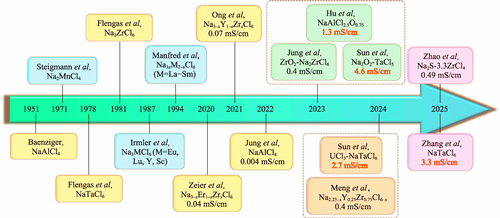
Sodium-ion batteries are widely considered a promising alternative to lithium-ion batteries owing to their low cost and the abundance of sodium resources. Advances in development and application of all-solid-state sodium-ion batteries (ASSBs) critically depend on the availability of solid electrolytes that combine high ionic conductivity with wide electrochemical stability window. Among various solid electrolytes, chloride solid electrolytes have attracted considerable attention in recent years due to their high ionic conductivity, high oxidation potential and favorable deformability. This review provides a comprehensive overview of development of sodium chloride solid electrolytes, emphasizing interplay of chemical composition, crystal structure and ionic conductivity, and further examining how modification approaches, including cation/anion doping, amorphization and heterostructure engineering, govern their ionic transport behavior. In addition, this review also evaluates the electrochemical stability of sodium chloride solid electrolytes, and their chemical and electrochemical compatibility with common cathode materials, which are crucial for enabling practical cell configurations. The interfacial degradation mechanisms that arise at the interface with sodium metal anode are also analyzed, and recent advances in chloride-based ASSBs are concisely reviewed. Finally, key challenges that hinder practical deployment of chloride-based ASSBs are highlighted, and prospective research directions are proposed, which are expected to provide valuable insights to guide future application of chloride solid electrolytes in energy conversion and storage technologies.
|
|
|
Research Progress on Lanthanum Zirconate Porous Materials for Thermal Insulation
CHEN Kun, JIANG Yonggang, FENG Junzong, LI Liangjun, HU Yijie, FENG Jian
2026 Vol. 41 (4): 421–431
Abstract(
450 )
HTML(
12)
PDF(3477KB)(
1574
)
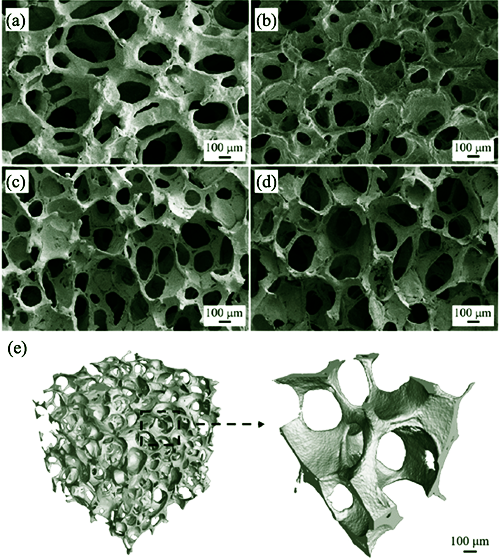
Lanthanum zirconate porous material is a kind of high porosity materials with nanoparticles or microparticles as the basic building unit. These materials exhibit exceptionally low thermal conductivity and maintain remarkable phase stability up to their melting point, making them particularly promising for thermal insulation applications in the aerospace industry. However, sintering problems of lanthanum zirconate porous materials cause collapse and shrinkage of pore structure, resulting in relatively poor thermal resistance and thermal insulation. Researchers have employed precise control over pore sizes and particle dimensions to optimize the mesostructure, leading to a significant reduction in thermal conductivity. Specifically, template-based methods enable precise control over pore sizes at the micro-nano scale, while Sol-Gel techniques combined with varied drying processes facilitate regulation of particle dimensions at the nanoscale. Concurrently, introduction of single- or multi-element doping has proven effective in inducing controlled lattice distortion, which subsequently weakens thermodynamic diffusion processes and suppresses high-temperature grain growth. This dual strategy of morphological control and compositional engineering has substantially improved both thermal insulation capability and temperature resistance of lanthanum zirconate porous materials. This review begins by introducing crystal structure of lanthanum zirconate, highlighting its advantages in phase stability and doping capability. It then systematically surveys recent developments in fabrication technologies and modification strategies for lanthanum zirconate-based porous thermal insulation materials, with particular emphasis on advances in mesostructural optimization and elemental doping methodologies. A detailed analysis is provided on the distinct mechanisms through which these approaches suppress thermal conduction and enhance high-temperature stability. Finally, this review concludes by outlining promising avenues for future research.
|
|
|
Surface Modification of Titanium-based Dental Implants for Soft Tissue Sealing: A Review
LI Xuan, YE Kuicai, FENG Jiayin, QIU Jiajun, QIAN Wenhao, XING Min
2026 Vol. 41 (4): 432–444
Abstract(
492 )
HTML(
7)
PDF(3797KB)(
2773
)
Titanium and its alloys are widely used as dental implant materials due to their excellent mechanical property, corrosion resistance and biocompatibility. However, in clinical applications, titanium-based dental implants often suffer from poor soft tissue sealing, allowing bacteria to invade and induce peri-implantitis, and leading to final implant failure. To address these issues and effectively reduce the failure rate of implant surgery, researchers worldwide have conducted extensive and in-depth studies. This article reviews recent advancements in surface modification strategies for improving soft tissue sealing on titanium-based dental implants, with a focus on methods for regulating surface chemical composition and constructing micro-nano structures. Additionally, it highlights the existing challenges and future trends in this field, aiming to provide valuable insights for further research on soft tissue sealing of titanium-based dental implants.
|
|
|
First-principles Investigation of Elastic and Thermophysical Properties of High-entropy Rare-earth Oxide Thermal Barrier Coating Materials
WANG Yuhe, LUO Yixiu, GUO Huiming, ZHANG Guangheng, ZHANG Siyan, SUN Luchao, WANG Jiemin, WANG Jingyang
2026 Vol. 41 (4): 445–454
Abstract(
824 )
HTML(
19)
PDF(16654KB)(
3789
)
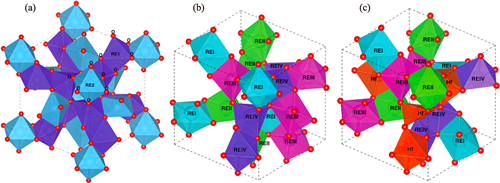
Continuous fiber-reinforced silicon carbide ceramic matrix composites utilized in hot-section components of high thrust-to-weight ratio aero-engines require protection via thermal/environmental barrier coatings (T/EBCs). To develop novel rare-earth oxide thermal barrier coating materials with low thermal conductivity, compatible thermal expansion coefficients, and excellent high-temperature phase stability, introduction of a high-entropy design concept offers a promising approach and opportunity for composition design and performance optimization. Addressing the challenges of structural modeling and property prediction for complex high-entropy ceramic systems, this study firstly introduces a novel high-entropy ceramic modeling strategy based on the special quasi-random structure (SQS) method. This strategy facilitates rapid prediction of complex ceramic properties while maintaining computational accuracy. Subsequently, crystal structures, elastic properties and thermophysical characteristics of four high-entropy rare-earth oxide materials are predicted and compared by integrating first-principles calculations. This research particularly elucidates regulatory effects and atomic-scale origins of different rare-earth compositions and Hf doping on the material’s low thermal conductivity performance. The research results provide scientific insights and fundamental data for theoretical simulation and material selection design of T/EBCs for aero-engine hot-section components.
|
|
|
Machine Learning Potential Development and High-temperature Property Calculation for High-entropy Boride Ceramics
GONG Huan, ZHANG Xu, ZHANG Xiaofeng, LI Bei, LIU Kai
2026 Vol. 41 (4): 455–461
Abstract(
635 )
HTML(
14)
PDF(5181KB)(
2216
)
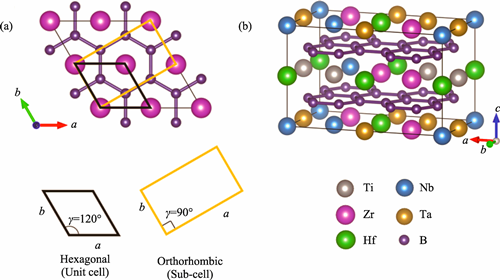
Molecular dynamics simulations of high-entropy boride ceramics (HEBCs) in extreme high-temperature environments are constrained by limited accuracy and temperature stability of empirical force fields. In this work, a high-accuracy deep-learning potential (DP) was proposed and developed for (Hf0.2Zr0.2Ta0.2Ti0.2Nb0.2)B2 systems via first-principles calculations and deep learning method. It is shown that, through expanding datasets via the active learning strategy, the DP model stability under high-temperature conditions (i.e., ~3000 K) could be significantly enhanced. The developed DP achieves high accuracy while maintaining computational efficiency. Validation results from the developed DP manifest that predictions of the volumetric equation of state align well with first-principles calculations, demonstrating the model’s good scalability. The lattice constants and mechanical properties predicted by DP-enabled molecular dynamics simulations show excellent agreements with experimental observations, with relative errors within 2%. Furthermore, the simulations successfully reveal the anisotropic thermal expansion behavior of HEBCs and rectify the anomalous trends reported in previous research. Therefore, this developed DP model provides a reliable tool for atomic-scale simulations of high-entropy boride ceramics under extreme conditions, and holds significant scientific value for advancing the in-depth understanding of their high-temperature service behavior.
|
|
|
High-performance n-type PVDF/Ag2Se Free-standing Flexible Composite Thermoelectric Films Fabricated by Powder Hot-pressing
XU Zishuo, HU Yuejuan, HU Yuchen, CHEN Lidong, YAO Qin
2026 Vol. 41 (4): 462–468
Abstract(
594 )
HTML(
8)
PDF(3867KB)(
2157
)
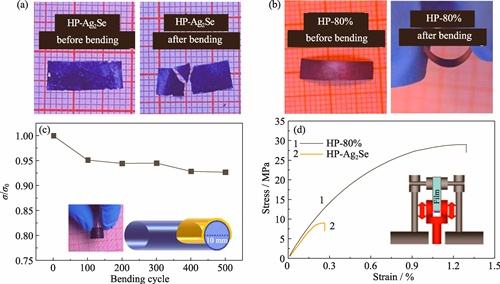
Rapid development of applications in wearable devices, microelectronics, and internet of things has created an urgent demand for free-standing flexible thermoelectric films. Currently, research on n-type free-standing flexible thermoelectric films significantly lags behind, and there is an urgent need to enhance film performance through the optimization of preparation processes. In this study, high-performance n-type poly(vinylidene fluoride)/silver selenide (PVDF/Ag2Se) free-standing flexible thermoelectric composite films were developed using a simple and efficient powder hot-pressing method. The high-temperature and high-pressure conditions during hot pressing induced recrystallization and grain growth of Ag2Se, effectively reducing grain boundary density, significantly decreasing carrier scattering and interfacial resistance, thereby simultaneously enhancing carrier mobility, electrical conductivity and Seebeck coefficient. Meanwhile, the melted PVDF filled interstices of the Ag2Se conductive network during hot pressing, substantially improving material flexibility while increasing density. Experimental results demonstrate that the hot-pressed sample with 80% (in mass) Ag2Se exhibits outstanding room-temperature thermoelectric performance with an electrical conductivity of 277.0 S·cm-1 and a Seebeck coefficient of -135 μV·K-1, and thermoelectric power factor (PF) and estimated figure of merit (ZT) reach 509 μW·m-1·K-2 and 0.26, respectively. This performance not only significantly surpasses that of previously reported PVDF/Ag2Se free-standing films but also ranks among the highest for all reported Ag2Se-based organic/inorganic free-standing flexible thermoelectric films. Furthermore, mechanical tests reveal that the film maintains over 92% of its original conductivity after 500 bending cycles at a 5 mm radius, while exhibiting a maximum tensile strain four times greater than pure Ag2Se films. This study provides a novel strategy for synergistic optimization of thermoelectric performance and mechanical flexibility in organic/inorganic composite thermoelectric materials.
|
|
|
Boron and Nitrogen Co-doped Biomass Carbon Sphere Anode Material: Preparation and Sodium Storage Properties for Sodium-ion Batteries
MA Xiaojia, GENG Xinyu, ZHANG Weike
2026 Vol. 41 (4): 469–478
Abstract(
828 )
HTML(
12)
PDF(14535KB)(
578
)
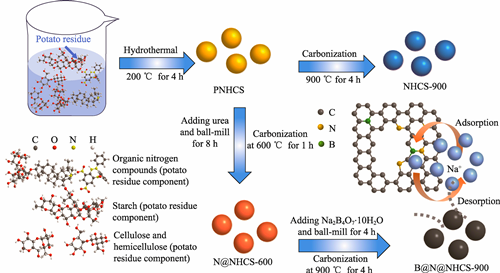
Hard carbon is a promising anode material for sodium-ion batteries due to its low cost, wide source and long lifespan. However, its lower initial Coulombic efficiency (ICE) and poor capacity limit its practical applications. At present, heteroatom doping is an effective strategy to modulate the amorphous carbon microcrystalline structure and improve the sodium storage performance of carbon materials. The synergistic effect generated by combined heteroatom doping is more conducive to enhancing the electrochemical reactivity of carbon materials than single heteroatom doping. In this study, carbon spheres were synthesized by hydrothermal reaction, with waste residue extracted from potato starch processing waste liquid as precursor, based on which boron and nitrogen co-doped biomass carbon spheres were prepared by ball milling and pyrolysis using urea and sodium tetraborate as doping sources. Subsequently, the effects of B and N co-doping on the microstructure and sodium storage properties of carbon materials were investigated. The results indicated that B and N co-doping increased disorder and enlarged layer spacing of carbon materials, while forming suitable C=O bonds that were conducive to stabilizing solid electrolyte interphase film generation. The as-prepared electrode exhibited a reversible capacity of 284.3 mAh·g-1 at a current density of 50 mA·g-1 with an ICE of 77.0%. After 500 cycles at 2 A·g-1, its capacity decayed to 122.5 mAh·g-1, with 56.1% capacity retention. Therefore, boron and nitrogen co-doped biomass carbon sphere anode material is a promising one for sodium-ion batteries with superior sodium storage properties.
|
|
|
Preparation and Performance Optimization of Boron-gallium Co-doped Zinc Oxide Transparent Electrodes
JIANG Shengnan, ZHENG Zhong, HE Weiyi, LIU Tao, PAN Xiuhong, CHEN Kun, GUO Hui, GAO Pan, LIU Chunjun, LIU Xuechao
2026 Vol. 41 (4): 479–485
Abstract(
506 )
HTML(
9)
PDF(4589KB)(
1788
)
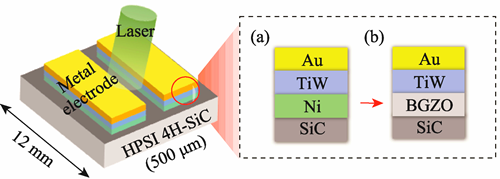
Silicon carbide (SiC) photoconductive semiconductor switches (PCSS) are optoelectronic devices that utilize ultrafast pulsed lasers to modulate semiconductor resistivity for switching operations. Transparent oxide conductive films, especially zinc oxide thin films, are considered as a potential alternative electrode materials to reduce the on-resistance due to their excellent optical transparency and electrical conductivity. However, zinc oxide thin films are prone to ablation damage under high-energy pulsed laser irradiation, leading to crack formation and significantly affecting the device’s lifespan. Additionally, uneven local electric field distribution in the electrodes poses challenges to the long-term stability of the device. In this study, boron-gallium co-doped zinc oxide (BGZO) thin films were prepared by magnetron sputtering, and effects of annealing temperature (300-600 ℃) on their structural and electrical properties were investigated. X-ray diffraction and Hall effect measurements revealed that these films annealed at 400 ℃ exhibited optimal crystallinity and electrical performance, achieving a visible-light transmittance of 93% and a resistivity as low as 1.40×10⁻² Ω·cm. After integrating the optimized BGZO films as transparent electrodes into SiC PCSS devices, these BGZO-based devices, under 532 nm wavelength and 170 mJ pulsed laser excitation, exhibited more stable operation than conventional Ni-based electrodes, with reduced filamentary current damage at the SiC-electrode interface and improved electric field uniformity at the electrode edges. This study provides an optimized fabrication strategy for high-performance transparent conductive films and confirms their advantages in PCSS applications.
|
|
|
Effects of Working Pressure on the Structure and Electrical Properties of AlScN Thin Films
SUI Jinyang, ZHOU Dayu, ZHAO Wenjin, TONG Yi, WANG Xinpeng
2026 Vol. 41 (4): 486–492
Abstract(
422 )
HTML(
6)
PDF(2420KB)(
905
)
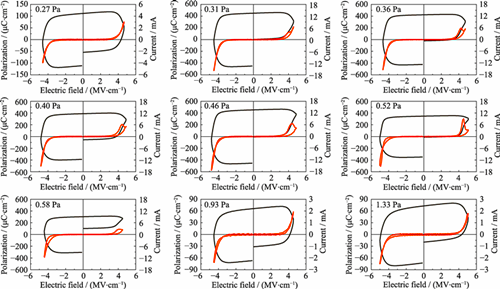
Since ferroelectric properties of Al1-xScxN thin films were experimentally confirmed in 2019, wurtzite-structured ferroelectric materials have received worldwide attention. However, the strong dependence of their ferroelectric performance on deposition parameters still remains a significant challenge, limiting their reliable integration into practical device applications. This study aims to systematically investigate the influence of sputtering working pressure on microstructural evolution and resultant ferroelectric properties of Al1-xScxN thin films. The primary goal is to identify the optimal pressure window that yields superior ferroelectric performance and to understand the underlying structure-property relationships. Al0.71Sc0.29N thin films were deposited on silicon substrates using reactive magnetron sputtering in a pure nitrogen atmosphere, and experienced the working pressure varied from 0.27 Pa to 1.33 Pa. The correlation between crystal structure, surface morphology, and ferroelectric properties of the thin film was analyzed. The results showed that the working pressure significantly affected crystallization quality of Al0.71Sc0.29N thin films, among which prepared under 0.52 Pa had the best crystallization quality and excellent ferroelectric properties. As the working pressure increased, the pyramid-like structures began to appear on surface of the film and gradually increased, while the static leakage current also gradually decreased. This work conclusively demonstrates that sputtering working pressure is one of the decisive factors in tuning microstructure and ferroelectricity of Al1-xScxN films. The correlation between working pressure-induced morphological changes and leakage current suppression offers valuable insights for engineering high-performance wurtzite ferroelectric devices.
|
|
|
Crystal Growth and Properties of Bi-doped InSe
XU Hao, GU Haitao, WU Honghui, YUE Xiaofei, LIN Siqi, JIN Min
2026 Vol. 41 (4): 493–499
Abstract(
514 )
HTML(
6)
PDF(7240KB)(
1026
)
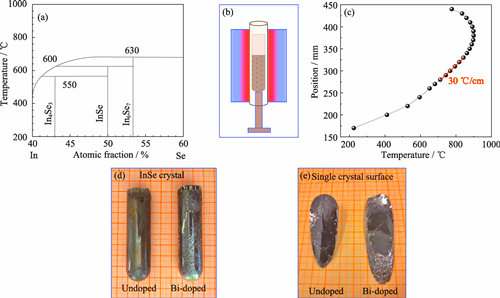
Indium selenide (InSe), a typical layered III-VI semiconductor, has attracted intense interest owing to its high electron mobility, tunable bandgap and exceptional plastic deformation capability, enabling it a promising candidate for next-generation electronic, optoelectronic and flexible devices. Recently, the controlled growth of intrinsic InSe crystals has been well developed, whereas doping InSe crystals with a third element remains relatively scarce. In this study, intrinsic InSe crystals were grown using the Bridgman method, and high-quality Bi-doped InSe crystals were then prepared through introducing Bi during the crystal synthesis stage. Optical microscopy and scanning electron microscopy observations indicate that the as-grown Bi-doped InSe crystals exhibit a smooth surface and excellent single-crystalline characteristic. Raman spectroscopy and X-ray diffraction analyses further demonstrate that, after Bi doping, their phase structure is consistent with former intrinsic crystals, exhibiting ε-InSe phase. Chemical etching experiments reveal that the doped Bi atoms can interact with dislocation cores within the crystal, effectively suppressing their motion and significantly reducing their dislocation density. Electrical measurements show that the Bi doping markedly increases carrier concentration and mobility of InSe crystal at high temperature, which is primarily attributed to the introduction of additional free carriers and suppression of carrier scattering resulting from the reduced dislocation density. Consequently, Bi-doped InSe crystal was successfully fabricated, and its superior performance compared to the intrinsic InSe was verified. This work provides theoretical insights and experimental guidance for optimizing properties of InSe crystals in application in future devices.
|
|
|
Co-Mg Synergistic Carbon Nano Onions Catalyst: Preparation and Low-temperature Catalytic Hydrogen Production from Ammonia Decomposition
XUE Xinyan, ZHANG Xiaowei, LU Heng, LI Shijie, ZHANG Weike, CHAN Siewhwa
2026 Vol. 41 (4): 500–508
Abstract(
466 )
HTML(
8)
PDF(6305KB)(
1152
)
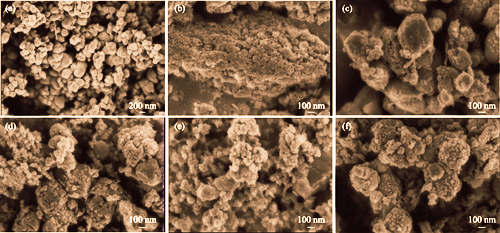
Decomposition of ammonia for hydrogen production is a promising method, but still needs developing low-cost, highly active and selective catalysts which can operate at moderate temperatures. In this study, carbon nano-onions (CNOs), a byproduct of methane pyrolysis at 850 ℃, were used as a support for loading active metal cobalt (Co) via a uniform deposition-precipitation method. Additionally, magnesium oxide (MgO) was introduced as a promoter to prepare a high-performance ammonia decomposition catalyst. An investigation was conducted on the effects of acid washing and potassium (K) activation treatments on morphology of the CNOs support and catalyst performance with in-depth exploration of their influence mechanisms. Various characterization and chemical adsorption experiments confirmed a positive correlation between basicity strength of the catalyst and its ammonia decomposition performance. It was revealed that incorporation of CNOs significantly enhanced electronic conductivity of the catalyst and facilitated uniform dispersion of Co2MgO4 nanoparticles on the support. This uniform dispersion increased the exposure of basic active sites, thereby enhancing the catalyst's ability to adsorb ammonia molecules. The acid washing treatment introduced more oxygen-containing functional groups on the CNOs surface which acted as anchoring sites to form strong chemical bonds (coordination or ionic bonds) with Co2+ or Mg2+, thus stabilizing Co2MgO4 particles. These strong chemical bonds increased the reduction difficulty of the metal oxides, leading to an elevated reduction temperature. Catalytic performance tests demonstrated that the synergistic effect of CNOs, MgO, K, and Co significantly optimized structural characteristics, metal particle size and catalytic performance of the catalyst. Among a series of synthesized catalysts, Co2Mg/K-CNO’ exhibited the best catalytic activity for ammonia decomposition, achieving a conversion rate of 99.6% at 550 ℃ and a space-time yield of 12000 mL·gcat-1·h-1.
|
|
|
Cordierite/Aluminum Borate Whiskers/Co0.8FexCe0.2-xCr2O4 Catalysts: Preparation and Filtration Catalytic Performance for Carbon Soot
ZHANG Mengjie, LI Zhibo, HUANG Ruinan, LÜ Xiangfei, WANG Wei
2026 Vol. 41 (4): 509–518
Abstract(
362 )
HTML(
7)
PDF(2301KB)(
311
)
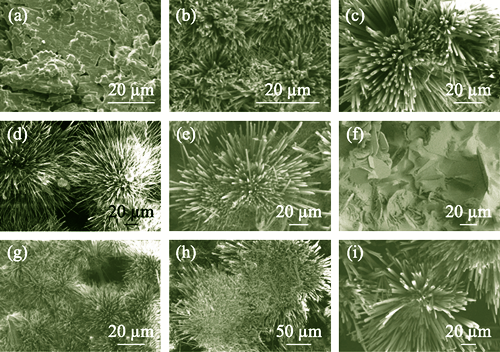
With increasingly strict regulations on exhaust emissions, the higher requirements have been built for filtration of diesel particulate filter (DPF) because traditional DPF cannot meet the demand for precise filtration of nanoparticles in exhaust. In this study, a series of Co0.8FexCe0.2-xCr2O4 spinel-type catalysts were loaded on aluminum borate whiskers by hexadecyl dimethyl ammonium bromide (CTAB)-assisted co-precipitation method. The unique hierarchical microstructure design of “whisker enhanced filter-bimetallic doping catalytic oxidation” achieves a combination of efficient filtration performance and low-temperature catalytic performance, enabling catalytic oxidation of carbon soot particles at lower temperatures. Fe and Ce co-doping produces significant synergistic effects, increasing concentrations of oxygen species (oxygen vacancies), Co3+ and Cr6+ on the catalyst surface and enhancing reaction activity. Temperature of carbon soot particles at 50% conversion (T50=446 ℃) is significantly lower than that of the blank cordierite sample (T50=567 ℃). Five cyclic stability tests show that the catalysts have good stability and CO2 selectivity (86%-94%). In conclusion, this unique hierarchical microstructure exhibits a unity of efficient particle filtration and low temperature catalytic combustion performance, with potential application in the field of DPF.
|
|
|
Graphene Oxide Modified UiO-66 Based Metal Organic Framework Gel: Preparation and Efficient Toluene Adsorption Performance
ZHU Kaihuang, YANG Shijie, LI Xinge, SONG Guanqing, SHI Gansheng, WANG Yan, REN Xiaomeng, LU Yao, XU Xinhong, SUN Jing
2026 Vol. 41 (4): 519–526
Abstract(
919 )
HTML(
7)
PDF(1341KB)(
1726
)
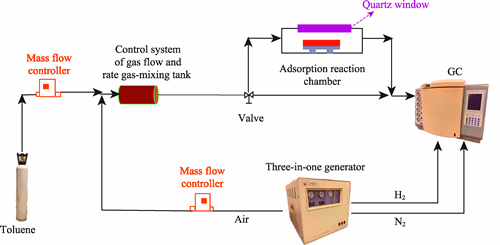
Volatile organic compounds (VOCs), particularly aromatic hydrocarbons such as toluene, pose significant threats to the environment and human health due to their high volatility and biological toxicity. Traditional metal- organic frameworks (MOFs) are primarily microporous, and their trade-off between adsorption capacity and molecular transport efficiency has driven development of more advanced material systems. In this work, graphene oxide (GO) doped metal-organic framework gels (MOGs) based on UiO-66 were developed, leveraging the synergistic modification effect of GO. The π-conjugated structure of GO enhanced π-π interactions with toluene molecules, while its abundant oxygen-containing functional groups facilitated competitive coordination with metal nodes, leading to exposure of additional Lewis acid sites and thereby enhancing metal-π interactions. Experimental results demonstrated that UG-1 with a mass ratio of GO to ZrCl4 at 1 : 100 exhibited a breakthrough adsorption capacity of 77.4 mg/g in dynamic adsorption experiments and a saturated capacity of up to 1245.5 mg/g in static tests, outperforming both UiO66 MOF and UiO66 MOG materials. In conclusion, this study elucidates multiple regulatory mechanisms of GO incorporation in modulating pore structure and host-guest interactions, providing a new theoretical basis and practical guidance for designing efficient and recyclable VOC adsorbents.
|
|
|
Fe Doped Ti-MOFs for Enhanced Antibacterial Sonodynamic Therapy of Periodontitis
WANG Haoyu, KE Xue, GUAN Shiwei, QIAN Shi, LIU Xuanyong
2026 Vol. 41 (4): 527–535
Abstract(
934 )
HTML(
11)
PDF(17085KB)(
1274
)
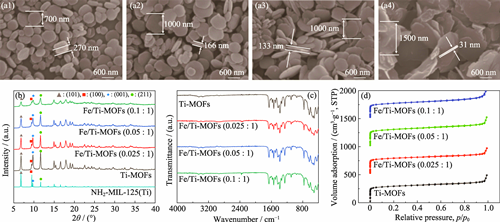
Periodontitis is a clinical challenge caused by bacterial overgrowth, resulting in irreversible damage to periodontal tissue. Antibacterial sonodynamic therapy (aSDT) has emerged as a promising alternative to conventional debridement due to its excellent biocompatibility and tissue penetration capability. However, this therapy cannot cure the periodontitis solely, needing more exploration to find an effectively improved treatment. Here, Fe doped Ti based metal-organic frameworks (Fe/Ti-MOFs) were prepared to explore the relationship between Fe doping and sonoresponsive efficiency. Incorporation of Fe enabled precise modulation of the band structure and crystallinity while maintaining the lattice architecture. Results showed that Fe/Ti-MOFs exhibited enhanced hydroxyl radical (•OH) generation under ultrasonic irradiation, effectively facilitating the eradication of bacterial pathogens. Notably, the sample with a Fe/Ti molar ratio of 0.025 : 1 exhibited exceptional performance. The sonocatalytic activity was collectively influenced by bandgap engineering, Fe doping concentration and crystallinity. Moreover, Fe/Ti-MOFs exhibited no cytotoxicity toward gingival fibroblasts and maintained excellent biocompatibility, without adverse effects on tissue repair. The ultrasound responsive Fe/Ti-MOFs material developed in this study offers potential for mitigating the adverse effects of antibiotics and providing novel insights and strategies for the application of aSDT in periodontitis treatment.
|
|
|
Fabrication of Graphene-reinforced Alumina Ceramic Composites via Adsorption-precipitation Self-assembly Combined with Spark Plasma Sintering
CHENG Aopeng, WANG Yuewen, XU Wentao, LIU Quanwei, ZHANG Haitao, ZHOU Youfu
2026 Vol. 41 (4): 536–544
Abstract(
590 )
HTML(
10)
PDF(5319KB)(
350
)
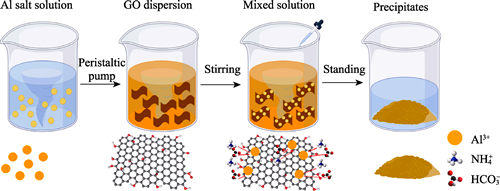
Alumina ceramics are widely utilized as structural materials, yet their inherent brittleness and monofunctionality limit their application in high-stress scenarios. Strategic integration of two-dimensional graphene sheets, characterized by their excellent mechanical, thermal and electrical properties, into ceramic matrix can facilitate grain refinement through interface engineering, thereby achieving performance optimization. Conventional physical blending methods result in poor uniformity and integrity of 2D sheets, thereby impeding advancements in graphene-ceramic composites. Herein, a novel adsorption-precipitation self-assembly (APSA) method was proposed for the nondestructive integration of graphene oxide (GO) sheets with submicron Al2O3 particles. A homogeneous precursor is obtained by uniform deposition of Al3+ ions adsorbed on GO surface, followed by low-temperature rapid densification via spark plasma sintering (SPS). For the resultant composites, the incorporated graphene is aligned parallel to the alumina grains, facilitating grain refinement and significantly enhancing the mechanical properties through synergistic effect of various toughening mechanisms, including pull-out, crack extension and bridging. In comparison to monolithic alumina ceramics, the ceramic composites exhibit a 43% enhancement in flexural strength ((428±87) MPa) and a 34% improvement in fracture toughness ((4.40±0.13) MPa·m1/2). Furthermore, the strength and toughness values also increase by 15% respectively, compared to specimens made from the conventional ball-milling mixing process, confirming the efficacy and advancement of such a manufacturing approach.
|
|