
Journal of Inorganic Materials ›› 2026, Vol. 41 ›› Issue (4): 421-431.DOI: 10.15541/jim20250364
• REVIEW • Previous Articles Next Articles
CHEN Kun( ), JIANG Yonggang(), FENG Junzong, LI Liangjun, HU Yijie, FENG Jian()
Received:2025-09-19
Revised:2025-11-03
Published:2026-04-20
Online:2025-11-26
Contact:
JIANG Yonggang, associate professor. E-mail: jygemail@nudt.edu.cn;About author:CHEN Kun (1999-), male, PhD candidate. E-mail: chenkun17@nudt.edu.cn
Supported by:CLC Number:
CHEN Kun, JIANG Yonggang, FENG Junzong, LI Liangjun, HU Yijie, FENG Jian. Research Progress on Lanthanum Zirconate Porous Materials for Thermal Insulation[J]. Journal of Inorganic Materials, 2026, 41(4): 421-431.
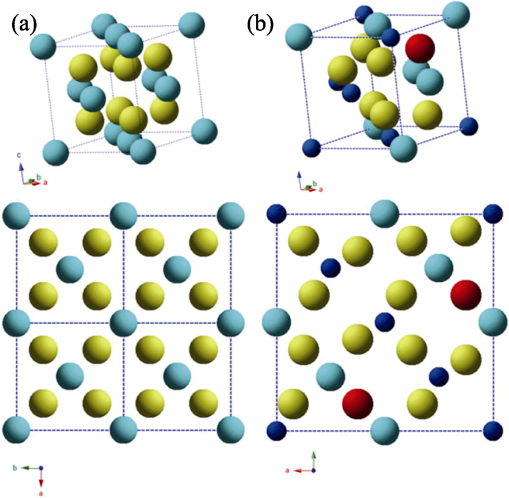
Fig. 1 Schematic diagrams of (a) fluorite and (b) pyrochlore structures[20]
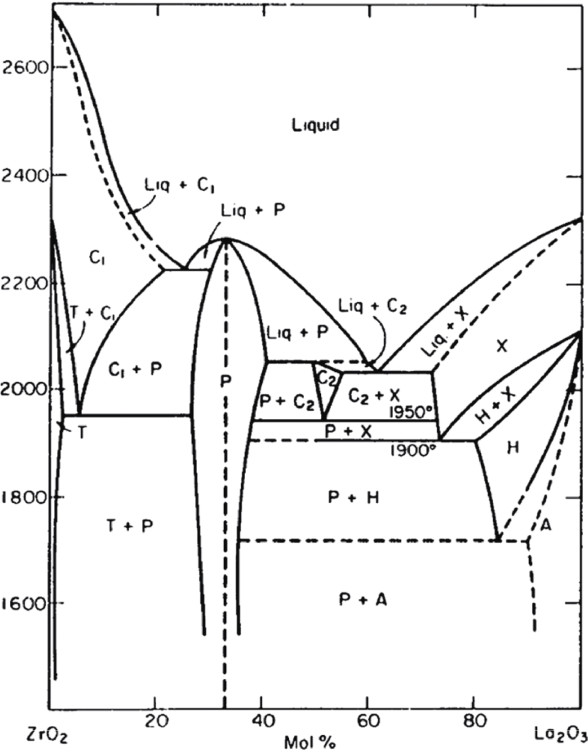
Fig. 2 Phase diagram of the La2O3-ZrO2 system[27]
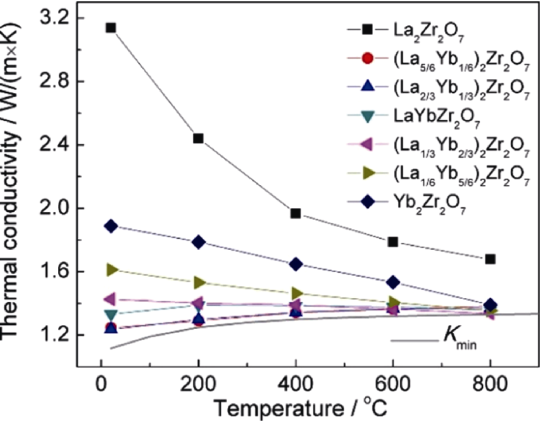
Fig. 3 Thermal conductivity of LZO modified by binary rare earths as a function of temperature[31]
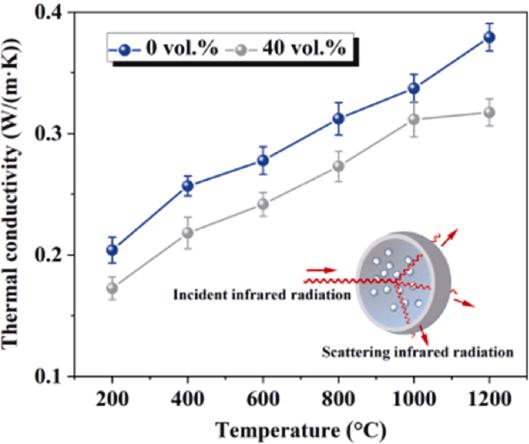
Fig. 4 Thermal conductivity of porous LZO ceramics at 200-1200 ℃[40]
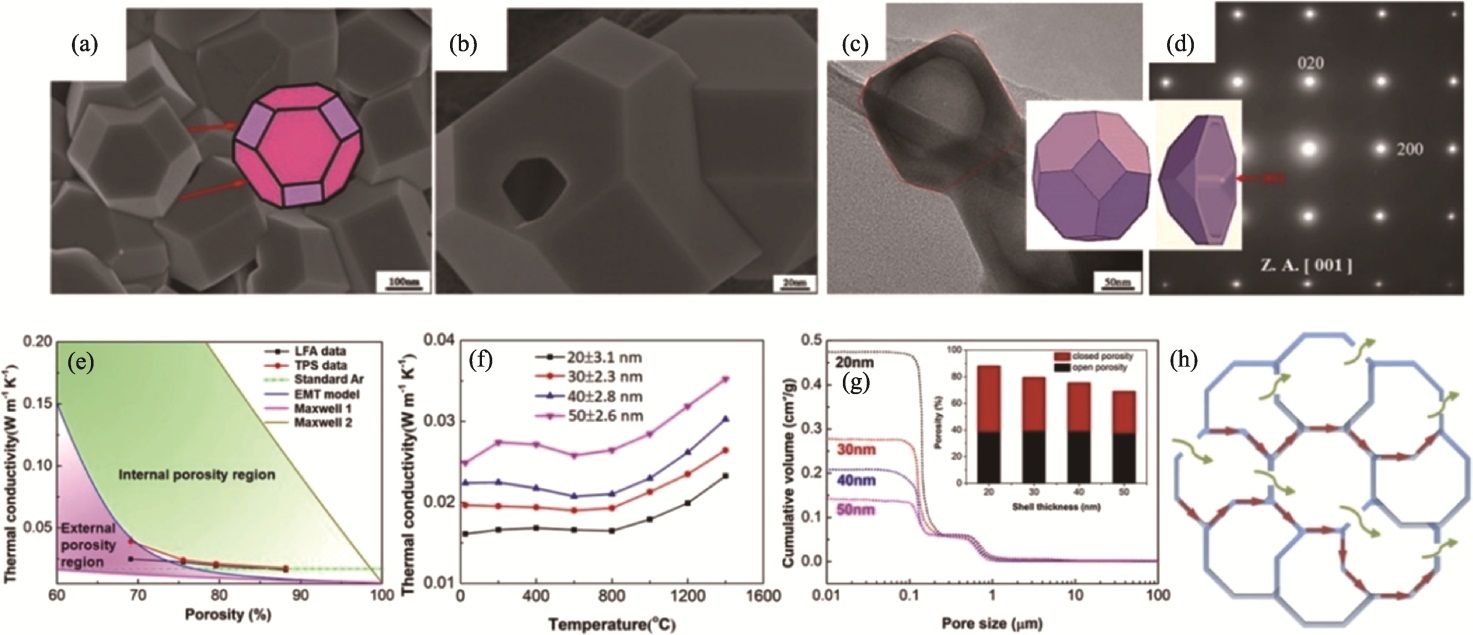
Fig. 5 Hollow-grained La2Zr2O7 ceramics[41] (a-c) Microstructures of hollow-grained La2Zr2O7 ceramics and (d) corresponding selected area electron diffraction pattern of the bulk; (e) Thermal performance of hollow-grained La2Zr2O7 ceramics; (f) Thermal conductivity of La2Zr2O7 ceramics at various temperatures; (g) Mercury intrusion results with inset showing stacked column chart; (h) Illustration of heat transfer paths
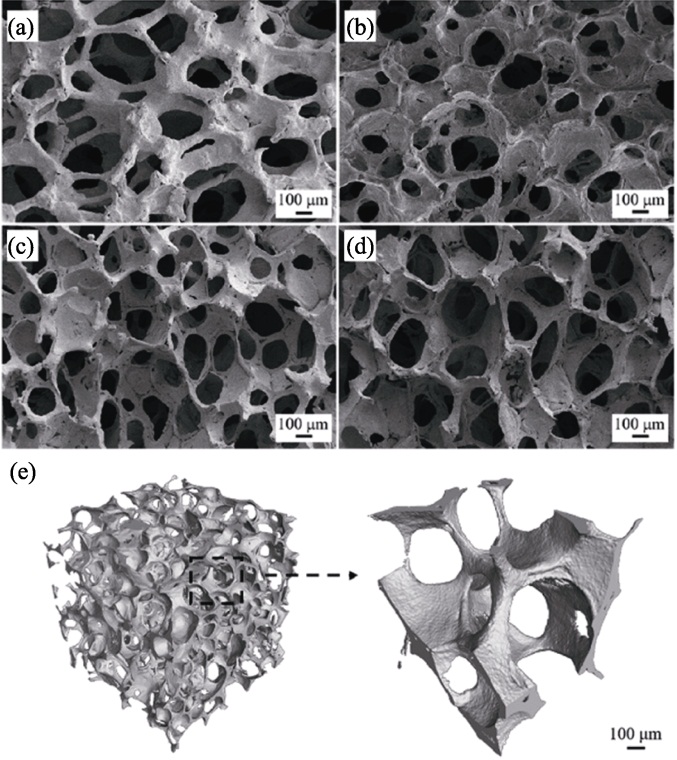
Fig. 6 Microstructures of LZO porous ceramics with different coating contents[45] (a) 13.7%; (b) 10.5%; (c) 6.4%; (d) 4.6%; (e) Micro-computed tomography of LZO porous ceramics (sample with coating content of 10.5%, in volume)
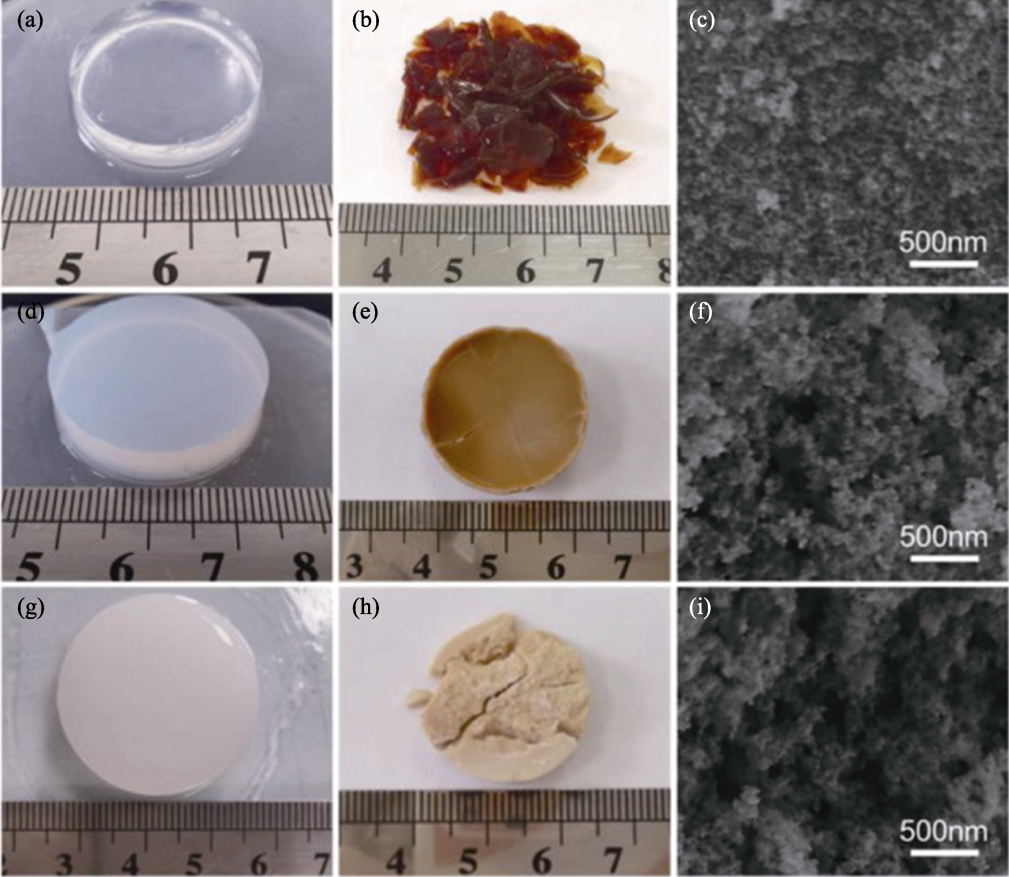
Fig. 7 Pictures and microstructures of the wet gel and aerogels synthesized with different ethanol contents[51] (a-c) E20; (d-f) E40; (g-i) E60
| Precursor | Drying process* | Specific surface area/(m2·g-1) | Average pore size/nm | Nanoparticle size/nm | Thermal conductivity/ (W·m-1·K-1) | Density/ (g·cm-3) | Ref. |
|---|---|---|---|---|---|---|---|
| Zr(NO3)4·5H2O La(NO3)3·6H2O | EtOH | 413.2 | 12.3 | 14.5 | - | - | [ |
| Zr(NO3)4·5H2O La(NO3)3·6H2O | Ambient pressure drying | 302.9 | 22.2 | 90.9 | - | - | [ |
| Zr(CH3COO)4 La(NO3)3·6H2O | EtOH | 325.17 | 40-50 | 25-35 | 0.071 (RT) | 1.78 | [ |
| ZrOCl2·8H2O La(NO3)3·6H2O | Ambient pressure drying | - | - | 40-100 | - | - | [ |
| Zr(NO3)4·5H2O La(NO3)3·6H2O | Freeze drying | 594.85 | 36-45 | 20-28 | 0.033 (RT) 0.051 (800 ℃) | - | [ |
| Zr(OPr)4 La(NO3)3·6H2O | CO2 | 100 | 40 | 70 | - | - | [ |
| Zr(NO3)4·5H2O La(NO3)3·6H2O | Ambient pressure drying | 89 | 3.7 | 70 | - | - | [ |
| Zr(NO3)4·5H2O La(NO3)3·6H2O | EtOH | 470.8 | 22.3 | 12.74 | - | - | [ |
Table 1 Basic properties of lanthanum zirconate porous materials for thermal insulation[47,51 -57]
| Precursor | Drying process* | Specific surface area/(m2·g-1) | Average pore size/nm | Nanoparticle size/nm | Thermal conductivity/ (W·m-1·K-1) | Density/ (g·cm-3) | Ref. |
|---|---|---|---|---|---|---|---|
| Zr(NO3)4·5H2O La(NO3)3·6H2O | EtOH | 413.2 | 12.3 | 14.5 | - | - | [ |
| Zr(NO3)4·5H2O La(NO3)3·6H2O | Ambient pressure drying | 302.9 | 22.2 | 90.9 | - | - | [ |
| Zr(CH3COO)4 La(NO3)3·6H2O | EtOH | 325.17 | 40-50 | 25-35 | 0.071 (RT) | 1.78 | [ |
| ZrOCl2·8H2O La(NO3)3·6H2O | Ambient pressure drying | - | - | 40-100 | - | - | [ |
| Zr(NO3)4·5H2O La(NO3)3·6H2O | Freeze drying | 594.85 | 36-45 | 20-28 | 0.033 (RT) 0.051 (800 ℃) | - | [ |
| Zr(OPr)4 La(NO3)3·6H2O | CO2 | 100 | 40 | 70 | - | - | [ |
| Zr(NO3)4·5H2O La(NO3)3·6H2O | Ambient pressure drying | 89 | 3.7 | 70 | - | - | [ |
| Zr(NO3)4·5H2O La(NO3)3·6H2O | EtOH | 470.8 | 22.3 | 12.74 | - | - | [ |
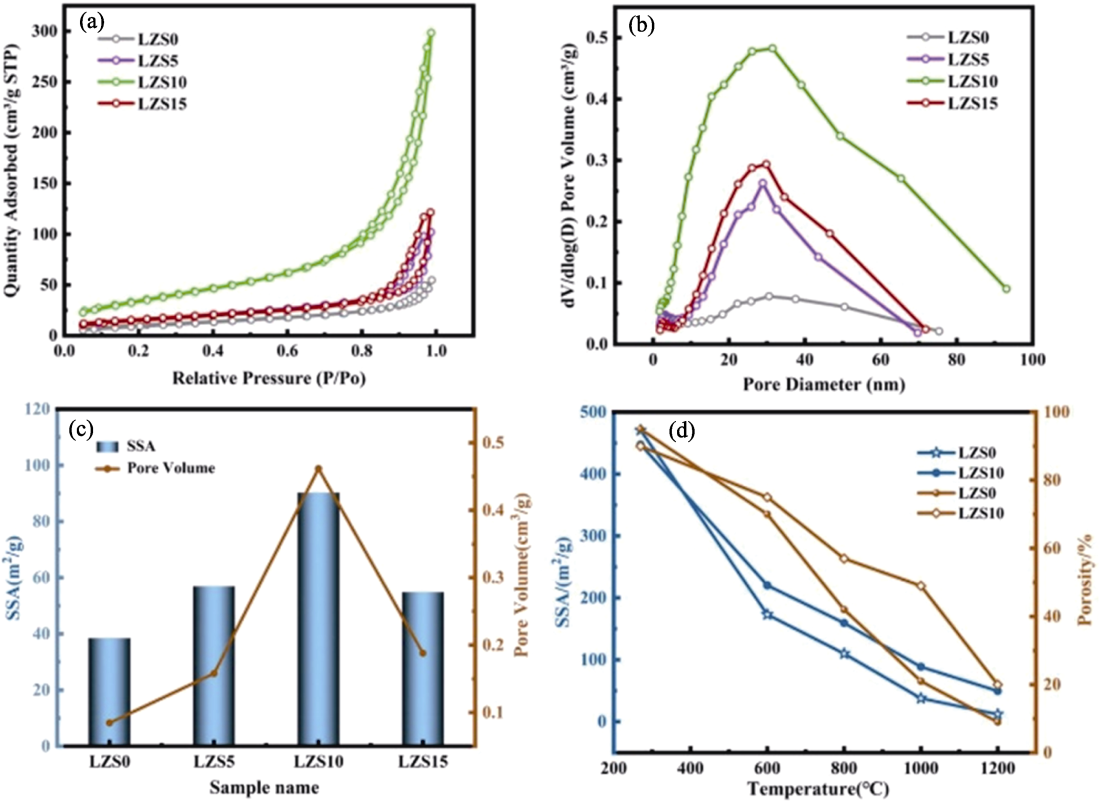
Fig. 8 Specific surface area and pore structure of silicon-doped LZS aerogels[57] (a) N2 adsorption-desorption isotherms; (b) Pore size distribution curves; (c) Specific surface area and pore volume of LZS aerogels at 1000 ℃ heat treatment; (d) Specific surface area and porosity of LZS0 and LZS10 aerogels at different heat temperatures
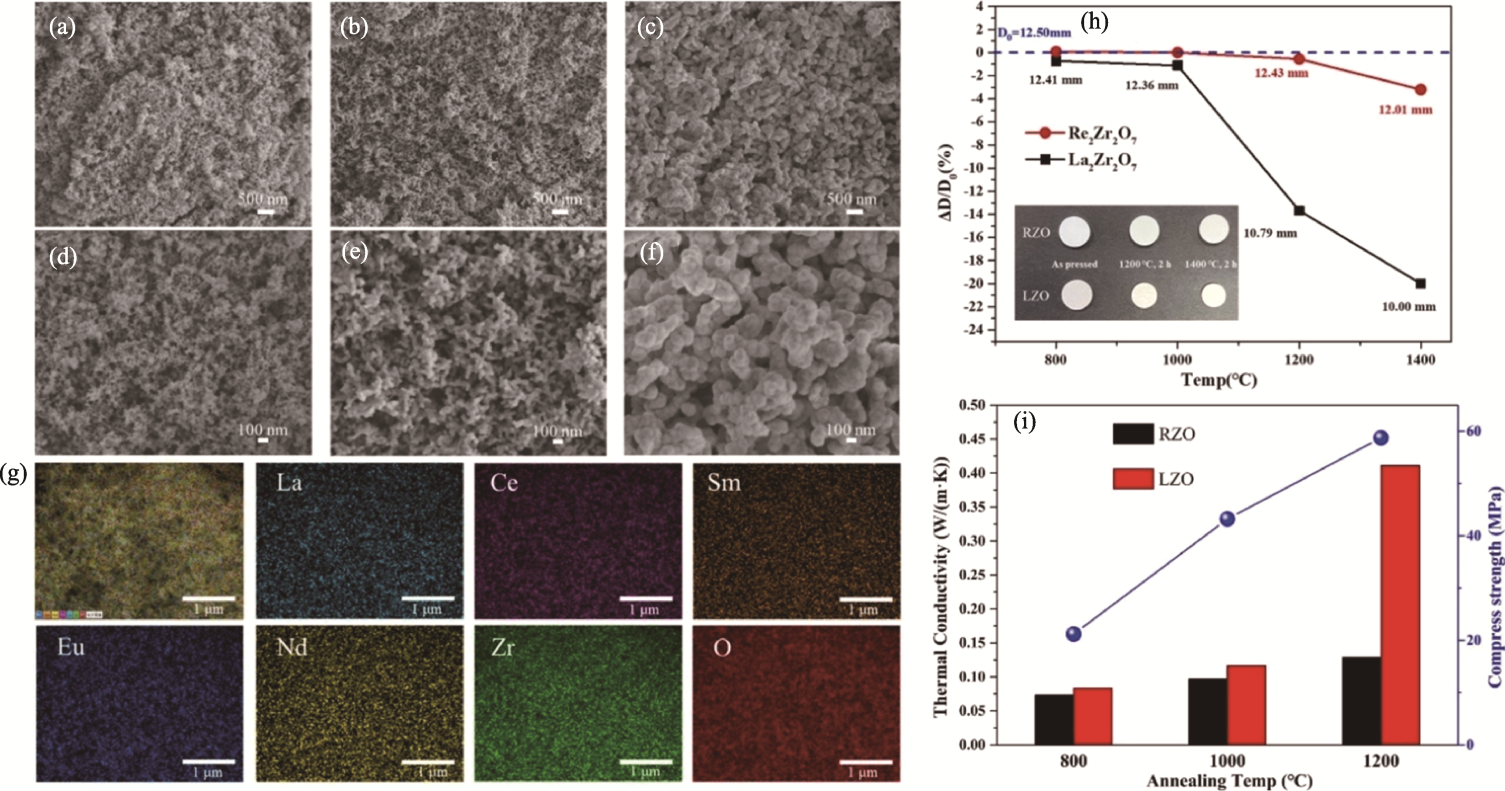
Fig. 9 Compositions, structures and properties of (LaCeSmEuNd)2Zr2O7 aerogels[61] (a-f) SEM images of (LaCeNdSmEu)2Zr2O7 ceramics calcined at (a, d) 750, (b, e) 950 and (c, f) 1150 ℃; (g) EDS-mappings of the sample calcined at 950 ℃; (h) Diameter shrinkage of cylindrical samples and photographs of LZO and RZO as pressed and annealed at 1200 and 1400 ℃ for 2 h; (i) Thermal conductivities of RZO and LZO at 25 ℃ and compressive strength of RZO
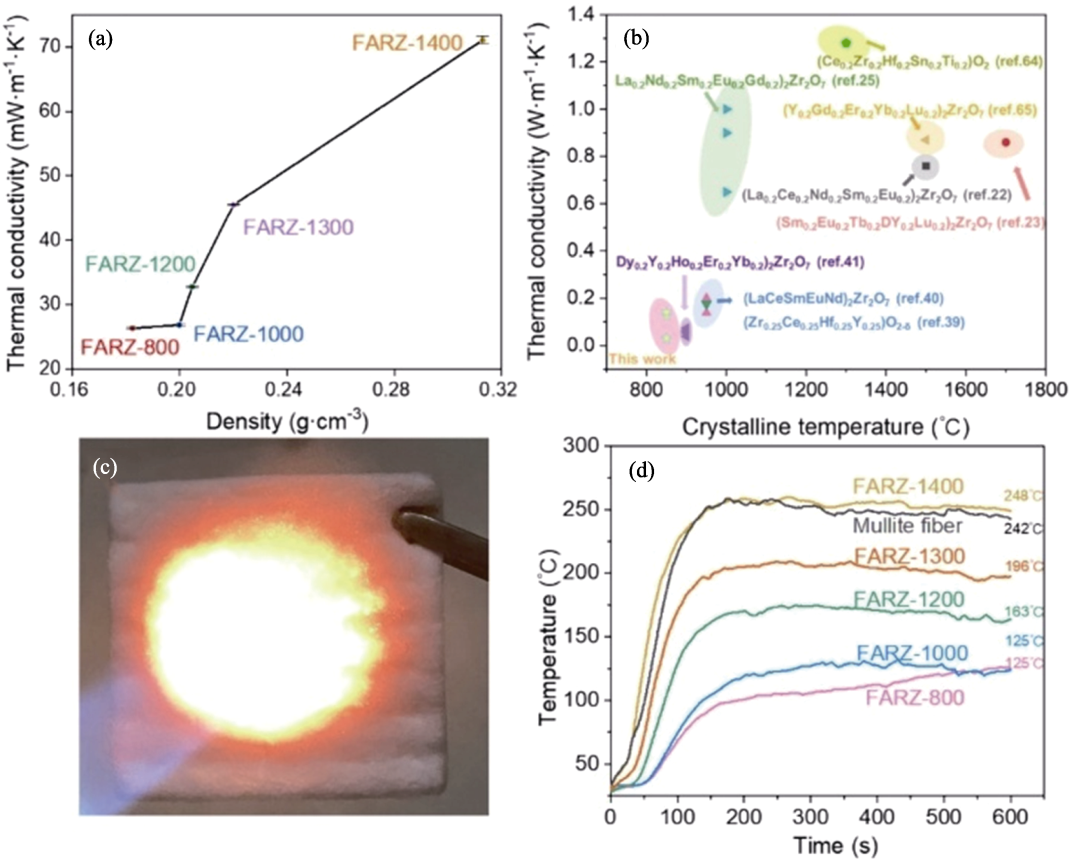
Fig. 10 Thermal conductivities and insulating properties of FARZ[63] (a) Thermal conductivities of FARZ as a function of density; (b) Thermal conductivities at room temperature in air and crystalline temperature for high entropy materials; (c) Optical image and (d) time-dependent temperature evolution on the back side of FARZ mullite fiber exposed to a butane blowtorch flame
| [1] |
CHANG X, CHENG X, ZHANG H, et al. Superelastic carbon aerogels: an emerging material for advanced thermal protection in extreme environments. Advanced Functional Materials, 2023, 33(26): 2215168.
DOI URL |
| [2] |
JIN R, ZHOU Z, LIU J, et al. Aerogels for thermal protection and their application in aerospace. Gels, 2023, 9(8): 606.
DOI URL |
| [3] | JING T, XIN Y, ZHANG L, et al. Application of carbon fiber-reinforced ceramic composites in active thermal protection of advanced propulsion systems: a review. Chemical Record, 2023, 23(4): e202300022. |
| [4] |
ZHANG L, YUAN F, WANG W, et al. Progress and challenges in lightweight ceramic matrix composite structures towards integrated thermal protection structure. Journal of Materials Engineering, 2022, 50(10): 15.
DOI |
| [5] |
ZHANG S, LI X, ZUO J, et al. Research progress on active thermal protection for hypersonic vehicles. Progress in Aerospace Sciences, 2020, 119: 100646.
DOI URL |
| [6] | 卢天健, 何德坪, 陈常青, 等. 超轻多孔金属材料的多功能特性及应用. 力学进展, 2006, 36(4): 517. |
| [7] | 朱小龙, 苏雪筠. 多孔陶瓷材料. 中国陶瓷, 2000, 36(4): 36. |
| [8] |
SAM D K, CAO Y. Porous carbon materials for adsorption: a mini-review. Fullerenes Nanotubes and Carbon Nanostructures, 2024, 32(8): 721.
DOI URL |
| [9] |
LU X, ARDUINI-SCHUSTER M C, KUHN J, et al. Thermal conductivity of monolithic organic aerogels. Science, 1992, 255(5047): 971.
PMID |
| [10] |
BRAGIN D M, POPOV A I, EREMIN A V. The thermal conductivity properties of porous materials based on TPMS. International Journal of Heat and Mass Transfer, 2024, 231: 125863.
DOI URL |
| [11] |
LIAN X, TIAN L, LI Z, et al. Thermal conductivity analysis of natural fiber-derived porous thermal insulation materials. International Journal of Heat and Mass Transfer, 2024, 220: 124941.
DOI URL |
| [12] | 曲肖夫, 谢敏, 宋晓炜, 等. Gd掺杂La2(Zr0.7Ce0.3)2O7陶瓷材料抗V2O5+Na2SO4熔盐腐蚀行为. 硅酸盐学报, 2025, 53(3): 620. |
| [13] |
王衍飞, 江堤, 王思青, 等. 锆酸镧涂层高温结构演变及热导性能. 航空材料学报, 2019, 39(4): 26.
DOI |
| [14] |
WU J, WEI X Z, PADTURE N P, et al. Low-thermal-conductivity rare-earth zirconates for potential thermal-barrier-coating applications. Journal of the American Ceramic Society, 2002, 85(12): 3031.
DOI URL |
| [15] |
WANG C, WANG Y. Thermophysical properties of La2(Zr0.7Ce0.3)2O7 prepared by hydrothermal synthesis for nano-sized thermal barrier coatings. Ceramics International, 2015, 41(3): 4601.
DOI URL |
| [16] | 王生学, 李伟, 王松, 等. 凝胶促进剂对分级多孔锆酸镧孔结构的影响. 稀有金属材料与工程, 2016, 45(S1): 462. |
| [17] | WANG H, XU J, WEI M, et al. Low thermal conductivity lanthanum zirconate nanofibrous membranes for thermal insulation. International Journal of Ceramic Engineering & Science, 2023, 5(4): e10181. |
| [18] |
WANG X, CUI X, CHEN Z, et al. Study of the relationship between entropy value and properties of lanthanum zirconate ceramics. Ceramics International, 2024, 50(5): 7383.
DOI URL |
| [19] |
SUBRAMANIAN M A, ARAVAMUDAN G, SUBBA RAO G V. Oxide pyrochlores — a review. Progress in Solid State Chemistry, 1983, 15(2): 55.
DOI URL |
| [20] |
FUENTES A F, O'QUINN E C, MONTEMAYOR S M, et al. Pyrochlore-type lanthanide titanates and zirconates: synthesis, structural peculiarities, and properties. Applied Physics Reviews, 2024, 11(2): 021337.
DOI URL |
| [21] | TEYMOURINIA H. Rare earth zirconate (Re2Zr2O7) ceramic nanomaterials//ZINATLOO-AJABSHIR S. Advanced rare earth-based ceramic nanomaterials. Elsevier, 2022: 77-103. |
| [22] |
WANG C, WANG Y, CHENG Y, et al. Preparation and thermophysical properties of nano-sized Ln2Zr2O7 (Ln=La, Nd, Sm, and Gd) ceramics with pyrochlore structure. Journal of Materials Science, 2012, 47(10): 4392.
DOI URL |
| [23] | 王璟. 锆酸镧热障涂层研究. 长沙: 国防科学技术大学博士学位论文, 2009. |
| [24] | 徐春辉. 锆酸镧基热障涂层的制备及性能研究. 北京: 中国地质大学博士学位论文, 2018. |
| [25] |
UNO M, KOSUGA A, OKUI M, et al. Photoelectrochemical study of lanthanide zirconium oxides, Ln2Zr2O7 (Ln=La, Ce, Nd and Sm). Journal of Alloys and Compounds, 2006, 420(1): 291.
DOI URL |
| [26] |
SIMEONE D, THOROGOOD G J, HUO D, et al. Intricate disorder in defect fluorite/pyrochlore: a concord of chemistry and crystallography. Scientific Reports, 2017, 7: 3727.
DOI PMID |
| [27] |
SHUGUROV S M, KURAPOVA O Y, LOPATIN S I, et al. Thermodynamic properties of the La2O3-ZrO2 system by Knudsen effusion mass spectrometry at high temperature. Rapid Communications in Mass Spectrometry, 2017, 31(23): 2021.
DOI URL |
| [28] |
MOAVENI M J, OMIDVAR H, FARVIZI M, et al. Effect of Y2O3 doping on thermophysical properties and grain growth rate of lanthanum zirconate. Ceramics International, 2024, 50(15): 26410.
DOI URL |
| [29] |
PATIL A R, VAGGE S T. Oxidation and hot corrosion behaviour of functionally graded yttria stabilized zirconia and lanthanum zirconate thermal barrier coatings. Surface and Coatings Technology, 2023, 474: 130059.
DOI URL |
| [30] |
WAN C L, PAN W, XU Q, et al. Effect of point defects on the thermal transport properties of (LaxGd1-x)2Zr2O7: experiment and theoretical model. Physical Review B, 2006, 74(14): 144109.
DOI URL |
| [31] |
REN X, WAN C, ZHAO M, et al. Mechanical and thermal properties of fine-grained quasi-eutectoid (La1-xYbx)2Zr2O7 ceramics. Journal of the European Ceramic Society, 2015, 35(11): 3145.
DOI URL |
| [32] |
XIANG J, CHEN S, HUANG J, et al. Phase structure and thermophysical properties of co-doped La2Zr2O7 ceramics for thermal barrier coatings. Ceramics International, 2012, 38(5): 3607.
DOI URL |
| [33] | 陈彰旭, 郑炳云, 李先学, 等. 模板法制备纳米材料研究进展. 化工进展, 2010, 29(1): 94. |
| [34] |
MARCHESINI S, MCGILVERY C M, BAILEY J, et al. Template-free synthesis of highly porous boron nitride: insights into pore network design and impact on gas sorption. ACS Nano, 2017, 11(10): 10003.
DOI PMID |
| [35] |
PARASHAR M, SHUKLA V K, SINGH R. Metal oxides nanoparticles via Sol-Gel method: a review on synthesis, characterization and applications. Journal of Materials Science: Materials in Electronics, 2020, 31(5): 3729.
DOI |
| [36] |
LIU X, YU C, QU D, et al. Preparation of porous β-SiAlON ceramics using corn starch as pore-forming agent. Journal of the Australian Ceramic Society, 2022, 58(2): 531.
DOI |
| [37] | MIAO J, SONG X, XU J, et al. Ultralight, elastic, thermally insulating, and high-temperature resistant Al2O3-SiO2-B2O3 nanofibrous aerogels prepared via the direct foaming method. ACS Applied Materials & Interfaces, 2025, 17(8): 12402. |
| [38] |
XU X, SHU X, PEI Q, et al. Effects of porosity on the tribological and mechanical properties of oil-impregnated polyimide. Tribology International, 2022, 170: 107502.
DOI URL |
| [39] |
OHJI T, FUKUSHIMA M. Macro-porous ceramics: processing and properties. International Materials Reviews, 2012, 57(2): 115.
DOI URL |
| [40] |
MENG X, XU J, YANG R, et al. Lanthanum zirconate porous ceramics with controllable secondary pores for high-temperature thermal insulation. Ceramics International, 2022, 48(22): 33976.
DOI URL |
| [41] |
LI S, WANG C A, YANG F, et al. Hollow-grained “Voronoi foam” ceramics with high strength and thermal superinsulation up to 1400 ℃. Materials Today, 2021, 46: 35.
DOI URL |
| [42] | GUAN L, HU H, TENG X L, et al. Templating synthesis of porous carbons for energy-related applications: a review. Carbon, 2022, 192: 483. |
| [43] |
LAI M, RILEY D J. Templated electrosynthesis of nanomaterials and porous structures. Journal of Colloid and Interface Science, 2008, 323(2): 203.
DOI PMID |
| [44] |
WANG H, DU G, JIA J, et al. Hierarchically porous zeolites synthesized with carbon materials as templates. Frontiers of Chemical Science and Engineering, 2021, 15(6): 1444.
DOI |
| [45] |
LIN L, XU J, MENG X, et al. High porosity and low thermal conductivity lanthanum zirconate porous ceramics via replica method. Journal of Asian Ceramic Societies, 2024, 12(2): 172.
DOI URL |
| [46] |
MENG X, XU J, ZHU J, et al. Enhancing the thermal insulating properties of lanthanum zirconate porous ceramics via pore structure tailoring. Journal of the European Ceramic Society, 2021, 41(12): 6010.
DOI URL |
| [47] |
WANG S, LI W, WANG S, et al. Synthesis of well-defined hierarchical porous La2Zr2O7 monoliths via non-alkoxide Sol-Gel process accompanied by phase separation. Microporous and Mesoporous Materials, 2016, 221: 32.
DOI URL |
| [48] |
GUO X, ZHANG Q, DING X, et al. Synthesis and application of several Sol-Gel-derived materials via Sol-Gel process combining with other technologies: a review. Journal of Sol-gel Science and Technology, 2016, 79(2): 328.
DOI URL |
| [49] |
MYASOEDOVA T N, KALUSULINGAM R, MIKHAILOVA T S. Sol-gel materials for electrochemical applications: recent advances. Coatings, 2022, 12(11): 1625.
DOI URL |
| [50] |
WARREN S C, PERKINS M R, ADAMS A M, et al. A silica Sol-Gel design strategy for nanostructured metallic materials. Nature Materials, 2012, 11(5): 460.
DOI PMID |
| [51] |
ZHAO G, HUANG L, YU Y, et al. Preparation of mesoporous La2Zr2O7 aerogel via non-alkoxide Sol-Gel process with different solvent systems. Journal of Non-Crystalline Solids, 2023, 604: 122140.
DOI URL |
| [52] |
WANG S X, LI W, WANG S, et al. Synthesis of mesoporous La2Zr2O7 with high surface area by combining epoxide-mediated Sol-Gel process and solvothermal treatment. Microporous and Mesoporous Materials, 2016, 234: 137.
DOI URL |
| [53] |
LIU D, ZHANG C, XUE Y. Synthesis and characterization of Sol-Gel derived lanthanum zirconate ceramic aerogels toward ultralow thermal conductivity. Materials Science and Engineering: B, 2023, 287: 116127.
DOI URL |
| [54] |
LIU D B, ZHOU F F, QU L J, et al. A novel porous La2Zr2O7 ceramic aerogels with ultralow thermal conductivity and photocatalytic property. Journal of the American Ceramic Society, 2022, 105(4): 2772.
DOI URL |
| [55] |
WANG S, LI W, WANG S, et al. Synthesis of nanostructured La2Zr2O7 by a non-alkoxide Sol-Gel method: from gel to crystalline powders. Journal of the European Ceramic Society. 2015, 35(1): 105.
DOI URL |
| [56] |
TORRES-RODRIGUEZ J, GUTIERREZ-CANO V, MENELAOU M, et al. Rare-earth zirconate Ln2Zr2O7 (Ln: La, Nd, Gd, and Dy) powders, xerogels, and aerogels: preparation, structure, and properties. Inorganic Chemistry, 2019, 58(21): 14467.
DOI URL |
| [57] |
WANG Y, YU Y, TU F, et al. Preparation of La2Zr2O7 composite SiO2 aerogels and their fiber-reinforced materials for thermal insulation applications. Journal of Non-Crystalline Solids, 2024, 625: 122772.
DOI URL |
| [58] |
PAKHARUKOVA V P, SHALYGIN A S, GERASIMOV E Y, et al. Structure and morphology evolution of silica-modified pseudoboehmite aerogels during heat treatment. Journal of Solid State Chemistry, 2016, 233: 294.
DOI URL |
| [59] | ZHAO Z, XIANG H, DAI F Z, et al. (La0.2Ce0.2Nd0.2Sm0.2Eu0.2)2Zr2O7: a novel high-entropy ceramic with low thermal conductivity and sluggish grain growth rate. Journal of Materials Science & Technology, 2019, 35(11): 2647. |
| [60] | 周林. A2B2O7型高熵氧化物陶瓷的制备及性能研究. 上海: 东华大学博士学位论文, 2022. |
| [61] |
LIU X, SU C, ZHONG Y, et al. High entropy (LaCeSmEuNd)2Zr2O7 ceramic aerogel with low thermal conductivity and excellent structural heat resistance. Journal of the European Ceramic Society, 2022, 42(13): 5964.
DOI URL |
| [62] |
HAN Y, WU Y, HUANG S, et al. High-temperature thermal stability modification of (La0.2Y0.2Sm0.2Eu0.2Nd0.2)2Zr2O7 ceramic aerogel for enhanced thermal insulation performance. Ceramics International, 2024, 50(12): 22010.
DOI URL |
| [63] |
SHANG S, WANG J, YUAN M, et al. Characterization and thermal properties of (YErYbGdLa)2Zr2O7 high entropy ceramic aerogel. Materials Characterization, 2024, 217: 114392.
DOI URL |
| [64] | WANG D, SONG C, DANG S, et al. High-entropy ceramic aerogel with ultrahigh thermomechanical properties. ACS Applied Materials & Interfaces, 2025, 17(12): 18636. |
| [1] | CHEN Mingjun, MIAO Hongkang, XIAO Yingjun, DENG Jianbo, ZHANG Xiang, ZHAO Jiupeng, LI Yao. Photo- and Thermo-chromic Dual-responsive Materials: A Review on Design Strategies and Applications in Smart Windows [J]. Journal of Inorganic Materials, 2026, 41(6): 723-738. |
| [2] | SONG Kunjie, XIE Rongjun. Research Advances on Machine Learning-driven Development of Novel Luminescent Materials [J]. Journal of Inorganic Materials, 2026, 41(6): 689-703. |
| [3] | HU Yuqing, ZHU Yixin, LE Xianhao, WAN Qing. Lithium Tantalate Wafer: Advances in Thinning Technology and Application in Pyroelectric Infrared Detectors [J]. Journal of Inorganic Materials, 2026, 41(6): 764-774. |
| [4] | LIU Chunfan, CHEN Ke, GE Fangfang, HUANG Qing. Research Progress on Lead-bismuth Eutectic Corrosion Resistant Coatings [J]. Journal of Inorganic Materials, 2026, 41(6): 775-786. |
| [5] | HU Yang, XIE Min, ZHANG Xiaoyi, LI Xiang, GUO Xinwei, JIANG Nan, ZHOU Wenhan, ZHANG Shengli, ZENG Haibo. Research Progress on Computational and Data-driven Environmental-friendly Luminescent Materials [J]. Journal of Inorganic Materials, 2026, 41(6): 704-722. |
| [6] | WANG Junbu, HUANG Zeai, YANG Mingkai, MENG Ying, ZHOU Mingwei, ZHOU Ying. Research Progress on Anti-coking Catalytic Materials for Methane Conversion [J]. Journal of Inorganic Materials, 2026, 41(6): 739-750. |
| [7] | WANG Jinwen, YANG Zhen, ZHOU Huan, XIA Dan, YANG Lei. Biomedical Applications of Injectable Inorganic Biomaterials [J]. Journal of Inorganic Materials, 2026, 41(6): 751-763. |
| [8] | LI Hantao, SHEN Qiang, LUO Guoqiang, WANG Xuefei, GAO Ming, CHEN Chen. Research Progress on Structure and Performance Regulation of Silicon-based Anode Materials via Mechanical Ball Milling [J]. Journal of Inorganic Materials, 2026, 41(5): 561-572. |
| [9] | XIE Chenyi, MIAO Huaming, ZHANG Weiran, LIU Rongjun, WANG Yanfei, LI Duan. Research Progress on Theoretical Calculation in the Field of High-entropy Ceramics [J]. Journal of Inorganic Materials, 2026, 41(5): 545-560. |
| [10] | LI Xuan, YE Kuicai, FENG Jiayin, QIU Jiajun, QIAN Wenhao, XING Min. Surface Modification of Titanium-based Dental Implants for Soft Tissue Sealing: A Review [J]. Journal of Inorganic Materials, 2026, 41(4): 432-444. |
| [11] | PENG Dezhao, LI Rui, WANG Wenhong, WANG Zirui, ZHANG Zhizhen. Research Progress on Sodium Chloride Solid Electrolytes [J]. Journal of Inorganic Materials, 2026, 41(4): 409-420. |
| [12] | WEI Lianjin, QI Zhijie, WANG Xin, ZHU Junwu, FU Yongsheng. Modification of Nanodiamond and Its Application in Electrocatalytic Oxygen Reduction Reaction [J]. Journal of Inorganic Materials, 2026, 41(3): 273-288. |
| [13] | LIU Zhanyi, LI Mian, OUYANG Xiaoping, CHAI Zhifang, HUANG Qing. Recent Progress on Removal of Sr/Cs from Molten Salt in Dry Reprocessing [J]. Journal of Inorganic Materials, 2026, 41(2): 150-158. |
| [14] | SUN Lian, ZHANG Leilei, XUE Zexu, WU Kun, CHEN Ye, LI Zhiyuan, WANG Lukai, WANG Zungang. Research Progress on Zero-dimensional Metal Halide Scintillators towards Radiation Detection Applications [J]. Journal of Inorganic Materials, 2026, 41(2): 159-176. |
| [15] | REN Xianpei, LI Chao, HU Qiwei, XIANG Hui, PENG Yuehong. Research Progress on Mott-Schottky Hydrogen Evolution Catalysts Based on Metal/Transition Metal Compounds [J]. Journal of Inorganic Materials, 2026, 41(2): 137-149. |
| Viewed | ||||||
|
Full text |
|
|||||
|
Abstract |
|
|||||
