|
|
Research Progress on Theoretical Calculation in the Field of High-entropy Ceramics
XIE Chenyi, MIAO Huaming, ZHANG Weiran, LIU Rongjun, WANG Yanfei, LI Duan
2026 Vol. 41 (5): 545–560
 Abstract
(
699 )
 HTML
HTML(
25)
 PDF
PDF(13432KB)(
476
)
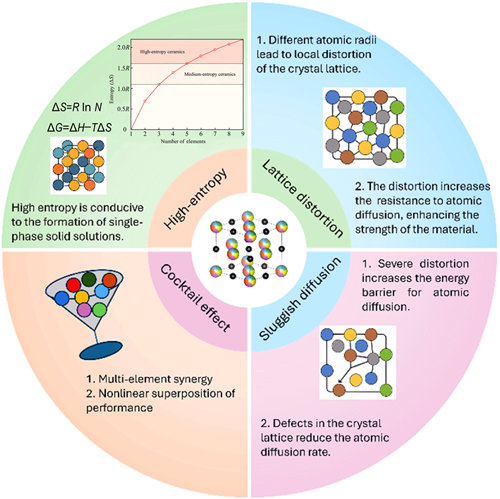
High-entropy ceramic (HEC) demonstrates exceptional thermal and mechanical properties, along with outstanding chemical stability, which can be attributed to their high entropy, lattice distortion, sluggish diffusion, and cocktail effects. However, the expansive compositional and structural space associated with HEC renders traditional trial-and-error methods time-consuming, costly and inadequate for investigation of complex systems. Thus, theoretical calculation has become an indispensable tool for addressing these challenges. To outline recent advances in theoretical calculation for HEC, this article focuses on prevalent calculation methods, including first-principles calculations, molecular dynamics, machine learning, and calculation of phase diagrams. Additionally, it discusses research paradigms such as high-throughput computing and performance descriptors, providing a comprehensive overview of their key roles and specific applications in HEC. The article first outlines fundamental characteristics and core effects of HEC, then turns to critically examine theoretical basis of these calculation methods, elaborating on their applications through specific examples in composition design, property prediction, microstructural parsing, and phase stability assessment. Finally, this paper summarizes the major challenges encountered in theoretical calculations in the study of multi-component systems, such as the scarcity of high-quality datasets and the ambiguity of structure-property relationships. It concludes with a forward-looking outlook on the development directions in this field, including data-driven design, cross-scale correlation, and extreme environment simulation.
|
|
|
Research Progress on Structure and Performance Regulation of Silicon-based Anode Materials via Mechanical Ball Milling
LI Hantao, SHEN Qiang, LUO Guoqiang, WANG Xuefei, GAO Ming, CHEN Chen
2026 Vol. 41 (5): 561–572
Abstract(
637 )
HTML(
11)
PDF(11634KB)(
2024
)
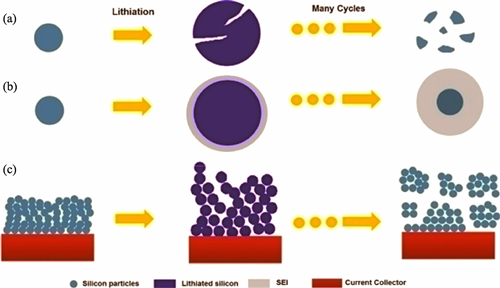
Silicon, due to its exceptionally high theoretical capacity, is widely regarded as an ideal candidate for the anode material in next-generation high-energy-density lithium-ion batteries. However, its practical application is limited by several critical issues, including significant volume expansion during repeated cycling, poor intrinsic conductivity, and instability at the electrode-electrolyte interface. Mechanical ball milling, a solid-state processing technique, offers significant advantages in the performance enhancement of silicon-based anode materials due to its adjustable structure, simplicity in operation, and scalability. This method enables precise control over particle size, morphology, and structural characteristics, providing an efficient and flexible strategy for improving material performance without the need for overly complex or stringent processing conditions. This review summarizes the recent progress in the application of mechanical ball milling for the performance optimization of silicon-based anode materials. Representative advancements include the controlled preparation of nanosilicon, rational design of silicon- carbon composite materials, construction of silicon-metal and metal silicide composite systems, and the implementation of in situ coating strategies. Overall, these studies clearly demonstrate that mechanical ball milling plays a key role in enhancing the structural stability and electrochemical performance of silicon-based anodes. Furthermore, this paper discusses the main challenges currently faced in this field, such as poor uniformity of composite materials, complexity of controlling energy input during milling, and limited understanding of the interface reaction mechanisms. Finally, emerging directions in the field are highlighted, including smart ball milling, interface engineering, and data-driven optimization, which are expected to provide valuable insights for the practical application and commercial promotion of high-performance silicon-based anode materials in high-energy-density lithium-ion batteries.
|
|
|
Bioinspired Nacre-like Ceramic-polymer Composites with Multiscale Layered and Gradient Structures
GAO Kefeng, HE Xinxin, LIU Zengqian, ZHANG Zhefeng
2026 Vol. 41 (5): 573–582
Abstract(
793 )
HTML(
12)
PDF(13830KB)(
388
)
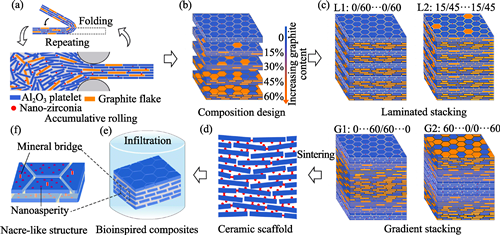
Due to their intrinsic brittleness and high sensitivity to structural flaws, ceramics face a fundamental limitation in applications that require mechanical load-bearing capacity, impact resistance, and reliable performance under complex service conditions. Natural ceramic-based materials, such as nacre, have evolved intricate multiscale structures through long-term evolutionary processes, effectively integrating high strength and fracture toughness, offering valuable inspiration for the design of synthetic ceramics. This study utilized an accumulative rolling technique combined with a layer-by-layer assembly process to fabricate bioinspired ceramic-polymer composites featuring nacre-like layered and gradient structures at the multiscale. The composites exhibit a characteristic nacre-like “brick-and-mortar” architecture at the microscale, as well as periodic or gradient variations in ceramic content at the mesoscale, collectively forming bioinspired multiscale layered and gradient structures. The mechanical properties of the bioinspired composites were systematically investigated and compared with uniform composites with equivalent ceramic content. The relationships between the bioinspired structures, mechanical properties, and damage characteristics were elucidated. The results demonstrate that the bioinspired composites exhibit variations of up to several times in local hardness and elastic modulus along the thickness direction. In particular, the gradient composite with a “soft-hard-soft” configuration achieves superior strength-toughness synergy, demonstrating significantly higher strength, work of fracture, and fracture and impact toughness compared to the uniform materials with the same ceramic content. This enhancement is primarily attributed to the ability of this architecture to broaden stress distribution, reduce local stress concentrations, and facilitate extensive dissipation of mechanical energy. This study provides a useful reference and guidance for the structural design of strong and tough bioinspired ceramic-polymer composites.
|
|
|
Microstructure and Ablation Resistance of C/C Composites Modified by Hf-Si-based Coating-matrix Integrated Structure Fabricated by Reactive Melt Infiltration
ZHAO Tongtong, DAI Jixiang, SU Cheng, SHI Yan, SHA Jianjun
2026 Vol. 41 (5): 583–594
Abstract(
468 )
HTML(
9)
PDF(11195KB)(
259
)
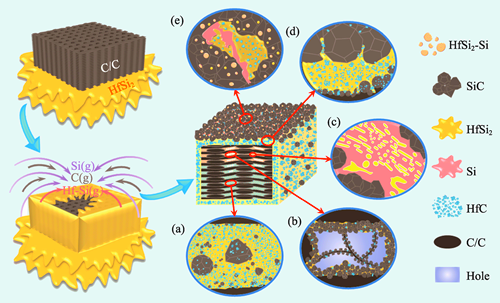
To enhance the ablation resistance of C/C composites under ultra-high-temperature and long-duration conditions, a non-embedded reactive melt infiltration technique was employed to fabricate an Hf-Si-based coating-matrix integrated modified C/C composite. Microstructural analysis revealed that the coating and matrix primarily consist of HfC, SiC, and HfSi2, with strong interfacial bonding formed between them through chemical reactions. Within the materials, the matrix density and composition exhibited a gradient distribution along the infiltration direction. Specifically, regions proximal to the infiltration source were denser and rich in HfC-HfSi2 phases, whereas distal regions were more porous, with the matrix consisting mainly of SiC and Si-HfSi2 eutectic structure. The surface coating was continuous and dense, with a uniform thickness of approximately 120 µm. It featured a distinct bilayer architecture composed of an outer SiC layer and an inner HfC-HfSi2-SiC layer. An in-depth investigation of the reaction mechanism revealed that the HfC-SiC-HfSi2 coating-matrix integrated structure formed through a synergistic effect of melt infiltration-reaction and vapor permeation-deposition. The composite exhibited exceptional ablation resistance when exposed to an oxyacetylene flame. After ablation tests conducted at 2500 ℃ for 60, 180, 600, and 3540 s, the linear ablation rates were -3.52, -1.35, -0.85, and 0.118 μm/s, respectively. This outstanding performance is attributed to the in-situ formation of a dual-layer oxide barrier. A dense, continuous HfO2 layer generated from the surface coating works in concert with a multiphase HfO2-SiO2-HfSiO4 oxide layer generated from substrate oxidation. Together, these layers effectively retard inward oxygen diffusion and suppress the oxidative ablation process. This work proposes a viable strategy for designing and fabricating high-performance integrated thermal protection structures.
|
|
|
Spectroscopic Analysis of Ho:BaF2 Crystals in the NIR to MIR Spectral Region
QIAN Xinyu, WANG Wudi, GUO Junyao, REN Yongchun, DONG Jianshu, WANG Qingguo, TANG Huili, ZHANG Chenbo, XU Xiaodong, DONG Yongjun, HUA Wei, XU Jun
2026 Vol. 41 (5): 595–603
Abstract(
381 )
HTML(
7)
PDF(1901KB)(
947
)
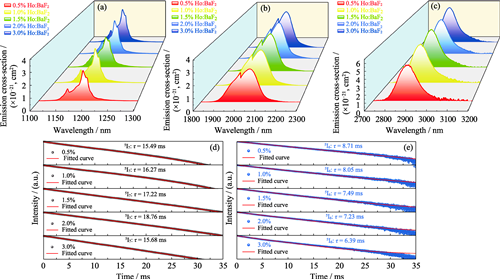
Infrared lasers in the 1-3 μm region are increasingly important for applications in medical treatment, atmospheric monitoring, and high-power laser systems. Holmium ions (Ho3+) are particularly attractive because of their multiple emission channels covering near to mid infrared ranges. This work aims to systematically evaluate the structural and spectroscopic properties of Ho:BaF2 crystals and determine the optimal doping concentrations for efficient multi-band laser operation. High-quality Ho:BaF2 single crystals with concentrations of 0.5%-3.0% (in atom) were grown using the temperature gradient technique (TGT). Structural characterization was performed, while spectroscopic properties were analyzed via absorption, fluorescence, and lifetime measurements. Judd-Ofelt analysis was further applied to calculate radiative parameters. All samples exhibited cubic structures, with doping segregation ratios close to unity and uniform Ho3+ distribution. Spectroscopic evaluation revealed optimal doping concentrations of 2.0% (in atom) for ~1.2 μm (5I6→5I8, spectral quality factor Q=24.29×10⁻²¹ cm2·ms) and ~2.05 μm (5I7→5I8, Q=67.53×10⁻²¹ cm2·ms), and 1.0% (in atom) for ~2.85 μm (5I6→5I7, Q=44.52×10⁻²¹ cm2·ms). BaF2 host, with its low phonon energy (~346 cm-1) and anti-clustering characteristics, enabled enhanced emission performance, including a maximum emission cross-section of 3.81×10⁻²¹ cm2 at ~2.05 μm. These results outperform traditional hosts such as YAG and CaF2. Compared to oxide hosts, BaF2 offers superior lifetime, reduced non-radiative losses, and greater resistance to concentration quenching. The findings indicate that Ho:BaF2 supports higher effective doping levels, making it particularly promising for high-power and ultrafast laser applications. Ho:BaF2 crystals demonstrate excellent potential as efficient, multi-wavelength infrared laser gain media.
|
|
|
Sulfur-doped Graphene/Conductive Polymer Composites: Preparation and Performance as Electrode of Flexible Supercapacitor
QIN Ying, YAO Zhuo, ZHENG Lijun, BAO Shuo, LI Peng, GUO Shiqi
2026 Vol. 41 (5): 604–610
Abstract(
481 )
HTML(
12)
PDF(2222KB)(
1138
)
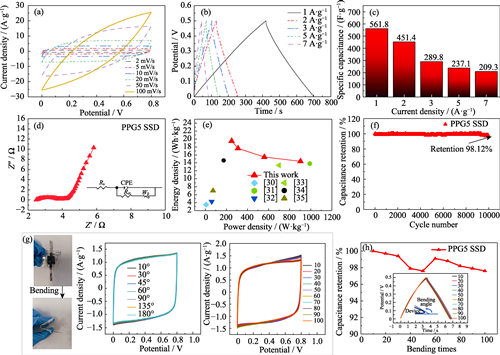
With the rapid development of the Internet of Things, smart healthcare, and wearable electronics, there is an increasingly urgent demand for high-performance flexible energy storage devices. Supercapacitors (SCs) have emerged as promising candidates due to their high power density and long cycle life. However, conventional electrode materials often suffer from limited specific capacitance, insufficient mechanical flexibility, and poor long-term cycling stability under flexible conditions, which severely restricts their practical application. To address these challenges, this study aims to develop a novel electrode material that combines high electrochemical performance with excellent mechanical flexibility. By constructing a ternary composite of sulfur-doped graphene oxide (SGO) with two conductive polymers, polyaniline (PANI) and polypyrrole (PPy), a highly conductive hierarchical porous network is formed through the interweaving of mixed nano-sized PANI and PPy. The incorporation of sulfur atoms into SGO effectively enlarges the interlayer spacing of graphene, significantly mitigating the restacking of graphene sheets and thereby exposing more active surfaces. Electrochemical tests demonstrate that the as-prepared SGO/PANI/PPy ternary composite electrode exhibits outstanding performance, delivering a high specific capacitance of 561.8 F·g-1. At a power density of 250.62 W·kg-1, the device achieves an energy density of 19.51 Wh·kg-1. Moreover, the electrode retains 98.12% of its initial capacitance after 10000 consecutive charge-discharge cycles. This work confirms the great potential of the ternary composite as an electrode for flexible supercapacitors and provides new insights into addressing the performance limitations of flexible energy storage devices through multi-component synergy and structural design.
|
|
|
Effect of Al2O3/P2O5 Molar Ratio on Structure and Properties of Sealing Glass for Power Lithium Batteries
WANG Weiwei, CAO Xin, LIU Junfei, YANG Xiaofei, HAN Na, LI Xingcong, SHI Lifen
2026 Vol. 41 (5): 611–618
Abstract(
426 )
HTML(
7)
PDF(1786KB)(
458
)
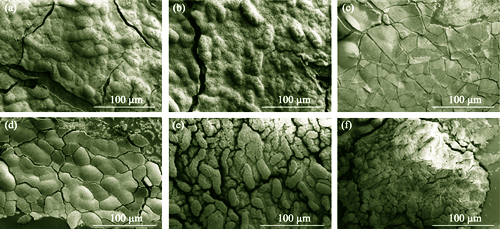
This study presents a new kind of sealing glass based on P2O5-Al2O3-B2O3-R2O-NaF system, which exhibits a high coefficient of thermal expansion (CTE) suitable for sealing power lithium batteries. The effects of Al2O3/P2O5 molar ratio on the structure, thermal properties, sealing performance and chemical stability of the sealing glass were characterized. The results show that as the Al2O3/P2O5 molar ratio increases from 0.35 to 0.76, the number of P-O-P bridge oxygen bonds within the glass structure gradually decreases, and the content of [AlO4] tetrahedra initially increases and then decreases, leading to an initial increase in the compactness of the phosphate glass network structure, followed by a decrease. Correspondingly, the CTE of the glass firstly decreases from 164.5×10⁻⁷ ℃-1 to 160.0×10⁻⁷ ℃-1, and then gradually increases to 175.9×10⁻⁷ ℃-1, while the sealing temperature initially rises to 588 ℃ and subsequently falls to 549 ℃. The acid resistance of the glass also follows this trend, initially improving and then deteriorating. The phosphate sealing glass prepared in this study displays proper balance among high CTE, low sealing temperature and excellent chemical stability, providing theoretical and technical support for the development of a low-temperature sealing process for the electrodes of power lithium batteries.
|
|
|
Polyurethane-carbon Nanotubes@Bismuth Telluride Hybrid Aerogel: Preparation and Sensing Properties
CAO Ying, PENG Lu, XIA Shuang, BAI Ju, ZHANG Ting, LI Tie
2026 Vol. 41 (5): 619–627
Abstract(
421 )
HTML(
4)
PDF(7732KB)(
386
)
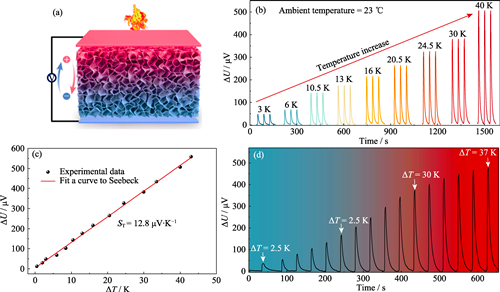
With the rapid development of intelligent equipment such as bionic humanoid robots, flexible tactile sensors have attracted increasing attention for their bionic haptic behaviors similar to human fingers. However, the existing sensing materials used for assembling multimodal flexible tactile sensors still lack the high-selective response capabilities, resulting in the cross-interference phenomenon of various output signals, which is difficult to meet the lightweight and integrated requirements of microsystems. In this study, a new-style polyurethane-carbon nanotubes@bismuth telluride (WPU-CNT@Bi2Te3) hybrid aerogel was designed and prepared, which exhibits a maximum compressive strain of 60% and a compressive strength of 9.4 kPa via the optimization of component ratios. Furthermore, according to the independent sensing principles of the piezoresistive effect of CNTs to mechanical pressure stimuli, and the thermoelectric effect of Bi2Te3 to changes in the external temperature, this hybrid aerogel derived flexible tactile sensor achieves high sensitivity (GF value of -1.28 kPa-1, temperature response sensitivity of 1.2 K-1, and minimum response temperature difference of 0.4 K) and rapid response behaviors (response and recovery times of 0.14 and 0.18 s for pressure, optimal response time of 0.28 s for temperature) to temperature and pressure, with high sensing stability (no degradation after 1300 thermal cycles) and non-mutual interference behaviors, endowing the equipped robotic hand with the perception capability to recognize both the hardness and temperature of various objects.
|
|
|
Tandem Catalysis of CuNi Bimetallic MOFs Boosting Nitrate Reduction for Ammonia Production
WANG Meng, CAO Leilei, GOU Wangyan, CHENG Yayi, ZHAN Qi, YUAN Menglei
2026 Vol. 41 (5): 628–636
Abstract(
703 )
HTML(
11)
PDF(7380KB)(
4240
)
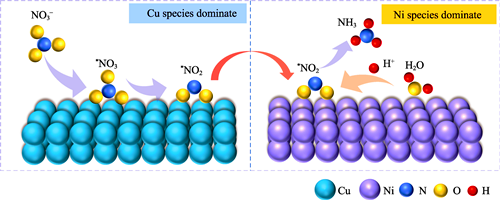
Electrocatalytic nitrate reduction reaction (NO3RR), as a green technology for producing ammonia and purifying wastewater, faces challenges in terms of nitrite intermediate accumulation and competitive hydrogen evolution reactions. Tandem catalytic strategy (NO3-→NO2-→NH3) is expected to significantly improve the rate and selectivity of ammonia production. Therefore, designing and constructing dual active sites with different catalytic properties contributes to improving reaction activity. Herein, a CuNi bimetallic metal organic framework (MOF) tandem catalytic system using well-defined MOFs as templates was constructed through simple hydrothermal synthesis. The research results indicated that Cu active sites could efficiently catalyze the reduction of NO3- to NO2-, while Ni sites exhibited excellent active hydrogen species *H supply capacity and NO2- conversion efficiency, forming an efficient tandem catalytic mechanism with Cu sites, and achieving a Faraday efficiency of up to 90.1% for ammonia synthesis and an ammonia yield of 28.8 mg·h-1·mgcat-1. In addition, the bimetallic MOFs catalyst showed excellent cycling stability without any degradation in ammonia synthesis after multiple cycling tests. This work provides new insights for the design and optimization of high-performance tandem catalysts.
|
|
|
Enhanced Sulfur Fixation Efficiency of Calcium Hydroxide by Fe3+: Dual Mechanisms of Oxidation and Catalysis
LI Zhongyi, LIU Biao, CHEN Xi, LI Chunzhong, JIANG Haibo
2026 Vol. 41 (5): 637–644
Abstract(
513 )
HTML(
2)
PDF(2600KB)(
176
)
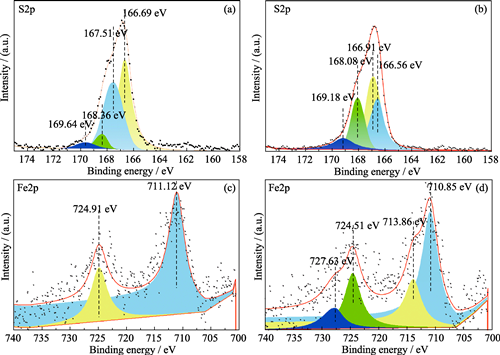
Sulfur dioxide (SO2) is a major air pollutant that poses severe hazards to environment and human health. Currently, calcium hydroxide (Ca(OH)2) is widely used as a common desulfurizing agent due to its simple preparation process, low cost and relatively good desulfurization performance. However, how to further improve its sulfur fixation efficiency remains unknown. Here, a novel calcium-iron desulfurizing agent was prepared in a stepwise manner by incorporating ferric hydroxide during hydration process of calcium oxide (CaO), and then its desulfurization performance was investigated. The results demonstrated that sulfur fixation efficiency of the calcium-iron desulfurizing agent was significantly enhanced, increasing by 26.16% compared to the maximum sulfur fixation efficiency of pure Ca(OH)2. Addition of Fe3+ modified the morphology of Ca(OH)2, rendering its surface much rougher with an increasing of pores and cracks. This morphological change provided more active sites for the desulfurization reaction. X-ray photoelectron spectroscopy analysis revealed that after desulfurization the proportion of hexavalent sulfur (S6+) in the sample increased from 9.71% (pure Ca(OH)2) to 33.33% (calcium-iron desulfurizing agent). Experiment study revealed that before desulfurization, all iron in the calcium-iron desulfurizing agent was in the form of Fe3+, but after desulfurization, Fe2+ amazingly accounted for 68.42% while Fe3+ only accounted for 31.58% of the total calcium-iron agent. Calculations based on these data indicated that 35.56% sulfur was oxidized while 64.44% was catalyzed. These calculation findings confirmed that oxidation and catalytic effects of the iron promoted the conversion of tetravalent sulfur (S4+) to S6+, thereby further improving the sulfur fixation efficiency. This study provides a promising approach to enhance the sulfur fixation efficiency of Ca(OH)2 and an effective material for removing sulfur dioxide from industrial flue gas.
|
|
|
Self-developed Ortho-para Hydrogen Conversion Catalyst: Catalytic Testing and Optimization of Batch Preparation Process
LI Na, WEI Jin, CAO Ruixiao, LIU Yu, HUANG Guiwen, XIAO Hongmei
2026 Vol. 41 (5): 645–652
Abstract(
388 )
HTML(
2)
PDF(2784KB)(
721
)
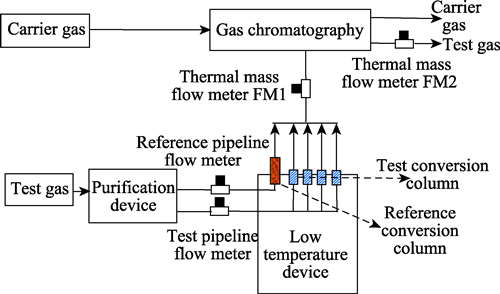
Ortho-para hydrogen conversion catalyst (OPC) is one of the key materials in large-scale hydrogen liquefaction projects. In recent years, research primarily focuse on enhancing low-temperature catalytic activity of existing systems, while accurate measurement of para-hydrogen content has become the foundation of such studies. However, only a limited number of studies and relevant industry standards have reported the testing accuracy and reliability of para-hydrogen analysis, and the optimization of batch preparation process, all of which could not meet the requirement of domestic industrial development to reduce reliance on imported catalysts. This study explores both catalytic testing analysis and optimization of mass production processes for OPC, demonstrates the stability and high measurement accuracy of the experimental self-developed testing platform, and identifies the optimal mass production process combination to maximize yield through comprehensive comparison on catalytic performance and mechanical strength. Furthermore, process optimizations such as low-temperature activation, particle size optimization and secondary washing are implemented to produce catalysts with superior catalytic activity. The results show that the self-developed catalyst 2# with primary crushing, sieving through a 0.8 mm sieve, washing and low-temperature activation exhibits approximately 3.4% higher catalytic performance than imported catalysts at a space velocity of 1.2 L/(min·mL), with corresponding conversion rate and reaction rate constant (k value) approximately 7.42% and 25.78% higher, respectively. This study provides a kind of self-developed catalyst with excellent performance for domestic substitution through optimizing batch preparation.
|
|
|
Hole Diameter Effect on Open-hole Tensile Mechanical Property of MI-SiCf/SiC Composites
WANG Yana, SONG Jiupeng, WANG Hairun, LI Tianshan, JIAO Jian
2026 Vol. 41 (5): 653–662
Abstract(
401 )
HTML(
4)
PDF(8164KB)(
1078
)
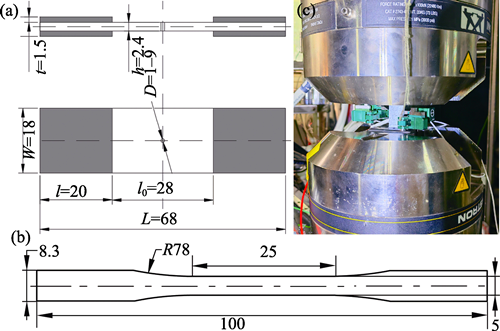
To meet the design requirements for perforated structures in aero-engine hot-section components made of MI-SiCf/SiC composites, this study prepared unnotched specimens and five types of open-hole specimens with different diameters (D=1-9 mm), and conducted room-temperature tensile tests. By integrating digital image correlation and acoustic emission techniques, the full-field strain evolution and internal damage signals were monitored in real time, systematically elucidating the influence of hole diameter on damage initiation threshold and evolution behavior. A three-dimensional finite element model was established to analyze the competing mechanisms between material nonlinearity, stress concentration at the hole-edge, and stress interaction at the hole-edge. The results indicate that the open-hole tensile strength exhibits a nonlinear relationship with the hole diameter: when D≤3 mm, the strength increases slowly with increasing diameter, whereas it decreases sharply for D>3 mm. A critical threshold exists concerning the width-to-diameter ratio (W/D): specifically, when W/D<3, stress concentration interference between the hole and the specimen edge leads to a pronounced decline in load-bearing capacity, with geometric effects dominating the failure behavior. Moreover, damage initiation stress decreases with increasing hole diameter. Small-hole specimens (D≤3 mm) maintain a sequential damage evolution process, while large-hole specimens (D>3 mm) exhibit concurrent multiple damage modes. Finite element analysis reveals that the stress peak shifts away from the hole edge once the material enters the nonlinear stage, resulting in early failure in specimens with diameter of 1-2 mm due to the overlap between the high-stress zone and inherent material defects. Larger holes require a larger stress redistribution zone. When W/D exceeds the critical value of 3, the available material width becomes insufficient, ultimately leading to a sharp decrease in nominal tensile strength. In conclusion, the optimal open-hole tensile performance of MI-SiCf/SiC composites is achieved at a hole diameter of 3 mm. Reinforcement designs are recommended for open-hole structures with W/D<3.
|
|
|
Ligand-hydroxylated UiO-66 for Enhanced Photothermally Catalytic VOCs Oxidation
CHEN Xiaochen, WANG Yang, YANG Bin, WANG Min, A Bohan, WANG Man, ZHANG Lingxia
2026 Vol. 41 (5): 663–672
Abstract(
997 )
HTML(
3)
PDF(4541KB)(
3309
)
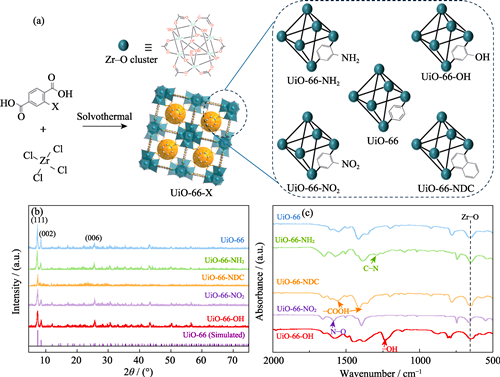
The efficient removal of low-concentration volatile organic compounds (VOCs) in indoor and industrial environments remains a significant challenge. Metal-organic frameworks (MOFs) are potential oxidation catalysts due to their superior adsorption enrichment capability for low-concentration VOCs. In this work, hydroxyl-containing ligands were introduced into UiO-66, and the as-synthesized UiO-66-OH catalyst exhibited exceptional photothermal catalytic performance on oxidation of flowing low-concentration VOCs (initial concentrations of 0.075 mg/L for toluene and 0.064 mg/L for benzene, a weight hourly space velocity (WHSV) of 30000 mL/(g∙h)), achieving 97% and 90% conversion of toluene and benzene, respectively, surpassing the reported photothermal catalysts such as metal oxides and noble-metal-loaded catalysts. Such impressive activity is attributed to the synergy of thermal catalysis and photocatalysis. Ligand hydroxylation optimizes the electron structure and the ligand-to-metal charge transfer (LMCT) effect, enhancing light absorption, improving electron-hole separation efficiency and photothermal properties of UiO-66. Hydroxyl introduction promotes the formation of oxygen vacancies, facilitating oxygen adsorption/activation to sustain lattice oxygen (Olatt) and generate superoxide radical (∙O2-), which are the dominant reactive species in VOCs oxidation. This work not only presents the potential of MOFs as efficient photothermal catalysts for the oxidation of low-concentration VOCs but also shows prospects on facile modulation of electron structure by ligand engineering to enhance the photothermal properties of MOFs.
|
|
|
Anomalous Fluorescence Thermal Quenching in a Red-emitting RbZnF3:Eu3+ Phosphor under Violet Excitation
DONG Langping, LI Shixuan, YANG Shaoxing, HOU Jingshan, LIN Yandan, ZHOU Pengcheng, SUN Xuejiao, SUN Yiyang, CHEN Daqin, FANG Yongzheng
2026 Vol. 41 (5): 673–680
Abstract(
345 )
HTML(
5)
PDF(2734KB)(
1047
)
Thermal quenching is a key challenge in the application of fluorescent materials in solid state lighting devices. Herein, we report a perovskite phosphor RbZnF3:Eu3+ exhibiting anti-thermal quenching behavior. Under violet excitation, this phosphor yields bright red emission. As the temperature rises, the luminescence intensity first increases up to 175 ℃ (i.e., anti-thermal quenching) and then decreases. When the temperature is above 200 ℃, the luminescence intensity falls below the value at room temperature. Comprehensive characterizations demonstrate that the observed anti-thermal quenching behavior is mainly due to the existence of defect levels. First-principles calculations show that Rb vacancy and F vacancy could be responsible for the observed defect levels. Finally, this study has fabricated a white light-emitting diode (LED) using the RbZnF3:Eu3+ phosphor which verifies its potential application.
|
|