
Journal of Inorganic Materials ›› 2026, Vol. 41 ›› Issue (10): 1459-1469.DOI: 10.15541/jim20260067
• RESEARCH ARTICLE • Previous Articles Next Articles
LI Xiaolei( ), QI Xiaofang, MA Wencheng(), XU Yongkuan
Received:2026-02-07
Revised:2026-03-19
Published:2026-10-20
Online:2026-05-08
Contact:
MA Wencheng, associate professor. E-mail: wcma@email.tjut.edu.cnAbout author:LI Xiaolei (1999-), male, Master candidate. E-mail: 574029178@qq.com
Supported by:CLC Number:
LI Xiaolei, QI Xiaofang, MA Wencheng, XU Yongkuan. Effects of Pressure and Rotation Speed on the Growth Rate and Uniformity of SiC in a Vertical Hot-wall CVD Epitaxial System[J]. Journal of Inorganic Materials, 2026, 41(10): 1459-1469.
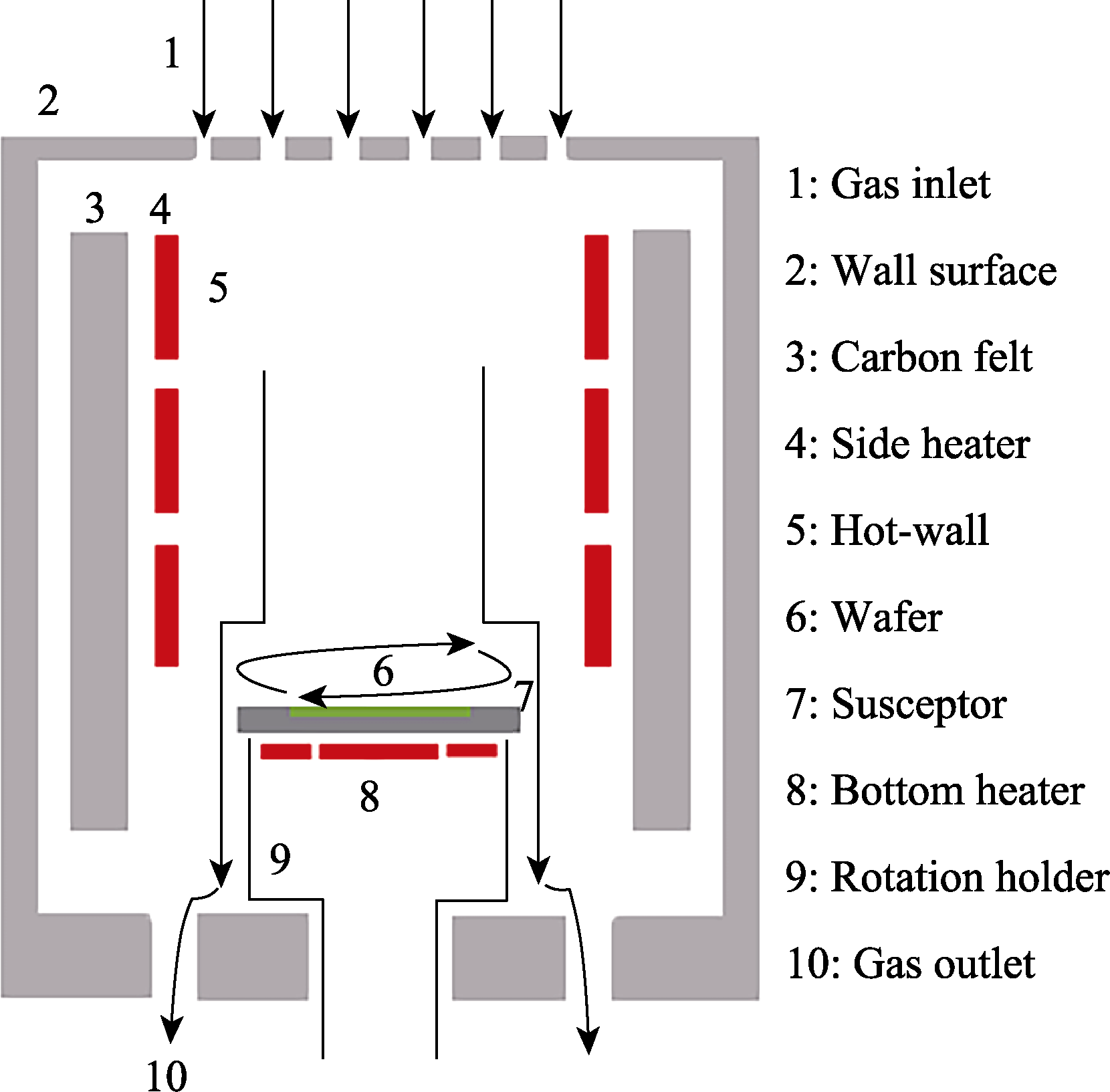
Fig. 1 Schematic diagram of the vertical hot-wall CVD SiC epitaxial growth furnace
| Material | Density/(kg·m-3) | Specific heat/(J·kg-1·K-1) | Thermal conductivity/ (W·m-1·K-1) | Viscosity/ (kg·m-1·s-1) | Surface emissivity |
|---|---|---|---|---|---|
| Felt | 120 | 200 | 9×10⁻³+2.7×10⁻⁴T+1.1× 10⁻¹⁰T3 | - | 0.8 |
| Graphite | 1950 | 753.5lnT-3466.7 | 1808×T-0.479 | - | 0.8 |
| SiC | 3220 | 1281 | 6.11×10⁴/(T-115) | - | 0.9 |
| H2 | Incompressible-ideal-gas | 1.4×10⁴+3.4T-3.4×10⁻³T2- 3.9×10⁻⁷T3+1.7×10⁻⁹T4 | 0.2+3.2×10⁻⁴T | 8.4×10⁻⁶+1.1×10⁻⁸T | - |
| Mixture-gas | Kinetic-theory | Kinetic-theory | Kinetic-theory | - | - |
Table 1 Physical parameters of main materials
| Material | Density/(kg·m-3) | Specific heat/(J·kg-1·K-1) | Thermal conductivity/ (W·m-1·K-1) | Viscosity/ (kg·m-1·s-1) | Surface emissivity |
|---|---|---|---|---|---|
| Felt | 120 | 200 | 9×10⁻³+2.7×10⁻⁴T+1.1× 10⁻¹⁰T3 | - | 0.8 |
| Graphite | 1950 | 753.5lnT-3466.7 | 1808×T-0.479 | - | 0.8 |
| SiC | 3220 | 1281 | 6.11×10⁴/(T-115) | - | 0.9 |
| H2 | Incompressible-ideal-gas | 1.4×10⁴+3.4T-3.4×10⁻³T2- 3.9×10⁻⁷T3+1.7×10⁻⁹T4 | 0.2+3.2×10⁻⁴T | 8.4×10⁻⁶+1.1×10⁻⁸T | - |
| Mixture-gas | Kinetic-theory | Kinetic-theory | Kinetic-theory | - | - |
| Reaction | A | Ea | n |
|---|---|---|---|
| C2H4+H→C2H5 | 2.2×10⁸ | 8.64×10³ | 0 |
| C2H5+3H→2CH4 | 5.0×10¹¹ | 0 | 0 |
| C2H5+2H2→2CH4+H | 9.0×10¹³ | 0 | 0 |
| C2H6+H→C2H5+H2 | 1.4×10⁹ | 3.09×10⁵ | 0.5 |
| C2H5→C2H4+H | 1.4×10⁸ | 1.56×10⁵ | 0 |
| SiHCl3→SiCl2+HCl | 3.2×10¹² | 7.00×10⁴ | 0 |
| SiHCl3+H2→SiH2Cl2+HCl | 3.2×10⁻⁸ | 2.33×10⁵ | 0 |
| SiH2Cl2→SiCl2+H2 | 2.1×10¹⁸ | 3.20×10⁵ | 0 |
| SiH2Cl2→SiHCl+HCl | 6.9×10¹⁴ | 3.17×10⁵ | 0 |
| SiHCl3+H→SiCl3+H2 | 7.4×10⁸ | 2.70×10³ | 0 |
| SiCl3+HCl→SiCl4+H | 1.2×10² | 1.10×10⁴ | 0 |
| SiHCl3+HCl→SiCl4+H2 | 2.2×10³ | 4.26×10⁴ | 0 |
| SiCl4→SiCl3+Cl | 7.0×10²² | 1.11×10⁴ | 0 |
| C2H4→C2H2+H2 | 1.5×10¹⁵ | 3.45×10⁴ | 0 |
| SiHCl+HCl→SiCl2+H2 | 2.2×10⁸ | 1.00×10⁸ | 0.5 |
| H+H2→H2 | 5.0×10¹¹ | 9.20×10⁷ | -0.6 |
Table 2 Gas phase kinetic mechanism
| Reaction | A | Ea | n |
|---|---|---|---|
| C2H4+H→C2H5 | 2.2×10⁸ | 8.64×10³ | 0 |
| C2H5+3H→2CH4 | 5.0×10¹¹ | 0 | 0 |
| C2H5+2H2→2CH4+H | 9.0×10¹³ | 0 | 0 |
| C2H6+H→C2H5+H2 | 1.4×10⁹ | 3.09×10⁵ | 0.5 |
| C2H5→C2H4+H | 1.4×10⁸ | 1.56×10⁵ | 0 |
| SiHCl3→SiCl2+HCl | 3.2×10¹² | 7.00×10⁴ | 0 |
| SiHCl3+H2→SiH2Cl2+HCl | 3.2×10⁻⁸ | 2.33×10⁵ | 0 |
| SiH2Cl2→SiCl2+H2 | 2.1×10¹⁸ | 3.20×10⁵ | 0 |
| SiH2Cl2→SiHCl+HCl | 6.9×10¹⁴ | 3.17×10⁵ | 0 |
| SiHCl3+H→SiCl3+H2 | 7.4×10⁸ | 2.70×10³ | 0 |
| SiCl3+HCl→SiCl4+H | 1.2×10² | 1.10×10⁴ | 0 |
| SiHCl3+HCl→SiCl4+H2 | 2.2×10³ | 4.26×10⁴ | 0 |
| SiCl4→SiCl3+Cl | 7.0×10²² | 1.11×10⁴ | 0 |
| C2H4→C2H2+H2 | 1.5×10¹⁵ | 3.45×10⁴ | 0 |
| SiHCl+HCl→SiCl2+H2 | 2.2×10⁸ | 1.00×10⁸ | 0.5 |
| H+H2→H2 | 5.0×10¹¹ | 9.20×10⁷ | -0.6 |
| Reaction | A | Ea | n |
|---|---|---|---|
| SiHCl3+C-surf→SiCl-surf+C-vol+H+2Cl | 2.6×10¹⁶ | 0 | 0.5 |
| SiCl3+C-surf→SiCl-surf+C-vol | 3.2×10¹⁸ | 0 | 0.5 |
| SiCl2+C-surf→SiCl-surf+C-vol+Cl | 3.1×10¹⁹ | 0 | 0.5 |
| SiCl4+C-surf→SiCl-surf+C-vol+3Cl | 2.9×10¹⁶ | 0 | 0.5 |
| SiH2Cl2+C-surf→SiCl-surf+C-vol+2H+Cl | 3.8×10⁸ | 0 | 0.5 |
| SiHCl+C-surf→Si-surf+HCl+C-vol | 3.1×10¹⁶ | 0 | 0.5 |
| SiCl-surf→Si-surf+Cl | 2.3×10¹² | 0 | 0.5 |
| C2H2+2Si-surf→2C-surf+H2+2Si-vol | 3.0×10¹⁸ | 0 | 0.5 |
| C2H4+2Si-surf→2C-surf+2H2+2Si-vol | 2.3×10¹⁶ | 0 | 0.5 |
| CH4+Si-surf→C-surf+2H2+Si-vol | 4.3×10¹¹ | 0 | 0.5 |
Table 3 Surface kinetic mechanism
| Reaction | A | Ea | n |
|---|---|---|---|
| SiHCl3+C-surf→SiCl-surf+C-vol+H+2Cl | 2.6×10¹⁶ | 0 | 0.5 |
| SiCl3+C-surf→SiCl-surf+C-vol | 3.2×10¹⁸ | 0 | 0.5 |
| SiCl2+C-surf→SiCl-surf+C-vol+Cl | 3.1×10¹⁹ | 0 | 0.5 |
| SiCl4+C-surf→SiCl-surf+C-vol+3Cl | 2.9×10¹⁶ | 0 | 0.5 |
| SiH2Cl2+C-surf→SiCl-surf+C-vol+2H+Cl | 3.8×10⁸ | 0 | 0.5 |
| SiHCl+C-surf→Si-surf+HCl+C-vol | 3.1×10¹⁶ | 0 | 0.5 |
| SiCl-surf→Si-surf+Cl | 2.3×10¹² | 0 | 0.5 |
| C2H2+2Si-surf→2C-surf+H2+2Si-vol | 3.0×10¹⁸ | 0 | 0.5 |
| C2H4+2Si-surf→2C-surf+2H2+2Si-vol | 2.3×10¹⁶ | 0 | 0.5 |
| CH4+Si-surf→C-surf+2H2+Si-vol | 4.3×10¹¹ | 0 | 0.5 |
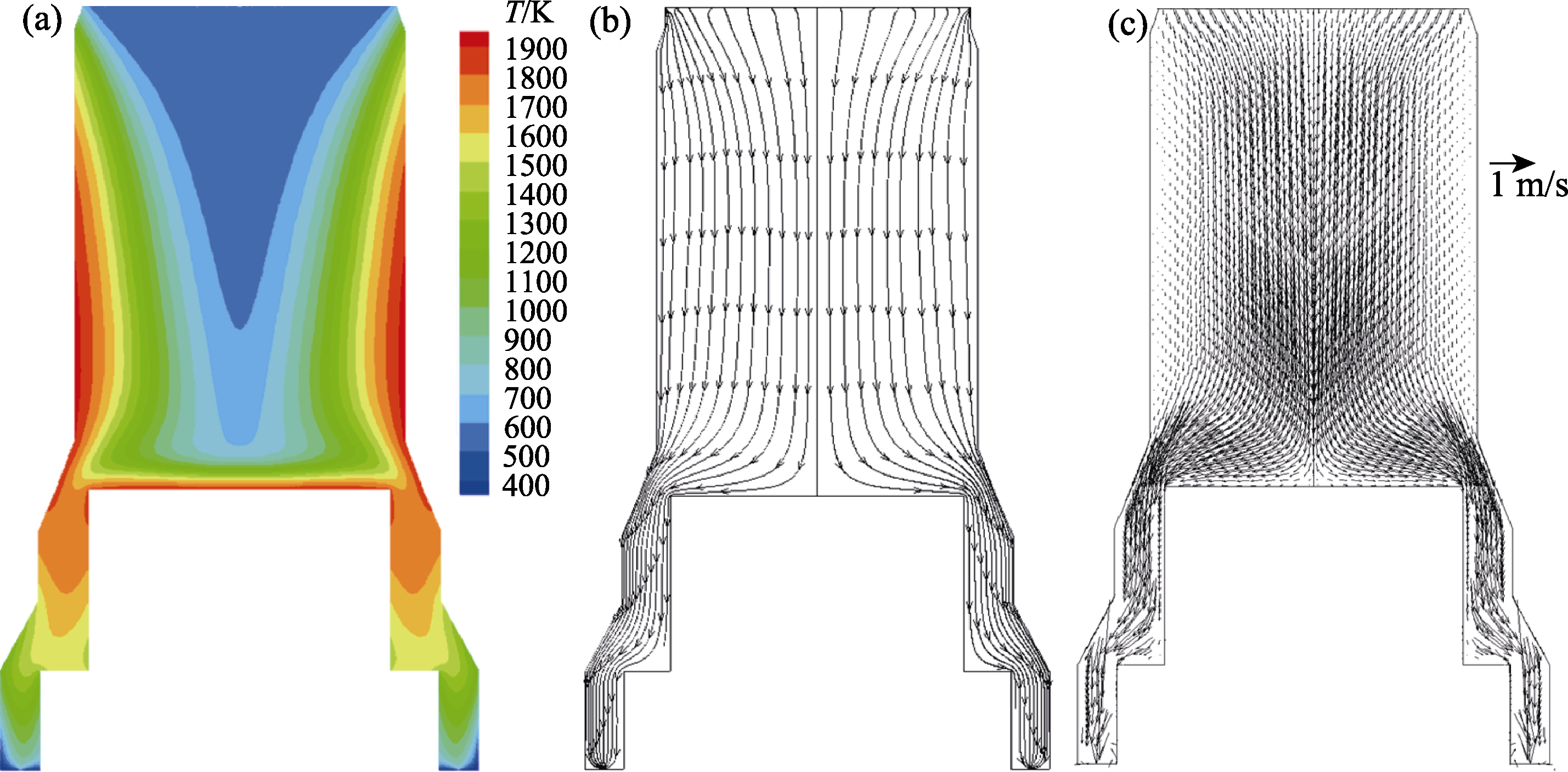
Fig. 2 Temperature distribution and streamline distribution in the reaction chamber under baseline case (a) Temperature distribution; (b) Streamline distribution; (c) Flow velocity distribution. Colorful figures are available on website
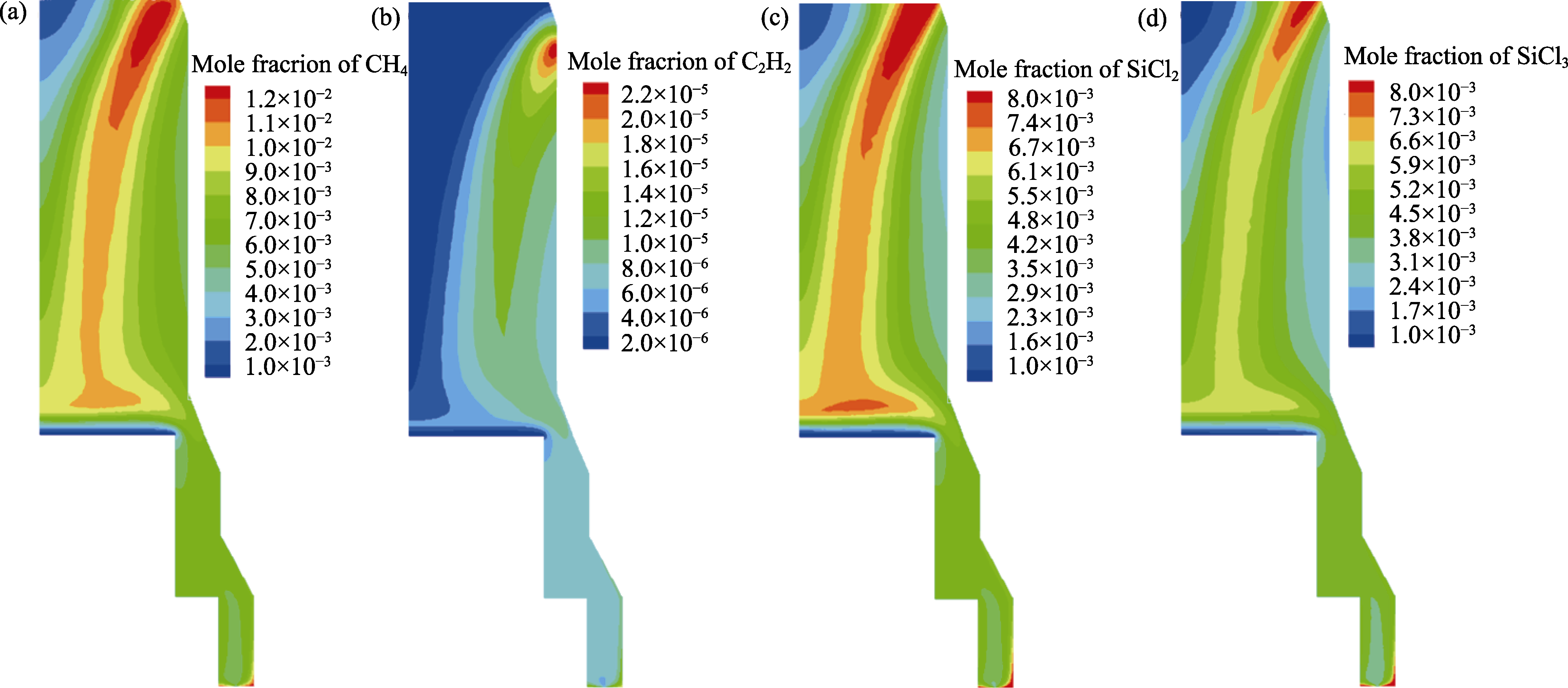
Fig. 3 Distribution of molar fractions for different components in the reaction chamber under baseline case (a) CH4 molar fraction; (b) C2H2 molar fraction; (c) SiCl2 molar fraction; (d) SiCl3 molar fraction. Colorful figures are available on website
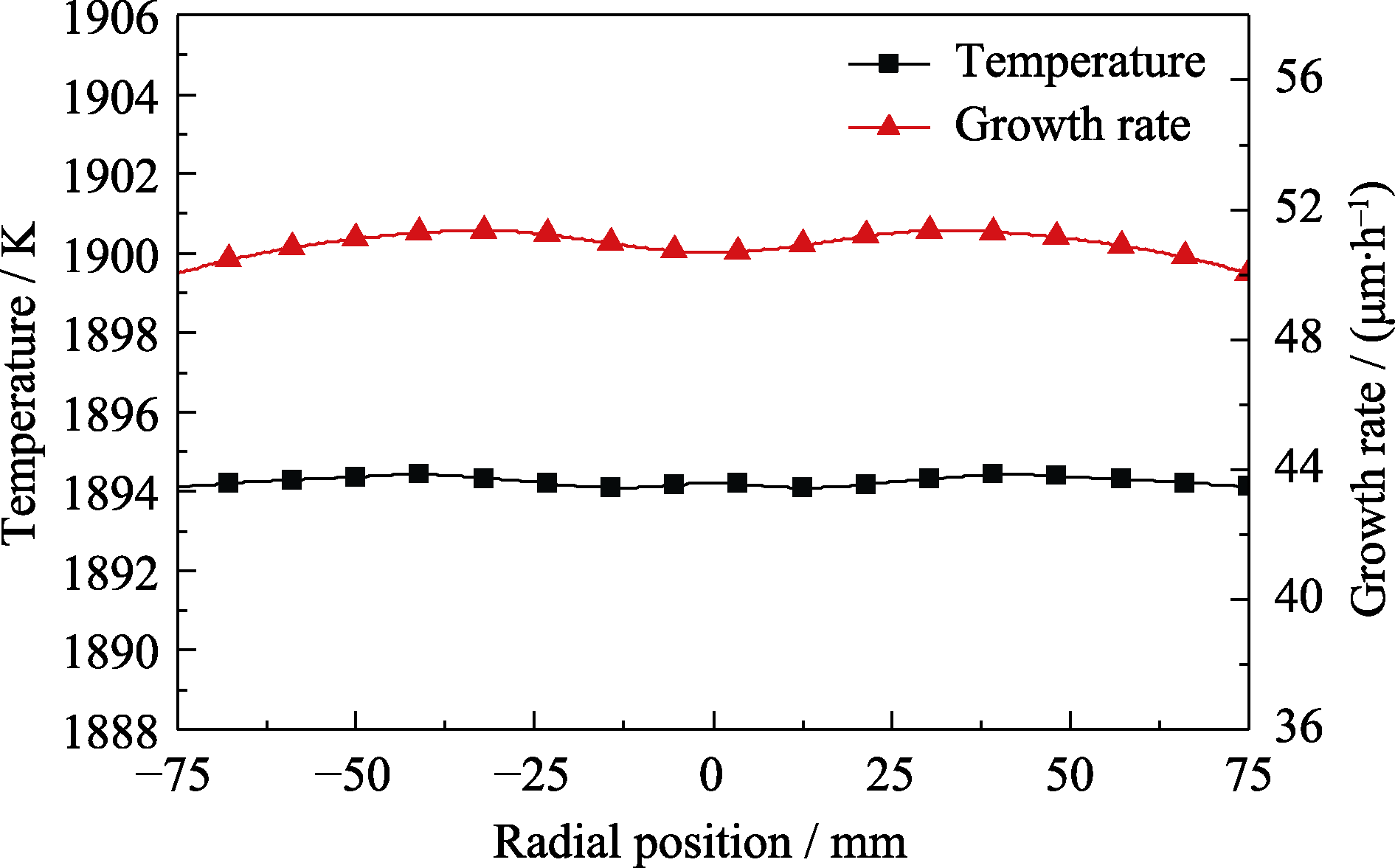
Fig. 4 Temperature and growth rate distributions on the substrate surface for baseline case
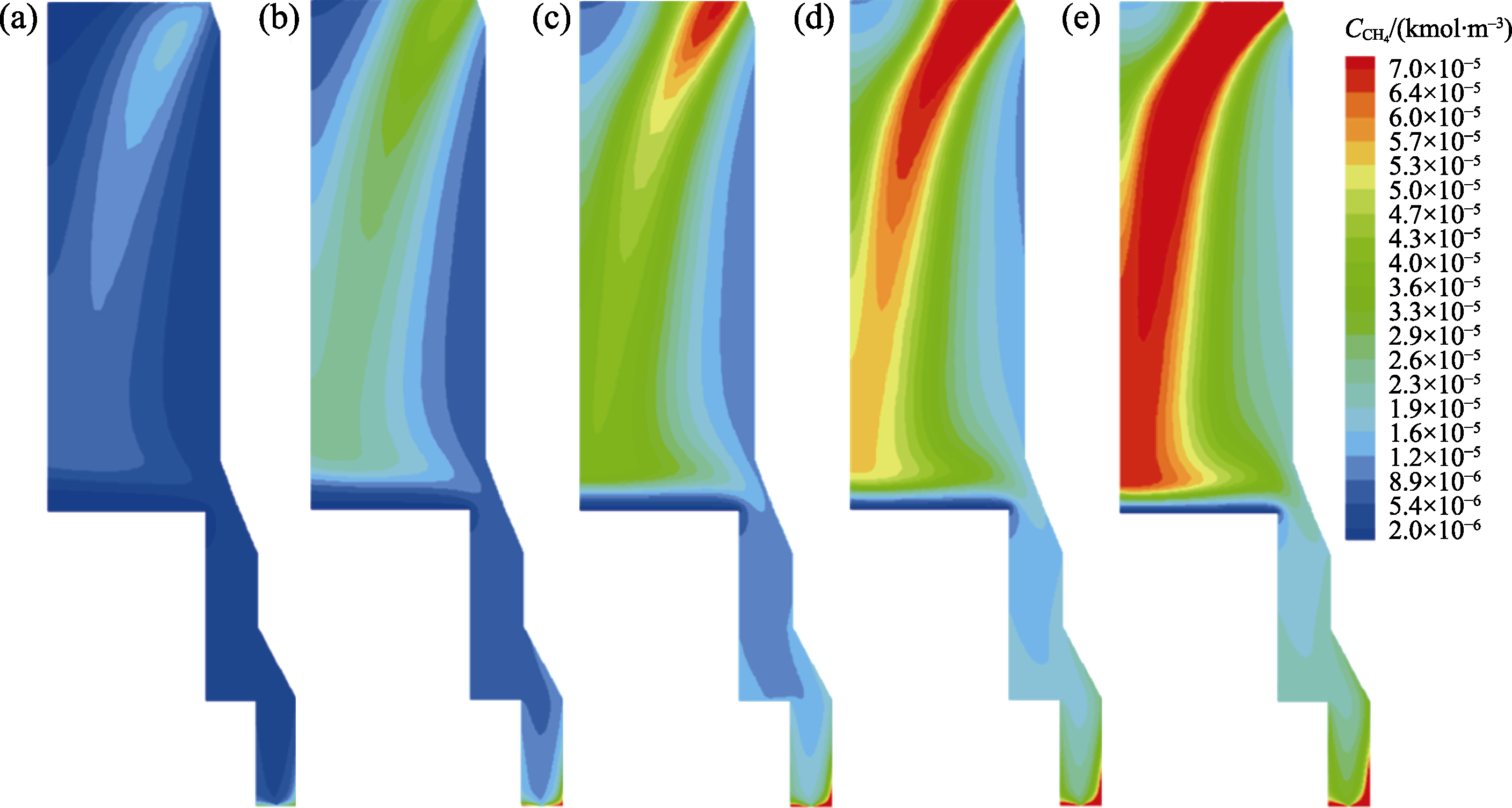
Fig. 5 Distribution of molar concentration of CH4 at different pressures (a) 5 kPa; (b) 15 kPa; (c) 25 kPa; (d) 35 kPa; (e) 45 kPa. Colorful figures are available on website
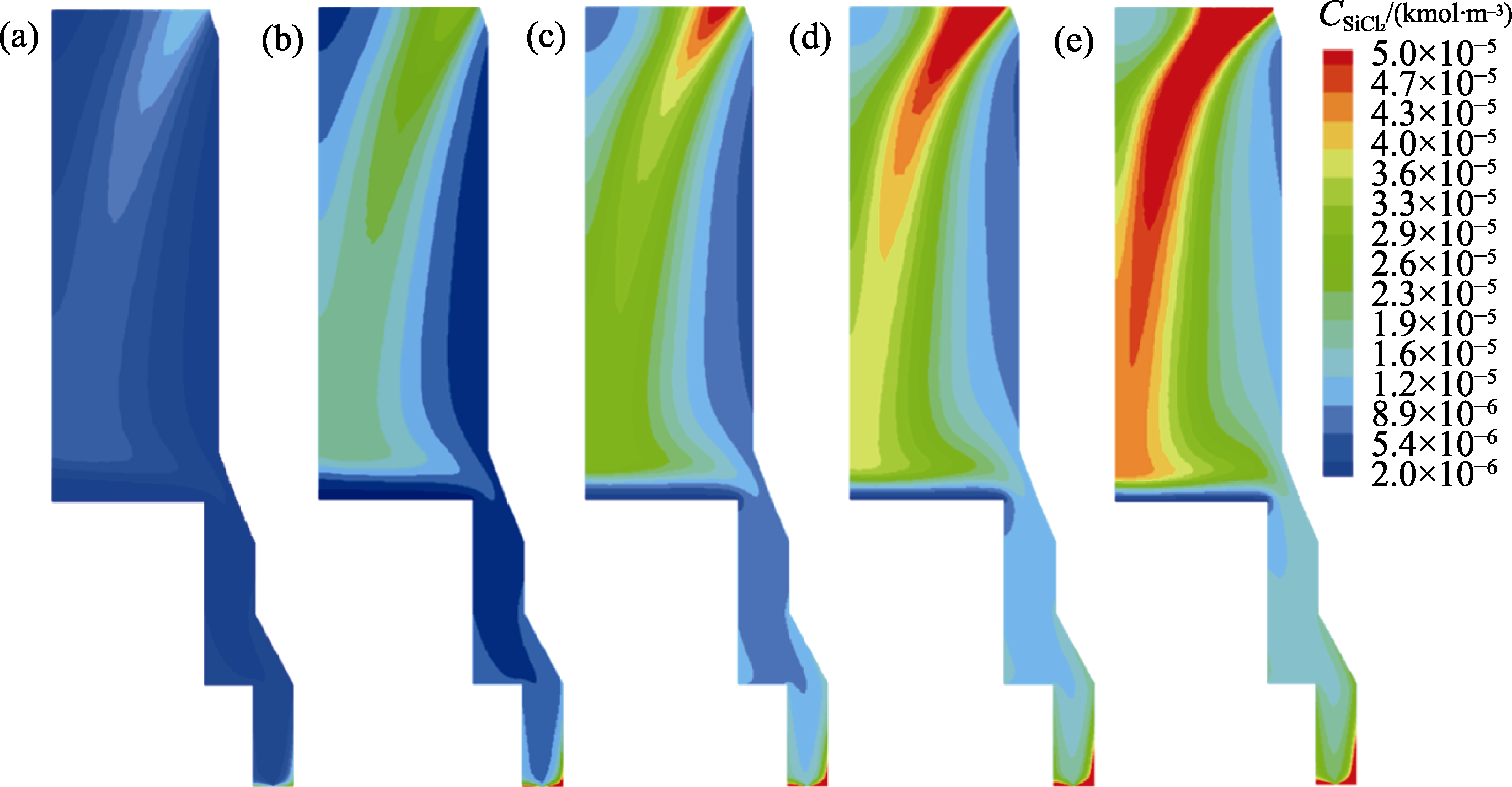
Fig. 6 Distribution of molar concentration of SiCl2 at different pressures (a) 5 kPa; (b) 15 kPa (c) 25 kPa; (d) 35 kPa; (e) 45 kPa. Colorful figures are available on website
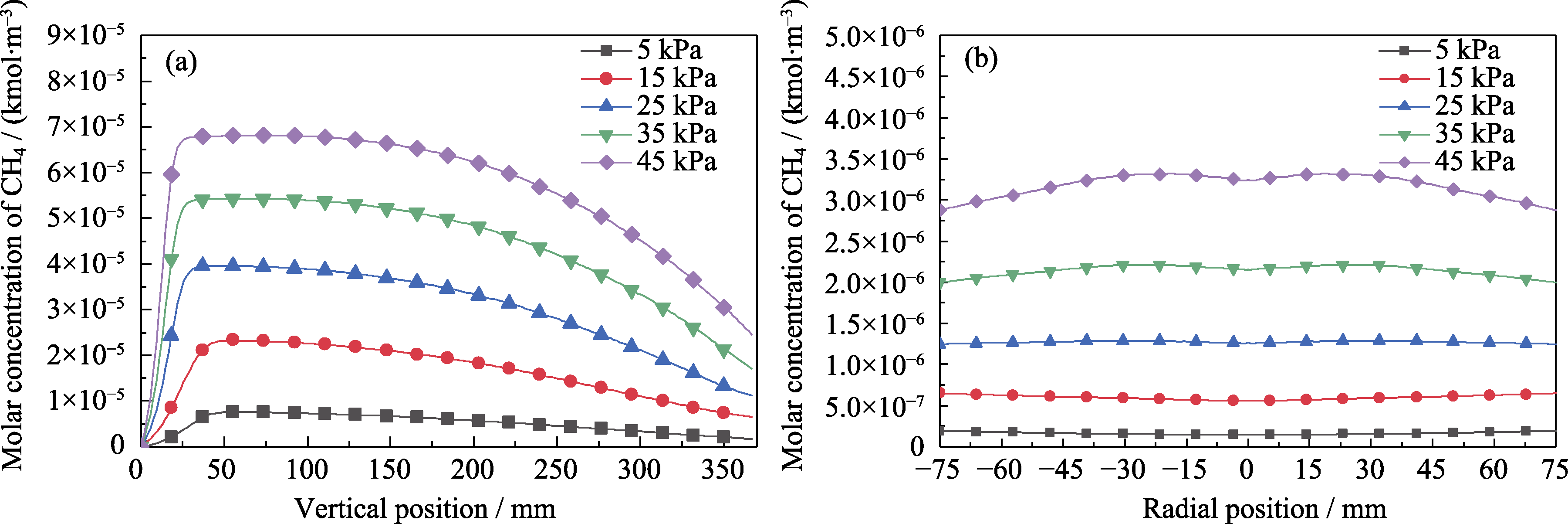
Fig. 7 Vertical and radial distributions of CH4 molar concentration above the substrate surface at different pressures (a) Vertical distribution; (b) Radial distribution
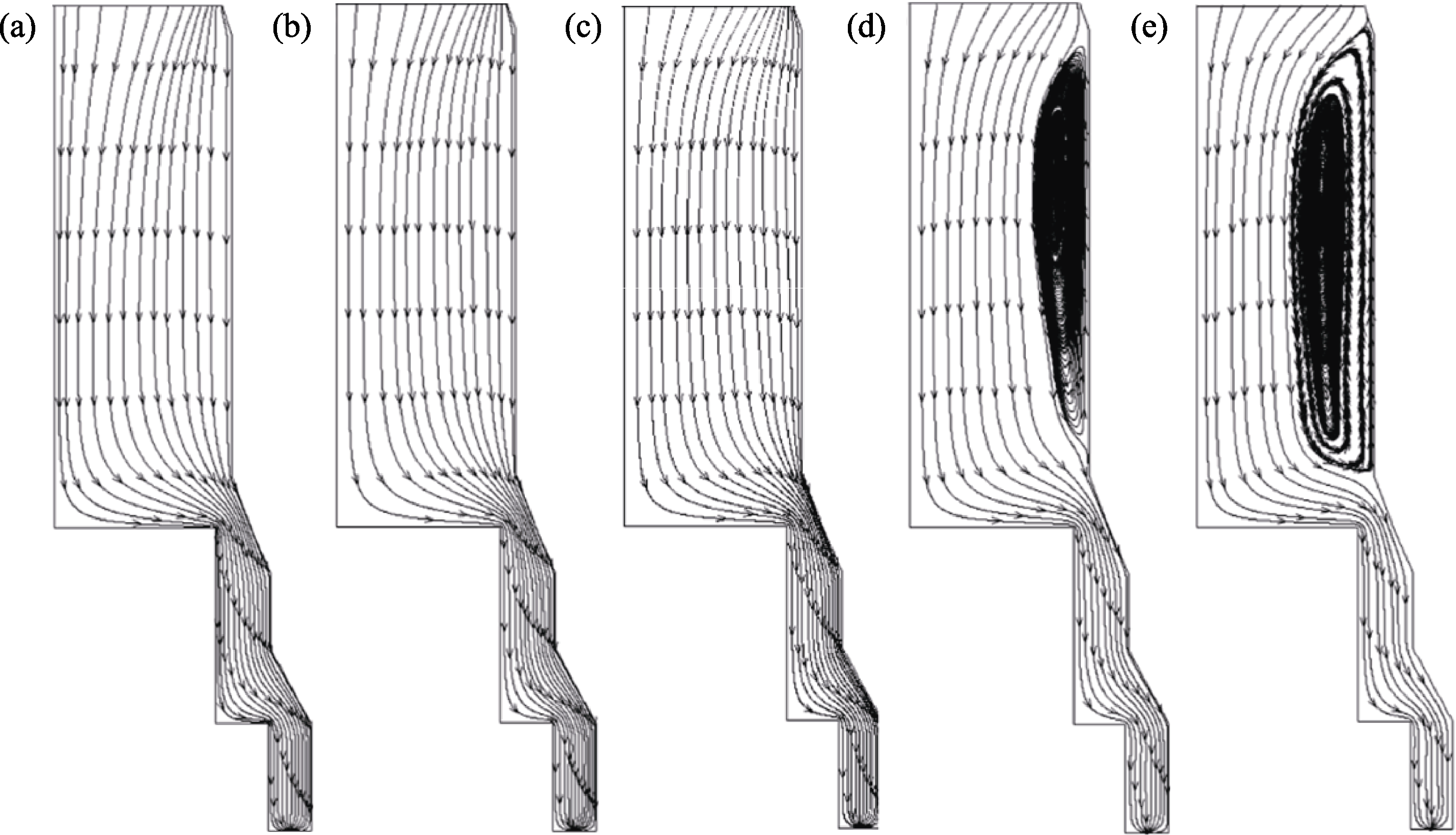
Fig. 8 Streamline distribution at different pressures (a) 5 kPa; (b) 15 kPa; (c) 25 kPa; (d) 35 kPa; (e) 45 kPa
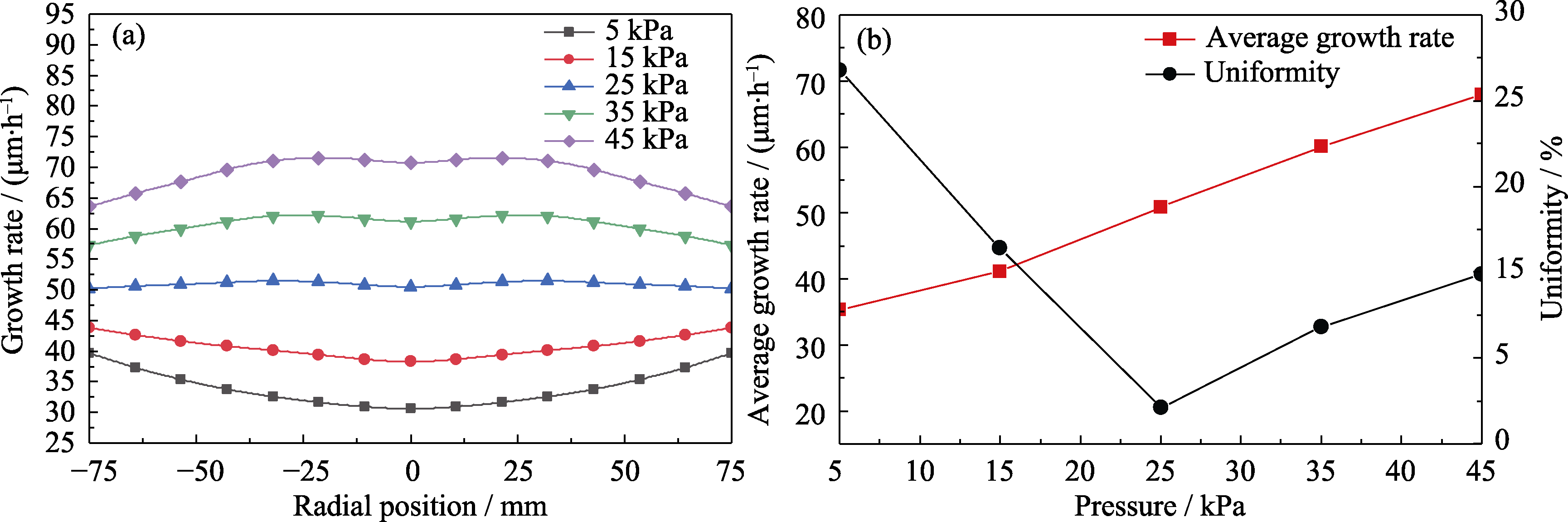
Fig. 9 (a) Growth rate distribution and (b) average growth rate and uniformity versus pressure
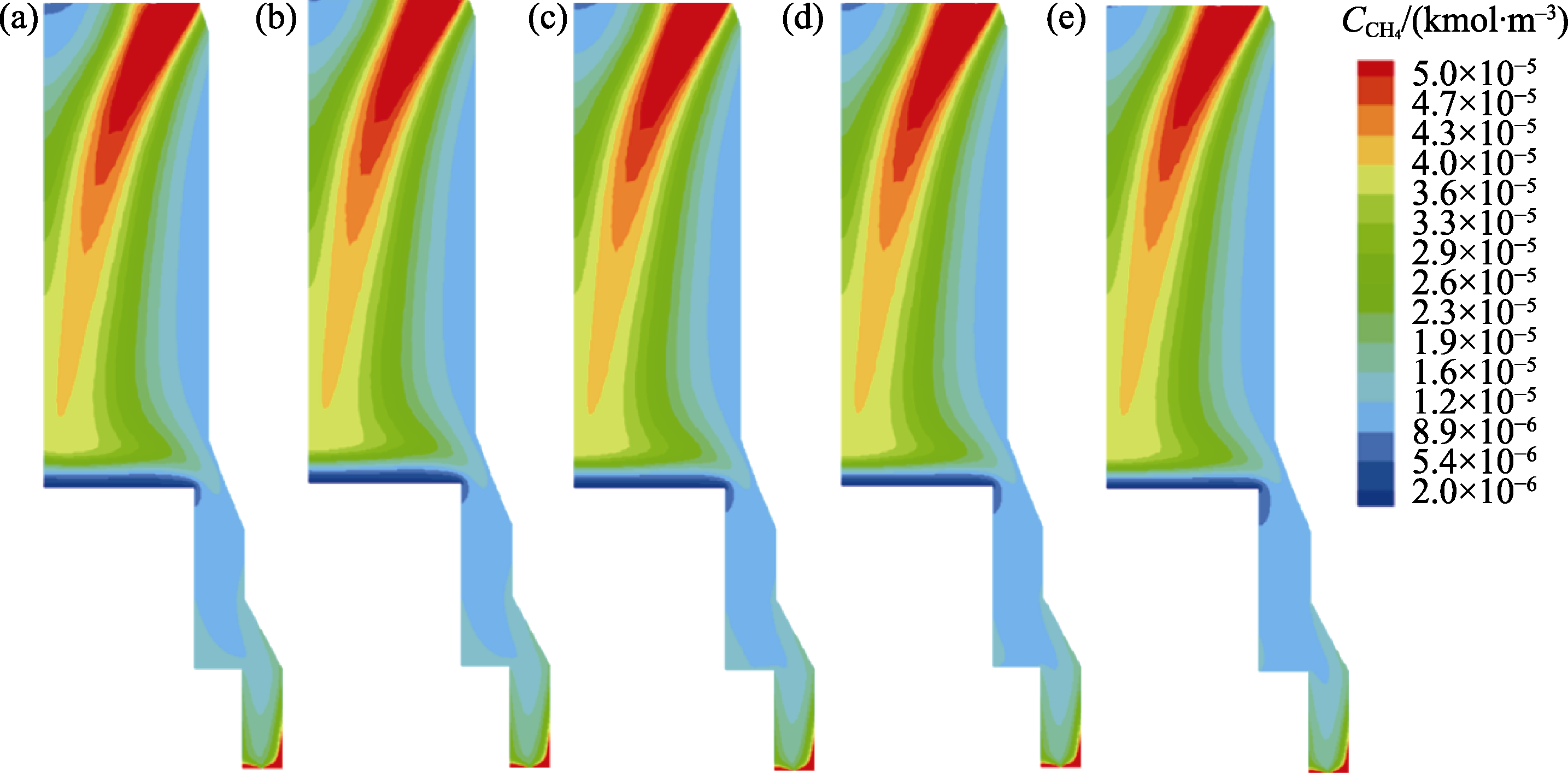
Fig. 10 Distribution of CH4 molar concentration at different rotational rates (a) 0 r/min; (b) 250 r/min; (c) 500 r/min; (d) 750 r/min; (e) 1000 r/min. Colorful figures are available on website
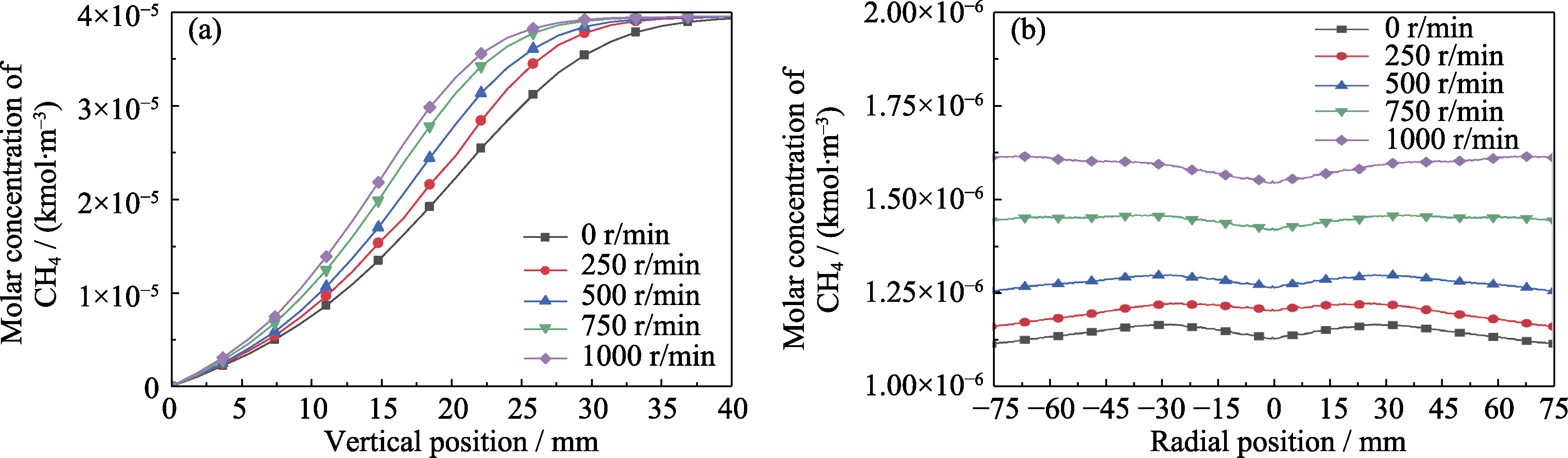
Fig. 11 Vertical and radial distributions of CH4 molar concentration above the substrate surface at different rotational rates (a) Vertical distribution; (b) Radial distribution
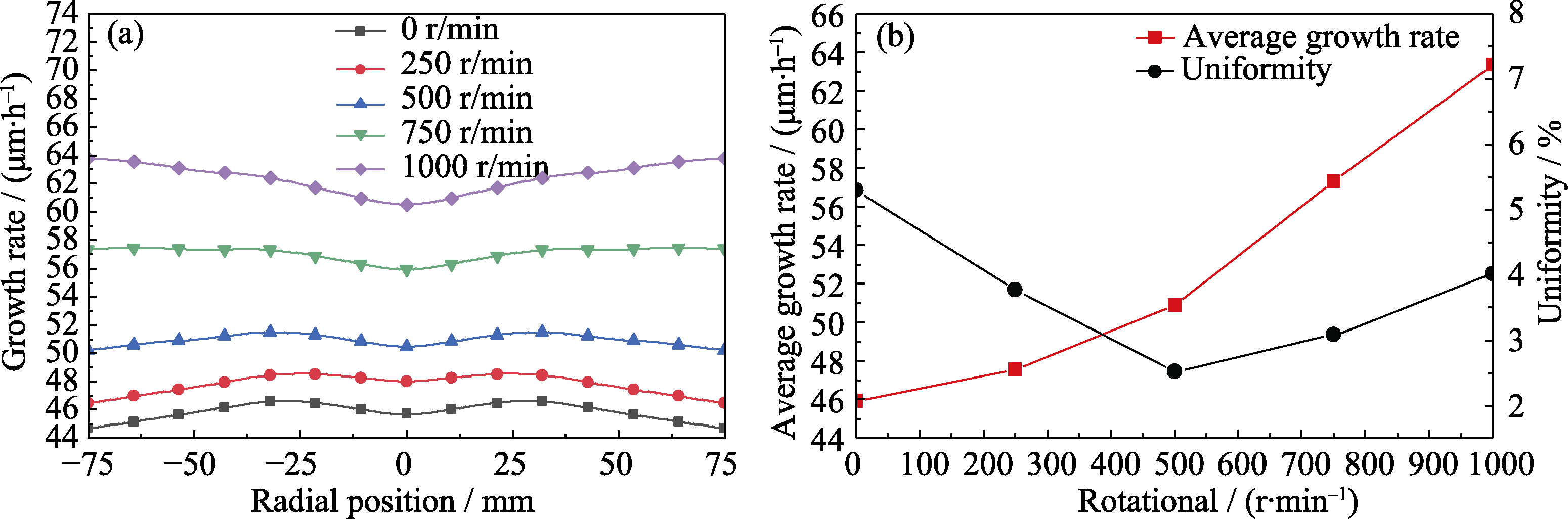
Fig. 12 (a) Growth rate distribution and (b) average growth rate and uniformity versus rotational rate
| [1] |
MUSOLINO M, CARRIA E, CRIPPA D, et al. Development of n-type epitaxial growth on 200 mm 4H-SiC wafers for the next generation of power devices. Microelectronic Engineering, 2023, 274: 111976.
DOI URL |
| [2] |
LI Q, ZHANG Y, JI B, et al. Improvement of SiC deposition uniformity in CVD reactor by showerhead with baffle. Journal of Crystal Growth, 2023, 615: 127255.
DOI URL |
| [3] |
ZHAO S, WANG J, YAN G, et al. Surface uniformity of wafer-scale 4H-SiC epitaxial layers grown under various epitaxial conditions. Coatings, 2022, 12(5): 597.
DOI URL |
| [4] |
CHOKAWA K, DAIGO Y, MIZUSHIMA I, et al. First-principles and thermodynamic analysis for gas phase reactions and structures of the SiC(0001) surface under conventional CVD and halide CVD environments. Japanese Journal of Applied Physics, 2021, 60(8): 085503.
DOI |
| [5] | HAN Y B, PU Y, SHI J X, et al. Technical progress of silicon carbide epitaxial equipment by chemical vapor deposition. Journal of Synthetic Crystals, 2022, 51(7): 1300. |
| [6] | HAN Q W, LI G D. Simplified reaction simulation of SiC deposition by CH3SiCl3-H2-Ar chemical vapor deposition. Materials Science and Engineering of Powder Metallurgy, 2021, 26(2): 99. |
| [7] | YUAN W, PEI Y, LI Y, et al. Research on the influence of carbon sources and buffer layers on the homogeneous epitaxial growth of 4H-SiC. Micromachines (Basel), 2024, 15(5): 600. |
| [8] |
GUAN K, GAO Y, ZENG Q, et al. Numerical modeling of SiC by low-pressure chemical vapor deposition from methyltrichlorosilane. Chinese Journal of Chemical Engineering, 2020, 28(6): 1733.
DOI URL |
| [9] |
TANG Z, GU L, JIN L, et al. Insights into the effect of susceptor rotational speed in CVD reactor on the quality of 4H-SiC epitaxial layer on homogeneous substrates. Materials Today Communications, 2024, 38: 108037.
DOI URL |
| [10] |
DAIGO Y, ISHIGURO A, ISHII S, et al. Reduction of surface and PL defects on n-type 4H-SiC epitaxial films grown using a high speed wafer rotation vertical CVD tool. Materials Science Forum, 2018, 924: 108.
DOI URL |
| [11] | FUJIBAYASHI H, ITO M, ITO H, et al. Fast 4H-SiC epitaxial growth on 150 mm diameter area with high-speed wafer rotation. Materials Science Forum, 2014, 778/779/780: 117. |
| [12] |
GAKIS G P, KORONAKI E D, BOUDOUVIS A G. Numerical investigation of multiple stationary and time-periodic flow regimes in vertical rotating disc CVD reactors. Journal of Crystal Growth, 2015, 432: 152.
DOI URL |
| [13] |
TANG Z, ZHAO S, LI J, et al. Optimizing the chemical vapor deposition process of 4H-SiC epitaxial layer growth with machine-learning-assisted multiphysics simulations. Case Studies in Thermal Engineering, 2024, 59: 104507.
DOI URL |
| [14] |
GUO N, PEI Y, YUAN W, et al. Effect of TCS gas flow and pre-etching on homopitaxial growth of 4H-SiC. RSC Advances, 2024, 14(23): 16574.
DOI PMID |
| [15] |
SONG B, GAO B, HAN P, et al. Surface kinetic mechanisms of epitaxial chemical vapour deposition of 4H silicon carbide growth by methyltrichlorosilane-H2 gaseous system. Materials (Basel), 2022, 15(11): 3768.
DOI URL |
| [16] |
ZHENG G, SUN Y, LIU S, et al. Numerical investigation on the effect of growth conditions on silicon carbide growth in chemical vapor deposition. Journal of Crystal Growth, 2025, 657: 128108.
DOI URL |
| [17] | LU R L, ZHENG L L, ZHANG H, et al. Effect of hot-wall CVD preparation process on thickness uniformity of 8-inch SiC epitaxial layer. Journal of Synthetic Crystals, 2025, 54(9): 1509. |
| [18] | DAIGO Y, WATANABE T, ISHIGURO A, et al. Impact of precise temperature control for 4H-SiC epitaxy on large diameter wafers. 2020 International Symposium on Semiconductor Manufacturing (ISSM), 2020: 1-4. |
| [19] |
HA M T, SHIN Y J, BAE S Y, et al. Effect of hot-zone aperture on the growth behavior of SiC single crystal produced via top-seeded solution growth method. Journal of the Korean Ceramic Society, 2019, 56: 589.
DOI URL |
| [20] | FANG Y L, WANG C L, TIAN W X, et al. Calculation and analysis of thermophysical properties of high-temperature hydrogen working fluid. Atomic Energy Science and Technology, 2021, 55(8): 1411. |
| [21] |
DAIKOKU H, KAWANISHI S, ISHIKAWA T, et al. Density, surface tension, and viscosity of liquid Si-Cr alloys and influence on temperature and fluid flow during solution growth of SiC. Journal of Chemical Thermodynamics, 2021, 160: 106476.
DOI URL |
| [22] |
VENERONI A, OMARINI F, MASI M. Silicon carbide growth mechanisms from SiH4, SiHCl3 and nC3H8. Crystal Research and Technology, 2005, 40(10/11): 967.
DOI URL |
| [23] |
RAVASIO S, MASI M, CAVALLOTTI C. Analysis of the gas phase reactivity of chlorosilanes. The Journal of Physical Chemistry A, 2013, 117(25): 5221.
DOI URL |
| [24] |
VENERONI A, MASI M. Gas-phase and surface kinetics of epitaxial silicon carbide growth involving chlorine-containing species. Chemical Vapor Deposition, 2006, 12(8/9): 562.
DOI URL |
| [25] |
GE Y, GORDON M S, BATTAGLIA F, et al. Theoretical study of the pyrolysis of methyltrichlorosilane in the gas phase. 3. Reaction rate constant calculations. The Journal of Physical Chemistry A, 2010, 114(6): 2384.
DOI URL |
| [26] |
SEO J W, CHOI K. Application of CFD simulation to silicon carbide deposition for nozzles with funnel. Journal of the Korean Ceramic Society, 2021, 58: 184.
DOI |
| [27] |
SONG B T, GAO B, HAN P F, et al. Numerical simulation of gas phase reaction for epitaxial chemical vapor deposition of silicon carbide by methyltrichlorosilane in horizontal hot-wall reactor. Materials, 2021, 14(24): 7532.
DOI URL |
| [28] | HAN Y B, PU Y, SHI J X, et al. Study on epitaxial growth of n-type 4H-SiC films by high-speed rotating vertical hot-wall CVD. Journal of Synthetic Crystals, 2023, 52(5): 918. |
| [29] |
SUN Y Q, FENG G, ZHANG J H, et al. Reduction of epitaxial defects on 4°-off 4H-SiC homoepitaxial growth by optimizing in-situ etching process. Superlattices and Microstructures, 2016, 99: 145.
DOI URL |
| [30] |
LIU X F, YAN G G, LIU B, et al. Process optimization for homoepitaxial growth of thick 4H-SiC films via hydrogen chloride chemical vapor deposition. Journal of Crystal Growth, 2018, 504: 7.
DOI URL |
| [31] |
DAIGO Y, ISHIGURO A, ISHII S, et al. High in-wafer uniformity of growth rate and carrier concentration on n-type 4H-SiC epitaxial films achieved by high speed wafer rotation vertical CVD tool. Materials Science Forum, 2018, 924: 88.
DOI URL |
| [32] |
TOUKABRI R, SHI Y. Effect of pressure on the gas-phase chemistry when using monomethylsilane and dimethylsilane in hot-wire chemical vapor deposition. Canadian Journal of Chemistry, 2015, 93(1): 82.
DOI URL |
| [33] |
KOLLMUSS M, LA VIA F, WELLMANN P J. Effect of growth conditions on the surface morphology and defect density of CS-PVT-grown 3C-SiC. Crystal Research and Technology, 2023, 58: 2300034.
DOI URL |
| [34] |
LE B P, CHEN J C, HU C, et al. Numerical analysis of the use of multiple inlet plates to improve the thickness uniformity of silicon epitaxial layers during atmospheric pressure chemical vapor deposition. Results in Engineering, 2024, 24: 103688.
DOI URL |
| [1] | HUANG Gan, XUE Jiaxiang, TAN Caiwang, LIU Yang, ZHANG Guoliang, YANG Zhengmao, CHEN Zhaoke. Multi-scale Methods for Investigating Mechanical Damage in Nuclear SiC Composite Cladding: A Review [J]. Journal of Inorganic Materials, 2026, 41(9): 1157-1177. |
| [2] | LIU Leimin, LUO Hongxin, HE Yumei, JIN Limin, LI Yongjie, LIU Jingwen, WEI Yuquan, SUN Anle, CHEN Zhongming, LIU Xuejian, YIN Jie, HUANG Zhengren. Performance of Silicon Carbide Mirrors for Advanced Light Source Devices [J]. Journal of Inorganic Materials, 2026, 41(6): 805-813. |
| [3] | JIANG Shengnan, ZHENG Zhong, HE Weiyi, LIU Tao, PAN Xiuhong, CHEN Kun, GUO Hui, GAO Pan, LIU Chunjun, LIU Xuechao. Preparation and Performance Optimization of Boron-gallium Co-doped Zinc Oxide Transparent Electrodes [J]. Journal of Inorganic Materials, 2026, 41(4): 479-485. |
| [4] | CAO Juan, WU Xishi, LIU Zehua, PEI Bingbing, HAN Jianshen, LIU Huan, YANG Yitian, WU Haibo, HUANG Zhengren. Influence of Grain Size on Weibull Distribution of Fracture Strength in Atmospheric-pressure Solid-phase Sintered SiC Ceramics [J]. Journal of Inorganic Materials, 2026, 41(2): 217-224. |
| [5] | HE Tao, WANG Xingang, WANG Xiaofei, WANG Ming, XU Jingcheng, LÜ Songze, CHEN Yue, LIU Chenyu, JIANG Danyu. Tensile Properties and Microstructural Evolution of SiC Fibres from Room Temperature to 2000 ℃ [J]. Journal of Inorganic Materials, 2026, 41(10): 1415-1424. |
| [6] | WANG Lujie, ZHANG Yuxin, LI Tongyang, YU Yuan, REN Pengwei, WANG Jianzhang, TANG Huaguo, YAO Xiumin, HUANG Yihua, LIU Xuejian, QIAO Zhuhui. Corrosion and Wear Behavior of Silicon Carbide Ceramic in Deep-sea Service Environment [J]. Journal of Inorganic Materials, 2025, 40(7): 799-807. |
| [7] | LI Ziwei, GONG Weilu, CUI Haifeng, YE Li, HAN Weijian, ZHAO Tong. (Zr, Hf, Nb, Ta, W)C-SiC Composite Ceramics: Preparation via Precursor Route and Properties [J]. Journal of Inorganic Materials, 2025, 40(3): 271-280. |
| [8] | ZHAO Lijuan, TAN Zhe, ZHANG Xiaoguang, JIANG Guosai, TAO Ran, PAN De’an. Numerical Simulation of Particle Classification for Spent Hydrogenation Catalyst [J]. Journal of Inorganic Materials, 2025, 40(12): 1387-1394. |
| [9] | WANG Hao, LIU Xuechao, ZHENG Zhong, PAN Xiuhong, XU Jintao, ZHU Xinfeng, CHEN Kun, DENG Weijie, TANG Meibo, GUO Hui, GAO Pan. Performance of Lateral 4H-SiC Photoconductive Semiconductor Switches by Extrinsic Backside Trigger [J]. Journal of Inorganic Materials, 2024, 39(9): 1070-1076. |
| [10] | SUN Chuan, HE Pengfei, HU Zhenfeng, WANG Rong, XING Yue, ZHANG Zhibin, LI Jinglong, WAN Chunlei, LIANG Xiubing. SiC-based Ceramic Materials Incorporating GNPs Array: Preparation and Mechanical Characterization [J]. Journal of Inorganic Materials, 2024, 39(3): 267-273. |
| [11] | XU Hao, QIAN Wei, HUA Yinqun, YE Yunxia, DAI Fengze, CAI Jie. Effects of Micro Texture Processed by Picosecond Laser on Hydrophobicity of Silicon Carbide [J]. Journal of Inorganic Materials, 2023, 38(8): 923-930. |
| [12] | CHEN Qiang, BAI Shuxin, YE Yicong. Highly Thermal Conductive Silicon Carbide Ceramics Matrix Composites for Thermal Management: a Review [J]. Journal of Inorganic Materials, 2023, 38(6): 634-646. |
| [13] | MU Honghe, WANG Pengfei, SHI Yufeng, ZHANG Zhonghan, WU Anhua, SU Liangbi. Large-size CeF3 Crystal Growth by Heat Exchanger-Bridgman Method: Thermal Field Design and Optimization [J]. Journal of Inorganic Materials, 2023, 38(3): 288-295. |
| [14] | SHI Yanlei, SUN Niefeng, XU Chengyan, WANG Shujie, LIN Peng, MA Chunlei, XU Senfeng, WANG Wei, CHEN Chunmei, FU Lijie, SHAO Huimin, LI Xiaolan, WANG Yang, QIN Jingkai. Thermal Field of 6-inch Indium Phosphide Single Crystal Growth by Semi-sealed Czochralski Method [J]. Journal of Inorganic Materials, 2023, 38(3): 335-342. |
| [15] | GU Xuesu, YIN Jie, WANG Kanglong, CUI Chong, MEI Hui, CHEN Zhongming, LIU Xuejian, HUANG Zhengren. Effect of Particle Grading on Properties of Silicon Carbide Ceramics by Binder Jetting Printing [J]. Journal of Inorganic Materials, 2023, 38(12): 1373-1378. |
| Viewed | ||||||
|
Full text |
|
|||||
|
Abstract |
|
|||||
