|
|
Research Progress on Multi-scale Simulation of Damage and Failure in Fiber-reinforced Ceramic Matrix Composites
WANG Xing, YU Ting, GUO Lei, WANG Weide, PENG Zheng, MA Qingsong
2026 Vol. 41 (10): 1349–1364
 Abstract (
604 )
 HTML (
10)
 PDF (9400KB)(
326
)
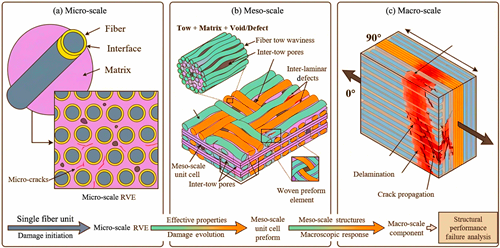
Multi-scale simulation is a vital analytical tool for elucidating the cross-scale mechanical behavior and failure mechanisms of fiber-reinforced ceramic matrix composites. Current research focuses on its applications in constitutive modeling, damage mechanism elucidation, and failure prediction under coupled environmental factors. Within the framework of micro-, meso-, and macro-scale coupling mechanisms, this paper systematically reviews the fundamental concepts, analytical strategies, and critical challenges associated with parameter transfer in multi-scale simulations. Emphasis is placed on the role of data-driven paradigms in enhancing multi-scale computational efficiency within multi-scale frameworks. Applications of these methods in damage constitutive modeling and oxidation damage analysis are comprehensively surveyed, with particular focus on tensile progressive damage, interfacial delamination, and crack propagation. The advantages of multi-scale simulation in capturing dynamic failure processes, such as crack initiation and propagation, are analyzed. Furthermore, recent advancements in multi-physics coupled damage modeling under high-temperature oxidative environments are explored, providing a theoretical basis for the design of ceramic matrix composites in extreme service conditions. Finally, an outlook on potential future developments of multi-scale simulation methods for ceramic matrix composites is presented.
|
|
|
Second-harmonic Generation in Stacking-engineered 2D Materials: Characterization and Modulation
XIA Fangfang, HUANG Wenjuan, ZHAI Tianyou
2026 Vol. 41 (10): 1365–1379
Abstract(
279 )
HTML(
5)
PDF(3053KB)(
121
)
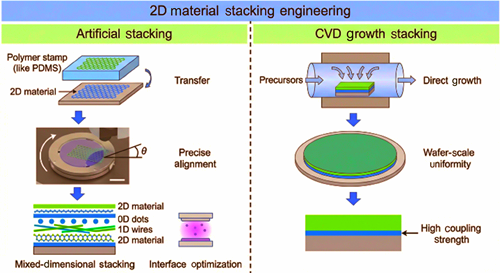
The interlayer stacking configurations play a pivotal role in defining the crystal symmetry and Coulomb interactions of two-dimensional (2D) materials, thereby enabling novel ordered states as well as emergent optical, electronic, and magnetic properties through strategic stacking engineering. These 2D material structures, characterized by remarkable second-order susceptibility, atomic-scale thinness, and ideal phase matching, herald new research frameworks in the realm of nonlinear optics. Second harmonic generation (SHG), an essential nonlinear optical phenomenon, offers precise characterization of the interlayer stacking parameters inherent in 2D materials. This paper presents a comprehensive review of SHG technology as applied to the stacking engineering of 2D materials. Centered on “stacking engineering”, this paper systematically integrates the dual applications of SHG technology in the characterization and performance modulation of stacked structures, with a focus on analyzing the regulatory mechanisms of key parameters such as homo/hetero-stacking and twist angles on SHG performance. Through detailed analysis, it highlights the various approaches by which SHG can be used to ascertain the number of layers and stacking order, as well as angular orientations in stacked 2D materials. Furthermore, the paper explores the mechanisms by which both homogeneous and heterogeneous stacking configurations modulate SHG performance, discussing in depth the modulation and enhancement effects induced by stacking engineering. Finally, this review provides a forward-looking perspective on the transformative potential of material diversification as well as cross-dimensional stacking in micro- and nano-device applications. By harnessing the potential of stacking engineering, researchers aim to uncover unprecedented optical and electronic characteristics in 2D materials, ultimately driving the evolution of nano-scale devices and technologies within both scientific research and industrial production domains, fostering significant advancements and novel developments.
|
|
|
Thermal Transport Properties of Two-dimensional Layered Material CuInP2Se6
CHENG Zhipeng, LIN Chensheng, YAN Tao, LUO Min, YANG Shunda
2026 Vol. 41 (10): 1380–1386
Abstract(
142 )
HTML(
1)
PDF(4451KB)(
65
)
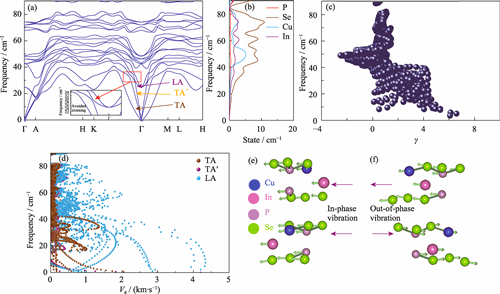
Two-dimensional layered CuInP2Se6 crystals have attracted extensive attention owing to the ferroelectricity and various unique optical properties. However, the lack of research on their thermal properties hindered their further application. In this study, dense polycrystalline CuInP2Se6 was prepared by vapor transport combined with spark plasma sintering (SPS), and its thermal stability and thermal transport properties were investigated systematically. Thermogravimetric analysis results show that CuInP2Se6 does not decompose or undergo phase transitions in the temperature range of 300-740 K. Within the temperature range of 300-623 K, the thermal conductivity decreases from 0.63 W·m-1·K-1 to 0.35 W·m-1·K-1 parallel to the SPS pressing direction, and from 1.34 W·m-1·K-1 to 0.93 W·m-1·K-1 perpendicular to the SPS pressing direction. To explore the key factors influencing the thermal conductivity of CuInP2Se6, corresponding theoretical calculations and sound velocity measurements were carried out. Results reveal strong phonon scattering inside the material, and CuInP2Se6 possesses a low transverse sound velocity (VT=1199 m·s-1) and strong lattice anharmonicity (γ=1.83). The low thermal conductivity of CuInP2Se6 originates from the synergistic effect of strong phonon scattering, low sound velocity, and strong lattice anharmonicity. This study provides theoretic mechanism and experimental data for application of CuInP2Se6.
|
|
|
Highly Active FeCoNiCuMn High-entropy Alloys/Carbon Cloth Composite: Synthesis and Its Performance in Thermo-electrochemical Cells
ZHU Mengting, ZHANG Ruifeng, QIAO Zihan, MA Ruguang, WU Zhengying
2026 Vol. 41 (10): 1387–1395
Abstract(
258 )
HTML(
4)
PDF(11468KB)(
155
)
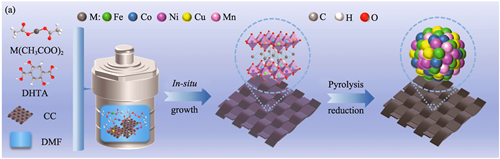
Thermo-electrochemical cells (TECs) are a new type of system for harvesting low-grade waste heat. Their development and utilization can contribute to improving overall energy efficiency and mitigating the urban heat island effect. Metallic platinum (Pt), a commonly used electrode material in TEC research, is costly, which significantly limits the widespread application of TECs. Therefore, developing low-cost, high-performance alternative electrodes has become a research hotspot in the field of TECs. In this study, commercial carbon cloth (CC) was used as both the substrate and structural directing agent. Then, catalytically active FeCoNiCuMn high-entropy alloys (HEAs) nanoparticles were uniformly grown onto CC, forming a FeCoNiCuMn HEAs/CC composite used as an electrode material for TECs. The high-entropy effect of HEAs endows the composite with the stable chemical structure, while the interaction among its multiple principal elements enhances its catalytic activity and reaction kinetics. Thus, the FeCoNiCuMn HEAs/CC electrode possesses a higher electrochemical active surface area (2.52 cm2) and a lower charge transfer resistance (2 Ω) compared to CC, the ternary FeCoNi/CC, and the quaternary FeCoNiCu/CC. Furthermore, the HEAs/CC-based TECs achieve a current density of 0.35 mA·cm-2 and an output power density of 30.40 mW·m-2 under a temperature difference of 22.0 K, significantly higher than those achieved by TECs using CC (0.17 mA·cm-2/14.55 mW·m-2), FeCoNi/CC (0.27 mA·cm-2/19.00 mW·m-2), and FeCoNiCu/CC (0.30 mA·cm-2/24.44 mW·m-2) as electrodes under the same conditions. Additionally, the cell system maintains 91.5% of its initial short-circuit current after 7 d of cycling and also exhibits good reversibility. The highly active FeCoNiCuMn HEAs/CC composite constructed in this study provides a promising pathway for the development and application of low-cost, high-performance TECs electrode materials.
|
|
|
Construction and High-efficiency Hydrogen Evolution Performance of Porous Layered Cobalt-vanadium Hydroxide/Nickel-copper Composite Catalyst
SUN Qiangqiang, JIANG Meina, WEI Yuhang, WANG Dan, ZHOU Ziwen, LI Chun, CAO Baoyue
2026 Vol. 41 (10): 1396–1406
Abstract(
156 )
HTML(
1)
PDF(19194KB)(
110
)
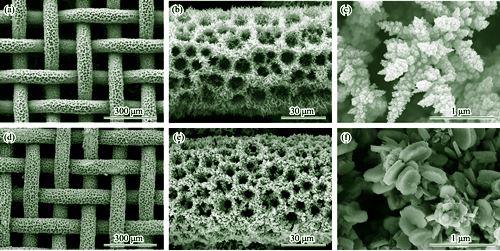
Given the urgent demand for non-precious metal electrocatalysts in the hydrogen production field, developing efficient, stable, and low-cost hydrogen evolution electrode materials is a key challenge for achieving sustainable water electrolysis for hydrogen generation. Using nickel mesh (NM) as the substrate, a three-dimensional porous composite catalyst comprising cobalt-vanadium layered hydroxide and a nickel-copper alloy (CoV LDH/NiCu/NM) was fabricated via a combined approach of hydrogen bubble dynamic template electrodeposition and cyclic voltammetry. The resulting material features an open porous architecture constructed from intertwined nanodendrites and stacked circular nanosheets, with nickel-copper alloy and cobalt-vanadium hydroxide as the primary crystalline phases. This unique structure significantly enhances the specific surface area, yielding an electrochemical active surface area (ECSA) approximately 110 times that of the bare NM substrate, thereby providing abundant catalytic sites and efficient mass transfer pathways for water electrolysis. Benefiting from synergistic multi-component and structural effects, the CoV LDH/NiCu/NM electrode exhibits exceptional hydrogen evolution reaction (HER) performance in 1 mol·L-1 KOH electrolyte. Specifically, it delivers low overpotentials of 28 and 108 mV at current densities of 10 and 100 mA·cm-2, respectively, along with a Tafel slope of 47.1 mV·dec-1, indicating favorable reaction kinetics. The catalyst also exhibits good oxygen evolution reaction (OER) activity and enables overall water splitting with the overpotential of 329 mV and cell voltage of 1.506 V at 10 mA·cm-2, demonstrating its potential as a bifunctional electrode. Moreover, the catalyst demonstrates outstanding long-term durability, with negligible degradation in overpotential after 72 h of continuous operation at 100 mA·cm-2. Structural and electrochemical analyses reveal that the superior catalytic activity is primarily attributable to the well-defined porous nanosheet architecture. This work presents a promising strategy for the design of high-performance, noble-metal-free electrocatalysts for hydrogen evolution.
|
|
|
Dual-site Doping for High-stability Manganese-based Cathode Materials in Sodium-ion Batteries
LIU Dexin, ZHAO Yuze, ZHU Zhengwei, WEN Yanliang, HONG Mingzi, HE Weiyan
2026 Vol. 41 (10): 1407–1414
Abstract(
297 )
HTML(
1)
PDF(1782KB)(
168
)
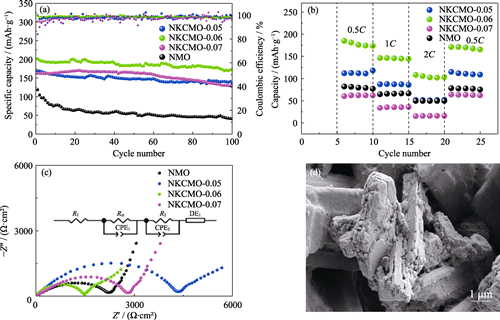
Sodium-ion batteries (SIBs), benefiting from their environmental friendliness, abundant reserves, and low cost, have become the most important supplement, even an alternative, for lithium-ion batteries and hold broad application potential in the field of energy storage. However, manganese-based cathode materials for SIBs face challenges such as structural instability and poor cycling stability, which severely limit their practical application. In this study, O3-NaMnO2 was used as the matrix to investigate the effects and underlying mechanisms of K/Cu dual-site doping on its electrochemical performance. Both theoretical calculations and experimental results demonstrate that the introduction of K+ into the sodium layer effectively enhances the diffusion rate of sodium ions, while Cu2+ doping in the transition metal layer effectively suppresses the Jahn-Teller distortion of Mn3+, thereby mitigating the complex phase transitions of the cathode material during charging and discharging, and improving its structural stability. K/Cu co-doping disrupts the vacancy structure formed by the ordered arrangement of sodium ions, activates anionic redox reactions, contributes additional specific capacity, and significantly enhances the electronic conductivity of the material. Na0.94K0.06Cu0.05Mn0.95O2 achieves an initial discharge specific capacity of 201.16 mAh/g at 0.2C (1C = 226.28 mAh/g), and retains 85.67% of its specific capacity after 100 cycles. After high-current cycling at 1C and 2C, it still delivers 170.87 mAh/g at 0.5C, showing excellent cycling and rate performance. This co-doping strategy offers a new approach for the design of high-performance sodium-ion battery cathode materials.
|
|
|
Tensile Properties and Microstructural Evolution of SiC Fibres from Room Temperature to 2000 ℃
HE Tao, WANG Xingang, WANG Xiaofei, WANG Ming, XU Jingcheng, LÜ Songze, CHEN Yue, LIU Chenyu, JIANG Danyu
2026 Vol. 41 (10): 1415–1424
Abstract(
183 )
HTML(
0)
PDF(2800KB)(
104
)
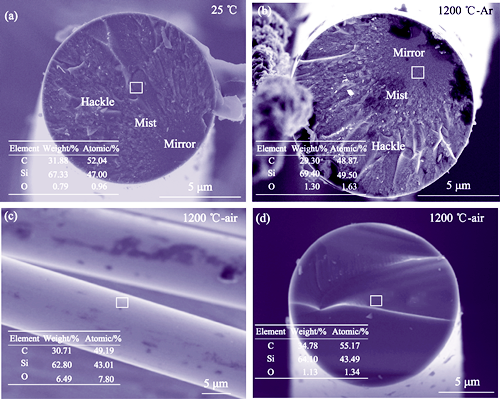
Continuous silicon carbide (SiC) ceramic fibres serve as reinforcements for composites used in aerospace and advanced nuclear energy applications. High-temperature tensile performance is a key property for ceramic fibres employed in extreme environments. However, reports on the in-situ high-temperature tensile properties of SiC fibres remain limited. In this study, in-situ high-temperature tensile tests using both cold-grip and hot-grip methods were employed to systematically investigate the relationships among composition, microstructure, and mechanical properties of SiC fibres from room temperature up to 2000 ℃ under different atmospheres. The high-temperature tensile strength of fibre tows is influenced by the atmosphere. At 1200 ℃, oxidation in air causes the tensile strength to decrease from 1632 MPa at room-temperature value to 417 MPa, retaining 44.4% of the original strength. In contrast, in an argon atmosphere at the same temperature, the tensile strength is 843 MPa, corresponding to a retention of 89.7%. In an argon atmosphere, the tensile strength retentions at 1400 and 1600 ℃ are 76.1% and 63.5%, respectively. Above 1700 ℃, the tensile strength decreases significantly, owing to rapid coarsening of β-SiC grains and the formation of pore defects from the decomposition of some amorphous phases. At 2000 ℃, the fibre strength drops to only 331 MPa, retaining only 22.5% of its original strength. This study reveals that SiC fibres exhibit relatively high strength retention in argon below 1600 ℃, and elucidates the mechanisms governing the evolution of high-temperature mechanical properties above 1700 ℃, including grain coarsening, partial phase decomposition and phase transformation. Therefore, this study provides critical fundamental data to support the high-temperature engineering application of domestic SiC fibres.
|
|
|
Preparation and Performance of Ceria-based Slurry for Ultra-precision Polishing of Calcium Fluoride
JIA Wenqing, ZHANG Zhenghao, WANG Jun, WANG Mengxia, ZHANG Chuanqi, JIANG Dapeng, ZHANG Ling, KOU Huamin, WANG Wenzhong
2026 Vol. 41 (10): 1425–1434
Abstract(
244 )
HTML(
1)
PDF(8625KB)(
104
)
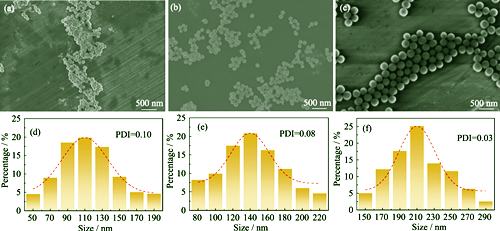
The continuous downscaling of integrated circuit nodes demands atomic-level smoothness for calcium fluoride (CaF2) optical materials used in lithography systems. To overcome the limitations of conventional alkaline silica polishing slurries, namely low material removal rate (MRR) and corrosion issues, this study developed a high-efficiency, stable, and eco-friendly near-neutral ceria (CeO2) slurry for chemical mechanical polishing (CMP) of CaF2. Monodispersed spherical CeO2 abrasives with three particle sizes were synthesized via urea precipitation, then the polishing slurries were prepared using sodium polyacrylate (PAAS) as dispersant and primary alcohol ethoxylate (AEO-9) as surfactant. Effects of calcination temperature, abrasive size, and additive content on polishing performance were systematically investigated. Optimal performance was achieved with CeO2 calcined at 500 ℃ in the presence of 0.2% PAAS and 0.2% AEO-9 (in mass). Specifically, the slurry containing 140 nm abrasives delivered a MRR of 109 nm/min and a surface roughness (Ra) of 0.12 nm, while the slurry with 110 nm abrasives produced an ultra-smooth surface with an Ra as low as 0.09 nm, outperforming the traditional alkaline silica slurry. Laser-induced damage threshold tests revealed that CaF2 polished with the optimized slurry reached 6.4 J/cm2, which is approximately 31% higher than the 4.9 J/cm2 obtained with the silica slurry. Electron paramagnetic resonance (EPR) and Fourier-transform infrared (FT-IR) spectroscopic analyses confirmed that Ce3+ species on the CeO2 surface are critical for enhancing chemical reactivity. The contact angle measurements showed that PAAS and AEO-9 notably reduced contact angle and improved wettability. This study provides an efficient, eco-friendly strategy for ultraprecision machining of CaF2.
|
|
|
ZnSe Single Crystal Growth and Cr2+ Doping Behavior Enabled by a Molybdenum-crucible Sealing Method
LI Ya, HUANG Changbao, YU Xuezhou, QI Huabei, ZHU Zhicheng, WU Haixin, CHEN Weihao, YU Ping
2026 Vol. 41 (10): 1435–1441
Abstract(
240 )
HTML(
8)
PDF(1368KB)(
476
)
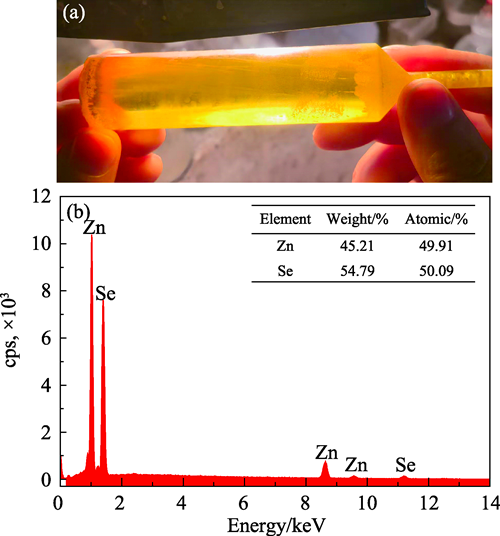
Zinc selenide (ZnSe) is an II-VI semiconductor material with low phonon energy, a wide optical transparency range, and excellent physicochemical properties, making it highly attractive for infrared window components and mid-infrared laser host applications. However, during high-temperature melt growth, imbalanced volatilization of ZnSe components makes it difficult to maintain stoichiometric stability, thereby limiting the growth of high-quality single crystals. This study focused on the stable growth of ZnSe single crystals and established a preparation route based on sealed melt growth. Polycrystalline ZnSe purified by a vapor-phase method was used as the starting material. Component volatilization was suppressed by vacuum sealing in a molybdenum crucible, and ZnSe single crystals with dimensions of φ27 mm×100 mm were successfully grown using the vertical Bridgman method. Subsequently, Cr2+:ZnSe elements were prepared via thermal diffusion. X-ray rocking curve measurements revealed a full width at half maximum of 0.016° (57.6 arcsec) for the (110) plane, indicating high crystalline perfection. Optical transmittance spectra showed near-theoretical high transmittance in the wavelength range of 1-15 μm, demonstrating good optical quality of the crystals. Inductively coupled plasma-mass spectrometry analysis showed a Zn/Se atomic ratio of approximately 0.997, indicating that sealed growth effectively suppressed stoichiometric deviation. For the Cr2+:ZnSe samples, a characteristic Cr2+ absorption band centered at 1770 nm (5E→5T2) was observed, and the Cr2+ doping concentration was measured to be 1.81×1019 cm-3. X-ray photoelectron spectroscopy further confirmed that chromium predominantly existed in the divalent state. This study demonstrates that vacuum sealing using a molybdenum crucible enables the growth of high-quality ZnSe single crystals, and that thermal diffusion can achieve effective Cr2+ doping. These results provide a feasible technological pathway for preparing high-melting-point and volatile mid-infrared laser crystals.
|
|
|
Crystal Growth and Spectroscopic Properties of Tb:LiYF4 Single Crystals
YU Xuezhou, LIU Guojin, HUANG Changbao, LI Ya, CHEN Weihao, QI Huabei, NI Youbao, WU Haixin
2026 Vol. 41 (10): 1442–1452
Abstract(
228 )
HTML(
0)
PDF(2186KB)(
102
)
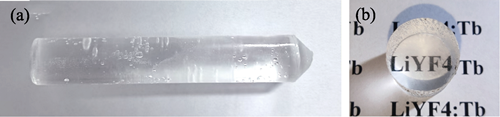
LiYF4 crystal is a laser host material with excellent optical and physical properties, and Tb3+ doping endows it with great potential for high-energy pulsed laser operation in the green and yellow spectral regions. However, the hygroscopicity of fluoride raw materials, the volatility of components at high temperatures, and the strong corrosiveness pose challenges to the growth of high-quality crystals and cost control. In this work, a Tb:LiYF4 single crystal with dimensions of φ16 mm×120 mm was successfully grown using a vacuum-sealed platinum crucible combined with the vertical Bridgman method. The crystalline quality, compositional uniformity, and optical properties were systematically characterized using multiple techniques. The crystal exhibits a transmittance exceeding 93% and an absorption coefficient below 0.02 cm-1 in the transparent region, indicating excellent optical quality. Based on Judd-Ofelt theory, three intensity parameters and related spectroscopic parameters were obtained, and temperature dependent fluorescence emission spectra and fluorescence decay curves were measured. Strong emissions were observed at 545 and 585 nm, with fluorescence branching ratios of 57% and 15%, respectively. The fluorescence lifetime of the 5D4 level at room temperature is 4.83 ms. The relatively large branching ratios and the long fluorescence lifetime indicate that Tb:LiYF4 crystal has great potential for achieving efficient laser output in the green and yellow spectral regions. This work establishes a feasible growth method for Tb:LiYF4 crystals and provides a systematic investigation of their spectroscopic properties, providing a material basis and experimental support for the development of high-efficiency green and yellow solid-state lasers.
|
|
|
Scattering Particles in Bi12SiO20 Crystals Grown by the Vertical Bridgman Method
YU Yanqiang, XIONG Wei, CHEN Liang, ZHOU Yao, LI Ying, YUAN Hui
2026 Vol. 41 (10): 1453–1458
Abstract(
126 )
HTML(
1)
PDF(2716KB)(
62
)
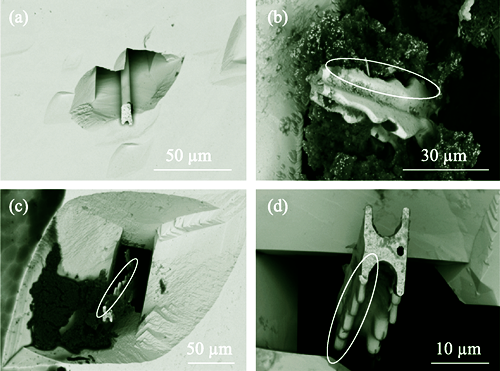
Bismuth silicon oxide (Bi12SiO20, BSO) crystal is a wide-bandgap, high-resistivity and non-ferroelectric cubic semi-insulator. Due to its linear electro-optic effect, photoconductive properties, piezoelectric performance, and photorefractive effect, it exhibits broad applications in various optoelectronic fields. However, the scattering particles generated from the Bridgman crystal growth have seriously limited its practical applications. This study focuses on the scattering particles in BSO crystals grown via the vertical Bridgman method. The morphology, size, spatial distribution, and chemical composition of the scattering particles by transmission polarizing microscopy (TPM), scanning electron microscopy (SEM) with energy dispersive spectroscopy (EDS) were systematically analyzed. Combining thermodynamic and kinetic processes of crystal growth, the formation mechanism of these scattering particles was also discussed. Results indicate that the scattering particles are primarily composed of metallic platinum (Pt), originating from corrosion of the platinum crucible by the high-temperature melt. These particles exist as linear defects exhibiting a rod-like to H-shaped transitional morphology, where the H-shaped defects display a continuous peak-valley zigzag fine structure along their longitudinal profile. Their formation correlates with the crystal growth environment, showing predominant distribution in the central region of the wafer, while the orientation of the scattering particles aligns closely with the [100] crystal growth direction. Based on this work, the optimized growth parameters are proposed, including strict control of the raw material stoichiometry and reduction of the melt temperature, to suppress the incorporation of platinum. This work provides a practical foundation for producing large-size BSO crystals with low platinum-scattering defect density and high optical homogeneity.
|
|
|
Effects of Pressure and Rotation Speed on the Growth Rate and Uniformity of SiC in a Vertical Hot-wall CVD Epitaxial System
LI Xiaolei, QI Xiaofang, MA Wencheng, XU Yongkuan
2026 Vol. 41 (10): 1459–1469
Abstract(
275 )
HTML(
0)
PDF(5144KB)(
72
)
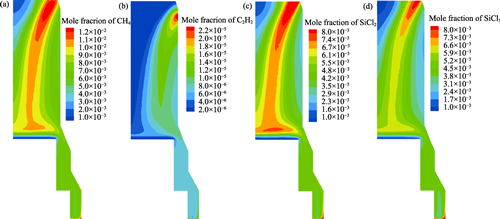
Silicon carbide (SiC) is a core wide-bandgap semiconductor material used in the fabrication of high-power, high-temperature, and high-frequency electronic devices. The quality of its epitaxial layers directly affects device performance and reliability. Vertical hot-wall chemical vapor deposition (CVD) represents a key future development direction for the SiC epitaxy industry due to its advantages, including stable temperature and flow fields, fast growth rates, and improved thickness uniformity. Reaction chamber pressure and substrate rotation speed are two key adjustable parameters in the vertical hot-wall CVD process. By altering the flow field distribution, boundary layer thickness, and precursor concentration distribution within the reaction chamber, these parameters exert a significant influence on the epitaxial growth rate and thickness uniformity. Therefore, this study aims to investigate the mechanisms by which these two key process parameters affect the vertical hot-wall CVD SiC epitaxial growth process and to determine an optimized process window that balances high growth rates with uniformity. Based on the finite volume method, a numerical model for heat and mass transfer in the vertical hot-wall CVD SiC epitaxial growth process was established, incorporating the gas-phase and surface reaction kinetics of the trichlorosilane (TCS)/C2H4/H2 precursor system. Multiple simulation scenarios were designed to systematically investigate the influence of different reaction chamber pressures and substrate rotation speeds on the epitaxial growth process. Simulation results indicate that as the reaction chamber pressure increases from 5 kPa to 45 kPa, the concentrations of major reactants such as CH4 and SiCl2 above the substrate gradually rise, while the thickness of the component boundary layer decreases, and the epitaxial growth rate increases from 35 μm/h to 65 μm/h. However, when the pressure exceeds 25 kPa, vortices tend to form in the chamber flow field, leading to non-uniform radial mass transport and a gradual deterioration in the epitaxial layer's thickness uniformity. Regarding substrate rotation speed, the growth rate increases gradually with increasing rotation speed. Within the range of 0-500 r/min, increasing the rotation speed effectively optimizes the radial concentration distribution of components and improves the thickness uniformity of the epitaxial layer; however, when the rotation speed exceeds 500 r/min, the rotational effect intensifies the aggregation of components at the substrate edges, resulting in a distribution with high concentration at the center and low concentration at the edges, which causes a slight deterioration in uniformity. The above results reveal the intrinsic mechanism by which reaction chamber pressure and substrate rotation speed influence epitaxial growth rate and thickness uniformity through the regulation of boundary layer thickness and radial concentration distribution. It was determined that a chamber pressure of 25 kPa and a substrate rotation speed of 500 r/min can achieve a growth rate exceeding 50 μm/h and a thickness uniformity of 2.0%, providing a theoretical basis for optimizing SiC epitaxial growth parameters and promoting the industrial application of vertical hot-wall CVD technology.
|
|
|
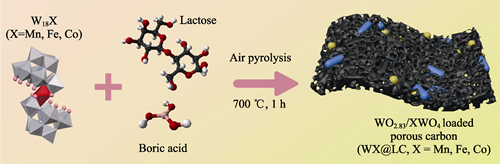
Boric Acid-assisted Construction of Polyoxometalate/Lactose-derived Defective Porous Carbon for Highly Efficient Microwave Absorption
SHI Jinzhao, ZHU Meiling, ZHENG Qi, WANG Lianjun, JIANG Wan
2026 Vol. 41 (10): 1470–1480
Abstract(
156 )
HTML(
0)
PDF(5332KB)(
75
)
Developing lightweight, broadband, and highly efficient microwave absorption materials is of great significance for electromagnetic protection in complex environments. In this study, a series of composition-tunable composites (WX@LC, X = Mn, Fe, Co) consisting of polyoxometalate (POM)-derived metal tungstate, tungsten oxide, and porous carbon were designed. Using lactose as the carbon source and transition metal-substituted POMs as inorganic precursors, the composites were successfully synthesized via a facile one-step air pyrolysis strategy with boric acid as a pore-forming agent. Microstructural analysis reveals that introducing the POM precursor precisely constructs a high concentration of oxygen vacancies and rich heterogeneous interfaces within the highly interconnected 3D porous carbon network. Furthermore, a dual-phase heterogeneous interface between MnWO4 and WO2.83 is exclusively observed in the Mn-doped WM@LC sample. This unique multiple heterogeneous structure induces strong interfacial polarization while maintaining moderate conduction loss, which effectively optimizes impedance matching. Electromagnetic measurements demonstrate that WM@LC exhibits optimal microwave absorption performance. At a low filler loading of 15% (in mass), it achieves a minimum reflection loss (RLmin) of -73.13 dB at a thickness of 4.11 mm, and a maximum effective absorption bandwidth (EABmax) of 6.64 GHz at 2.18 mm, fully covering the Ku band. This work offers an effective pathway for designing the microstructure of carbon-based microwave absorbers and provides a reliable reference for applying POM derivatives in electromagnetic protection.
|
|
|
Controlled Microwave-assisted Synthesis of Black Phosphorus Quantum Dots Boosting PEDOT:PSS Field-effect Direct-current Generator Performance
YU Junlong, JIANG Yin, GUO Jiangtao, YANG Peizhi, FENG Xiaobo
2026 Vol. 41 (10): 1481–1488
Abstract(
131 )
HTML(
1)
PDF(13161KB)(
66
)
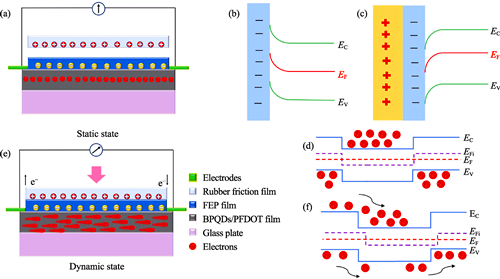
Black phosphorus quantum dots (BPQDs) have attracted considerable interest in the energy sector owing to their tunable bandgap and high charge carrier mobility. However, the controllable synthesis of high-quality BPQDs remains a significant challenge. This study proposes a facile, low-cost, and efficient microwave-assisted liquid-phase exfoliation strategy for synthesizing BPQDs and explores their application in enhancing field-effect direct-current generator (FENG) performance. By systematically adjusting microwave temperature, duration, and precursor/solvent ratio, the optimal parameters were identified as 150 ℃, 6 h, and 1 : 2. Under these conditions, high-quality BPQDs with an average size as small as 1.47 nm and uniform distribution were successfully prepared. Compared with conventional methods, this strategy shows notable advantages in production efficiency and structural integrity. Furthermore, the as-prepared BPQDs were incorporated with the conductive polymer PEDOT:PSS to form an active friction layer for FENG. Experimental results demonstrated that incorporating BPQDs significantly improved the device’s output performance, and the average peak current increased by 43.6% compared to the pure PEDOT:PSS-based device. It was also found that reducing BPQD size by raising synthesis temperature linearly enhances output voltage, current, and charge transfer rate, and the best performance was achieved at 150 ℃. The improvement is attributed to the excellent electrical properties of ultrasmall BPQDs and their high specific surface area, which promote interfacial polarization and charge storage. This study not only provides an efficient and green strategy for the controllable preparation of BPQDs but also, through their successful integration into flexible self-powered systems, demonstrates their broad application potential in the field of energy conversion.
|
|
|
Design and Implementation of Bi-YIG Gyromagnetic Ferrites with Low Magnetic Moment and High Dielectric Constant for 5G Miniaturized Circulators
ZHAO Jianwei, CHENG Zelai, LIANG Ji, QIU Weihua, SU Hua, LI Huayi
2026 Vol. 41 (10): 1489–1496
Abstract(
224 )
HTML(
0)
PDF(4322KB)(
103
)
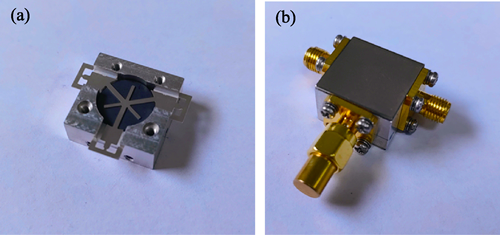
With the increasing demand for highly integrated devices in 5G communication, the development of gyromagnetic ferrites combining high dielectric constant and low saturation magnetization has become a research focus. This study aims to design and prepare a garnet ferrite suitable for the 3.0-3.6 GHz band through a multi-ion co-substitution strategy. A series of Bi1.4Gd0.2Ca1.4Zr0.2AlnV0.6Fe4.2-nO12 (n=0-0.20) samples were synthesized by the solid-state reaction method. The effects of Al3+ substitution on the microstructure, magnetic properties, and dielectric properties were systematically investigated. All samples maintain a pure garnet phase without secondary phases. Dense and uniform microstructures with clear grain boundaries are observed. The results show that the optimal comprehensive performance is achieved at n=0.10: the saturation magnetization (4πMs) is significantly reduced to 774 G (1 G=10-4 T), the ferromagnetic resonance linewidth (ΔH) is optimized to 83 Oe (1 Oe=1000/4π A/m≈ 79.577 A/m), the dielectric constant (εr) reaches 26.31, and the dielectric loss (tanδε) is as low as 8.49×10⁻⁴. A dual-Y-junction circulator fabricated based on this optimized material exhibits excellent microwave performance within the 3.0-3.6 GHz band, with an insertion loss of 0.27 to 0.31 dB, return loss and isolation both better than 20 dB. Moreover, the device demonstrates stable performance over a wide temperature range from -40 ℃ to 85 ℃, indicating its reliability for practical engineering applications. The Al3+ substitution synergistically reduces both 4πMs and ΔH by diluting magnetic ions and weakening magnetocrystalline anisotropy. This work provides a high-performance ferrite material solution for miniaturized 5G circulators and contributes to the advancement of integrated microwave devices for next-generation communication systems.
|
|
|
Preparation and Properties of an Electrically Conductive Composite Hydrogel with Electric Field-regulated pH
WANG Huiwen, YAO Aihua, WANG Deping
2026 Vol. 41 (10): 1497–1506
Abstract(
166 )
HTML(
1)
PDF(11398KB)(
77
)
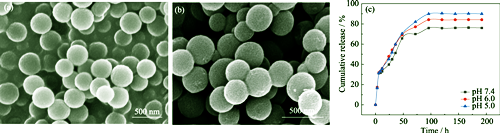
Chronic non-healing wounds associated with metabolic disorders, particularly diabetes, remain a major clinical challenge. The pathogenesis of these refractory wounds involves a dysregulated microenvironment characterized by bacterial colonization, impaired angiogenesis, and persistent inflammation. Although pH plays a pivotal role in wound healing and drug release, conventional pH-responsive hydrogels rely on passive responses to endogenous pH variations, which are often ineffective in chronic wounds where pH levels persistently deviate from the physiological range. To address this limitation, a multifunctional composite hydrogel (HPL-PDA@Cur-BG) capable of active, on-demand pH regulation was designed and prepared. This system integrates curcumin-loaded polydopamine nanoparticles (PDA@Cur NPs) and bioactive glass (BG) within a conductive hydroxypropyl methyl cellulose (HPMC)/polyacrylamide (PAM) double-network matrix. Under external direct current stimulation, the hydrogel enables dynamic pH modulation to trigger the intelligent release of anti-inflammatory agents. Concurrently, the polydopamine component confers photothermal antibacterial activity, while functional ions released from BG promote angiogenesis and tissue regeneration. The engineered hydrogel exhibits superior electrical conductivity (1.87 S·m-1) and achieves an antibacterial rate of about 98% under synergistic electrical stimulation and near-infrared irradiation. Collectively, this work provides a promising active therapeutic strategy for the treatment of refractory chronic infected wounds.
|
|
|
ZSM-5 Molecular Sieves: Preparation from Coal Gasification Slag and Performance in Methanol to Aromatics
CHEN Zhiping, DUAN Zhenyang, YU Haoshan, ZHOU Wenwu, YANG Zhiyuan, ZHOU Anning
2026 Vol. 41 (10): 1507–1516
Abstract(
210 )
HTML(
1)
PDF(3921KB)(
73
)
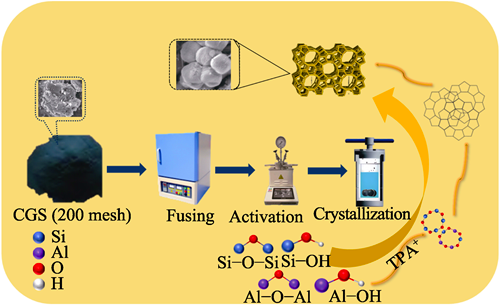
Coal gasification slag (CGS), rich in silicon and aluminum species, represents a potential raw material for the preparation of molecular sieves. However, the traditional activation method of silicon and aluminum species in CGS has the problems of high energy consumption, significant pollution and substantial cost. In this study, CGS was activated by sub-molten salt method at low temperature, and then ZSM-5 molecular sieve was synthesized by hydrothermal method with activated CGS as raw material, and its methanol to aromatics (MTA) performance was evaluated. The results showed that the suitable activation conditions for the synthesis of ZSM-5 zeolite by CGS activated by sub-molten salt were as follows: CGS/NaOH mass ratio of 1 : 1.2, alkali concentration of 6.10 mol/L, activation time of 3 h, and activation temperature of 200 ℃. The suitable crystallization conditions for the synthesis of ZSM-5 molecular sieve by activating CGS are as follows: the synthesis system of pH 11, crystallization temperature of 160 ℃, crystallization time of 72 h, and molar ratio of tetrapropyl ammonium bromide (TPABr)/SiO2 of 0.10. The ZSM-5 molecular sieve synthesized has good crystallinity, complete skeleton and regular morphology. The Zn/H-ZSM-5 catalyst was prepared by ion exchange and equal volume impregnation of the synthesized ZSM-5 zeolite. The results of MTA performance evaluation showed that the methanol conversion of Zn/H-ZSM-5 catalyst reached 100% in the range of 400-500 ℃ and 5-10 h-1. With the increase of reaction temperature, the selectivity of aromatics increased firstly and then decreased. With the increase of weight hourly space velocity, the selectivity of aromatics gradually decreased. The reaction temperature of 450 ℃ and the weight hourly space velocity of 5 h-1 are the suitable conditions for MTA reaction on Zn/H-ZSM-5 catalyst. At this time, the methanol conversion rate reached 100% and the aromatics selectivity was 45.0%, showing good MTA performance and application potential. This study can provide a new pathway for the green and efficient synthesis of molecular sieves using CGS.
|
|
|
Density Functional Theory Computation of Mo-adsorbed Two-dimensional Boron-nitrogen Monolayers for Nitrogen Reduction Reaction
LI Zhi, ZHANG Junmiao, FENG Ziyang, XIAO Beibei, SONG Erhong
2026 Vol. 41 (10): 1517–1524
Abstract(
185 )
HTML(
0)
PDF(3551KB)(
86
)
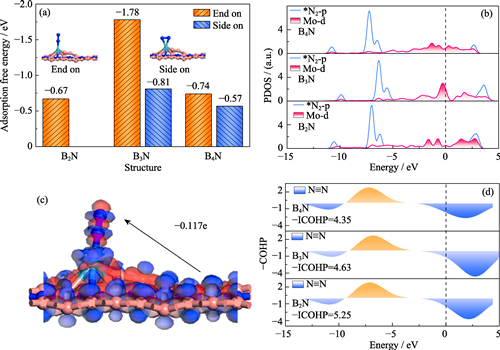
Electrocatalytic nitrogen reduction reaction (NRR) is regarded as a promising route for sustainable ammonia synthesis, but developing highly active and selective catalysts remains a critical challenge. In this work, the density functional theory calculations were performed to investigate the NRR performance of Mo-adsorbed B2N, B3N and B4N monolayers. The strong interaction between Mo and its substrate ensures the good stability, as reflected by the binding energies of -8.39, -5.91 and -6.75 eV for Mo-adsorbed B2N, B3N and B4N monolayers, respectively. The adsorbed Mo sites are able to activate the N2 molecule, elongating the N≡N bond length from 1.108 Å in the gas phase to 1.128, 1.132 and 1.132 Å on Mo-B2N, Mo-B3N and Mo-B4N, respectively. Free energy profile analysis reveals that the thermodynamic barriers are 1.21, 1.07 and 0.61 eV for Mo-B2N, Mo-B3N and Mo-B4N, with Mo-B4N exhibiting the highest activity. This trend clearly demonstrates that the Mo reactivity is well-tuned by its coordination. Furthermore, the electronic structure analysis shows a relation between the strength of N≡N bond and the thermodynamic energy, where a weaker strength of N≡N bond indicates a better NRR activity. Mo-B4N material also exhibits a high thermodynamic stability, as reflected by the robustness of the structural rigidity wherein no structural collapse is observed under the room temperature of 300 K. Therefore, Mo-B4N is expected to be an active and durable catalyst for the NRR. This study provides theoretical guidance for the design of NRR electrocatalysts and proposes viable candidate systems for experimental synthesis. The datasets in this article are listed in Science Data Bank at https://www.doi.org/10.57760/sciencedb.jim.00043.
|
|
|
One-step Synthesis of Non-layered 2D Bi2WO6 Nanosheets for Electronics and Optoelectronics
QU Kairui, LI Linyun, CHEN Xiang, ZENG Haibo
2026 Vol. 41 (10): 1525–1532
Abstract(
162 )
HTML(
4)
PDF(7322KB)(
69
)
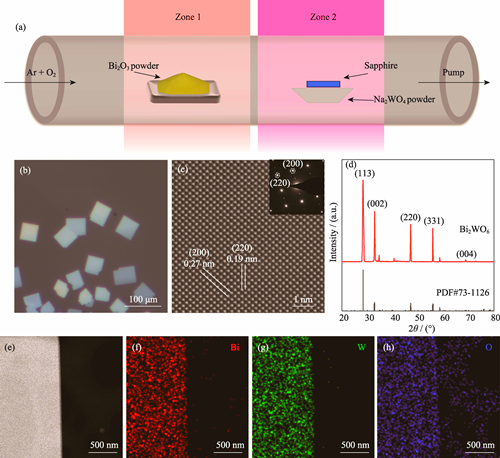
Since the discovery of graphene, two-dimensional (2D) materials have been a research hotspot. 2D semiconductor materials, with their atomic-level thickness and excellent electronic and optoelectronic properties, are considered ideal semiconductor materials. However, van der Waals materials account for only 5% of the crystal structure database, resulting in a limited number of 2D materials to be studied, which restricts their development and application. The development of non-van der Waals 2D materials will greatly enrich the family of 2D semiconductor materials. However, the two-dimensional growth of non-van der Waals materials remains a significant challenge, as conventional synthesis methods struggle to limit their growth in three dimensions. This study developed a one-step chemical vapor deposition method to grow non-van der Waals 2D Bi2WO6 nanosheets on C-plane sapphire with an average size of 60 μm. Furthermore, the thickness of the 2D Bi2WO6 nanosheets was precisely controlled by adjusting the growth parameters. The Bi2WO6 nanosheets were used to construct a top-gate field-effect transistor, achieving an on/off ratio as high as 106 and a carrier mobility of 2.4 cm2∙V-1∙s-1. This study also constructed a photodetector that achieved a specific detectivity of up to 3.6×10¹⁰ Jones, a responsivity of 0.779 A·W-1, and an external quantum efficiency of 218.5%. This research demonstrates that 2D Bi2WO6 holds promise as an ideal material for future electronic and optoelectronic devices.
|
|
|
Thermal Corrosion Behavior and Mechanism of RE2Ti2O7 Ceramics in V2O5 and Na2SO4+V2O5 Molten Salts
GAO Zhixin, FU Shuai, BAO Yiwang, LÜ Kuilin, LIU Xiaogen
2026 Vol. 41 (10): 1533–1540
Abstract(
143 )
HTML(
4)
PDF(6473KB)(
54
)
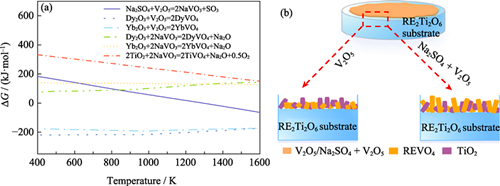
In the context of developing aircraft engines with high thrust-to-weight ratio, thermal barrier coating (TBC) materials must possess excellent thermal insulation properties and be capable of withstanding the thermal corrosion caused by molten salts (such as V2O5 and sulfates) in high-temperature combustion gases. In this study, RE2Ti2O7 (RE=Dy and Yb) ceramics were synthesized via a solid-state sintering method. The phase stability and decomposition behavior were examined through thermogravimetric-differential scanning calorimetry (TG-DSC) analysis. The corrosion behavior of RE2Ti2O7 upon exposure to V2O5 and Na2SO4+V2O5 molten salts at 900, 1000, and 1100 ℃ was analyzed. TG-DSC results show that RE2Ti2O7 retains good thermal stability at 1100 ℃, with no obvious decomposition peaks. In a pure V2O5 molten salt environment, granular rare earth vanadates (REVO4) form on the surface, accompanied by columnar TiO2 precipitation. The corrosion products were distributed in a dense layered structure, which would limit further deep corrosion. Upon the introduction of Na2SO4, the NaVO3 formed in the system reduced the local melt viscosity and significantly increased ionic mobility, thereby accelerating the dissolution and reprecipitation of rare earths and titanium. This resulted in corrosion products dominated by columnar REVO4 and TiO2. Based on phase diagrams and Gibbs free energy (ΔG) calculations, a reaction pathway dominated by redox reactions and ion exchange between V2O5 and RE2Ti2O7 was proposed. Furthermore, Lewis acid-base theory was employed to explain how the addition of Na+ alters solvation and complexation behavior, thereby influencing the overall corrosion kinetics. In summary, RE2Ti2O7 ceramics exhibit excellent corrosion resistance in high-temperature molten salts, demonstrating their potential as candidate materials for thermal barrier coatings.
|
|