无机材料学报 ›› 2026, Vol. 41 ›› Issue (10): 1407-1414.DOI: 10.15541/jim20250512
刘德新1( ), 赵宇泽1, 朱正伟1, 问研良1(), 洪明子1(), 何伟艳2
收稿日期:2025-12-23
修回日期:2026-02-28
出版日期:2026-10-20
网络出版日期:2026-04-03
通讯作者:
问研良, 副教授. E-mail: wenyanliang@163.com;作者简介:刘德新(1999-), 男, 硕士研究生. E-mail: liudexin@ordoslab.cn
基金资助:
LIU Dexin1(), ZHAO Yuze1, ZHU Zhengwei1, WEN Yanliang1(), HONG Mingzi1(), HE Weiyan2
Received:2025-12-23
Revised:2026-02-28
Published:2026-10-20
Online:2026-04-03
Contact:
WEN Yanliang, associate professor. E-mail: wenyanliang@163.com;About author:LIU Dexin (1999-), male, Master candidate. E-mail: liudexin@ordoslab.cn
Supported by:摘要:
钠离子电池(SIBs)具有环境友好、原料储量丰富、成本低廉等优势, 已经成为锂离子电池在储能领域的重要补充甚至替代者, 具有广阔的应用前景。然而, 锰基SIBs正极材料存在的结构不稳定、循环稳定性差等问题, 严重制约了SIBs的应用。本研究以O3-NaMnO2为基体, 探究了K/Cu双位点掺杂对其电化学性能的影响与调控机制。理论计算及实验结果表明, 在钠层中引入K+有效提升了钠离子的扩散速率, 同时在过渡金属层中掺杂Cu2+有效抑制了Mn3+的Jahn-Teller畸变, 限制了正极材料在充放电过程中发生复杂相变, 增强了材料的结构稳定性。K/Cu共掺杂打破了钠离子有序排列所形成的空位结构, 激活了阴离子氧化还原反应, 从而贡献了额外的比容量, 并显著增强了材料的电子导电性。Na0.94K0.06Cu0.05Mn0.95O2在0.2C (1C=226.28 mAh/g)下首次放电比容量达201.16 mAh/g, 100 次循环后比容量保持率为85.67%, 并且在1C和2C大电流下循环后, 回到0.5C仍可保持170.87 mAh/g的比容量, 表现出优异的循环与倍率性能。这种双位点共掺杂策略为高性能SIBs正极材料的设计提供了新思路。
中图分类号:
刘德新, 赵宇泽, 朱正伟, 问研良, 洪明子, 何伟艳. 高稳定性锰基钠离子电池正极材料的双位点掺杂研究[J]. 无机材料学报, 2026, 41(10): 1407-1414.
LIU Dexin, ZHAO Yuze, ZHU Zhengwei, WEN Yanliang, HONG Mingzi, HE Weiyan. Dual-site Doping for High-stability Manganese-based Cathode Materials in Sodium-ion Batteries[J]. Journal of Inorganic Materials, 2026, 41(10): 1407-1414.
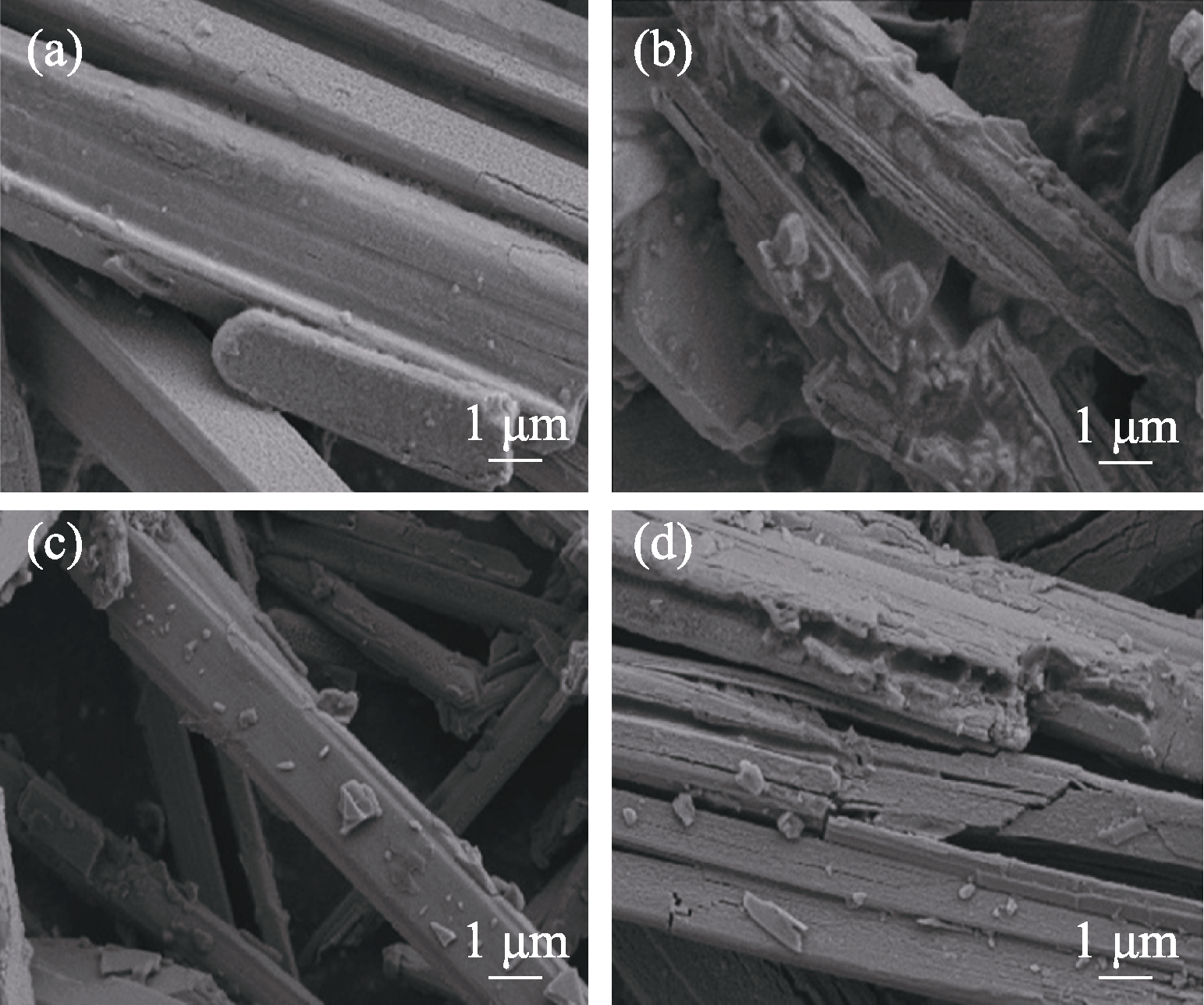
图1 NMO (a)、NKCMO-0.05 (b)、NKCMO-0.06 (c)、NKCMO-0.07 (d)的SEM照片
Fig. 1 SEM images of NMO (a), NKCMO-0.05 (b), NKCMO- 0.06 (c), and NKCMO-0.07 (d)
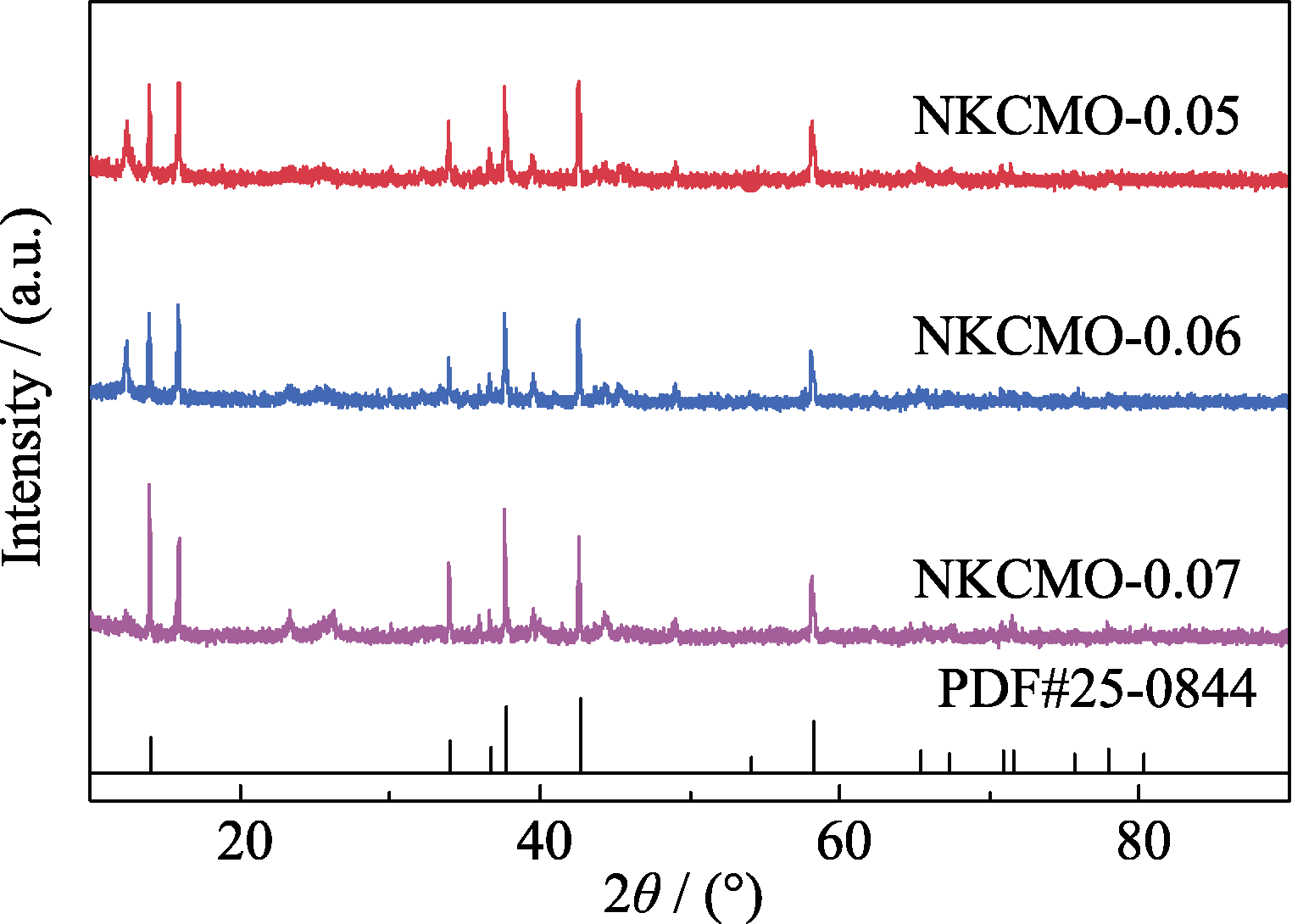
图2 NKCMO-x的XRD图谱
Fig. 2 XRD patterns of the NKCMO-x
| Sample | Element | Mass fraction% | Actual | Theoretical |
|---|---|---|---|---|
| NKCMO-0.05 | Na | 22.32 | 0.97 | 0.95 |
| K | 1.84 | 0.05 | 0.05 | |
| Mn | 47.57 | 0.87 | 0.95 | |
| Cu | 3.43 | 0.06 | 0.05 | |
| NKCMO-0.06 | Na | 22.48 | 0.97 | 0.94 |
| K | 2.42 | 0.06 | 0.06 | |
| Mn | 47.91 | 0.87 | 0.95 | |
| Cu | 3.37 | 0.05 | 0.05 | |
| NKCMO-0.07 | Na | 21.31 | 0.93 | 0.93 |
| K | 2.93 | 0.08 | 0.07 | |
| Mn | 48.68 | 0.89 | 0.95 | |
| Cu | 3.43 | 0.05 | 0.05 |
表1 NKCMO的各元素的含量
Table 1 Elemental contents of NKCMO
| Sample | Element | Mass fraction% | Actual | Theoretical |
|---|---|---|---|---|
| NKCMO-0.05 | Na | 22.32 | 0.97 | 0.95 |
| K | 1.84 | 0.05 | 0.05 | |
| Mn | 47.57 | 0.87 | 0.95 | |
| Cu | 3.43 | 0.06 | 0.05 | |
| NKCMO-0.06 | Na | 22.48 | 0.97 | 0.94 |
| K | 2.42 | 0.06 | 0.06 | |
| Mn | 47.91 | 0.87 | 0.95 | |
| Cu | 3.37 | 0.05 | 0.05 | |
| NKCMO-0.07 | Na | 21.31 | 0.93 | 0.93 |
| K | 2.93 | 0.08 | 0.07 | |
| Mn | 48.68 | 0.89 | 0.95 | |
| Cu | 3.43 | 0.05 | 0.05 |
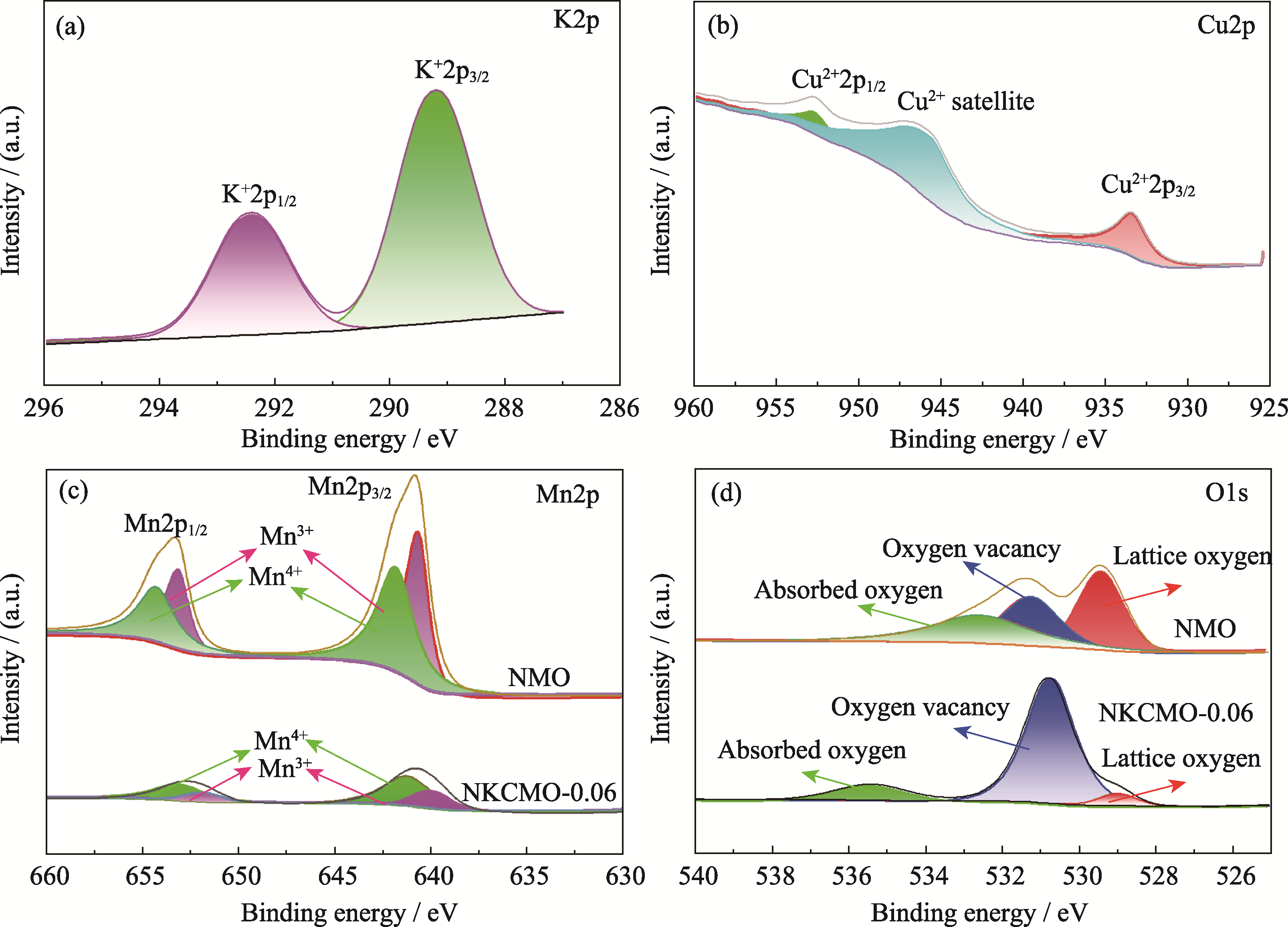
图3 NKCMO-0.06的K2p (a)和Cu2p (b) XPS谱图; NMO和NKCMO-0.06的Mn2p (c)和O1s (d) XPS谱图
Fig. 3 K2p (a) and Cu2p (b) XPS spectra for NKCMO-0.06; Mn2p (c) and O1s (d) XPS spectra for NMO and NKCMO-0.06
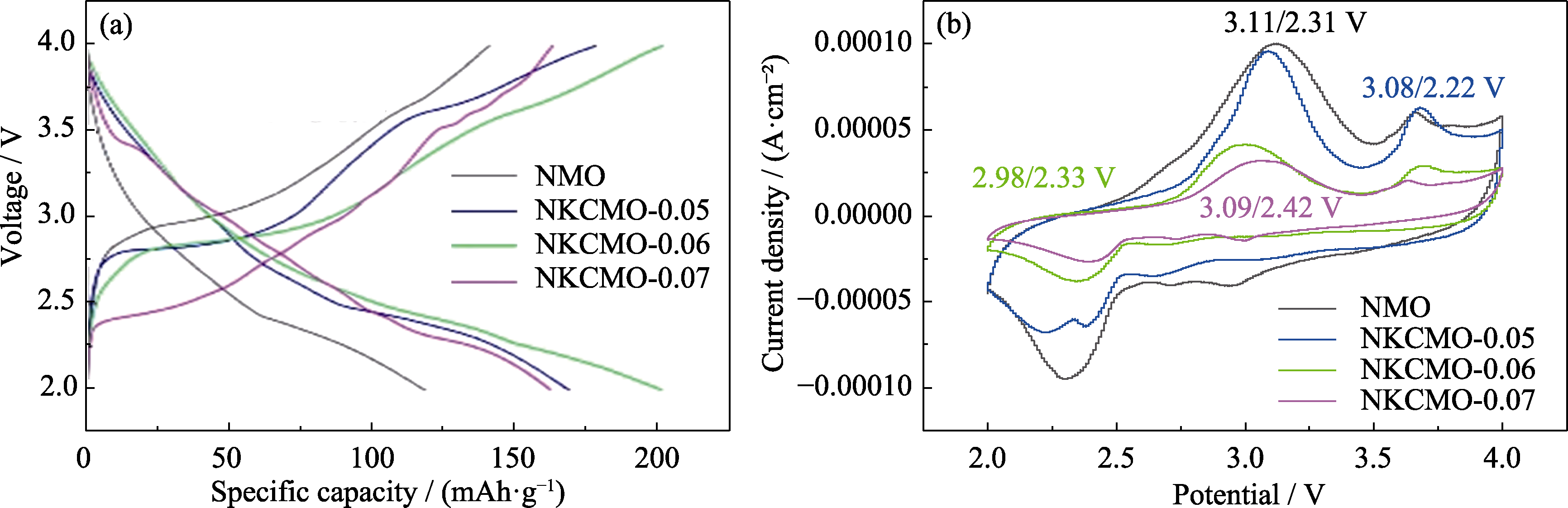
图4 NMO、NKCMO-x的首次充放电曲线(a)和CV曲线(b)
Fig. 4 Initial charge/discharge curves (a) and CV curves (b) of NMO and NKCMO-x Colorful figures are available on website
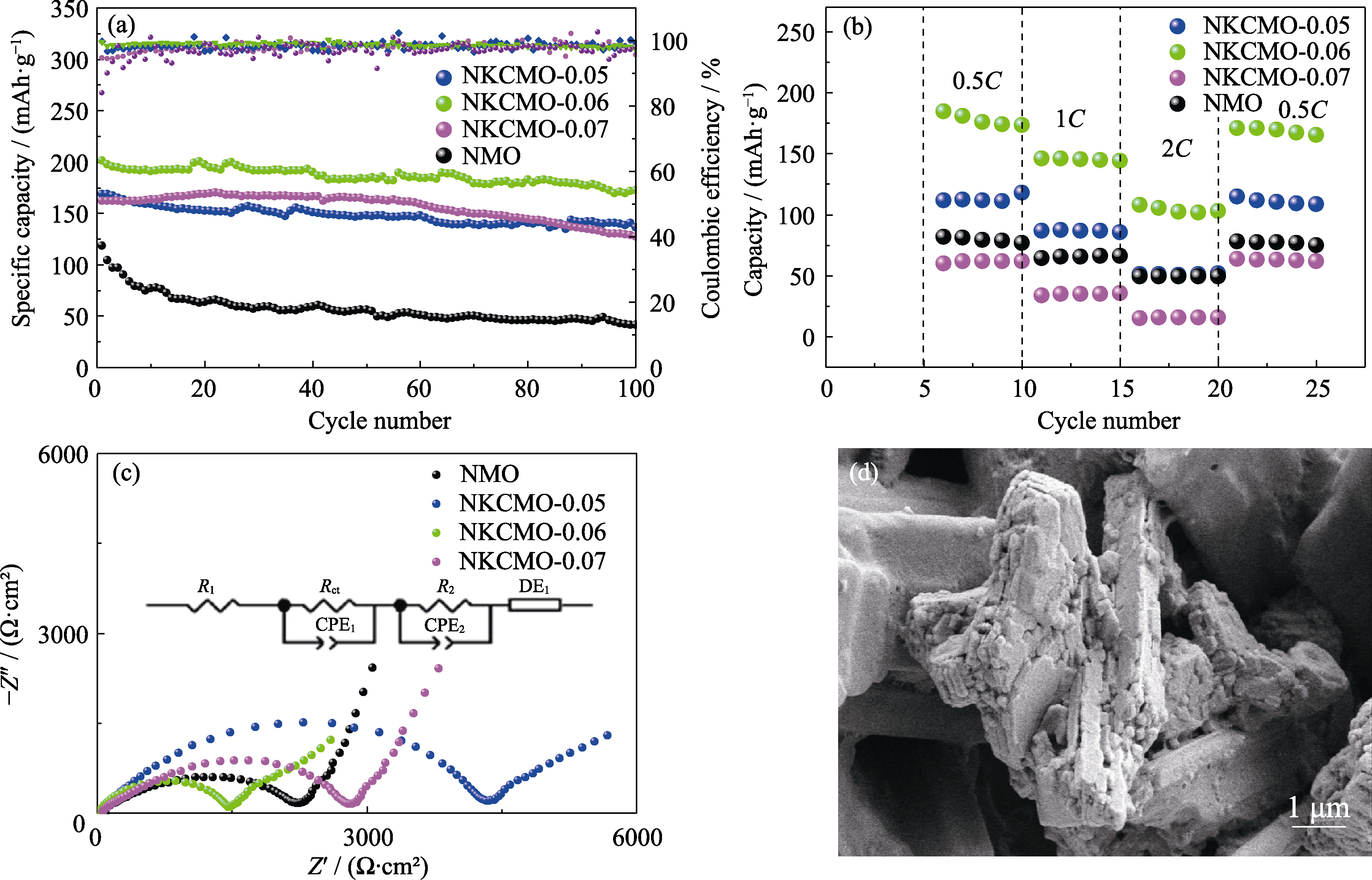
图5 NMO和NKCMO-x的长循环性能(a)和倍率性能(b); (c) NMO和NKCMO-x的电化学阻抗谱图; (d) NKCMO-0.06循环后的SEM照片
Fig. 5 Long-term cycling performance (a) and rate capability (b) of NMO and NKCMO-x; (c) Electrochemical impedance spectra of NMO and NKCMO-x; (d) SEM image of NKCMO-0.06 after cycling Colorful figures are available on website
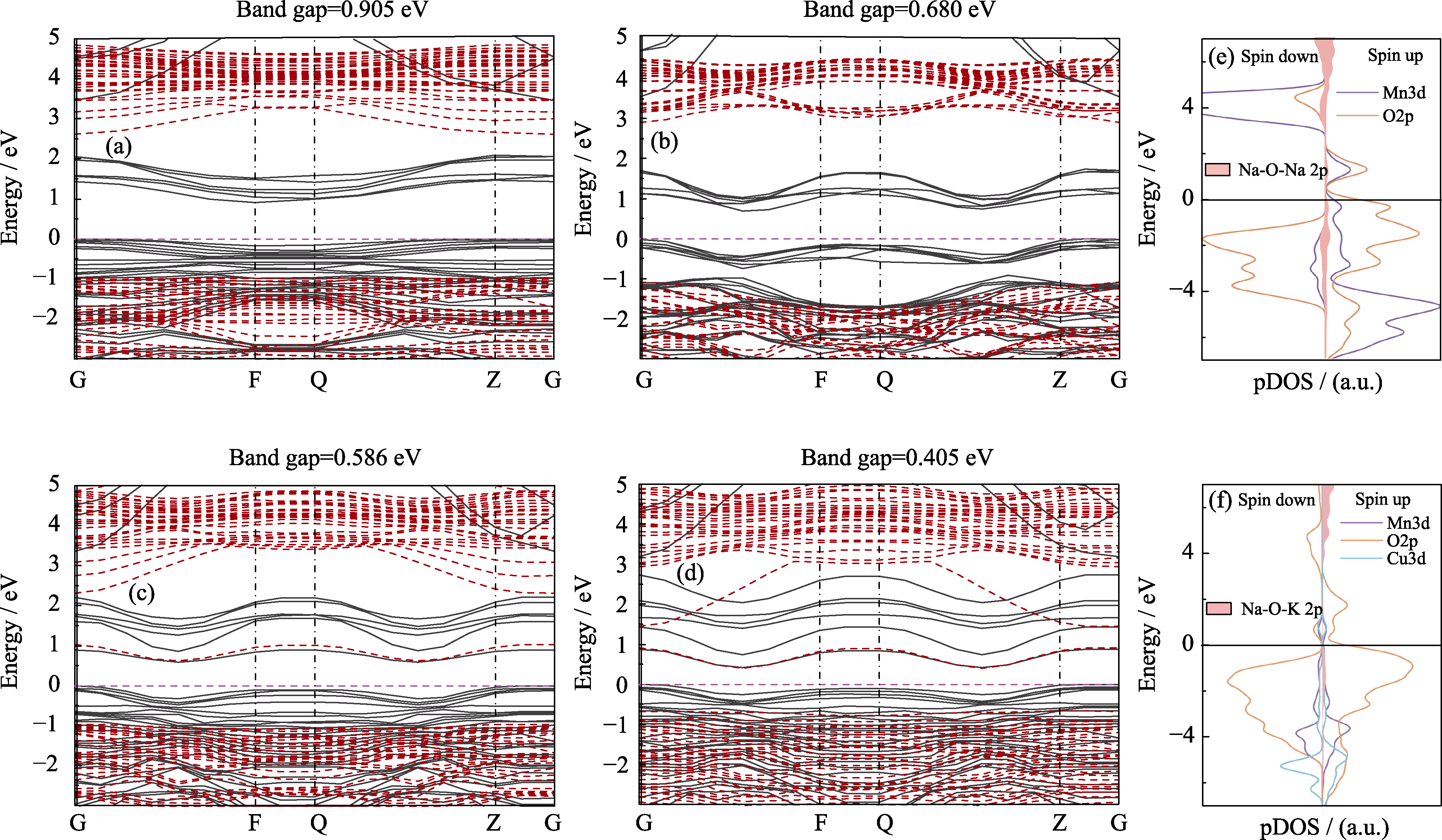
图6 NMO (a)、NKMO (b)、NCMO (c)和NKCMO-0.06 (d)的能带结构图; NMO (e)与NKCMO-0.06 (f)偏态密度图
Fig. 6 Band structure diagrams of NMO (a), NKMO (b), NCMO (c), and NKCMO-0.06 (d); Partial density of states diagrams of NMO (e) and NKCMO-0.06 (f) Colorful figures are available on website
| [1] |
ZHANG X J, LI J L, QIU W J, et al. Electrochemical activity of positive electrode material of P2-Nax[Mg0.33Mn0.67]O2 sodium ion battery. Journal of Inorganic Materials, 2021, 36(6): 623.
DOI URL |
| [2] | 丁飞翔, 容晓晖, 王海波, 等. 钠离子层状氧化物材料相变及其对性能的影响. 物理学报, 2022, 71(10): 7. |
| [3] |
ZHAO Y, KANG Y Q, WOZNY J, et al. Recycling of sodium-ion batteries. Nature Reviews Materials, 2023, 8(9): 623.
DOI |
| [4] | 胡勇胜, 陆雅翔, 陈立泉. SIBs科学与技术. 北京: 科学出版社, 2020. |
| [5] |
SUN L Y, ZENG J, WAN X H, et al. Recent progress of interface modification of layered oxide cathode material for sodium-ion batteries. Electron, 2024, 2(2): e31.
DOI URL |
| [6] | HOU P Y, DONG M H, LIN Z Z, et al. Alleviating the Jahn-Teller distortion of P3-type manganese-based cathodes by compositionally graded structure for sodium-ion batteries. ACS Sustainable Chemistry & Engineering, 2023, 11(29): 10785. |
| [7] |
NAYAK P K, YANG L, BREHM W, et al. From lithium-ion to sodium-ion batteries: advantages, challenges, and surprises. Angewandte Chemie International Edition, 2018, 57(1): 102.
DOI URL |
| [8] |
WU K, DOU X W, ZHANG X X, et al. The sodium-ion battery: an energy-storage technology for a carbon-neutral world. Engineering, 2023, 21(2): 36.
DOI URL |
| [9] | 陈梅艳, 曾凡浩. SIBs层状氧化物正极材料的研究进展. 化学通报, 2025, 88(8): 801. |
| [10] |
KANWADE A, GUPTA S, KANKANE A, et al. Transition metal oxides as a cathode for indispensable Na-ion batteries. RSC Advances, 2022, 12(36): 23284.
DOI PMID |
| [11] | 甘露, 姚胡蓉. SIBs层状氧化物正极材料有序结构研究进展. 硅酸盐学报, 2022, 50(1): 148. |
| [12] |
王绍聪, 李伟, 黄瑞琴, 等. 锰基SIBs正极材料Jahn-Teller效应抑制方法进展. 储能科学与技术, 2023, 12(1): 139.
DOI |
| [13] |
MU J X, CAI T X, DONG W J, et al. Biphasic high-entropy layered oxide as a stable and high-rate cathode for sodium-ion batteries. Chemical Engineering Journal, 2023, 471: 144403.
DOI URL |
| [14] | 孙媛媛, 李思卿, 王成儒, 等. SIBs层状过渡金属氧化物正极材料的研究进展. 稀有金属, 2022, 46(6): 776. |
| [15] |
ZHANG J G, WU T, ZHAO X, et al. Improvement of cycling stability of cathode materials and industrialization process for sodium- ion batteries. Journal of Inorganic Materials, 2025, 40(4): 348.
DOI URL |
| [16] |
李丽江, 陆楚, 苏高琴, 等. SIBs P2型锰基层状正极材料改性研究进展. 化工新型材料, 2022, 50(9): 16.
DOI |
| [17] |
TANG G X, CHEN Z W, LIN Z Y, et al. K+-doped P2-Na0.67Fe0.5Mn0.5O2 cathode for highly enhanced rate performance sodium-ion battery. Journal of Alloys and Compounds, 2023, 947: 169482.
DOI URL |
| [18] |
WANG J Z, TENG Y X, SU G Q, et al. A dual-modification strategy for P2-type layered oxide via bulk Mg/Ti co-substitution and MgO surface coating for sodium ion batteries. Journal of Colloid and Interface Science, 2022, 608: 3013.
DOI URL |
| [19] |
ZHANG L Y, GUAN C H, ZHENG J Q, et al. Rational design of intergrowth P2/O3 biphasic layered structure with reversible anionic redox chemistry and structural evolution for Na-ions batteries. Science Bulletin, 2023, 68(2): 180.
DOI URL |
| [20] |
KALYONCUOGLU B, OZGUL M, ALTUNDAG S, et al. Unveiling the outstanding full-cell performance of P2-type Na0.67(Mn0.44Ni0.06Fe0.43Ti0.07)O2 cathode active material for Na-ion batteries. Journal of Power Sources, 2024, 591: 233775.
DOI URL |
| [21] | YAN G Q, WANG C, LAN C B, et al. Al-doped P2-type Na0.8Ni0.33Mn0.67-xAlxO2 as cathode for sodium-ion batteries: synthesis and electrochemical properties. Journal of Inorganic Materials, 2025, 40(9): 1005. |
| [22] | 魏树兵, 何勇菊, 曹鑫鑫, 等. 钾掺杂O3型层状氧化物正极材料及其性能. 粉末冶金材料科学与工程, 2023, 28(5): 438. |
| [23] |
ADAMO C, BARONE V. Toward chemical accuracy in the computation of NMR shieldings: the PBE 0 model. Chemical Physics Letters, 1998, 298(1): 113.
DOI URL |
| [24] |
JI H C, JI W H, XUE H Y, et al. Synergistic activation of anionic redox via cosubstitution to construct high-capacity layered oxide cathode materials for sodium-ion batteries. Science Bulletin, 2023, 68(1): 65.
DOI URL |
| [25] | 刘欢庆. SIBs锰基层状氧化物相结构设计及其储钠机制. 长沙: 中南大学博士学位论文, 2023. |
| [26] |
KONG W J, YANG W Y, NING D, et al. Tuning anionic/cationic redox chemistry in a P2-type Na0.67Mn0.5Fe0.5O2 cathode material via a synergic strategy. Science China Materials, 2020, 63(9): 1703.
DOI |
| [27] |
WANG P F, XIAO Y, PIAO N, et al. Both cationic and anionic redox chemistry in a P2-type sodium layered oxide. Nano Energy, 2020, 69: 104474.
DOI URL |
| [28] |
CHEN J, LI L J, WU L, et al. Enhanced cycle stability of Na0.9Ni0.45Mn0.55O2 through tailoring O3/P 2 hybrid structures for sodium-ion batteries. Journal of Power Sources, 2018, 406: 110.
DOI URL |
| [29] |
DONG L W, WU W, XU Z M, et al. Nb-doped NaNi1/3Fe1/3Mn1/3O2 and its high-voltage performance as sodium-ion battery cathode. Journal of Power Sources, 2025, 640: 236701.
DOI URL |
| [30] |
DONG H, LIU H, GUO Y J, et al. Lithium orbital hybridization chemistry to stimulate oxygen redox with reversible phase evolution in sodium-layered oxide cathodes. Journal of the American Chemical Society, 2024, 146(32): 22335.
DOI PMID |
| [31] |
TIAN Y F, CAI Y S, CHEN Y P, et al. Accessing the O vacancy with anionic redox chemistry toward superior electrochemical performance in O 3 type Na‐ion oxide cathode. Advanced Functional Materials, 2024, 34(32): 2316342.
DOI URL |
| [32] |
CAI C C, LI X Y, LI J T, et al. Transition metal vacancy and position engineering enables reversible anionic redox reaction for sodium storage. Nature Communications, 2025, 16: 100.
DOI |
| [1] | 杨紫程, 范广新, 袁振洛, 刘宝忠, 毛英杰. MgO/Y2O3复合包覆对LiNi0.9Mn0.1O2结构及性能的影响[J]. 无机材料学报, 2026, 41(9): 1220-1228. |
| [2] | 李涵涛, 沈强, 罗国强, 王雪飞, 高明, 陈晨. 机械球磨法调控硅基负极材料结构与性能的研究进展[J]. 无机材料学报, 2026, 41(5): 561-572. |
| [3] | 马晓佳, 耿欣宇, 张卫珂. 硼氮共掺杂生物质碳球负极材料的制备及其储钠性能[J]. 无机材料学报, 2026, 41(4): 469-478. |
| [4] | 侯佳兵, 胡强, 崔久治, 黄云迪, 王心蕊, 刘兴泉. 高镍单晶层状三元正极材料的高熵策略掺杂改性研究[J]. 无机材料学报, 2026, 41(2): 193-200. |
| [5] | 闫共芹, 王晨, 蓝春波, 洪雨昕, 叶维超, 付向辉. Al掺杂P2型Na0.8Ni0.33Mn0.67-xAlxO2钠离子电池正极材料的制备与电化学性能[J]. 无机材料学报, 2025, 40(9): 1005-1012. |
| [6] | 万俊池, 杜路路, 张永上, 李琳, 刘建德, 张林森. Na4FexP4O12+x/C钠离子电池正极材料的结构演变及其电化学性能[J]. 无机材料学报, 2025, 40(5): 497-503. |
| [7] | 薛柯, 蔡长焜, 谢满意, 李舒婷, 安胜利. 固体氧化物燃料电池Pr1+xBa1-xFe2O5+δ阴极材料的制备及电化学性能研究[J]. 无机材料学报, 2025, 40(4): 363-371. |
| [8] | 张继国, 吴田, 赵旭, 杨钒, 夏天, 孙士恩. 钠离子电池正极材料循环稳定性提升策略及产业化进程[J]. 无机材料学报, 2025, 40(4): 348-362. |
| [9] | 杨舒琪, 杨存国, 牛慧祝, 石唯一, 舒珂维. GeP3/科琴黑复合材料作为钠离子电池高性能负极材料[J]. 无机材料学报, 2025, 40(3): 329-336. |
| [10] | 朱志杰, 申明远, 吴涛, 李文翠. Cu和Mg协同取代抑制钠离子电池正极材料P2-Na2/3Ni1/3Mn2/3O2的P2-O2相变[J]. 无机材料学报, 2025, 40(2): 184-195. |
| [11] | 杨恒强, 张馨月, 马义初, 周青军. 铁基钙钛矿La0.25M0.75FeO3-δ (M=Ba, Sr, Ca)的制备及其作为固体氧化物燃料电池阴极材料的性能研究[J]. 无机材料学报, 2025, 40(12): 1365-1372. |
| [12] | 姜玥宏, 宋云峰, 张磊磊, 马季, 宋昭远, 龙文. 质子传导型固体氧化物燃料电池BaZr0.1Ce0.7Y0.1Yb0.1O3电解质的氟化研究[J]. 无机材料学报, 2025, 40(12): 1356-1364. |
| [13] | 凌意瀚, 郭胜, 曹志强, 田云峰, 刘方升, 金芳军, 高源. 固体氧化物电池直孔电极结构的制备技术与性能研究进展[J]. 无机材料学报, 2025, 40(12): 1311-1323. |
| [14] | 张宇婷, 李晓斌, 刘尊义, 李宁, 赵鹬. 复合蛋黄壳型NiCo2V2O8@TiO2@NC材料用作锂离子电池负极研究[J]. 无机材料学报, 2025, 40(11): 1221-1228. |
| [15] | 唐阳, 刘立敏, 周晓亮, 张搏, 蒋星洲, 贾浩义, 罗延麟庆. 质子陶瓷膜反应器的制备及低温氨分解性能研究[J]. 无机材料学报, 2025, 40(11): 1277-1284. |
| 阅读次数 | ||||||
|
全文 |
|
|||||
|
摘要 |
|
|||||