|
|
Dynamic Radiative Thermal Management Technologies: From Principles and Materials to Synergistic Optimization of Materials and Structures
MA Zhitong, LI Zhongshao, CAO Xun
2026 Vol. 41 (8): 1021–1035
 Abstract
(
346 )
 HTML
HTML(
20)
 PDF
PDF(3468KB)(
214
)
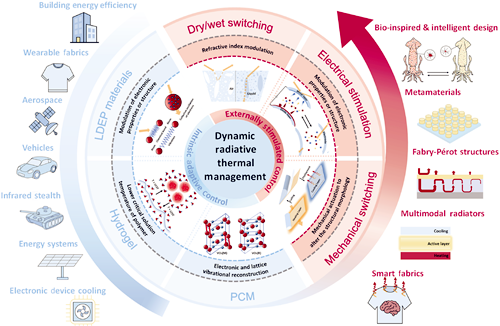
Global energy consumption continues to rise, presenting a critical challenge. Thermal energy, as the primary form of energy use, accounts for approximately 51% of global final energy consumption. Consequently, developing high-efficiency thermal management technologies with low or even zero energy input has become an urgent challenge. As an emerging strategy, dynamic radiative thermal management (DRTM) exploits tunable spectral radiative properties of materials to achieve precise temperature control in response to environmental changes, thereby enhancing energy efficiency and thermal comfort. This review summarizes the fundamental principles of DRTM. Recognizing the limitations of existing classification schemes in encompassing the diversity of DRTM developments, this review proposes a novel framework that categorizes related studies into three categories: externally stimulated control, material intrinsic adaptive control and materials-structures synergistic optimization, the latter representing a key future development trend. On this basis, we discuss in detail the working mechanisms, recent research progress and representative material systems associated with each group. Particular emphasis is placed on comparing their performance in terms of solar absorptance, mid-to-far infrared band emissivity modulation, and the ability to switch between different operating modes. The potential of synergistic optimization under various triggering stimuli is further analyzed with respect to modulation capability and accessible operating range, providing guidance for selecting suitable technological routes in different application scenarios. From a broader perspective, DRTM is expected to serve as a key technological pathway for the integrated development of the built environment, energy systems and intelligent materials.
|
|
|
Research Progress on Tandem Quantum-dot Light-emitting Diodes
ZHONG Hong, ZHANG Yuhao, SHAN Qingsong, HU Tianjun, ZENG Haibo
2026 Vol. 41 (8): 1036–1048
Abstract(
543 )
HTML(
11)
PDF(7700KB)(
282
)
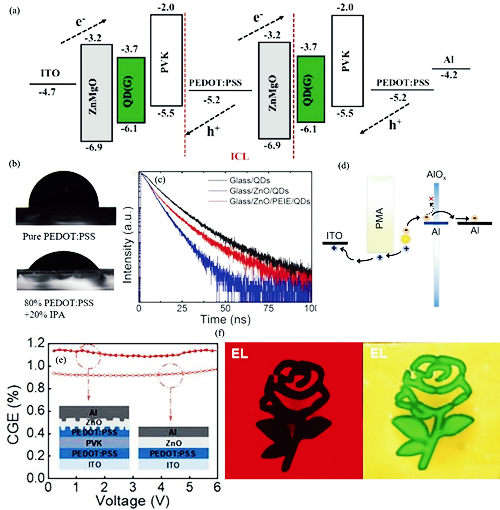
Tandem quantum-dot light-emitting diodes (TQLEDs), as an important extension of quantum-dot light-emitting diodes (QLEDs) technology, have achieved remarkable improvements in external quantum efficiency, brightness, and operational lifetime through the introduction of multiple emission units and charge generation layers. They have thus become a major research focus in the development of next-generation high-performance display devices. However, despite the substantial progress made in TQLED research, it still faces several critical challenges, such as imbalanced charge injection, poor compatibility with solution-processing techniques, insufficient environmental friendliness of materials, and inadequate stability of devices during long-term operation. This paper first introduces the basic structure and working principles of TQLED, compares its advantages over conventional single-layer QLED, and elaborates on the working principle of the charge generation layer as well as its key role in the collaborative operation of multiple emission units. Subsequently, focusing on inverted, conventional, multiple emission material-based, and other innovative tandem device structures, the paper conducts a systematic analysis of the research progress in improving device performance through different material systems, processing technologies, and structural designs. It also summarizes the breakthroughs achieved by TQLED in terms of efficiency, brightness, and stability. Finally, it identifies current challenges in TQLED and proposes potential future development pathways alongside research priorities from perspectives such as material innovation, structural optimization, and process refinement. Special emphasis is placed on the importance of developing environmentally friendly quantum dot materials, innovating solution-processing techniques, and constructing stable interface structures. These analyses aim to provide theoretical guidance and technical references for the subsequent technological development of TQLED, accelerating their transition from laboratory research to industrial application.
|
|
|
Research Progress on Yellow-orange Laser Crystals and Their All-solid-state Laser Devices
SI Huichen, LIANG Fei, YU Haohai, ZHANG Huaijin
2026 Vol. 41 (8): 1049–1068
Abstract(
347 )
HTML(
13)
PDF(5648KB)(
172
)
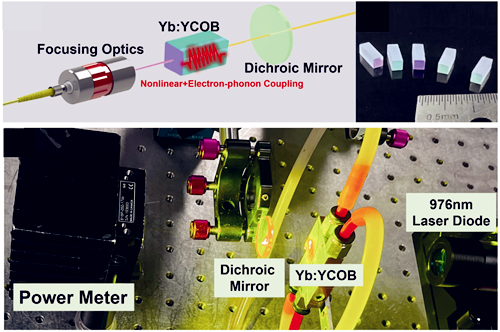
Laser wavelength is a critical parameter that determines the applicability and effectiveness of laser sources among various fields. The extension of laser wavelengths has been a long-standing task in laser physics and laser technology. Among various spectral regions, yellow-orange lasers—characterized by high eye sensitivity, excellent color rendering, and strong atmospheric penetration—have attracted significant attention for their wide applications in biomedical imaging, laser therapy, display technology, environmental sensing, optical communications, and so on. This review aims to summarize the recent advances in yellow-orange laser crystals and all-solid-state laser devices. It contains four main categories of approaches: blue diode-pumped Dy3+/Tb3+ doped crystal materials, nonlinear sum-frequency-generation (SFG), Raman laser crystals, and the emerging function- integrated laser crystals. A detailed comparison of their technical characteristics and performances has been provided. Notably, a novel class of function-integrated yellow-orange laser crystals based on electron-phonon coupling effects has been investigated by many leading groups. These novel crystal materials enable efficient wavelength extension through enhanced energy transfer between electronic transitions and phonon vibrations, thus offering a promising alternative for changing the laser wavelengths, especially in the yellow-orange region. Such phonon-coupled laser devices exhibit remarkable advantages, including wide wavelength tunability, high conversion efficiency, low cost, and high integration capability. Consequently, they have garnered widespread interest within the global laser research community and are paving the new way for practical applications in laser medicine, high-fidelity displays, remote sensing, and other advanced photonic systems. Finally, this review outlines prospective research directions and anticipates potential breakthroughs in the design, synthesis, and application of yellow-orange laser crystal materials.
|
|
|
LiNi0.8Co0.1Mn0.1O2 Coated with Mg-Cr Co-doped LiNi0.5Mn1.5O4 as Cathode Material for Li-ion Battery
LIU Boyu, WANG Tengfei, PANG Qing, LI Xiufen, WANG Hongyu
2026 Vol. 41 (8): 1069–1077
Abstract(
381 )
HTML(
9)
PDF(10757KB)(
560
)
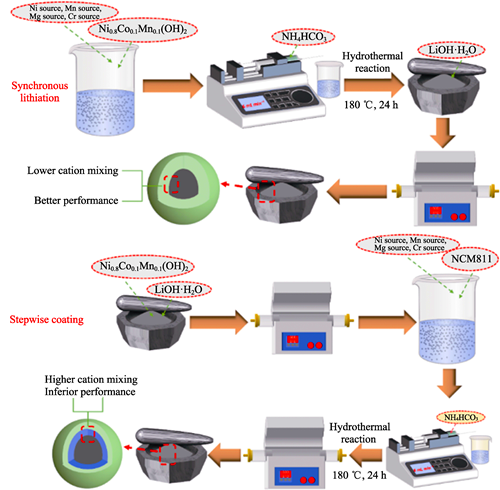
LiNi0.8Co0.1Mn0.1O2 (NCM811) emerged as one of the crucial cathode materials in the field of power batteries owing to its high theoretical specific capacity. However, when the charging voltage exceeds 4.3 V, the material is prone to structural phase transitions and severe interfacial side reactions with the electrolyte, leading to increased interfacial impedance and rapid capacity fading, which restricts the further improvement of its energy density. In this study, a synergistic modification strategy is proposed: a synchronous lithiation process is adopted to prepare Mg-Cr co-doped LiNi0.5Mn1.5O4 (LNMO) as the coating layer. This coating layer inherits the high operating voltage, three-dimensional lithium ion transport channels, and excellent electrochemical stability of LNMO. Meanwhile, Mg-Cr co-doping enhances the ionic/electronic conductivity of LNMO and inhibits the dissolution of Mn elements. The results demonstrate that the Mg-Cr co-doped LNMO coating modification reduces the degree of Li⁺/Ni²⁺ cation mixing in the NCM811 cathode material. The modified cathode material exhibits outstanding performance in the voltage range of 2.7-4.5 V. It delivers an initial discharge specific capacity of 212.74 mAh·g-1 at 0.1C (1C= 200 mA·g-1), a discharge specific capacity of 182.32 mAh·g-1 at a high rate of 5C, and a capacity retention rate of 77.09% after 100 cycles at 1C. Its electrochemical performance is significantly superior to that of the unmodified and stepwise-coated samples. This strategy improves the stability and electrochemical performance of NCM811 by suppressing interfacial side reactions and reducing charge transfer resistance, thereby providing an effective approach for the optimization of high-voltage and high-nickel cathodes.
|
|
|
Porous Flowerball-like NiCo2O4/Co3S4-M Heterostructure: Preparation and Its Performance of Asymmetric Supercapacitor
SHI Pu, LU Qianqian, LIU Xin, ZHANG Yaqin, LI Fuzhi
2026 Vol. 41 (8): 1078–1086
Abstract(
333 )
HTML(
11)
PDF(3508KB)(
3404
)
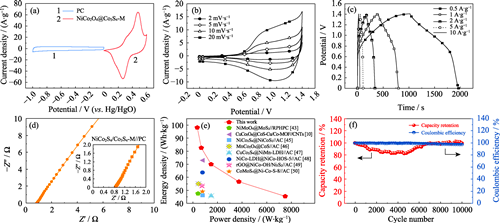
Supercapacitors demonstrate significant application potential in the energy storage field due to their high power density, rapid charge-discharge capability, and long cycle life. However, their relatively low energy density restricts further development. In this study, porous flowerball-like NiCo2O4/Co3S4-M heterostructured electrode materials were constructed via hydrothermal method, template-assisted growth, and sulfuration treatments, and their electrochemical performance was systematically investigated. In a three-electrode system, NiCo2O4/Co3S4-M exhibits a specific capacitance of 2362 F·g−1 at 1 A·g−1. The porous flowerball structure affords abundant active sites, and the heterointerface facilitates electron/ion transport, synergistically boosting both conductivity and stability. Furthermore, an asymmetric supercapacitor (NiCo2O4/Co3S4-M//PC) was assembled using porous flowerball-like NiCo2O4/Co3S4-M as the cathode and porous carbon (PC) as the anode, achieving a high energy density of 98.40 Wh·kg−1 at a power density of 375 W·kg−1, which maintained 45.42 Wh·kg−1 even at a power density of 7500 W·kg−1, along with outstanding cycling stability. After 10000 cycles at a current density of 5 A·g−1, the capacitance retention rate reached 99.7% with a Coulombic efficiency of 97.56%. This study indicates that the strategy of heterostructure design and microstructure modulation can effectively achieve high specific capacity and superior cycling stability, providing new research insights for the development of high-performance supercapacitor electrode materials.
|
|
|
Integrated Roasting-Alkali Leaching-Adsorption Strategy for Highly Efficient Lithium Extraction from Coal Fly Ash
HUANG Qihan, LIU Chang, HAO Jiayu, LI Zhihua, XU Wenhua
2026 Vol. 41 (8): 1087–1094
Abstract(
417 )
HTML(
11)
PDF(3526KB)(
140
)
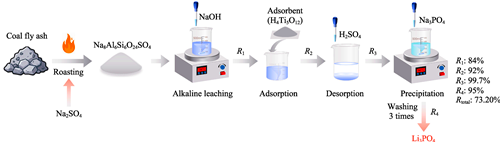
Since a vast amount of lithium-rich coal fly ash (CFA) is produced domestically each year, the extraction of this resource is of great importance for supporting sustainable development of the new energy. However, conventional methods for lithium extraction from CFA are constrained by efficiency and selectivity, owing to the low grade of lithium and its encapsulation within a chemically stable glass phase. To overcome this technical bottleneck, this study proposes a novel multi-stage lithium extraction strategy integrating "activation roasting-mild alkaline leaching-adsorption separation". First, CFA was mixed with sodium sulfate and roasted at 900 ℃ for 2 h. This high-temperature roasting effectively disrupted the Si-O-Al bonds within the glass phase, inducing lattice reconstruction and enabling the thermal activation of lithium and its host minerals. Subsequently, the calcine underwent mild alkaline leaching (1 mol·L-1 NaOH, 70 ℃, liquid-to-solid ratio of 5 : 1) to achieve the selective release of lithium ions. Finally, a lithium titanate ion sieve, known for its specific memory effect towards lithium, was employed for adsorption, accomplishing the highly efficient and specific separation of lithium from impurities. The new process achieved a total lithium recovery of 73.20% and a lithium/impurity separation factor exceeding 96. The purified solution can be concentrated to directly produce lithium phosphate with a purity of 99.02%, enabling the precise purification of lithium from CFA. This work provides a potential green and efficient approach for the high-value utilization of China’s vast CFA reserves and the development of unconventional lithium resources.
|
|
|
Nitrogen Modulation of Micro-arc Oxidation: Densification and Corrosion Resistance of Zirconium Alloy Coatings
JI Ruonan, WEI Daqing, WANG Qingyu, LI Yongchang, ZHANG Tian, DU Qing
2026 Vol. 41 (8): 1095–1102
Abstract(
377 )
HTML(
9)
PDF(4642KB)(
1365
)
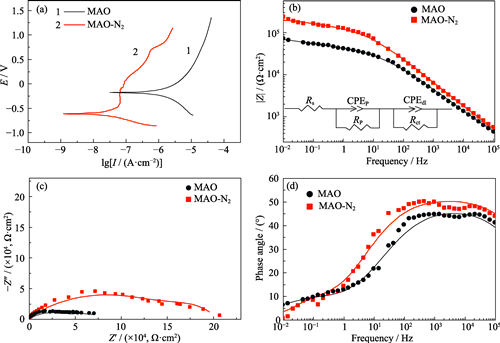
Zirconium alloys used in nuclear reactors undergo severe zirconium-water reaction during loss-of-coolant accidents. Conventional micro-arc oxidation (MAO) coatings, limited by their high porosity, offer insufficient protection. In this study, nitrogen was innovatively introduced into the MAO process to suppress arc concentration, thereby achieving simultaneous structural optimization and nitrogen doping of the coating. Experimental results demonstrate the successful fabrication of a dense zirconium oxide coating through this approach. The porosity is significantly reduced to 4.96% (representing a 62% reduction), surface roughness is decreased, and a tight, crack-free bond with the substrate is achieved. Simultaneously, nitrogen is incorporated into the crystal lattice, forming a characteristic Zr-O-N bonding structure. Benefiting from this synergistic optimization of the microstructure and chemical composition, the dense coating exhibits a corrosion current density as low as 1.61×10⁻⁸ A·cm-2 in a 0.1 mol/L LiOH solution, which is one order of magnitude lower than that of a conventional MAO coating. This work confirms that a nitrogen atmosphere can simultaneously facilitate structural regulation and chemical modification, providing a new pathway for developing high-performance accident-tolerant zirconium alloy cladding coatings.
|
|
|
Fabrication and Properties of Magnetoplumbite-type Rare-earth Hexaaluminate Thermal Barrier Coating Materials
XU Mingyi, XIONG Ying, WANG Bo, ZHANG Yixin, CHEN Wenbo, CAO Xueqiang
2026 Vol. 41 (8): 1103–1109
Abstract(
392 )
HTML(
8)
PDF(1299KB)(
1139
)
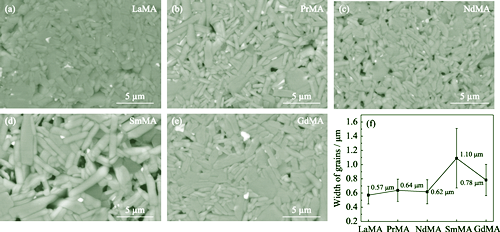
Magnetoplumbite-type rare-earth hexaaluminates RMgAl11O19 (RMA, R=La, Pr, Nd, Sm, Gd) emerged as promising candidates for next-generation thermal barrier coatings (TBCs) capable of operating at temperatures exceeding 1300 ℃, owing to their high melting points, low thermal conductivity, and remarkable sintering resistance. To elucidate the influence of rare-earth ion substitution on the structural and functional properties, a series of single rare-earth cation substituted RMA ceramics were synthesized via a solid-state reaction route and densified using spark plasma sintering. Their phase composition, microstructure, thermophysical, and infrared radiative properties were systematically characterized by different measurements. All samples crystallize in a hexagonal magnetoplumbite-type structure, with both lattice parameters and unit cell volumes exhibiting a gradual contraction as the rare-earth ionic radius decreases. The grain growth rate generally increases with a reduction in ionic radius. The thermal diffusivity and conductivity of RMA ceramics decrease with increasing temperature, reaching a minimum of 2.86-3.19 W/(m·K) in the temperature range of 25-1000 ℃. The average thermal expansion coefficients vary from 8.22×10⁻⁶ to 8.70×10⁻⁶ K-1 between 200 and 1300 ℃, indicating comparable thermo-physical properties across different compositions. In contrast, notable differences appear in the 3-5 μm infrared band, where PrMA exhibits the highest average emissivity (0.746) and LaMA exhibits the lowest (0.493), reflecting the critical role of rare-earth cation electronic structure in radiative behavior. This work elucidates the coupled thermal-radiative modulation mechanism induced by rare-earth ion substitution in magnetoplumbite-type hexaaluminates, offering valuable insights for the design of high-temperature TBC materials that combine low thermal conductivity with high infrared radiative performance.
|
|
|
Microstructure and Mechanical Property Evolution of Continuous Alumina Fibers during Long-term Exposure at Elevated Temperatures
HU Juan, XU Di, NIE Huaiwen, LIN Genlian, YAN Jina
2026 Vol. 41 (8): 1110–1116
Abstract(
319 )
HTML(
10)
PDF(1606KB)(
191
)
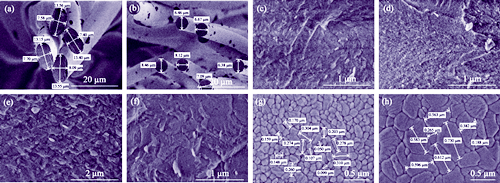
Continuous alumina fibers are widely used in fields including aerospace, national defense, military industry and energy resources, due to their exceptional chemical stability, oxidation resistance, structural stability and excellent high-temperature mechanical properties, making them promising engineering fibers with significant research value and market prospects. The long-term service temperature of alumina fibers varies depending on their composition, structure and morphology. In this work, phase composition, microstructure and mechanical property evolution of two commercial fibers (i.e. NextelTM 440 and NITIVY ALFTM), and one lab-synthesized fiber (i.e. SLF72) were investigated after long-term treatment at elevated temperatures. Characterization was performed using different methods. The influence of phase composition and microstructure on mechanical properties was discussed, and the underlying mechanisms were elucidated. Furthermore, the mechanical properties of the fibers after heat treatment at different temperatures were compared. The results indicate that all three fibers undergo a transformation to mullite phase, accompanied by a general decline in single-filament tensile strength with increasing temperature. The formation and growth of mullite phase are identified as the primary reasons for the strength degradation after heat treatment. Compared with NextelTM 440 and NITIVY ALFTM, the lab-synthesized fiber SLF72 demonstrates superior mechanical properties after long-term exposure at elevated temperatures. The long-term service temperature limits of the fibers follow the order: SLF72>NITIVY ALFTM>NextelTM 440.
|
|
|
Synthesis and Electrical Properties of Ba0.57Sr0.39Ca0.03Ti1.01NbxO3 Positive Temperature Coefficient Ceramics
ZHOU Wenhao, OUYANG Qi, MA Mingsheng, LU Yiqing, LIU Zhifu
2026 Vol. 41 (8): 1117–1124
Abstract(
419 )
HTML(
4)
PDF(1492KB)(
515
)
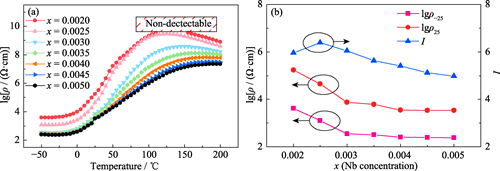
Low Curie temperature Barium titanate-based positive temperature coefficient (PTC) ceramics, which exhibit significant resistivity changes with temperature in low temperature environments, fulfill the demand for precise temperature sensor components and hold broad application potential in deep space exploration. However, achieving both low low-temperature resistivity and high PTC intensity remains challenging in low Curie temperature barium titanate-based PTC materials. This study focuses on optimizing the performance of low-Curie-temperature barium titanate-based PTC ceramics through element doping, addressing the critical contradiction between elevated low-temperature resistivity and insufficient PTC intensity. A low Curie temperature barium titanate-based PTC thermistor ceramic material Ba0.57Sr0.39Ca0.03Ti1.01NbxO3 (x=0.0020, 0.0025, 0.0030, 0.0035, 0.0040, 0.0045, 0.0050) was prepared via solid-state synthesis. X-ray diffraction (XRD), scanning electron microscope (SEM) and electric tests were implemented to clarify the mechanism of structures and properties. Electrical property tests on samples sintered at different temperatures confirmed 1375 ℃ as the optimal sintering temperature. XRD analysis verified single crystalline phase composition. SEM images confirmed niobium’s role in grain refinement. Resistivity-temperature tests on samples with varying Nb doping content showed that at x = 0.0025 and 0.0030, the low-temperature resistivity dropped to 103 Ω·cm with a PTC intensity greater than 6, demonstrating excellent PTC characteristics. Dielectric constant-temperature spectra further confirmed the Curie temperature at 0 ℃ and the dielectric constant showed an oscillatory increase with the rise of Nb doping content. Alternating current complex impedance spectra revealed that the PTC effect originates from grain boundary effects. Strontium doping reduced the Curie temperature to 0 ℃, while niobium as a donor dopant decreased the low-temperature resistivity. Manganese was introduced to enhance the PTC intensity. This study pioneered the fabrication of barium titanate-based PTC ceramics exhibiting low Curie temperatures, exceptionally small low-temperature resistivity, and high PTC intensity, establishing a paradigm shift for developing cryogenic temperature sensors critical to aerospace thermal management systems.
|
|
|
Regulation of Periodic Poling in KTP Crystals via Electrode Pattern and Connection Design
TAN Tingting, SONG Xudong, ZHAO Weidi, QIN Qi, HE Xiaoling, ZHANG Changlong
2026 Vol. 41 (8): 1125–1132
Abstract(
332 )
HTML(
8)
PDF(5537KB)(
199
)
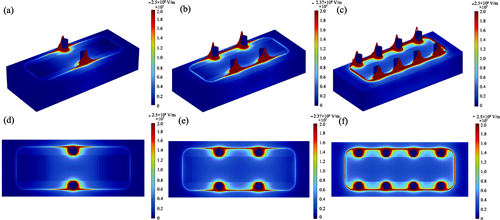
Periodically poled potassium titanyl phosphate (PPKTP) crystals, engineered based on the ferroelectric domain structure of KTiOPO4 (KTP), have emerged as a core component for generating entangled quantum light sources in quantum optics. This is attributed to the entangled photon sources they produce, which exhibit superior performance such as low power consumption, compact size, and high entanglement quality. During the preparation of PPKTP crystals via the electric field poling method, inhomogeneous electric fields can lead to irregular domain structures, adversely affecting their nonlinear optical properties. Therefore, electric field uniformity is a critical control factor in the poling process. To improve the electric field homogeneity during the polarization of PPKTP crystals, this study systematically optimized both the electrode pattern and the electrode connection structure through simulation and experimental validation. Using finite element analysis, the spatial electric field distributions of different electrode patterns were simulated. A double-sided rounded electrode pattern was proposed to mitigate edge electric field concentration, while a parallel multi-contact electrode connection method was introduced to further enhance the uniformity of the electric field distribution. The domain structures of the poled crystals were characterized using metallographic microscopy. Experimental results from the ferroelectric domain morphology analysis confirmed that the double-sided rounded electrode pattern effectively alleviates the tip effect, and the parallel multi-contact connection method significantly improves electric field uniformity, thereby providing key conditions for high-quality domain inversion. Ultimately, hydrothermally grown PPKTP crystals were obtained with straight domain walls, a period of 46 μm, and a duty cycle of approximately (50±1)%. This work offers a simple, efficient, and structurally rational design solution for achieving uniform electric field distribution in the preparation of PPKTP crystals.
|
|
|
Investigation of Threading Screw Dislocation Evolution in 4H-SiC Single Crystals
ZHAO Ning, WEI Fuyuan, WANG Ping, SHI Tingting, WANG Bo, YANG Jian, LIU Chunjun
2026 Vol. 41 (8): 1133–1140
Abstract(
350 )
HTML(
2)
PDF(8147KB)(
148
)
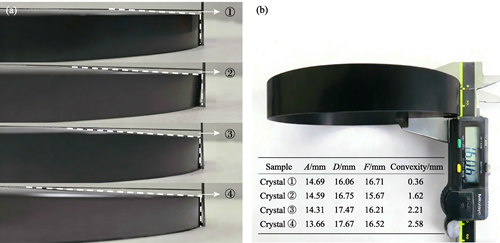
Threading screw dislocation (TSD) is a critical defect in silicon carbide (SiC) single crystals and have a strong impact on epitaxial quality and device performance. With the increasing diameter of SiC substrates, understanding the evolution behavior of TSD during bulk growth is of growing importance. This study aims to investigate the evolution characteristics of TSD in 6-inch 4H-SiC single crystals and to clarify the influence of crystal growth front convexity on TSD generation. Four 6-inch 4H-SiC single crystals with different growth convexities ranging from 0.36 to 2.58 mm were grown by the physical vapor transport (PVT) method through thermal field regulation. Longitudinal cross-sectional samples were characterized using X-ray topography (XRT) to trace the evolution behavior of individual TSD. Thermal field simulations were performed to analyze the relationship between temperature gradient and local C/Si ratio. XRT results reveal multiple TSD evolution behaviors, including inheritance from the seed, newly generated dislocations, merging and annihilation, and bending. The density of newly generated TSD during the initial growth stage increases monotonically with crystal convexity. When the convexity increases from 0.36 to 2.58 mm, the initial newly generated TSD density rises and reaches 126 cm-2. Thermal field simulations indicate that larger convexity leads to steeper temperature gradients and a reduced C/Si ratio, promoting silicon droplet formation and TSD nucleation. In contrast, the influence of convexity on TSD generation during the final growth stage is weak, with densities remaining at 0-3 cm-2. The results indicate that the initial growth stage is the dominant period for TSD formation, mainly governed by thermal field-induced C/Si imbalance. Optimizing the thermal field to maintain a low growth front convexity is essential for suppressing TSD formation in large-diameter 4H-SiC single crystals.
|
|
|
Growth of GaN Single Crystals on Sapphire Patterned-porous Thin Film Composite Substrate
SHAO Huihui, LI Qiubo, WANG Shouzhi, WANG Zhongxin, SUN Defu, JIANG Kaize, QI Zhanguo, XU Xiangang, XU Mingsheng, ZHANG Lei
2026 Vol. 41 (8): 1141–1147
Abstract(
310 )
HTML(
11)
PDF(709KB)(
514
)
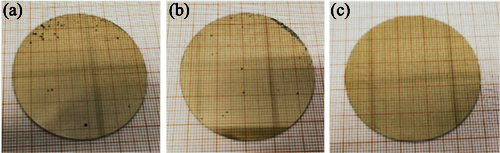
Due to the large lattice mismatch and thermal mismatch between gallium nitride (GaN) and hetero-substrates, high-density mismatch dislocations are introduced in the GaN epitaxial layer, thereby reducing the performance and lifetime of the devices. The most fundamental solution to this problem is to grow GaN on GaN homo-substrate. In this study, GaN films were first grown on a patterned sapphire substrate using metal-organic chemical vapor deposition method. Then, the GaN films were wet-etched to fabricate a sapphire patterned-porous film composite substrate. Subsequently, GaN single crystals were grown on this substrate, and GaN bulk single crystals were obtained by self-peeling. The feasibility of this process was experimentally verified. The test results of X-ray diffraction (XRD), Raman spectroscopy, photoluminescence (PL) spectroscopy, and cathodoluminescence (CL) spectroscopy confirm that the crystallinity and quality of grown GaN single crystals were improved. At the same time, the growth mechanism of GaN single crystals on the sapphire patterned-porous thin film composite substrate is expounded, providing a new idea for improving the quality of self-stripping GaN single crystals.
|
|
|
Deactivation Mechanism of Pd Only Three-way Catalysts under Aging Temperature Gradient
LIU Xuzi, SONG Zhaohua, ZENG Lu, QU Li, JIAO Yi, JIANG Fajun, LI Dacheng, YAN Huicheng, WANG Jianli, CHEN Yaoqiang
2026 Vol. 41 (8): 1148–1156
Abstract(
414 )
HTML(
8)
PDF(8913KB)(
247
)
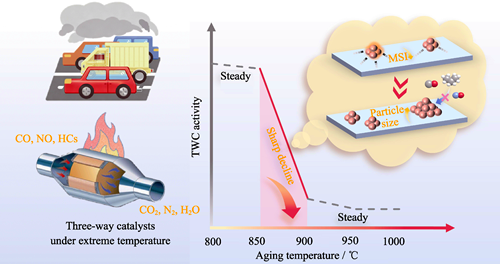
Pd/CZA catalyst composed of third-generation oxygen storage material CeO2-ZrO2-Al2O3 (CZA) loaded only with Pd represents a practical three-way catalyst (TWC) owing to its exceptional pollutant conversion efficiency and sintering resistance. Although the thermal degradation mechanism of Pd-based TWC has been confirmed to be closely associated with Pd sintering and the weakening of metal-support interaction (MSI), a systematic investigation into its thermal aging behavior under an extreme high-temperature gradient remains necessary. A series of Pd/CZA catalysts aged at 800-1000 ℃ were prepared in this study and their thermal degradation was systematically explored, presenting a pioneering investigation into the evolution pattern of the microchemical state of Pd with aging temperature gradient. The correlation among the microchemical state of Pd, MSI and aging resistance was evaluated through different characterization techniques. The results showed that catalytic activity exhibited a nonlinear decay with increasing aging temperature. Catalytic performance declined sharply in the range of 850-900 ℃, with increases of 26-40 ℃ and 39-67 ℃ for T50 and T90 (the temperatures at which the pollutant conversions are 50% and 90%, respectively) of carbon monoxide (CO), nitric oxide (NO) and hydrocarbons (HCs), while it showed little variation within the range of 900-1000 ℃. The underlying reason for this sharp decline in activity is an abrupt transformation in the microchemical state of Pd. When the aging temperature increases to 900 ℃, the Pd-O-Ce bond is weakened, which compromises the MSI. Consequently, Pd particles become unanchored, undergo rapid sintering and growth, and exhibit diminished capabilities for adsorbing and activating both reactants and oxygen.
|
|