
Journal of Inorganic Materials ›› 2026, Vol. 41 ›› Issue (8): 1148-1156.DOI: 10.15541/jim20250396
• RESEARCH LETTER • Previous Articles
LIU Xuzi1( ), SONG Zhaohua1, ZENG Lu1, QU Li2, JIAO Yi1(), JIANG Fajun3, LI Dacheng3, YAN Huicheng4, WANG Jianli2, CHEN Yaoqiang2
Received:2025-10-10
Revised:2025-12-24
Published:2026-08-20
Online:2026-01-06
Contact:
JIAO Yi, associate professor. E-mail: jiaoyiscu@163.comAbout author:LIU Xuzi (2000-), female, Master candidate. E-mail: lxz@stu.scu.edu.cn
Supported by:CLC Number:
LIU Xuzi, SONG Zhaohua, ZENG Lu, QU Li, JIAO Yi, JIANG Fajun, LI Dacheng, YAN Huicheng, WANG Jianli, CHEN Yaoqiang. Deactivation Mechanism of Pd Only Three-way Catalysts under Aging Temperature Gradient[J]. Journal of Inorganic Materials, 2026, 41(8): 1148-1156.
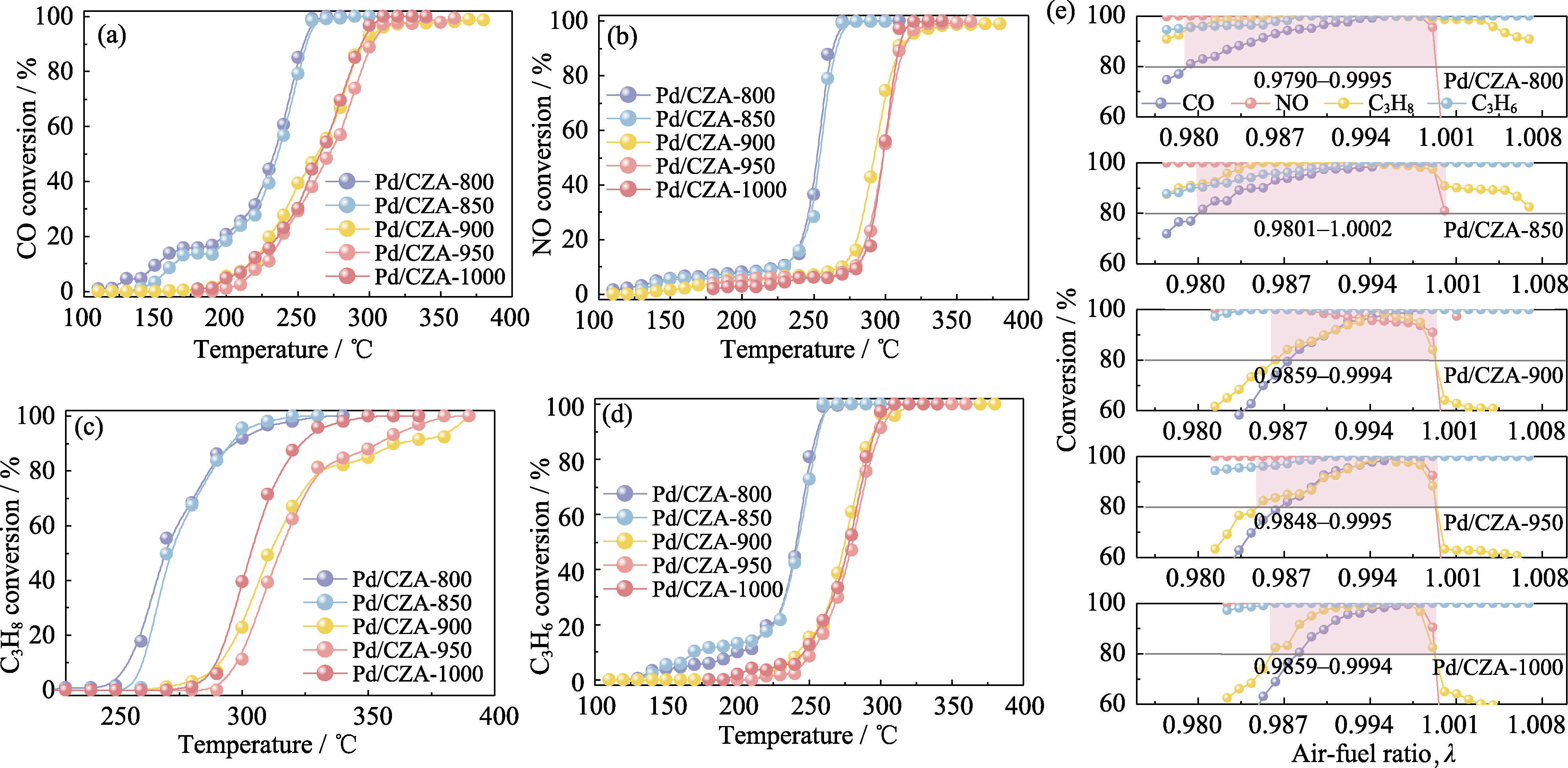
Fig. 1 (a-d) Light-off curves of (a) CO, (b) NO, (c) propane (C3H8) and (d) propylene (C3H6); (e) Operation windows of the aged catalysts Simulated exhaust gas consisted of 4500 μL/L CO, 1200 μL/L NO, 120 μL/L C3H8, 220 μL/L C3H6, 3130 μL/L O2, 1500 μL/L H2, 110 mL/L CO2, 100 mL/L H2O, and N2 as the balance gas. Operation window was tested at 400 ℃. Colorful figures are available on website
| Sample | CO | NO | C3H8 | C3H6 | ||||
|---|---|---|---|---|---|---|---|---|
| T50/℃ | T90/℃ | T50/℃ | T90/℃ | T50/℃ | T90/℃ | T50/℃ | T90/℃ | |
| Pd/CZA-800 | 233 | 254 | 252 | 263 | 269 | 297 | 241 | 255 |
| Pd/CZA-850 | 237 | 256 | 254 | 266 | 271 | 295 | 242 | 256 |
| Pd/CZA-900 | 263 | 295 | 292 | 310 | 311 | 362 | 275 | 295 |
| Pd/CZA-950 | 272 | 302 | 298 | 313 | 314 | 353 | 280 | 300 |
| Pd/CZA-1000 | 265 | 295 | 298 | 310 | 303 | 324 | 278 | 295 |
Table 1 T50 and T90 values of CO, NO and HCs of the aged catalysts
| Sample | CO | NO | C3H8 | C3H6 | ||||
|---|---|---|---|---|---|---|---|---|
| T50/℃ | T90/℃ | T50/℃ | T90/℃ | T50/℃ | T90/℃ | T50/℃ | T90/℃ | |
| Pd/CZA-800 | 233 | 254 | 252 | 263 | 269 | 297 | 241 | 255 |
| Pd/CZA-850 | 237 | 256 | 254 | 266 | 271 | 295 | 242 | 256 |
| Pd/CZA-900 | 263 | 295 | 292 | 310 | 311 | 362 | 275 | 295 |
| Pd/CZA-950 | 272 | 302 | 298 | 313 | 314 | 353 | 280 | 300 |
| Pd/CZA-1000 | 265 | 295 | 298 | 310 | 303 | 324 | 278 | 295 |
| Sample | SBET/ (m2•g-1) | Pore volume/ (mL•g-1) | Average pore size/nm |
|---|---|---|---|
| Pd/CZA-800 | 61 | 0.44 | 23.2 |
| Pd/CZA-850 | 67 | 0.42 | 24.5 |
| Pd/CZA-900 | 67 | 0.41 | 24.7 |
| Pd/CZA-950 | 69 | 0.43 | 24.6 |
| Pd/CZA-1000 | 70 | 0.40 | 29.1 |
Table 2 Textural properties of catalysts
| Sample | SBET/ (m2•g-1) | Pore volume/ (mL•g-1) | Average pore size/nm |
|---|---|---|---|
| Pd/CZA-800 | 61 | 0.44 | 23.2 |
| Pd/CZA-850 | 67 | 0.42 | 24.5 |
| Pd/CZA-900 | 67 | 0.41 | 24.7 |
| Pd/CZA-950 | 69 | 0.43 | 24.6 |
| Pd/CZA-1000 | 70 | 0.40 | 29.1 |
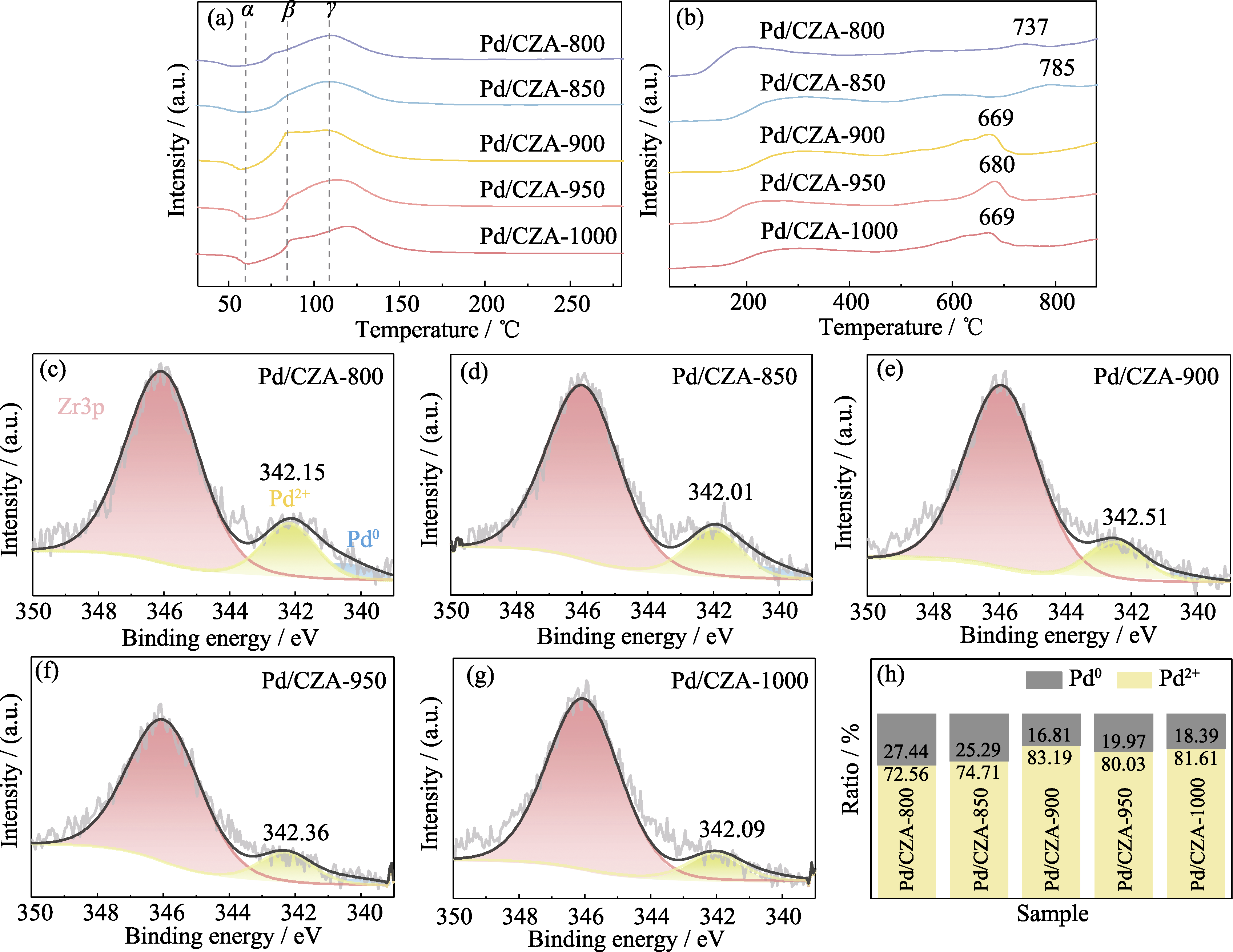
Fig. 2 (a) H2-TPR curves, (b) O2-TPD curves, (c-g) Pd3d XPS spectra and (h) Pd species ratio of the catalysts Colorful figures are available on website
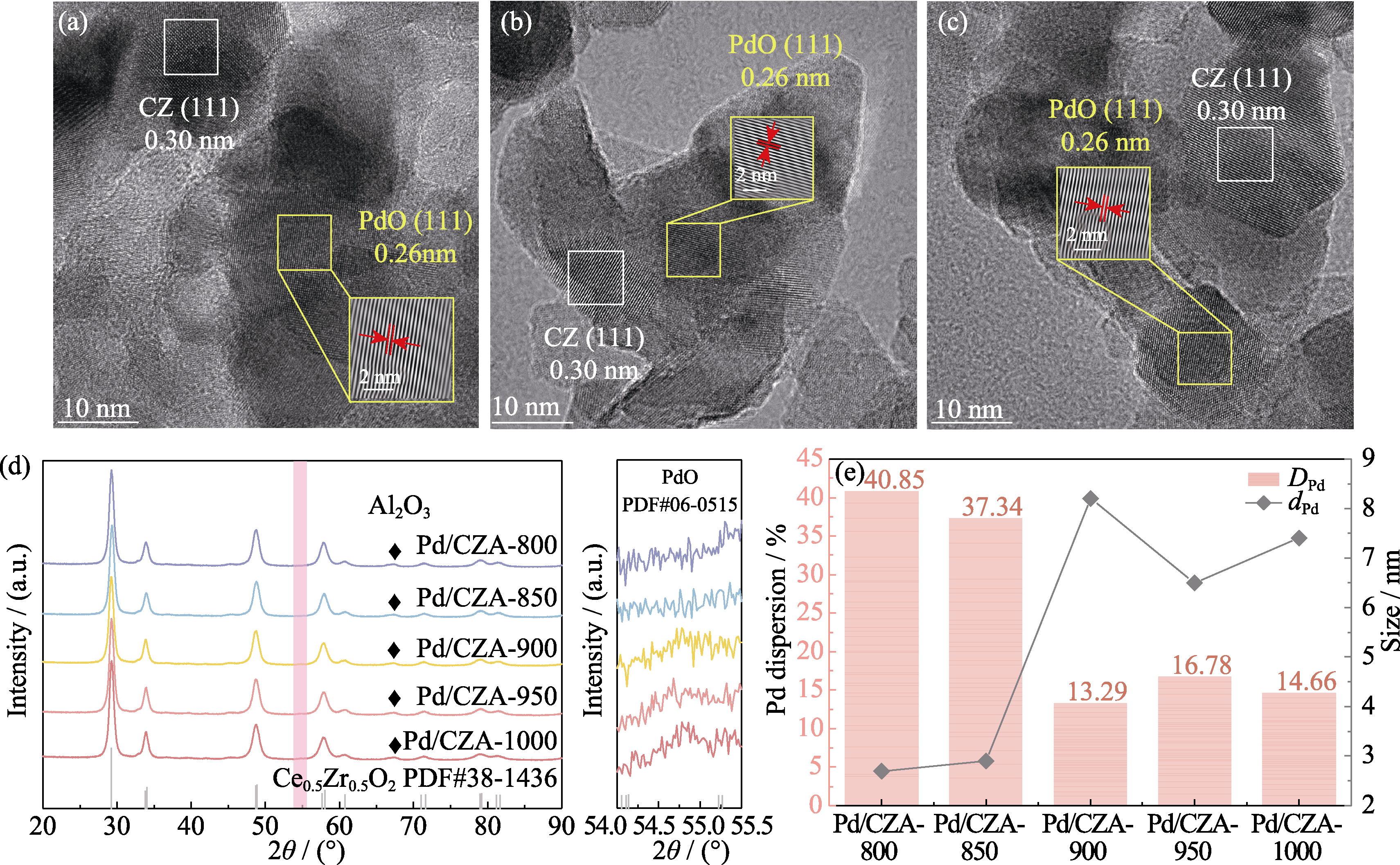
Fig. 3 (a-c) HRTEM images of (a) Pd/CZA-900, (b) Pd/CZA-950 and (c) Pd/CZA-1000; (d) XRD patterns of the catalysts and partial enlarged view of the pink area; (e) Pd dispersion and particle size of the catalysts
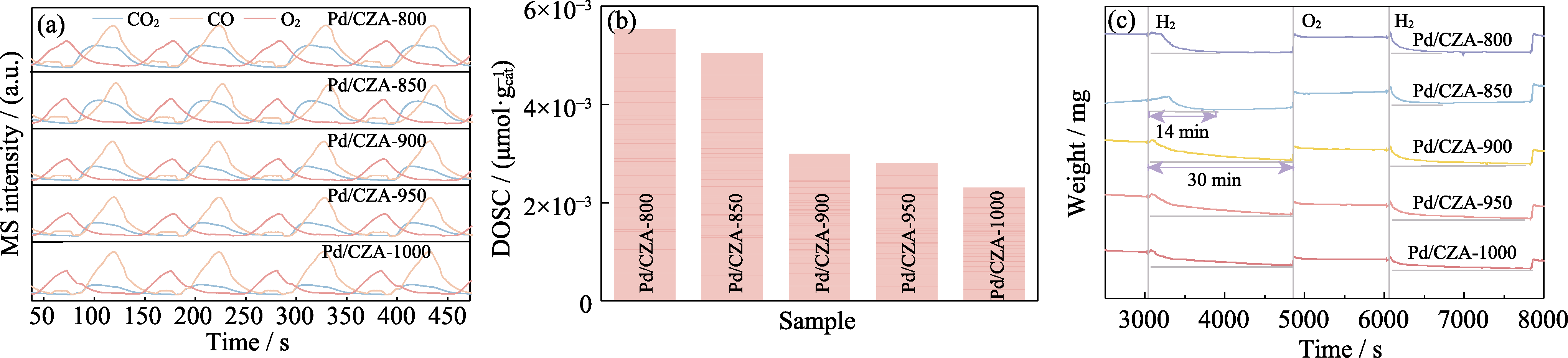
Fig. 4 (a) DOSC profiles of CO-O2 alternating pulse, (b) DOSC values and (c) H2-O2 atmosphere alternating TG curves of the catalysts Colorful figures are available on website
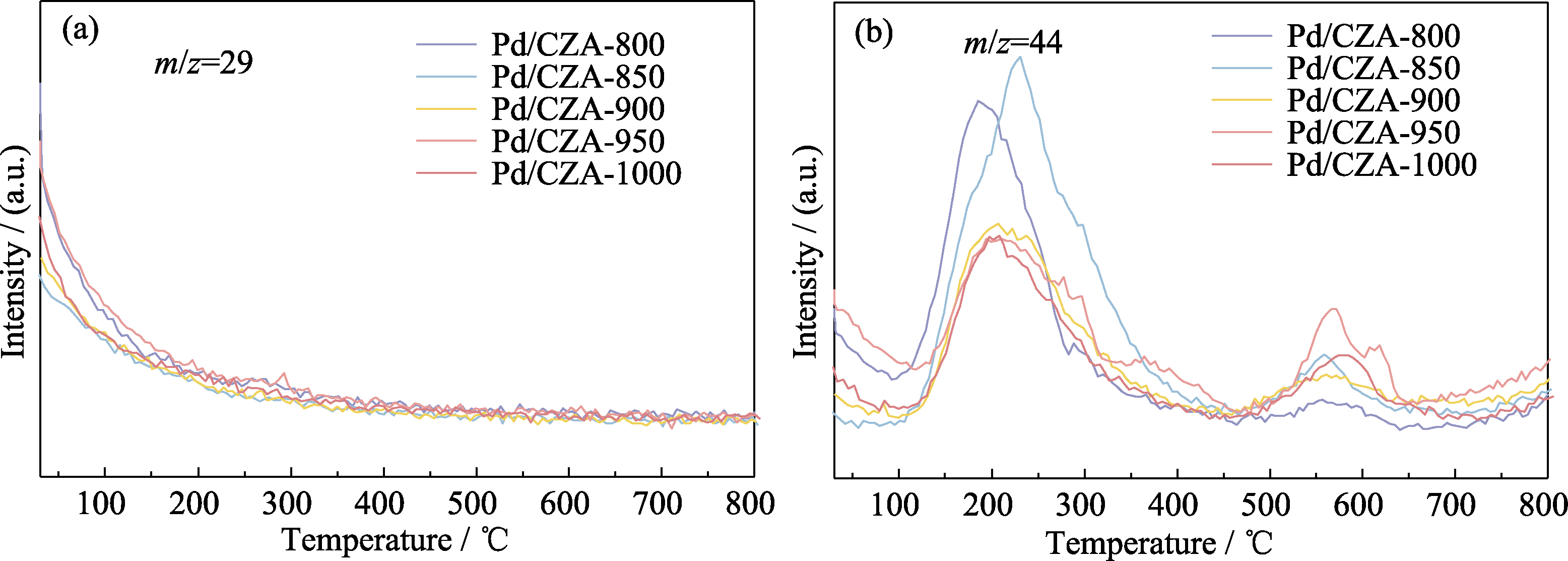
Fig. 5 (a) C3H8 and (b) CO2 desorption signals of C3H8-TPD over the catalysts Colorful figures are available on website
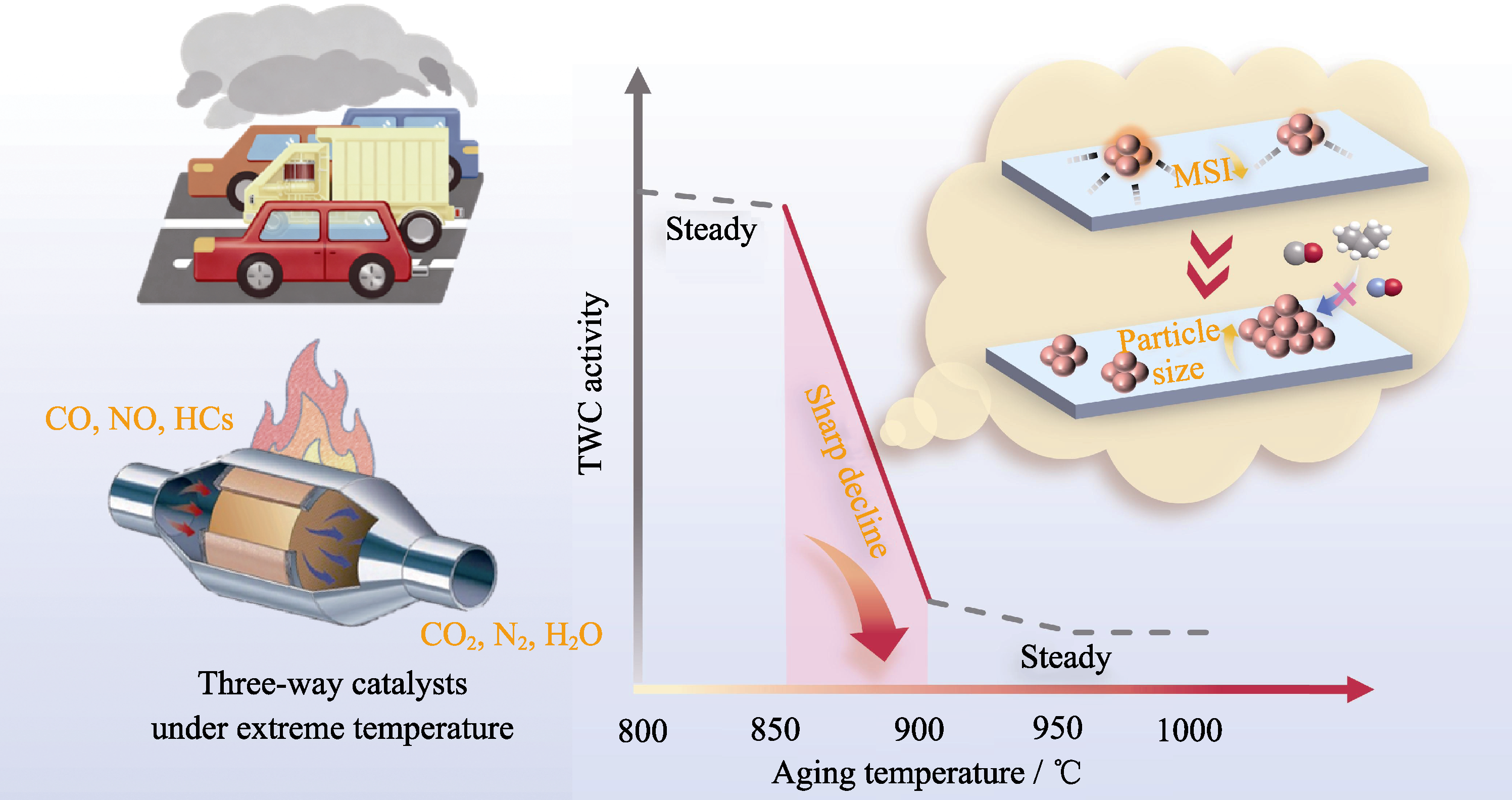
Fig. 6 Schematic diagram of structure-activity relationship
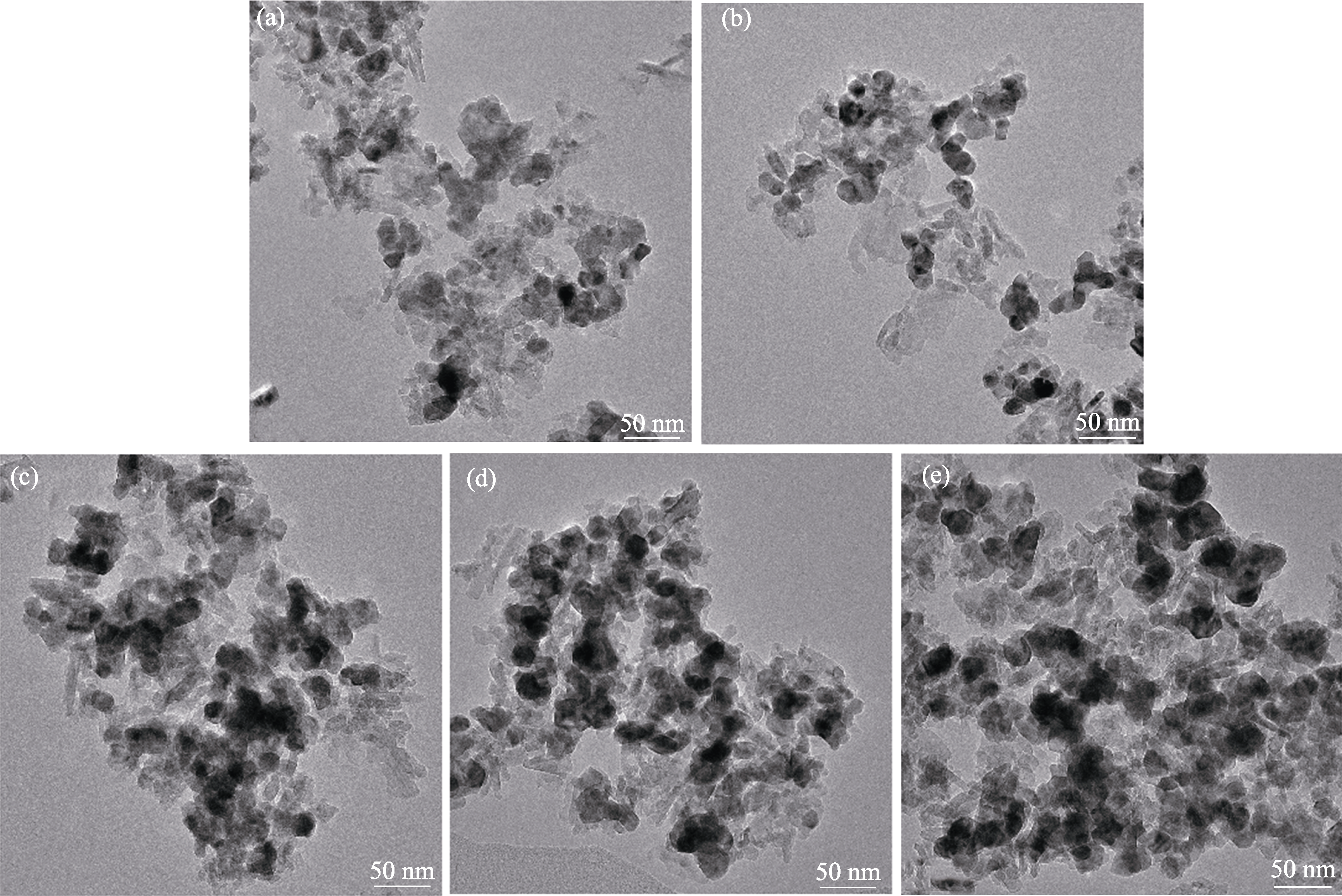
Fig. S1 TEM images of (a) Pd/CZA-800, (b) Pd/CZA-850, (c) Pd/CZA-900, (d) Pd/CZA-950 and (e) Pd/CZA-1000
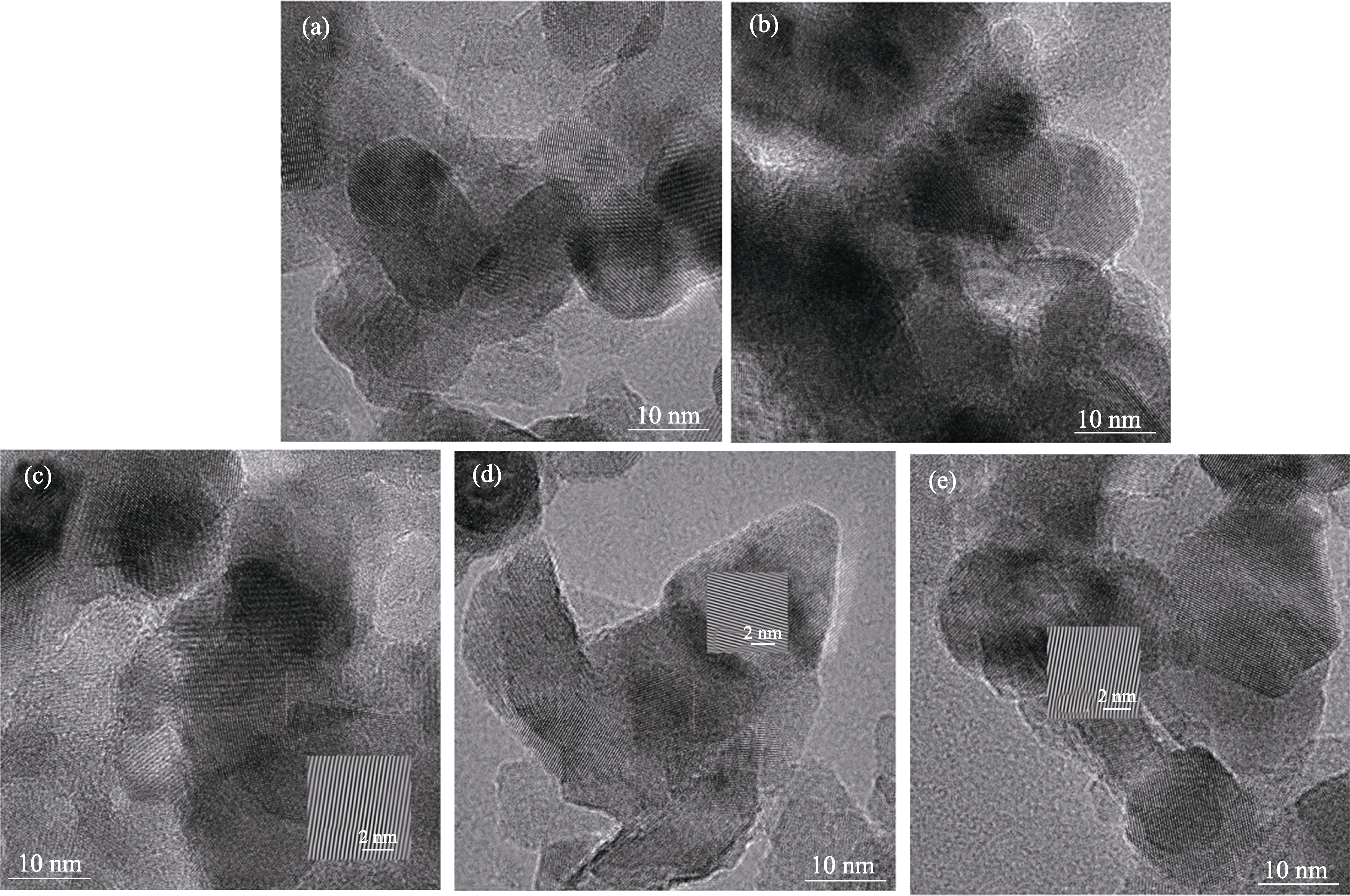
Fig. S2 HRTEM images of (a) Pd/CZA-800, (b) Pd/CZA-850, (c) Pd/CZA-900, (d) Pd/CZA-950 and (e) Pd/CZA-1000
| [1] |
FARRAUTO R J, DEEBA M, ALERASOOL S. Gasoline automobile catalysis and its historical journey to cleaner air. Nature Catalysis, 2019, 2: 603.
DOI |
| [2] | JOSHI A. Year in review: progress towards decarbonizing transport and near-zero emissions. SAE Technical Paper Series, DOI: 10.4271/2023-01-0396. |
| [3] | JOSHI A. Review of vehicle engine efficiency and emissions. SAE International Journal of Advances and Current Practices in Mobility, 2022, 4(5): 1704. |
| [4] | WANG J H, CHEN H, HU Z C, et al. A review on the Pd-based three-way catalyst. Catalysis Reviews, 2015, 57(1): 79. |
| [5] |
MARTÍN A J, MITCHELL S, MONDELLI C, et al. Unifying views on catalyst deactivation. Nature Catalysis, 2022, 5: 854.
DOI |
| [6] | MORIKAWA A, SUZUKI T, KANAZAWA T, et al. A new concept in high performance ceria-zirconia oxygen storage capacity material with Al2O3 as a diffusion barrier. Applied Catalysis B: Environmental, 2008, 78(3/4): 210. |
| [7] | MAMONTOV E, EGAMI T, BREZNY R, et al. Lattice defects and oxygen storage capacity of nanocrystalline ceria and ceria- zirconia. The Journal of Physical Chemistry B, 2000, 104(47): 11110. |
| [8] | KEITL G, RINK J, WEN F, et al. Impact of test conditions on the oxygen storage capacity of Pd loaded cerium zirconium oxide. Topics in Catalysis, 2017, 60(3): 272. |
| [9] |
DING Y Q, WU Q Q, LIN B, et al. Superior catalytic activity of a Pd catalyst in methane combustion by fine-tuning the phase of ceria-zirconia support. Applied Catalysis B: Environmental, 2020, 266: 118631.
DOI URL |
| [10] |
FAN J, CHEN L L, LI S S, et al. Insights into the promotional effect of alkaline earth metals in Pt-based three-way catalysts for NO reduction. Journal of Catalysis, 2023, 418: 90.
DOI URL |
| [11] | WOO H, LEE E J, PARK H, et al. Enhancing the thermal stability and activity of Pd-Rh/Al2O3 catalyst for three-way catalytic reaction by introducing Pt and varying the synthesis method. Journal of Environmental Chemical Engineering, 2023, 11(5): 110671. |
| [12] | CHALLA S R, DELARIVA A T, HANSEN T W, et al. Relating rates of catalyst sintering to the disappearance of individual nanoparticles during Ostwald ripening. Journal of the American Chemical Society, 2011, 133(51): 20672. |
| [13] | VEDYAGIN A A, VOLODIN A M, KENZHIN R M, et al. Characterization and study on the thermal aging behavior of palladium-alumina catalysts. Journal of Thermal Analysis and Calorimetry, 2017, 130(3): 1865. |
| [14] |
MUTA T, OHTA R, TSUSHIDA M, et al. Rh/Al2O3 and Pd/Al2O3 three-way catalysts show different thermal deactivation behaviors under real engine-aging conditions. Catalysis Today, 2025, 459: 115422.
DOI URL |
| [15] |
KANG S B, LIM J B, JO D, et al. Ostwald-ripening sintering kinetics of Pd-based three-way catalyst: importance of initial particle size of Pd. Chemical Engineering Journal, 2017, 316: 631.
DOI URL |
| [16] | YAN S, ZHAO M, WANG J L, et al. The preparation of Pd/CeO2- ZrO2-Al2O3 catalyst with superior structural stability: effect of zirconia incorporation method. Journal of Materials Science, 2020, 55(23): 9993. |
| [17] |
CHENG X M, ZHAO D P, ZHAO Y N, et al. Thermal deactivation mechanism of the commercial Pt/Pd/Rh/CeO2-ZrO2/Al2O3 catalysts aged under different conditions for the aftertreatment of CNG- fueled vehicle exhaust. Fuel, 2023, 344: 128009.
DOI URL |
| [18] | FUJIWARA A, TSURUNARI Y, YOSHIDA H, et al. Thermal deactivation of Pd/CeO2-ZrO2 three-way catalysts during real engine aging: analysis by a surface plus peripheral site model. ACS Omega, 2020, 5(44): 28897. |
| [19] | YOSHIDA H, KAKEI R, FUJIWARA A, et al. Redox dynamics of Pd supported on CeO2-ZrO2 during oxygen storage/release cycles analyzed by time-resolved in situ reflectance spectroscopy. The Journal of Physical Chemistry C, 2018, 122(49): 28173. |
| [20] |
VAN DEELEN T W, HERNÁNDEZ MEJÍA C, DE JONG K P. Control of metal-support interactions in heterogeneous catalysts to enhance activity and selectivity. Nature Catalysis, 2019, 2: 955.
DOI |
| [21] |
SU S D, LI X M, LIU Z Y, et al. Microchemical environmental regulation of POMs@MIL-101(Cr) promote photocatalytic nitrogen to ammonia. Journal of Colloid and Interface Science, 2023, 646: 547.
DOI PMID |
| [22] | CAO M, MAO Y J, WANG Q Q, et al. Sintering mechanism and sintering-resistant strategies for metal-based catalyst. Chemical Industry and Engineering Progress, 2023, 42(2): 744. |
| [23] | HANEDA M, NAKAMURA Y, YAMADA T, et al. Comprehensive study of the light-off performance and surface properties of engine-aged Pd-based three-way catalysts. Catalysis Science & Technology, 2021, 11(3): 912. |
| [24] | DATYE A K, VOTSMEIER M. Opportunities and challenges in the development of advanced materials for emission control catalysts. Nature Materials, 2021, 20(8): 1049. |
| [25] |
CHEN K, WAN J, LIN J S, et al. Comparative study of three-way catalytic performance over Pd/CeO2-ZrO2-Al2O3 and Pd/La-Al2O3 catalysts: new insights into microstructure and thermal stability. Molecular Catalysis, 2022, 526: 112361.
DOI URL |
| [26] |
DENG J, CHEN Y S, LI M C, et al. Formation of partial κ-Ce2Zr2O8 phase and its promotion on the supported Pd-only three-way catalysts. Materials Research Bulletin, 2021, 141: 111341.
DOI URL |
| [27] |
WU B C, ZHANG Y L, YANG W H, et al. Insight into deactivation mechanism of Pd/Al2O3 catalyst during accelerated hydrothermal aging process. Fuel, 2025, 400: 135707.
DOI URL |
| [28] |
YANG W H, WU Y, HUANG C S, et al. Magnesium-endowed exceptional hydrothermal stability of Pd/CeO2-ZrO2-Al2O3 catalyst for low-concentration methane combustion via two-step structure transformation. Fuel, 2024, 376: 132743.
DOI URL |
| [29] |
WANG W, ZHOU Z W, WU B C, et al. Boosting the three-way catalytic reactions on Pd/CeO2-ZrO2-Al2O3 catalyst: the superior lanthanum-doping strategy. Separation and Purification Technology, 2025, 363: 132294.
DOI URL |
| [30] |
JIANG X, FAN J, XIANG S Y, et al. Superior catalytic activity and high thermal durability of MgAl2O4 modified Pt/Ce0.5Zr0.5O2 TWC. Applied Surface Science, 2022, 578: 151915.
DOI URL |
| [31] | ZHANG S, LI J, XIA Z M, et al. Towards highly active Pd/CeO2 for alkene hydrogenation by tuning Pd dispersion and surface properties of the catalysts. Nanoscale, 2017, 9(9): 3140. |
| [32] | SHEN M Q, WANG X Q, AN Y, et al. Dynamic oxygen storage capacity measurements on ceria-based material. Journal of Rare Earths, 2007, 25(1): 48. |
| [33] |
SONG Z H, LIU X Z, QU L, et al. Construction of Pt2+-Ov-Ce3+ enrooted structure by reduction-gel method to inhibit high temperature deactivation of three-way catalysts. Chemical Engineering Journal, 2025, 522: 167150.
DOI URL |
| [34] | XIE Z A, YU T T, SONG W Y, et al. Highly active nanosized anatase TiO2-x oxide catalysts in situ formed through reduction and Ostwald ripening processes for propane dehydrogenation. ACS Catalysis, 2020, 10(24): 14678. |
| [1] | ZHAO Ning, WEI Fuyuan, WANG Ping, SHI Tingting, WANG Bo, YANG Jian, LIU Chunjun. Investigation of Threading Screw Dislocation Evolution in 4H-SiC Single Crystals [J]. Journal of Inorganic Materials, 2026, 41(8): 1133-1140. |
| [2] | XUE Xinyan, ZHANG Xiaowei, LU Heng, LI Shijie, ZHANG Weike, CHAN Siewhwa. Co-Mg Synergistic Carbon Nano Onions Catalyst: Preparation and Low-temperature Catalytic Hydrogen Production from Ammonia Decomposition [J]. Journal of Inorganic Materials, 2026, 41(4): 500-508. |
| [3] | HAO Yongxin, QIN Juan, SUN Jun, YANG Jinfeng, LI Qinglian, HUANG Guijun, XU Jingjun. Impact of Crucible Bottom Shape on the Growth of Congruent Lithium Niobate Crystals by Czochralski Method [J]. Journal of Inorganic Materials, 2024, 39(10): 1167-1174. |
| [4] | FAN Jun, JIANG Xue, JIAO Yi, CHEN Yusheng, WANG Jianli, CHEN Yaoqiang. Effect of Different Alkali-assisted Deposition Precipitation Methods on the Durability of Three-way Catalysts [J]. Journal of Inorganic Materials, 2021, 36(6): 659-664. |
| [5] | MENG Meng, QI Qiang, DING Dongzhou, HE Chongjun, ZHAO Shuwen, WAN Bo, CHEN Lu, SHI Junjie, REN Guohao. Twisted Growth, Component Segregation and Characteristics of Gd3(Al,Ga)5O12:Ce Scintillation Crystal [J]. Journal of Inorganic Materials, 2021, 36(2): 188-196. |
| [6] | LI Hong-Mei, LAN Li, CHEN Shan-Hu, LIU Da-Yu, WANG Wei, CHEN Yao-Qiang. Preparation of CexZr1-xO2 with Combined Composition for Improved Pd-only Three-way Catalyst [J]. Journal of Inorganic Materials, 2018, 33(7): 798-804. |
| [7] | HU Ke-Yan, XU Jun, TANG Hui-Li, LI Hong-Jun, ZOU Yu-Qi, YANG Qiu-Hong. Study on Methods to Strenthen and Toughen Sapphire Crystal by Carbon Doped Grown by Temperature Gradient Technique (TGT) [J]. Journal of Inorganic Materials, 2013, 28(3): 307-311. |
| [8] | YU Yao,LIN Tao,ZHANG Li-Juan,GUO Jia-Xiu,GONG Mao-Chu,CHEN Yao-Qiang. Preparation of Titanium-Zirconium Mixed Oxide and its Catalytic Performance of Pt Three-way Catalysts [J]. Journal of Inorganic Materials, 2008, 23(1): 71-76. |
| [9] |
ZOU Ji-Zhao,ZENG Xie-Rong,XIONG Xin-Bo,LI Xiao-Hua,TANG Han-Ling,LI Long.
Microwave Heating Effect and Mechanism for Carbon Fiber Preforms [J]. Journal of Inorganic Materials, 2007, 22(6): 1165-1168. |
| [10] | LI Jin,CHEN Zhen-Hua. C/C Composites Fabricated by the Chemical Liquid Phase Vaporization Densification with the Catalyst [J]. Journal of Inorganic Materials, 2005, 20(6): 1450-1456. |
| [11] | XIAO Hai-Bin,HU Guan-Qin,XU Li. Influence of Temperature Gradient on Radiation Damage of BGO Crystals [J]. Journal of Inorganic Materials, 2003, 18(2): 470-474. |
| Viewed | ||||||
|
Full text |
|
|||||
|
Abstract |
|
|||||
