
Journal of Inorganic Materials ›› 2026, Vol. 41 ›› Issue (8): 1078-1086.DOI: 10.15541/jim20250387
• RESEARCH ARTICLE • Previous Articles Next Articles
SHI Pu1( ), LU Qianqian1, LIU Xin1, ZHANG Yaqin1, LI Fuzhi2()
Received:2025-10-04
Revised:2025-12-19
Published:2026-08-20
Online:2026-01-21
Contact:
LI Fuzhi, associate professor. E-mail: lifuzhi@hut.edu.cnAbout author:SHI Pu (1976-), male, associate professor. E-mail: shipu@hut.edu.cn
Supported by:CLC Number:
SHI Pu, LU Qianqian, LIU Xin, ZHANG Yaqin, LI Fuzhi. Porous Flowerball-like NiCo2O4/Co3S4-M Heterostructure: Preparation and Its Performance of Asymmetric Supercapacitor[J]. Journal of Inorganic Materials, 2026, 41(8): 1078-1086.
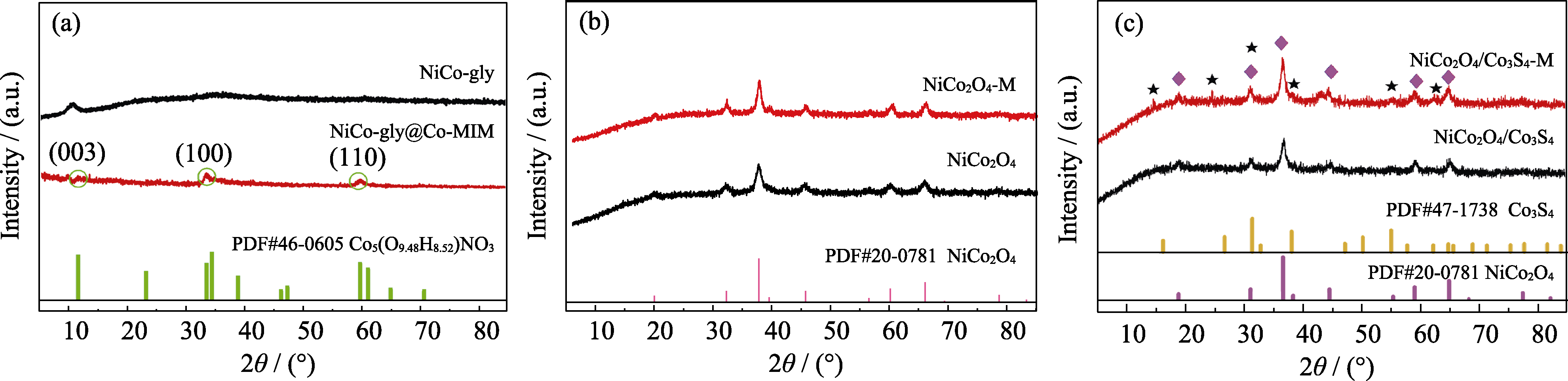
Fig. 1 XRD patterns of (a) NiCo-gly and NiCo-gly@Co-MIM, (b) NiCo2O4-M and NiCo2O4, (c) NiCo2O4/Co3S4-M and NiCo2O4/Co3S4 In Fig. (c), star indicating Co3S4 (PDF#47-1738), and diamond indicating NiCo2O4 (PDF#20-0781)
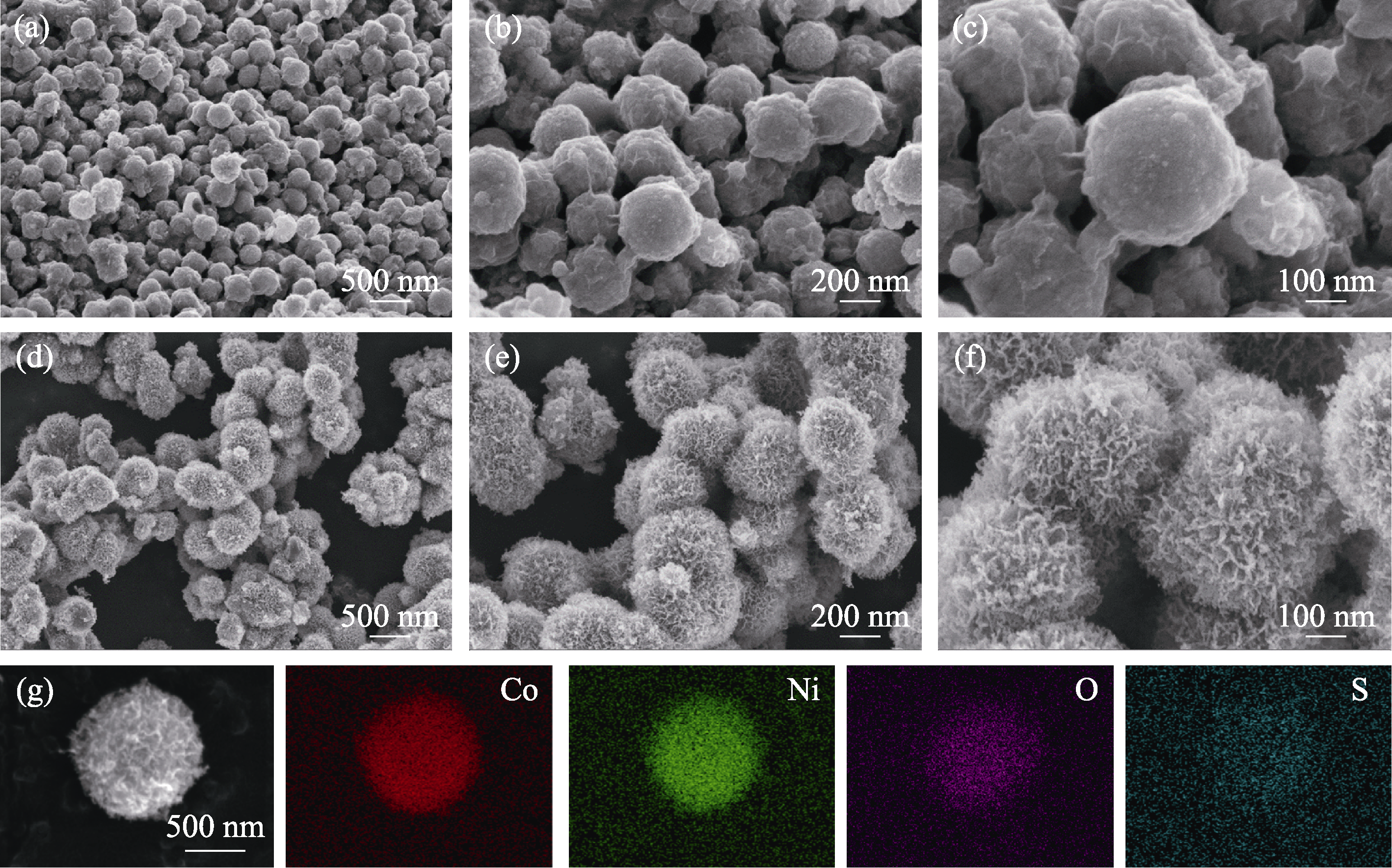
Fig. 2 SEM images of (a-c) NiCo2O4/Co3S4 and (d-f) NiCo2O4/Co3S4-M; (g) EDS elemental mappings of NiCo2O4/Co3S4-M
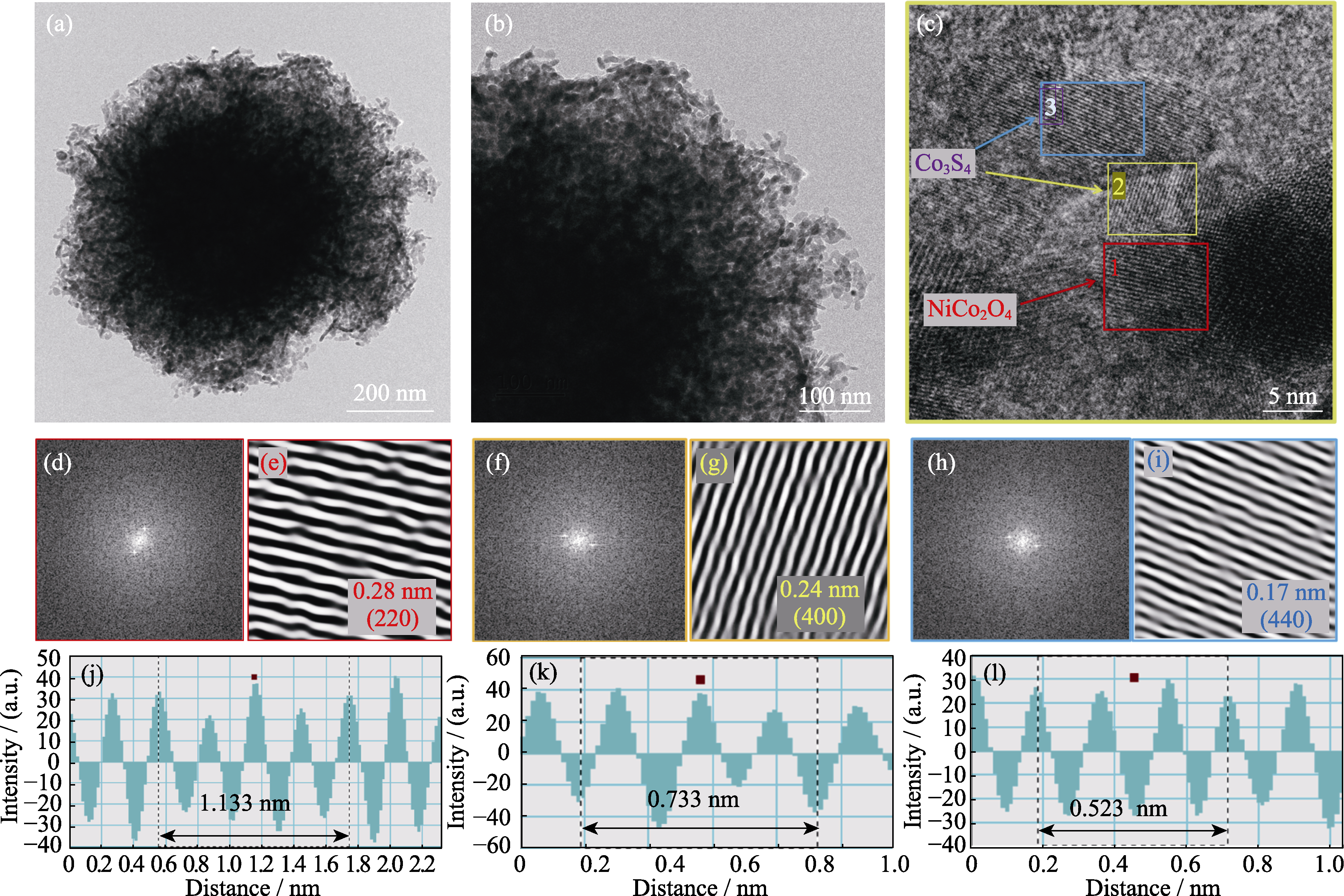
Fig. 3 (a, b) TEM images, (c) HRTEM image, (d, f, h) FFT images, (e, g, i) IFFT images and (j-l) lattice spacing of NiCo2O4/Co3S4-M
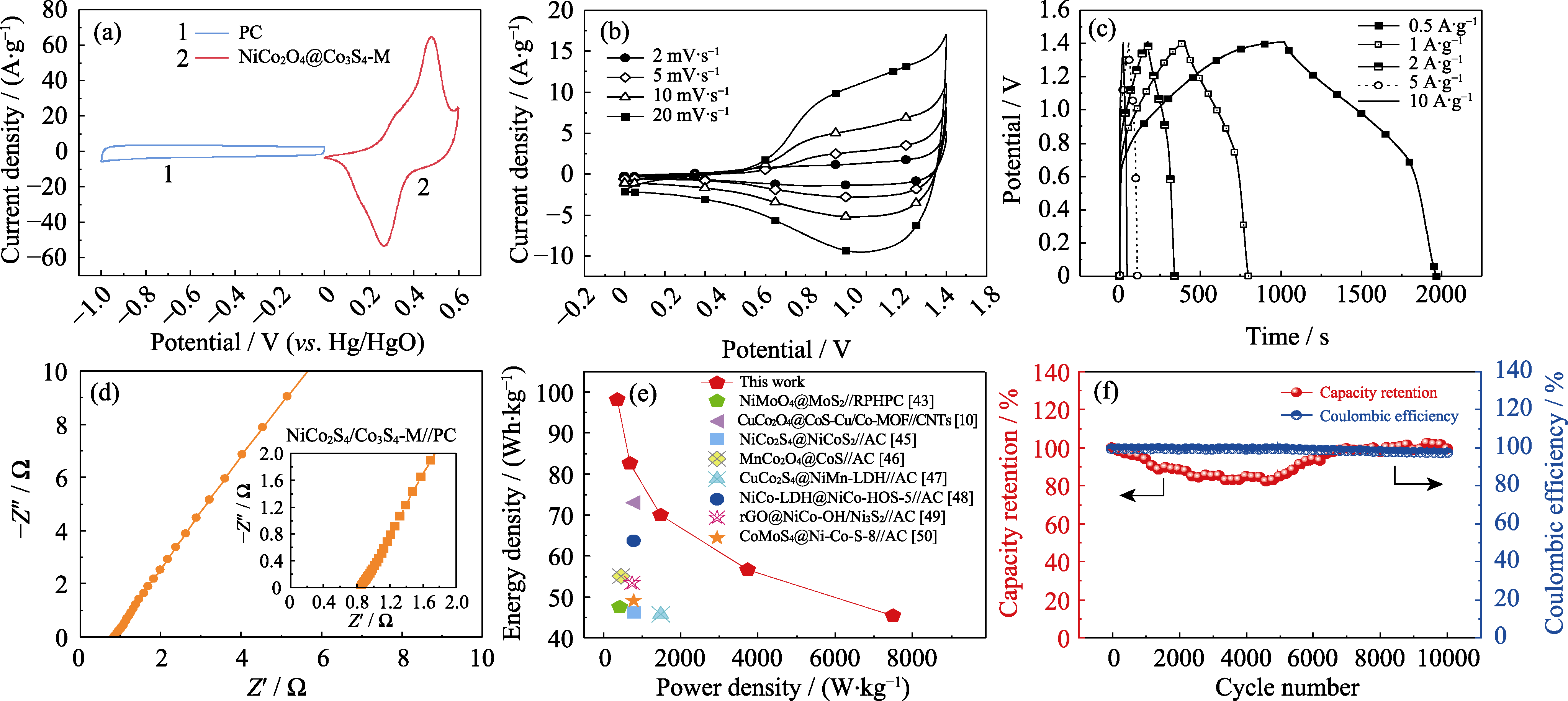
Fig. 4 Electrochemical performance of NiCo2O4/Co3S4-M//PC supercapacitor (a) CV curves of anode PC and cathode NiCo2O4/Co3S4-M at 10 mV·s−1; (b) CV curves at different scan rates; (c) GCD curves at different current densities; (d) EIS spectrum; (e) Ragon plots[10,43,45 -50]; (f) Cyclic stability and Coulombic efficiencies
| Device | Energy density/(Wh·kg−1) | Power density/(W·kg−1) | Capacity retention | Ref. |
|---|---|---|---|---|
| NiMoO4@MoS2//RPHPC | 47.5 | 440 | 80.2%, 10000 cycles | [ |
| CuCo2O4@CoS-Cu/Co-MOF//CNTs | 73.19 | 849.94 | 95.77%, 10000 cycles | [ |
| NiCo2S4@NiCoS2//AC | 46.3 | 799.8 | 80%, 10000 cycles | [ |
| MnCo2O4@CoS//AC | 55.1 | 477.3 | 91%, 6000 cycles | [ |
| CuCo2S4@NiMn-LDH//AC | 45.8 | 1499 | 87.6%, 10000 cycles | [ |
| NiCo-LDH@NiCo-HOS-5//AC | 63.6 | 800 | 67%, 10000 cycles | [ |
| rGO@NiCo-OH/Ni3S2//AC | 53.5 | 760 | 95.5%, 20000 cycles | [ |
| CoMoS4@Ni-Co-S-8//AC | 49.1 | 800 | 90.3%, 10000 cycle | [ |
| NiCo2O4/Co3S4-M//PC | 98.40 | 375 | 99.7%, 10000 cycles | This work |
Table 1 Performance of NiCo2O4/Co3S4-M//PC compared with reported systems
| Device | Energy density/(Wh·kg−1) | Power density/(W·kg−1) | Capacity retention | Ref. |
|---|---|---|---|---|
| NiMoO4@MoS2//RPHPC | 47.5 | 440 | 80.2%, 10000 cycles | [ |
| CuCo2O4@CoS-Cu/Co-MOF//CNTs | 73.19 | 849.94 | 95.77%, 10000 cycles | [ |
| NiCo2S4@NiCoS2//AC | 46.3 | 799.8 | 80%, 10000 cycles | [ |
| MnCo2O4@CoS//AC | 55.1 | 477.3 | 91%, 6000 cycles | [ |
| CuCo2S4@NiMn-LDH//AC | 45.8 | 1499 | 87.6%, 10000 cycles | [ |
| NiCo-LDH@NiCo-HOS-5//AC | 63.6 | 800 | 67%, 10000 cycles | [ |
| rGO@NiCo-OH/Ni3S2//AC | 53.5 | 760 | 95.5%, 20000 cycles | [ |
| CoMoS4@Ni-Co-S-8//AC | 49.1 | 800 | 90.3%, 10000 cycle | [ |
| NiCo2O4/Co3S4-M//PC | 98.40 | 375 | 99.7%, 10000 cycles | This work |
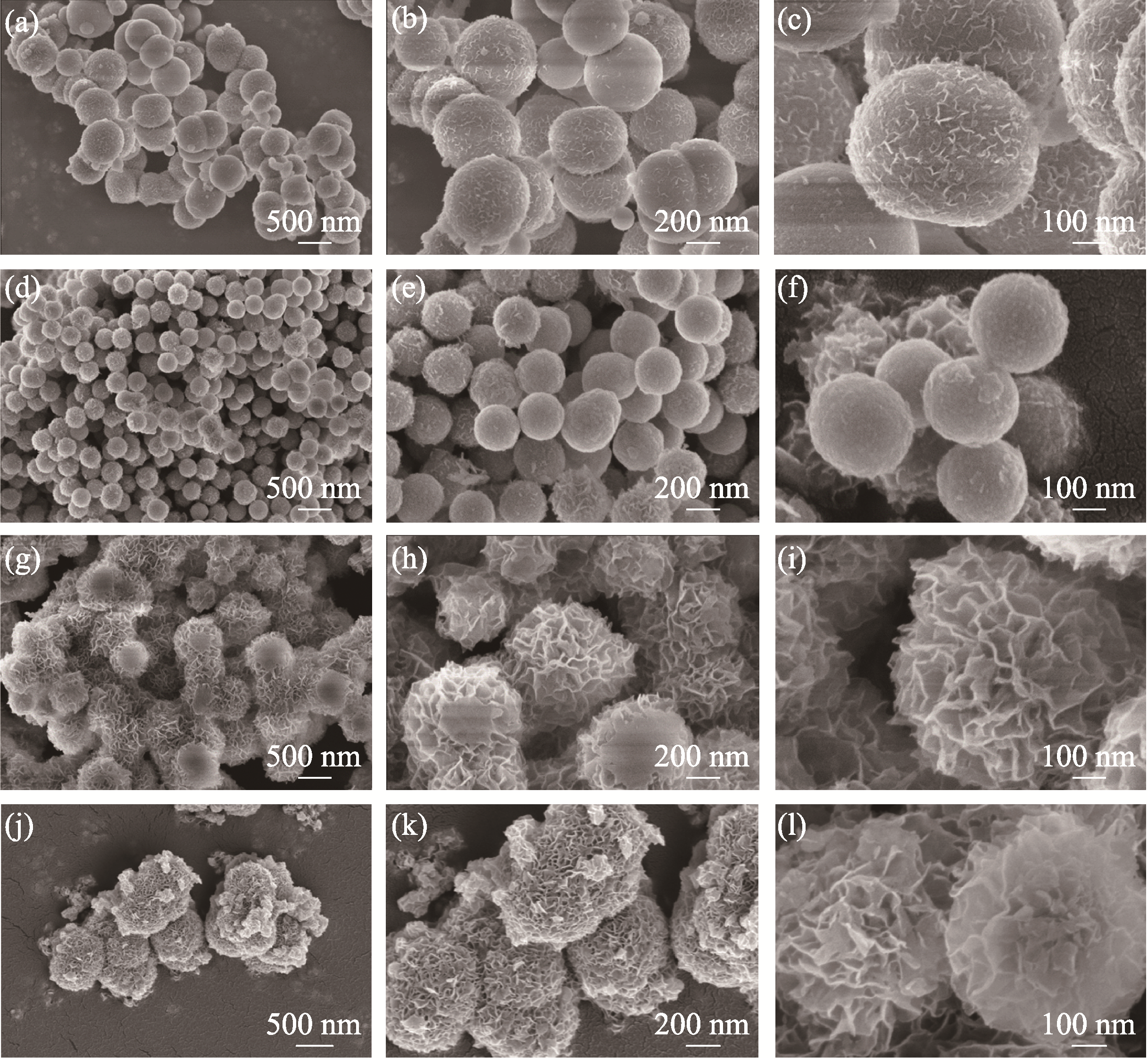
Fig. S1 SEM images of (a-c) NiCo-gly, (d-f) NiCo2O4, (g-i) CoNi-gly@Co-MIM and (j-l) NiCo2O4-M
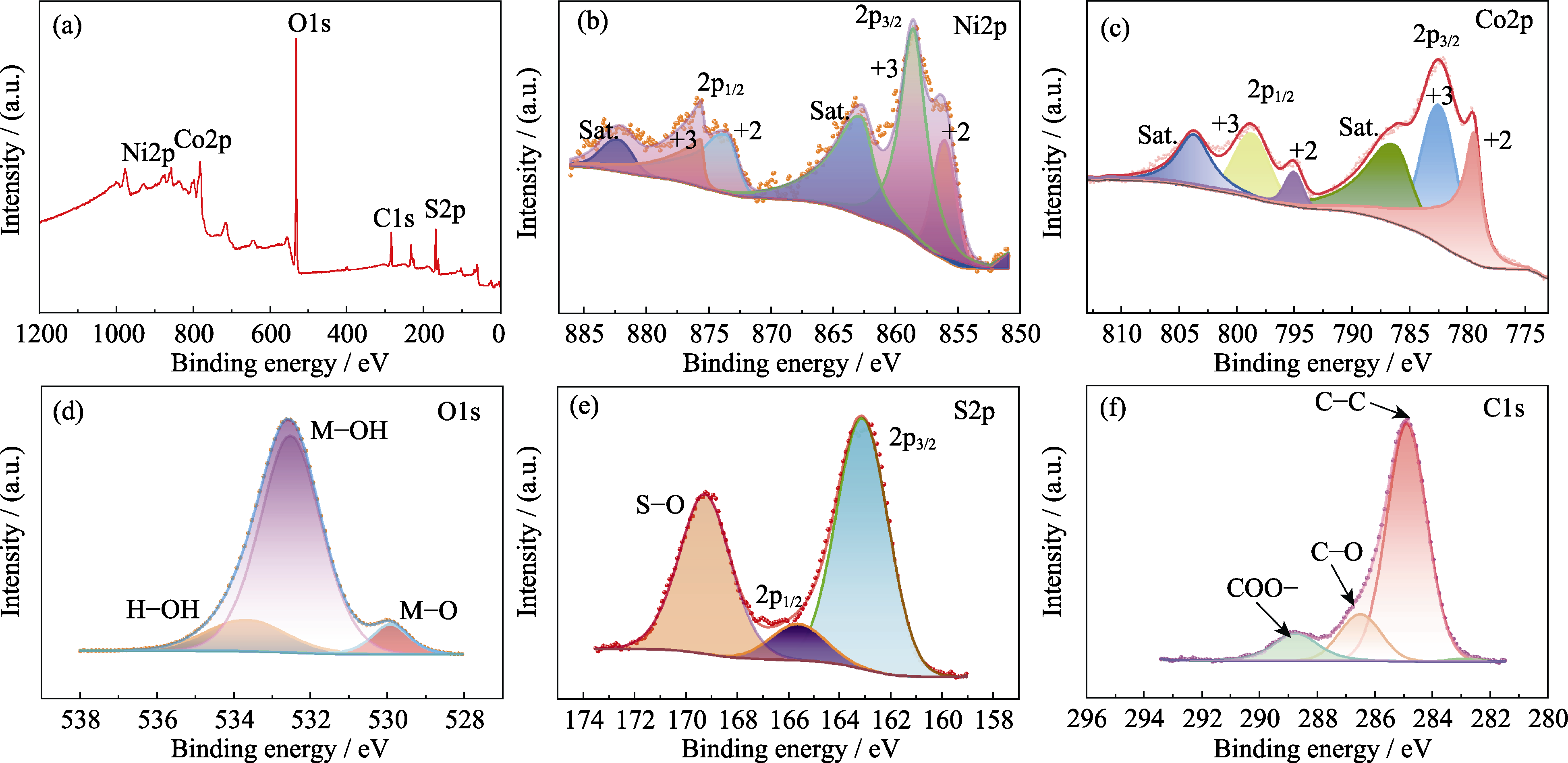
Fig. S2 (a) Survey, (b) Ni2p, (c) Co2p, (d) O1s and (e) S2p XPS spectra of NiCo2O4/Co3S4-M
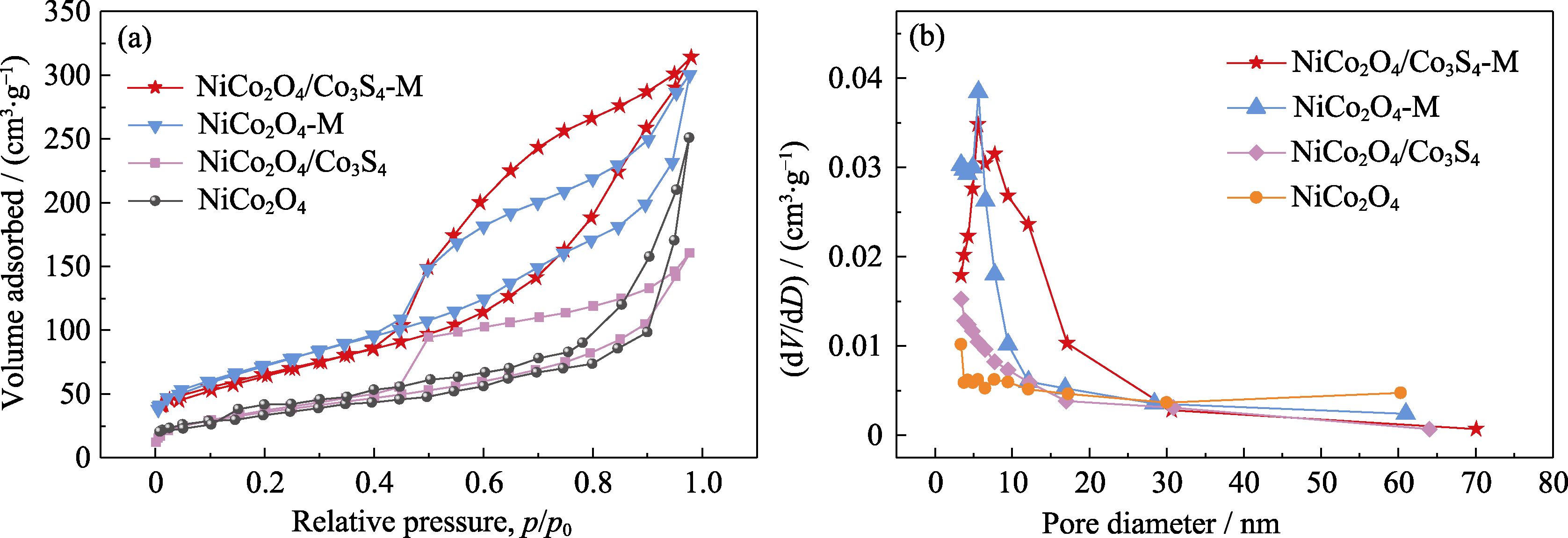
Fig. S3 (a) Nitrogen adsorption-desorption isotherms and (b) pore size distributions of NiCo2O4/Co3S4-M, NiCo2O4/Co3S4, NiCo2O4-M and NiCo2O4 samples
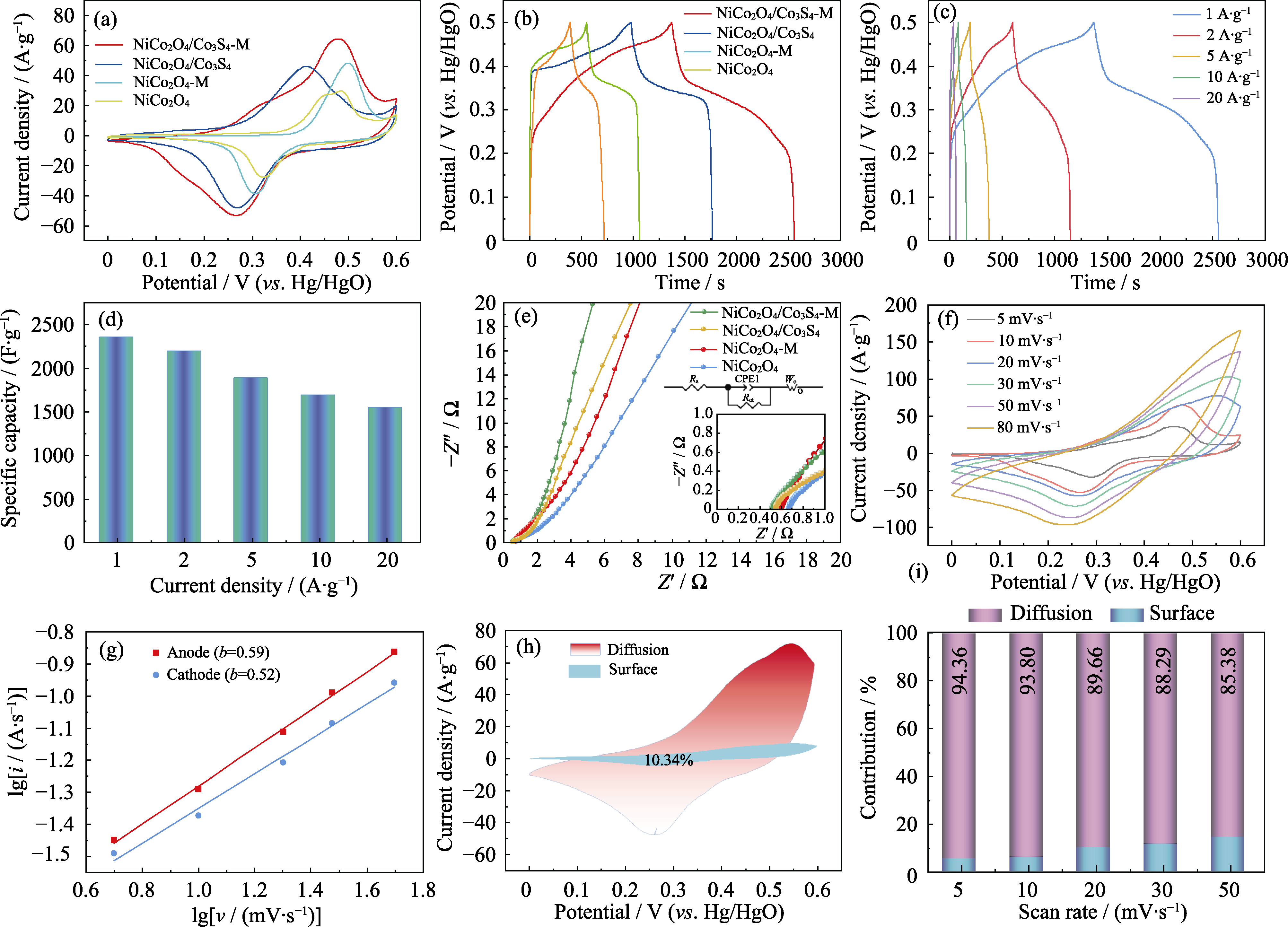
Fig. S4 Electrochemical performance of three-electrode systems (a) CV curves at 10 mV·s−1 and (b) GCD curves at 1 A·g−1 of NiCo2O4/Co3S4-M, NiCo2O4/Co3S4, NiCo2O4-M and NiCo2O4; (c) GCD curves of the NiCo2O4/Co3S4-M electrode at different current densities; (d) Rate capability of NiCo2O4/Co3S4-M; (e) Nyquist plots of NiCo2O4/Co3S4-M, NiCo2O4/Co3S4, NiCo2O4-M and NiCo2O4 with inset showing magnified view of the high-frequency region; (f) CV curves of NiCo2O4/Co3S4-M at 5-80 mV·s−1; (g) Linear relationship between anodic/cathodic peak currents and scan rates for NiCo2O4/Co3S4-M; (h) Proportion of capacitive-controlled and diffusion-controlled contributions in NiCo2O4/Co3S4-M at 20 mV·s−1; (i) Contribution of diffusion-controlled and surface capacitive-controlled processes in NiCo2O4/Co3S4-M within 5-50 mV·s−1
| Parameter | NiCo2O4/Co3S4-M | NiCo2O4/Co3S4 | NiCo2O4-M | NiCo2O4 |
|---|---|---|---|---|
| Rs/Ω | 0.51 | 0.55 | 0.60 | 0.68 |
| Rct/Ω | 0.34 | 0.39 | 0.46 | 0.54 |
Table S1 Solution resistance (Rs) and charge transfer resistance (Rct) of electrodes
| Parameter | NiCo2O4/Co3S4-M | NiCo2O4/Co3S4 | NiCo2O4-M | NiCo2O4 |
|---|---|---|---|---|
| Rs/Ω | 0.51 | 0.55 | 0.60 | 0.68 |
| Rct/Ω | 0.34 | 0.39 | 0.46 | 0.54 |
| [1] | RADHAKRISHNAN S, PATRA A, MANASA·G, et al. Borocarbonitride-based emerging materials for supercapacitor applications: recent advances, challenges, and future perspectives. Adv. Sci., 2024, 11(4): 2305325. |
| [2] | LUC W, JIAO F. Synthesis of nanoporous metals, oxides, carbides, and sulfides: beyond nanocasting. Acc. Chem. Res., 2016, 49(7): 1351. |
| [3] | LU X F, WU D J, LI R Z, et al. Hierarchical NiCo2O4nanosheets@hollow microrod arrays for high-performance asymmetric supercapacitors. J. Mater. Chem. A, 2014, 2(13): 4706. |
| [4] |
SUN L, HUANG X, LI Y, et al. Controlled synthesis and lithium storage performance of NiCo2O4/PPy composite materials. J. Phys. Chem. Solids, 2021, 148: 109761.
DOI URL |
| [5] |
NABI G, AHMED H, AHMAD R S, et al. Binder free 3D highly ordered Ta-NiCo2O4@CC nano-needle arrays as an efficient flexible supercapacitor electrode. J. Energy Storage, 2025, 108: 115089.
DOI URL |
| [6] | LI H, CHEN L, ZHOU Q, et al. NiCo2O4 used as a loading material to improve the capacitive performance of nitrogen-doped carbon aerogel. J. Mater. Sci., 2022, 57(26): 12497. |
| [7] |
WANG W D, LI X F, ZHANG P P, et al. Preparation of NiCo2O4@CoS heterojunction composite as electrodes for high-performance supercapacitors. J. Electroanal. Chem., 2021, 891: 115257.
DOI URL |
| [8] |
XIE L, LI M, ZHU P, et al. Novel combination of nickel-cobalt sulfide and oxide derived from Ni2CoS4@ZIF-67 for high performance supercapacitor. J. Alloys Compd., 2022, 898: 162861.
DOI URL |
| [9] | JIANG D, WEI C Y, ZHU Z Y, et al. Synthesis of 3D flower-like hierarchical NiCo-LDH microspheres with boosted electrochemical performance for hybrid supercapacitors. Inorg. Chem. Front., 2021, 8(19): 4324. |
| [10] |
HU X, LIU S, WANG Y, et al. Hierarchical CuCo2O4@CoS-Cu/ Co-MOF core-shell nanoflower derived from copper/cobalt bimetallic metal-organic frameworks for supercapacitors. J. Colloid Interface Sci., 2021, 600: 72.
DOI URL |
| [11] | KUMAR R, SAHOO S, JOANNI E, et al. Vacancy designed 2D materials for electrodes in energy storage devices. Chem. Commun., 2023, 59(41): 6109. |
| [12] |
WANG Y, YANG H, LV H, et al. High performance flexible asymmetric supercapacitor constructed by cobalt aluminum layered double hydroxide @nickel cobalt layered double hydroxide heterostructure grown in-situ on carbon cloth. J. Colloid Interface Sci., 2022, 610: 35.
DOI URL |
| [13] |
ZHENG R, LIN H, DING J, et al. A self-supporting multi- component collaborative structure for enhancing interface electron transfer in hybrid supercapacitor. J. Energy Storage, 2024, 75: 109565.
DOI URL |
| [14] |
NGUYEN T B, YOON B, NGUYEN T D, et al. A facile salt- templating synthesis route of bamboo-derived hierarchical porous carbon for supercapacitor applications. Carbon, 2023, 206: 383.
DOI URL |
| [15] | ZHANG X, LU W, LI C, et al. Rational design of boron-doped NiCo-glycerate spheres with covered nanosheets for high performance supercapacitors. Mater. Today Chem., 2024, 35: 101826. |
| [16] |
CHEN J, WANG Q, PAN S, et al. Stepwise construction of hollow double shell cobalt sulfide spheres for enhanced hybrid supercapacitors. J. Energy Storage, 2024, 104: 114417.
DOI URL |
| [17] | ZHANG H, HAN J, XU J, et al. Self-assembled NiCo2O4 microspheres for hybrid supercapacitor applications. J. Mater. Sci., 2022, 57(9): 5566. |
| [18] |
ZARDKHOSHOUI A M, AMERI B, DAVARANI S S H. α-MnS@Co3S4 hollow nanospheres assembled from nanosheets for hybrid supercapacitors. Chem. Eng. J., 2021, 422: 129953.
DOI URL |
| [19] |
JIA H, WANG M, FENG M, et al. Synergistic enhancement of supercapacitor performance: modish designation of BPQD modified NiCo-LDH/NiCo2S4 hybrid nanotube arrays with improved conductivity and OH- adsorption. Chem. Eng. J., 2024, 484: 149591.
DOI URL |
| [20] | DILWALE S, GHOSH M, VIJAYAKUMAR V, et al. Electrodeposited layered sodium vanadyl phosphate (NaxVOPO4·nH2O) as cathode material for aqueous rechargeable zinc metal batteries. Energy & Fuels, 2022, 36(12): 6520. |
| [21] |
ZHANG Z, HUANG Y, YAN J, et al. A facile synthesis of 3D flower-like NiCo2O4@MnO2 composites as an anode material for Li-ion batteries. Appl. Surf. Sci., 2019, 473: 266.
DOI URL |
| [22] |
WANG W D, ZHANG P P, GAO S Q, et al. Core-shell nanowires of NiCo2O4@α-Co(OH)2 on Ni foam with enhanced performances for supercapacitors. J. Colloid Interface Sci., 2020, 579: 71.
DOI URL |
| [23] |
PANG T, LUO M, LIU X, et al. Microflower-like CuS/Co3S4composite as high-capacity and excellent-stability material for hybrid supercapacitors. J. Alloys Compd., 2024, 1008: 176563.
DOI URL |
| [24] | LIU J, WANG J, XU C, et al. Advanced energy storage devices: basic principles, analytical methods, and rational materials design. Adv. Sci., 2018, 5(1): 1700322. |
| [25] | LIANG X, TANG L J, ZHANG Y C, et al. Robust graphene-based aerogel for integrated 3D asymmetric supercapacitors with high energy density. Chem.-Asian J., 2024, 19(10): e202400243. |
| [26] |
WEI L, GU S, DUAN Y, et al. The construction of Newton's cradle type ions jumping path between layered double hydroxide interlayer for high-performance alkaline zinc batteries. J. Power Sources, 2025, 626: 235781.
DOI URL |
| [27] | LIU Z, TENG F, YUAN C, et al. Highly uniform MnCo2O4hollow spheres-based all-solid-state asymmetric micro-supercapacitor via a simple metal-glycerate precursor approach. Energy Technol., 2019, 7(9): 1900314. |
| [28] |
ZHOU Y, WEI L, LI C, et al. Nanostructure and phase engineering integration of amorphous Ni-Co sulfide/crystalline MnS/rGO cathode and ultra-small Fe2O3 nanodots/rGO anode for all-solid-state asymmetric supercapacitors. J. Energy Storage, 2022, 45: 103765.
DOI URL |
| [29] | HUANG Z Y, WANG J J, ZOU Y J, et al. Synthesis and application of NiLa-layered double hydroxides on nickel-coated carbon nanotubes with Co-ZIF-67 composite in supercapacitors. J. Energy Storage, 2024, 85: 8. |
| [30] | YANG H H, SUN Y X, WANG C, et al. Hollow polyhedral MnCoNi-LDH derived from metal-organic frameworks for high- performance supercapacitors. J. Electroanal. Chem., 2023, 928: 9. |
| [31] | CUI T, WU S, ZHOU S, et al. Three-dimensional microsphere-like cobalt-glycerolate strutted nickel hydroxidenitrate nanoflakes grown by hydrothermal method for asymmetric hybrid supercapacitors. J. Energy Storage, 2022, 52: 13. |
| [32] | ZHAO H D, YANG H X, ZHOU S Y, et al. Hydrothermal synthesis of NiCo2O4 nanowires for high-performance asymmetric supercapacitors. J. Solid State Electrochem., 2025, 29(11): 4557. |
| [33] | ZHU M Y, YANG Y, ZHANG X, et al. Cobalt-based zeolitic imidazole framework derived hollow Co3S4 nanopolyhedrons for supercapacitors. Appl. Organomet. Chem., 2024, 38(8): 11. |
| [34] | DU G, WANG H, LIU J, et al. Hierarchically porous mesostructured polydopamine nanospheres and derived carbon for supercapacitors. Langmuir, 2022, 38(29): 8964. |
| [35] | WANG X K, SHI J, MI L W, et al. Hierarchical porous hard carbon enables integral solid electrolyte interphase as robust anode for sodium-ion batteries. Rare Met., 2020, 39(9): 1053. |
| [36] |
LUO L, QIAN X, WANG X. Bimetallic metal-organic frameworks and their derivatives for electrochemical energy conversion and storage: recent progress, challenges and perspective. J. Energy Storage, 2024, 98: 113052.
DOI URL |
| [37] |
ZHANG X, WANG X, CAO Y, et al. Facile synthesis of ZnCo2O4@NiMoO4 with porous coated structures on carbon paper as stable and efficient Pt-free counter electrode materials for advanced dye-sensitized solar cells. Appl. Surf. Sci., 2023, 616: 156461.
DOI URL |
| [38] |
LIU G, YUAN W, ZHAO Z, et al. Mo4/3B2Tx induced hierarchical structure and rapid reaction dynamics in MoS2 anode for superior sodium storage. Chem. Eng. J., 2024, 493: 152576.
DOI URL |
| [39] | ZHANG X, LI D, DONG C, et al. The synergistic supercapacitive performance of Mo-MOF/PANI and its electrochemical impedance spectroscopy investigation. Mater. Today Commun., 2019, 21: 100711. |
| [40] | ZUO W, XIE C, XU P, et al. A novel phase-transformation activation process toward Ni-Mn-O nanoprism arrays for 2.4 V ultrahigh-voltage aqueous supercapacitors. Adv. Mater., 2017, 29(36): 1703463. |
| [41] |
ZHAO W, YAN G, ZHENG Y, et al. Bimetal-organic framework derived Cu(NiCo)2S4/Ni3S4electrode material with hierarchical hollow heterostructure for high performance energy storage. J. Colloid Interface Sci., 2020, 565: 295.
DOI URL |
| [42] | DASKALAKIS S, KOSTOPOULOU A, BRINTAKIS K, et al. Investigation of Si-coated multiwalled carbon nanotubes as potential electrodes for multivalent metal-ion electrochemical energy storage systems. J. Phys. Chem. C, 2023, 127(27): 13364. |
| [43] | WAN L, LIU J, LI X, et al. Fabrication of core-shell NiMoO4@MoS2 nanorods for high-performance asymmetric hybrid supercapacitors. Int. J. Hydrogen Energy, 2020, 45(7): 4521. |
| [44] | WEI Q, HUANG T, HUANG X, et al. High-rate sodium-ion storage of vanadium nitride via surface-redox pseudocapacitance. Interdisciplinary Materials, 2023, 2(3): 434. |
| [45] |
CHEN X, WU Y, ZHOU Y, et al. Preparation of sulfur vacancy modified NiCo2S4@NiCoS2 core-shell electrode material and its application in asymmetric supercapacitors. Electrochim. Acta, 2023, 454: 142376.
DOI URL |
| [46] | LIU G, WANG B, LIU T, et al. 3D self-supported hierarchical core/shell structured MnCo2O4@CoS arrays for high-energy supercapacitors. J. Mater. Chem. A, 2018, 6(4): 1822. |
| [47] |
LIN J, JIA H, LIANG H, et al. Hierarchical CuCo2S4@NiMn- layered double hydroxide core-shell hybrid arrays as electrodes for supercapacitors. Chem. Eng. J, 2018, 336: 562.
DOI URL |
| [48] |
LI P, WANG X, YANG S. Preparation of core-shell NiCo- LDH@NiCo-hydroxysulfide by two-step electrodeposition for high- performance supercapacitors. J. Energy Storage, 2024, 97: 112838.
DOI URL |
| [49] |
APPIAGYEI A B, BONSU J O, HAN J I. Construction of NiCo-OH/Ni3S2 core-shell heterostructure wrapped in rGO nanosheets as efficient supercapacitor electrode enabling high stability up to 20,000 cycles. J. Electroanal. Chem., 2021, 889: 115226.
DOI URL |
| [50] |
MA F, DAI X, JIN J, et al. Hierarchical core-shell hollow CoMoS4@Ni-Co-S nanotubes hybrid arrays as advanced electrode material for supercapacitors. Electrochim. Acta, 2020, 331: 135459.
DOI URL |
| [1] | QIN Ying, YAO Zhuo, ZHENG Lijun, BAO Shuo, LI Peng, GUO Shiqi. Sulfur-doped Graphene/Conductive Polymer Composites: Preparation and Performance as Electrode of Flexible Supercapacitor [J]. Journal of Inorganic Materials, 2026, 41(5): 604-610. |
| [2] | GUO Wenjing, WANG Guangshu, PENG Kai, ZHANG Xuhai, ZENG Yuqiao, JIANG Jianqing. High Rate Capability NiMnx-LDH@Ni95Cu5 Electrode: Fast Fabrication and Performance [J]. Journal of Inorganic Materials, 2026, 41(3): 295-302. |
| [3] | WANG Yu, BASSANYIN Christopher, LIU Xin, WANG Yanxiang, LI Jiake. Construction and Performance of ZnFe2O4//rGH Aqueous Photo-assisted Charging Supercapacitor [J]. Journal of Inorganic Materials, 2026, 41(1): 79-86. |
| [4] | ZHANG Jiguo, WU Tian, ZHAO Xu, YANG Fan, XIA Tian, SUN Shien. Improvement of Cycling Stability of Cathode Materials and Industrialization Process for Sodium-ion Batteries [J]. Journal of Inorganic Materials, 2025, 40(4): 348-362. |
| [5] | REN Xianpei, LI Chao, LING Fang, HU Qiwei, YU Junling, XIANG Hui, PENG Yuehong. CoMoSSe Alloy with Heterostructure on Carbon Black for Enhanced Electrocatalytic H2 Evolution [J]. Journal of Inorganic Materials, 2025, 40(11): 1293-1299. |
| [6] | YANG Endong, LI Baole, ZHANG Ke, TAN Lu, LOU Yongbing. ZnCo2O4-ZnO@C@CoS Core-shell Composite: Preparation and Application in Supercapacitors [J]. Journal of Inorganic Materials, 2024, 39(5): 485-493. |
| [7] | CHAO Shaofei, XUE Yanhui, WU Qiong, WU Fufa, MUHAMMAD Sufyan Javed, ZHANG Wei. Efficient Potassium Storage through Ti-O-H-O Electron Fast Track of MXene Heterojunction [J]. Journal of Inorganic Materials, 2024, 39(11): 1212-1220. |
| [8] | DING Ling, JIANG Rui, TANG Zilong, YANG Yunqiong. MXene: Nanoengineering and Application as Electrode Materials for Supercapacitors [J]. Journal of Inorganic Materials, 2023, 38(6): 619-633. |
| [9] | GAO Wa, XIONG Yujie, WU Congping, ZHOU Yong, ZOU Zhigang. Recent Progress on Photocatalytic CO2 Reduction with Ultrathin Nanostructures [J]. Journal of Inorganic Materials, 2022, 37(1): 3-14. |
| [10] | SUN Peng, ZHANG Shaoning, BI Hui, DONG Wujie, HUANG Fuqiang. Tuning Nitrogen Species and Content in Carbon Materials through Constructing Variable Structures for Supercapacitors [J]. Journal of Inorganic Materials, 2021, 36(7): 766-772. |
| [11] | LIU Fangfang, CHUAN Xiuyun, YANG Yang, LI Aijun. Influence of N/S Co-doping on Electrochemical Property of Brucite Template Carbon Nanotubes [J]. Journal of Inorganic Materials, 2021, 36(7): 711-717. |
| [12] | WANG Yiliang, AI Yunlong, YANG Shuwei, LIANG Bingliang, ZHENG Zhenhuan, OUYANG Sheng, HE Wen, CHEN Weihua, LIU Changhong, ZHANG Jianjun, LIU Zhiyong. Facile Synthesis and Supercapacitor Performance of M3O4(M=FeCoCrMnMg) High Entropy Oxide Powders [J]. Journal of Inorganic Materials, 2021, 36(4): 425-430. |
| [13] | ZHAO Yupeng,HE Yong,ZHANG Min,SHI Junjie. First-principles Study on the Photocatalytic Hydrogen Production of a Novel Two-dimensional Zr2CO2/InS Heterostructure [J]. Journal of Inorganic Materials, 2020, 35(9): 993-998. |
| [14] | LI Zehui,TAN Meijuan,ZHENG Yuanhao,LUO Yuyang,JING Qiushi,JIANG Jingkun,LI Mingjie. Application of Conductive Metal Organic Frameworks in Supercapacitors [J]. Journal of Inorganic Materials, 2020, 35(7): 769-780. |
| [15] | TAN Shilin,YIN Shunda,OUYANG Gang. Size Effect on the Interface Modulation of Interlayer and Auger Recombination Rates in MoS2/WSe2 van der Waals Heterostructures [J]. Journal of Inorganic Materials, 2020, 35(6): 682-688. |
| Viewed | ||||||
|
Full text |
|
|||||
|
Abstract |
|
|||||
