
Journal of Inorganic Materials ›› 2026, Vol. 41 ›› Issue (11): 1693-1702.DOI: 10.15541/jim20260066
• RESEARCH ARTICLE • Previous Articles Next Articles
SU Duna1( ), HU Xiaobo1,2(), WU Chuanli1,2, MA Jingsheng1, WANG Lianjun3, JIANG Wan3, HAN Xiuxun1,2()
Received:2026-02-07
Revised:2026-03-05
Published:2026-04-16
Online:2026-04-16
Contact:
HU Xiaobo, lecturer. E-mail: xbhu@jxust.edu.cn;About author:SU Duna (1999-), male, Master candidate. E-mail: SDN20251216@163.com
Supported by:CLC Number:
SU Duna, HU Xiaobo, WU Chuanli, MA Jingsheng, WANG Lianjun, JIANG Wan, HAN Xiuxun. One-pot Preparation of Cs3Cu2I5 Perovskite Nanocrystals and Their Application in X-ray Imaging[J]. Journal of Inorganic Materials, 2026, 41(11): 1693-1702.
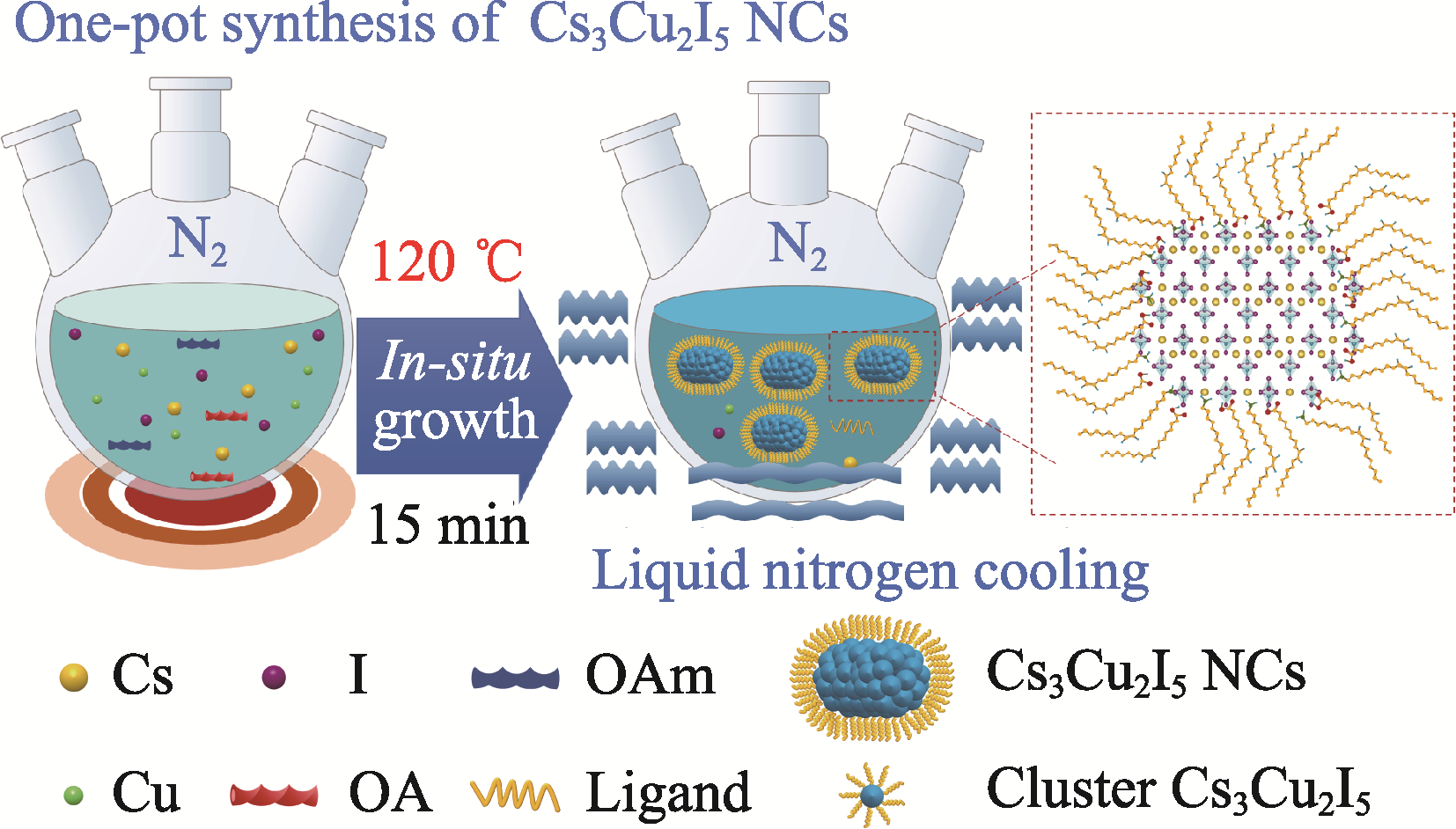
Fig. 1 Synthesis schematic of Cs3Cu2I5 nanocrystals (NCs) prepared by one-pot method
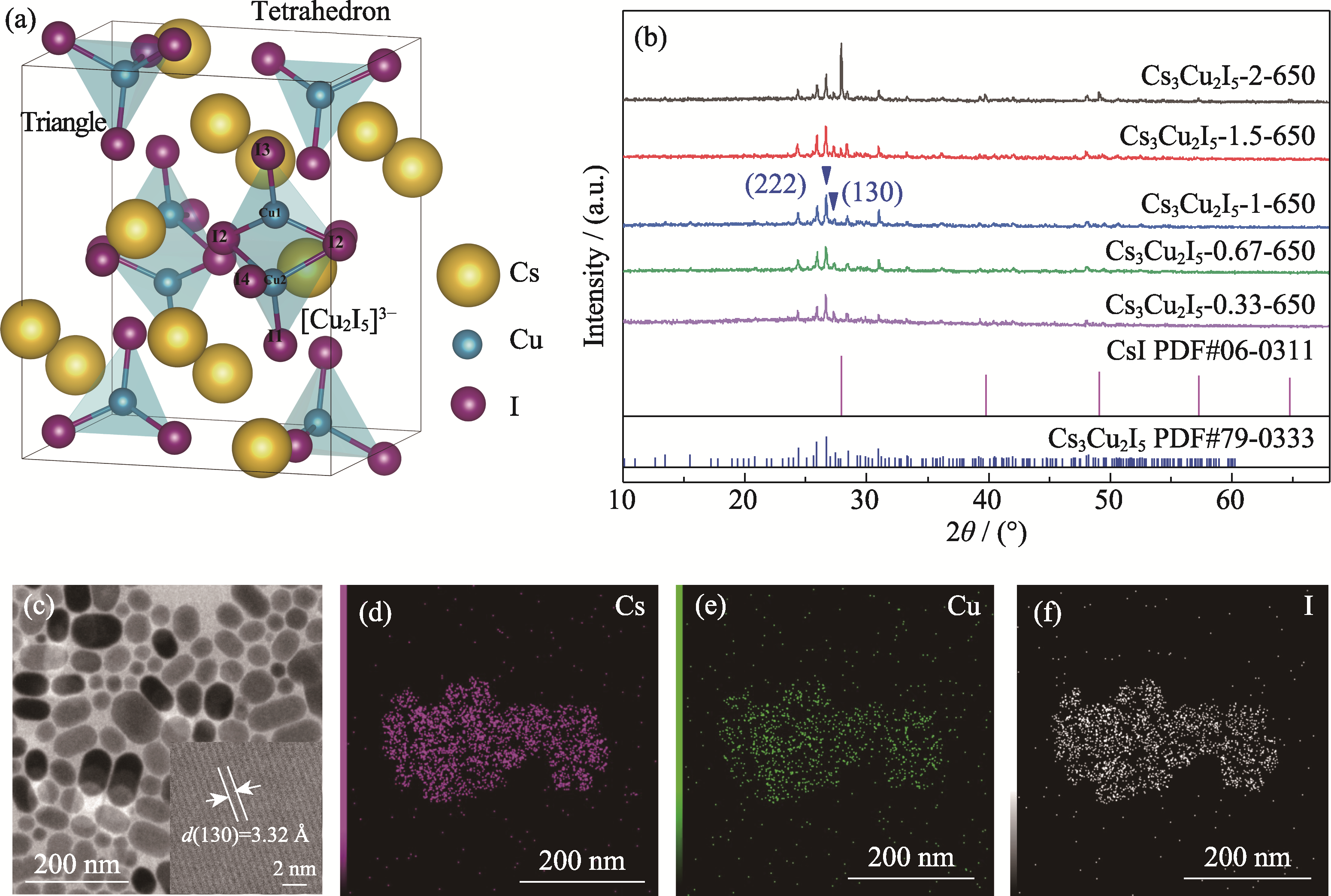
Fig. 2 Crystal structures and morphologies of Cs3Cu2I5-x-650 nanocrystals (a) Schematic diagram of crystal structure; (b) XRD patterns; (c) TEM image; EDS elemental mappings of (d) Cs, (e) Cu, and (f) I. Colorful figures are available on website
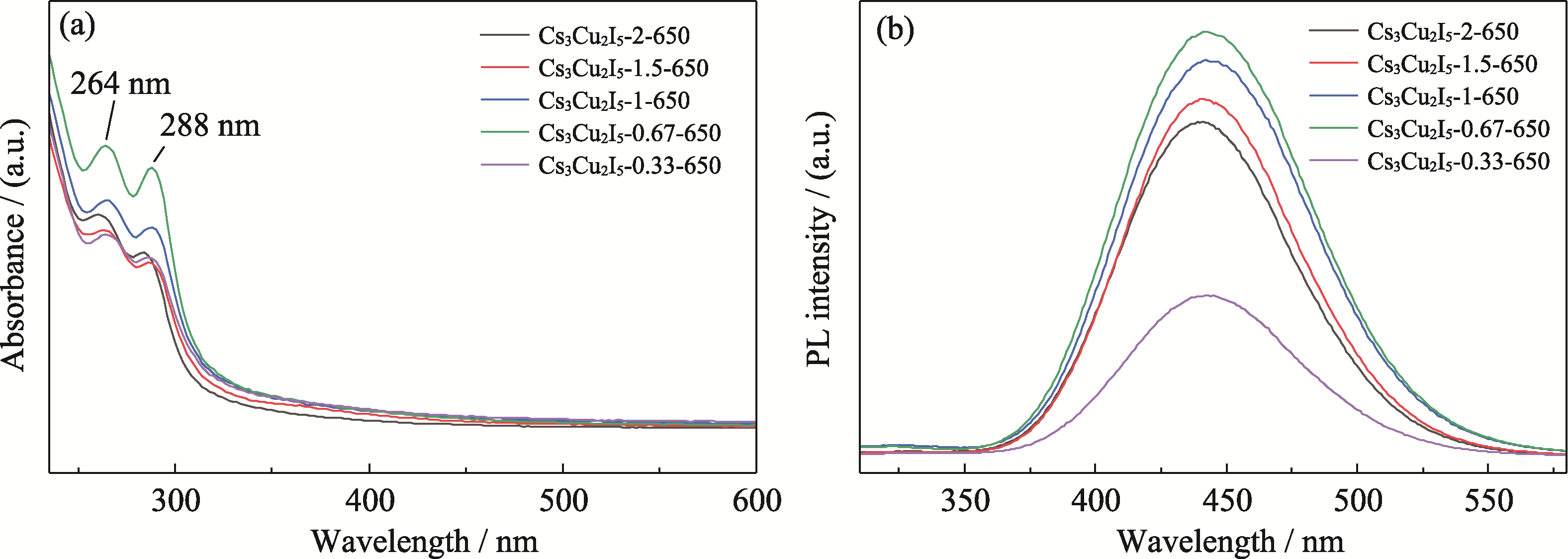
Fig. 3 (a) UV-Vis absorption spectra and (b) PL spectra of Cs3Cu2I5-x-650 nanocrystals Colorful figures are available on website
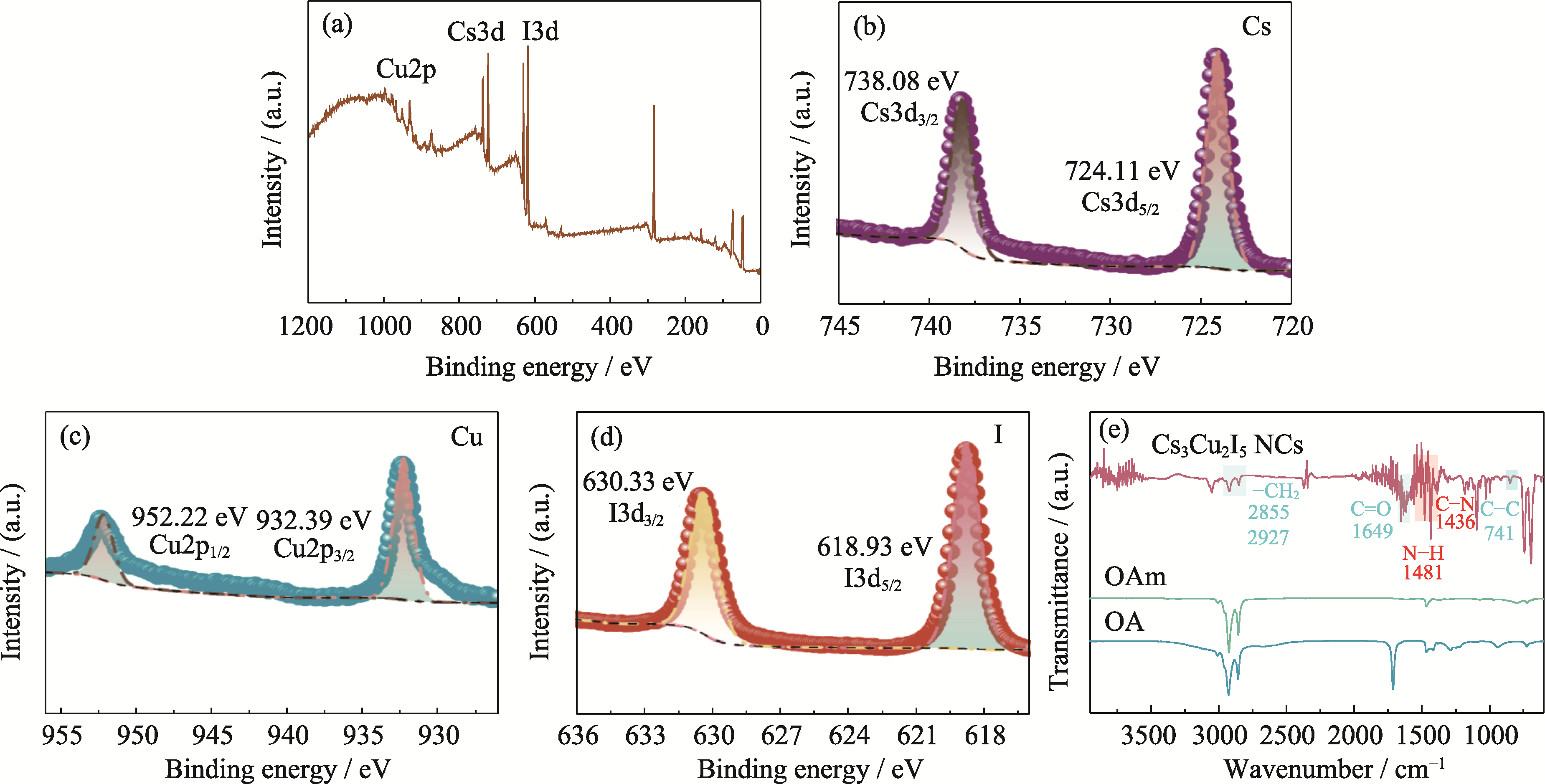
Fig. 4 (a-d) XPS spectra and (e) FT-IR spectra of Cs3Cu2I5-0.67-650 (a) Total; (b) Cs3d; (c) Cu2p; (d) I3d
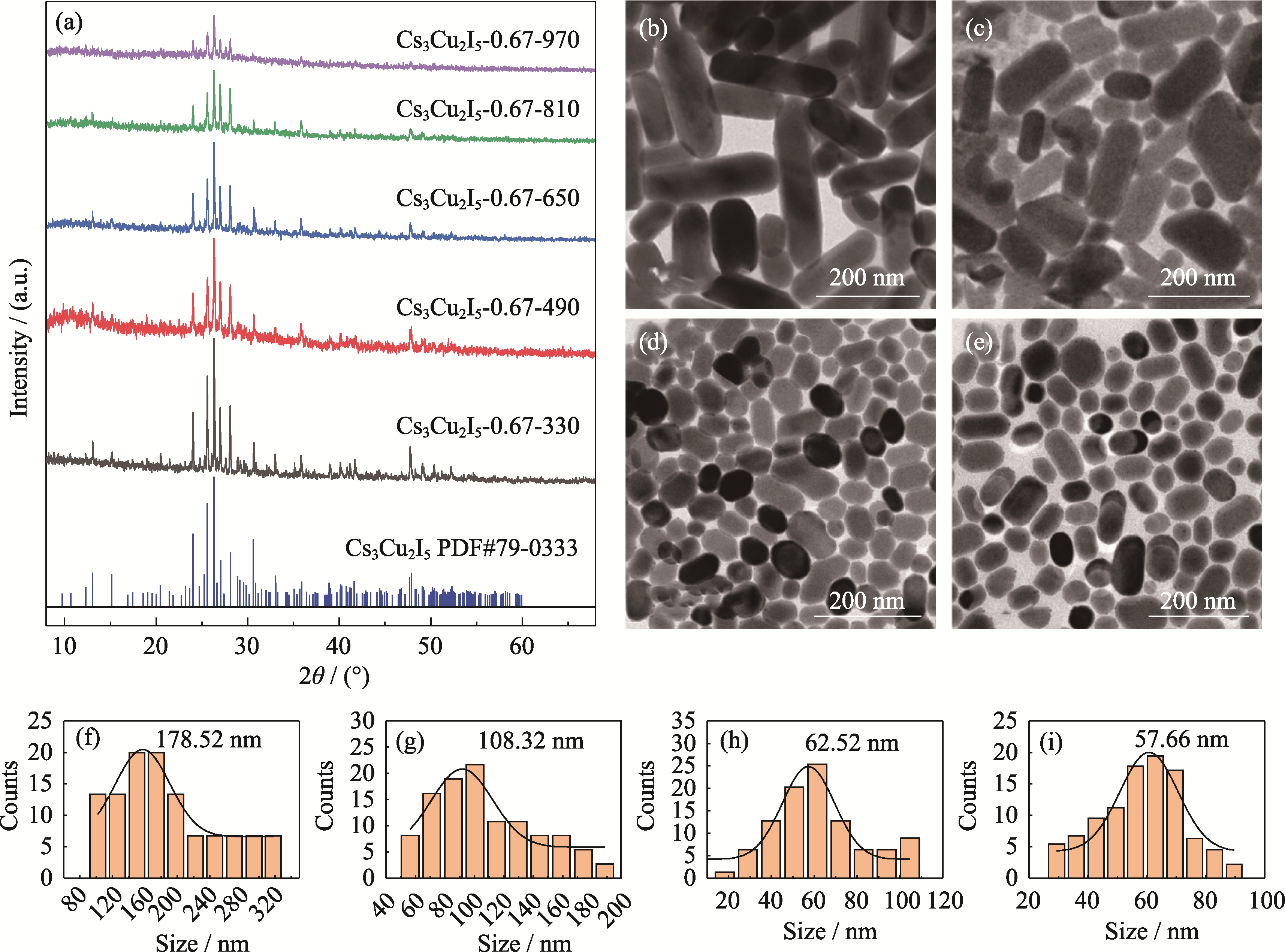
Fig. 5 (a) XRD patterns, (b-e) TEM images and (f-i) distributions of crystal sizes of Cs3Cu2I5-0.67-y nanocrystals (b, f) y=330; (c, g) y=490; (d, h) y=650; (e, i) y=810
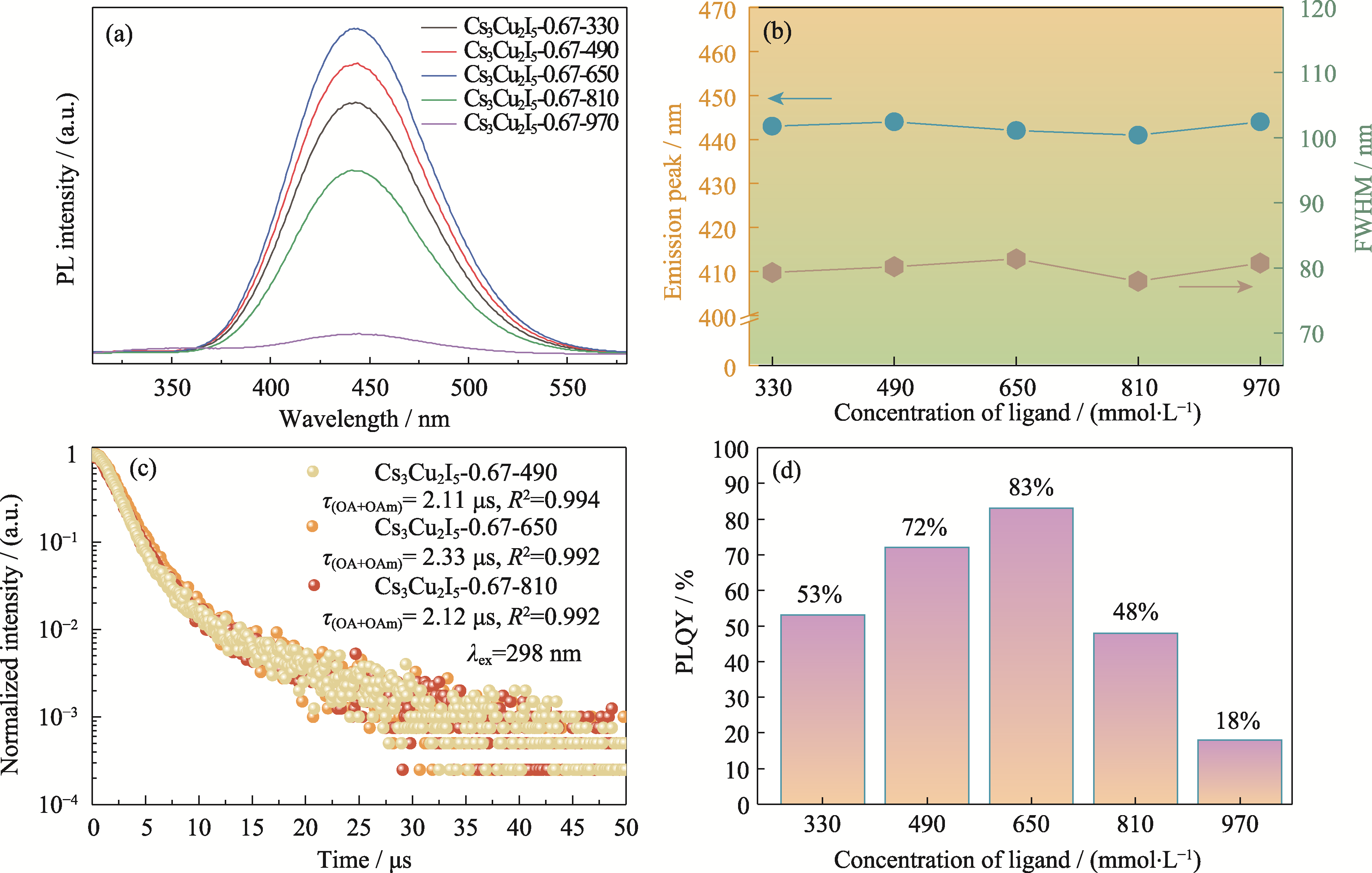
Fig. 6 Luminescence performance of Cs3Cu2I5-0.67-y nanocrystals (a) PL spectra; (b) FWHM and emissive peak position; (c) PL decay curves; (d) PLQY. Colorful figures are available on website
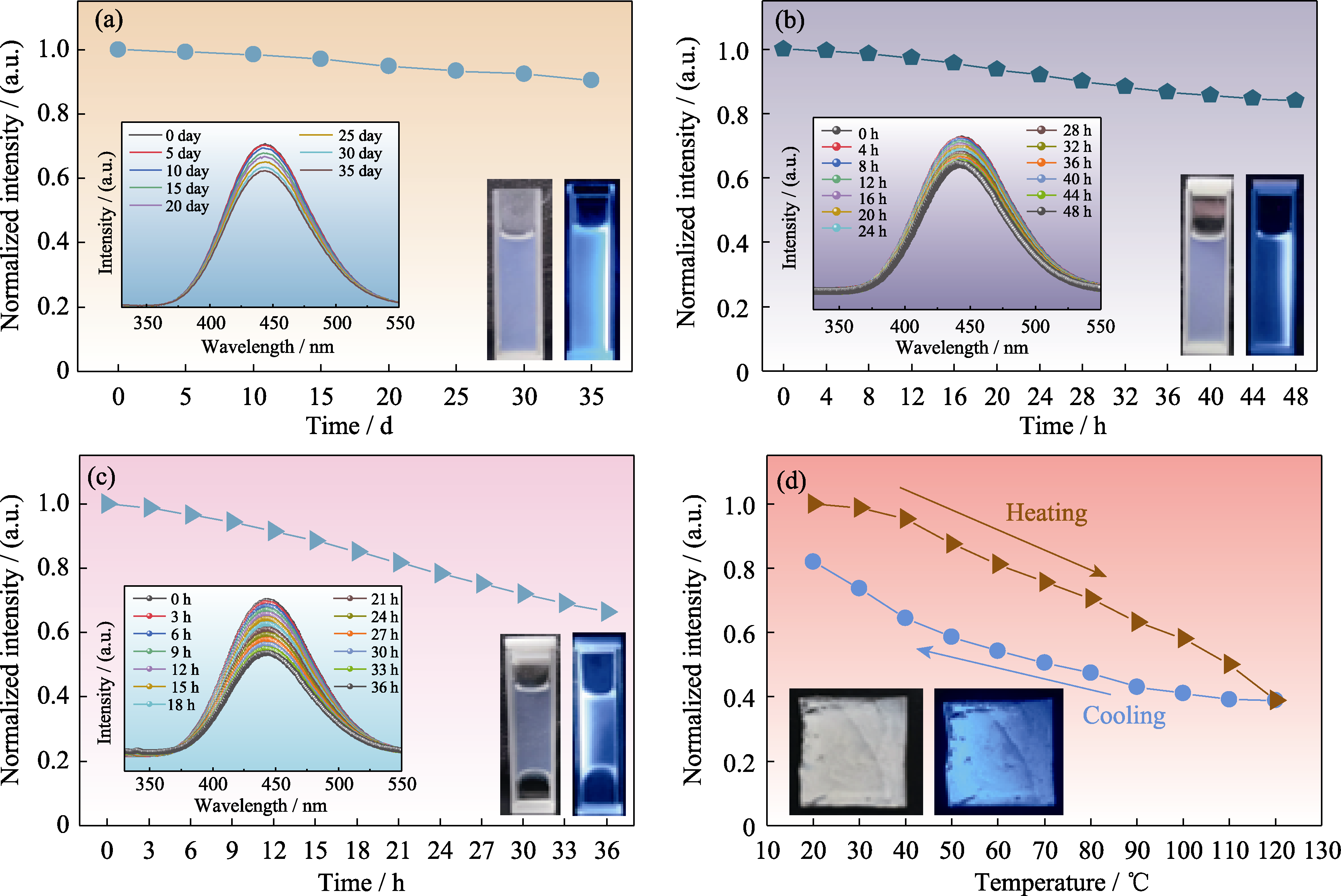
Fig. 7 Storage stability, photostability, water stability of Cs3Cu2I5-0.67-650 nanocrystals, and thermal stability of film (a) Normalized PL intensity of nanocrystals stored under ambient condition for different periods with insets showing PL spectra (left), photos at 35th day under day light (middle) and UV light (right); (b) Normalized PL intensity of nanocrystals under UV irradiation for different periods with insets showing PL spectra (left), photos at 48th hour under day light (middle) and UV light (right); (c) Normalized PL intensity of nanocrystals immersed in water for different periods with insets showing PL spectra (left), photos at 36th hour under day light (middle) and UV light (right); (d) Normalized temperature-dependent PL intensity (λex=298 nm) of film with insets showing photos under day light (left) and UV light (right). Colorful figures are available on website
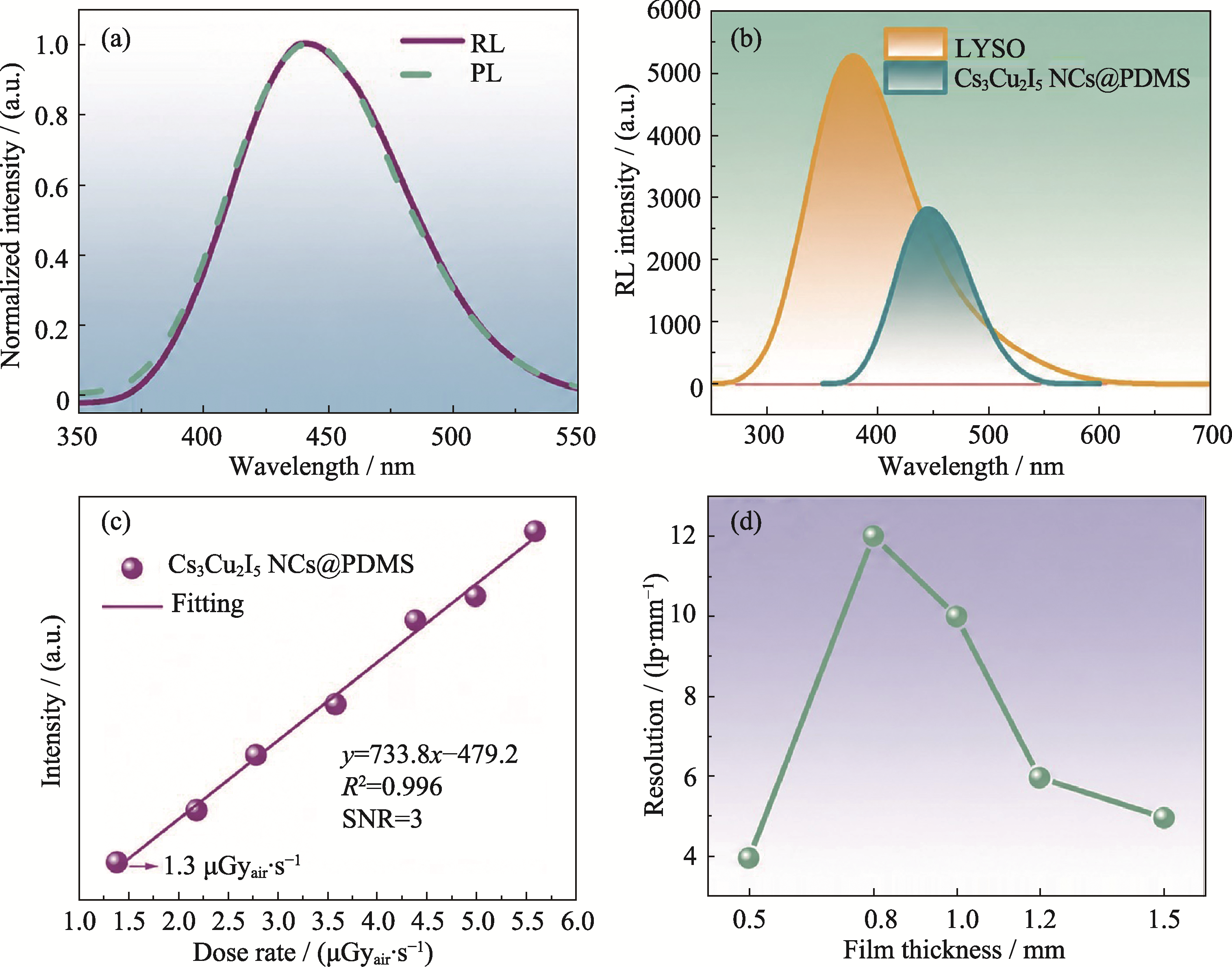
Fig. 8 Scintillation performance of Cs3Cu2I5@PDMS nanocrystals composite film (a) Radioluminescence (RL) and 298 nm excited PL spectra comparison; (b) Light yield measurement of composite film determined against commercial LYSO single crystal; (c) Detection limits of composite film at a signal-to-noise (SNR) ratio of 3; (d) Spatial resolution test of composite film with different thicknesses. Colorful figures are available on website
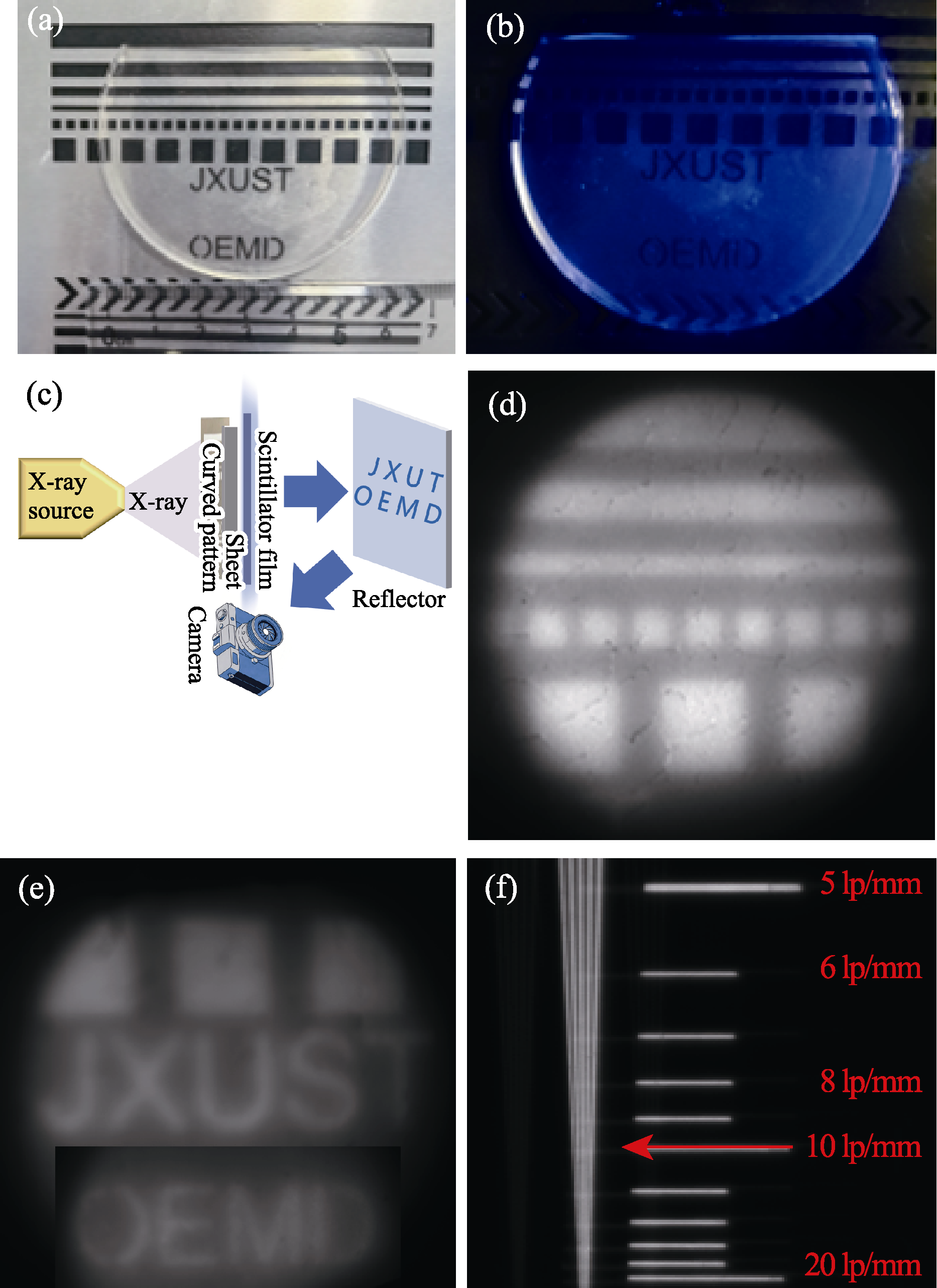
Fig. 9 X-ray imaging application of Cs3Cu2I5@PDMS nanocrystals film (a) Photographic image of film; (b) Luminescence image of film under UV lamp (λex=298 nm); (c) Schematic diagram of the X-ray imaging system; (d, e) Photographs and corresponding X-ray images of lines and patterns; (f) X-ray photograph of a standard line-pair card
| [1] |
CHEN Q, WU J, OU X Y, et al. All-inorganic perovskite nanocrystal scintillators. Nature, 2018, 561(7721):88.
DOI |
| [2] |
ZHOU Y, CHEN J, BAKR O M, et al. Metal halide perovskites for X-ray imaging scintillators and detectors. ACS Energy Letters, 2021, 6(2):739.
DOI URL |
| [3] |
YUE Z H, YANG X T, ZHANG Z J, et al. Effect of Pb2+ on the luminescent performance of borosilicate glass coated CsPbBr3 perovskite quantum dots. Journal of Inorganic Materials, 2024, 39(4):449.
DOI URL |
| [4] | SHI J, WANG S, ZHAO Q, et al. Scalable fabrication of lead-free metal halide for indirect flat panel detector. ACS Applied Materials & Interfaces, 2025, 17(24):34931. |
| [5] |
SUN L, ZHANG L L, XUE Z X, et al. Research progress on zero-dimensional metal halide scintillators towards radiation detection applications. Journal of Inorganic Materials, 2026, 41(2):159.
DOI URL |
| [6] |
LU L, SUN M, WU T, et al. All-inorganic perovskite nanocrystals: next-generation scintillation materials for high-resolution X-ray imaging. Nanoscale Advances, 2022, 4(3):680.
DOI PMID |
| [7] |
JIANG M, LU X, CHEN M, et al. Supramolecular assembly of cesium copper iodine resulting in rich emission properties. Advanced Optical Materials, 2024, 12(27):2401098.
DOI URL |
| [8] | YAO J Y, LIU H, CHEN Z N, et al. Low-dimensional lead-free metal halides for efficient electrically driven light-emitting diodes. Angewandte Chemie International Edition, 2025, 64(6):e202423185. |
| [9] |
ARSLANOVA K, GANSWINDT P, LORENZEN T, et al. Synthesis of Cs3Cu2I5 nanocrystals in a continuous flow system. Small, 2024, 20(44):2403572.
DOI URL |
| [10] |
DE ROO J, IBAÑEZ M, GEIREN P, et al. Highly dynamic ligand binding and light absorption coefficient of cesium lead bromide perovskite nanocrystals. ACS Nano, 2016, 10(2):2071.
DOI PMID |
| [11] | PAN Q, ZHAO Q, WEI P, et al. Surface ligands for perovskite quantum dots. ChemSusChem, 2025, 18(4):e202401875. |
| [12] |
SUN W, YUN R, LIU Y, et al. Ligands in lead halide perovskite nanocrystals: from synthesis to optoelectronic applications. Small, 2023, 19(11):2205950.
DOI URL |
| [13] |
GAO F, ZHU X, FENG Q, et al. Deep-blue emissive Cs3Cu2I5 perovskites nanocrystals with 96.6% quantum yield via InI3-assisted synthesis for light-emitting device and fluorescent ink applications. Nano Energy, 2022, 98: 107270.
DOI URL |
| [14] | RAHAMAN M Z, LIN C H. Crystallization in minutes: van der Waals force-driven ultrafast solution epitaxial growth of high-quality Cs3Cu2I5 platelets. Journal of Physical Chemistry C, 2025, 129(25):11554. |
| [15] |
FENG J, WANG J, WANG D, et al. Reversible phase transitions of all inorganic copper-based perovskites: water-triggered fluorochromism for advanced anticounterfeiting applications. ACS Applied Electronic Materials, 2022, 4(1):225.
DOI URL |
| [16] |
YANG H, MO X, XIONG W, et al. High-performance dual-mode UV photodetection from a single maneuverable X-shaped Cs3Cu2I5 microcrystal. ACS Nano, 2024, 18(49):33643.
DOI URL |
| [17] |
FREITAS A L M, TOFANELLO A, SABION F P, et al. Finite-size effects on Cs3Cu2I5 0D electronic nanostructures for ultraviolet-emitting applications. ACS Applied Nano Materials, 2023, 6(9):7196.
DOI URL |
| [18] |
YUAN X R, ZHANG X S, ZHAO X Y, et al. Achieving high quantum efficiency in Cs3Cu2I5 nanocrystals by the A-site ion substitution for flexible blue electroluminescence devices and enhanced photovoltaic cells. ACS Applied Nano Materials, 2024, 7(19):23214.
DOI URL |
| [19] | LI Y, LIU Y, LI X, et al. Effect of vacancy-defect on the electronic and optical properties of Cs3Cu2I5 scintillators: a first-principles study. Journal of Physical Chemistry C, 2025, 129(25):11583. |
| [20] |
LI S, ZHANG L, NAN W, et al. Correlating defect structures and optical performance in bridgman-grown Cs3Cu2I5 crystals: a defect engineering approach for enhanced blue emission. Inorganic Chemistry, 2025, 64(22):11184.
DOI URL |
| [21] |
LUO D, SU R, ZHANG W, et al. Minimizing non-radiative recombination losses in perovskite solar cells. Nature Reviews Materials, 2020, 5(1):44.
DOI |
| [22] | TAO J, ZHAO C, WANG Z, et al. Suppressing non-radiative recombination for efficient and stable perovskite solar cells. Energy & Environmental Science, 2025, 18(2):509. |
| [23] | WU T, SHI Y, WU H, et al. Potassium-regulated lead-free cesium copper iodide Cs3Cu2I5 perovskites with enhanced scintillation properties and their application in high-resolution X-ray imaging. Journal of Materials Chemistry C, 2024, 12(3):1002. |
| [24] |
CHEN J, LI J, YIN T, et al. Rb-doped Cs3Cu2I5 perovskite nanocrystals as paper-based scintillator film for high-resolution X-ray imaging. Advanced Functional Materials, 2025, 35(39):2506331.
DOI URL |
| [25] |
GUO H, ZHAO Q, RAN P, et al. Facilely fabricated bright lead-free perovskite Cs3Cu2I5 scintillator film for high-definition X-ray imaging. Advanced Photonics Research, 2022, 3(12):2200197.
DOI URL |
| [26] |
YANG Q H, WEI H Q, ZHAO S J, et al. Visible and near-infrared emission of lead-free Cs3Cu2I5:Bi perovskite by valence state regulation for optical anti-counterfeiting coatings. Materials Characterization, 2025, 225: 115203.
DOI URL |
| [27] |
PASIECZNA-PATKOWSKA S, CICHY M, FLIEGER J. Application of Fourier transform infrared (FTIR) spectroscopy in characterization of green synthesized nanoparticles. Molecules, 2025, 30(3):684.
DOI URL |
| [28] |
ZHOU Y, WU S, HUANG G, et al. Double passivation of alkali metal ion and organic ligand towards enhanced photoluminescence and stability of Cs3Cu2X5 (X=Cl, Br and I) nanocrystals. Journal of Alloys and Compounds, 2022, 918: 165565.
DOI URL |
| [29] |
WEN J, LI P, JIANG L, et al. Alkyl-chain engineering of bifunctional amino acids in optoelectronically superior lead-free copper-based perovskite Cs3Cu2I5. Journal of Materials Chemistry C, 2025, 13(46):23134.
DOI URL |
| [30] |
LU Y, LI G, FU S, et al. CsCu2I3 nanocrystals: growth and structural evolution for tunable light emission. ACS Omega, 2020, 6(1):544.
DOI URL |
| [31] |
DENG M, ZHANG Z, LIU L, et al. Ligand-solvent library design for tailoring interparticle interactions in colloidal nanocrystals. ACS Nano, 2025, 19(14):14299.
DOI PMID |
| [32] |
LAZZARI S, THEILER P M, SHEN Y, et al. Ligand-mediated nanocrystal growth. Langmuir, 2018, 34(10):3307.
DOI PMID |
| [33] |
MOZAFFARI S, LI W, THOMPSON C, et al. Colloidal nanoparticle size control: experimental and kinetic modeling investigation of the ligand-metal binding role in controlling the nucleation and growth kinetics. Nanoscale, 2017, 9(36):13772.
DOI PMID |
| [34] |
MENG W, WANG C, XU G, et al. Alkylammonium halides for phase regulation and luminescence modulation of cesium copper iodide nanocrystals for light-emitting diodes. Molecules, 2024, 29(5):1162.
DOI URL |
| [35] |
HEUER-JUNGEMANN A, FELIU N, BAKAIMI I, et al. The role of ligands in the chemical synthesis and applications of inorganic nanoparticles. Chemical Reviews, 2019, 119(8):4819.
DOI URL |
| [36] |
XING Z, ZHOU Z, ZHONG G, et al. Barrierless exciton self-trapping and emission mechanism in low-dimensional copper halides. Advanced Functional Materials, 2022, 32(46):2207638.
DOI URL |
| [37] |
HUI Y, CHEN S, LIN R, et al. Photophysics in Cs3Cu2I5 and CsCu2I3. Materials Chemistry Frontiers, 2021, 5(19):7088.
DOI URL |
| [38] |
LI X, LIU A, WANG Z, et al. Boosting self-trapped exciton emission from Cs3Cu2I5 nanocrystals by doping-enhanced exciton-phonon coupling. Nano Research, 2023, 16(7):10476.
DOI |
| [39] |
WANG B, LI P, ZHOU Y, et al. Cs3Cu2I5 perovskite nanoparticles in polymer matrix as large-area scintillation screen for high-definition X-ray imaging. ACS Applied Nano Materials, 2022, 5(7):9792.
DOI URL |
| [1] | LI Zhijie, WANG Xiaoyang, MU Xiaojiang, ZHU Sijing, MIAO Lei. Highly Durable Ni-Cu-Mo Catalyst: Preparation and Performance for Hydrogen Evolution through Ammonia Oxidation Reaction [J]. Journal of Inorganic Materials, 2026, 41(9): 1247-1254. |
| [2] | SHI Pu, LU Qianqian, LIU Xin, ZHANG Yaqin, LI Fuzhi. Porous Flowerball-like NiCo2O4/Co3S4-M Heterostructure: Preparation and Its Performance of Asymmetric Supercapacitor [J]. Journal of Inorganic Materials, 2026, 41(8): 1078-1086. |
| [3] | ZHOU Cui, LI Jie, SUN Luchao, SU Haijun, WANG Jingyang. Alumina-based Directionally Solidified Eutectic Ceramics: Microstructure, Control Strategies and Environmental Stability [J]. Journal of Inorganic Materials, 2026, 41(7): 899-914. |
| [4] | SUN Lian, ZHANG Leilei, XUE Zexu, WU Kun, CHEN Ye, LI Zhiyuan, WANG Lukai, WANG Zungang. Research Progress on Zero-dimensional Metal Halide Scintillators towards Radiation Detection Applications [J]. Journal of Inorganic Materials, 2026, 41(2): 159-176. |
| [5] | ZHOU Qi, LI Xiang, ZHANG Kaihui, WANG Zeliang, DENG Mingxue, JIA Wenbao, WANG Ke, CHEN Junfeng. Organic-Inorganic Composite Scintillators Loaded with LiF-CaF2:Eu Eutectic Powder: Preparation and Characterization [J]. Journal of Inorganic Materials, 2026, 41(2): 201-207. |
| [6] | JIANG Jun, YANG Gonglü, YANG Yufan, LI Yi, YUAN Ningyi, DING Jianning. Regulating Perovskite Film Crystallization via Organic Amine Salts for Enhanced Photoelectric Conversion Efficiency and Stability [J]. Journal of Inorganic Materials, 2026, 41(2): 186-192. |
| [7] | XU Jiawei, LI Xiang, ZHANG Jing, XIE Jiansheng, DENG Mingxue, QI Xuejun, CHEN Junfeng. Gamma-ray Induced Radiation Damage in BaF2:Y Scintillation Crystals [J]. Journal of Inorganic Materials, 2026, 41(11): 1677-1685. |
| [8] | MA Xinchao, ZHI Qing, LI Wei, CHEN Mao, WANG Hailong, ZHANG Rui, ZHANG Fan, FAN Bingbing. High-temperature Oxidation Mechanism and Electromagnetic Wave Absorption Properties of Fe2AlB2 [J]. Journal of Inorganic Materials, 2026, 41(1): 45-54. |
| [9] | JIANG Zongyu, HUANG Honghua, QING Jiang, WANG Hongning, YAO Chao, CHEN Ruoyu. Aluminum Ion Doped MIL-101(Cr): Preparation and VOCs Adsorption Performance [J]. Journal of Inorganic Materials, 2025, 40(7): 747-753. |
| [10] | ZHANG Jiguo, WU Tian, ZHAO Xu, YANG Fan, XIA Tian, SUN Shien. Improvement of Cycling Stability of Cathode Materials and Industrialization Process for Sodium-ion Batteries [J]. Journal of Inorganic Materials, 2025, 40(4): 348-362. |
| [11] | PAN Zesheng, YOU Yaping, ZHENG Ya, CHEN Haijie, WANG Lianjun, JIANG Wan. Stability of Phosphors for White LED Excitable by Violet Light [J]. Journal of Inorganic Materials, 2025, 40(3): 314-322. |
| [12] | QU Mujing, ZHANG Shulan, ZHU Mengmeng, DING Haojie, DUAN Jiaxin, DAI Henglong, ZHOU Guohong, LI Huili. CsPbBr3@MIL-53 Nanocomposite Phosphors: Synthesis, Properties and Applications in White LEDs [J]. Journal of Inorganic Materials, 2024, 39(9): 1035-1043. |
| [13] | MIAO Xin, YAN Shiqiang, WEI Jindou, WU Chao, FAN Wenhao, CHEN Shaoping. Interface Layer of Te-based Thermoelectric Device: Abnormal Growth and Interface Stability [J]. Journal of Inorganic Materials, 2024, 39(8): 903-910. |
| [14] | CHEN Tian, LUO Yuan, ZHU Liu, GUO Xueyi, YANG Ying. Organic-inorganic Co-addition to Improve Mechanical Bending and Environmental Stability of Flexible Perovskite Solar Cells [J]. Journal of Inorganic Materials, 2024, 39(5): 477-484. |
| [15] | YANG Bo, LÜ Gongxuan, MA Jiantai. Electrocatalytic Water Splitting over Nickel Iron Hydroxide-cobalt Phosphide Composite Electrode [J]. Journal of Inorganic Materials, 2024, 39(4): 374-382. |
| Viewed | ||||||
|
Full text |
|
|||||
|
Abstract |
|
|||||
