|
|
Research Progress on Near-infrared Persistent Luminescence Nanoprobes in Tumor Diagnosis and Treatment
ZHU Yaqi, LI Chao, CHEN Tianci, LIU Zhiyan, CHEN Yifei, WANG Haoliang
2026 Vol. 41 (11): 1541–1562
 Abstract (
196 )
 HTML (
6)
 PDF (28370KB)(
98
)
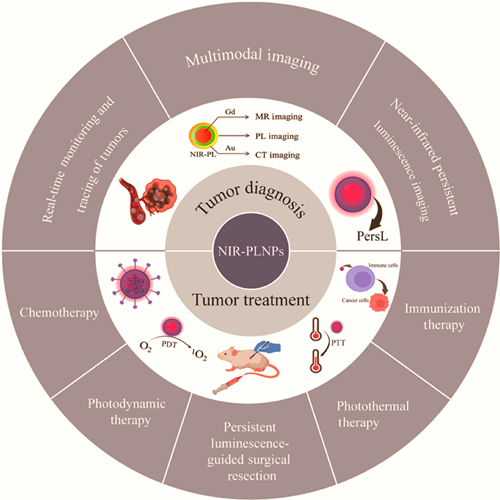
Near-infrared persistent luminescence nanoprobes (NIR-PLNPs) have become a focal point in the field of cancer theranostics due to their unique delayed luminescence properties, which effectively avoid biological autofluorescence interference and significantly enhance imaging signal-to-noise ratio and tissue penetration depth. Through material design and surface functionalization, NIR-PLNPs can achieve tumor-specific recognition and serve as multifunctional nanoplatforms for high-contrast imaging-guided surgical resection and precise synergistic therapy. In contrast to previous reviews, this article particularly emphasizes recent advances in imaging-guided precision tumor resection, stimuli-responsive drug delivery, photodynamic therapy and photothermal therapy, analyzes key bottlenecks in clinical translation, such as biosafety and optimization of persistent luminescence properties, and proposes future research directions, aiming to provide a systematic reference for the clinical advancement.
|
|
|
High-temperature Electromagnetic Wave Absorbing Materials and Their Multi-functional Integration: A Review
WANG Weichao, WANG Liuying, LIU Gu, HUANG Jie, GU Qi, GE Chaoqun, WU Renbing
2026 Vol. 41 (11): 1563–1578
Abstract(
353 )
HTML(
8)
PDF(15881KB)(
267
)
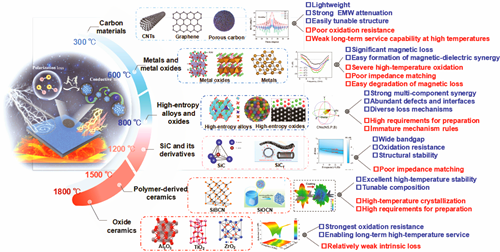
The rapid development of electromagnetic wave absorbing materials has greatly stimulated their applications and functional integration across diverse fields. However, under variable-temperature service environments, introduction of the temperature dimension poses severe challenges to both the material systems and design paradigms of existing electromagnetic wave absorbers. In this context, the development of novel high-temperature absorbing materials for extreme high-temperature and temperature-varying environments, the establishment of design paradigms for electromagnetic wave absorbing materials operable over a broad temperature window, and the proposal of multifunctional integration strategies for high-temperature electromagnetic wave absorbing materials are of great significance for their applications in aerospace, stealth technology, and advanced electronic systems. Based on the recent progress in high-temperature electromagnetic wave absorbing materials, this paper first systematically reviews their classification and summarizes the major categories that have emerged. The respective advantages and limitations of these material systems in variable-temperature environments are then analyzed in detail. In addition, this paper discusses the corresponding design strategies, the mechanisms underlying performance optimization, and the practical challenges that still hinder their wider application. Furthermore, in response to the long-standing problem of the narrow service temperature window of high-temperature electromagnetic wave absorbing materials, this paper summarizes and generalizes the design approaches for temperature-insensitive high-temperature absorbers. These approaches are expected to provide new insights into improving the stability of electromagnetic response across wide temperature ranges. Finally, in light of the growing trend toward multifunctional integration in electromagnetic wave absorbing materials, this paper further explores the feasible routes and potential application prospects for achieving multifunctional integration in high-temperature absorbing materials. By focusing on and clarifying the key issues currently faced by high-temperature electromagnetic wave absorbing materials, as well as the major directions for future research, this work aims to provide a useful reference for the further development, rational design, and practical application of high-temperature electromagnetic wave absorbing materials.
|
|
|
Preparation and Properties of Al2O3-SiO2-Cr2O3 Aerogel Insulation Composites with High-temperature Resistance and Low Thermal Conductivity
XU Lin, JIANG Yonggang, FENG Junzong, HU Yijie, FENG Jian
2026 Vol. 41 (11): 1579–1586
Abstract(
208 )
HTML(
3)
PDF(4793KB)(
101
)
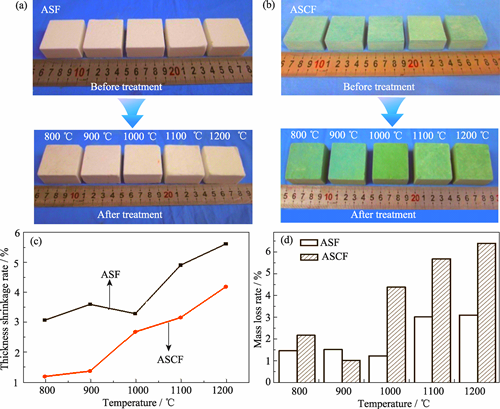
Radiative heat transfer significantly impacts the high-temperature thermal insulation performance of Al2O3-SiO2 aerogel composite materials. To reduce their high-temperature thermal conductivity, this study introduces an infrared opacifier via a liquid-phase precursor route. Using aluminum sec-butoxide, tetraethyl orthosilicate, and chromium nitrate nonahydrate as precursors, Cr2O3 with excellent infrared shielding capability was incorporated into Al2O3-SiO2 aerogel thermal insulation composites (ASF) through Sol-Gel method followed by ethanol supercritical drying. This approach successfully fabricated Al2O3-SiO2-Cr2O3 aerogel thermal insulation composites (ASCF) with excellent high-temperature resistance and thermal insulation performance. The influences of heat treatment temperature on the microstructure, phase composition, thermal stability, and thermal insulation properties of ASCF were systematically investigated. The results indicate that the introduction of Cr2O3 enables ASCF to maintain good high-temperature resistance while achieving significantly lower high-temperature thermal conductivity. At 1100 ℃, the thermal conductivity of ASCF is only 0.050 W/(m·K), representing a substantial reduction of 30.6% compared to that of ASF (0.072 W/(m·K)). After heat treatment at 800-1100 ℃, the high-temperature thermal conductivity of ASCF remains largely stable (ranging from 0.052 to 0.055 W/(m·K) at 1100 ℃), indicating outstanding thermal insulation stability. After 7 cycles of infrared radiation heating at 1000 ℃ for 3300 s using a quartz lamp, the temperature rise curves on the sample’s cold surface nearly overlap. At the end of each cycle, the cold surface temperature remains within a range of 326-358 ℃. Furthermore, the sample maintains its macroscopic integrity, with no visible deformation, cracking, or shrinkage, demonstrating excellent reusability. The liquid-phase precursor approach for introducing infrared absorbers offers a novel strategy for achieving low thermal conductivity in aerogel thermal insulation composites.
|
|
|
ZIF-67-derived Hollow-structured LDHs Si Composite Anode for Enhanced Performance on Lithium Storage
QIN Zongbu, SHI Wenhua, WANG Lindong, WANG Ruiqing, HU Zhiyi, LI Yu
2026 Vol. 41 (11): 1587–1596
Abstract(
260 )
HTML(
2)
PDF(7461KB)(
154
)
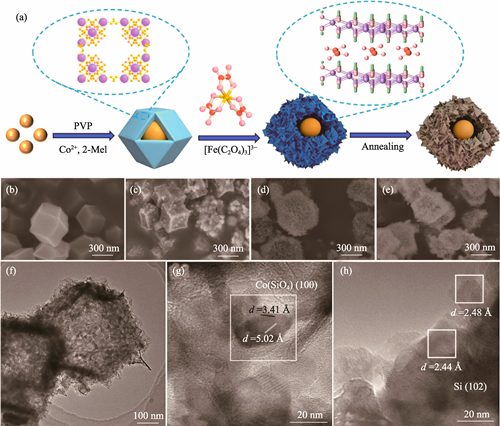
Silicon (Si)-based anode materials of Li-ion batteries have attracted extensive attention owing to their high theoretical specific capacity (4200 mAh·g-1), low working potential, abundant resources, and environmental friendliness. However, Si undergoes a volume expansion of approximately 400% during lithiation, which readily leads to electrode cracking and pulverization. This study proposes a doping-etching-reconstruction strategy utilizing cobalt-based zeolitic imidazolate framework (ZIF-67) as a sacrificial template to synthesize cobalt-iron layered double hydroxides (LDHs), fabricating a composite silicon-based anode material with a hollow structure (Si@CoFeOx). This material maintains a reversible specific capacity of 952.6 mAh·g-1 after 600 cycles at a current density of 1 A·g-1, and retains a specific capacity of 427.7 mAh·g-1 after 400 cycles at a high current density of 2 A·g-1. The superior electrochemical performance of this composite is primarily attributed to its hollow structure, which effectively accommodates the volume expansion of silicon nanoparticles during cycling. This study provides insights into the structural design of high-performance Si-based anode materials for lithium-ion batteries.
|
|
|
Mechanism of Barrier Layer Densification on Performance Enhancement in Solid Oxide Cells
XU Yifei, WANG Ziheng, LI Yongxin, LI Wenhuai, WANG Xixi, ZHOU Chuan, ZHOU Wei
2026 Vol. 41 (11): 1597–1605
Abstract(
181 )
HTML(
3)
PDF(3376KB)(
97
)
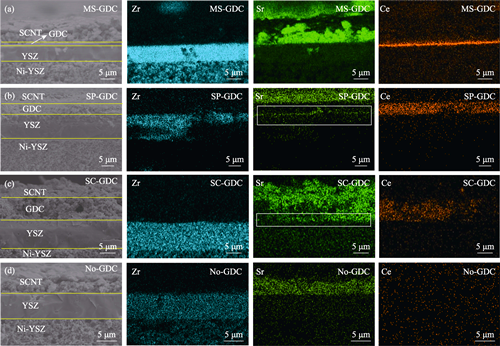
Solid oxide cells (SOCs) are highly efficient clean energy technologies that hold significant promise for energy conversion and hydrogen production. However, detrimental interfacial phase reactions tend to occur during the fabrication and operation of the cell. Particularly in cells composed of a Y0.16Zr0.84O2-δ (YSZ) electrolyte and Sr-Co-based oxygen electrodes like SrCo0.8Nb0.1Ta0.1O3-δ (SCNT), the migration of Sr to the electrolyte interface leads to the formation of high-resistivity phases such as SrZrO3, which severely limits the cell performance. This study employed magnetron sputtering to deposit an ultrathin and dense Gd0.1Ce0.9O2-δ (GDC) barrier layer onto the YSZ electrolyte, systematically investigating the effects of processing conditions on its microstructure and performance. The results demonstrate that the optimized magnetron-sputtered GDC barrier layer is only about 0.5 μm thick, exhibits a dense microstructure, and forms a good interfacial bonding. Compared with conventional screen-printing (~5 μm) and spray-coating (~8 μm), the magnetron-sputtered GDC layer is significantly thinner and much denser. The single cell incorporating the magnetron-sputtered GDC barrier layer delivers an excellent peak power density of 1.762 W·cm-2 at 750 ℃ in fuel cell mode, and achieves a high current density of 1.921 A·cm-2 at an electrolysis voltage of 1.3 V, significantly superior to cells with screen-printed or spray-coated GDC barrier layers. Electrochemical impedance analysis reveals that the densified GDC barrier layer effectively reduces the interfacial resistance and optimizes oxygen ion transport. This study elucidates the mechanism by which GDC barrier layer densification enhances the performance of SOCs, providing both a theoretical foundation and a technical approach for the design and fabrication of high-performance barrier layers.
|
|
|
Corn Straw Supported CoNi Alloy for Catalytic Hydrogen Evolution from Ammonia Borane
SONG Lizhi, WU Ming, LIU Pengfei, HAN Dong, SONG Erhong
2026 Vol. 41 (11): 1606–1614
Abstract(
212 )
HTML(
2)
PDF(2268KB)(
118
)
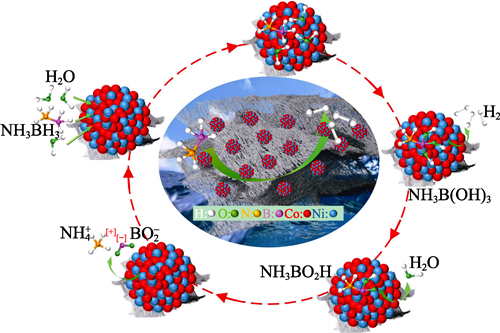
Ammonia borane (NH3BH3, AB) serves as a solid hydrogen storage material, and the preparation of efficient, low-cost, and stable catalysts for the decomposition of AB is crucial for its industrial application. This study prepared a pre-processed powdered corn straw-supported CoNi alloy catalyst (Co0.75Ni0.25/CS-y, y=1, 5, 10, 20, 40) via reduction by NaBH4. Co0.75Ni0.25/CS-y exhibited high efficiency in the catalytic decomposition of AB for hydrogen evolution at room temperature. Notably, the optimal sample Co0.75Ni0.25/CS-20 exhibited superior catalytic activity compared to pure Co, pure Ni and Co0.75Ni0.25 alloy. The corn straw effectively dispersed and immobilized the Co0.75Ni0.25 alloy, while the cooperation of Co and Ni atoms further enhanced the catalytic activity. Co0.75Ni0.25/CS-20 achieves an average turnover frequency (TOF) of 7.77 $\mathrm{mol}_{\mathrm{H}_{2}} \cdot \mathrm{~mol}_{\text {cat. }}^{-1} \cdot \mathrm{~min}^{-1}$ and an activation energy (Ea) of 20.17 kJ/mol. Furthermore, Co0.75Ni0.25/CS-20 exhibits excellent yield and activity stability for AB catalytic hydrogen evolution, which are 100% and 82.3% of the initial reaction within the 6th cycle, respectively. Its performance surpasses most reported non-precious metal catalysts and even outperforms some reported precious metal catalysts. This study introduces novel concepts for the design of non-precious metal catalysts and suggests new avenues for the high-value utilization of biomass materials.
|
|
|
Construction of CoMoNiSx/NF via Co-Mo Co-doping for Efficient Sulfur Oxidation Reaction
WANG Hao, LI Guanglan, ZHANG Yajing, XIAO Yonghou
2026 Vol. 41 (11): 1615–1622
Abstract(
227 )
HTML(
2)
PDF(3796KB)(
154
)
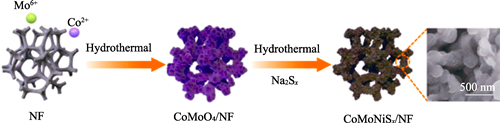
Replacing the energy-intensive oxygen evolution reaction with the thermodynamically more favorable sulfide oxidation reaction (SOR) is an effective strategy for achieving energy-saving hydrogen production while simultaneously recovering high-value sulfur products. However, uncontrollable solid sulfur deposition on the anode surface tends to cause active site passivation and sluggish reaction kinetics, severely impacting catalyst stability. Here, a cobalt-molybdenum co-doped nickel sulfide electrocatalyst with a unique “amorphous-microcrystalline” heterostructure (CoMoNiSx/NF) is fabricated on nickel foam via a two-step hydrothermal method. Benefiting from an in-situ constructed CoMoO4/sulfide hydrophilic interface and abundant S22− defect sites, the catalyst exhibits excellent SOR performance, delivering a current density of 100 mA·cm−2 at an ultralow overpotential of just 0.28 V (vs. RHE) and operating stably for over 300 h. The in-situ generated polysulfides during the SOR process under alkaline conditions are soluble in the electrolyte system, which significantly suppresses the deposition of solid sulfur on the electrode surface and thus prevents electrode passivation. Furthermore, the assembled SOR||HER two-electrode electrolyzer requires a cell voltage of only 1.0 V to reach 100 mA·cm−2, achieving a Faradaic efficiency of 98.6% for hydrogen production.
|
|
|
Preparation of CuCoNiCeMn High-entropy Oxide and Its Catalytic Oxidation Performance for CO in Sintering Flue Gas
LIU Jian, AN Weijia, GAO Qin, LI Jianhua, YANG Zongxiang, WANG Xiao, LIANG Yinghua, GE Jiaqi, CUI Wenquan
2026 Vol. 41 (11): 1623–1630
Abstract(
191 )
HTML(
3)
PDF(3127KB)(
99
)
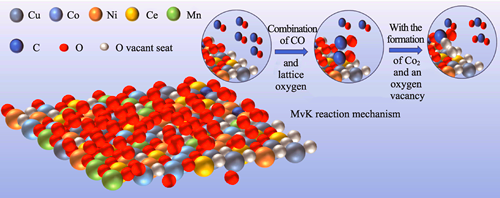
The iron ore sintering process is a major source of industrial CO emissions, characterized by large gas volumes, complex compositions, and wide fluctuations, making abatement challenging. To address this, the synergistic effects of multi-components in high-entropy oxides (HEOs) were exploited. A systematic study on preparation process optimization was conducted to explore the influence of high-entropy alloy oxides on CO catalytic oxidation, along with their water and sulfur resistance, and the underlying mechanism. Results show that catalysts prepared by the Sol-Gel method possess abundant multivalent metal ions and oxygen vacancies, achieving >95% CO conversion at 160 ℃ and a gas hourly space velocity (GHSV) of 48000 mL·g-1·h-1, with low-temperature activity (temperature corresponding to a CO conversion rate of 50% (T50)=101 ℃) significantly better than co-precipitation and hydrothermal methods. The effects of preparation parameters (citric acid ratio, solution pH, and calcination temperature) on catalytic performance were detailed. Characterization results confirm that electron transfer among multivalent metal ions and the synergy with oxygen vacancies are key to enhanced activity. The catalyst retains 98% CO conversion under 10% (in volume) H2O and operates stably for 24 h at 280 ℃ and 72000 mL·g-1·h-1, demonstrating excellent water resistance and thermal stability. It is speculated that its catalytic oxidation follows the Mars-van Krevelen (MvK) mechanism. This study reveals the reaction mechanism governed by multi-metal valence synergy, coexistence of lattice and adsorbed oxygen, and oxygen vacancies in HEOs, providing new theoretical and experimental foundations for designing low-cost, high-performance non-noble metal CO oxidation catalysts.
|
|
|
Manganese-doped Calcium Phosphate Nanoclusters with Hierarchical Structure: Construction and Performance
CHEN Junrui, TANG Xinli, CAO Wuqing, HAN Yingchao
2026 Vol. 41 (11): 1631–1639
Abstract(
268 )
HTML(
2)
PDF(4933KB)(
128
)
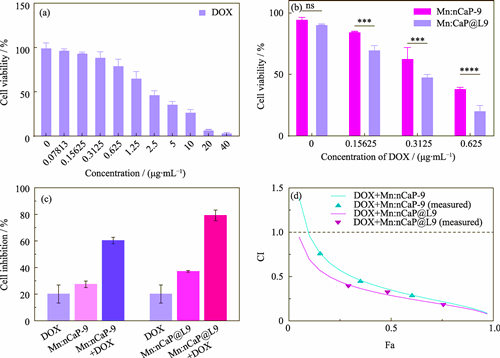
Manganese (Mn), with its unique multivalent nature, has been widely used in biomedical applications, including anticancer therapy and bone formation. However, in cancer treatment, it still faces challenges in achieving synergistic improvements in both catalytic and photothermal properties. In this study, a hierarchical structure (Mn:nCaP@Lys) was constructed through lysine (Lys) coupling and pH control utilizing manganese-doped calcium phosphate nanoclusters (Mn:nCaP, (2.50±0.64) nm) as structural units. Influence of hierarchical structuring on the photothermal conversion and catalytic performance of Mn:nCaP was discussed to optimize its biological effects. Experimental results showed that various Mn:nCaP@Lys samples with different particle sizes were successfully constructed by adjusting pH using a method of 1-ethyl-(3-dimethylaminopropyl) carbodiimide hydrochloride/ N-hydroxysuccinimide (0.09 mol/L)-mediated Lys (0.04 mol/L) coupling reaction. By increasing pH from 7.0 to 11.0, the particle size of Mn:nCaP@Lys was controllably increased from (57.27±7.83) nm to (95.70±14.16) nm. Compared to Mn:nCaP, Mn:nCaP@Lys showed better catalytic activity over 4 h. Moreover, the hierarchical structure material synthesized at pH 9.0 exhibited the strongest catalytic activity and good heating capacity, but its heating capacity was weaker than that of Mn:nCaP at pH 10.0 and 11.0. Biocompatible Mn:nCaP@Lys displayed enhanced tumor cell inhibition and increased chemo-therapeutic sensitization compared to Mn:nCaP. This study presents an effective method for improving the biological effects of Mn, supporting its application in biomedical fields.
|
|
|
Catalytic Hydrogenation of Carbon Dioxide to Ethanol by Hollow Flower-like Cu-Co/ZnFeOx
ZHANG Qiang, ZHUO Mao, ZHA Fei, MENG Wenliang, TIAN Haifeng, TANG Xiaohua, GUO Xiaojun
2026 Vol. 41 (11): 1640–1648
Abstract(
202 )
HTML(
2)
PDF(2548KB)(
79
)
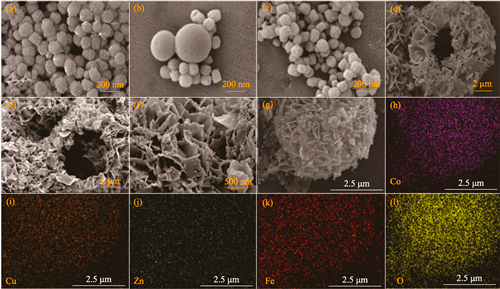
CO2 hydrogenation to ethanol offers the dual benefit of achieving carbon neutrality and addressing energy crises. However, its complex multi-step reaction mechanism imposes stringent requirements on catalyst design. Conventional bimetallic catalysts are limited by issues such as easy agglomeration of active components, low specific surface area due to dense particle structures, and poor interfacial tunability. In this study, hollow flower-like bimetallic Cu-Co was prepared via a solvothermal method, and mechanically mixed with spinel-phase ZnFeOx to develop a Cu-Co/ZnFeOx composite catalyst. Cu-Co/ZnFeOx catalyst features a hierarchical hollow structure with abundant mesoporous networks and a high specific surface area. Under reaction conditions of H2 : CO2=3 : 1 (in volume), gas hourly space velocity (GHSV)=12000 mL/(gcat·h), 300 ℃ and 1.5 MPa, Cu-Co/ZnFeOx catalyst increases CO2 conversion from 16.9% to 21.4% compared to Cu-Co alone, raises the selectivity of higher alcohols (C2+OH) from 17.0% to 26.7%, and achieves an ethanol selectivity of 61.8% in C2+OH. The hollow flower-like Cu-Co framework provides efficient mass transfer pathways and abundant H2 activation sites, while ZnFeOx offers high CO2 adsorption and activation capability. The strong electronic coupling between Cu-Co and ZnFeOx synergistically promotes H2 dissociation and CO2 activation. The underlying electronic synergy mechanism reveals strong metal-support interactions between the Cu-Co bimetallic and ZnFeOx. This synergistic effect promotes the formation of intermediates (CHx*) and C-C coupling, facilitating the formation and stabilization of key intermediates such as CH3CO* and CH3CH2O*, thereby enabling efficient and highly selective ethanol production. This study provides a reference for designing efficient, stable, and low-cost catalysts for CO2 hydrogenation.
|
|
|
Modification of Deoiled Diatomite and Its Adsorption Performance for Methyl Violet
CUI Mengmeng, LI Xiaoyan
2026 Vol. 41 (11): 1649–1657
Abstract(
180 )
HTML(
4)
PDF(4599KB)(
85
)
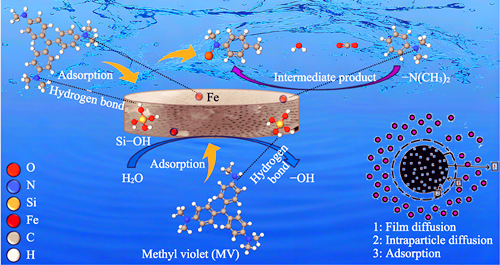
Oily diatomite is generated during the filtration of rolling oil using diatomite in the aluminum rolling process. Thermal desorption technology is utilized to recover oil and deoiled diatomite is produced. To reduce landfill and mitigate secondary environmental pollution, resource utilization of deoiled diatomite is essential. In this study, two modification methods were adopted and changes in functional groups, surface element valences, pore structure, and microstructure were analyzed. Adsorption experiments of methyl violet (MV) from simulated dye wastewater were conducted using the modified deoiled diatomite. Adsorption kinetics and thermodynamics were investigated, and the adsorption mechanism was discussed. By comparison with pristine diatomite, the feasibility of preparing diatomite filter aid from deoiled diatomite and its application in the dye wastewater treatment were explored. The results indicated that the optimal calcination temperature was 900 ℃, and the prepared material exhibited a high permeability and SiO2 content meeting the grade I diatomite filter aid. Compared with the calcined deoiled diatomite, the iron-modified deoiled diatomite exhibited increased crystallinity, enhanced lattice oxygen content, elevated surface Si-OH content and Fe3+/Fe2+ ratio, and increased specific surface area. It achieved a removal rate of 82.11% for MV after seven cycles, significantly higher than 58.34% for the calcined counterpart. The enhanced adsorption performance is primarily attributed to the introduction of new surface active sites, micropore filling, and the creation of additional pore structures after iron loading.
|
|
|
Preparation of Coal-based Rare Earth Catalysts via Plasma-assisted Ball Milling and Performance in the Degradation of Tetracycline Hydrochloride
NAN Tianxiang, WANG Lisheng, GUO Litong, WU Zhen, TAO Xueyu, FAN Heliang, ZHENG Ming, FENG Peizhong
2026 Vol. 41 (11): 1658–1666
Abstract(
217 )
HTML(
2)
PDF(4976KB)(
238
)
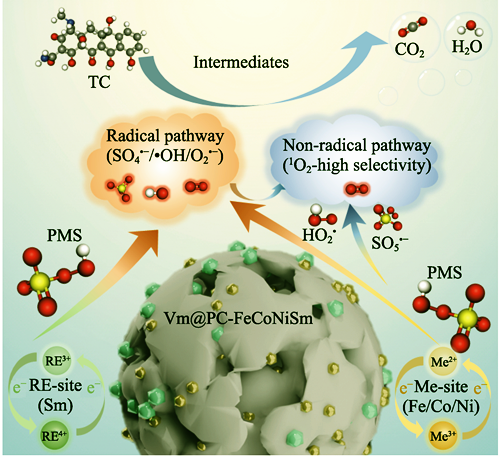
The efficient treatment of organic pollutant-containing wastewater is of great significance for water environmental safety and sustainable resource development. Although peroxymonosulfate (PMS)-based advanced oxidation processes have demonstrated unique advantages in the degradation of organic pollutants, the development of practical catalysts that combine high activity, stability, and low cost remains a major challenge in this field. In this study, a coal-based rare earth-transition metal multicomponent catalyst (Vm@PC-FeCoNiSm) was synthesized via plasma-assisted ball milling and applied in a PMS activation system for organic pollutant tetracycline hydrochloride (TC) degradation. The results show that the as-prepared catalyst exhibits a uniform microrod morphology with a micro-mesoporous composite structure and a high specific surface area of 789.2 m2/g. Under the conditions of 2.0 mmol/L PMS and 0.10 g/L catalyst, Vm@PC-FeCoNiSm achieves 96.3% degradation of TC within 30 min, which is significantly higher than that of the sample prepared without plasma treatment. After five consecutive cycles, the degradation efficiency remains above 91%, and the catalyst maintains stable degradation performance in real water matrices. The degradation process is driven by both radical (O2•-, •OH, SO4•-) and non-radical (1O2) pathways, with O2•- and 1O2 playing dominant roles. The electronic synergistic effect between the rare earth element Sm and the transition metals is critical for enhancing PMS activation efficiency and generating highly reactive species. This study not only provides a high-performance material for the advanced treatment of complex organic wastewater but also offers a new strategy and theoretical basis for the high-value utilization of coal-based carbon materials and rare earth elements in environmental catalysis.
|
|
|
MIL-53(Fe)-derived Fe3O4/HNTs/C Composite for Peroxymonosulfate Activation: Degradation Performance and Mechanism of Tetracycline
LEI Xinyu, WU Limei, WANG Xiaolong, CHEN Siquan, NIU Mengmeng, HU Chenkai, WANG Wei, TANG Ning
2026 Vol. 41 (11): 1667–1676
Abstract(
180 )
HTML(
2)
PDF(6312KB)(
77
)
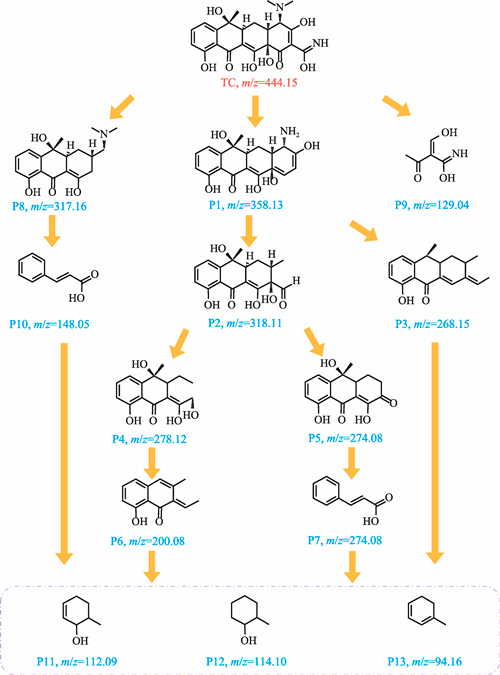
Fe3O4 is widely used as a heterogeneous catalyst in persulfate advanced oxidation technology due to its abundant availability and low cost. However, the inevitable agglomeration of nano-Fe3O4 severely restricts its catalytic activity and stability. In this study, halloysite nanotubes (HNTs) were employed as the carrier, and MIL-53(Fe) precursors were grown in-situ on the outer surface of HNTs via a solvothermal method, followed by calcination under an inert atmosphere to prepare MIL-53(Fe)-derived Fe3O4/HNTs/C composites. The performance and mechanism of Fe3O4/HNTs/C in activating peroxymonosulfate (PMS) for tetracycline (TC) degradation were systematically investigated. The results showed that the degradation efficiency of TC by Fe3O4/HNTs/C activating PMS reached 89.66%, which was 8.37% higher than that of the physically mixed sample of Fe3O4/C and HNTs. The Fe3O4/HNTs/C+PMS system maintained a TC degradation efficiency above 82% over a wide pH range of 3 to 11, and achieved a degradation efficiency of over 60% in both tap water and simulated seawater matrices. After 5 cycles, the degradation efficiency remained above 80%, demonstrating excellent stability and reusability. Free radical scavenging experiments and electron paramagnetic resonance tests confirmed that ·SO4-, ·OH, ·O2-, and 1O2 were involved in the degradation of TC, among which ·O2- played a dominant role. Furthermore, the possible intermediates and the potential degradation pathways of TC were explored. Toxicity evaluation indicated that the acute toxicity, mutagenicity, and developmental toxicity of the intermediates were generally lower than those of TC, effectively reducing the environmental risk.
|
|
|
Gamma-ray Induced Radiation Damage in BaF2:Y Scintillation Crystals
XU Jiawei, LI Xiang, ZHANG Jing, XIE Jiansheng, DENG Mingxue, QI Xuejun, CHEN Junfeng
2026 Vol. 41 (11): 1677–1685
Abstract(
164 )
HTML(
2)
PDF(1550KB)(
84
)
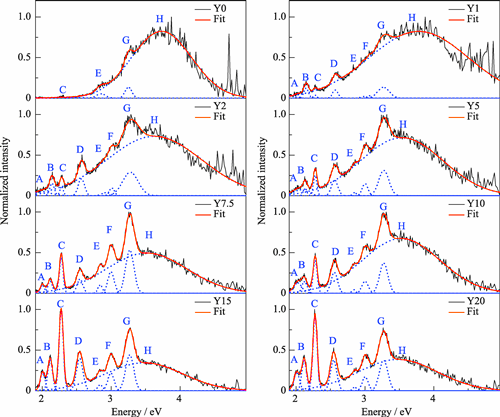
Yttrium-doped barium fluoride (BaF2:Y) crystal is a sub-nanosecond ultrafast scintillator characterized by effective suppression of its slow luminescence component and the ability to grow large, high-optical-quality single crystals, rendering it highly suitable for ultrafast radiation detection applications. Nevertheless, the underlying mechanisms of radiation damage and their dependence on yttrium doping remain poorly understood. In this study, a series of BaF2:Y crystals with 0-20.0% (in atomic) Y doping level using γ-rays across a dose range of 10 krad to 10 Mrad was systematically irradiated. The results indicate that radiation-induced absorption and relative light output loss of crystals exhibit pronounced doping-concentration dependence. Within the 1.0%-7.5% (in atomic) range, both the emission-weighted radiation-induced absorption coefficient (EWRIAC) and relative light output loss of Y-doped crystal are lower than those of the undoped crystal, with optimal performance at 2.0% (in atomic): the EWRIAC values for the fast and slow components are 4.6 and 4.0 m-1 at 10 Mrad, respectively, corresponding to a relative light output loss of ~29%. In contrast, both EWRIAC and relative light output loss of Y-doped crystals exceed those of the undoped crystal at doping levels of 10.0%-20.0% (in atomic). The emission peaks in the phosphorescence spectra exhibit distinct features: a broadband emission appears in all samples and shows a redshift with increasing Y doping level, while multiple distinct narrowband peaks are observed in Y-doped crystals with their intensity proportion increasing as the Y doping level rises. This study elucidates the influence of Y doping on the radiation damage characteristics of BaF2:Y crystals, providing key experimental evidence for enhancing the radiation resistance of BaF2:Y crystals and optimizing doping level design in practical applications.
|
|
|
Growth, Spectroscopy, and Laser Performance of Tm:YScO3 Crystal
SU Junyang, YANG Chuang, LIU Jian, JIANG Zhengyuan, ZHANG Jun, LIU Longxin, PAN Zhongben, XU Xiaodong, XU Jun
2026 Vol. 41 (11): 1686–1692
Abstract(
132 )
HTML(
2)
PDF(922KB)(
115
)
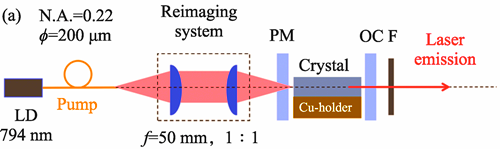
Mid-infrared laser crystals operating in the 2.1 µm spectral region are widely utilized in eye-safe applications, remote sensing, and medical surgery. In this study, high-quality 2.5%Tm:YScO3 single crystals (2.5% is in atomic) using the Czochralski method were grown. We systematically characterized their room-temperature absorption and fluorescence spectra, measured fluorescence lifetimes, calculated key spectroscopic parameters based on Judd-Ofelt theory, and evaluated their continuous-wave laser performance. The results indicate that the crystal exhibits an absorption cross-section of 0.33×10⁻²⁰ cm2 at 793 nm with a full width at half maximum (FWHM) of 23.5 nm. The Judd-Ofelt intensity parameters Ω2, Ω4, and Ω6 were determined to be 2.55×10⁻²⁰, 0.80×10⁻²⁰, and 0.66×10⁻²⁰ cm2, respectively, yielding a calculated radiative lifetime of 6.522 ms for the 3F4 level. Furthermore, the emission cross-section at 1960 nm was found to be 0.44×10⁻²⁰ cm2 with a broad FWHM of 86.63 nm, while the measured fluorescence lifetime was 3.855 ms. Under an incident pump power of 20 W, the laser achieved a maximum output power of 2.78 W with a slope efficiency of 22.66% and excellent beam quality factors of Mx2=1.18 and My2=1.09. The combination of a broad emission bandwidth and superior beam quality suggests that Tm:YScO3 is particularly well-suited for tunable and ultrafast laser applications. In conclusion, the 2.5%Tm:YScO3 crystal grown by the Czochralski method demonstrates exceptional spectroscopic and lasing properties, establishing it as a highly promising candidate for next-generation 2.1 µm solid-state laser systems.
|
|
|
One-pot Preparation of Cs3Cu2I5 Perovskite Nanocrystals and Their Application in X-ray Imaging
SU Duna, HU Xiaobo, WU Chuanli, MA Jingsheng, WANG Lianjun, JIANG Wan, HAN Xiuxun
2026 Vol. 41 (11): 1693–1702
Abstract(
187 )
HTML(
3)
PDF(9874KB)(
116
)
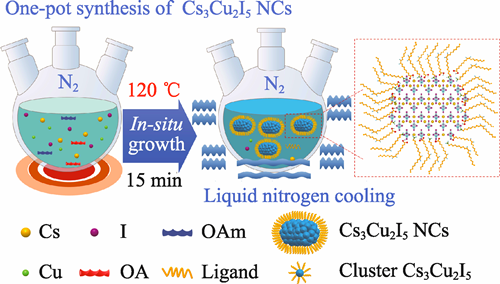
Zero-dimensional all-inorganic Cs3Cu2I5 perovskite emerges as a highly promising X-ray imaging material due to its lead-free nature, high luminescence efficiency, and unique photophysical properties originating from self-trapped excitons (STE). However, achieving the efficient, controllable synthesis and performance optimization of its nanocrystalline form remains a significant challenge. This study developed a facile one-pot synthesis strategy, aiming to fabricate Cs3Cu2I5 perovskite nanocrystals with high crystallinity, high luminescence efficiency, and excellent stability by synergistically optimizing the Cs/Cu molar ratio and the concentration of the oleic acid (OA)/oleylamine (OAm) dual-ligand system. The potential of these nanocrystals as scintillators for X-ray imaging was subsequently evaluated. A Cs/Cu molar ratio of 0.67 : 1 facilitates the formation of pure-phase Cs3Cu2I5 nanocrystals. A ligand concentration of 650 mmol/L promotes the effective passivation of surface defects by OA and OAm, thereby suppressing non-radiative recombination. The synthesized Cs3Cu2I5 nanocrystals exhibit outstanding optical properties, including a photoluminescence quantum yield (PLQY) as high as 83%. Remarkably, they retain over 90% of initial photoluminescence intensity after 35 d of storage under ambient conditions, demonstrating superior environmental stability. The composite film constructed from Cs3Cu2I5 nanocrystals and polydimethylsiloxane (PDMS) shows promising scintillation performance, with a light yield of 14019 ph/MeV, a detection limit as low as 1.3 μGyₐiᵣ/s. Furthermore, a spatial resolution of 12 lp/mm is achieved, enabling the acquisition of clear X-ray imaging photographs. This work provides a valuable reference for the efficient preparation and performance regulation of high-performance, lead-free perovskite nanocrystal scintillators for next-generation X-ray imaging devices.
|
|
|
Defect Properties of Alkali Metal Doped γ-CuI: A First-principles Perspective
REN Ruotian, BAI Ruirong, CHEN Xiaojian, LIN Zhennan, YANG Chang, WU Yuning
2026 Vol. 41 (11): 1703–1710
Abstract(
143 )
HTML(
2)
PDF(3764KB)(
97
)
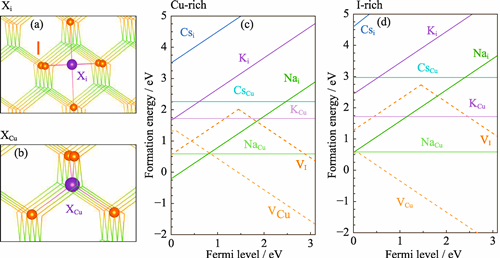
The transparent semiconductor γ-CuI is a highly promising material for next-generation optoelectronic devices. To further enhance its electrical and optical performance, intentional doping with alkali metals has been identified as a critical and effective strategy. In this study, the defect properties induced by doping with alkali metals (Na, K, and Cs) in CuI are systematically investigated using first-principles calculations. It is found that Na doping tends to form point defects and defect clusters, whereas the larger atomic radii of K and Cs promote the formation of more complex defect clusters. Furthermore, Na doping can result in defect concentrations higher than those of intrinsic defects, thereby significantly enhancing p-type conductivity. In contrast, the defect concentrations introduced by K and Cs doping are much lower than those of the intrinsic defects, and their effect on enhancing p-type conductivity is limited. Regarding the infrared absorption, high-concentration defects do not possess in-bandgap defect energy levels capable of absorbing infrared photons, whereas certain low-concentration defect clusters exhibit such absorption. Carrier absorption through defect energy levels has a negligible effect on the infrared transmittance of γ-CuI. This work predicts that alkali metal doped CuI is advantageous because p-type conductivity can be improved without causing uncontrollable infrared photon absorption caused by defect energy levels. This provides a theoretical basis for developing CuI-based devices that require simultaneous optimization of electrical and optical properties. The datasets in this article are listed in Science Data Bank at https://www.doi.org/10.57760/sciencedb.013h4.
|
|
|
Insights into Noncovalent Interaction Mechanisms within Solid Electrolyte Interfaces
YU Jinshuo, HUANG Jian, YANG Yi, YANG Qun, WANG Yidan, WANG Liang
2026 Vol. 41 (11): 1711–1722
Abstract(
170 )
HTML(
2)
PDF(14242KB)(
97
)
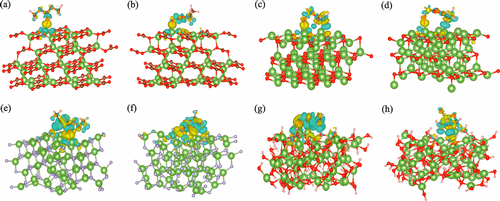
The role of molecular-level noncovalent interactions (NCI) in governing solid electrolyte interphase (SEI) formation remains poorly understood. This study employs density functional theory (DFT) combined with reduced density gradient (RDG) analysis to investigate 18 solvent and additive molecules adsorbed on four inorganic SEI surfaces: Li2CO3(001), Li2O(111), LiF(001), and LiOH(001). Interfacial interactions and electronic rearrangements were quantified via RDG analysis, differential charge densities, and Bader charge calculations. Results indicate that cyclic carbonates and sulfonyl/sultone groups exhibit strong directional attractions, whereas linear carbonates are dominated by weak van der Waals interactions, offering higher structural flexibility. Li2O demonstrates the strongest interfacial polarization toward polar O-or S-containing molecules. Bader analysis reveals net charge transfers (∆Q) ranging from 0.440e to 0.798e. Specifically, ethylene sulfite and 4,5-dimethyl-[1,3]dioxol-2-one on Li2O yield the highest transfers (0.796e and 0.798e), while dimethyl carbonate and propylene carbonate on Li2CO3 show significantly lower values (0.440e and 0.479e). LiF displays weak overall adsorption but high compatibility with fluorinated molecules (e.g., fluoroethylene carbonate-LiF, 0.672e), while LiOH exhibits moderate polarization (0.618e-0.679e). Strong directional NCI between polar additives and stable inorganic phases (Li2O, LiF) provide the microscopic foundation for dense, stable SEI structures, whereas linear carbonates primarily facilitate wetting and stress buffering. This work elucidates electrolyte-SEI compatibility mechanisms, offering theoretical guidance for designing inorganic-rich SEI layers. The datasets in this article are listed in Science Data Bank at http://doi.org/10.57760/sciencedb.jim.00032.
|
|
|
Quantitative Relationship between Structural Parameters and Output Power Density in Lattice Thermoelectric Legs
ZHOU Jie, CHEN Gang, LI Guodong
2026 Vol. 41 (11): 1723–1732
Abstract(
169 )
HTML(
3)
PDF(1734KB)(
95
)
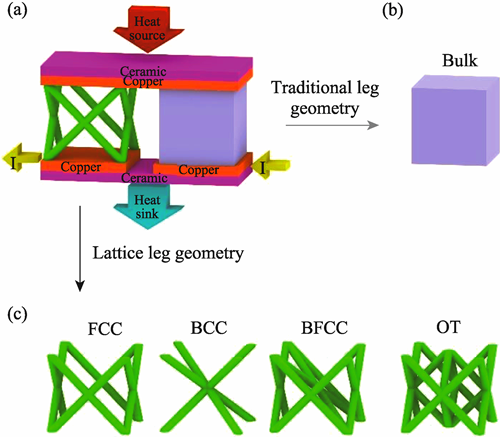
Unlike traditional bulk thermoelectric legs, recent studies show lattice-structured ones are a cost-effective strategy for boosting output power density. However, the intrinsic relationship between their structural parameters and thermoelectric performance lacks systematic analysis. This work investigated the relationship between two key structural parameters (strut diameter and lattice period) of lattice thermoelectric legs and the maximum output power density under different boundary conditions via an approximate calculation method for the heat transfer and electrical conduction of the extensively distributed diagonal struts in lattice structures. Then, the relationship between strut elements and the integral structure, as well as the influence of nodes, was taken into account during the transition from individual strut elements to the overall lattice structure. Finally, the correlation between structural parameters and output power density was derived by integrating the one-dimensional energy balance theory. Results show that under convective heat transfer boundary, lattice-structured thermoelectric legs have significant advantages in temperature difference and output power density over bulk structures due to their high thermal resistance. When the heat transfer coefficient is 200 W·m-2·K-1 (a common value in practical applications), adjusting the structural parameters makes the temperature difference ratio 2.4 times that of the bulk structure and the output power density 3.8 times that of the bulk structure. Our work provides theoretical guidance for the development of cost-effective thermoelectric devices.
|
|