Journal of Inorganic Materials ›› 2026, Vol. 41 ›› Issue (5): 645-652.DOI: 10.15541/jim20250373
• RESEARCH ARTICLE • Previous Articles Next Articles
LI Na1( ), WEI Jin1, CAO Ruixiao1,2, LIU Yu1, HUANG Guiwen1, XIAO Hongmei1()
Received:2025-09-26
Revised:2025-11-26
Published:2026-05-20
Online:2026-01-06
Contact:
XIAO Hongmei, professor. E-mail: hmxiao@mail.ipc.ac.cnAbout author:LI Na (1987-), female, PhD. E-mail: lina110@mail.ipc.ac.cn
Supported by:CLC Number:
LI Na, WEI Jin, CAO Ruixiao, LIU Yu, HUANG Guiwen, XIAO Hongmei. Self-developed Ortho-para Hydrogen Conversion Catalyst: Catalytic Testing and Optimization of Batch Preparation Process[J]. Journal of Inorganic Materials, 2026, 41(5): 645-652.
| Sample | Aperture of crushing sieve/mm | Particle size/mm | Granulation and post-processing technology | Secondary activation process |
|---|---|---|---|---|
| Commercial catalyst | / | 0.315-0.600 (30-50 mesh ) | / | / |
| 1# | 1.0 | 0.315-0.900 (20-50 mesh) | Primary crushing, washing | With low-temperature activation |
| 2# | 0.8 | 0.315-0.900 (20-50 mesh) | Primary crushing, washing | With low-temperature activation |
| 3# | 1.0 | 0.315-0.900 (20-50 mesh) | Secondary granulation, washing | With low-temperature activation |
| 4# | 0.8 | 0.315-0.900 (20-50 mesh) | Secondary granulation, washing | With low-temperature activation |
| 5# | 0.8 | 0.315-0.900 (20-50 mesh) | Without washing | / |
| 6# | 0.8 | 0.315-0.600 (30-50 mesh) | Primary crushing, washing | Without low-temperature activation |
| 7# | 0.8 | 0.315-0.900 (20-50 mesh) | Primary crushing, washing | Without low-temperature activation |
| 8# | 1.0 | 0.315-0.600 (30-50 mesh) | Secondary granulation, washing | Without low-temperature activation |
| 9# | 1.0 | 0.315-0.900 (20-50 mesh) | Secondary granulation, washing | Without low-temperature activation |
Table 1 Preparation parameters of self-developed catalysts
| Sample | Aperture of crushing sieve/mm | Particle size/mm | Granulation and post-processing technology | Secondary activation process |
|---|---|---|---|---|
| Commercial catalyst | / | 0.315-0.600 (30-50 mesh ) | / | / |
| 1# | 1.0 | 0.315-0.900 (20-50 mesh) | Primary crushing, washing | With low-temperature activation |
| 2# | 0.8 | 0.315-0.900 (20-50 mesh) | Primary crushing, washing | With low-temperature activation |
| 3# | 1.0 | 0.315-0.900 (20-50 mesh) | Secondary granulation, washing | With low-temperature activation |
| 4# | 0.8 | 0.315-0.900 (20-50 mesh) | Secondary granulation, washing | With low-temperature activation |
| 5# | 0.8 | 0.315-0.900 (20-50 mesh) | Without washing | / |
| 6# | 0.8 | 0.315-0.600 (30-50 mesh) | Primary crushing, washing | Without low-temperature activation |
| 7# | 0.8 | 0.315-0.900 (20-50 mesh) | Primary crushing, washing | Without low-temperature activation |
| 8# | 1.0 | 0.315-0.600 (30-50 mesh) | Secondary granulation, washing | Without low-temperature activation |
| 9# | 1.0 | 0.315-0.900 (20-50 mesh) | Secondary granulation, washing | Without low-temperature activation |
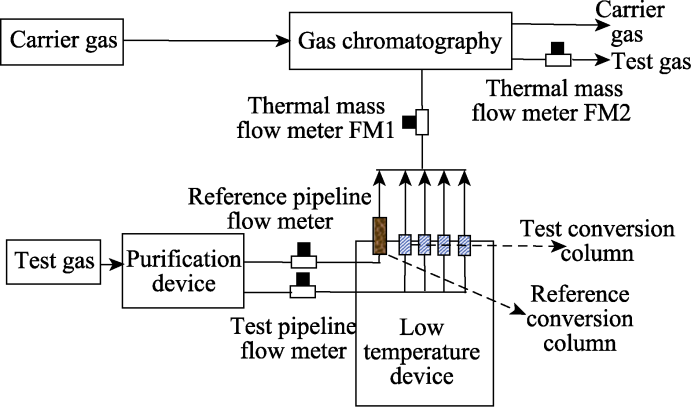
Fig. 1 Schematic diagram of experimental setup and testing process for the catalytic conversion of ortho-para hydrogen
| Parameter | Control sample | Test sample |
|---|---|---|
| Inner tube diameter | φ12.1 mm | φ8.9 mm |
| Working pressure | 0.1-0.2 MPa | 0.1-0.2 MPa |
| Hydrogen flow rate | 0.3-0.5 L/min | 0.4-1.6 L/min |
| Test section length | 65 mm | 32 mm |
| Catalyst packing volume | 4-5 mL | 1 mL |
Table 2 Experimental operating parameters
| Parameter | Control sample | Test sample |
|---|---|---|
| Inner tube diameter | φ12.1 mm | φ8.9 mm |
| Working pressure | 0.1-0.2 MPa | 0.1-0.2 MPa |
| Hydrogen flow rate | 0.3-0.5 L/min | 0.4-1.6 L/min |
| Test section length | 65 mm | 32 mm |
| Catalyst packing volume | 4-5 mL | 1 mL |
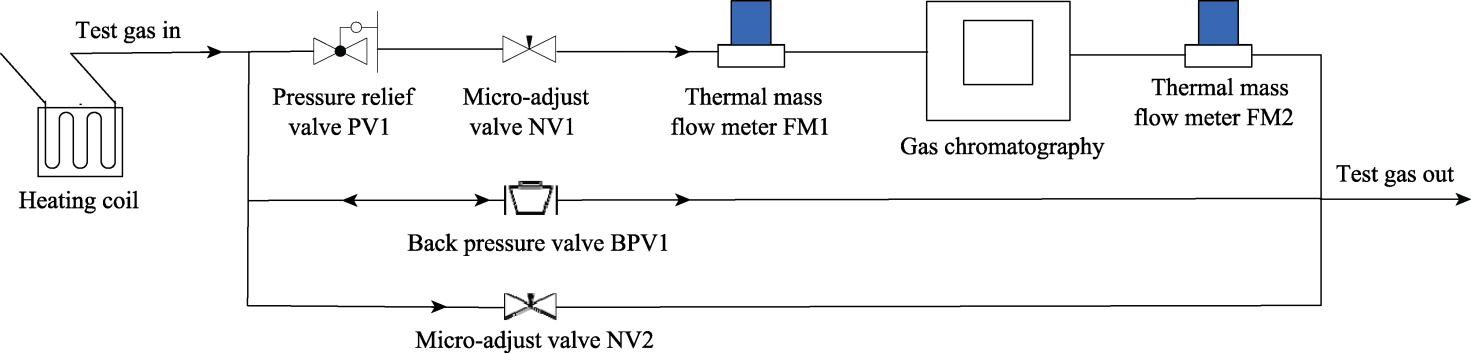
Fig. 2 Schematic diagram of testing gas flow process before entering into the gas chromatography
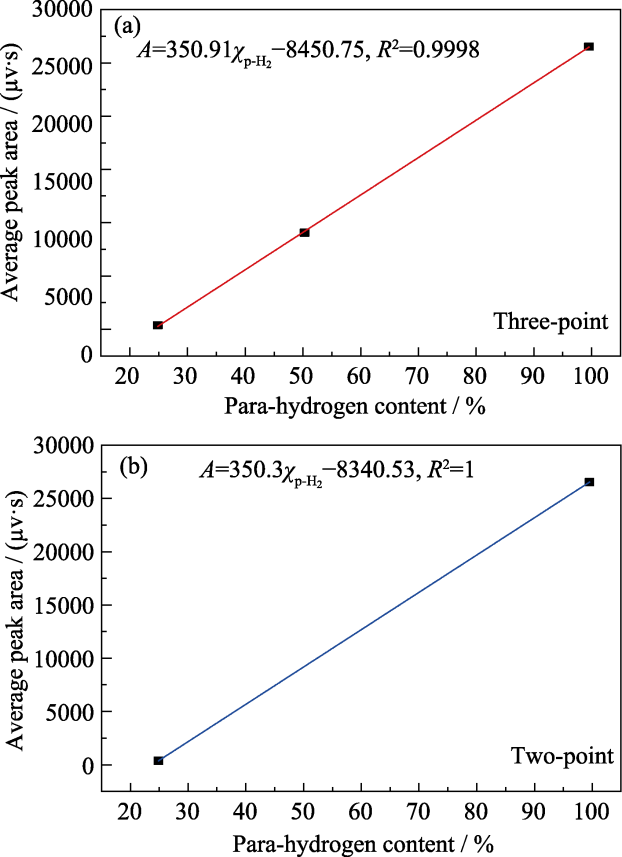
Fig. 3 Standard curves and fitted linear regression equations using (a) the three-point method and (b) the two-point method
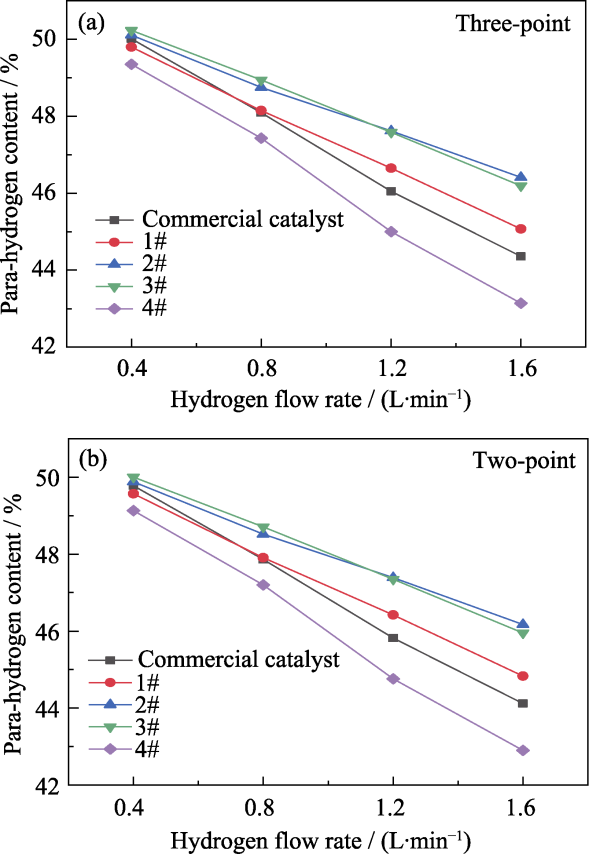
Fig. 4 Para-hydrogen contents of different samples at 77 K calculated by (a) the three-point method and (b) the two-point method
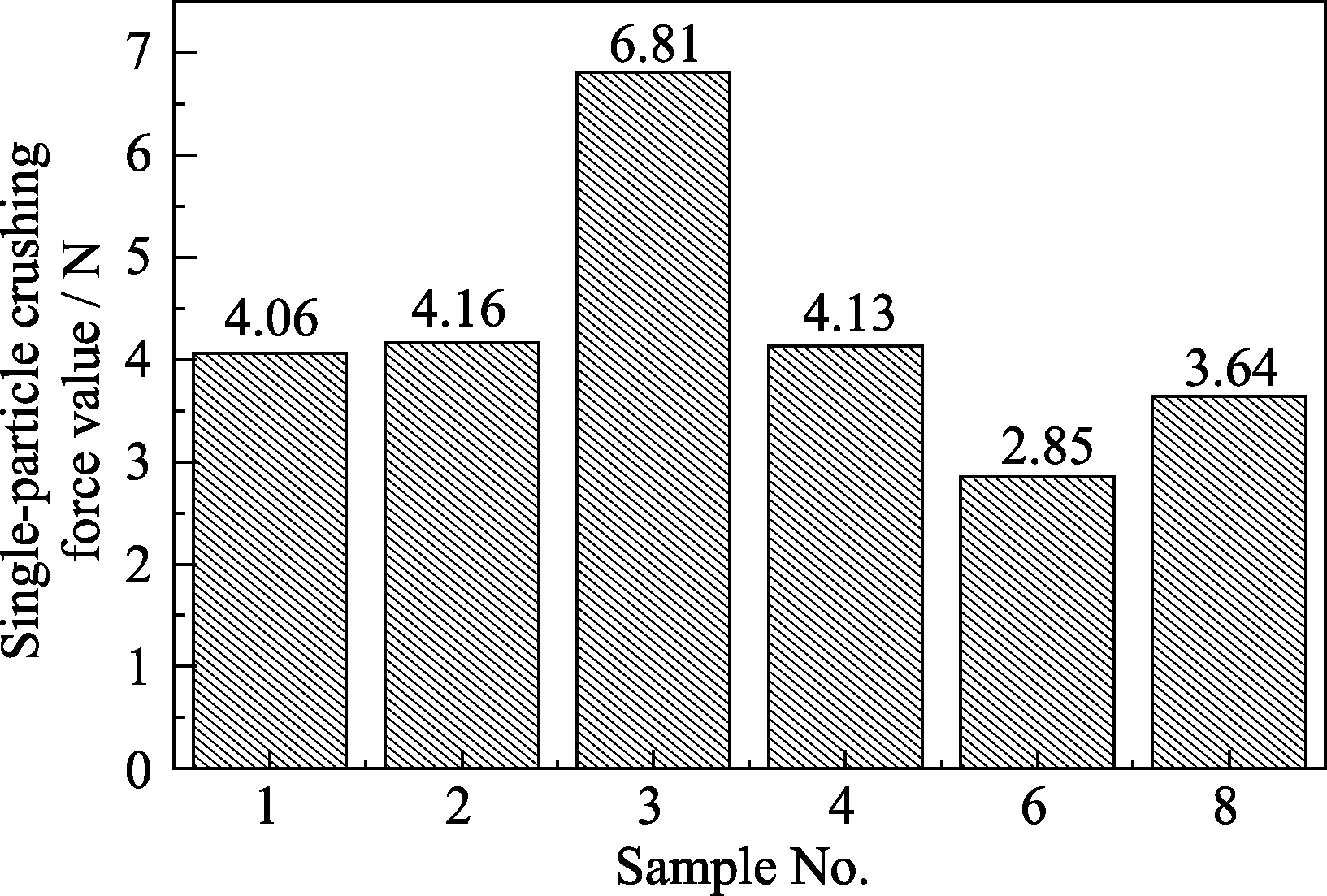
Fig. 5 Single-particle crushing force values of different samples
| Hydrogen flow rate/ (L·min-1) | Calculation parameter | Commercial catalyst | 1# | 2# | 3# | 4# |
|---|---|---|---|---|---|---|
| 0.4 | k value/(mol·(L·s)-1) | 0.6697 | 0.5881 | 0.7330 | 0.8825 | 0.4920 |
| Catalytic conversion rate/% | 98.86 | 98.03 | 99.25 | 99.72 | 96.26 | |
| 0.8 | k value/(mol·(L·s)-1) | 0.7313 | 0.7396 | 0.8375 | 0.8767 | 0.6531 |
| Catalytic conversion rate/% | 91.31 | 91.54 | 93.90 | 94.65 | 88.71 | |
| 1.2 | k value/(mol·(L·s)-1) | 0.8033 | 0.8716 | 1.0104 | 1.0037 | 0.7041 |
| Catalytic conversion rate/% | 83.28 | 85.64 | 89.46 | 89.30 | 79.15 | |
| 1.6 | k value/(mol·(L·s)-1) | 0.8706 | 0.9468 | 1.1240 | 1.0911 | 0.7587 |
| Catalytic conversion rate/% | 76.63 | 79.43 | 84.70 | 83.83 | 71.83 |
Table 3 Reaction rate constant (k) and catalytic conversion rates of various samples by the three-point method
| Hydrogen flow rate/ (L·min-1) | Calculation parameter | Commercial catalyst | 1# | 2# | 3# | 4# |
|---|---|---|---|---|---|---|
| 0.4 | k value/(mol·(L·s)-1) | 0.6697 | 0.5881 | 0.7330 | 0.8825 | 0.4920 |
| Catalytic conversion rate/% | 98.86 | 98.03 | 99.25 | 99.72 | 96.26 | |
| 0.8 | k value/(mol·(L·s)-1) | 0.7313 | 0.7396 | 0.8375 | 0.8767 | 0.6531 |
| Catalytic conversion rate/% | 91.31 | 91.54 | 93.90 | 94.65 | 88.71 | |
| 1.2 | k value/(mol·(L·s)-1) | 0.8033 | 0.8716 | 1.0104 | 1.0037 | 0.7041 |
| Catalytic conversion rate/% | 83.28 | 85.64 | 89.46 | 89.30 | 79.15 | |
| 1.6 | k value/(mol·(L·s)-1) | 0.8706 | 0.9468 | 1.1240 | 1.0911 | 0.7587 |
| Catalytic conversion rate/% | 76.63 | 79.43 | 84.70 | 83.83 | 71.83 |
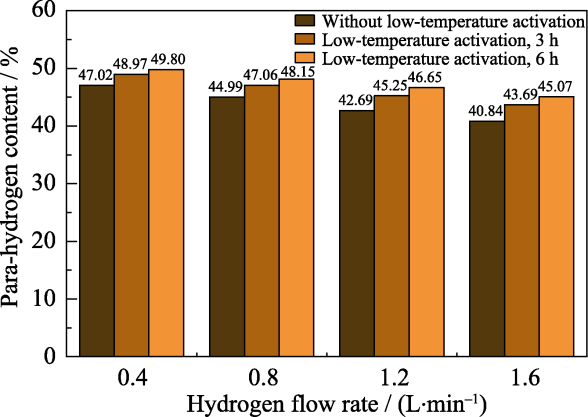
Fig. 6 Effect of low-temperature activation on the catalytic conversion of para-hydrogen content for sample 1#
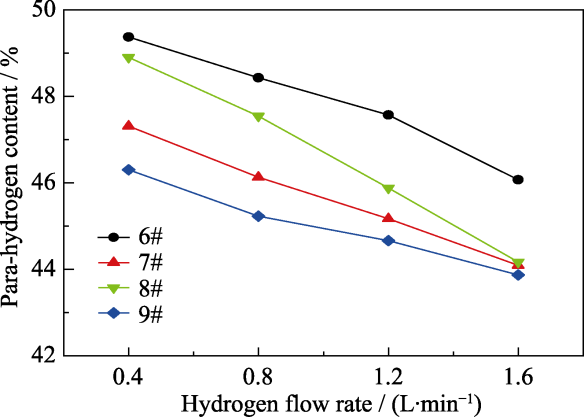
Fig. 7 Effect of particle size on the catalytic performance
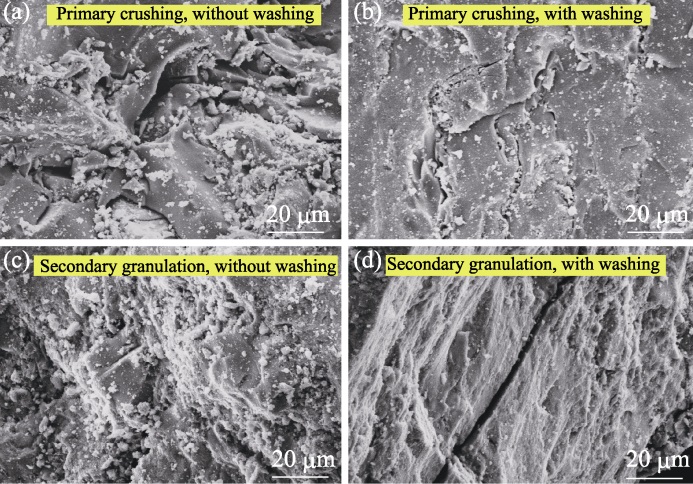
Fig. 8 SEM morphology comparison of the prepared samples (a, c) before and (b, d) after washing following (a, b) primary crushing and (c, d) secondary granulation
| Peak area | Hydrogen flow rate | Average value | RSD/% | Equilibrium para-hydrogen content/% | ||
|---|---|---|---|---|---|---|
| 0.3 L/min | 0.4 L/min | 0.5 L/min | ||||
| Peak area at 298 K/(μV·s) | 378.5 | 356.6 | 252.1 | 328.1 | 16.97 | 24.88 |
| 371.1 | 342.9 | 244.9 | ||||
| 375.1 | 329.7 | 284.3 | ||||
| Average peak area/(μV·s) | 374.9 | 343.0 | 266.6 | |||
| Corrected | 374.9 | 0.99 | ||||
| Peak area at 77 K/(μV·s) | 9131.7 | 9021.9 | 8919.2 | 9056.3 | 0.89 | 50.30 |
| 9161.6 | 9030.5 | 9020.0 | ||||
| 9131.6 | 9092.6 | 8995.6 | ||||
| Average peak area/(μV·s) | 9141.6 | 9048.3 | 8979.2 | |||
| Peak area at 21 K/(μV·s) | 26481.2 | 26501.7 | 26622.3 | 26531.7 | 0.37 | 99.55 |
| 26477.7 | 26486.8 | 26602.1 | ||||
| 26461.9 | 26444.0 | 26708.0 | ||||
| Average peak area/(μV·s) | 26473.6 | 26477.5 | 26644.1 | |||
Table S1 Calibration data at different temperatures
| Peak area | Hydrogen flow rate | Average value | RSD/% | Equilibrium para-hydrogen content/% | ||
|---|---|---|---|---|---|---|
| 0.3 L/min | 0.4 L/min | 0.5 L/min | ||||
| Peak area at 298 K/(μV·s) | 378.5 | 356.6 | 252.1 | 328.1 | 16.97 | 24.88 |
| 371.1 | 342.9 | 244.9 | ||||
| 375.1 | 329.7 | 284.3 | ||||
| Average peak area/(μV·s) | 374.9 | 343.0 | 266.6 | |||
| Corrected | 374.9 | 0.99 | ||||
| Peak area at 77 K/(μV·s) | 9131.7 | 9021.9 | 8919.2 | 9056.3 | 0.89 | 50.30 |
| 9161.6 | 9030.5 | 9020.0 | ||||
| 9131.6 | 9092.6 | 8995.6 | ||||
| Average peak area/(μV·s) | 9141.6 | 9048.3 | 8979.2 | |||
| Peak area at 21 K/(μV·s) | 26481.2 | 26501.7 | 26622.3 | 26531.7 | 0.37 | 99.55 |
| 26477.7 | 26486.8 | 26602.1 | ||||
| 26461.9 | 26444.0 | 26708.0 | ||||
| Average peak area/(μV·s) | 26473.6 | 26477.5 | 26644.1 | |||
| Sample No. | Test data | Hydrogen flow rate | |||
|---|---|---|---|---|---|
| 0.4 L/min | 0.8 L/min | 1.2 L/min | 1.6 L/min | ||
| Commercial catalyst | Average peak area/(μV·s) | 9096.6 | 8425.2 | 7709.0 | 7116.4 |
| RSD/% | 0.21 | 0.63 | 0.31 | 0.31 | |
| 1# | Average peak area/(μV·s) | 9025.0 | 8444.0 | 7920.3 | 7365.0 |
| RSD/% | 0.38 | 0.27 | 0.18 | 0.24 | |
| 2# | Average peak area/(μV·s) | 9134.1 | 8656.6 | 8261.8 | 7833.5 |
| RSD/% | 0.25 | 0.17 | 0.38 | 0.33 | |
| 3# | Average peak area/(μV·s) | 9174.6 | 8721.3 | 8244.6 | 7756.4 |
| RSD/% | 0.27 | 0.10 | 0.33 | 0.12 | |
| 4# | Average peak area/(μV·s) | 8868.2 | 8192.3 | 7339.9 | 6687.0 |
| RSD/% | 0.12 | 0.13 | 0.42 | 0.19 | |
Table S2 Catalytic test data for various samples at 77 K
| Sample No. | Test data | Hydrogen flow rate | |||
|---|---|---|---|---|---|
| 0.4 L/min | 0.8 L/min | 1.2 L/min | 1.6 L/min | ||
| Commercial catalyst | Average peak area/(μV·s) | 9096.6 | 8425.2 | 7709.0 | 7116.4 |
| RSD/% | 0.21 | 0.63 | 0.31 | 0.31 | |
| 1# | Average peak area/(μV·s) | 9025.0 | 8444.0 | 7920.3 | 7365.0 |
| RSD/% | 0.38 | 0.27 | 0.18 | 0.24 | |
| 2# | Average peak area/(μV·s) | 9134.1 | 8656.6 | 8261.8 | 7833.5 |
| RSD/% | 0.25 | 0.17 | 0.38 | 0.33 | |
| 3# | Average peak area/(μV·s) | 9174.6 | 8721.3 | 8244.6 | 7756.4 |
| RSD/% | 0.27 | 0.10 | 0.33 | 0.12 | |
| 4# | Average peak area/(μV·s) | 8868.2 | 8192.3 | 7339.9 | 6687.0 |
| RSD/% | 0.12 | 0.13 | 0.42 | 0.19 | |
| Hydrogen flow rate/(L·min-1) | Para-hydrogen content/% | Calibration method | ||||
|---|---|---|---|---|---|---|
| Commercial catalyst | 1# | 2# | 3# | 4# | ||
| 0.4 | 50.01 | 49.80 | 50.11 | 50.23 | 49.35 | Three-point method |
| 0.8 | 48.09 | 48.15 | 48.75 | 48.94 | 47.43 | |
| 1.2 | 46.05 | 46.65 | 47.62 | 47.58 | 45.00 | |
| 1.6 | 44.36 | 45.07 | 46.41 | 46.19 | 43.14 | |
| 0.4 | 49.78 | 49.57 | 49.88 | 50.00 | 49.13 | Two-point method |
| 0.8 | 47.86 | 47.91 | 48.52 | 48.71 | 47.20 | |
| 1.2 | 45.82 | 46.42 | 47.39 | 47.35 | 44.76 | |
| 1.6 | 44.12 | 44.83 | 46.17 | 45.95 | 42.90 | |
Table S3 Para-hydrogen content of various samples at 77 K calculated by three-point and two-point methods
| Hydrogen flow rate/(L·min-1) | Para-hydrogen content/% | Calibration method | ||||
|---|---|---|---|---|---|---|
| Commercial catalyst | 1# | 2# | 3# | 4# | ||
| 0.4 | 50.01 | 49.80 | 50.11 | 50.23 | 49.35 | Three-point method |
| 0.8 | 48.09 | 48.15 | 48.75 | 48.94 | 47.43 | |
| 1.2 | 46.05 | 46.65 | 47.62 | 47.58 | 45.00 | |
| 1.6 | 44.36 | 45.07 | 46.41 | 46.19 | 43.14 | |
| 0.4 | 49.78 | 49.57 | 49.88 | 50.00 | 49.13 | Two-point method |
| 0.8 | 47.86 | 47.91 | 48.52 | 48.71 | 47.20 | |
| 1.2 | 45.82 | 46.42 | 47.39 | 47.35 | 44.76 | |
| 1.6 | 44.12 | 44.83 | 46.17 | 45.95 | 42.90 | |
| [1] |
XU P, WEN J, LI K, et al. Review of the continuous catalytic ortho-para hydrogen conversion technology for hydrogen liquefaction. International Journal of Hydrogen Energy, 2024, 62: 473.
DOI URL |
| [2] | 唐璐, 邱利民, 姚蕾, 等. 氢液化系统的研究进展与展望. 制冷学报, 2011, 32(6): 1. |
| [3] |
YIN L, JU Y L. Review on the design and optimization of hydrogen liquefaction processes. Frontiers in Energy, 2020, 14(3): 530.
DOI |
| [4] |
ZHUZHGOV A V, KRIVORUCHKO O P, ISUPOVA L A, et al. Low-temperature conversion of ortho-hydrogen into liquid para- hydrogen: process and catalysts. Review. Catalysis in Industry, 2018, 10(1): 9.
DOI |
| [5] |
LARSEN A H, SIMON F E, SWENSON C A. The rate of evaporation of liquid hydrogen due to the ortho-para hydrogen conversion. Review of Scientific Instruments, 1948, 19(4): 266.
DOI URL |
| [6] |
ILISCA E. Ortho-para conversion of hydrogen molecules physisorbed on surfaces. Progress in Surface Science, 1992, 41(3): 217.
DOI URL |
| [7] |
XU Y F, BI Y J, JU Y L. The thermodynamic analysis on the catalytical ortho-para hydrogen conversion during the hydrogen liquefaction process. International Journal of Hydrogen Energy, 2024, 54: 1329.
DOI URL |
| [8] |
DAS T, NAH I W, CHOI J G, et al. Synthesis of iron oxide catalysts using various methods for the spin conversion of hydrogen. Reaction Kinetics, Mechanisms and Catalysis, 2016, 118(2): 669.
DOI URL |
| [9] |
SULLIVAN N S, ZHOU D, EDWARDS C M. Precise and efficient in situ ortho-para-hydrogen converter. Cryogenics, 1990, 30(8): 734.
DOI URL |
| [10] |
KIM J H, KARNG S W, OH I H, et al. Ortho-para hydrogen conversion characteristics of amorphous and mesoporous Cr2O3 powders at a temperature of 77 K. International Journal of Hydrogen Energy, 2015, 40(41): 14147.
DOI URL |
| [11] |
WAKAO N, SMITH J M, SELWOOD P W. The low-temperature orthohydrogen conversion over supported oxides and metals. Journal of Catalysis, 1962, 1(1): 62.
DOI URL |
| [12] | 花亦怀, 李秋英, 程昊, 等. 正仲氢催化转化机理研究综述. 制冷学报, 2025, 46(5): 12. |
| [13] |
TURRO N J, CHEN J Y, SARTORI E, et al. The spin chemistry and magnetic resonance of H2@C60. From the Pauli principle to trapping a long lived nuclear excited spin state inside a buckyball. Accounts of Chemical Research, 2010, 43(2): 335.
DOI PMID |
| [14] |
BOEVA O, ANTONOV A, ZHAVORONKOVA K. Influence of the nature of IB group metals on catalytic activity in reactions of homomolecular hydrogen exchange on Cu, Ag, Au nanoparticles. Catalysis Communications, 2021, 148: 106173.
DOI URL |
| [15] |
BOEVA O A, ODINTZOV A A, SOLOVOV R D, et al. Low-temperature ortho-para hydrogen conversion catalyzed by gold nanoparticles: particle size does not affect the rate. International Journal of Hydrogen Energy, 2017, 42(36): 22897.
DOI URL |
| [16] |
CHEN Y, YANG L J, LI X B. Preparation and study of high efficiency M-BTC ortho-para hydrogen conversion catalysts. International Journal of Hydrogen Energy, 2024, 81: 10.
DOI URL |
| [17] |
POLYUKHOV D M, KUDRIAVYKH N A, GROMILOV S A, et al. Efficient MOF-catalyzed ortho-para hydrogen conversion for practical liquefaction and energy storage. ACS Energy Letters, 2022, 7(12): 4336.
DOI URL |
| [18] |
WANG J Y, YUE C Z, ZHAO J, et al. Doping-induced structural transformations in maghemite for enhanced ortho-para hydrogen conversion. Catalysis Today, 2025, 452: 115243.
DOI URL |
| [19] |
ZHAO Z Z, LI A Q, CHEN Y S, et al. Insights into the facet dependent conversion of ortho- to para-hydrogen over α-Fe2O3 nanocrystals. International Journal of Hydrogen Energy, 2025, 123: 281.
DOI URL |
| [20] |
YUE C Z, WANG J Y, WANG S F, et al. Identification of structural factors in iron oxide triggering ortho-para hydrogen conversion. The Journal of Physical Chemistry C, 2024, 128(30): 12355.
DOI URL |
| [21] |
CHEN Y S, ZHUO H Y, SHEN Z, et al. Catalytic mechanism studies of ortho-para H2 conversion over iron oxide catalysts. EcoEnergy, 2025, 3(3): e70004.
DOI URL |
| [22] | 陈志强, 汪丽, 丁明伟, 等. 封装型α-Fe2O3@SiO2催化剂的制备及其催化正仲氢转化性能评价. 低碳化学与化工, 2024, 49(9): 106. |
| [23] | 范质, 吴俊哲, 杨昌乐, 等. 正仲氢转化催化剂性能实验研究. 低温工程, 2025(1): 65. |
| [24] |
XU H, WANG J W, HAN Y S, et al. Effect of unpaired electron number elements (Al, Cr, Mn) doping in Fe2O3 on ortho to para hydrogen conversion at 77 K. Journal of Energy Storage, 2023, 74: 109512.
DOI URL |
| [25] |
XU H, BI S H, XUE M Z, et al. Amorphous cobalt iron oxide nanoparticles with high magnetization intensity for spin conversion of hydrogen at 77 K. International Journal of Hydrogen Energy, 2023, 48(81): 31643.
DOI URL |
| [26] |
XUE M Z, XU H, SHEN J, et al. A high specific surface area and amorphous cobalt oxide@molecular sieve supported catalyst for ortho-to para-hydrogen conversion. International Journal of Hydrogen Energy, 2025, 103: 341.
DOI URL |
| [27] |
LI N, CAO R X, WEI J, et al. Performance and influencing factors of iron-based catalyst for ortho to para hydrogen conversion. Journal of Inorganic Materials, 2025, 40(1): 47.
DOI URL |
| [28] | WEITZEL D H, BLAKE J H, KONECNIK M. Boston, Flow conversion kinetics of ortho and parahydrogen. Advances in Cryogenic Engineering, Boston, MA, 1960. |
| [1] | WANG Junbu, HUANG Zeai, YANG Mingkai, MENG Ying, ZHOU Mingwei, ZHOU Ying. Research Progress on Anti-coking Catalytic Materials for Methane Conversion [J]. Journal of Inorganic Materials, 2026, 41(6): 739-750. |
| [2] | XUE Xinyan, ZHANG Xiaowei, LU Heng, LI Shijie, ZHANG Weike, CHAN Siewhwa. Co-Mg Synergistic Carbon Nano Onions Catalyst: Preparation and Low-temperature Catalytic Hydrogen Production from Ammonia Decomposition [J]. Journal of Inorganic Materials, 2026, 41(4): 500-508. |
| [3] | HUANG Yinghe, HUANG Renxing, SHI Yuxing, LEI Yijie, YU Tao, WANG Cheng, GU Jun. Enhancing Durability of Pt Catalysts in the Oxygen Reduction Reaction by Confinement Effect of Mesoporous Carbon [J]. Journal of Inorganic Materials, 2026, 41(3): 289-294. |
| [4] | REN Xianpei, LI Chao, HU Qiwei, XIANG Hui, PENG Yuehong. Research Progress on Mott-Schottky Hydrogen Evolution Catalysts Based on Metal/Transition Metal Compounds [J]. Journal of Inorganic Materials, 2026, 41(2): 137-149. |
| [5] | WU Boyu, ZHANG Shengen, ZHANG Shengyang, LIU Bo, ZHANG Bolin. Effect of CeO2 on Low-temperature Denitrification Performance of MnOx Catalysts and Its Mechanism [J]. Journal of Inorganic Materials, 2026, 41(1): 87-95. |
| [6] | LIU Jiangping, GUAN Xin, TANG Zhenjie, ZHU Wenjie, LUO Yongming. Research Progress on Catalytic Oxidation of Nitrogen-containing Volatile Organic Compounds [J]. Journal of Inorganic Materials, 2025, 40(9): 933-943. |
| [7] | GUO Ziyu, ZHU Yunzhou, WANG Li, CHEN Jian, LI Hong, HUANG Zhengren. Effect of Zn2+ Catalyst on Microporous Structure of Porous Carbon Prepared from Phenolic Resin/Ethylene Glycol [J]. Journal of Inorganic Materials, 2025, 40(5): 466-472. |
| [8] | LI Jianjun, CHEN Fangming, ZHANG Lili, WANG Lei, ZHANG Liting, CHEN Huiwen, XUE Changguo, XU Liangji. Peroxymonosulfate Activation by CoFe2O4/MgAl-LDH Catalyst for the Boosted Degradation of Antibiotic [J]. Journal of Inorganic Materials, 2025, 40(4): 440-448. |
| [9] | XIN Zhenyu, GUO Ruihua, WUREN Tuoya, WANG Yan, AN Shengli, ZHANG Guofang, GUAN Lili. Pt-Fe/GO Nanocatalysts: Preparation and Electrocatalytic Performance on Ethanol Oxidation [J]. Journal of Inorganic Materials, 2025, 40(4): 379-387. |
| [10] | SUN Shujuan, ZHENG Nannan, PAN Haokun, MA Meng, CHEN Jun, HUANG Xiubing. Research Progress on Preparation Methods of Single-atom Catalysts [J]. Journal of Inorganic Materials, 2025, 40(2): 113-127. |
| [11] | LI Xueru, MA Zhejie, GUO Yujie, LI Ping. Influence of Support Characteristics on Coverage of Ionomer and Oxygen Reduction Performance for Pt/C Catalysts [J]. Journal of Inorganic Materials, 2025, 40(12): 1395-1404. |
| [12] | ZHAO Lijuan, TAN Zhe, ZHANG Xiaoguang, JIANG Guosai, TAO Ran, PAN De’an. Numerical Simulation of Particle Classification for Spent Hydrogenation Catalyst [J]. Journal of Inorganic Materials, 2025, 40(12): 1387-1394. |
| [13] | LIU Panpan, YAO Peng, LIU Xuzi, QU Li, ZENG Lu, SONG Zhaohua, JIAO Yi, WANG Jianli, CHEN Yaoqiang. MnOx/CeO2-ZrO2 Composite Oxides: Construction and Application in Soot Oxidation [J]. Journal of Inorganic Materials, 2025, 40(11): 1300-1308. |
| [14] | LI Na, CAO Ruixiao, WEI Jin, ZHOU Han, XIAO Hongmei. Performance and Influencing Factors of Iron-based Catalyst for Ortho to Para Hydrogen Conversion [J]. Journal of Inorganic Materials, 2025, 40(1): 47-52. |
| [15] | LIAN Minli, SU Jiaxin, HUANG Hongyang, JI Yuyin, DENG Haifan, ZHANG Tong, CHEN Chongqi, LI Dalin. Supported Ni Catalysts from Ni-Mg-Al Hydrotalcite-like Compounds:Preparation and Catalytic Performance for Ammonia Decomposition [J]. Journal of Inorganic Materials, 2025, 40(1): 53-60. |
| Viewed | ||||||
|
Full text |
|
|||||
|
Abstract |
|
|||||
