无机材料学报 ›› 2026, Vol. 41 ›› Issue (5): 583-594.DOI: 10.15541/jim20250424
赵彤彤1( ), 代吉祥1(), 苏成1, 师艳1, 沙建军1,2
收稿日期:2025-10-27
修回日期:2025-11-27
出版日期:2026-05-20
网络出版日期:2025-12-19
通讯作者:
代吉祥, 副教授. E-mail: jxdai@dlut.edu.cn作者简介:赵彤彤(1998-), 女, 博士研究生. E-mail: zttz@mail.dlut.edu.cn
基金资助:
ZHAO Tongtong1(), DAI Jixiang1(), SU Cheng1, SHI Yan1, SHA Jianjun1,2
Received:2025-10-27
Revised:2025-11-27
Published:2026-05-20
Online:2025-12-19
Contact:
DAI Jixiang, associate professor. E-mail: jxdai@dlut.edu.cnAbout author:ZHAO Tongtong (1998-), female, PhD candidate. E-mail: zttz@mail.dlut.edu.cn
Supported by:摘要:
为提升C/C复合材料在超高温长时环境下的抗烧蚀性能, 本研究采用非包埋的反应熔渗法制备了Hf-Si基涂层-基体一体化改性C/C复合材料。微观结构分析表明, 涂层和基体主要由HfC、SiC和HfSi2相构成, 两者通过化学反应形成紧密结合。材料内部基体的致密度及组分构成沿渗透方向呈现梯度分布: 靠近入渗端孔隙填充致密, 基体相以HfC-HfSi2为主; 远离入渗端残存较多孔隙, 基体相以SiC和Si-HfSi2两相共晶组织为主。表面涂层结构连续且致密, 厚度约120 μm, 其主要由SiC外层和HfC-HfSi2-SiC内层构成。对复合材料反应形成机制的深入探究表明, HfC-SiC-HfSi2涂层-基体一体化结构是熔体渗透-反应与气相渗透-沉积协同作用的结果。氧乙炔烧蚀测试结果表明, 该复合材料具有优异的抗高温烧蚀性能。在2500 ℃下烧蚀考核60、180、600和3540 s后, 材料的线烧蚀率分别为-3.52、-1.35、-0.85和0.118 μm/s。复合材料优异的抗烧蚀性能源于表面多组分涂层协同氧化生成的连续致密HfO2保护层, 以及涂层下方基体氧化生成的HfO2-SiO2-HfSiO4多相混合氧化物层。两者共同作用, 有效抑制了氧气向内扩散, 从而显著延缓了复合材料内部的氧化烧蚀进程。本研究为制备高性能一体化热防护结构提供了一种可行的技术策略。
中图分类号:
赵彤彤, 代吉祥, 苏成, 师艳, 沙建军. 反应熔渗法制备Hf-Si基涂层-基体一体化改性C/C复合材料的微观结构及烧蚀性能[J]. 无机材料学报, 2026, 41(5): 583-594.
ZHAO Tongtong, DAI Jixiang, SU Cheng, SHI Yan, SHA Jianjun. Microstructure and Ablation Resistance of C/C Composites Modified by Hf-Si-based Coating-matrix Integrated Structure Fabricated by Reactive Melt Infiltration[J]. Journal of Inorganic Materials, 2026, 41(5): 583-594.
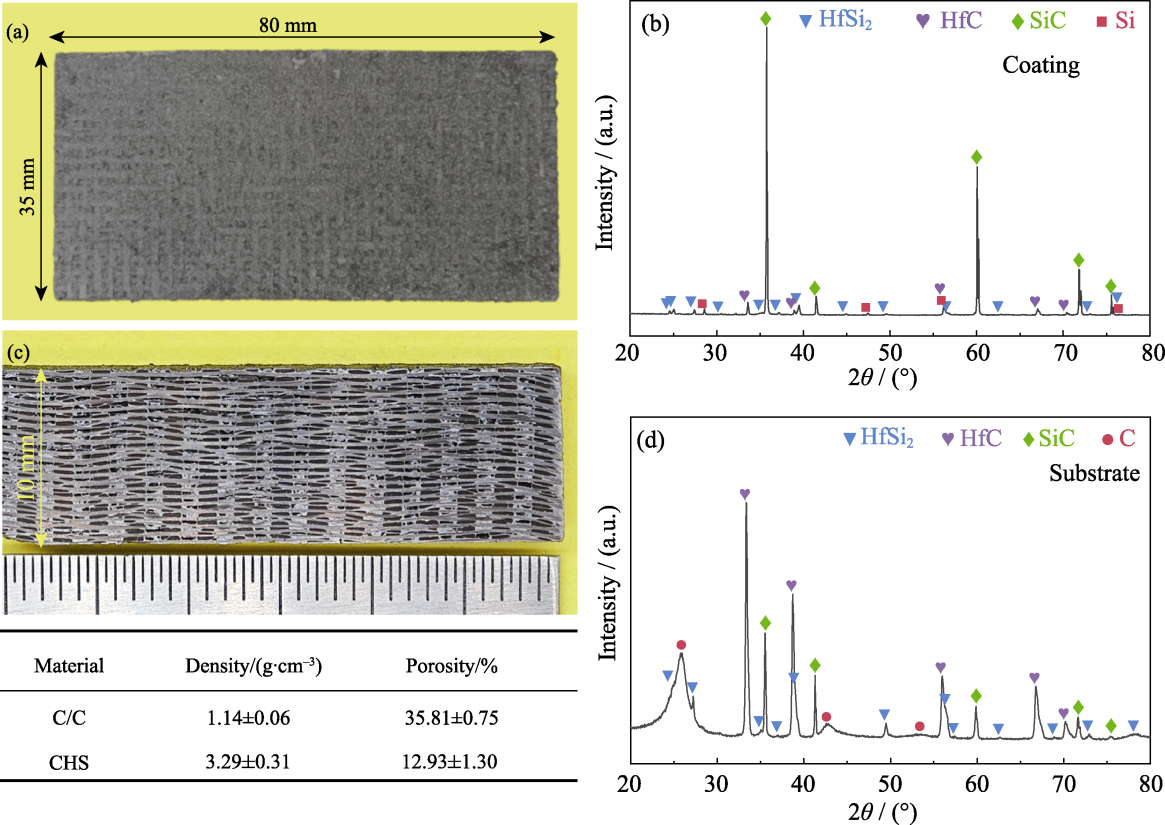
图1 (a, c) CHS上表面和横切面的宏观形貌; (b, d)涂层和基体的XRD图谱
Fig. 1 (a, c) Macroscopic photographs of the upper surface and cross-section of CHS; (b, d) XRD patterns of the coating and substrate
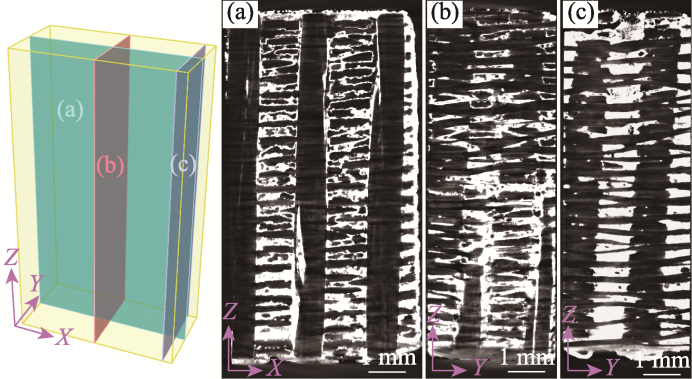
图2 CHS的XRM图像切片
Fig. 2 XRM image slices of CHS (a) XZ plane; (b, c) YZ plane
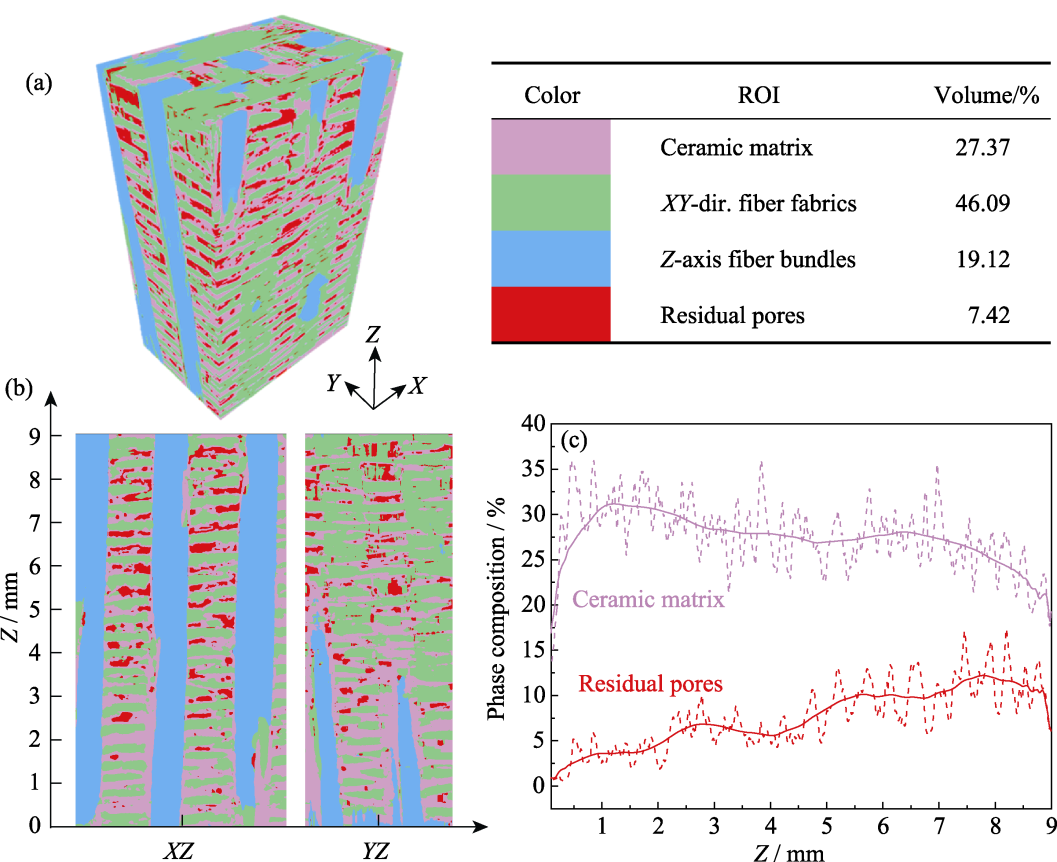
图3 基于深度学习处理的CHS内部的三维XRM图像(a)、典型二维图像切片(b), 以及陶瓷基体和残留孔隙的含量随渗透深度的变化曲线(c)
Fig. 3 3D XRM image (a) and typical 2D image slices (b) of CHS processed using deep learning, along with the variation curves of ceramic matrix and residual pore content with penetration depth (c) Colorful figures are available on website
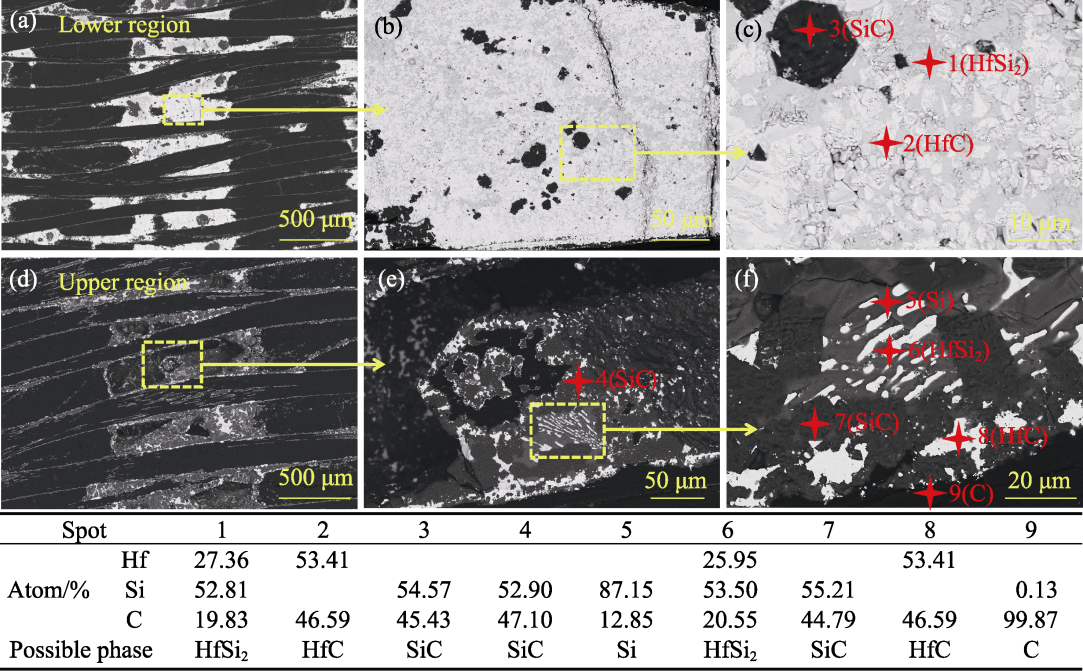
图4 CHS内部基体的微观形貌和EDS结果
Fig. 4 Microstructure and EDS results of the CHS internal matrix (a-c) Lower end region; (d-f) Upper end region
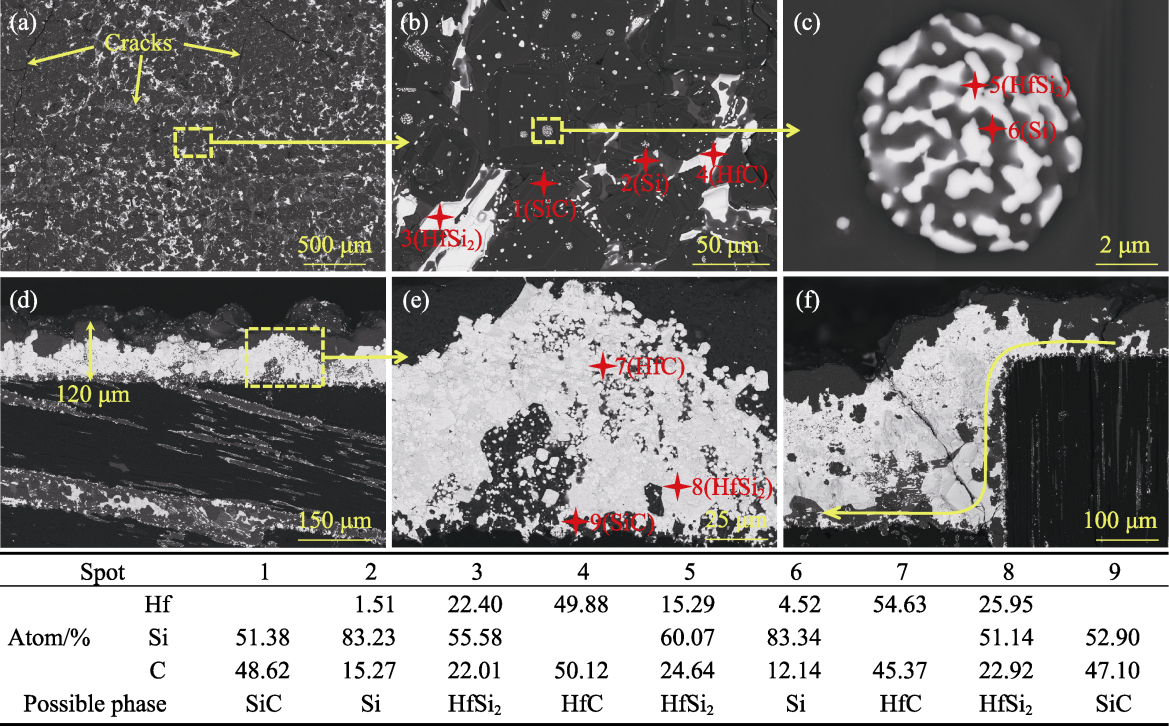
图5 CHS上表面涂层的微观形貌及EDS结果
Fig. 5 Microstructure and EDS results of the top surface coating on CHS (a-c) Coating surface; (d-f) Coating cross-section
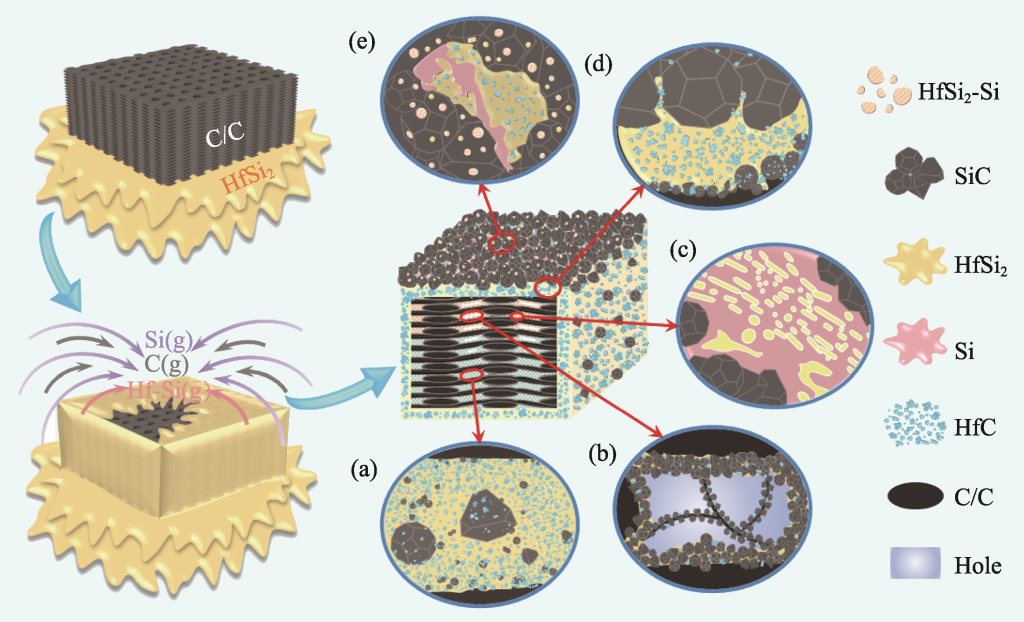
图6 HfC-SiC-HfSi2涂层-基体一体化改性C/C复合材料的形成机制示意图
Fig. 6 Formation mechanism diagram of HfC-SiC-HfSi2 coating-matrix integrated modified C/C composites
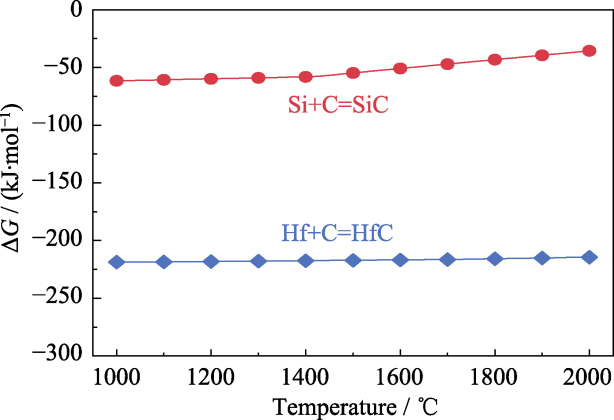
图7 Hf-C、Si-C反应的吉布斯自由能随温度的变化曲线
Fig. 7 Gibbs free energy changes as a function of temperature for the Hf-C and Si-C reactions
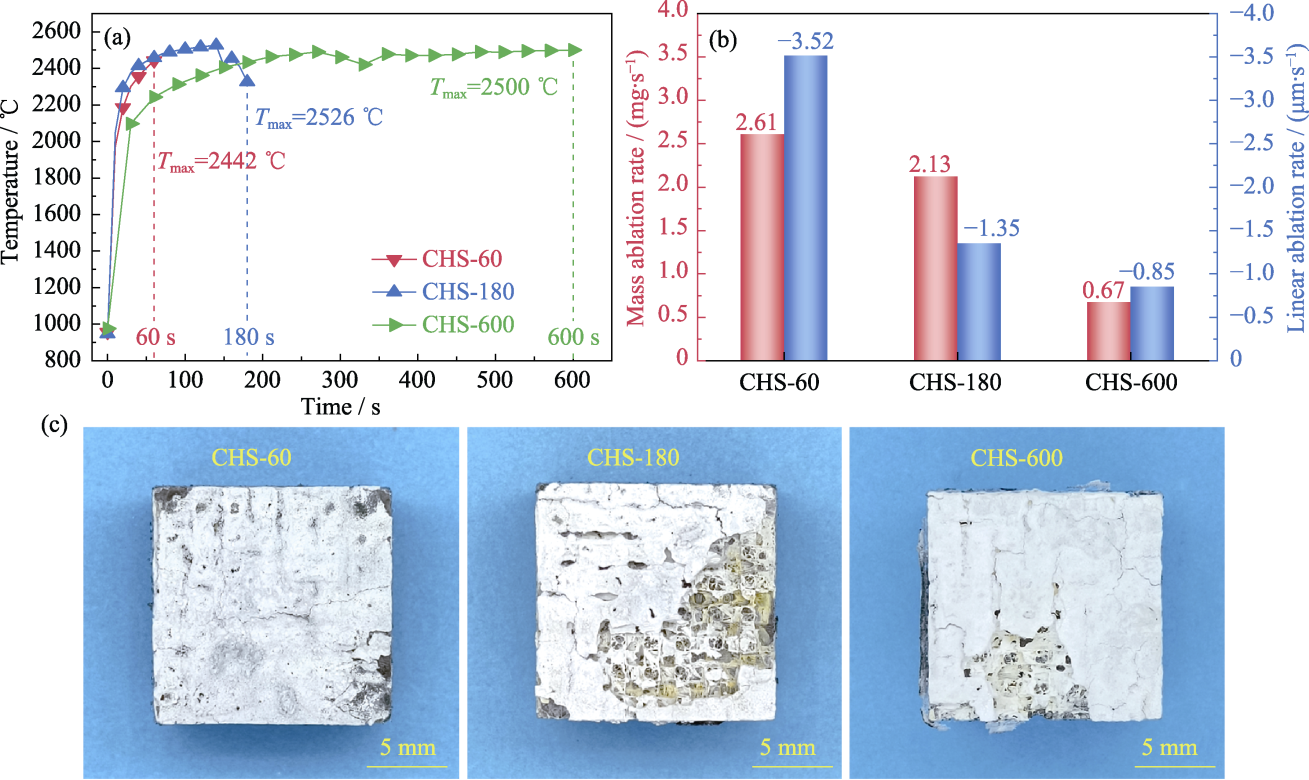
图8 (a)试样烧蚀中心的温度曲线; (b)质量和线性烧蚀率; (c)试样烧蚀后的表面形貌
Fig. 8 (a) Temperature curves at the ablation center of the samples; (b) Mass and linear ablation rates; (c) Surface morphologies of the samples after ablation
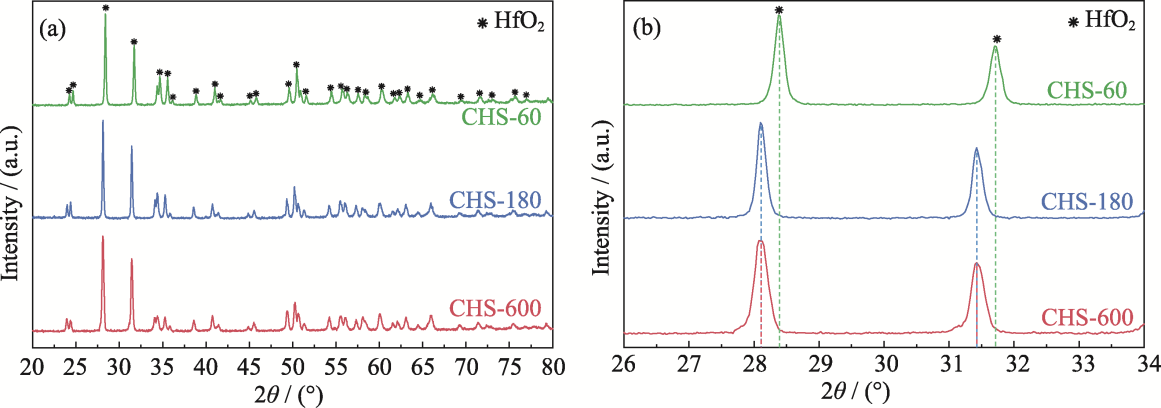
图9 烧蚀试样表面的XRD图谱(a)及2θ=26°~34°范围的放大图谱(b)
Fig. 9 XRD patterns of the ablated samples surface (a) and enlarged patterns in the range of 2θ=26°-34° (b)
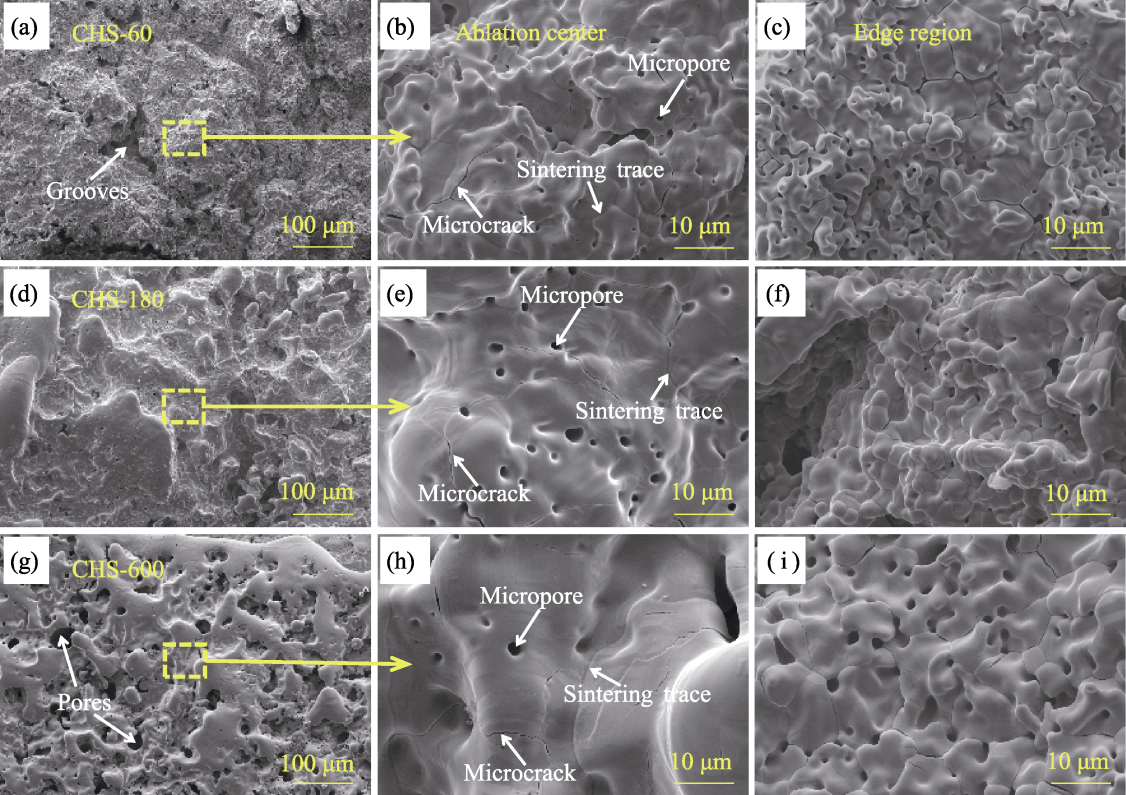
图10 烧蚀试样表面中心和边缘区域的微观形貌
Fig. 10 Micro-morphologies of the center and edge regions of the ablated samples surface (a-c) CHS-60; (d-f) CHS-180; (g-i) CHS-600
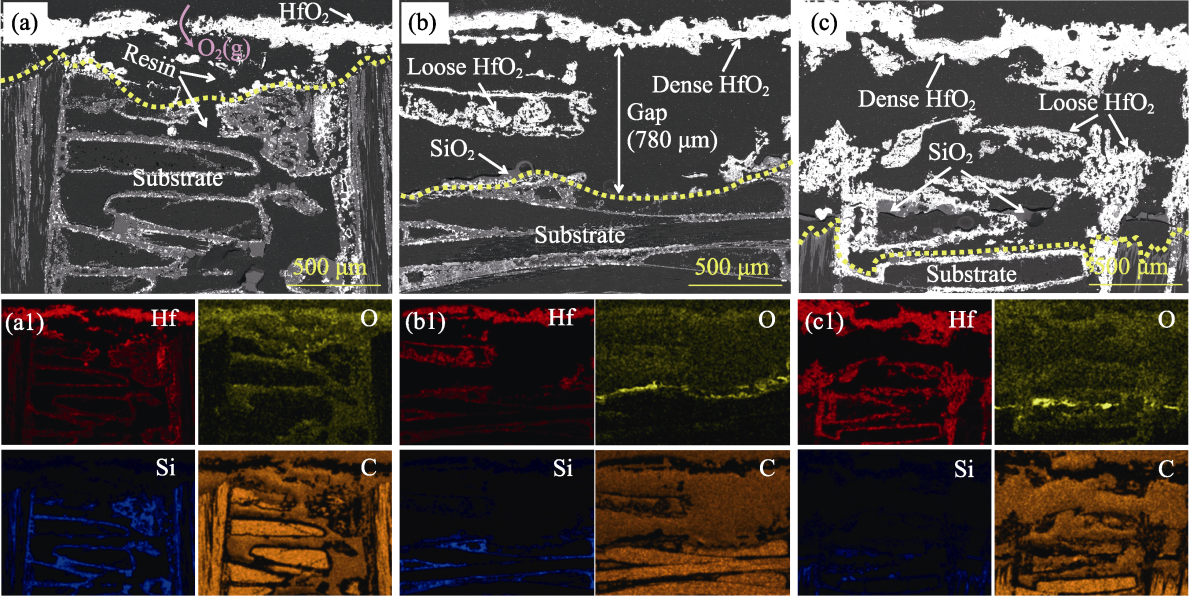
图11 试样烧蚀中心截面的微观形貌及EDS元素面分布图
Fig. 11 Micro-morphologies and EDS elemental mappings of the cross-section at the ablation center of the samples (a, a1) CHS-60; (b, b1) CHS-180; (c, c1) CHS-600
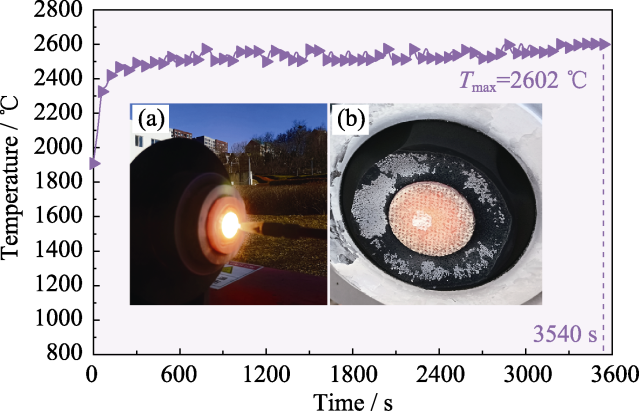
图12 CHS-3540的烧蚀中心温度曲线及试样和石墨夹具在烧蚀过程中(a)和烧蚀停止后(b)的状态图
Fig. 12 Temperature curve at the ablation center of CHS-3540 and state diagrams of the sample and graphite fixture during (a) and after (b) ablation
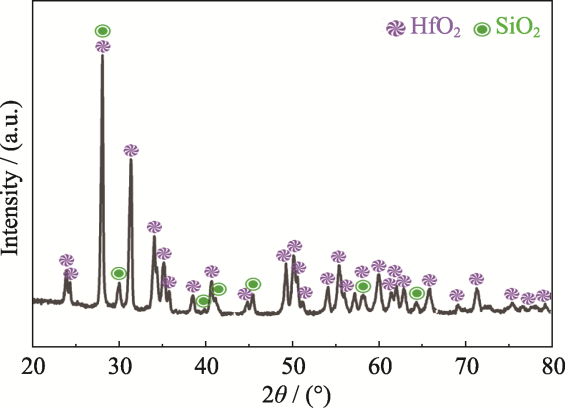
图13 CHS-3540烧蚀表面的XRD图谱
Fig. 13 XRD pattern of the CHS-3540 ablation surface
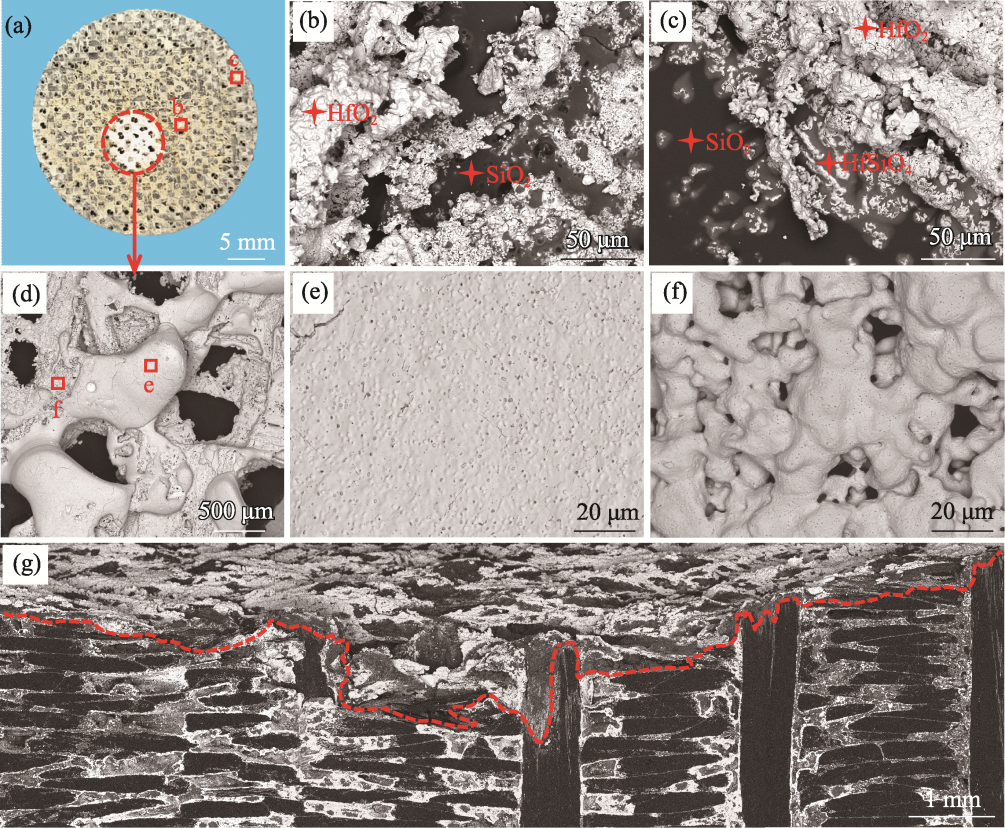
图14 CHS-3540烧蚀后的表面宏观形貌(a)和微观形貌(b~g)
Fig. 14 Macroscopic morphology (a) and microstructures (b-g) of CHS-3540 after ablation (b) Transition region; (c) Edge region; (d-f) HfO2 layer at ablation center; (g) Cross-section
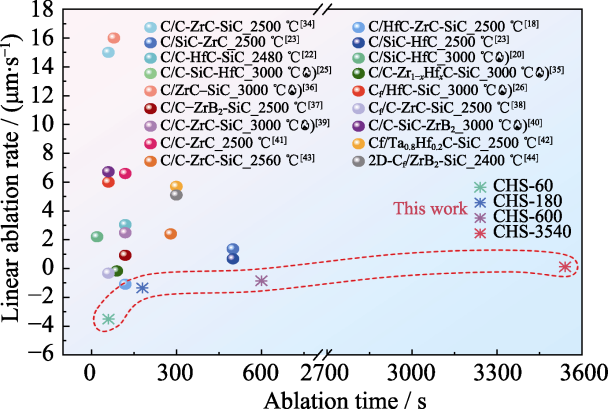
图15 本工作与相关文献报道的线烧蚀率的比较[18,20,22 -23,25 -26,34 -44]
Fig. 15 Comparison of line ablation rates between this work and related literature[18,20,22 -23,25 -26,34 -44] Colorful figure is available on website
| [1] |
ZENG Y, WANG D, XIONG X, et al. Ablation-resistant carbide Zr0.8Ti0.2C0.74B0.26 for oxidizing environments up to 3,000 ℃. Nature Communications, 2017, 8: 15836.
DOI URL |
| [2] |
SCITI D, ZOLI L, REIMER T, et al. A systematic approach for horizontal and vertical scale up of sintered ultra-high temperature ceramic matrix composites for aerospace—advances and perspectives. Composites Part B: Engineering, 2022, 234: 109709.
DOI URL |
| [3] |
PADTURE N P. Advanced structural ceramics in aerospace propulsion. Nature Materials, 2016, 15(8): 804.
DOI PMID |
| [4] | 陈玉峰, 洪长青, 胡成龙, 等. 空天飞行器用热防护陶瓷材料. 现代技术陶瓷, 2017, 38(5): 311. |
| [5] |
ARAI Y, INOUE R, GOTO K, et al. Carbon fiber reinforced ultra-high temperature ceramic matrix composites: a review. Ceramics International, 2019, 45(12): 14481.
DOI URL |
| [6] |
ZHU S, ZHANG G, BAO Y, et al. Progress in preparation and ablation resistance of ultra-high-temperature ceramics modified C/C composites for extreme environment. Reviews on Advanced Materials Science, 2023, 62(1): 20220276.
DOI URL |
| [7] |
NI D, CHENG Y, ZHANG J, et al. Advances in ultra-high temperature ceramics, composites, and coatings. Journal of Advanced Ceramics, 2021, 11(1): 1.
DOI |
| [8] | PARK S J. Carbon/carbon composites//PARK S J. Carbon fibers. Singapore: Springer Singapore, 2018: 279. |
| [9] |
ZHANG J P, QU J L, FU Q G. Ablation behavior of nose-shaped HfB2-SiC modified carbon/carbon composites exposed to oxyacetylene torch. Corrosion Science, 2019, 151: 87.
DOI URL |
| [10] |
JIN X, FAN X, LU C, et al. Advances in oxidation and ablation resistance of high and ultra-high temperature ceramics modified or coated carbon/carbon composites. Journal of the European Ceramic Society, 2018, 38(1): 1.
DOI URL |
| [11] |
FAHRENHOLTZ W G, HILMAS G E. Ultra-high temperature ceramics: materials for extreme environments. Scripta Materialia, 2017, 129: 94.
DOI URL |
| [12] |
ZHANG X H, WANG Y M, CHENG Y, et al. Research progress on ultra-high temperature ceramic composites. Journal of Inorganic Materials, 2024, 39(6): 571.
DOI URL |
| [13] |
WYATT B C, NEMANI S K, HILMAS G E, et al. Ultra-high temperature ceramics for extreme environments. Nature Reviews Materials, 2023, 9: 773.
DOI |
| [14] |
LI X X, FU Q G, WEN Z H, et al. Research progress on ultra-high temperature ceramic structural materials for extreme environments. Journal of Inorganic Materials, 2025, 40(10): 1045.
DOI URL |
| [15] |
LIU Z, WANG Y, XIONG X, et al. Microstructure and ablation behavior of C/C-SiC-(ZrxHf1-x)C composites prepared by reactive melt infiltration method. Materials, 2023, 16(5): 2120.
DOI URL |
| [16] |
JIAO X, TAN Q, HE Q, et al. Cyclic ablation behavior of mullite-modified C/C-HfC-SiC composites under an oxyacetylene flame at about 2400 ℃. Journal of the European Ceramic Society, 2023, 43(10): 4309.
DOI URL |
| [17] |
WANG Y L, XIONG X, ZHAO X J, et al. Structural evolution and ablation mechanism of a hafnium carbide coating on a C/C composite in an oxyacetylene torch environment. Corrosion Science, 2012, 61: 156.
DOI URL |
| [18] |
CHEN Y, SUN W, XIONG X, et al. Microstructure, thermophysical properties, and ablation resistance of C/HfC-ZrC-SiC composites. Ceramics International, 2019, 45(4): 4685.
DOI URL |
| [19] |
VERDON C, SZWEDEK O, ALLEMAND A, et al. High temperature oxidation of two- and three-dimensional hafnium carbide and silicon carbide coatings. Journal of the European Ceramic Society, 2014, 34(4): 879.
DOI URL |
| [20] |
DUAN L, ZHAO X, WANG Y. Comparative ablation behaviors of C/SiC-HfC composites prepared by reactive melt infiltration and precursor infiltration and pyrolysis routes. Ceramics International, 2017, 43(18): 16114.
DOI URL |
| [21] |
CHEN B W, NI D W, WANG J X, et al. Ablation behavior of Cf/ZrC-SiC-based composites fabricated by an improved reactive melt infiltration. Journal of the European Ceramic Society, 2019, 39(15): 4617.
DOI URL |
| [22] |
LIU Z, FU Q, SHI H, et al. Comparative study of microstructure and ablation behaviour of C/C-HfC-SiC composites prepared under two different conditions. Materials Characterization, 2022, 194: 112467.
DOI URL |
| [23] |
ZHAO R, PANG S, LIANG B, et al. Comparative ablation behaviors of C/SiC-ZrC and C/SiC-HfC composites prepared by ceramization of carbon aerogel preforms. Corrosion Science, 2023, 225: 111623.
DOI URL |
| [24] |
KOU S, MAO Y, MA J, et al. Microstructure evolution and properties of Hf/Zr-based UHTCs modified C/C composites prepared by reactive melt infiltration method. Journal of the European Ceramic Society, 2024, 44(6): 3610.
DOI URL |
| [25] |
YAN M, LI H, FU Q, et al. Ablative property of C/C-SiC-HfC composites prepared via precursor infiltration and pyrolysis under 3,000 ℃ oxyacetylene torch. Acta Metallurgica Sinica (English Letters), 2014, 27(6): 981.
DOI URL |
| [26] |
YAN C, LIU R, ZHA B, et al. Fabrication and properties of 3-dimensional 4-directional Cf/HfC-SiC composites by precursor impregnation and pyrolysis process. Journal of Alloys and Compounds, 2018, 739: 955.
DOI URL |
| [27] |
ZHANG J, XIN Y, WANG R, et al. Ablation behaviour of C/C-HfC-SiC composites prepared by joint route of precursor infiltration and pyrolysis and gaseous silicon infiltration. Chinese Journal of Aeronautics, 2023, 36(9): 426.
DOI URL |
| [28] |
ZHANG M, HU D, FU Q. Ablation resistant behavior of silicide modified HfB2-SiC coating on graphite by spark plasma sintering: role of MeSi2 addition Journal of the European Ceramic Society, 2024, 44(11): 6286.
DOI URL |
| [29] |
GIGOLOTTI J C J, NUNES C A, SUZUKI P A, et al. Evaluation of phase equilibria involving the liquid phase in the Hf-Si system. Journal of Phase Equilibria and Diffusion, 2014, 35(5): 622.
DOI URL |
| [30] |
ZHOU L, FU Q, HU D, et al. Oxidation protective SiC-Si coating for carbon/carbon composites by gaseous silicon infiltration and pack cementation: a comparative investigation. Journal of the European Ceramic Society, 2021, 41(1): 194.
DOI URL |
| [31] |
HOU J Q, CHEN R C, ZENG Y Y, et al. Thermal shock and ablation resistance of SiC coating repaired by gaseous silicon infiltration. Journal of Inorganic Materials, 2025, 40(2): 168.
DOI URL |
| [32] |
HAGGERTY R P, SARIN P, APOSTOLOV Z D, et al. Thermal expansion of HfO2 and ZrO2. Journal of the American Ceramic Society, 2014, 97(7): 2213.
DOI URL |
| [33] |
WANG P, LI H, SUN J, et al. The effect of HfB2 content on the oxidation and thermal shock resistance of SiC coating. Surface and Coatings Technology, 2018, 339: 124.
DOI URL |
| [34] |
SHEN Y, SUN W, XU Y, et al. Structural characteristics and ablative behavior of YF3 modified C/C-ZrC-SiC composites and their preparation by molten salt assisted reactive melt infiltration. Journal of the European Ceramic Society, 2023, 43(4): 1303.
DOI URL |
| [35] |
JIAO X, HE Q, QING M, et al. Ablation behavior of C/C- Zr1-xHfxC-SiC composites under an oxyacetylene flame at above 2500 ℃. Journal of Materials Research and Technology, 2023, 24: 3235.
DOI URL |
| [36] |
YAN C, LIU R, CAO Y, et al. Ablation behavior and mechanism of C/ZrC, C/ZrC-SiC and C/SiC composites fabricated by polymer infiltration and pyrolysis process. Corrosion Science, 2014, 86: 131.
DOI URL |
| [37] |
RAN L P, RAO F, PENG K, et al. Preparation and properties of C/C-ZrB2-SiC composites by high-solid-loading slurry impregnation and polymer infiltration and pyrolysis (PIP). Transactions of Nonferrous Metals Society of China, 2019, 29(10): 2141.
DOI URL |
| [38] |
CHANG Y, SUN W, XIONG X, et al. Microstructure and ablation behaviors of a novel gradient C/C-ZrC-SiC composite fabricated by an improved reactive melt infiltration. Ceramics International, 2016, 42(15): 16906.
DOI URL |
| [39] |
XIE J, LI K, LI H, et al. Ablation behavior and mechanism of C/C-ZrC-SiC composites under an oxyacetylene torch at 3000 ℃. Ceramics International, 2013, 39(4): 4171.
DOI URL |
| [40] |
LIU Y, FU Q, WANG B, et al. The ablation behavior and mechanical property of C/C-SiC-ZrB2 composites fabricated by reactive melt infiltration. Ceramics International, 2017, 43(8): 6138.
DOI URL |
| [41] |
LI K, XIE J, LI H, et al. Ablative and mechanical properties of C/C-ZrC composites prepared by precursor infiltration and pyrolysis process. Journal of Materials Science and Technology, 2015, 31(1): 77.
DOI URL |
| [42] |
ZOU X, NI D, CHEN B, et al. Ablation behavior and mechanisms of 3D-Cf/Ta0.8Hf0.2C-SiC composite at temperatures up to 2500 ℃. Journal of the European Ceramic Society, 2023, 43(4): 1284.
DOI URL |
| [43] |
ZHONG L, GUO L, WANG C, et al. Preparation and long-term ablation behavior of Cf-reinforced ZrC-SiC coated C/C-ZrC-SiC composite. Journal of the European Ceramic Society, 2024, 44(2): 693.
DOI URL |
|
CHEN B W, NI D W, LIAO C J, et al. Long-term ablation behavior and mechanisms of 2D-Cf/ZrB2-SiC composites at temperatures up to 2400 ℃. Corrosion Science, 2020, 177: 108967.
DOI URL |
| [1] | 隋金洋, 周大雨, 赵文瑾, 童祎, 王新朋. 工作气压对AlScN薄膜结构和电学性能的影响[J]. 无机材料学报, 2026, 41(4): 486-492. |
| [2] | 袁旺, 胡建宝, 周亮, 阚艳梅, 张翔宇, 董绍明. 氩气气氛热处理对Shicolon-II SiC纤维机械性能和微观结构演变的影响[J]. 无机材料学报, 2026, 41(1): 119-128. |
| [3] | 钟卫民, 赵科, 王珂玮, 刘佃光, 刘金铃, 安立楠. 振荡压力振幅对碳化钨微观结构和摩擦磨损性能的影响[J]. 无机材料学报, 2025, 40(9): 964-970. |
| [4] | 穆浩洁, 张源江, 喻彬, 付秀梅, 周世斌, 李晓东. ZrO2掺杂Y2O3-MgO纳米复相陶瓷的制备及性能研究[J]. 无机材料学报, 2025, 40(3): 281-289. |
| [5] | 李筱暄, 付前刚, 文子豪, 杨金山, 倪德伟, 张洁, 程源, 刘昱轩, 褚衍辉, 蔡飞燕, 王京阳, 张幸红. 极端环境用超高温陶瓷结构材料研究进展[J]. 无机材料学报, 2025, 40(10): 1045-1078. |
| [6] | 周帆, 田志林, 李斌. 热防护系统用碳化物超高温陶瓷抗烧蚀涂层研究进展[J]. 无机材料学报, 2025, 40(1): 1-16. |
| [7] | 谭敏, 陈小武, 杨金山, 张翔宇, 阚艳梅, 周海军, 薛玉冬, 董绍明. 流延成型结合反应熔渗制备ZrB2-SiC陶瓷及其微观结构与氧化行为研究[J]. 无机材料学报, 2024, 39(8): 955-964. |
| [8] | 范武刚, 曹雄, 周响, 李玲, 赵冠楠, 张兆泉. 8YSZ陶瓷在模拟压水堆水环境中的耐腐蚀性能[J]. 无机材料学报, 2024, 39(7): 803-809. |
| [9] | 姜灵毅, 庞生洋, 杨超, 张悦, 胡成龙, 汤素芳. C/SiC-BN复合材料的制备及氧化行为[J]. 无机材料学报, 2024, 39(7): 779-786. |
| [10] | 张育育, 吴轶城, 孙佳, 付前刚. 聚合物转化SiHfCN陶瓷的制备及其吸波性能[J]. 无机材料学报, 2024, 39(6): 681-690. |
| [11] | 蔡飞燕, 倪德伟, 董绍明. 高熵碳化物超高温陶瓷的研究进展[J]. 无机材料学报, 2024, 39(6): 591-608. |
| [12] | 粟毅, 史扬帆, 贾成兰, 迟蓬涛, 高扬, 马青松, 陈思安. 浆料浸渍辅助PIP工艺制备C/HfC-SiC复合材料的微观结构及性能研究[J]. 无机材料学报, 2024, 39(6): 726-732. |
| [13] | 赵日达, 汤素芳. 多孔碳陶瓷化改进反应熔渗法制备陶瓷基复合材料研究进展[J]. 无机材料学报, 2024, 39(6): 623-633. |
| [14] | 张幸红, 王义铭, 程源, 董顺, 胡平. 超高温陶瓷复合材料研究进展[J]. 无机材料学报, 2024, 39(6): 571-590. |
| [15] | 薛轶凡, 李玮洁, 张中伟, 庞旭, 刘愚. 碳纤维布表面PyC界面相微观结构及均匀性的工艺调控[J]. 无机材料学报, 2024, 39(4): 399-408. |
| 阅读次数 | ||||||
|
全文 |
|
|||||
|
摘要 |
|
|||||