无机材料学报 ›› 2019, Vol. 34 ›› Issue (8): 885-892.DOI: 10.15541/jim20180514 CSTR: 32189.14.10.15541/jim20180514
张丽艳1,李洪2,胡丽丽1,王亚杰1,3
收稿日期:2018-10-31
修回日期:2019-01-07
出版日期:2019-08-20
网络出版日期:2019-05-22
作者简介:张丽艳(1971-), 女, 副研究员. E-mail: jndxzly@hotmail.com
ZHANG Li-Yan1,LI Hong2,HU Li-Li1,WANG Ya-Jie1,3
Received:2018-10-31
Revised:2019-01-07
Published:2019-08-20
Online:2019-05-22
摘要:
介绍了一种基于玻璃结构性质而建立的玻璃成分(C)-结构(S)-性能(P)的统计模拟方法。分析了常用的成分-性质(C-P)模拟法的局限性以及结构-性质(S-P)模拟法的特点, 并利用磷酸盐激光钕玻璃化学稳定性改良实验比较了C-P与S-P模型的差异, 表明对于组分微调设计, 结构模拟可以给出更好的模拟结果。叙述了C-S-P模型的建模步骤, 通过模拟案例演示了使用C-S与S-P模型反演玻璃成分的具体过程。除常规性质外, C-S-P模拟法还可以对玻璃的光谱激光性质及化学性质等C-P模型难以准确模拟的性质进行预测和模拟。目的是探索一种对玻璃设计普遍适用的, 可以为新型玻璃的研发和玻璃工业生产提供高效、准确设计的便捷模拟方法。
中图分类号:
张丽艳, 李洪, 胡丽丽, 王亚杰. 玻璃成分-结构-性质的“基因结构”模拟法[J]. 无机材料学报, 2019, 34(8): 885-892.
ZHANG Li-Yan, LI Hong, HU Li-Li, WANG Ya-Jie. Structure Modeling of Genes in Glass: Composition-structure-property Approach[J]. Journal of Inorganic Materials, 2019, 34(8): 885-892.
| Sample | WL /(mg?cm-2) | nd | n2 /(×10-13, esu) | α300 ℃/(×10-6, K-1) | Tg/℃ |
|---|---|---|---|---|---|
| BL | 1.29 | 1.50466 | 1.05 | 12.51 | 493.1 |
| S1 | 0.89 | 1.50574 | 0.99 | 12.75 | 471.9 |
| S2 | 1.07 | 1.50650 | 0.99 | 12.56 | 471.6 |
| S3 | 1.30 | 1.50600 | 0.98 | 12.62 | 482.7 |
| S4 | 1.11 | 1.50554 | 0.99 | 12.27 | 486.1 |
| B1 | 0.65 | 1.50734 | 1.00 | 12.53 | 471.1 |
| B2 | 1.04 | 1.50708 | 0.99 | 12.58 | 472.8 |
| B3 | 0.67 | 1.50841 | 0.99 | 12.48 | 476.8 |
| B4 | 1.11 | 1.50814 | 1.01 | 12.04 | 492.2 |
| L1 | 0.79 | 1.50836 | 0.99 | 12.80 | 466.5 |
| L2 | 0.70 | 1.51001 | 1.03 | 12.48 | 476.8 |
| L3 | 0.65 | 1.51165 | 1.06 | 12.60 | 480.4 |
| L4 | 0.69 | 1.51332 | 1.08 | 12.32 | 484.4 |
表1 实验玻璃编号及性质
Table 1 Number of glass samples and their properties
| Sample | WL /(mg?cm-2) | nd | n2 /(×10-13, esu) | α300 ℃/(×10-6, K-1) | Tg/℃ |
|---|---|---|---|---|---|
| BL | 1.29 | 1.50466 | 1.05 | 12.51 | 493.1 |
| S1 | 0.89 | 1.50574 | 0.99 | 12.75 | 471.9 |
| S2 | 1.07 | 1.50650 | 0.99 | 12.56 | 471.6 |
| S3 | 1.30 | 1.50600 | 0.98 | 12.62 | 482.7 |
| S4 | 1.11 | 1.50554 | 0.99 | 12.27 | 486.1 |
| B1 | 0.65 | 1.50734 | 1.00 | 12.53 | 471.1 |
| B2 | 1.04 | 1.50708 | 0.99 | 12.58 | 472.8 |
| B3 | 0.67 | 1.50841 | 0.99 | 12.48 | 476.8 |
| B4 | 1.11 | 1.50814 | 1.01 | 12.04 | 492.2 |
| L1 | 0.79 | 1.50836 | 0.99 | 12.80 | 466.5 |
| L2 | 0.70 | 1.51001 | 1.03 | 12.48 | 476.8 |
| L3 | 0.65 | 1.51165 | 1.06 | 12.60 | 480.4 |
| L4 | 0.69 | 1.51332 | 1.08 | 12.32 | 484.4 |
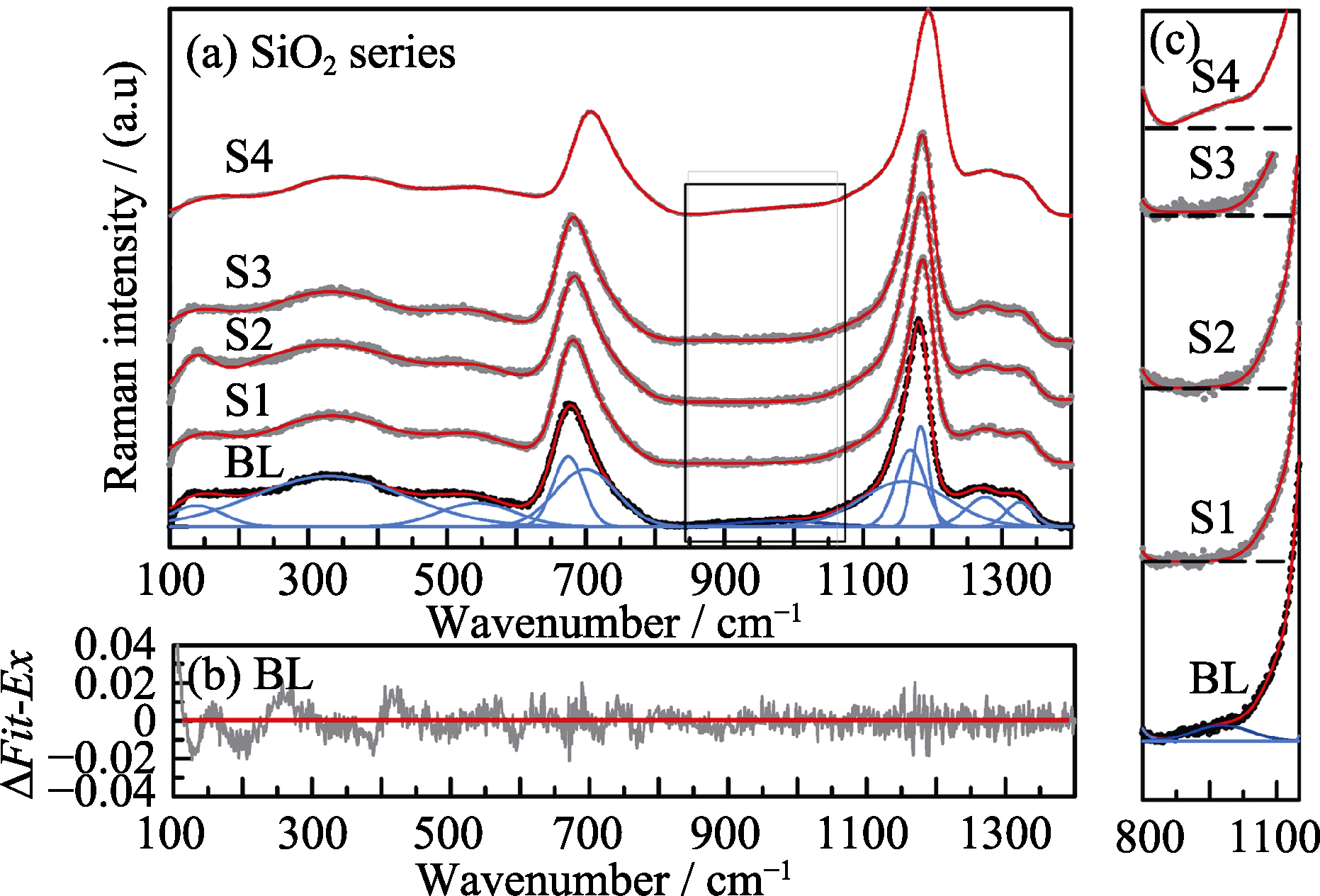
图1 BL与含SiO2的玻璃拉曼光谱对比(包含测试与拟合谱图对比)及BL拉曼分峰结果细节描述(a~b)为拟合误差, (c)为虚框处的拟合细节
Fig. 1 Raman spectra of BL glass and SiO2 modified glasses, comparing the measured and the simulated spectra (a) along with the corresponding error in detail curve fitting results for BL glass (b), and the fitting detail of gridlines (c) in Fig.1(a)
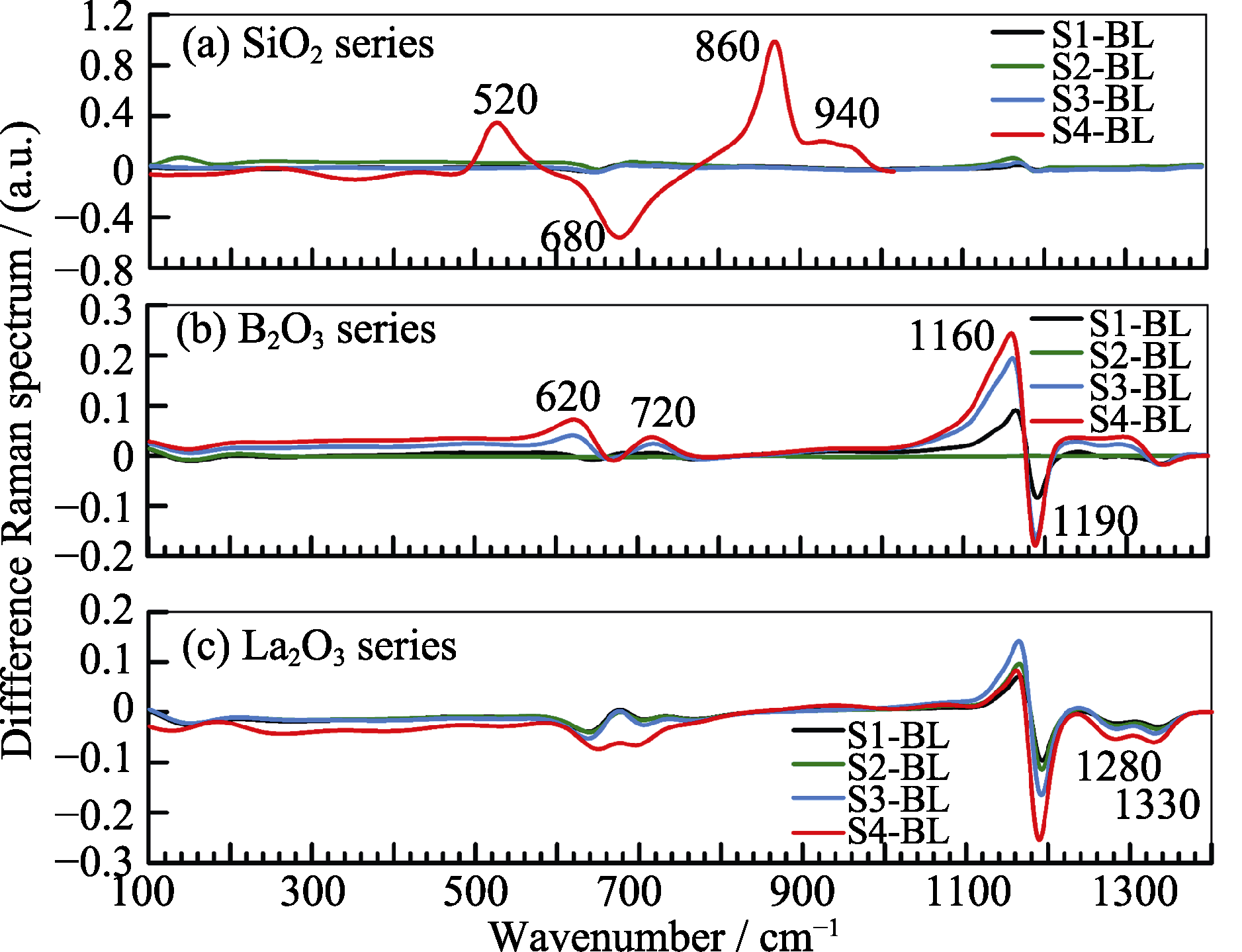
图2 SiO2、B2O3和La2O3对BL玻璃拉曼光谱强度的影响
Fig. 2 Effect of SiO2、B2O3 and La2O3 on Raman spectra of BL glass
| No. | A1 | A2 | A3 | A4 | A5 | A6 | A7 | A8 | A9 | A10 | A11 |
|---|---|---|---|---|---|---|---|---|---|---|---|
| BL | 3.6 | 29.0 | 6.9 | 8.2 | 13.5 | 1.9 | 15.3 | 8.7 | 6.3 | 4.3 | 2.5 |
| S1 | 4.4 | 27.6 | 8.1 | 9.2 | 13.1 | 0.0 | 14.2 | 9.1 | 7.7 | 4.3 | 2.4 |
| S2 | 3.3 | 36.8 | 6.6 | 6.3 | 14.2 | 0.0 | 12.5 | 9.3 | 5.1 | 4.2 | 1.9 |
| S3 | 4.2 | 28.1 | 7.6 | 7.4 | 14.9 | 0.0 | 13.0 | 10.5 | 7.5 | 4.8 | 2.0 |
| S4 | 3.4 | 19.2 | 10.4 | 6.8 | 13.0 | 3.1 | 18.8 | 8.0 | 9.3 | 5.2 | 2.7 |
| B1 | 3.7 | 27.6 | 7.8 | 7.4 | 13.4 | 2.8 | 12.7 | 10.2 | 5.9 | 7.2 | 1.1 |
| B2 | 3.7 | 29.0 | 6.7 | 8.0 | 13.6 | 1.8 | 15.3 | 8.6 | 6.4 | 4.2 | 2.6 |
| B3 | 3.6 | 29.1 | 10.7 | 4.6 | 16.3 | 2.8 | 15.4 | 10.8 | 5.1 | 6.9 | 0.9 |
| B4 | 3.5 | 28.4 | 8.0 | 3.5 | 16.4 | 2.3 | 17.8 | 7.4 | 5.7 | 5.0 | 1.7 |
| L1 | 3.7 | 27.1 | 7.4 | 8.8 | 12.3 | 2.5 | 13.5 | 11.1 | 5.8 | 5.8 | 1.9 |
| L2 | 3.7 | 27.4 | 7.4 | 8.5 | 12.3 | 2.4 | 12.8 | 11.5 | 5.7 | 6.5 | 1.7 |
| L3 | 3.8 | 27.1 | 7.4 | 9.3 | 11.2 | 2.4 | 16.2 | 10.0 | 6.3 | 4.2 | 2.2 |
| L4 | 5.0 | 23.5 | 9.4 | 9.3 | 11.0 | 2.7 | 13.7 | 11.4 | 6.1 | 6.7 | 1.4 |
表2 拉曼光谱分峰拟合后各分峰的积分面积(A=Area)
Table 2 Integral area of Raman bands derived from the Raman curve fitting (A=Area)
| No. | A1 | A2 | A3 | A4 | A5 | A6 | A7 | A8 | A9 | A10 | A11 |
|---|---|---|---|---|---|---|---|---|---|---|---|
| BL | 3.6 | 29.0 | 6.9 | 8.2 | 13.5 | 1.9 | 15.3 | 8.7 | 6.3 | 4.3 | 2.5 |
| S1 | 4.4 | 27.6 | 8.1 | 9.2 | 13.1 | 0.0 | 14.2 | 9.1 | 7.7 | 4.3 | 2.4 |
| S2 | 3.3 | 36.8 | 6.6 | 6.3 | 14.2 | 0.0 | 12.5 | 9.3 | 5.1 | 4.2 | 1.9 |
| S3 | 4.2 | 28.1 | 7.6 | 7.4 | 14.9 | 0.0 | 13.0 | 10.5 | 7.5 | 4.8 | 2.0 |
| S4 | 3.4 | 19.2 | 10.4 | 6.8 | 13.0 | 3.1 | 18.8 | 8.0 | 9.3 | 5.2 | 2.7 |
| B1 | 3.7 | 27.6 | 7.8 | 7.4 | 13.4 | 2.8 | 12.7 | 10.2 | 5.9 | 7.2 | 1.1 |
| B2 | 3.7 | 29.0 | 6.7 | 8.0 | 13.6 | 1.8 | 15.3 | 8.6 | 6.4 | 4.2 | 2.6 |
| B3 | 3.6 | 29.1 | 10.7 | 4.6 | 16.3 | 2.8 | 15.4 | 10.8 | 5.1 | 6.9 | 0.9 |
| B4 | 3.5 | 28.4 | 8.0 | 3.5 | 16.4 | 2.3 | 17.8 | 7.4 | 5.7 | 5.0 | 1.7 |
| L1 | 3.7 | 27.1 | 7.4 | 8.8 | 12.3 | 2.5 | 13.5 | 11.1 | 5.8 | 5.8 | 1.9 |
| L2 | 3.7 | 27.4 | 7.4 | 8.5 | 12.3 | 2.4 | 12.8 | 11.5 | 5.7 | 6.5 | 1.7 |
| L3 | 3.8 | 27.1 | 7.4 | 9.3 | 11.2 | 2.4 | 16.2 | 10.0 | 6.3 | 4.2 | 2.2 |
| L4 | 5.0 | 23.5 | 9.4 | 9.3 | 11.0 | 2.7 | 13.7 | 11.4 | 6.1 | 6.7 | 1.4 |
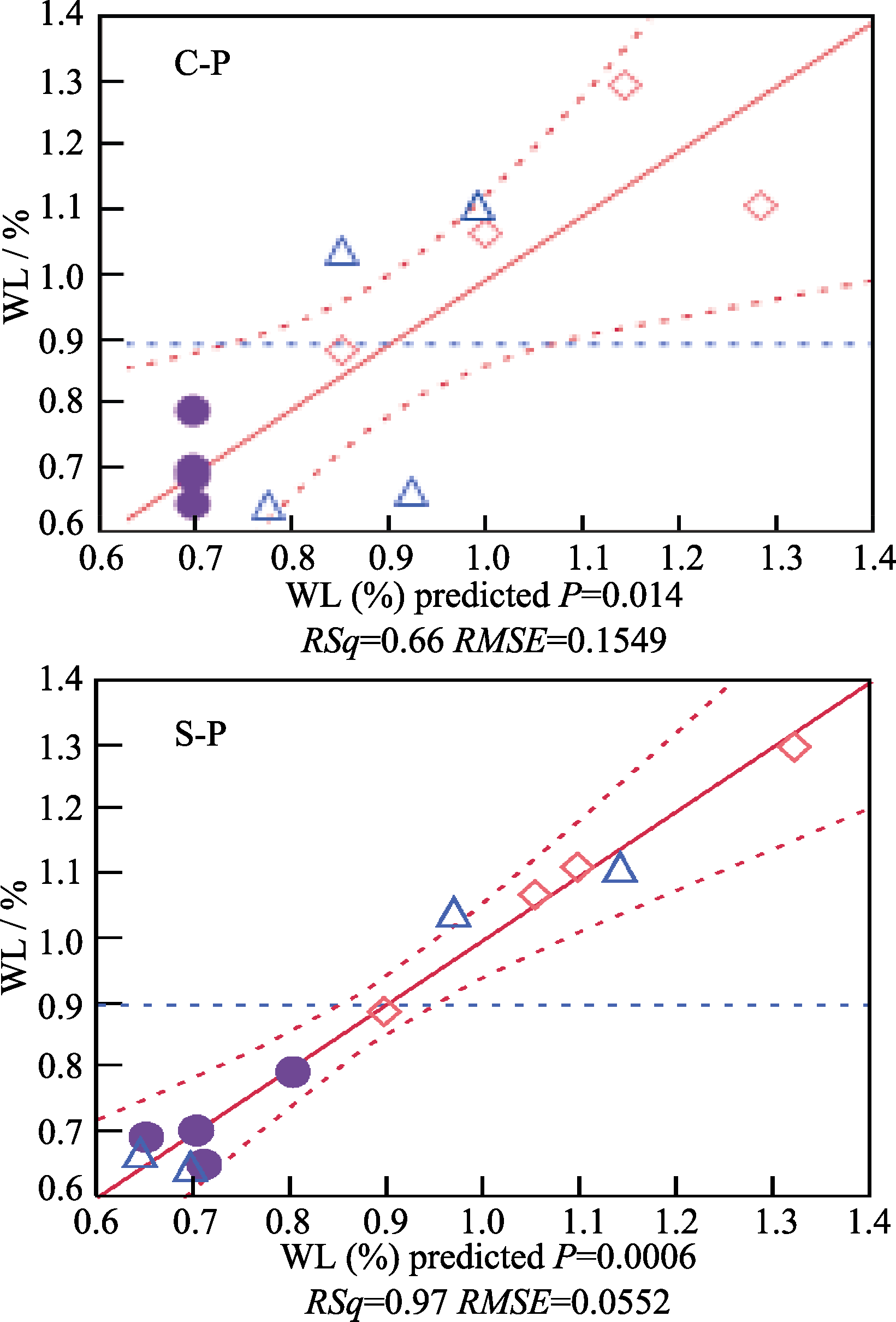
图3 化学稳定性的C-P与S-P拉曼模型
Fig. 3 C-P and S-P Raman models of chemical stability
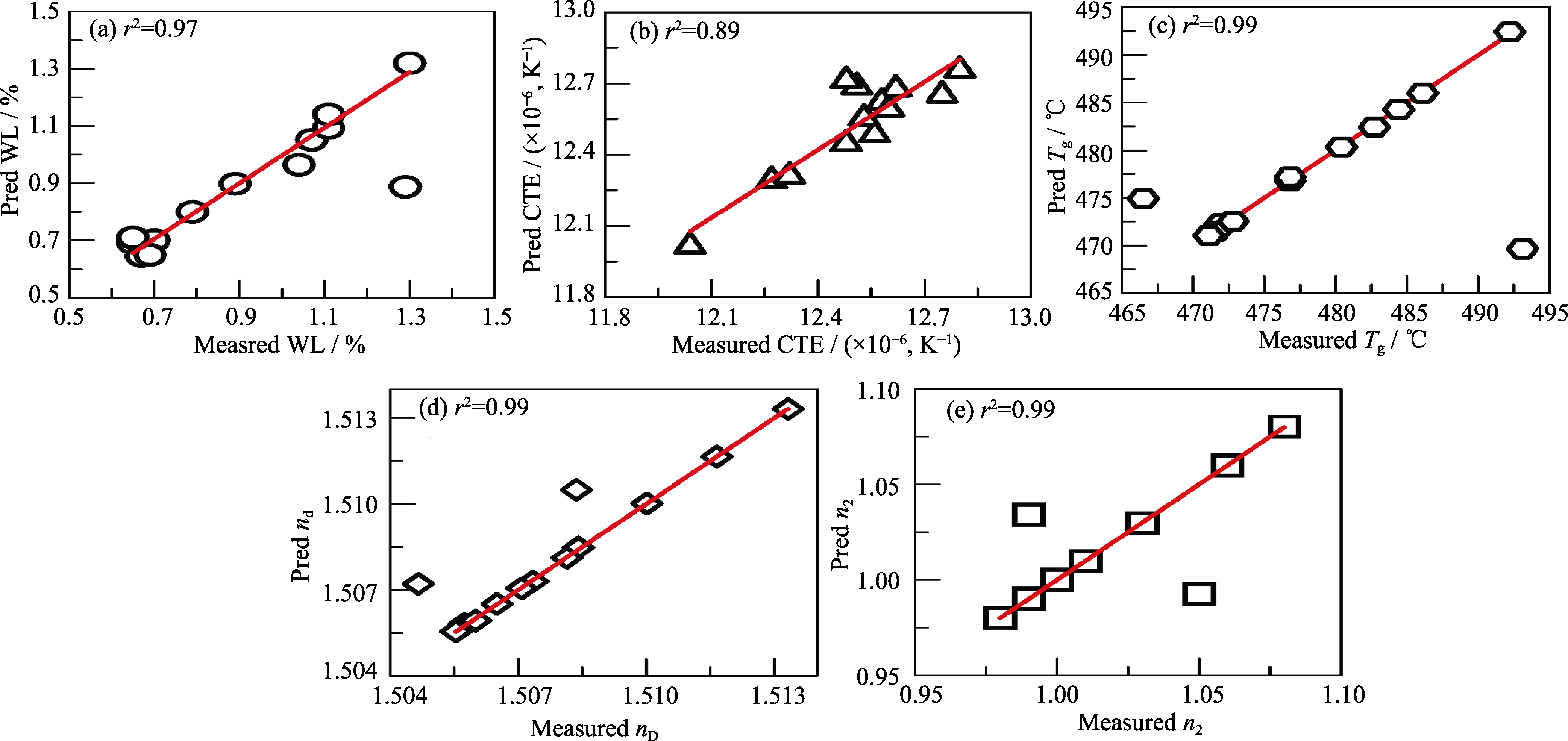
图4 基于S-P模拟的BL化稳性改性玻璃预测值与实验值的比较
Fig. 4 Predicted and experimental results of the chemical stability for the modified BL glass based on S-P modeling
| n2/(×10-13, esu) | WL/ (mg?cm-2) | Tg/℃ | CTE /(×10-6, K-1) | SiO2/wt% | B2O3/wt% | La2O3 /wt% | RO*/wt% | R2O*/wt% | Al2O3 /wt% | P2O5/wt% | Obj |
|---|---|---|---|---|---|---|---|---|---|---|---|
| 1.029 | 0.90 | 486.9 | 12.18 | 2.16 | 2.81 | 0.91 | 13.59 | 10.74 | 11.58 | 59.17 | 0.99 |
| 1.023 | 0.92 | 486.7 | 12.28 | 1.93 | 2.96 | 1.08 | 13.61 | 10.77 | 11.60 | 59.27 | 0.99 |
| 1.027 | 0.88 | 487.0 | 12.26 | 1.89 | 3.04 | 1.27 | 13.59 | 10.74 | 11.58 | 59.15 | 0.98 |
| 1.024 | 0.94 | 488.0 | 12.21 | 2.05 | 2.97 | 0.89 | 13.60 | 10.75 | 11.59 | 59.21 | 0.98 |
| 1.027 | 0.90 | 487.4 | 12.22 | 2.19 | 2.95 | 1.08 | 13.57 | 10.73 | 11.56 | 59.09 | 0.98 |
| 1.027 | 0.93 | 486.0 | 12.28 | 2.03 | 2.78 | 1.21 | 13.62 | 10.77 | 11.60 | 59.30 | 0.98 |
表3 C-S-P模型预测的玻璃成分及相应性质
Table 3 Compositions and properties of the glass predicted by C-S-P model
| n2/(×10-13, esu) | WL/ (mg?cm-2) | Tg/℃ | CTE /(×10-6, K-1) | SiO2/wt% | B2O3/wt% | La2O3 /wt% | RO*/wt% | R2O*/wt% | Al2O3 /wt% | P2O5/wt% | Obj |
|---|---|---|---|---|---|---|---|---|---|---|---|
| 1.029 | 0.90 | 486.9 | 12.18 | 2.16 | 2.81 | 0.91 | 13.59 | 10.74 | 11.58 | 59.17 | 0.99 |
| 1.023 | 0.92 | 486.7 | 12.28 | 1.93 | 2.96 | 1.08 | 13.61 | 10.77 | 11.60 | 59.27 | 0.99 |
| 1.027 | 0.88 | 487.0 | 12.26 | 1.89 | 3.04 | 1.27 | 13.59 | 10.74 | 11.58 | 59.15 | 0.98 |
| 1.024 | 0.94 | 488.0 | 12.21 | 2.05 | 2.97 | 0.89 | 13.60 | 10.75 | 11.59 | 59.21 | 0.98 |
| 1.027 | 0.90 | 487.4 | 12.22 | 2.19 | 2.95 | 1.08 | 13.57 | 10.73 | 11.56 | 59.09 | 0.98 |
| 1.027 | 0.93 | 486.0 | 12.28 | 2.03 | 2.78 | 1.21 | 13.62 | 10.77 | 11.60 | 59.30 | 0.98 |
| Sample | Yb3+ (ICP)/ (×1020, ions?cm-3) | σemi/pm2 | Tg/℃ | Stark splitting |
|---|---|---|---|---|
| PS0 | 2.40 | 0.50 | 477 | 639 |
| PS2 | 2.38 | 0.48 | 441 | 651 |
| PS5 | 2.46 | 0.50 | 462 | 769 |
| PS10 | 2.32 | 0.53 | 503 | 786 |
| PS20 | 2.17 | 0.57 | 509 | 814 |
表4 PS玻璃性质
Table 4 Properties of PS glass
| Sample | Yb3+ (ICP)/ (×1020, ions?cm-3) | σemi/pm2 | Tg/℃ | Stark splitting |
|---|---|---|---|---|
| PS0 | 2.40 | 0.50 | 477 | 639 |
| PS2 | 2.38 | 0.48 | 441 | 651 |
| PS5 | 2.46 | 0.50 | 462 | 769 |
| PS10 | 2.32 | 0.53 | 503 | 786 |
| PS20 | 2.17 | 0.57 | 509 | 814 |
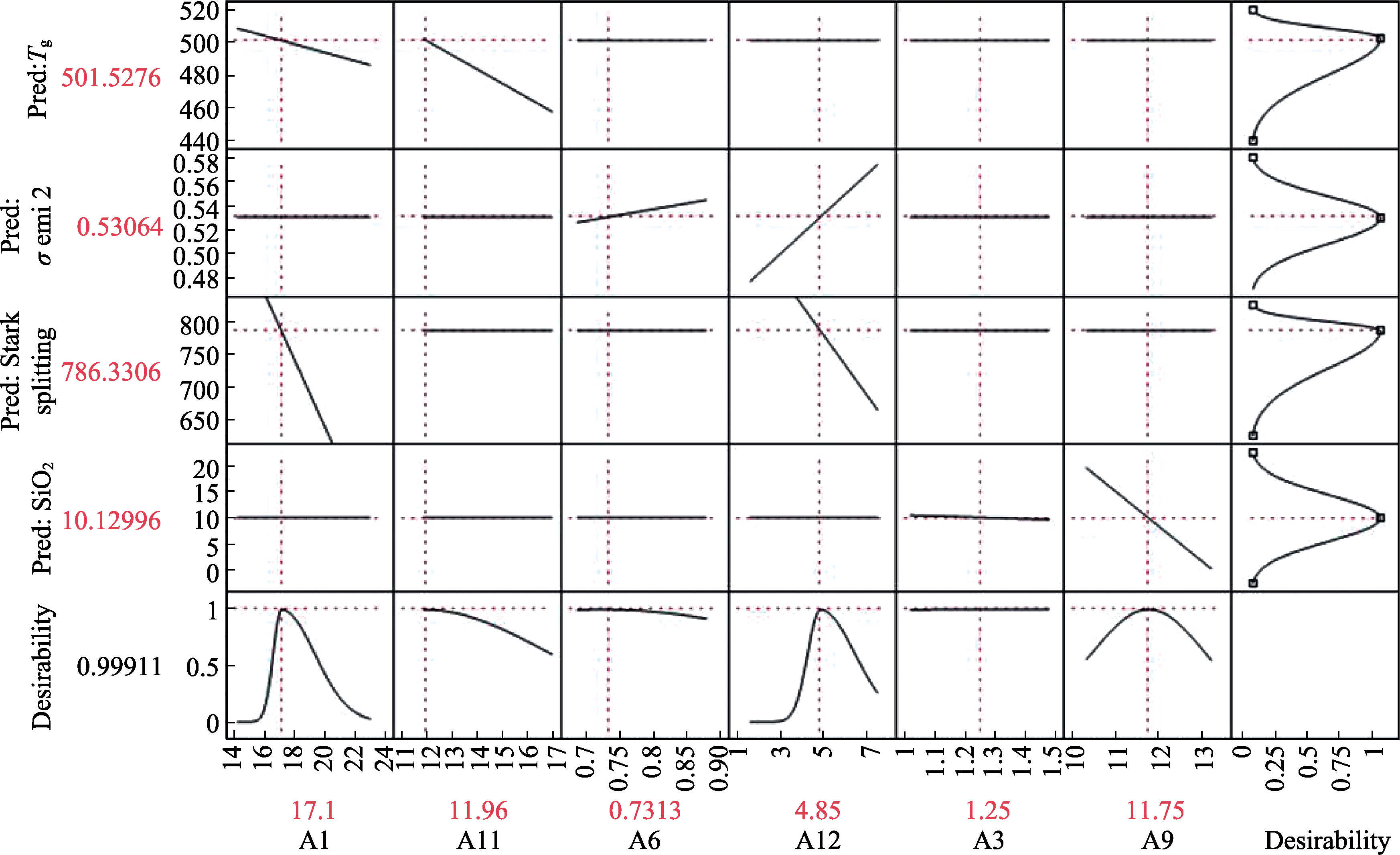
图5 由模拟器设计的满足设计性质的玻璃特定结构基团组分(Ai)
Fig. 5 Simulator designed special structural group distributions (Ai) in the glass to meet required properties
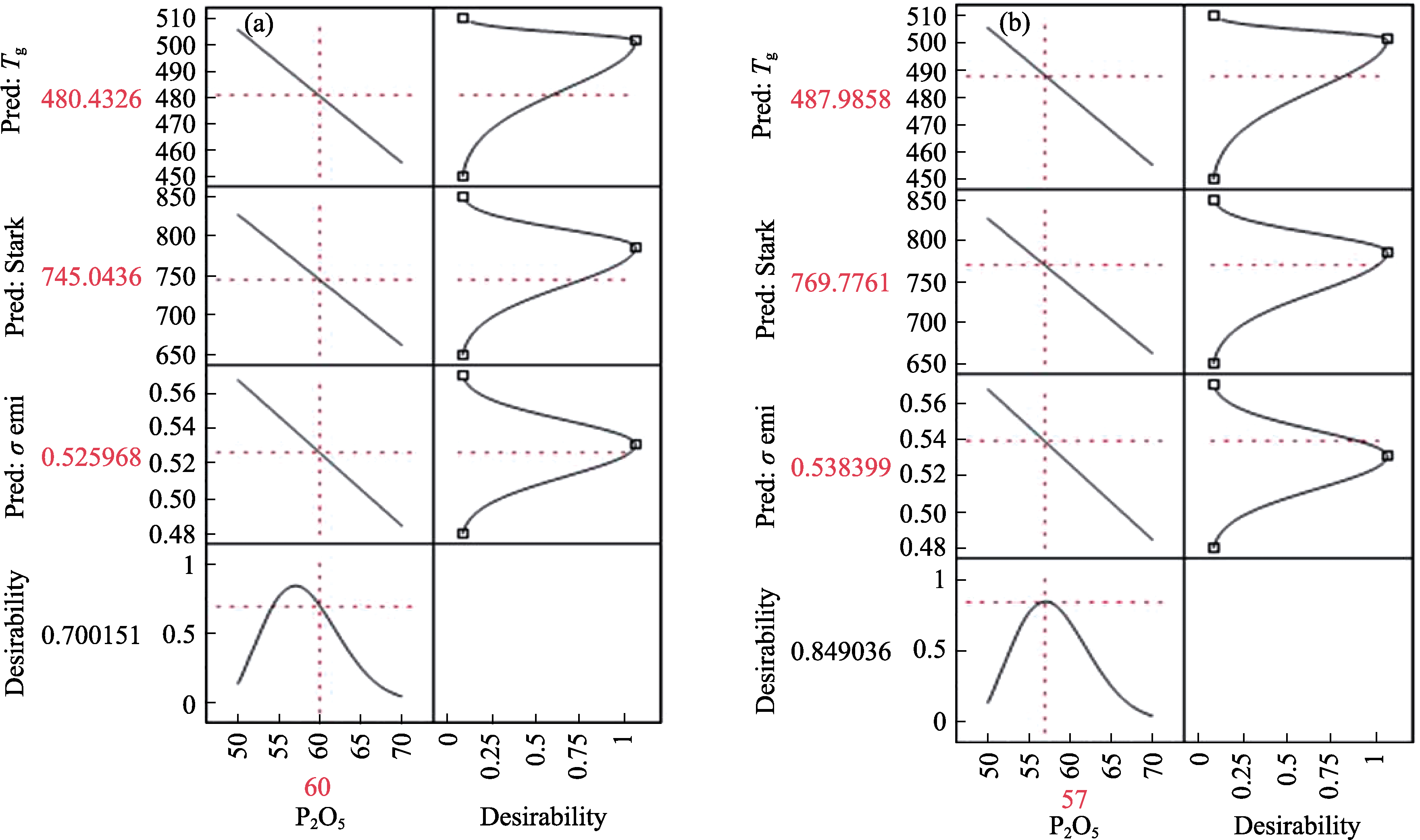
图6 设计成分为SiO2=10mol%时对应设计性质(a)和最高模拟意愿对应的P2O5值对应性质(b)的C-P模型图
Fig. 6 Designed results of C-P model (a) Properties with SiO2=10mol%, (b) Properties with P2O5 mol% under the highest aspiration
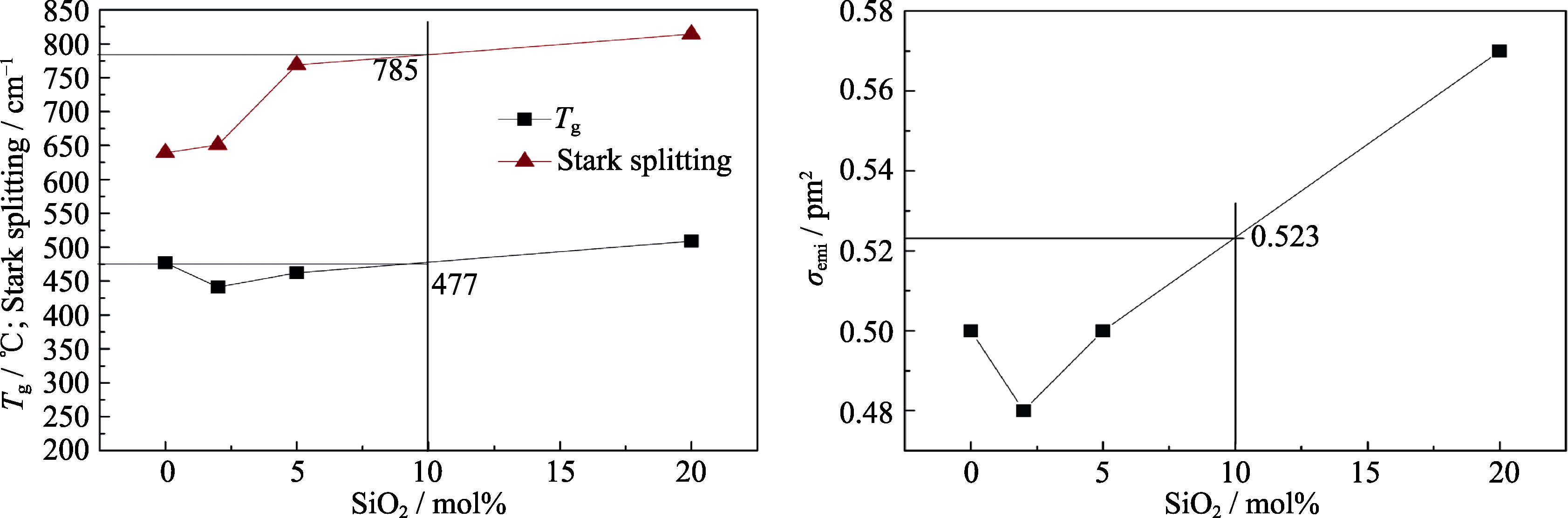
图7 Tg、Stark分裂和发射截面的线性估计值
Fig. 7 Linear estimated values for Tg, Stark splitting and emission cross section
| [1] | ZHAO J C . A perspective on the materials genome initiative. Chinese Journal of Nature, 2014,36(2):89-104. |
| [2] | VOLF M . Mathematical approach to glass. Amsterdam: Elsevier Science Publishers, 1988. |
| [3] | LI H, DAVIS M J, URRUTI E H . Eye-safe laser glass development at SCHOTT. Proc. of SPIE, 2010,7686(16):1-12. |
| [4] |
VIENNA J D . Compositional models of glass/melt properties and their use for glass formulation. Procedia Materials Science, 2014,7:148-155.
DOI URL |
| [5] |
LI H, CHERYL R, WATSON J . High-performance glass fiber development for composite applications. International Journal of Applied Glass Science, 2014,5(1):65-81.
DOI URL |
| [6] | VIENNA J D, HRMA P R, SCHWEIGER M J , et al . Effect of composition and temperature on the properties of High-Level Waste (HLW) glasses melting above 1200 ℃ (Draft). Office of Scientific & Technical Information Technical Reports, 1996. |
| [7] | YAMASHITA H, YOSHINO H, NAGATA K , et al. Nuclear magnetic resonance studies of alkaline earth phosphosilicate and aluminoborosilicate glasses. Journal of Non-Crystalline Solids, 2000,270(1):48-59. |
| [8] |
GREAVES G N . EXAFS and the structure of glass. Journal of Non-Crystalline Solids, 1985,71(1):203-217.
DOI URL |
| [9] | SEN S, RAKHMATULLIN R, GUBAYDULLIN R , et al. A pulsed EPR study of clustering of Yb3+ ions incorporated in GeO2 glass. Journal of Non-Crystalline Solids , 2004,333(1):22-27. |
| [10] | ZHANG L Y, LI H, HU L L . Statistical structure analysis of GeO2 modified Yb 3+: phosphate glasses based on Raman and FT-IR study . Journal of Alloys & Compounds, 2017,698:103-113. |
| [11] | LI H, ZHANG L Y, HU L L , et al. Statistical Modeling Approach to Glass Research and Development: Composition-Structure- Property Relationships (Invited). 8th International Symposium on Advanced Glass, Shanghai, China, 2018. |
| [12] | CORNELL J A . Experiments with Mixtures: Designs, Models, and the Analysis of Mixture Data, 3rd ed. New York: John Wiley and Sons, 2002. |
| [13] |
DARROCH J N, WALLER J . Additive and interaction in three-component experiments with mixtures. Biometrika, 1985,72:153-163.
DOI URL |
| [14] |
PIEPEL G F, SZYCHOWSKI J M, LOEPPKY J L . Augmenting scheffe linear mixture models with squared and/or crossproduct terms. Journal of Quality Technology, 2002,34(3):297-314.
DOI URL |
| [15] | SCHEFFE H . The simplex-centroid design for experiments with mixtures. Journal of the Royal Statistical Society, 1963,25(2):235-263. |
| [16] | ZHANG L Y, LI H, HU L L . Statistical approach to modeling relationships of composition-structure-property I: Alkaline earth phosphate glasses. Journal of Alloys & Compounds, 2018,734:163-171. |
| [1] | 王萌萌, 田力, 张俊敏, 李庆刚, 杨金山, 董绍明. 3D打印制备CNT/SiC-SiO2及其电磁屏蔽性能[J]. 无机材料学报, 2026, 41(6): 831-838. |
| [2] | 洪恩柳, 涂欣晨, 李自清, 方晓生. 二维钙钛矿单晶纳米片的漂浮法制备及其光电探测性能[J]. 无机材料学报, 2026, 41(6): 787-794. |
| [3] | 李涵涛, 沈强, 罗国强, 王雪飞, 高明, 陈晨. 机械球磨法调控硅基负极材料结构与性能的研究进展[J]. 无机材料学报, 2026, 41(5): 561-572. |
| [4] | 钱新宇, 王无敌, 郭俊尧, 任永春, 董建树, 王庆国, 唐慧丽, 张晨波, 徐晓东, 董永军, 华伟, 徐军. Ho:BaF2晶体在近红外-中红外波段光谱性能分析[J]. 无机材料学报, 2026, 41(5): 595-603. |
| [5] | 李璇, 叶奎材, 冯佳音, 邱家军, 钱文昊, 邢敏. 钛基牙种植体表面改性促进软组织封闭的研究进展[J]. 无机材料学报, 2026, 41(4): 432-444. |
| [6] | 王禹贺, 罗颐秀, 郭会明, 张广珩, 张思岩, 孙鲁超, 王杰民, 王京阳. 高熵稀土氧化物热障涂层材料弹性及热物性的第一性原理研究[J]. 无机材料学报, 2026, 41(4): 445-454. |
| [7] | 朱开煌, 杨世杰, 李欣格, 宋贯卿, 史淦升, 王焱, 任小孟, 陆遥, 徐新宏, 孙静. 基于UiO-66骨架的氧化石墨烯改性金属有机框架凝胶的制备及其对甲苯的高效吸附性能[J]. 无机材料学报, 2026, 41(4): 519-526. |
| [8] | 蒋圣楠, 郑重, 何唯一, 刘涛, 潘秀红, 陈锟, 郭辉, 高攀, 刘春俊, 刘学超. 硼镓共掺氧化锌透明电极的制备及性能优化[J]. 无机材料学报, 2026, 41(4): 479-485. |
| [9] | 徐浩, 顾海涛, 吴鸿辉, 岳晓飞, 林思琪, 金敏. Bi掺杂InSe晶体生长及性能研究[J]. 无机材料学报, 2026, 41(4): 493-499. |
| [10] | 张梦婕, 李智博, 黄瑞楠, 吕向菲, 王伟. 堇青石/硼酸铝晶须/Co0.8FexCe0.2-xCr2O4催化剂的制备及其碳烟过滤-催化燃烧性能[J]. 无机材料学报, 2026, 41(4): 509-518. |
| [11] | 隋金洋, 周大雨, 赵文瑾, 童祎, 王新朋. 工作气压对AlScN薄膜结构和电学性能的影响[J]. 无机材料学报, 2026, 41(4): 486-492. |
| [12] | 程澳芃, 王跃文, 许文涛, 刘全伟, 张海涛, 周有福. 吸附-沉淀自组装结合放电等离子烧结法制备石墨烯增强氧化铝复合陶瓷[J]. 无机材料学报, 2026, 41(4): 536-544. |
| [13] | 田洪旺, 罗龙飞, 胡成龙, 闫猛, 庞生洋, 李建, 汤素芳. C/CA表面陶瓷-树脂涂层的简易制备与中温抗氧化性能[J]. 无机材料学报, 2026, 41(3): 401-408. |
| [14] | 李泽熙, 卢文杰, 王朝, 张璐, 李述体, 高芳亮. 基于液态金属镓制备二维氮化镓及其光电性能研究[J]. 无机材料学报, 2026, 41(3): 377-384. |
| [15] | 曹娟, 吴西士, 刘泽华, 裴兵兵, 韩建燊, 刘欢, 杨亦天, 吴海波, 黄政仁. 晶粒尺寸对常压固相烧结SiC陶瓷断裂强度Weibull分布的影响[J]. 无机材料学报, 2026, 41(2): 217-224. |
| 阅读次数 | ||||||
|
全文 |
|
|||||
|
摘要 |
|
|||||