
Journal of Inorganic Materials ›› 2026, Vol. 41 ›› Issue (7): 983-992.DOI: 10.15541/jim20250433
• RESEARCH ARTICLE • Previous Articles Next Articles
XU Ming1,2( ), WANG Yuanfei3, WU Tong1,2()
Received:2025-10-30
Revised:2025-11-24
Published:2026-07-20
Online:2026-01-21
Contact:
WU Tong, professor. E-mail: tongwu24@163.comAbout author:XU Ming (1998-), male, PhD candidate. E-mail: xumingmed@163.com
Supported by:CLC Number:
XU Ming, WANG Yuanfei, WU Tong. Preparation and in vitro Synergistic Osteogenic-promoting Effect of Puerarin/Mesoporous Bioactive Glass Composites[J]. Journal of Inorganic Materials, 2026, 41(7): 983-992.
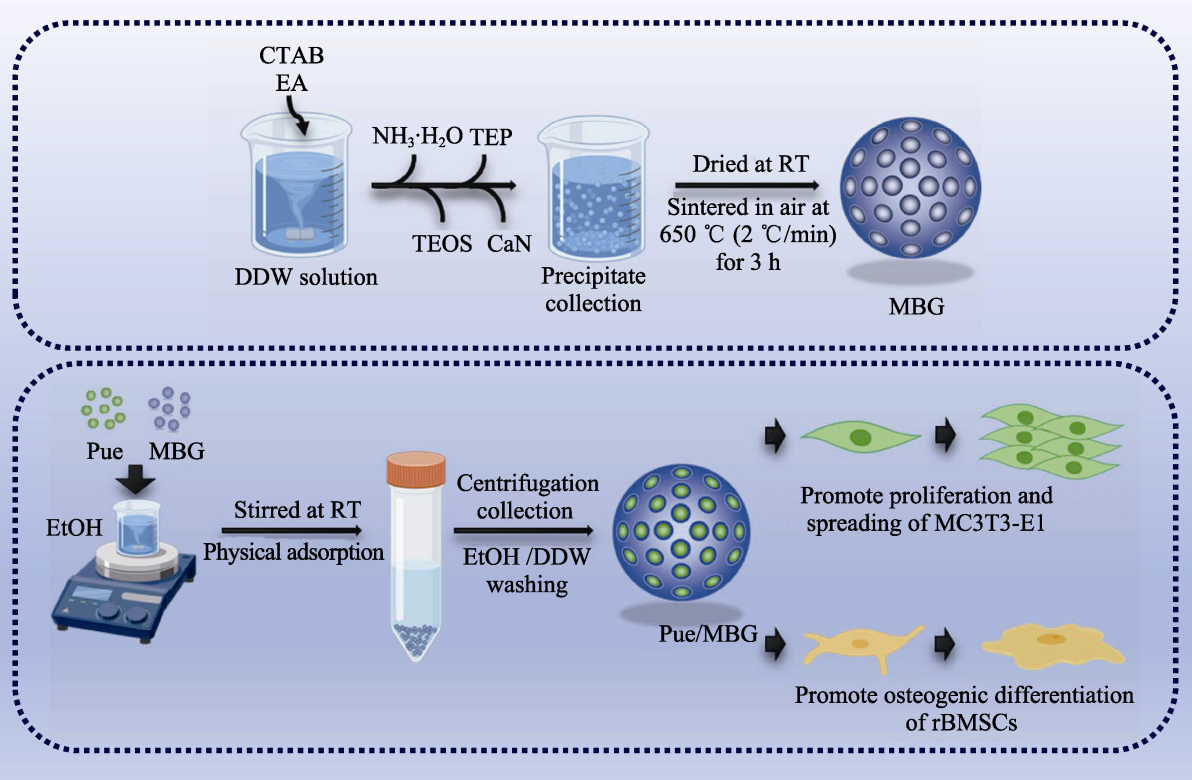
Fig. 1 Preparation and osteogenic-promoting mechanism of Pue/MBG composites RT: room temperature
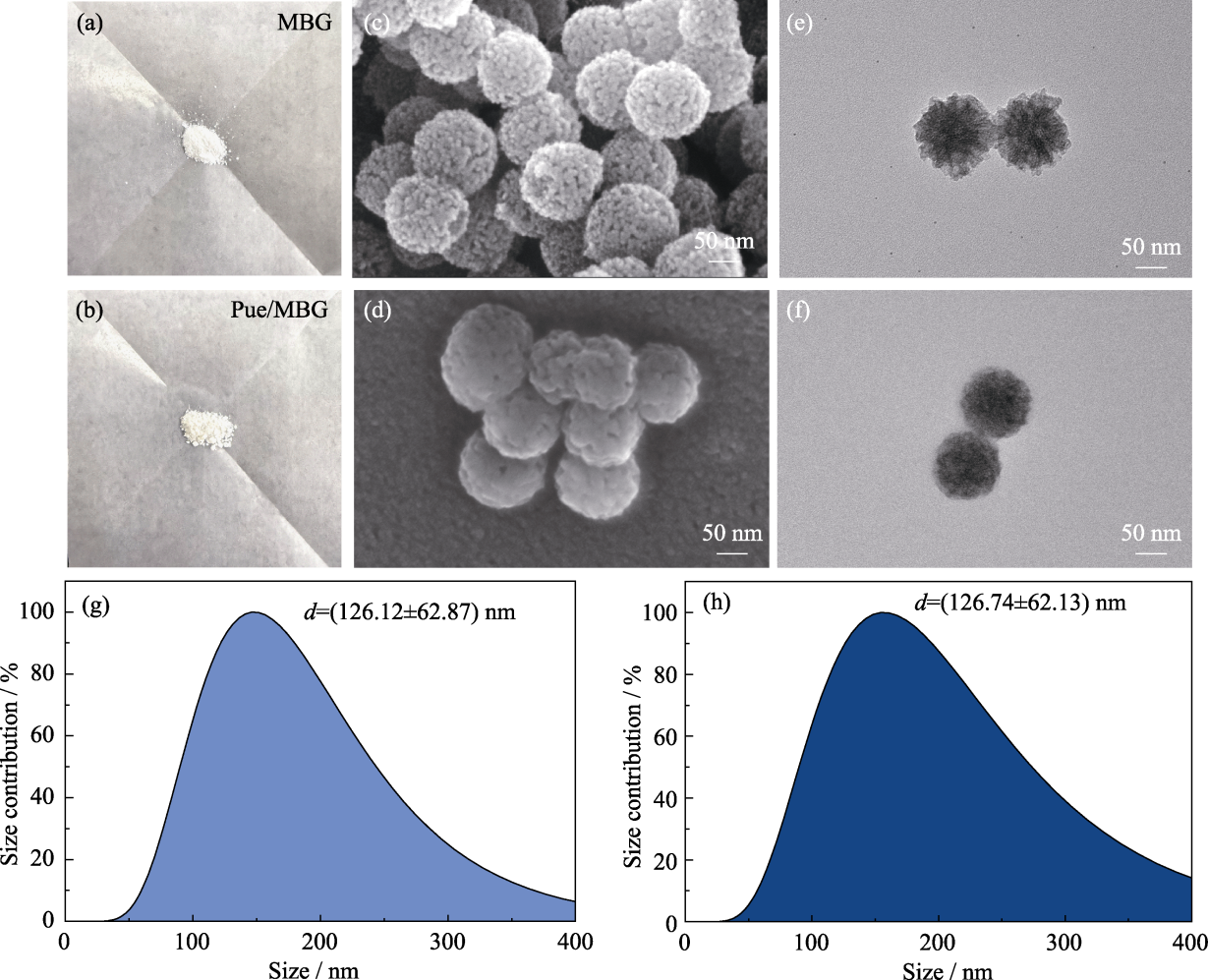
Fig. 2 Surface morphology and particle size analysis of MBG and Pue/MBG (a, b) Digital photos of (a) MBG and (b) Pue/MBG; (c, d) SEM images of (c) MBG and (d) Pue/MBG; (e, f) TEM images of (e) MBG and (f) Pue/MBG; (g, h) Particle size distribution diagrams of (g) MBG and (h) Pue/MBG
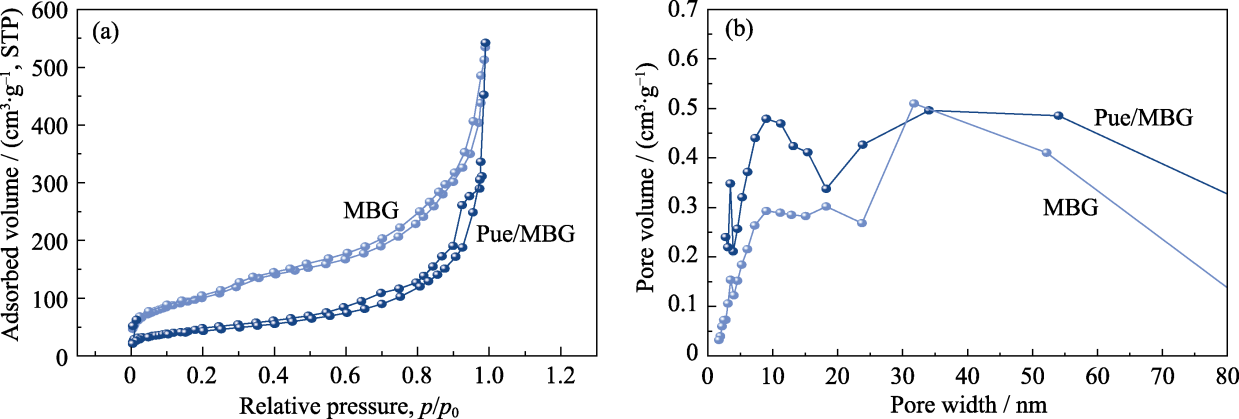
Fig. 3 (a) N2 adsorption-desorption isotherms and (b) corresponding pore size distributions of MBG and Pue/MBG
| Sample | BET surface area/(m2·g−1) | Pore volume/ (cm3·g−1) | BJH pore size/nm |
|---|---|---|---|
| MBG | 373.28 | 0.70 | 12.93 |
| Pue/MBG | 151.02 | 0.45 | 8.84 |
Table 1 Specific surface area and mesoporous analysis of MBG and Pue/MBG
| Sample | BET surface area/(m2·g−1) | Pore volume/ (cm3·g−1) | BJH pore size/nm |
|---|---|---|---|
| MBG | 373.28 | 0.70 | 12.93 |
| Pue/MBG | 151.02 | 0.45 | 8.84 |
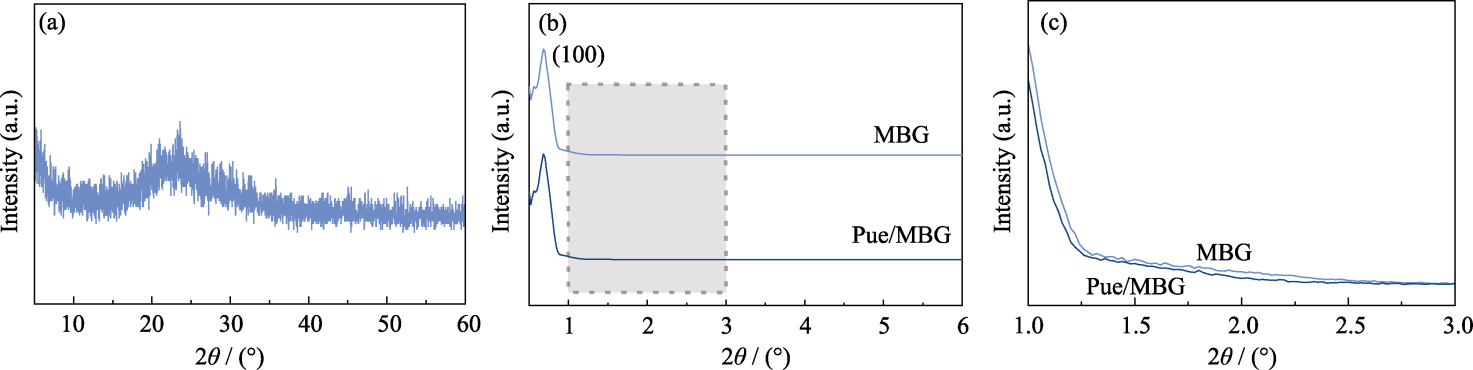
Fig. 4 XRD patterns of MBG and Pue/MBG (a) Wide-angle XRD pattern of MBG; (b) Small-angle XRD patterns of MBG and Pue/MBG; (c) Enlarged view of rectangular region in Fig. (b)
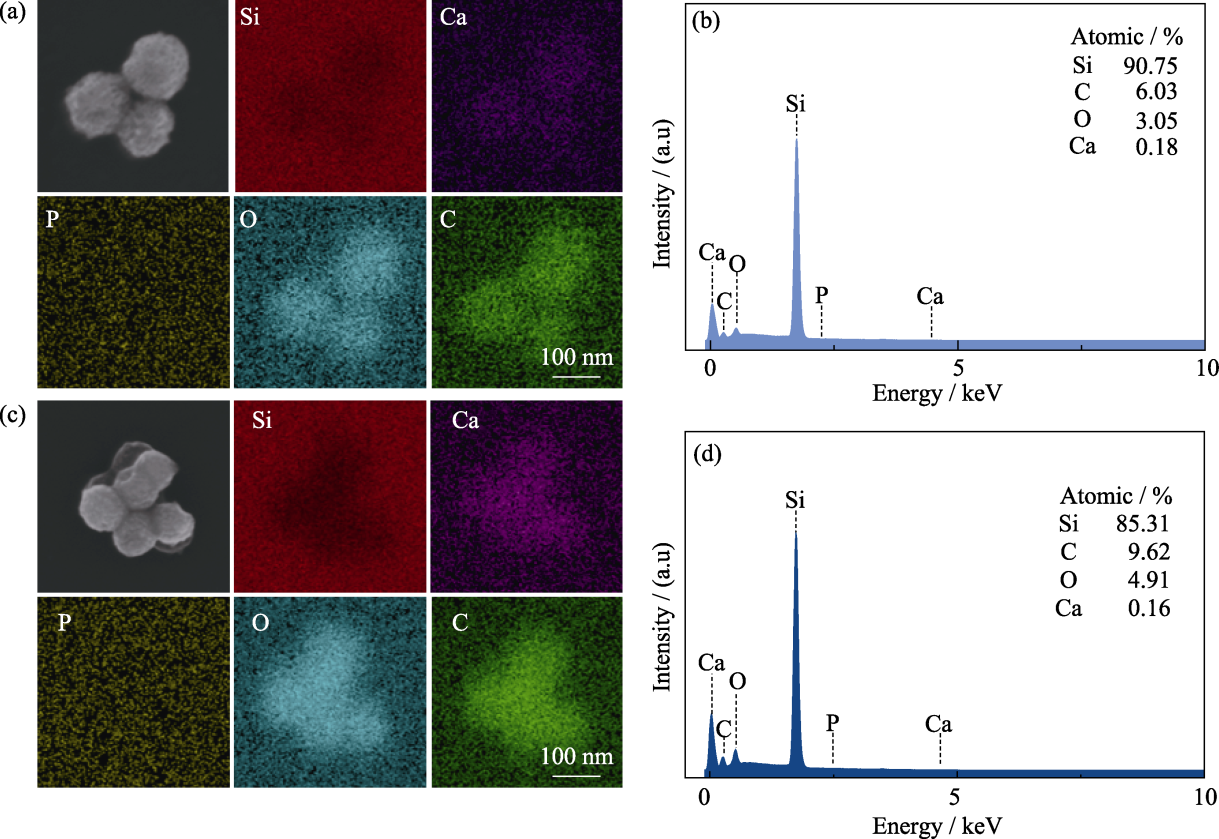
Fig. 5 EDS analysis of (a, b) MBG and (c, d) Pue/MBG (a, c) EDS elemental mappings; (b, d) EDS point spectra
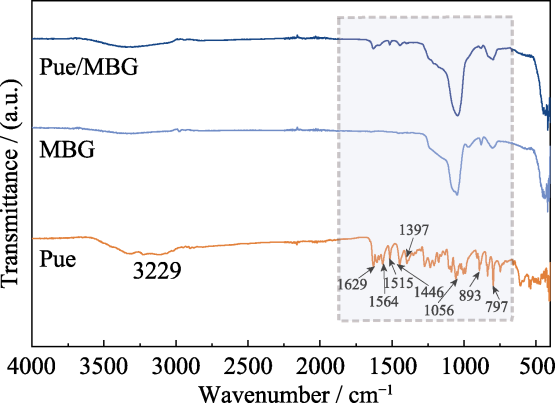
Fig. 6 FT-IR spectra of Pue, MBG and Pue/MBG
| Sample | DLC/μg | DLR/% | EE/% |
|---|---|---|---|
| Pue/MBG | 338.38±16.05 | 33.84±1.61 | 9.02±0.43 |
Table 2 Drug loading capacity, drug loading rate, and encapsulation efficiency of Pue/MBG
| Sample | DLC/μg | DLR/% | EE/% |
|---|---|---|---|
| Pue/MBG | 338.38±16.05 | 33.84±1.61 | 9.02±0.43 |
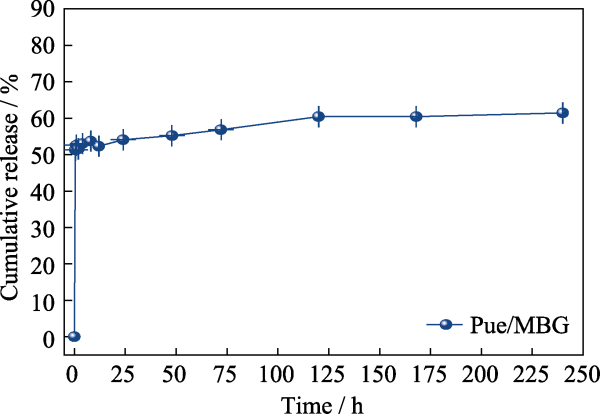
Fig. 7 Drug release curve of Pue/MBG
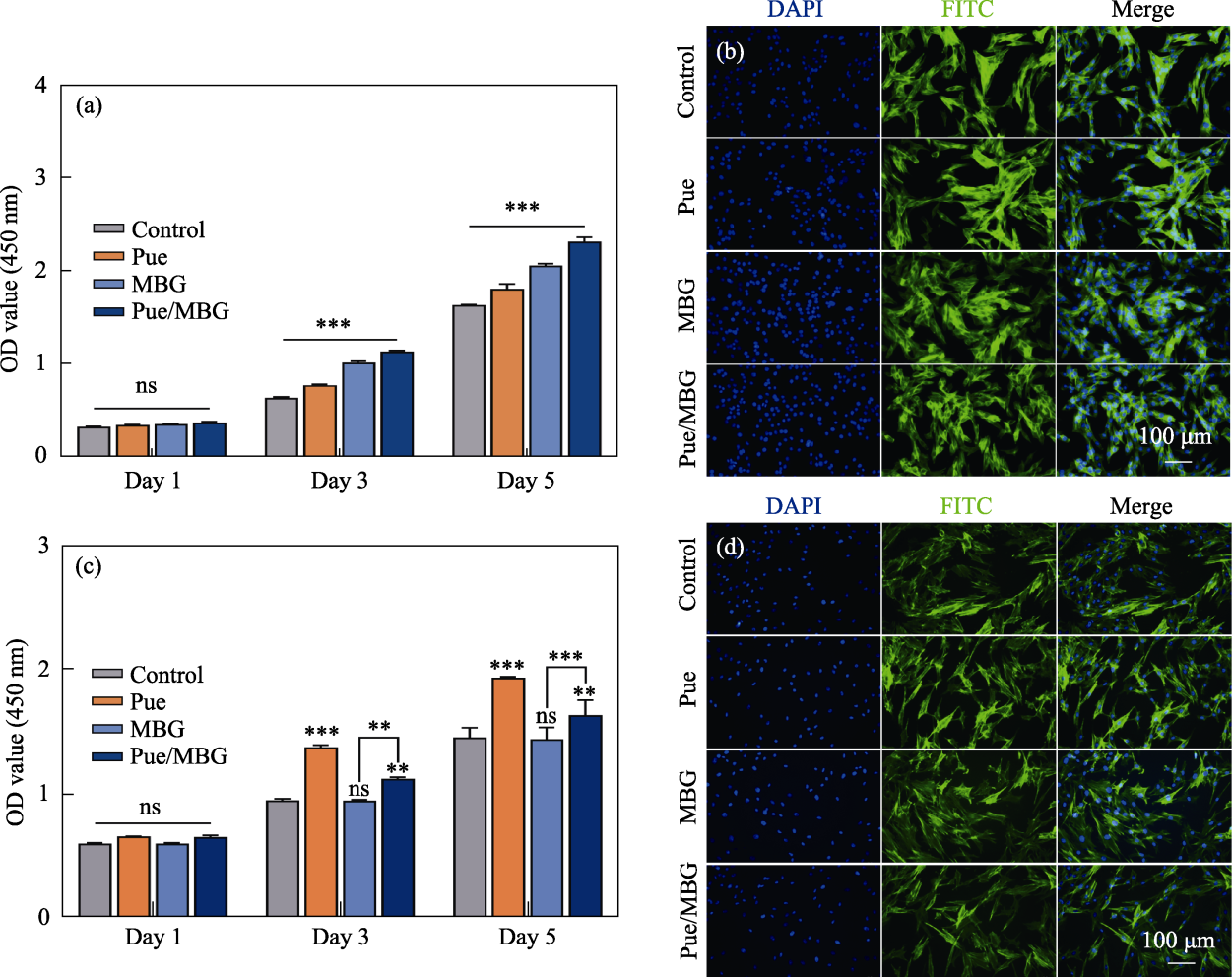
Fig. 8 In vitro biocompatibility evaluation of Pue/MBG (a, c) Cell viability assay of (a) MC3T3-E1 and (c) rBMSCs; (b, d) Cell morphology staining of (b) MC3T3-E1 and (d) rBMSCs. Colorful figures are available on website
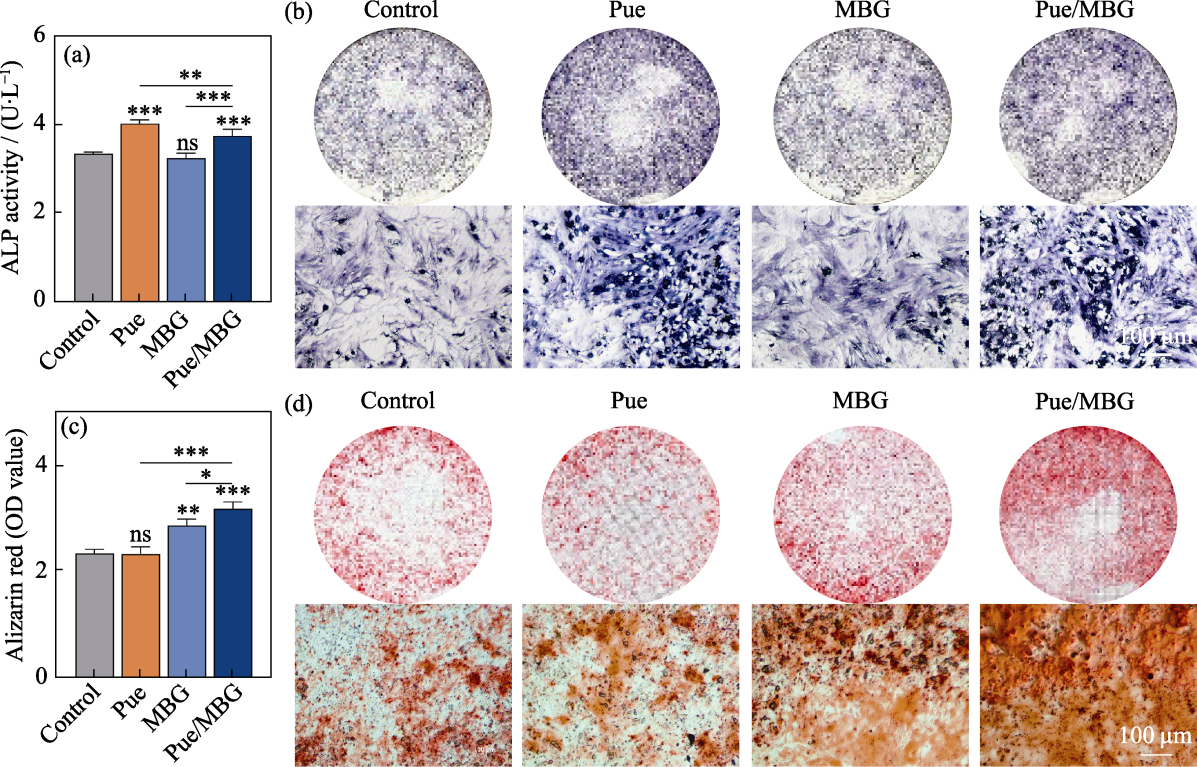
Fig. 9 Osteogenic differentiation effects of Pue/MBG (a) ALP activity assay and (b) ALP staining images on 7 days; (c) ARS quantitative analysis and (d) ARS staining images on 14 days. Colorful figures are available on website
| [1] | WEI Y, PAN H, YANG J, et al. Aligned cryogel fibers incorporated 3D printed scaffold effectively facilitates bone regeneration by enhancing cell recruitment and function. Science Advances, 2024, 10(6): eadk6722. |
| [2] |
YU C, CHEN J, WANG T, et al. GelMA hydrogels reinforced by PCL@GelMA nanofibers and bioactive glass induce bone regeneration in critical size cranial defects. Journal of Nanobiotechnology, 2024, 22(1): 696.
DOI PMID |
| [3] |
MOY P K, AGHALOO T. Risk factors in bone augmentation procedures. Periodontology 2000, 2019, 81(1): 76.
DOI PMID |
| [4] |
LALZAWMLIANA V, ANAND A, ROY M, et al. Mesoporous bioactive glasses for bone healing and biomolecules delivery. Materials Science and Engineering: C, 2020, 106: 110180.
DOI URL |
| [5] |
VALLET-REGI M, SALINAS A J. Mesoporous bioactive glasses for regenerative medicine. Materials Today Bio, 2021, 11: 100121.
DOI URL |
| [6] |
SCHUMACHER M, HABIBOVIC P, VAN RIJT S. Mesoporous bioactive glass composition effects on degradation and bioactivity. Bioactive Materials, 2021, 6(7): 1921.
DOI PMID |
| [7] |
CUI Y, HONG S, JIANG W, et al. Engineering mesoporous bioactive glasses for emerging stimuli-responsive drug delivery and theranostic applications. Bioactive Materials, 2024, 34: 436.
DOI PMID |
| [8] |
ZHOU Y X, ZHANG H, PENG C. Puerarin: a review of pharmacological effects. Phytotherapy Research, 2014, 28(7): 961.
DOI URL |
| [9] |
ZENG X, FENG Q, ZHAO F, et al. Puerarin inhibits TRPM3/miR-204 to promote MC3T3-E1 cells proliferation, differentiation and mineralization. Phytotherapy Research, 2018, 32(6): 996.
DOI PMID |
| [10] |
YANG X, YANG Y, ZHOU S, et al. Puerarin stimulates osteogenic differentiation and bone formation through the ERK1/2 and p38-MAPK signaling pathways. Current Molecular Medicine, 2018, 17(7): 488.
DOI PMID |
| [11] |
YANG Y, CHEN D, LI Y, et al. Effect of puerarin on osteogenic differentiation in vitro and on new bone formation in vivo. Drug Design, Development and Therapy, 2022, 16: 2885.
DOI URL |
| [12] |
KANG S, BENNETT C N, GERIN I, et al. Wnt signaling stimulates osteoblastogenesis of mesenchymal precursors by suppressing CCAAT/enhancer-binding protein alpha and peroxisome proliferator-activated receptor gamma. Journal of Biological Chemistry, 2007, 282(19): 14515.
DOI PMID |
| [13] |
LI B, WANG Y, GONG S, et al. Puerarin improves OVX-induced osteoporosis by regulating phospholipid metabolism and biosynthesis of unsaturated fatty acids based on serum metabolomics. Phytomedicine, 2022, 102: 154198.
DOI URL |
| [14] |
PANG Z, WEI Y, WANG N, et al. Gel formation of puerarin and mechanistic study during its cooling process. International Journal of Pharmaceutics, 2018, 548(1): 625.
DOI PMID |
| [15] |
ZHANG L. Pharmacokinetics and drug delivery systems for puerarin, a bioactive flavone from traditional Chinese medicine. Drug Delivery, 2019, 26(1): 860.
DOI PMID |
| [16] |
HU Q, LI Y, ZHAO N, et al. Facile synthesis of hollow mesoporous bioactive glass sub-micron spheres with a tunable cavity size. Materials Letters, 2014, 134: 130.
DOI URL |
| [17] |
YUN H S, KIM S H, LEE S, et al. Synthesis of high surface area mesoporous bioactive glass nanospheres. Materials Letters, 2010, 64(16): 1850.
DOI URL |
| [18] |
HENCH L L, WILSON J. Surface-active biomaterials. Science, 1984, 226(4675): 630.
PMID |
| [19] |
YANG S Y, HU Y, ZHAO R, et al. Quercetin-loaded mesoporous nano-delivery system remodels osteoimmune microenvironment to regenerate alveolar bone in periodontitis via the miR-21a-5p/ PDCD4/NF-κB pathway. Journal of Nanobiotechnology, 2024, 22(1): 94.
DOI |
| [20] |
ZHENG K, BOCCACCINI A R. Sol-Gel processing of bioactive glass nanoparticles: a review. Advances in Colloid and Interface Science, 2017, 249: 363.
DOI PMID |
| [21] |
LIGA S, VODĂ R, LUPA L, et al. Synthesis of Ag2O/Ag nanoparticles using puerarin: characterization, cytotoxicity, in ovo safety profile, antioxidant, and antimicrobial potential against nosocomial pathogens. Journal of Functional Biomaterials, 2025, 16(7): 258.
DOI URL |
| [22] |
GARCÍA-PERDIGUERO J C, GÓMEZ-CEREZO N, GISBERT- GARZARÁN M, et al. Unraveling the role of calcium in the osteogenic behavior of mesoporous bioactive glass nanoparticles. Acta Biomaterialia, 2025, 198: 482.
DOI URL |
| [23] | CHEN M, WANG Y, YUAN P, et al. Multifunctional bioactive glass nanoparticles: surface-interface decoration and biomedical applications. Regenerative Biomaterials, 2024, 11: rbae110. |
| [24] |
WANG X, WANG G, ZHANG Y. Research on the biological activity and doxorubicin release behavior in vitro of mesoporous bioactive SiO2-CaO-P2O5 glass nanospheres. Applied Surface Science, 2017, 419: 531.
DOI URL |
| [25] |
ANAND A, DAS P, NANDI S K, et al. Development of antibiotic loaded mesoporous bioactive glass and its drug release kinetics. Ceramics International, 2020, 46(4): 5477.
DOI URL |
| [26] |
SOUNDRAPANDIAN C, MAHATO A, KUNDU B, et al. Development and effect of different bioactive silicate glass scaffolds: in vitro evaluation for use as a bone drug delivery system. Journal of the Mechanical Behavior of Biomedical Materials, 2014, 40: 1.
DOI URL |
| [27] |
ZHU Y, KASKEL S. Comparison of the in vitro bioactivity and drug release property of mesoporous bioactive glasses (MBGs) and bioactive glasses (BGs) scaffolds. Microporous and Mesoporous Materials, 2009, 118(1): 176.
DOI URL |
| [28] |
ZHAO L, YAN X, ZHOU X, et al. Mesoporous bioactive glasses for controlled drug release. Microporous and Mesoporous Materials, 2008, 109(1): 210.
DOI URL |
| [29] |
ALMASRI D, DAHMAN Y. Impact of composition and surfactant-templating on mesoporous bioactive glasses structural evolution, bioactivity, and drug delivery property. Journal of Biomaterials Applications, 2025, 39(9): 1064.
DOI URL |
| [30] |
VIMALRAJ S. Alkaline phosphatase: structure, expression and its function in bone mineralization. Gene, 2020, 754: 144855.
DOI URL |
| [31] |
QUARLES L D, YOHAY D A, LEVER L W, et al. Distinct proliferative and differentiated stages of murine MC3T3-E1 cells in culture: an in vitro model of osteoblast development. Journal of Bone and Mineral Research, 1992, 7(6): 683.
DOI URL |
| [32] |
BROWN E M, MACLEOD R J. Extracellular calcium sensing and extracellular calcium signaling. Physiological Reviews, 2001, 81(1): 239.
DOI PMID |
| [33] |
LIU Y K, LU Q Z, PEI R, et al. The effect of extracellular calcium and inorganic phosphate on the growth and osteogenic differentiation of mesenchymal stem cells in vitro: implication for bone tissue engineering. Biomedical Materials, 2009, 4(2): 025004.
DOI URL |
| [34] |
DANOUX C B, BASSETT D C, OTHMAN Z, et al. Elucidating the individual effects of calcium and phosphate ions on hMSCs by using composite materials. Acta Biomaterialia, 2015, 17: 1.
DOI PMID |
| [1] | ZHANG Bo, FU Yimin, CHEN Zheng, SHI Ao, ZHU Min. Near-infrared Responsive Biphasic Antibacterial Mesoporous Bioactive Glass Composite Scaffolds: Preparation and Antibacterial Performance [J]. Journal of Inorganic Materials, 2025, 40(10): 1137-1144. |
| [2] | ZHANG Shumin, XI Xiaowen, SUN Lei, SUN Ping, WANG Deqiang, WEI Jie. Sonodynamic and Enzyme-like Activities of Niobium-based Coatings: Antimicrobial, Cell Proliferation and Cell Differentiation [J]. Journal of Inorganic Materials, 2024, 39(10): 1125-1134. |
| [3] | XIE Jiaye, LI Liwen, ZHU Qiang. Contrastive Study on in Vitro Antibacterial Property and Biocompatibility of Three Clinical Pulp Capping Agents [J]. Journal of Inorganic Materials, 2023, 38(12): 1449-1456. |
| [4] | GUO Xiaowei, LI Yuyan, CHEN Nanchun, WANG Xiuli, XIE Qinglin. Construction of Sustainable Release Antimicrobial Microspheres Loaded with Potassium Diformate [J]. Journal of Inorganic Materials, 2021, 36(2): 181-187. |
| [5] | HU Li-Fang,LIU Liu,HE Jie,SUN Zhi-Peng,CHEN Xiao-Ping. Aspirin on Ni-Ti-LDHs Nanosheets: Load and Sustained-release [J]. Journal of Inorganic Materials, 2020, 35(2): 165-172. |
| [6] | LI Kun-Qiang,QIAO Yu-Qin,LIU Xuan-Yong. Titanium Modified by Copper Ion Implantation: Anti-bacterial and Cellular Behaviors [J]. Journal of Inorganic Materials, 2020, 35(2): 158-164. |
| [7] | DONG Zhi-Hong, NIE Zhi-Ping, ZHOU Chang-Chun. Bionic Remineralization of Acidic Etched Enamel Induced by Using Mesoporous Bioactive Glass in Natural Oral Saliva [J]. Journal of Inorganic Materials, 2016, 31(1): 88-94. |
| [8] | LI Yan-Yun, LI Song-Mei, LIU Jian-Hua, YU Mei. Preparation and Anti-mildew Properties of TPN-SDS-layered Double Hydroxide Nanohybrids [J]. Journal of Inorganic Materials, 2014, 29(5): 515-522. |
| [9] | ZHANG Yi-Xuan, LI Song-Mei, LIU Jian-Hua, YU Mei. Preparation of BIT-layered Double Hydroxide and the Study of Antifungal Properties [J]. Journal of Inorganic Materials, 2013, 28(9): 1025-1032. |
| [10] | YANG Guo-Jing, LIN Mian, ZHANG Lei, GOU Zhong-Ru. Progress of Calcium Sulfate and Inorganic Composites for Bone Defect Repair [J]. Journal of Inorganic Materials, 2013, 28(8): 795-803. |
| [11] | ZENG Xiao-Bo, HU Hao, XIE Li-Qin, LAN Fang, WU Yao, GU Zhong-Wei. Preparation and Properties of Supermagnetic Calcium Phosphate Composite Scaffold [J]. Journal of Inorganic Materials, 2013, 28(1): 79-84. |
| [12] | Lü Xiao-Ying, HUANG Yan, YU Ya-Dong, YANG Ya-Min. Application of Genomics/Proteomics Technologies in the Research of Biocompatibility of Biomaterials [J]. Journal of Inorganic Materials, 2013, 28(1): 21-28. |
| [13] | CHEN Yu, LI Wen-Rui, XU Can, SU Jia-Can, LI Ming, LIU Chang-Sheng. Study on Hemostatic Materials of Mesoporous Silicon Dioxide Doped Ca and Ag with Antibacterial Properties [J]. Journal of Inorganic Materials, 2012, 27(5): 513-518. |
| [14] | HAN Xue, CHEN Xiao-Feng, MENG Yong-Chun, ZHOU Jia-An, LIN Cai, JIANG Xiao-Rui, ZHANG Xin-Xin. Biocompatibility of the Composite Scaffold of Sol-Gel Bioactive Glass/Collagen [J]. Journal of Inorganic Materials, 2011, 26(8): 869-873. |
| [15] | CAO Lie-Hui, YU Bao-Qing, WU Guo-Sheng, SU Jia-Can. Study on Adulterate Sodium Silica Apatite Cement Porous Scaffolds for Bone Defect Repair [J]. Journal of Inorganic Materials, 2011, 26(6): 591-596. |
| Viewed | ||||||
|
Full text |
|
|||||
|
Abstract |
|
|||||
