无机材料学报 ›› 2026, Vol. 41 ›› Issue (5): 653-662.DOI: 10.15541/jim20250347 CSTR: 32189.14.10.15541/jim20250347
王雅娜1,2( ), 宋九鹏1, 王海润1, 李天山1, 焦健1()
收稿日期:2025-08-29
修回日期:2025-11-17
出版日期:2026-05-20
网络出版日期:2025-11-26
通讯作者:
焦 健, 研究员. E-mail: Jian.jiao@biam.ac.cn作者简介:王雅娜(1988-), 女, 博士. E-mail: wangyana198833@163.com
WANG Yana1,2(), SONG Jiupeng1, WANG Hairun1, LI Tianshan1, JIAO Jian1()
Received:2025-08-29
Revised:2025-11-17
Published:2026-05-20
Online:2025-11-26
Contact:
JIAO Jian, professor. E-mail: Jian.jiao@biam.ac.cnAbout author:WANG Yana (1988-), female, PhD. E-mail: wangyana198833@163.com
摘要:
为满足航空发动机热端部件对熔渗(MI)工艺SiCf/SiC复合材料含孔结构的设计需求, 本研究制备了无孔试样以及五种孔径(D=1~9 mm)的开孔试样, 并开展室温拉伸实验。通过数字图像相关与声发射技术, 实时监测了全场应变与内部损伤, 系统揭示了孔径对损伤起始与演化的影响规律。通过建立三维有限元模型, 分析了材料非线性行为与孔边应力集中、孔-边缘应力干涉之间的竞争机制。研究结果表明, 开孔拉伸强度与孔径呈非线性关系: 当孔径D≤3 mm时, 强度随孔径增大而缓慢上升, 孔径D>3 mm时强度随孔径增大而迅速降低; 试样宽度与孔径之比(W/D)存在临界阈值, 当W/D<3时, 孔与边缘应力集中相互干涉, 导致承载能力急剧下降, 几何效应主导失效。损伤起始应力随孔径增大而降低, D≤3 mm的小孔试样损伤演化仍具顺序性, D>3 mm的大孔试样则表现为多种损伤模式并发。有限元分析进一步揭示, 材料进入非线性阶段后, 应力峰值会从孔边偏移, 使得孔径为1~2 mm的试样因孔边应力区与材料缺陷重合而早期失效。大孔径试样需更大应力重分布区, 当W/D超过临界值3时, 有效材料尺寸不足, 导致名义强度骤降。综上, MI-SiCf/SiC复合材料具备最优开孔拉伸性能的孔径为3 mm, 建议对W/D<3的开口结构采取补强措施。
中图分类号:
王雅娜, 宋九鹏, 王海润, 李天山, 焦健. MI-SiCf/SiC复合材料开孔拉伸性能孔径效应研究[J]. 无机材料学报, 2026, 41(5): 653-662.
WANG Yana, SONG Jiupeng, WANG Hairun, LI Tianshan, JIAO Jian. Hole Diameter Effect on Open-hole Tensile Mechanical Property of MI-SiCf/SiC Composites[J]. Journal of Inorganic Materials, 2026, 41(5): 653-662.
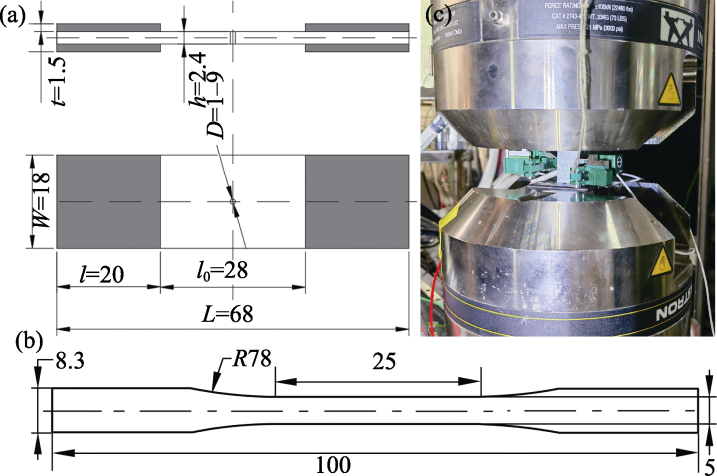
图1 试验件构型、尺寸与试样加载图
Fig. 1 Test specimen configuration, dimensions and photograph of the loading setup (a) Open-hole tensile specimen; (b) Unnotched tensile specimen; (c) Photograph of the specimen under loading. Unit: mm
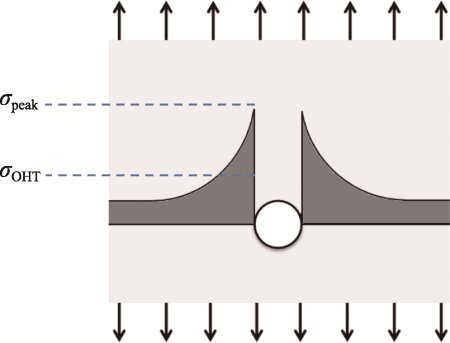
图2 开孔拉伸试验件孔边应力分布规律示意图
Fig. 2 Schematic diagram of stress distribution characteristics around the hole in an open-hole tensile specimen
| Specimen | D/mm | W/D | Kt |
|---|---|---|---|
| K0 | 0 | / | / |
| K1 | 1 | 18 | 2.844 |
| K2 | 2 | 9 | 2.707 |
| K3 | 3 | 6 | 2.582 |
| K4 | 6 | 3 | 2.302 |
| K5 | 9 | 2 | 2.130 |
表1 试样几何构型和理论应力集中系数
Table 1 Specimen geometry and theoretical stress concentration factor
| Specimen | D/mm | W/D | Kt |
|---|---|---|---|
| K0 | 0 | / | / |
| K1 | 1 | 18 | 2.844 |
| K2 | 2 | 9 | 2.707 |
| K3 | 3 | 6 | 2.582 |
| K4 | 6 | 3 | 2.302 |
| K5 | 9 | 2 | 2.130 |
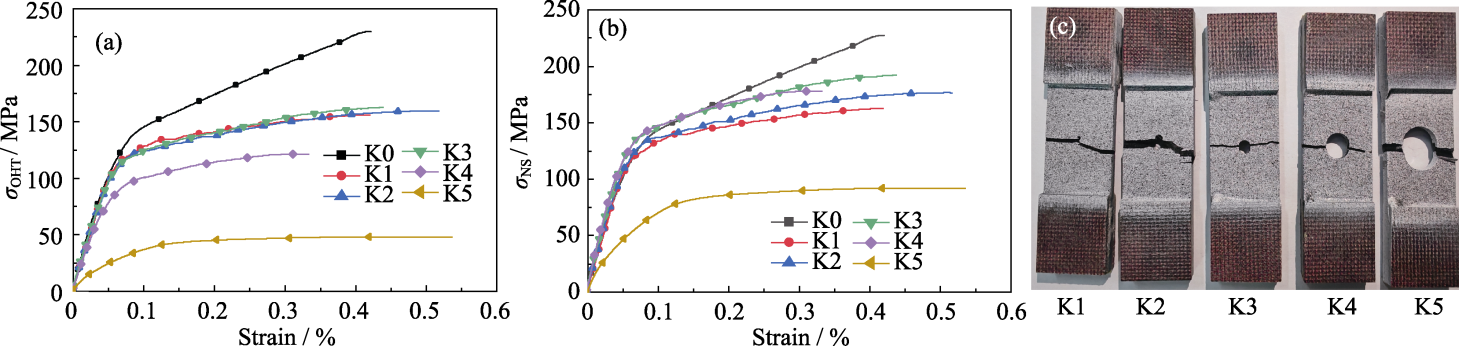
图3 无孔与开孔试样的拉伸曲线和断口形貌对比
Fig. 3 Comparison of tensile curves and fracture surface morphologies between unnotched and open-hole specimens (a) Nominal open-hole tensile stress-strain curves; (b) Net-section stress-strain curves; (c) Fracture morphologies of OHT specimens
| Specimen | D/ mm | EOHT/ GPa | ENS/ GPa | SOHT/ MPa | SNS/ MPa | σp_OHT/ MPa | σp_NS/ MPa | σpeak/ MPa |
|---|---|---|---|---|---|---|---|---|
| K0 | 0 | 206 | 206 | 228 | 228 | 125 | 125 | 125 |
| K1 | 1 | 200 | 212 | 155 | 164 | 106 | 112 | 301 |
| K2 | 2 | 203 | 229 | 158 | 177 | 98.8 | 111 | 267 |
| K3 | 3 | 204 | 245 | 162 | 194 | 98.1 | 117 | 253 |
| K4 | 6 | 186 | 278 | 120 | 179 | 90.0 | 134 | 207 |
| K5 | 9 | 83.2 | 164 | 47.3 | 93.1 | 20.5 | 40.5 | 43.7 |
表2 不同孔径试样的拉伸刚度和强度
Table 2 Tensile stiffness and strength for specimens with different hole diameters
| Specimen | D/ mm | EOHT/ GPa | ENS/ GPa | SOHT/ MPa | SNS/ MPa | σp_OHT/ MPa | σp_NS/ MPa | σpeak/ MPa |
|---|---|---|---|---|---|---|---|---|
| K0 | 0 | 206 | 206 | 228 | 228 | 125 | 125 | 125 |
| K1 | 1 | 200 | 212 | 155 | 164 | 106 | 112 | 301 |
| K2 | 2 | 203 | 229 | 158 | 177 | 98.8 | 111 | 267 |
| K3 | 3 | 204 | 245 | 162 | 194 | 98.1 | 117 | 253 |
| K4 | 6 | 186 | 278 | 120 | 179 | 90.0 | 134 | 207 |
| K5 | 9 | 83.2 | 164 | 47.3 | 93.1 | 20.5 | 40.5 | 43.7 |
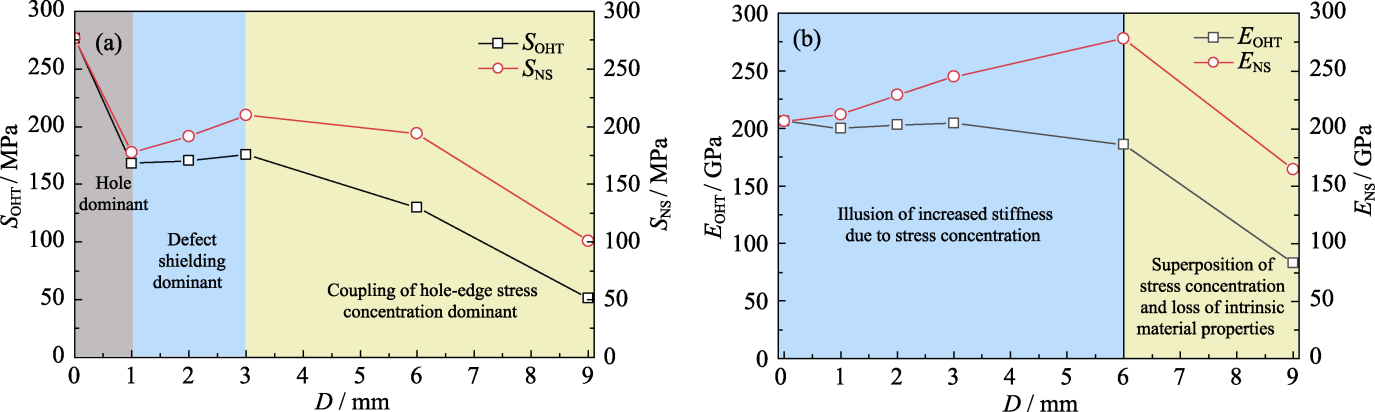
图4 孔径对试样(a)拉伸强度和(b)模量参数的影响
Fig. 4 Effect of hole diameter on (a) tensile strength properties and (b) module properties of specimens
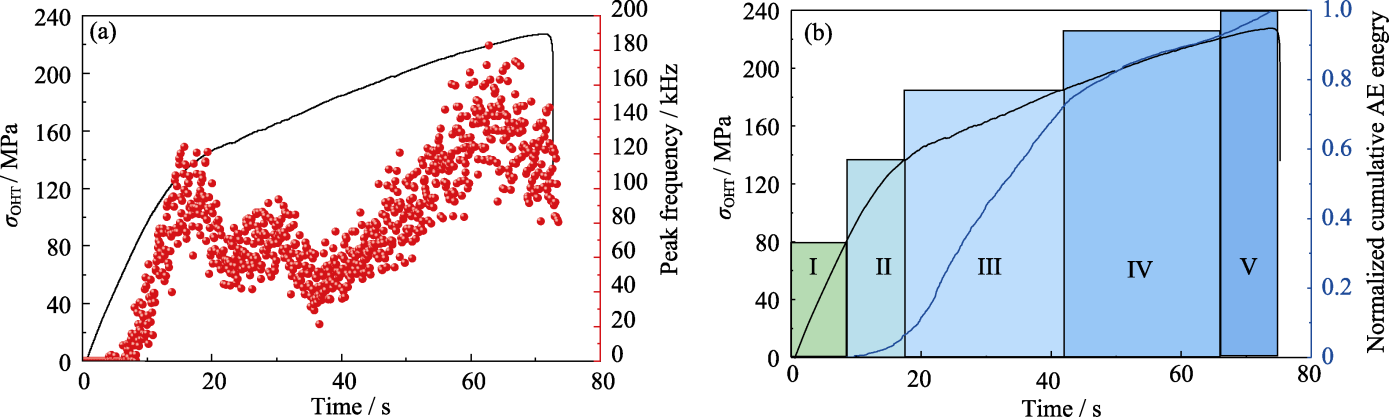
图5 无孔试样的(a)峰值频率曲线和(b)归一化累积能量曲线
Fig. 5 (a) Peak frequency and (b) normalized cumulative energy curves of unnotched specimen
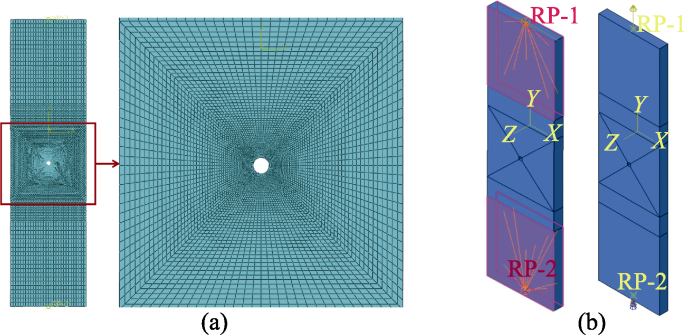
图6 开孔试样的(a)有限元模型及其(b)载荷边界条件
Fig. 6 (a) Finite element model of the open-hole specimen and (b) corresponding applied loads and boundary conditions
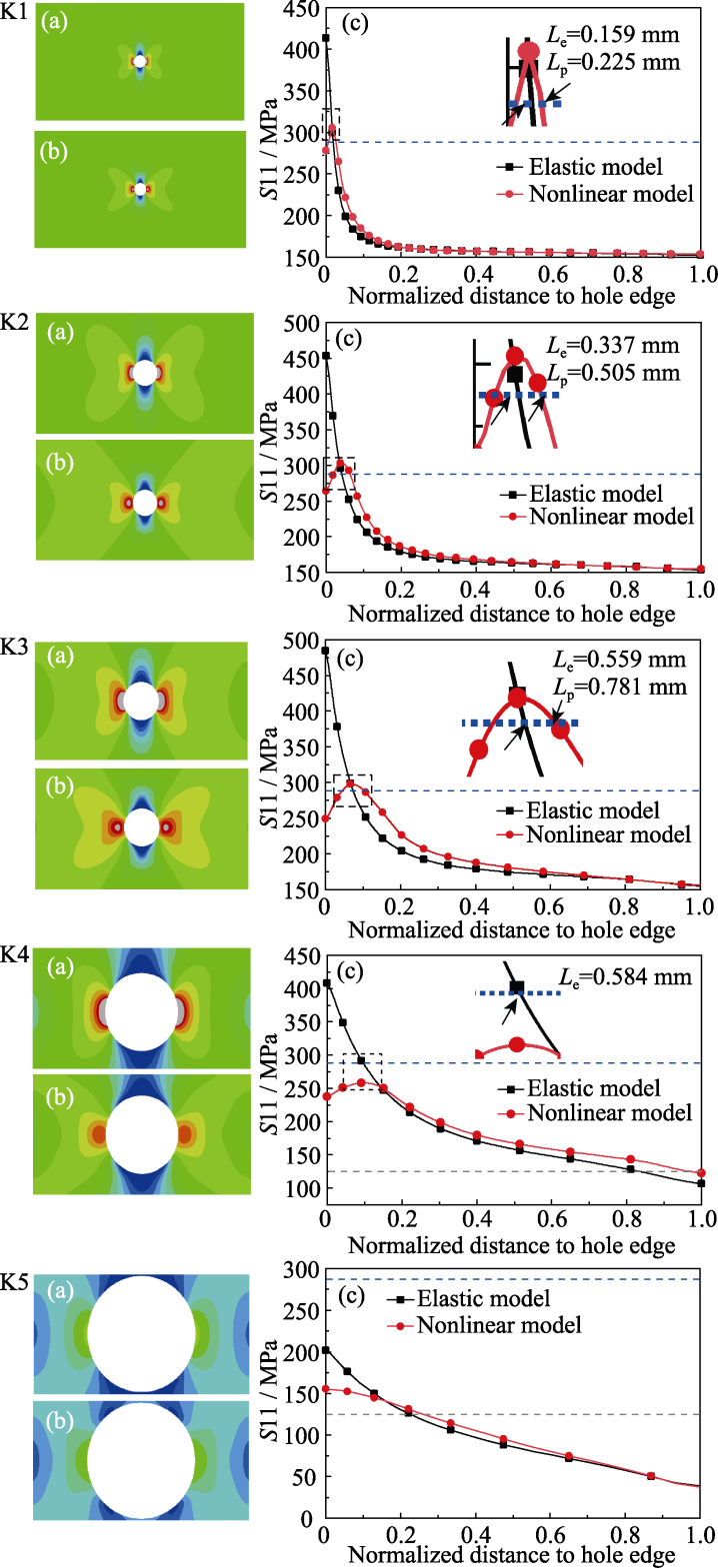
图7 K1~K5试样孔边应力预测结果
Fig. 7 Stress predictions around holes in K1-K5 specimens (a) Elastic model results; (b) Nonlinear model results; (c) Stress distribution along hole edge to the specimen edge line
| Specimen | D/mm | Le/mm | Lp/mm |
|---|---|---|---|
| K1 | 1 | 0.159 | 0.225 |
| K2 | 2 | 0.337 | 0.505 |
| K3 | 3 | 0.559 | 0.781 |
| K4 | 6 | 0.584 | / |
| K5 | 9 | / | / |
表3 不同孔径试样的特征尺寸分析结果
Table 3 Characteristic dimension analysis for specimens with different hole diameters
| Specimen | D/mm | Le/mm | Lp/mm |
|---|---|---|---|
| K1 | 1 | 0.159 | 0.225 |
| K2 | 2 | 0.337 | 0.505 |
| K3 | 3 | 0.559 | 0.781 |
| K4 | 6 | 0.584 | / |
| K5 | 9 | / | / |

图S1 不同孔径下的试验件内部缺陷的CT重构图像
Fig. S1 CT reconstructed images of internal defects in specimens with different hole diameters (a) K1 specimen; (b) K2 specimen; (c) K3 specimen; (d) K4 specimen; (e) K5 specimen
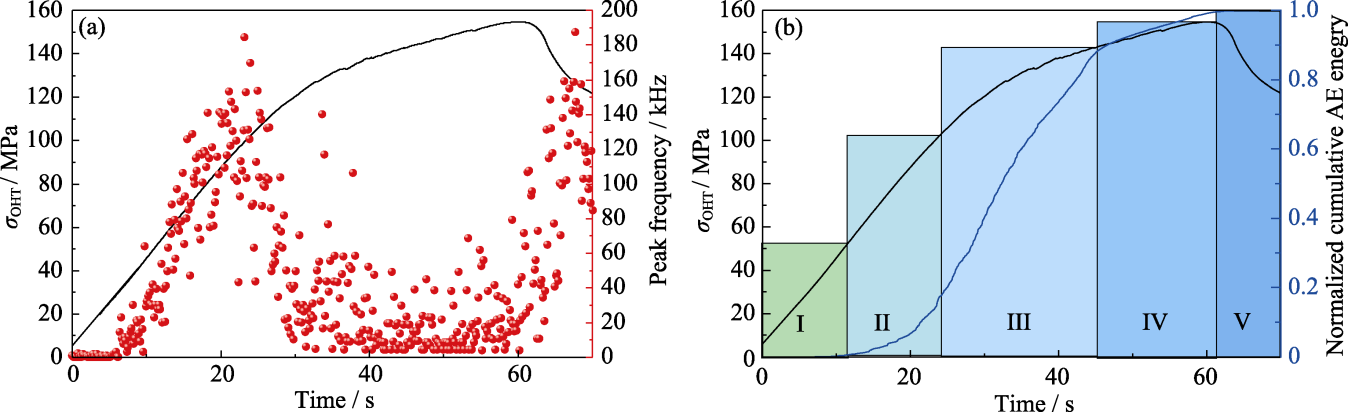
图S2 OHT试样K1的(a)峰值频率和(b)归一化累积能量曲线
Fig. S2 (a) Peak frequency and (b) normalized cumulative energy curves of K1 OHT specimen
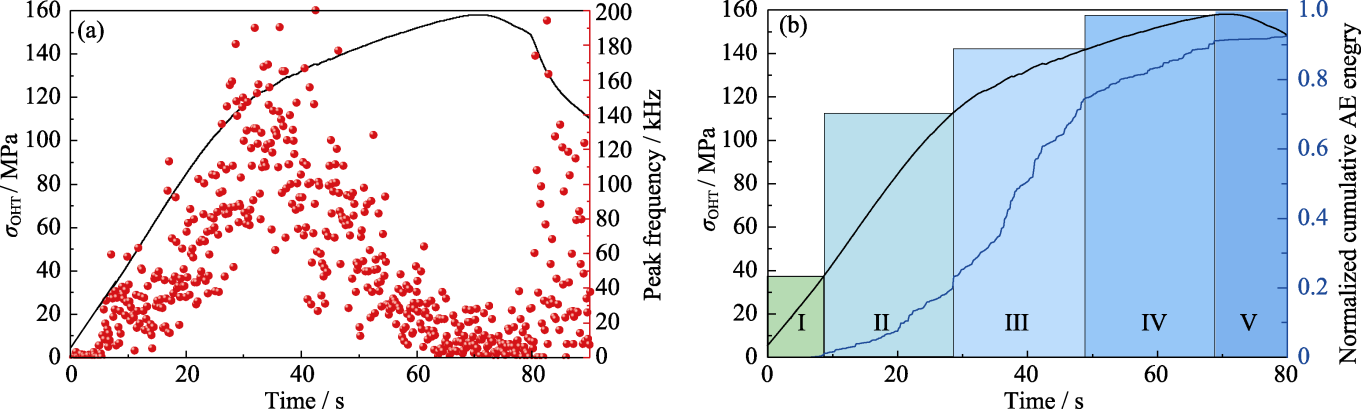
图S3 OHT 试样K2的(a)峰值频率曲线和(b)归一化累积能量
Fig. S3 (a) Peak frequency and (b) normalized cumulative energy curves of K2 OHT specimen
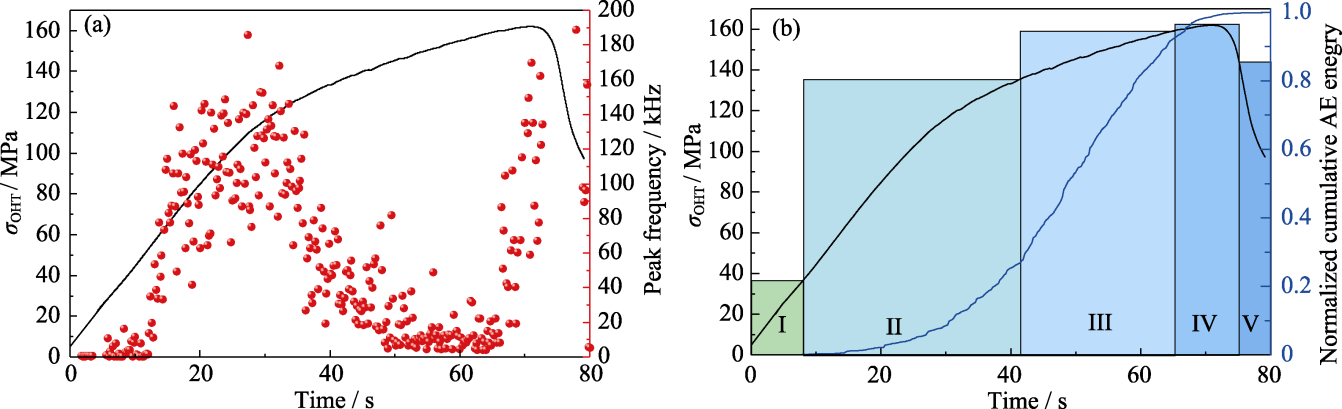
图S4 K3试验件的(a)峰值频率曲线和(b)归一化累积能量
Fig. S4 (a) Peak frequency and (b) normalized cumulative energy curves of K3 specimen
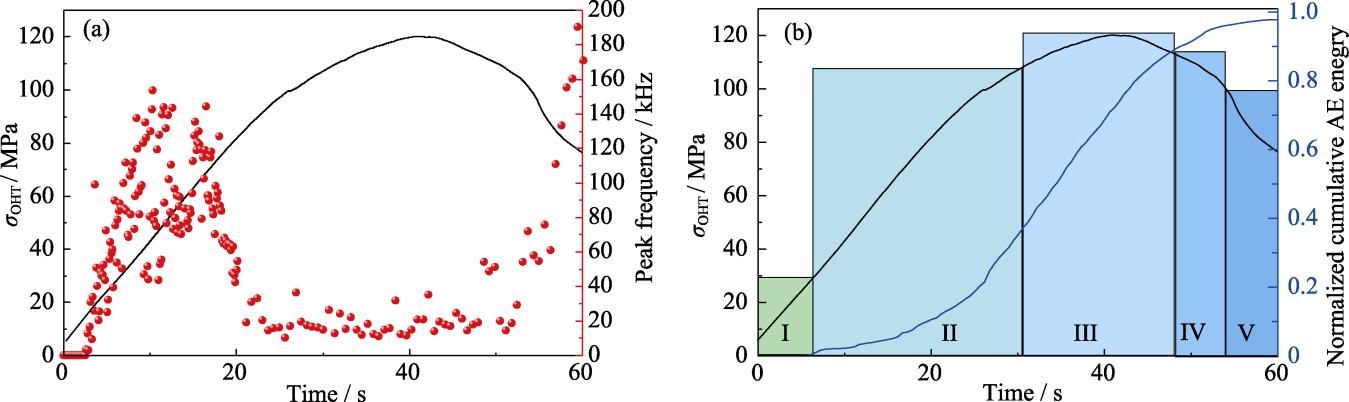
图S5 K4试验件的(a)峰值频率曲线和归一化累积能量
Fig. S5 (a) Peak frequency and (b) normalized cumulative energy curves of K4 specimen
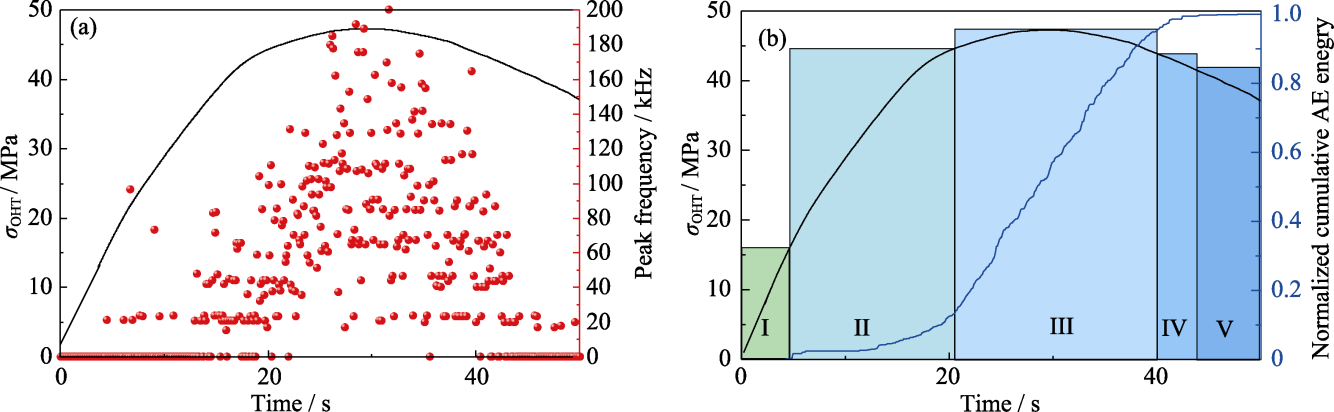
图S6 K5试验件的(a)峰值频率曲线和(b)归一化累积能量曲线
Fig. S6 (a) Peak frequency and (b) normalized cumulative energy curves of K5 specimen
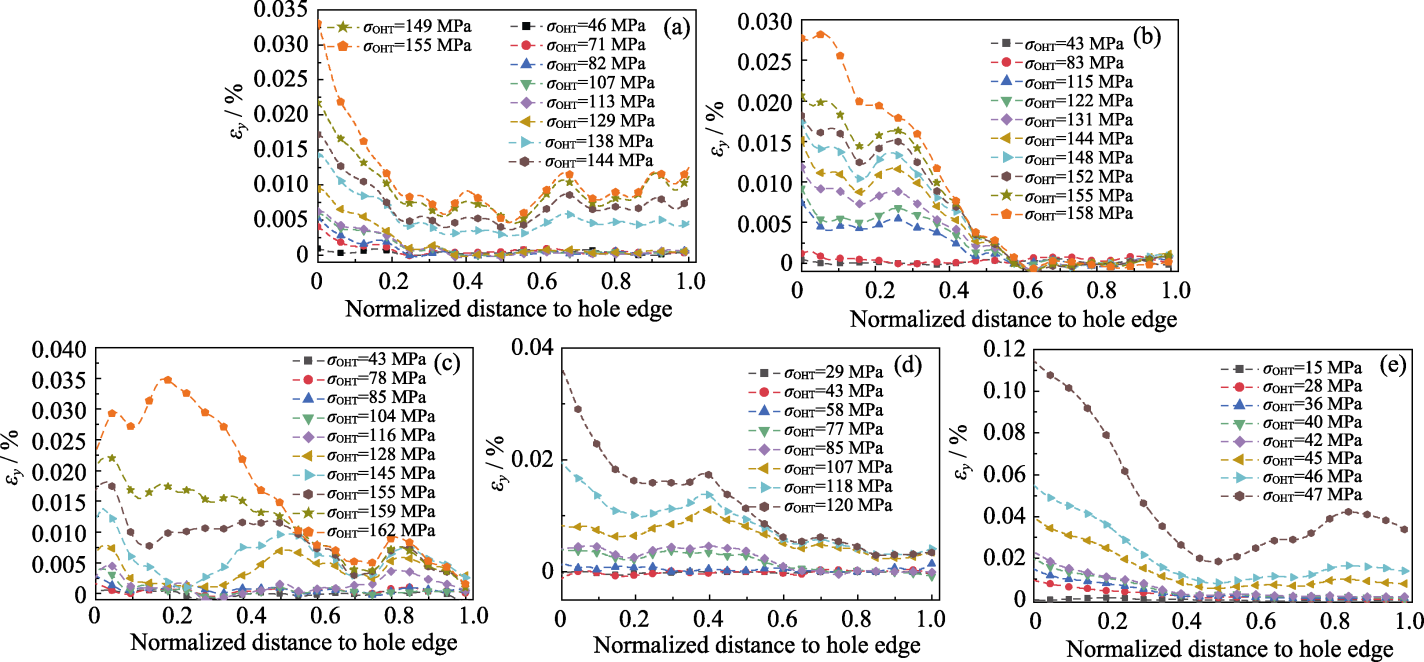
图S7 孔边到试样边缘连线上的应变分布
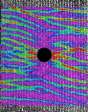
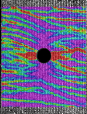
Fig. S7 Longitudinal tensile strain distribution along the hole-to-side line (a) K1 specimen; (b) K2 specimen; (c) K3 specimen; (d) K4 specimen; (e) K5 specimen
| σOHT/MPa | 46 | 82 | 113 | 138 | 149 | 155 | |
|---|---|---|---|---|---|---|---|
| K1 | 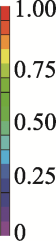 | 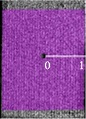 | 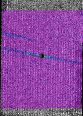 | 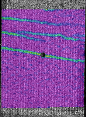 | 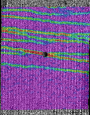 | 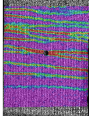 | 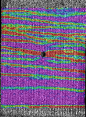 |
| K2 | σOHT/MPa | 23.5 | 84.0 | 112 | 144 | 155 | 158 |
 |  |  |  |  |  |  | |
| K3 | σOHT/MPa | 34.1 | 78.0 | 108 | 142 | 155 | 162 |
 |  |  |  |  |  |  | |
| K4 | σOHT/MPa | 29.1 | 43.0 | 85.2 | 107 | 120 | 103 |
 |  |  |  |  |  |  | |
| K5 | σOHT/MPa | 15.1 | 28.0 | 36.1 | 47.2 | 46.0 | 37.1 |
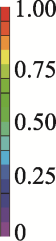 | 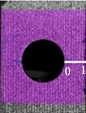 | 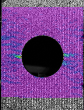 | 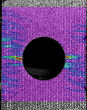 | 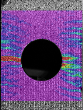 | 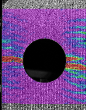 |  |
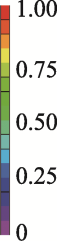
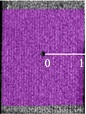
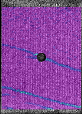
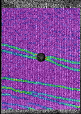
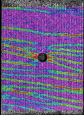
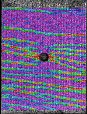
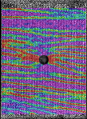
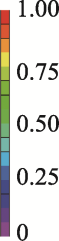
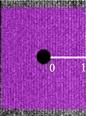
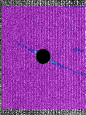
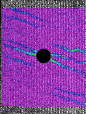
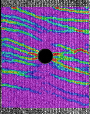
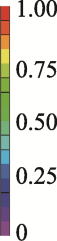
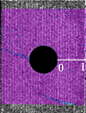
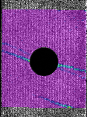
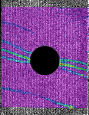
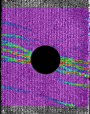
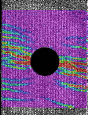
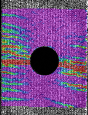
表S1 5种不同孔径试样不同应力水平下表面应变场的整体变化规律
Table S1 Variation of the full-field surface strain at different stress levels for specimens with five different hole diameters
| σOHT/MPa | 46 | 82 | 113 | 138 | 149 | 155 | |
|---|---|---|---|---|---|---|---|
| K1 | | | | | | | |
| K2 | σOHT/MPa | 23.5 | 84.0 | 112 | 144 | 155 | 158 |
| | | | | | | | |
| K3 | σOHT/MPa | 34.1 | 78.0 | 108 | 142 | 155 | 162 |
| | | | | | | | |
| K4 | σOHT/MPa | 29.1 | 43.0 | 85.2 | 107 | 120 | 103 |
| | | | | | | | |
| K5 | σOHT/MPa | 15.1 | 28.0 | 36.1 | 47.2 | 46.0 | 37.1 |
| | | | | | | |
| Specimen | First occurrence of acoustic emission signals on the peak frequency curve | First occurrence of an energy jump on the normalized cumulative energy curve | Peak frequency reaches the first peak point |
|---|---|---|---|
| K1 | 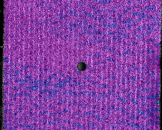 σOHT=32.2 MPa | 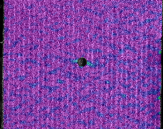 σOHT=52.7 MPa | 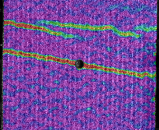 σOHT=102 MPa |
| K2 | 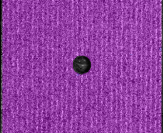 σOHT=23.1 MPa | 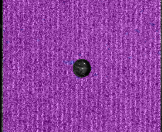 σOHT=37.4 MPa | 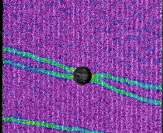 σOHT=121 MPa |
| K3 | 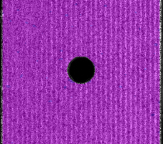 σOHT=27.0 MPa | 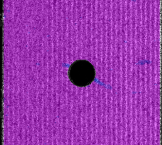 σOHT=36.6 MPa | 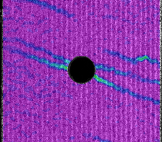 σOHT=104 MPa σOHT=104 MPa |
| K4 | 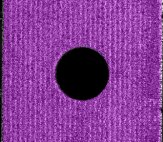 σOHT=16.9 MPa | 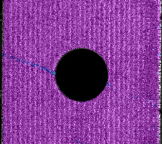 σOHT=29.5 MPa | 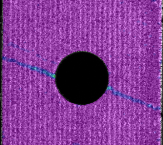 σOHT=44.1 MPa |
| K5 | 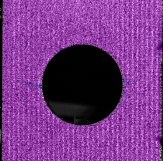 σOHT=14.4 MPa | 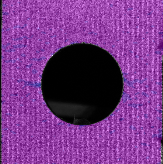 σOHT=16.2 MPa | 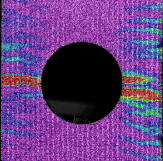 σOHT=47.4 MPa |
表S2 声发射信号特征点应力下的DIC应变云图
Table S2 DIC strain contour map of the stress corresponding to acoustic emission signal feature points
| Specimen | First occurrence of acoustic emission signals on the peak frequency curve | First occurrence of an energy jump on the normalized cumulative energy curve | Peak frequency reaches the first peak point |
|---|---|---|---|
| K1 | σOHT=32.2 MPa | σOHT=52.7 MPa | σOHT=102 MPa |
| K2 | σOHT=23.1 MPa | σOHT=37.4 MPa | σOHT=121 MPa |
| K3 | σOHT=27.0 MPa | σOHT=36.6 MPa | σOHT=104 MPa |
| K4 | σOHT=16.9 MPa | σOHT=29.5 MPa | σOHT=44.1 MPa |
| K5 | σOHT=14.4 MPa | σOHT=16.2 MPa | σOHT=47.4 MPa |
| [1] | 李龙彪. 陶瓷基复合材料在航空发动机应用与适航符合性验证研究进展. 复合材料学报, 2025, 42(1): 54. |
| [2] | 焦健, 孙世杰, 焦春荣, 等. SiCf/SiC复合材料涡轮导向叶片研究进展. 复合材料学报, 2023, 40(8): 4342. |
| [3] |
王雅娜, 李天山, 王海润, 等. GE公司预浸料-熔渗工艺SiCf/SiC复合材料应用研究历程及启示. 航空材料学报, 2025, 45(2): 1.
DOI |
| [4] | 刘虎, 束小文, 洪智亮, 等. 航空发动机用SiC/SiC复合材料典型元件设计及性能评价研究进展. 材料导报, 2023, 37(14): 12. |
| [5] | ASTM International. Standard test method for open-hole tensile strength of fiber-reinforced advanced ceramic composites: ASTM C1869-18. West Conshohocken: ASTM International, 2023. |
| [6] | KALLURI S, VERRILLI M J. Influence of holes on the in-plane tensile strength and fatigue durability of a Nicalon™/Si-N-C ceramic matrix composite. Ceramic Engineering and Science Proceedings, 2003, 24(4): 427. |
| [7] |
HAQUE A, AHMED L, RAMASETTY A. Stress concentrations and notch sensitivity in woven ceramic matrix composites containing a circular hole—an experimental, analytical, and finite element study. Journal of the American Ceramic Society, 2005, 88(8): 2195.
DOI URL |
| [8] |
GYEKENYESI A L, MORSCHER G N. Damage progression and stress redistribution in notched SiC/SiC composites. Journal of Materials Engineering and Performance, 2010, 19(9): 1298.
DOI URL |
| [9] | GYEKENYESI A L, MORSCHER G N. Evaluating the mechanical behavior of notched SiC/SiC composites using thermoelastic stress analysis. Proceedings of SPIE, Bellingham, 2004: 456-465. |
| [10] | MORSCHER G N, GYEKENYESI J Z, GYEKENYESI A L. Mechanical behavior of notched SiC/SiC composites. ASME International Gas Turbine and Aeroengine Congress, New Orleans, 2001: 1-7. |
| [11] |
RUGGLES-WRENN M B, KURTZ G. Notch sensitivity of fatigue behavior of a Hi-Nicalon™/SiC-B4C composite at 1,200 ℃ in air and in steam. Applied Composite Materials, 2013, 20: 891.
DOI URL |
| [12] |
GOWAYED Y, OJARD G, CHEN J, et al. Accumulation of time-dependent strain during dwell-fatigue experiments of iBN- Sylramic melt infiltrated SiC/SiC composites with and without holes. Composites Part A: Applied Science and Manufacturing, 2011, 42(12): 2020.
DOI URL |
| [13] |
MCNULTY J C, HE M Y, ZOK F W. Notch sensitivity of fatigue life in a Sylramic™/SiC composite at elevated temperature. Composites Science and Technology, 2001, 61(9): 1331.
DOI URL |
| [14] |
SANTHOSH U, AHMAD J, JOHN R, et al. Modeling of stress concentration in ceramic matrix composites. Composites Part B: Engineering, 2013, 45: 1156.
DOI URL |
| [15] |
GUAN X Y, WANG Y N, JIAO J, et al. Hierarchical modeling of strain-concentrating effect in notched ceramic-matrix composite laminates. International Journal of Mechanical Sciences, 2025, 304: 110641.
DOI URL |
| [16] |
LIU H, LI L B, WANG Y N, et al. In situ damage propagation and fracture in notched cross-ply SiC/SiC composites: experiment and numerical modeling. Journal of the European Ceramic Society, 2024, 44(4): 2052.
DOI URL |
| [17] | 刘海龙. SiC/SiC陶瓷基复合材料力学性能与失效机理研究. 上海: 上海交通大学硕士学位论文, 2020. |
| [18] | PETERSON R E, PLUNKETT R. Stress concentration factors. Naval Engineers Journal, 2010, 67(3): 697. |
| [19] |
MORSCHER G N. Stress-dependent matrix cracking in 2D woven SiC-fiber reinforced melt-infiltrated SiC matrix composites. Composites Science and Technology, 2004, 64(9): 1311.
DOI URL |
| [20] |
MORSCHER G N, MAXWELL R. Monitoring tensile fatigue crack growth and fiber failure around a notch in laminate SiC/SiC composites utilizing acoustic emission, electrical resistance, and digital image correlation. Journal of the European Ceramic Society, 2019, 39(2/3): 229.
DOI URL |
| [21] |
BACHE M R, NEWTON C D, JONES J P, et al. Advances in damage monitoring techniques for the detection of failure in SiCf/SiC ceramic matrix composites. Ceramics, 2019, 2(2): 347.
DOI URL |
| [22] |
DASSIOS K G, AGGELIS D G, KORDATOS E Z, et al. Cyclic loading of a SiC-fiber reinforced ceramic matrix composite reveals damage mechanisms and thermal residual stress state. Composites Part A: Applied Science and Manufacturing, 2013, 44: 105.
DOI URL |
| [23] |
MORSCHER G N, FERGUSON C, PRATT S, et al. Acoustic emission accuracy from a tensile test of a ceramic matrix composite. Journal of the American Ceramic Society, 2024, 107(12): 8556.
DOI URL |
| [1] | 陈斌, 任科, 王一光. Mini-SiCf/SiC复合材料长时间高温下的力学性能演变[J]. 无机材料学报, 2025, 40(9): 971-980. |
| [2] | 吴晓晨, 郑瑞晓, 李露, 马浩林, 赵培航, 马朝利. SiCf/SiC陶瓷基复合材料高温环境损伤原位监测研究进展[J]. 无机材料学报, 2024, 39(6): 609-622. |
| [3] | 李广宇, 岳一凡, 王波, 张程煜, 索涛, 李玉龙. 2D-SiC/SiC复合材料的弹丸冲击损伤及冲击后拉伸性能[J]. 无机材料学报, 2024, 39(5): 494-500. |
| [4] | 沈轩逸, 马沁, 薛玉冬, 廖春景, 朱敏, 张翔宇, 杨金山, 董绍明. 复合界面层对SiCf/SiC复合材料力学损伤行为的影响[J]. 无机材料学报, 2023, 38(8): 917-922. |
| [5] | 张亚晨, 孟佳, 蔡坤, 盛晓晨, 乐军, 宋力昕. 基于声发射技术的Si-Cr-Ti高温抗氧化涂层弯曲失效机理研究[J]. 无机材料学报, 2021, 36(11): 1185-1192. |
| [6] | 李陇彬, 薛玉冬, 胡建宝, 杨金山, 张翔宇, 董绍明. 碳化硅纳米线增韧碳化硅纤维/碳化硅基体损伤行为研究[J]. 无机材料学报, 2021, 36(10): 1111-1117. |
| [7] | 张勇祯, 童小燕, 姚磊江, 李斌, 白国栋. 基于改进遗传算法的C/SiC拉伸损伤声发射模式识别[J]. 无机材料学报, 2020, 35(5): 593-600. |
| [8] | 黄喜鹏, 王波, 杨成鹏, 潘文革, 刘小瀛. 基于声发射信号的三维针刺C/SiC复合材料拉伸损伤演化研究[J]. 无机材料学报, 2018, 33(6): 609-616. |
| [9] | 邓启煌, 王连军, 许虹杰, 王宏志, 江 莞. MSP试验法评价PZT陶瓷的循环疲劳寿命[J]. 无机材料学报, 2012, 27(10): 1047-1052. |
| [10] | 潘文革,矫桂琼,王波,管国阳. 声发射技术在三维编织C/SiC复合材料拉伸损伤分析中的应用[J]. 无机材料学报, 2004, 19(4): 871-875. |
| 阅读次数 | ||||||
|
全文 |
|
|||||
|
摘要 |
|
|||||