无机材料学报 ›› 2026, Vol. 41 ›› Issue (8): 1133-1140.DOI: 10.15541/jim20250509
赵宁1,2,3( ), 魏福源3, 汪坪3, 史婷婷3, 王波2,3, 杨建2,3, 刘春俊2()
收稿日期:2025-12-20
修回日期:2026-02-02
出版日期:2026-08-20
网络出版日期:2026-04-03
通讯作者:
刘春俊, 研究员. E-mail: liuchunjun@tankeblue.cn作者简介:赵 宁(1986-), 男, 博士研究生. E-mail: zhaoning@tankeblue.cn
基金资助:
ZHAO Ning1,2,3(), WEI Fuyuan3, WANG Ping3, SHI Tingting3, WANG Bo2,3, YANG Jian2,3, LIU Chunjun2()
Received:2025-12-20
Revised:2026-02-02
Published:2026-08-20
Online:2026-04-03
Contact:
LIU Chunjun, professor. E-mail: liuchunjun@tankeblue.cnAbout author:ZHAO Ning (1986-), male, PhD candidate. E-mail: zhaoning@tankeblue.cn
Supported by:摘要:
螺位错(Threading Screw Dislocation, TSD)是碳化硅(Silicon Carbide, SiC)单晶中影响外延质量和器件性能的重要缺陷。随着SiC晶圆尺寸不断增大, 系统研究TSD的演变规律具有重要意义。本工作针对4H-SiC晶体中的TSD演变规律开展研究, 阐明晶体生长凸度对TSD产生的影响。采用物理气相传输(Physical Vapor Transport, PVT)法在不同热场条件下制备凸度为0.36~2.58 mm的4H-SiC单晶。利用X射线形貌术(X-ray Topography, XRT)对纵切样品进行表征, 分析热场梯度及C/Si比对TSD演变的作用。TSD在晶体生长过程中表现出继承、新生、合并、消失、弯折等多种演变行为。在初期生长阶段, 新增TSD密度随晶体凸度增大而显著升高, 当凸度为2.58 mm时, 新增TSD密度为126 cm-2。热场模拟表明, 较大的凸度对应更陡峭的热场梯度和更低的C/Si比, 易诱发硅液滴的形成并促进TSD形核; 末期新增TSD密度受凸度影响较小, 维持在0~3 cm-2。晶体初期生长阶段是TSD形成的主要时期, 热场引起的C/Si比失衡起主导作用。通过优化热场结构并降低生长前沿凸度, 可有效抑制TSD形成, 提高大尺寸4H-SiC单晶质量。
中图分类号:
赵宁, 魏福源, 汪坪, 史婷婷, 王波, 杨建, 刘春俊. 4H-SiC晶体中的螺位错演变规律研究[J]. 无机材料学报, 2026, 41(8): 1133-1140.
ZHAO Ning, WEI Fuyuan, WANG Ping, SHI Tingting, WANG Bo, YANG Jian, LIU Chunjun. Investigation of Threading Screw Dislocation Evolution in 4H-SiC Single Crystals[J]. Journal of Inorganic Materials, 2026, 41(8): 1133-1140.
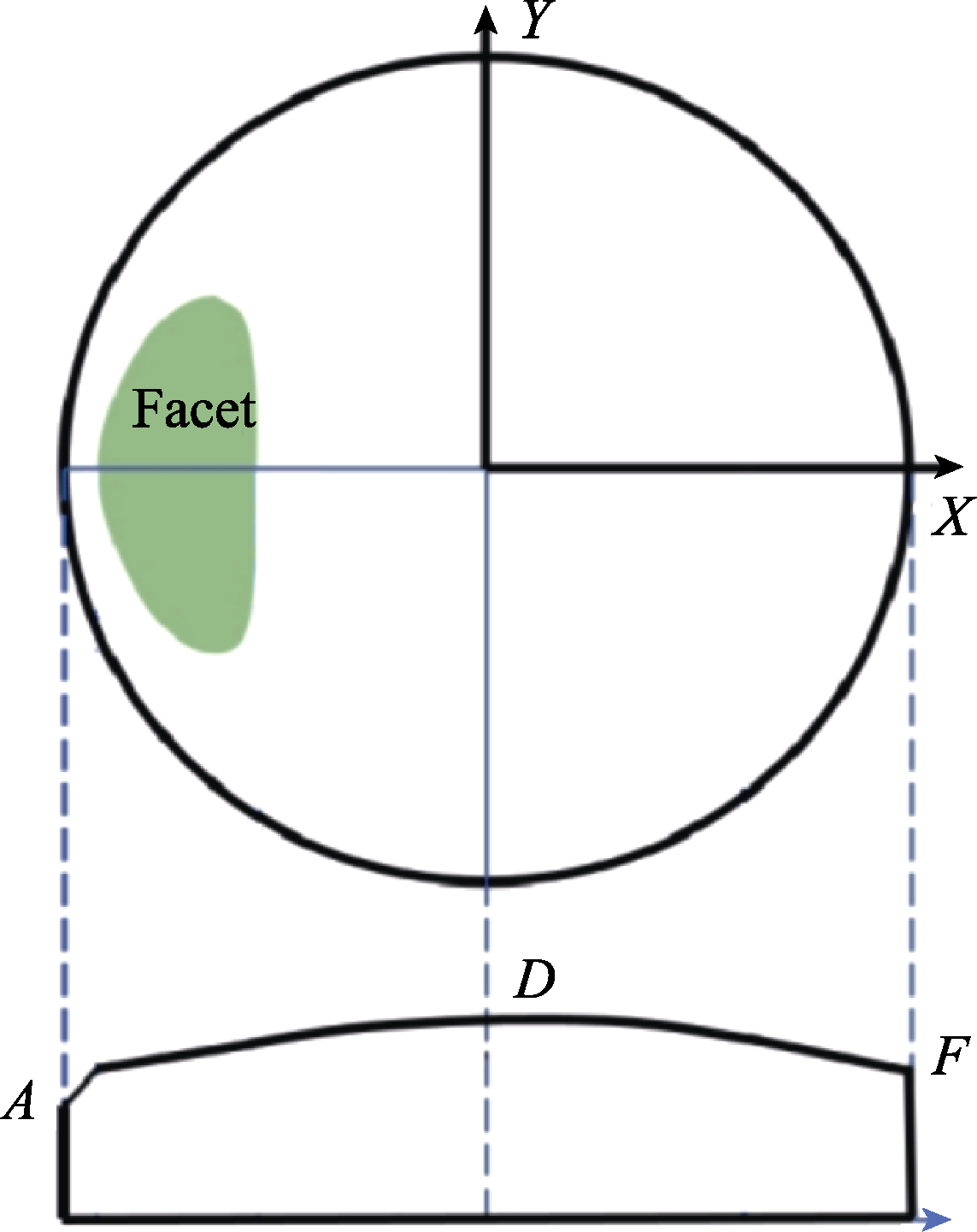
图1 晶体凸度定义的描述图
Fig. 1 Diagram describing the definition of crystal convexity

图2 4块不同凸度碳化硅晶体对应的坩埚与线圈相对位置
Fig. 2 Relative positions between the crucible and the induction coil corresponding to the four silicon carbide crystals with different convexities (a) 0.36 mm; (b) 1.62 mm; (c) 2.21 mm; (d) 2.58 mm
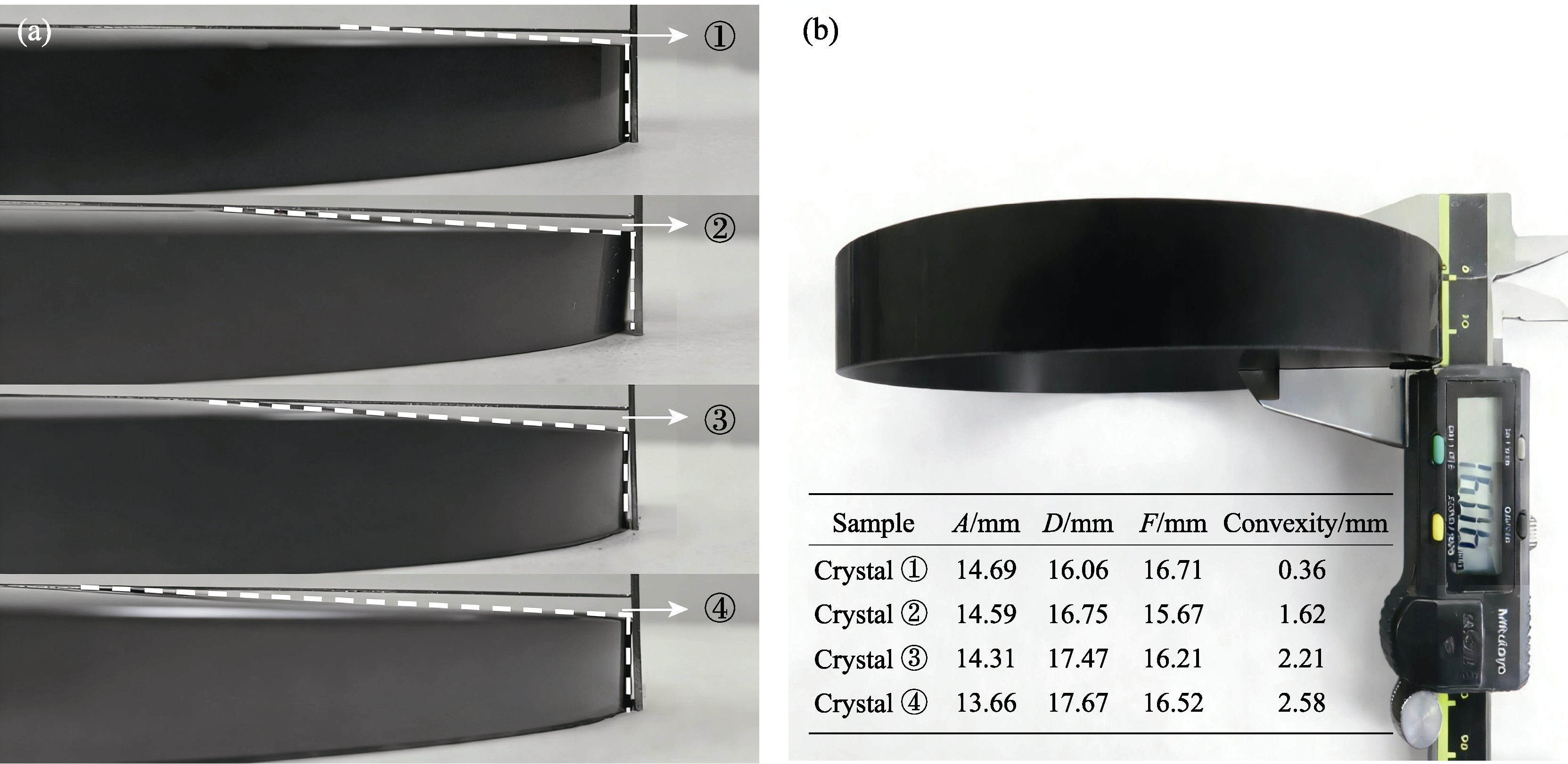
图3 不同凸度的碳化硅晶体
Fig. 3 Profiles of silicon carbide crystals with different convexities (a) Digital photos of four crystals showing region D to F; (b) Method for height measurement and convexity calculation
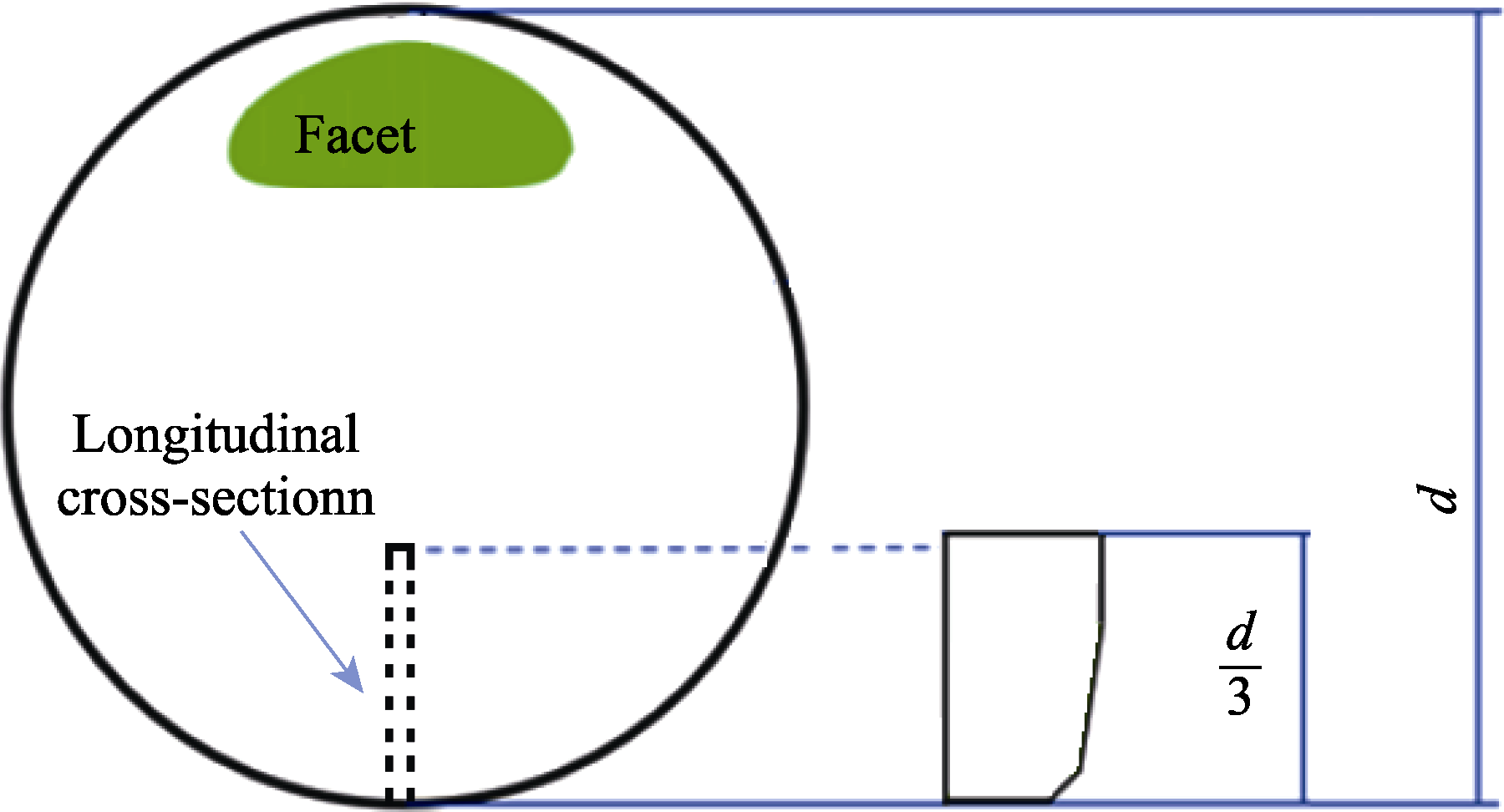
图4 晶体纵切图
Fig. 4 Longitudinal cross-section of the crystal
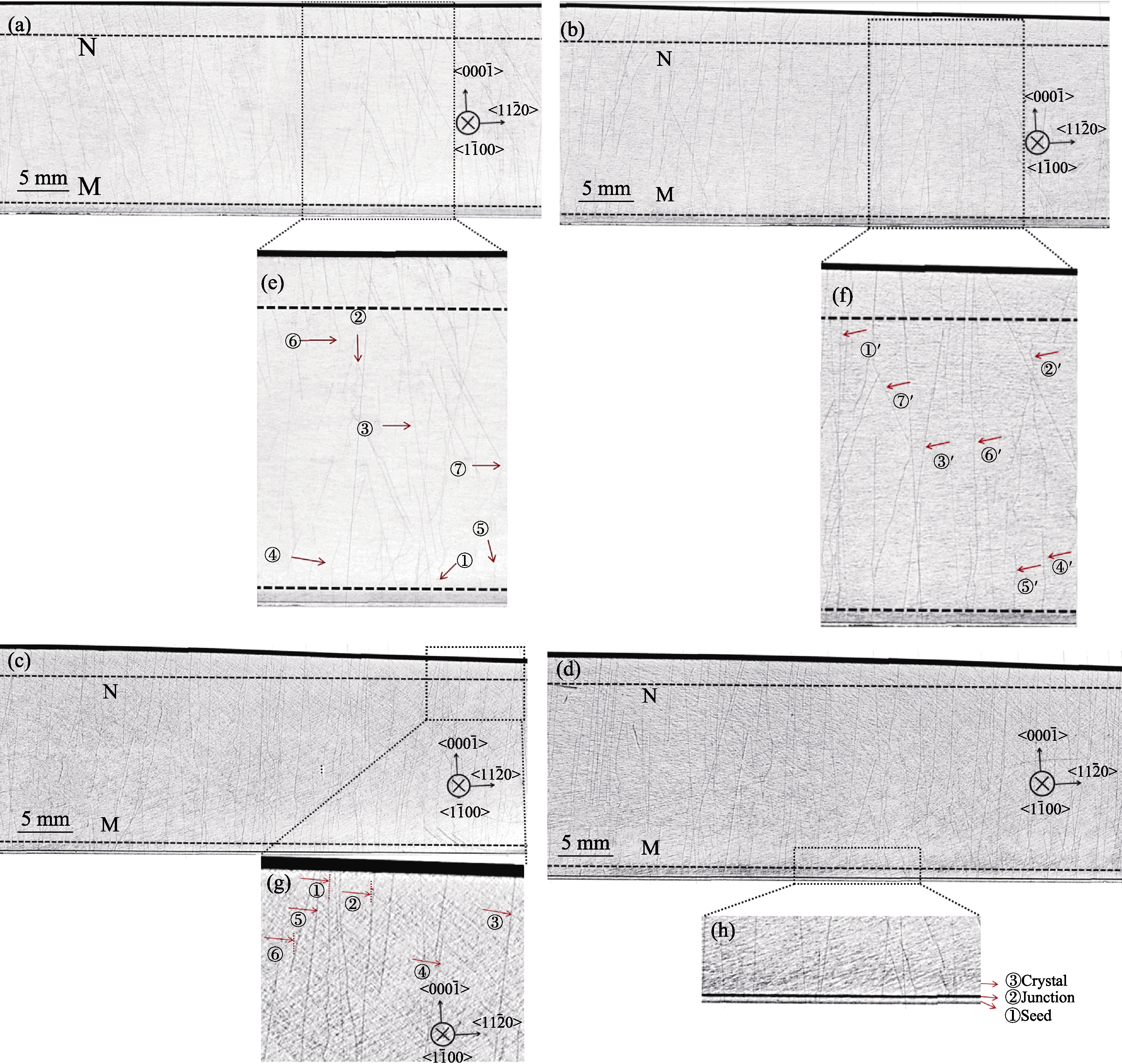
图5 不同凸度晶体的纵切截面XRT图
Fig. 5 Longitudinal cross-section XRT of crystals with different convexities (a) 0.36 mm; (b) 1.62 mm; (c) 2.21 mm; (d) 2.58 mm; (e-h) Magnified view (inset)
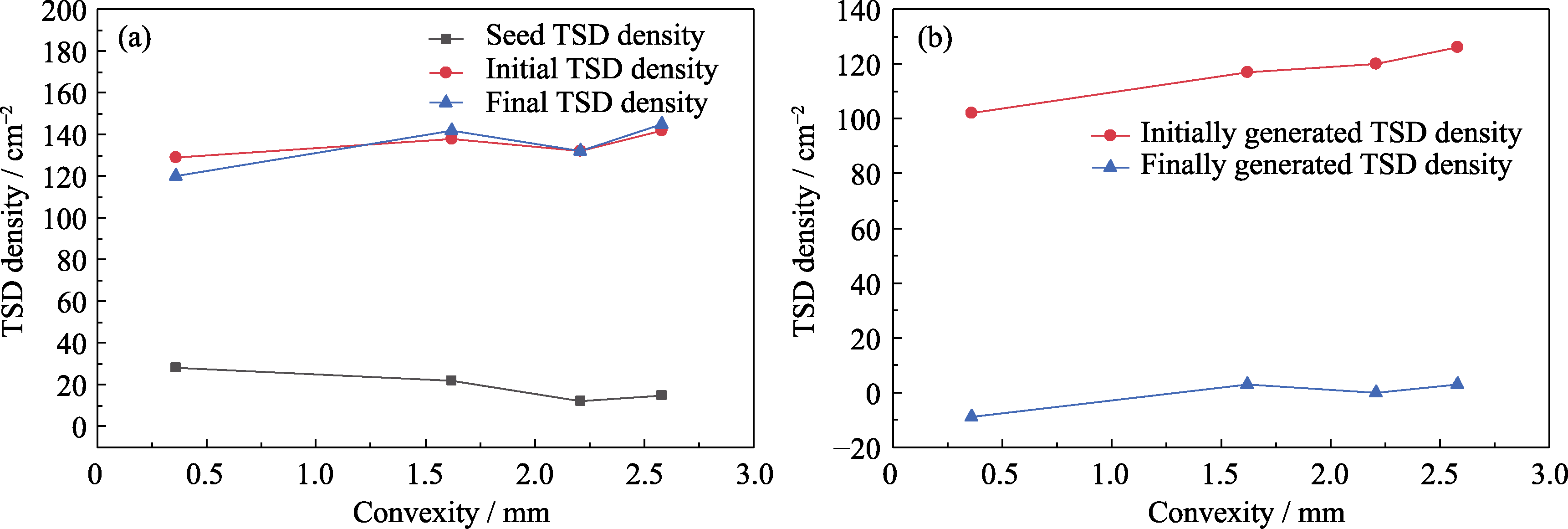
图6 新增TSD密度与晶体凸度的关系
Fig. 6 Variation of TSD density with crystal convexity (a) TSD density in the seed inheritance, initial growth, and final growth stages;(b) TSD density in the initially generated and finally generated growth stages

图7 不同生长初期热场结构与C/Si比模拟图
Fig. 7 Simulated C/Si ratio maps under various early stage thermal-field configurations (a) Minimum convexity; (b) Moderate convexity; (c) Maximum convexity. Colorful figures are available on website
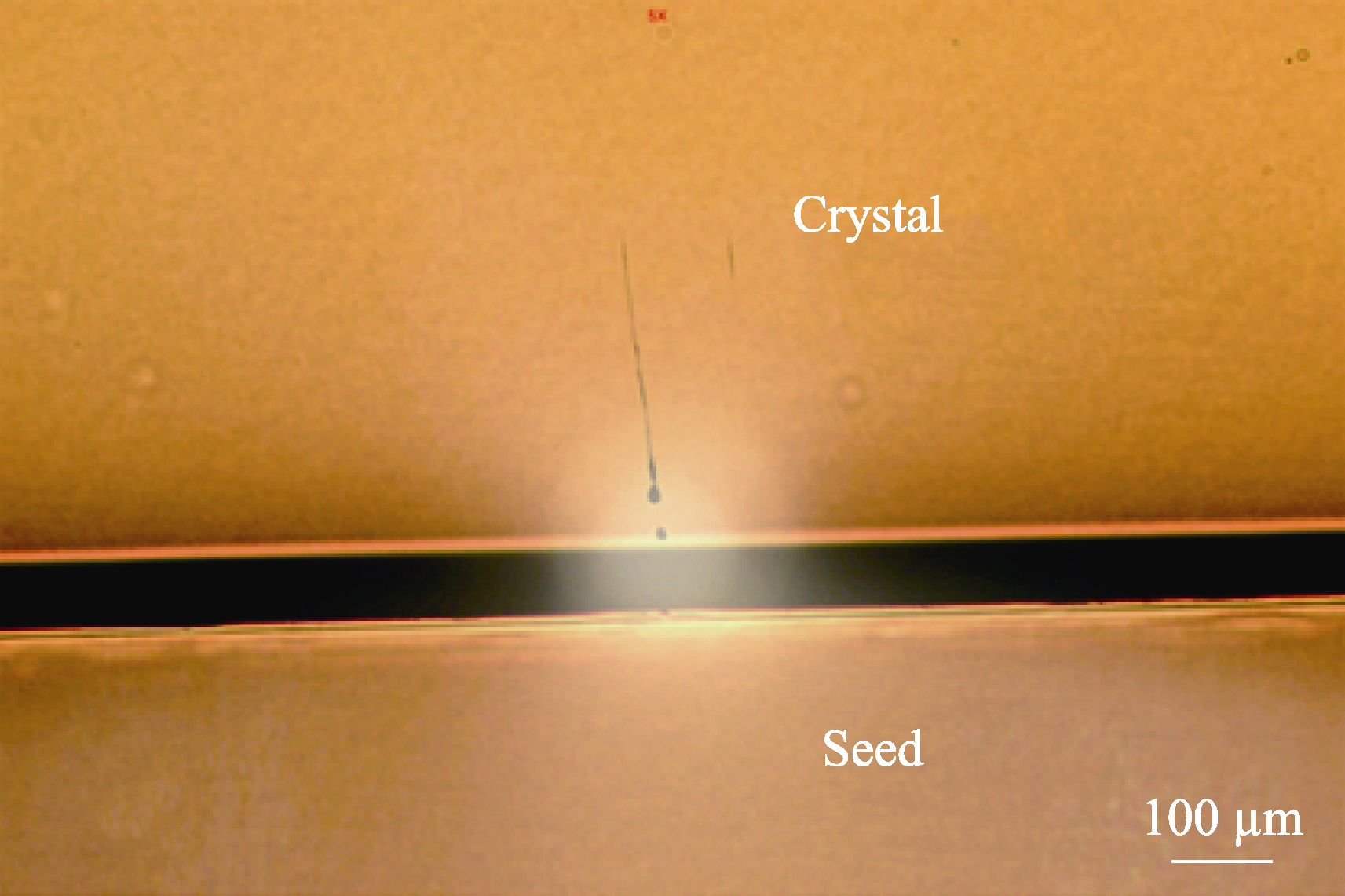
图8 光学显微镜下籽晶界面的液滴
Fig. 8 Silicon droplets at the seed-crystal interface under an optical microscope
| [1] | YAKIMOVA R, SYVÄJÄRVI M, IAKIMOV T, et al. Polytype stability in seeded sublimation growth of 4H-SiC boules. Journal of Crystal Growth, 2000, 217(3): 255. |
| [2] | YANG X L, CHEN X F, XIE X J, et al. Growth of 8-inch conductive 4H-SiC single crystals. Journal of Synthetic Crystals, 2022, 51(9): 1745. |
| [3] | LOU Y F, GONG T K, ZHANG W, et al. Preparation and c-haracterization of 8-inch conductive 4H-SiC single-crystal substrates. Journal of Synthetic Crystals, 2022, 51(12): 6. |
| [4] | YANG G, LIU X S, LI J J, et al. Dislocations in 4H-SiC single crystals. Journal of Synthetic Crystals, 2022, 51(Z1): 1673. |
| [5] | SHAO H Y, XIONG X X, YANG X L, et al. Study on the mechanism of facet formation based on the shape of temperature field. Crystal Growth & Design, 2025, 25(2): 400. |
| [6] | BERG W. Über eine röntgenographische methode zur untersu- chung von gitterstörungen an kristallen. Naturwissenschaften, 1931, 19(19): 391. |
| [7] | BOWEN D K, TANNER B K. X-ray metrology in semiconductor manufacturing. Florida: CRC Press, 2018. |
| [8] | ARMSTRONG R. X-ray misorientation contrast for a (lineage) subgrain boundary. Journal of Applied Crystallography, 1977, 10(1): 57. |
| [9] |
AUTHIER A. Contrast of dislocation images in X-ray transmission topography. Advances in X-ray Analysis, 1966, 10: 9.
DOI URL |
| [10] | SUVOROV E V, SMIRNOVA I A. X-ray diffraction imaging of defects in topography (microscopy) studies. Physics-Uspekhi, 2015, 58(9): 833. |
| [11] | BARRETT C S. A new microscopy and its potentialities. Transactions of AIME, 1945, 161: 15. |
| [12] | LANG A R. The early days of high-resolution X-ray topography. Journal of Physics D: Applied Physics, 1993, 26(4A): A1. |
| [13] | XIONG X X, HU X B, PENG Y, et al. Preparation of 8-inch conductive silicon carbide single crystal substrate with low dislocation density. Journal of Inorganic Materials, 2023, 38(11): 1371. |
| [14] | WANG S Z, DENG X Y, ZHANG T, et al. Correlation between stacking faults in 4H-SiC epitaxial layers and substrate defects. Journal of Inorganic Materials, 2019, 34(7): 748. |
| [15] | LIDER V. X-ray diffraction topography methods. Physics of the Solid State, 2021, 63(2): 189. |
| [16] | LANG A. The projection topograph: a new method in X-ray diffraction microradiography. Acta Crystallographica, 1959, 12(3): 249. |
| [17] |
GUO J, YANG Y, WU F, et al. Synchrotron X-ray topographic study on nature of threading mixed dislocations in 4H-SiC crystals grown by PVT method. Journal of Crystal Growth, 2016, 452: 39.
DOI URL |
| [18] |
FUJIE F, PENG H, AILIHUMEAR T, et al. Synchrotron X-ray topographic image contrast variation of screw-type basal plane dislocations located at different depths below the crystal surface in on-axis 4H-SiC. Acta Materialia, 2021, 208: 116746.
DOI URL |
| [19] |
MOKHOV E N, NAGALYUK S S, SOLTAMOV V A. Reduction of dislocation density in bulk silicon carbide crystals grown by PVT on profiled seeds. Materials Science Forum, 2017, 897: 7.
DOI URL |
| [20] | OHTANI N, KATSUNO M, TSUGE H, et al. Behavior of basal plane dislocations in hexagonal silicon carbide single crystals grown by physical vapor transport. Japanese Journal of Applied Physics, 2006, 45(3R): 1738. |
| [21] | BLUMENAU A T, JONES R, OBERG S, et al. Basal plane partial dislocations in silicon carbide. Physica B: Condensed Matter, 2003, 340/341/342: 160. |
| [22] | RAGHOTHAMACHAR B, YANG Y, GUO J, et al. Analysis of basal plane dislocation dynamics in PVT-grown 4H-SiC crystals during high temperature treatment. ECS Transactions, 2019, 92(7): 131. |
| [23] | OHTANI N, KATSUNO M, TSUGE H, et al. Dislocation processes during SiC bulk crystal growth. Microelectronic Engineering, 2006, 83(1): 142. |
| [24] |
SAKA H, WATANABE H, KITOU Y, et al. Inclination of a threading dislocation in an epilayer of 4H-SiC. Japanese Journal of Applied Physics, 2014, 53: 111302.
DOI URL |
| [25] |
TANUMA R, KAMATA I, HADORN J P, et al. Two-photon- excited, three-dimensional photoluminescence imaging and dislocati- on-line analysis of threading dislocations in 4H-SiC. Journal of Applied Physics, 2018, 124: 125703.
DOI URL |
| [26] |
CHEN K R, YANG S, WANG J F, et al. Identification and formation mechanism of threading screw dislocations in 4H-SiC crystal. Journal of Alloys and Compounds, 2025, 1040: 183454.
DOI URL |
| [27] | NAGANO M, KAMATA I, TSUCHIDA H. Plan-view and cross-sectional photoluminescence imaging analyses of threading dislo-cations in 4H-SiC epilayers. Japanese Journal of Applied Physics, 2013, 52(4S): 04CP09. |
| [28] | KUSUNOKI K, OKADA N, KATO T, et al. Control of polytype and defect formation in SiC bulk crystal growth by physical vapor transport. Materials Science Forum, 2006, 527/528/529: 3. |
| [29] | SUKOVICH J R, BALKAS C. Modeling of SiC sublimation growth: effect of thermal field on crystal morphology. Journal of Electronic Materials, 2000, 29(3): 270. |
| [30] | DRACHEV R V, STRATIY G D, CHEREDNICHENKO D I, et al. Liquid phase silicon at the front of crystallization during SiC PVT growth. Journal of Crystal Growth, 2001, 233(3/4): 541. |
| [31] | LIU C J, PENG T H, WANG S C, et al. Formation mechanism of type 2 micropipe defects in 4H-SiC crystals. CrystEngComm, 2013, 15(7): 1307. |
| [32] | KOLLMUß M, LA VIA F, WELLMANN P J. Effect of gro-wth conditions on the surface morphology and defect density of CS-PVT-grown 3C-SiC. Crystal Research and Technology, 2023, 58(7): 2300034. |
| [33] | PEI Y, YUAN W, LI Y, et al. Influence of growth process on suppression of surface morphological defects in 4H-SiC homoepitaxial layers. Micromachines, 2024, 15(6): 665. |
| [34] |
ARZIG M, SALAMON M, HSIAO T C, et al. Influence of the growth interface shape on the defect characteristics in the facet region of 4H-SiC single crystals. Journal of Crystal Growth, 2020, 532: 125436.
DOI URL |
| [35] |
ZHANG S, FAN G, LI T, et al. Optimization of thermal field of 150 mm SiC crystal growth by PVT method. RSC Advances, 2022, 12: 19936.
DOI PMID |
| [36] | YANG M C, CHEN Z M, FENG X F, et al. Effect of the growth interface shape on the thermoelastic stresses in SiC crystal prepared by PVT technique. Journal of Synthetic Crystals, 2012, 41(1): 24. |
| [37] |
HU S S, RAGHOTHAMACHAR B, CHEN Z Y, et al. New insights into the occurrence of prismatic slip during PVT growth of SiC crystals. Materials Science Forum, 2025, 1156: 57.
DOI URL |
| [1] | 胡钰晴, 朱一新, 乐先浩, 万青. 钽酸锂晶圆减薄技术及其热释电红外探测器应用进展[J]. 无机材料学报, 2026, 41(6): 764-774. |
| [2] | 朱一新, 喻志奎, 万青. 大尺寸功能晶圆临时键合与减薄[J]. 无机材料学报, 2025, 40(12): 1443-1444. |
| [3] | 张婷婷, 王方园, 刘长友, 张国荣, 吕佳辉, 宋宇晨, 介万奇. 水热-烧结法制备Cr2+:ZnSe/ZnSe核壳结构纳米孪晶[J]. 无机材料学报, 2024, 39(4): 409-415. |
| [4] | 孙晗, 李文俊, 贾子璇, 张岩, 殷利迎, 介万奇, 徐亚东. ACRT技术对大尺寸ZnTe晶体溶液法制备及其性能影响[J]. 无机材料学报, 2023, 38(3): 310-315. |
| [5] | 李盛菘, 郑永超, 孟澍临, 吴骊珠, 钟近艺, 赵冲林. 核壳型量子点-纳米金颗粒组装体高效检测神经性毒剂模拟剂[J]. 无机材料学报, 2019, 34(8): 893-898. |
| [6] | 耿瑞文, 杨晓京, 谢启明, 李芮, 罗良. 基于划刻实验的单晶锗材料去除机理研究[J]. 无机材料学报, 2019, 34(8): 867-872. |
| [7] | 祝志祥,张强,朱思宇,卢成嘉,刘艺,杨佳,吴超峰,曹林洪,王轲,高志鹏,朱承治. 脉冲电场下ZnO压敏陶瓷动态击穿过程研究[J]. 无机材料学报, 2019, 34(7): 715-720. |
| [8] | 徐信, 王书荣, 马逊, 杨帅, 李耀斌, 杨洪斌. 硫化物靶与单质靶制备Cu2ZnSnS4薄膜的比较研究[J]. 无机材料学报, 2019, 34(5): 529-534. |
| [9] | 肖海林, 邵刚勤, 赛青林, 夏长泰, 周圣明, 易学专. 混晶β-(Al, Ga)2O3的禁带调节[J]. 无机材料学报, 2016, 31(11): 1258-1262. |
| [10] | 李 斌, 李英莲, 莫淑一, 陈明光, 王东生, 龙 飞. In2Se3/CuSe核壳结构微纳粉的合成及其喷涂热处理制备CuInSe2薄膜[J]. 无机材料学报, 2016, 31(10): 1135-1140. |
| [11] | 黄耀芹, 郑国源, 莫淑一, 何丽秋, 王东生, 龙 飞. 液相辅助热压烧结制备Cu(In, Ga)Se2靶材的研究[J]. 无机材料学报, 2016, 31(10): 1141-1146. |
| [12] | 黄林芸, 李晨辉, 柯文明, 史玉升, 贺智勇, 张启富. 稀土氧化物对SPS烧结AlN陶瓷电性能的影响[J]. 无机材料学报, 2015, 30(3): 267-271. |
| [13] | 张骐昊, 徐磊磊, 王连军, 江 莞. Se掺杂量对n型Bi2Te3-xSex微结构及热电性能的影响[J]. 无机材料学报, 2014, 29(11): 1139-1144. |
| [14] | 龚 婷, 秦利军, 严 蕊, 胡 岚, 姬月萍, 冯 昊. 原子层沉积技术合成氧化铝薄膜包覆二硝酰胺铵[J]. 无机材料学报, 2014, 29(8): 869-874. |
| [15] | 吕 坤, 祝柏林, 李 珂, 胡文超, 谢 铭, 吴 隽. 氢气与Cu中间层对GZO薄膜光电性能的影响[J]. 无机材料学报, 2014, 29(5): 493-497. |
| 阅读次数 | ||||||
|
全文 |
|
|||||
|
摘要 |
|
|||||