
Journal of Inorganic Materials ›› 2026, Vol. 41 ›› Issue (7): 974-982.DOI: 10.15541/jim20250365
• RESEARCH ARTICLE • Previous Articles Next Articles
FAN Shengqiang1,2( ), ZHOU Shuhao1, QIAN Junchao1, MA Ruguang1(), WU Zhengying1()
Received:2025-09-19
Revised:2025-12-05
Published:2026-07-20
Online:2026-01-21
Contact:
MA Ruguang, professor. E-mail: ruguangma@usts.edu.cn;About author:FAN Shengqiang (1998-), male, Master candidate. E-mail: fanshengqiang0127@126.com
Supported by:CLC Number:
FAN Shengqiang, ZHOU Shuhao, QIAN Junchao, MA Ruguang, WU Zhengying. Manganese Dioxide/Biocarbon Composite Photothermal Material: Synthesis and Performance in Solar Interface Water Evaporation[J]. Journal of Inorganic Materials, 2026, 41(7): 974-982.
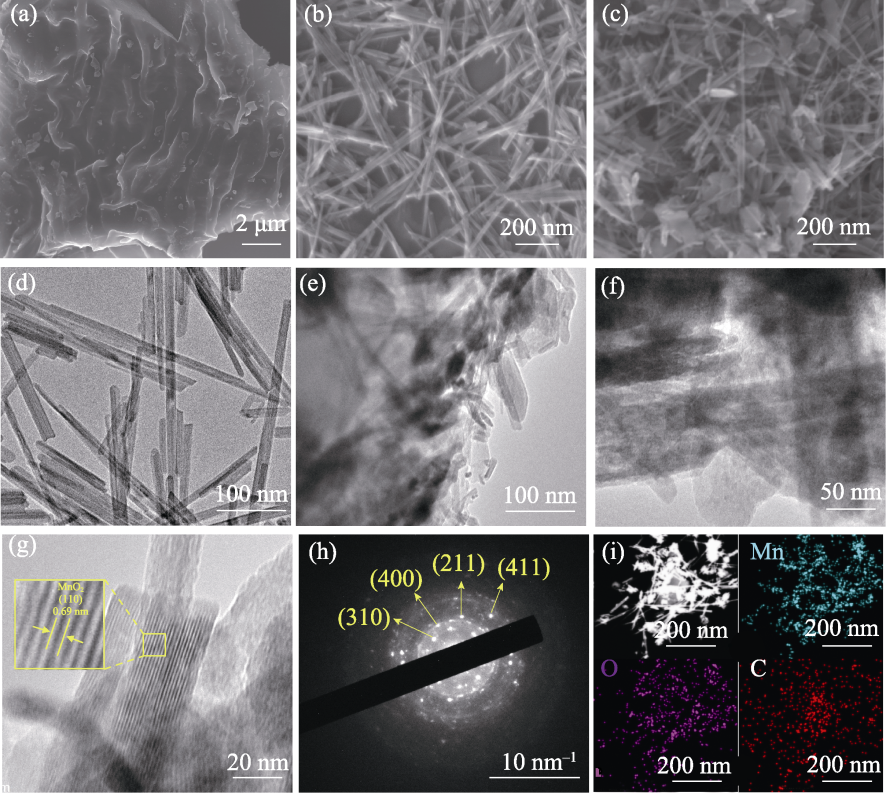
Fig. 1 SEM and TEM characterizations for CC, HMO and HMO/CC (a-c) SEM images of (a) CC, (b) HMO and (c) HMO/CC; (d-f) TEM images of (d) HMO and (e, f) HMO/CC; (g) HRTEM image, (h) SAED pattern and (i) EDS elemental mappings of HMO/CC
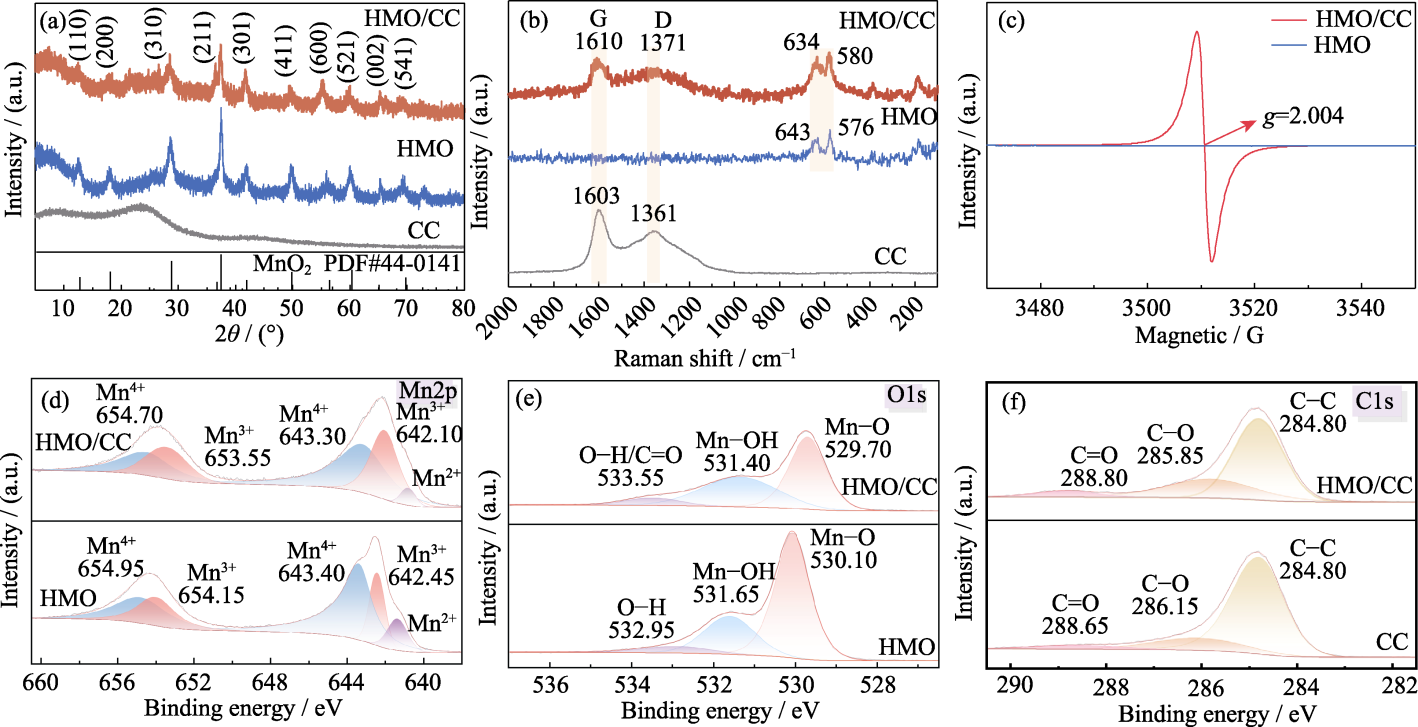
Fig. 2 XRD, Raman, EPR and XPS results for CC, HMO and HMO/CC (a) XRD patterns and (b) Raman spectra of CC, HMO and HMO/CC; (c) EPR results of HMO and HMO/CC; (d) Mn2p and (e) O1s XPS spectra of HMO and HMO/CC; (f) C1s XPS spectra of CC and HMO/CC. Colorful figures are available on website
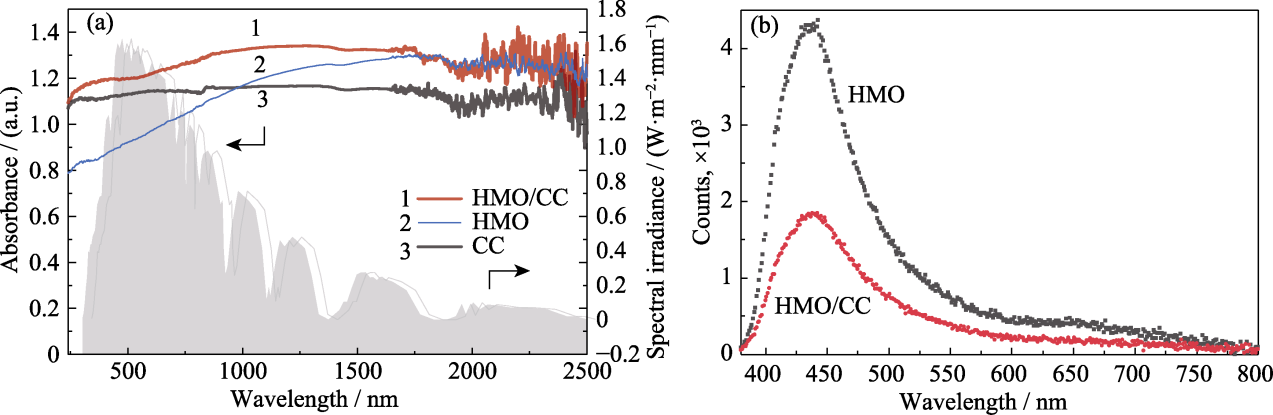
Fig. 3 Optical properties of CC, HMO and HMO/CC (a) UV-Vis-NIR absorption spectra of CC, HMO and HMO/CC; (b) Fluorescence emission spectra of HMO and HMO/CC
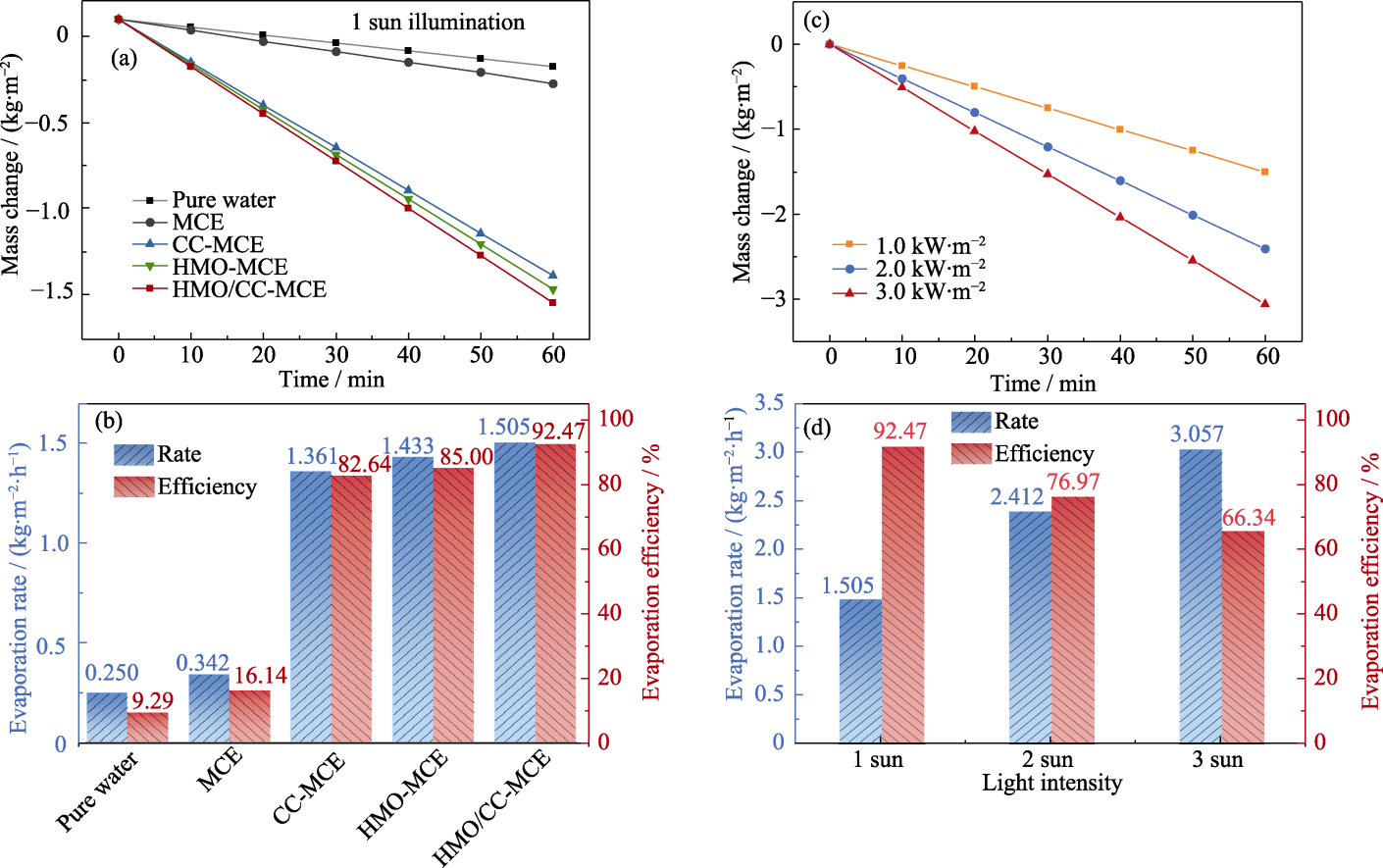
Fig. 4 Water evaporation performance of pure water, MCE, CC-MCE, HMO-MCE and HMO/CC-MCE membranes (a) Mass changes of water, (b) evaporation rates and efficiency of pure water, MCE, CC-MCE, HMO-MCE and HMO/CC-MCE membranes at 1 sun illumination; (c) Mass changes of water, (d) evaporation rates and efficiency of HMO/CC-MCE membrane under different light illuminations. Colorful figures are available on website
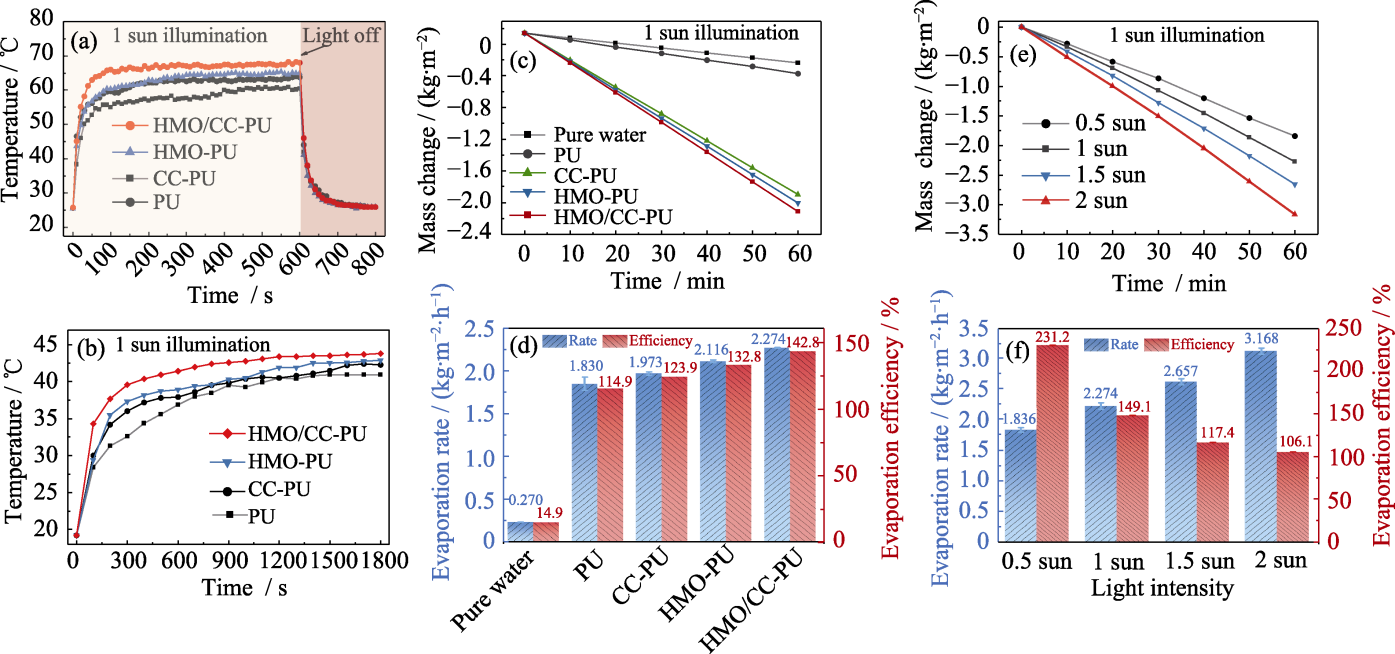
Fig. 5 Photothermal and water evaporation performance of PU, CC-PU, HMO-PU and HMO/CC-PU sponges (a, b) Surface temperature evolutions of PU, CC-PU, HMO-PU and HMO/CC-PU sponges at 1 sun illumination under (a) dry and (b) wet states; (c) Mass changes of water, (d) evaporation rates and efficiency of pure water, PU, CC-PU, HMO-PU and HMO/CC-PU sponges; (e) Mass changes of water, (f) evaporation rates and efficiency of HMO/CC-PU sponge under different light illuminations. Colorful figures are available on website

Fig. S1 Flowchart depicting the preparation process of HMO/CC-PU hydrogel
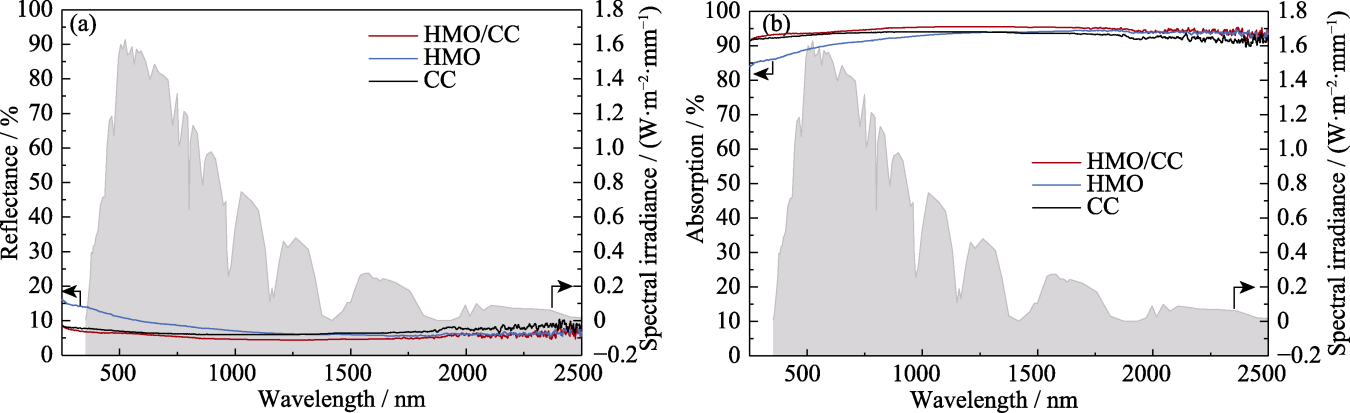
Fig. S2 UV-Vis-NIR spectra of CC, HMO and HMO/CC (a) Reflection; (b) Absorbance
| Sample | Total absorption | UV (<400 nm) | Visible (400-760 nm) | Infrared (>760 nm) |
|---|---|---|---|---|
| Solar spectrum | 100% | 7% | 50% | 43% |
| CC | 93.0% | 6.4% | 46.6% | 40.0% |
| HMO | 90.9% | 5.9% | 44.8% | 40.2% |
| HMO/CC | 94.2% | 6.4% | 47.0% | 40.8% |
Table S1 Absorption efficiency of CC, HMO and HMO/CC for spectra in the range of 200-2500 nm
| Sample | Total absorption | UV (<400 nm) | Visible (400-760 nm) | Infrared (>760 nm) |
|---|---|---|---|---|
| Solar spectrum | 100% | 7% | 50% | 43% |
| CC | 93.0% | 6.4% | 46.6% | 40.0% |
| HMO | 90.9% | 5.9% | 44.8% | 40.2% |
| HMO/CC | 94.2% | 6.4% | 47.0% | 40.8% |
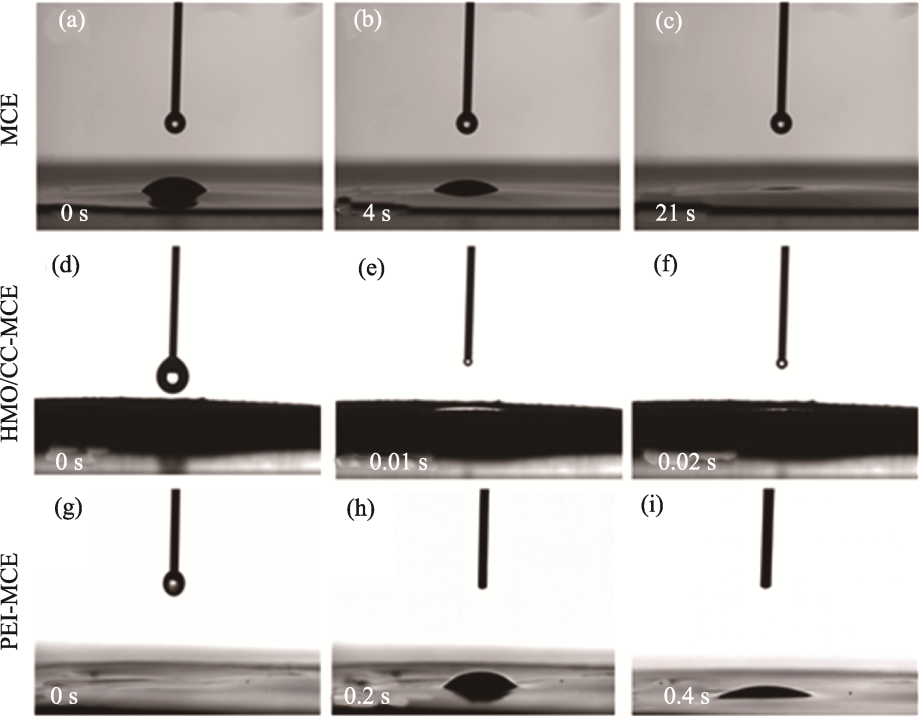
Fig. S3 Water contact angles of membranes (a-c) MCE; (d-f) HMO/CC-MCE; (g-i) PEI-MCE
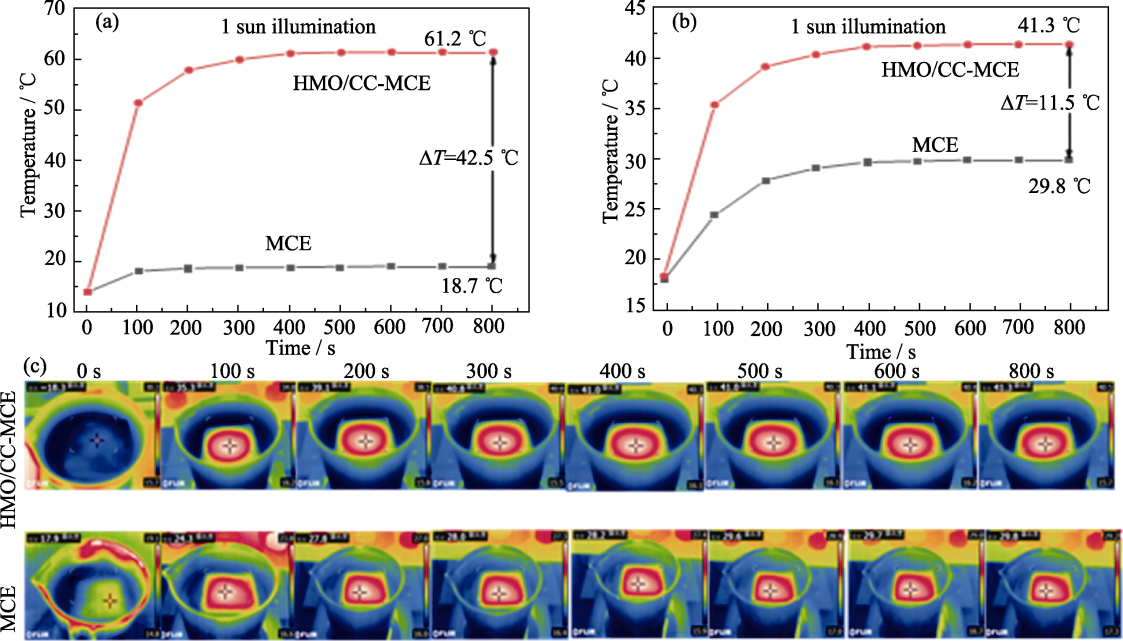
Fig. S4 Photothermal performance of MCE and HMO/CC-MCE (a, b) Surface temperature evolutions of MCE and HMO/CC-MCE membranes in the (a) dry and (b) Wet states; (c) Infrared thermographs in the wet state
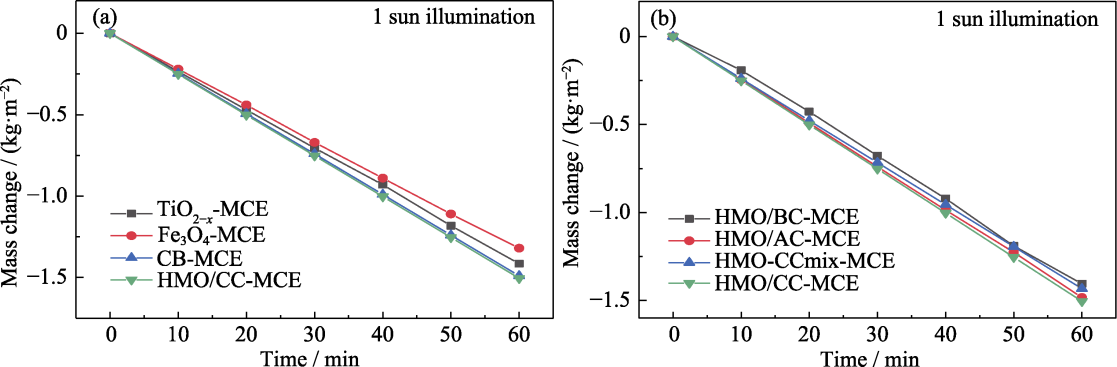
Fig. S5 Comparison of photothermal performance for HMO/CC and other materials (a) Mass changes of water for different photothermal materials; (b) Mass changes of water for photothermal materials prepared with different carbon substrates
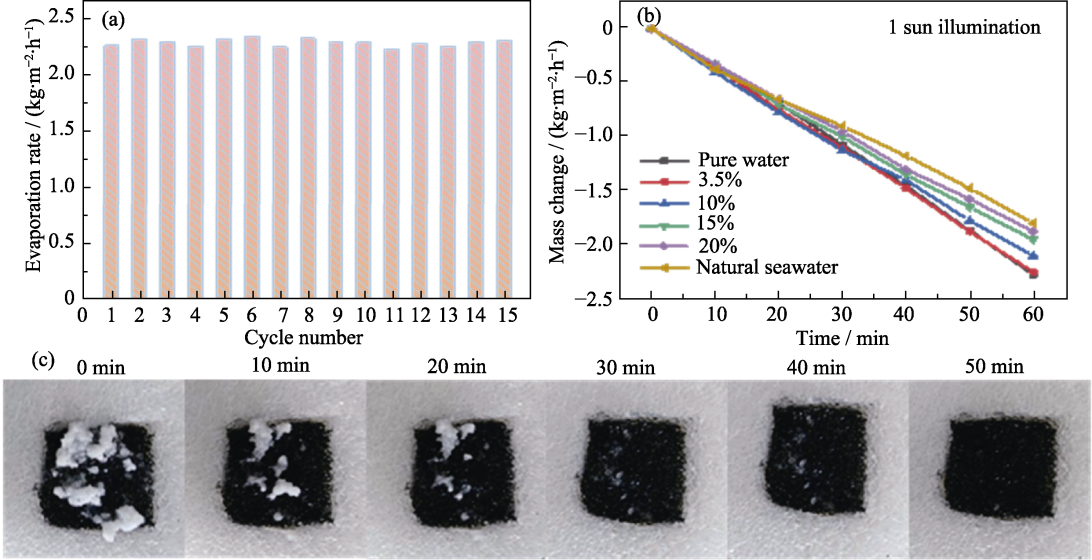
Fig. S6 Cycling and salt-resistance performance of HMO/CC-PU (a) Evaporation rates under 15 cycles; (b) Mass changes in natural seawater and brine with different concentrations;(c) Salt resistance performance of HMO/CC-PU aerogel sponge
| [1] |
YANG L, LI N, GUO C, et al. Marine biomass-derived composite aerogels for efficient and durable solar-driven interfacial evaporation and desalination. Chemical Engineering Journal, 2021, 417: 128051.
DOI URL |
| [2] | MEKONNEN M M, HOEKSTRA A Y. Four billion people facing severe water scarcity. Science Advances, 2016, 2(2): e1500323. |
| [3] |
ZHOU X, LI J, LIU C, et al. Carbonized tofu as photothermal material for highly efficient solar steam generation. International Journal of Energy Research, 2020, 44(11): 9213.
DOI URL |
| [4] |
ZHOU M, ZHANG L, TAO S, et al. Recent research advances in efficient solar-driven interfacial evaporation. Chemical Engineering Journal, 2024, 489: 151157.
DOI URL |
| [5] | JING X X, WU Z Y, SUN L B, et al. Research progress on photothermal materials and their application in solar desalination. Chinese Journal of Inorganic Chemistry, 2024, 40(6): 1033. |
| [6] |
ZHOU L, LI X Q, NI G W, et al. The revival of thermal utilization from the sun: interfacial solar vapor generation. National Science Review, 2019, 6(3): 562.
DOI URL |
| [7] |
LI S, YANG X, HE Y, et al. Hierarchical porous aero-cryogels for wind energy enhanced solar vapor generation. Cellulose, 2022, 29(2): 953.
DOI |
| [8] |
WEI W H, HARADA K, YOSHIDA M, et al. Mn-MIL-100 derived MnO2@carbon for the photo-induced thermal catalytic HCHO oxidation. Separation and Purification Technology, 2025, 360: 131129.
DOI URL |
| [9] |
WANG R, HAO Q, FENG J, et al. Enhanced separation of photogenerated charge carriers and catalytic properties of ZnO- MnO2 composites by microwave and photothermal effect. Journal of Alloys and Compounds, 2019, 786: 418.
DOI URL |
| [10] |
ZHENG N, CHEN C, TANG M, et al. Ultrahigh compressibility and superior elasticity carbon framework derived from shaddock peel for high-performance pressure sensing. RSC Advances, 2021, 11(46): 28621.
DOI PMID |
| [11] | ZHANG C, XIAO P, NI F, et al. Converting pomelo peel into eco-friendly and low-consumption photothermic biomass sponge toward multifunctioal solar-to-heat conversion. ACS Sustainable Chemistry & Engineering, 2020, 8(13): 5328. |
| [12] |
TIAN H, YU M, LIU X, et al. Plant-cell oriented few-layer MoS2/C as high performance anodes for lithium-ion batteries. Electrochimica Acta, 2022, 424: 140685.
DOI URL |
| [13] |
BELLARDITA M, GARLISI C, OZER L Y, et al. Highly stable defective TiO2-x with tuned exposed facets induced by fluorine: impact of surface and bulk properties on selective UV/visible alcohol photo-oxidation. Applied Surface Science, 2020, 510: 145419.
DOI URL |
| [14] |
MAJIDI M R, FARAHANI F S, HOSSEINI M, et al. Low-cost nanowired α-MnO2/C as an ORR catalyst in air-cathode microbial fuel cell. Bioelectrochemistry, 2019, 125: 38.
DOI URL |
| [15] |
YANG L W, TIAN X Y, LIU Z Y, et al. Performance and mechanism of lanthanum-modified MnO for defluoridation from water: the role of Mn crystal forms. Chemical Engineering Journal, 2024, 492: 152343.
DOI URL |
| [16] |
LIU J, WANG J, ZHAO M, et al. Engineering defective Mnδ+-OV active structure in α-MnO2 for efficient low-temperature CO oxidation. Applied Surface Science, 2024, 670: 160602.
DOI URL |
| [17] | WANG L, GUAN S Y, WENG Y Z W, et al. Highly efficient vacancy-driven photothermal therapy mediated by ultrathin MnO2 nanosheets. ACS Applied Materials & Interfaces, 2019, 11(6): 6267. |
| [18] |
JIANG J, LAI X, FANG Y, et al. “One stone two birds” strategy for sustainable water purification: bifunctional photothermic- catalytic manganese oxide/carbon composites enabling solar evaporation, seawater desalination and periodate activation. Desalination, 2025, 597: 118402.
DOI URL |
| [19] |
WANG G, XU H, LU L, et al. One-step synthesis of mesoporous MnO2/carbon sphere composites for asymmetric electrochemical capacitors. Journal of Materials Chemistry A, 2015, 3(3): 1127.
DOI URL |
| [20] |
JIA J, LI L, LIAN X, et al. A mild reduction of Co-doped MnO2 to create abundant oxygen vacancies and active sites for enhanced oxygen evolution reaction. Nanoscale, 2021, 13(25): 11120.
DOI URL |
| [21] |
SAMPATHKUMAR P, MONICA M S, GIRIBABU K, et al. Influence of phase structure of MnO2 for enhancing the electrochemical sensitivity of environmental pollutant chlortetracycline. Next Materials, 2024, 2: 100079.
DOI URL |
| [22] |
JIANG C, GE Y, CHEN W, et al. Hierarchically-structured TiO2/MnO2 hollow spheres exhibiting the complete mineralization of phenol. Catalysts, 2019, 9(4): 390.
DOI URL |
| [23] |
YANG W, PENG Y, WANG Y, et al. Controllable redox-induced in-situ growth of MnO2 over Mn2O3 for toluene oxidation: active heterostructure interfaces. Applied Catalysis B: Environmental, 2020, 278: 119279.
DOI URL |
| [24] |
ZHANG Y H, ZHANG S, HU N, et al. Oxygen vacancy chemistry in oxide cathodes. Chemical Society Reviews, 2024, 53(7): 3302.
DOI URL |
| [25] |
MU G, XIE H, JIAN Y, et al. Facile construction and enhanced catalytic activity of Co-Mn oxide with rich amorphous/crystalline interfaces for propane oxidation. Separation and Purification Technology, 2024, 348: 127699.
DOI URL |
| [26] |
KONG J, CHEN H, LI Z, et al. Synergistic defect engineering in β-MnO2 nanorods for energy-efficient photocatalytic air purification. Chemical Engineering Journal, 2025, 522: 167730.
DOI URL |
| [27] |
QIU Y, LEE M, CHEN J, et al. Effect of light intensity on solar- driven interfacial steam generation. Nanoscale, 2021, 13: 20387.
DOI URL |
| [28] | ZHOU X, ZHAO F, GUO Y, et al. A hydrogel-based antifouling solar evaporator for highly efficient water desalination. Energy & Environmental Science, 2018, 11(8): 1985. |
| [29] |
ZHOU X, GUO Y, ZHAO F, et al. Topology-controlled hydration of polymer network in hydrogels for solar-driven wastewater treatment. Advanced Materials, 2020, 32(52): 2007012.
DOI URL |
| [30] |
YANG Y, ZHAO Y, SHI F, et al. Synergistic photothermal-bubbly driving effect on MnO2/carbon microsphere micromotors assisted by photocatalytic H2O2 decomposition. Catalysis Today, 2025, 460: 115487.
DOI URL |
| [31] | XU Z, ZHANG L, ZHAO L, et al. Ultrahigh-efficiency desalination via a thermally-localized multistage solar still. Energy & Environmental Science, 2020, 13(3): 830. |
| [32] |
KIM H T, PHILIP L, MCDONAGH A, et al. Recent advances in high-rate solar-driven interfacial evaporation. Advanced Science, 2024, 11(26): 2401322.
DOI URL |
| [33] |
LU F, WU S L, QUAN L N, et al. Twisting two-dimensional photothermal sponges for boosting solar steam generation. Chemical Engineering Journal, 2023, 474: 145747.
DOI URL |
| [1] | XI Wen, LI Haibo. Preparation of TiO2/Ti3C2Tx Composite for Hybrid Capacitive Deionization [J]. Journal of Inorganic Materials, 2021, 36(3): 283-291. |
| [2] | ZHU Chunhui, XU Rong, REN Xiuxiu, ZUO Shixiang, GONG Genghao, ZHONG Jing. Fabrication of ZIF-8-NH2/Organosilica Hybrid Membranes for Pervaporation Desalination [J]. Journal of Inorganic Materials, 2020, 35(11): 1239-1246. |
| [3] | XU Rong, JIANG Wan, QI Lv, ZHANG Qi, ZHONG Jing. Fabrication of PEG Crosslinked Organosilica Hybrid Membranes for Reverse Osmosis Desalination [J]. Journal of Inorganic Materials, 2018, 33(11): 1154-1160. |
| [4] | ZHANG Deng-Song,SHI Li-Yi,FANG Jian-Hui,DAI Kai,ZHANG Li-Ying. Effect of Moulding Techniques on Electro-adsorption Desalination of Carbon Nanotube Electrodes [J]. Journal of Inorganic Materials, 2006, 21(1): 87-93. |
| Viewed | ||||||
|
Full text |
|
|||||
|
Abstract |
|
|||||
