
Journal of Inorganic Materials ›› 2026, Vol. 41 ›› Issue (6): 823-830.DOI: 10.15541/jim20250423
Special Issue: 【能源环境】储能电池(202606)
• RESEARCH ARTICLE • Previous Articles Next Articles
QIAO Junyi( ), LI Tao, DONG Xinji, YANG Hange, LIN Tianquan()
Received:2025-10-27
Revised:2025-11-28
Published:2026-06-20
Online:2025-12-11
Contact:
LIN Tianquan, professor. E-mail: tqlin@sjtu.edu.cnAbout author:QIAO Junyi (2002-), male, Master candidate. E-mail: jyqiao0907@sjtu.edu.cn
Supported by:CLC Number:
QIAO Junyi, LI Tao, DONG Xinji, YANG Hange, LIN Tianquan. Long-cycling Aqueous Zinc-iodine Batteries with Uniform Zinc Deposition Regulated by Crystal Planes of Copper Current Collector[J]. Journal of Inorganic Materials, 2026, 41(6): 823-830.
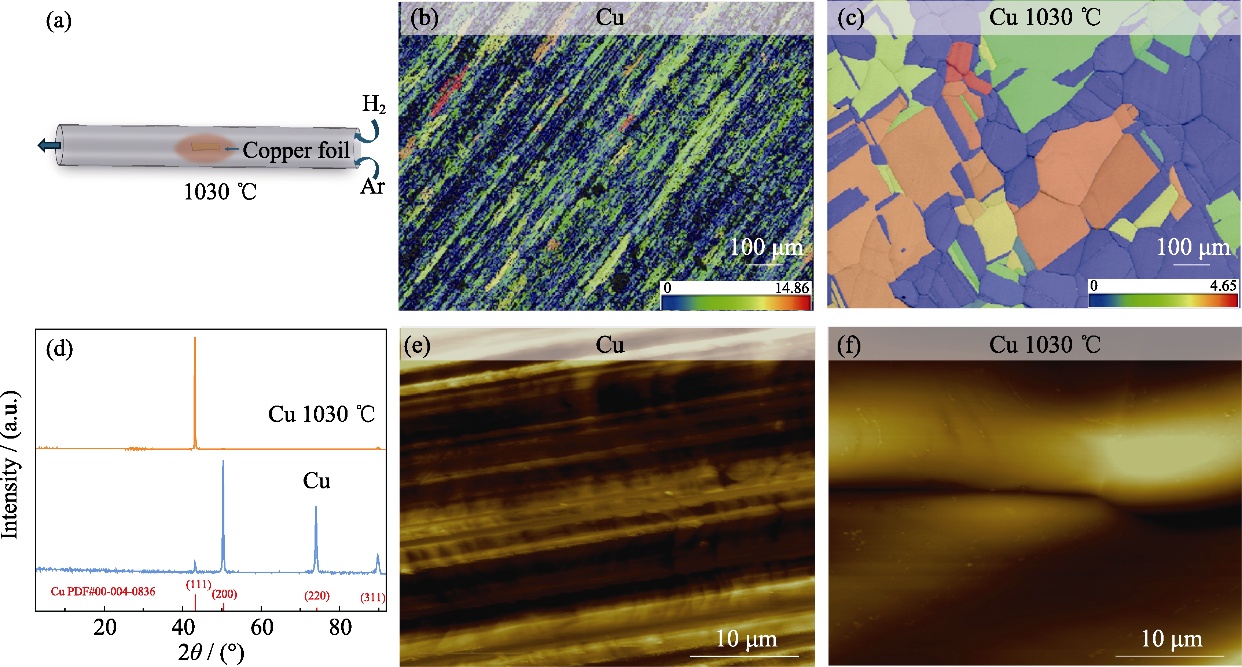
Fig. 1 Copper current collector modification process and surface phase structure change (a) Copper current collector modification process; (b, c) Inverse pole figure coloring diagrams of copper current collector (b) before and (c) after annealing; (d) XRD patterns of copper current collector before and after annealing; (e, f) AFM images of copper current collector (e) before and(f) after annealing. Colorful figures are available on website
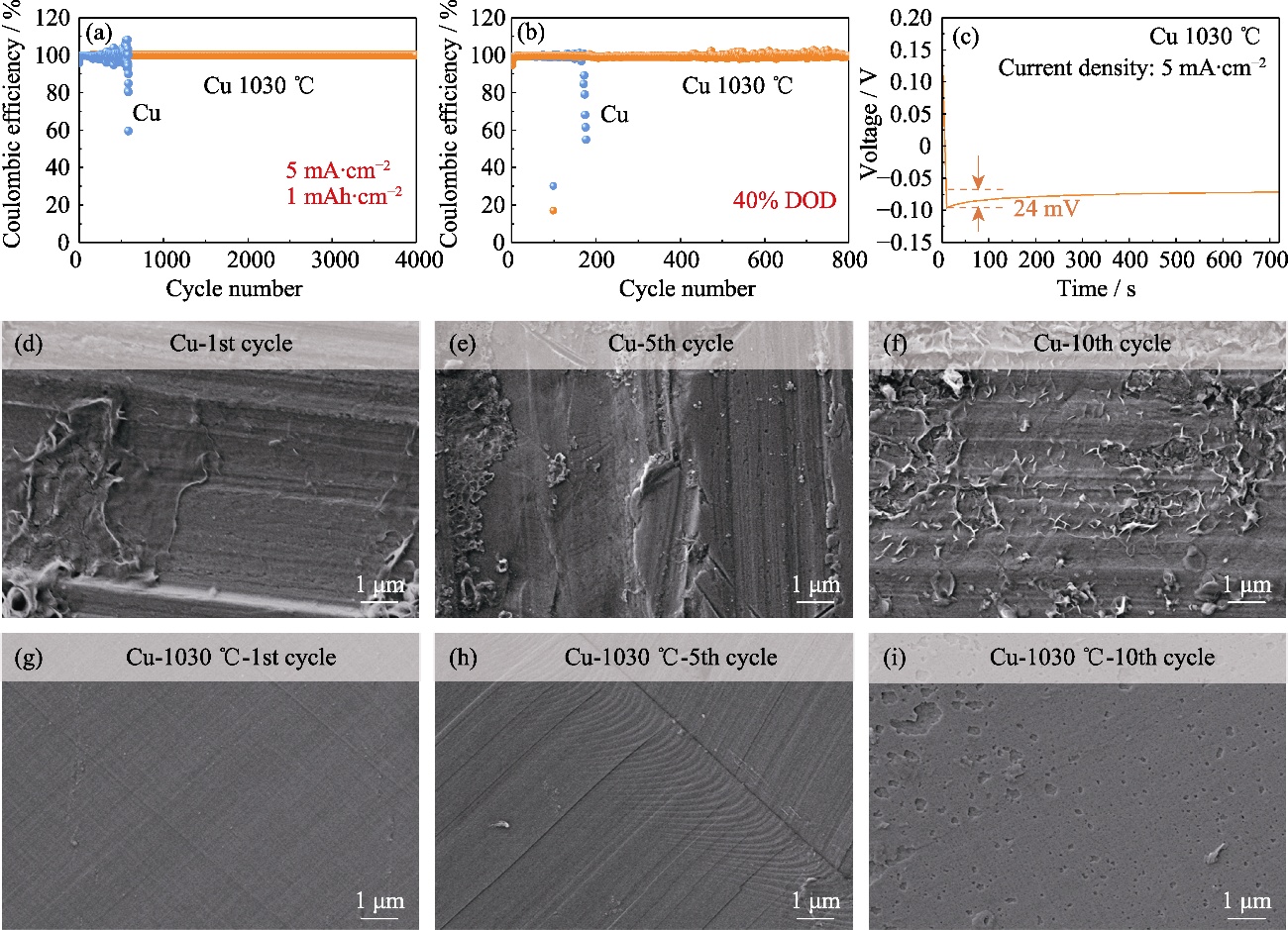
Fig. 2 Stripping performance of zinc from copper current collector (a, b) Zinc-copper asymmetric battery cycle tests of copper current collector before and after annealing under (a) low current and (b) high depth of discharge conditions; (c) Nucleation overpotential of copper current collector after annealing at low current; (d-f) Surface SEM images of initial copper current collector after (d) one cycle, (e) five cycles and (f) ten cycles; (g-i) Surface SEM images of annealed copper current collector after (g) one cycle, (h) five cycles and (i) ten cycles
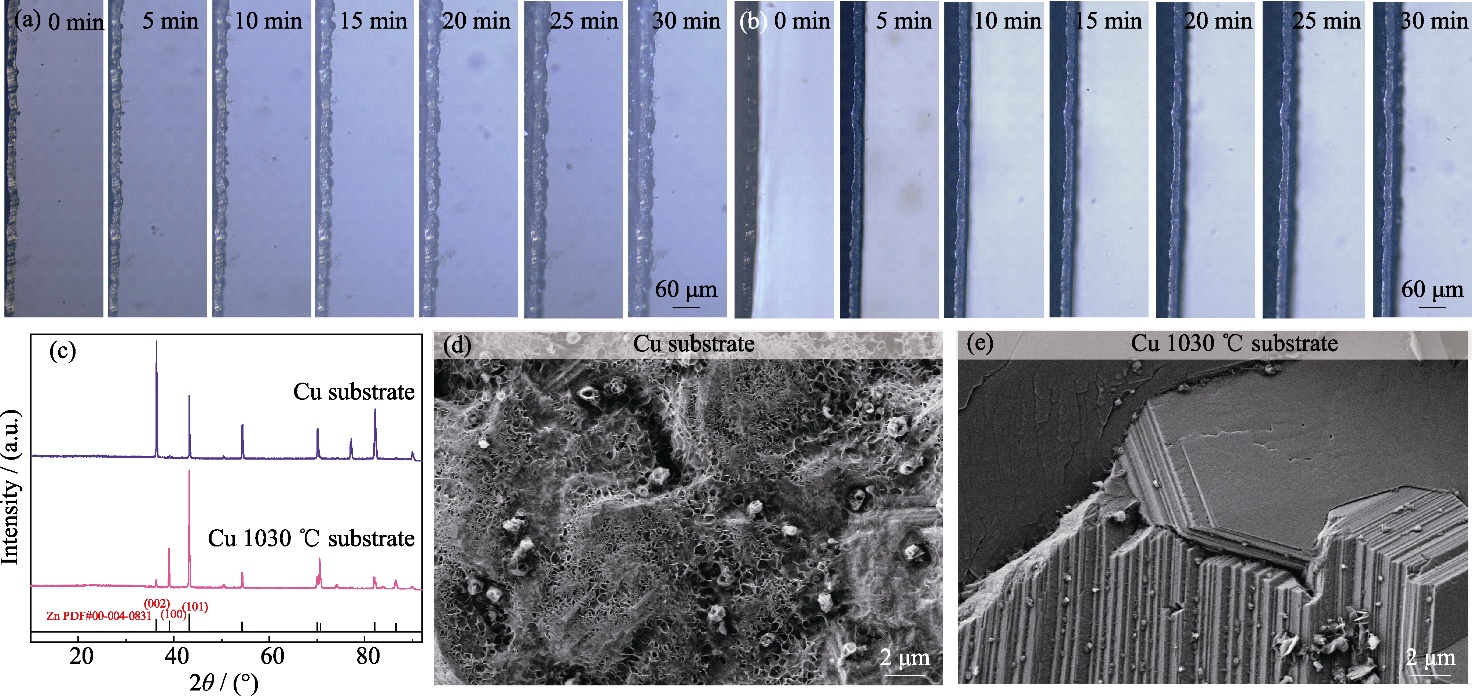
Fig. 3 Deposition performance of copper current collector to zinc (a, b) In-situ optical microscopy characterization of zinc electrodeposition on copper current collector (a) before and (b) after annealing; (c) XRD patterns of electrodeposited zinc on the surface of copper current collector before and after annealing; (d, e) SEM images of electrodeposited zinc on copper current collector (d) before and (e) after annealing
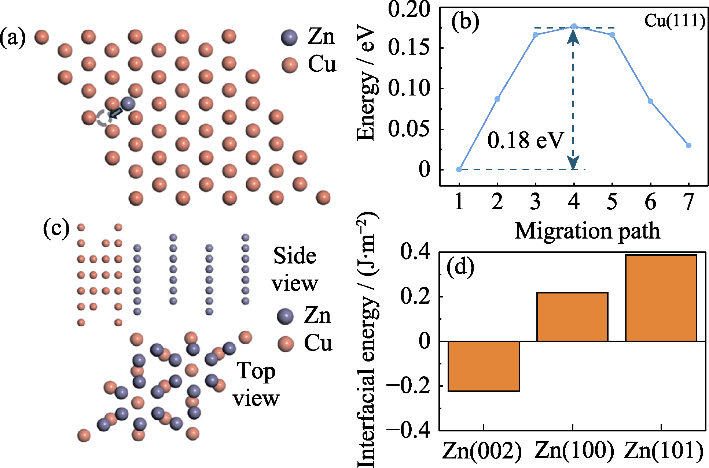
Fig. 4 First-principle calculations of zinc on Cu(111) crystal plane (a) Diffusion path diagram of zinc atoms on the Cu(111) crystal plane; (b) Typical diffusion energy barrier profile of zinc atom diffusion on Cu(111) crystal plane; (c) Interface model diagram of Zn(002) crystal plane and Cu(111) crystal plane; (d) Theoretical interfacial energy between three typical zinc crystal planes and Cu(111) crystal plane
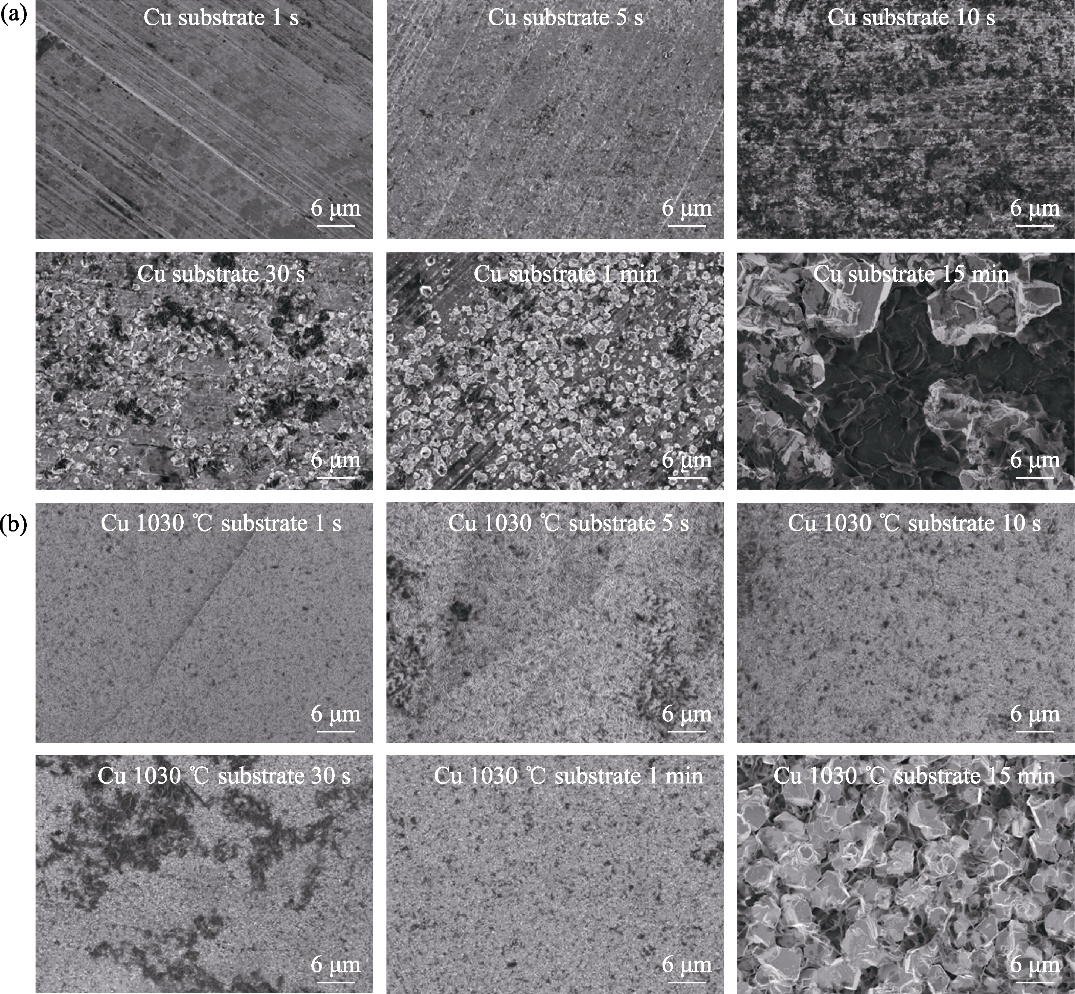
Fig. 5 Deposition morphologies of zinc on copper current collectors (a) before and (b) after annealing at 5 mA·cm−2 for different time
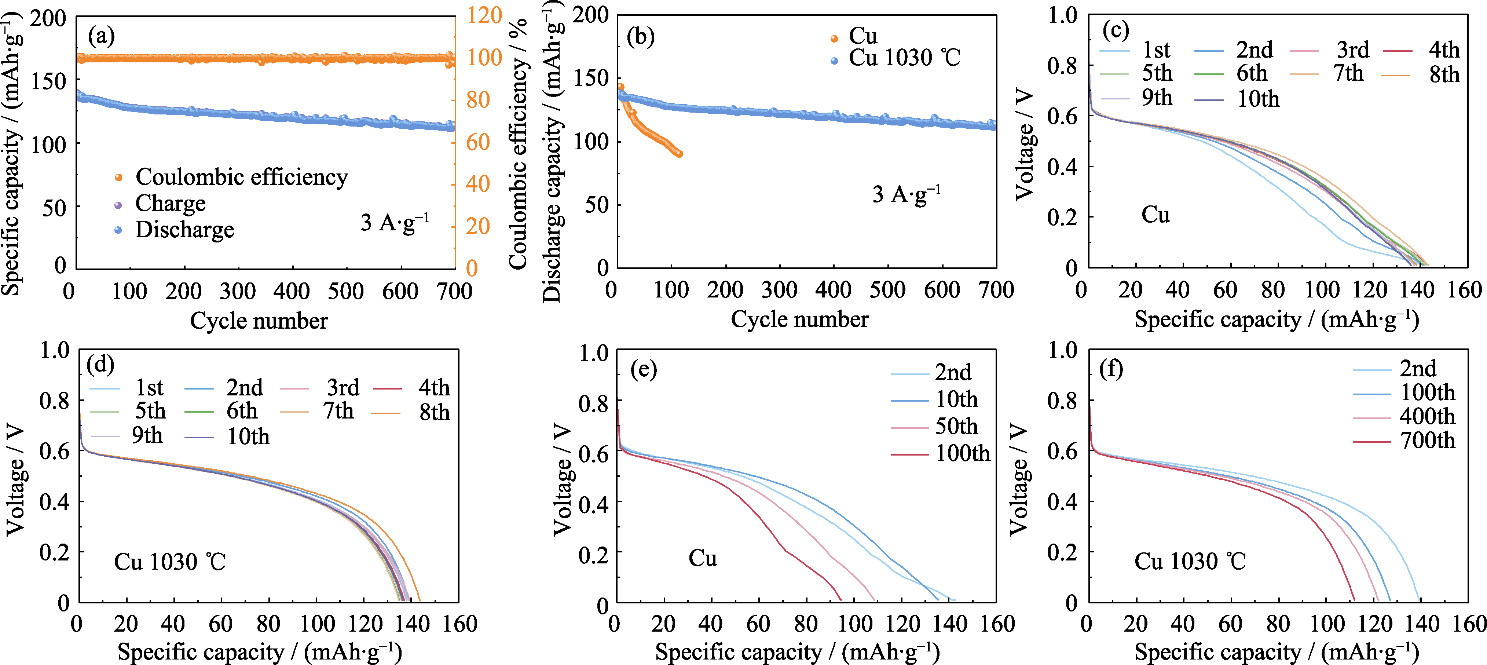
Fig. 6 Comparision of long cycle performance of copper current collector before and after annealing in full cell (a) Long cycle performance of annealed copper current collector in full cell; (b) Comparison of cycle performance of copper current collector before and after annealing in full cell; (c, d) Comparison of discharge curves of the first ten cycles of copper current collector (c) before and (d) after annealing in full cell; (e) Discharge curves of the initial copper current collector applied in the full cell at the 2nd, 10th, 50th and 100th cycles; (f) Discharge curves of the annealed copper current collector applied in the full cell at the 2nd, 100th, 400th and 700th cycles. Colorful figures are available on website
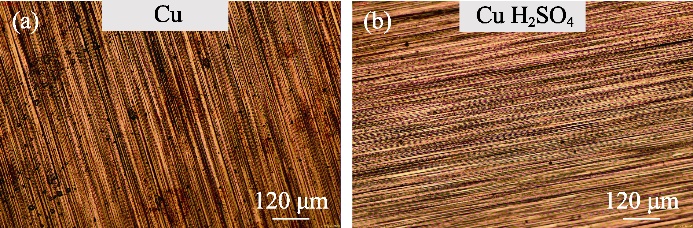
Fig. S1 Optical microscope characterization of copper current collector surface (a) before and (b) after pickling
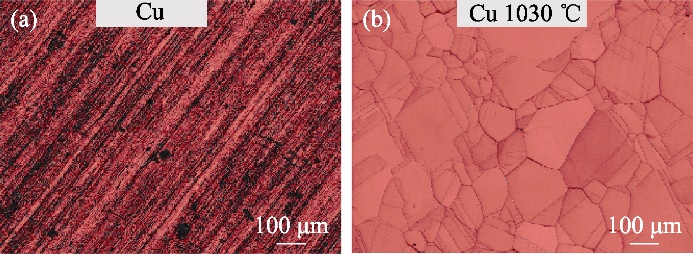
Fig. S2 Surface defect distribution of copper current collector (a) before and (b) after annealing
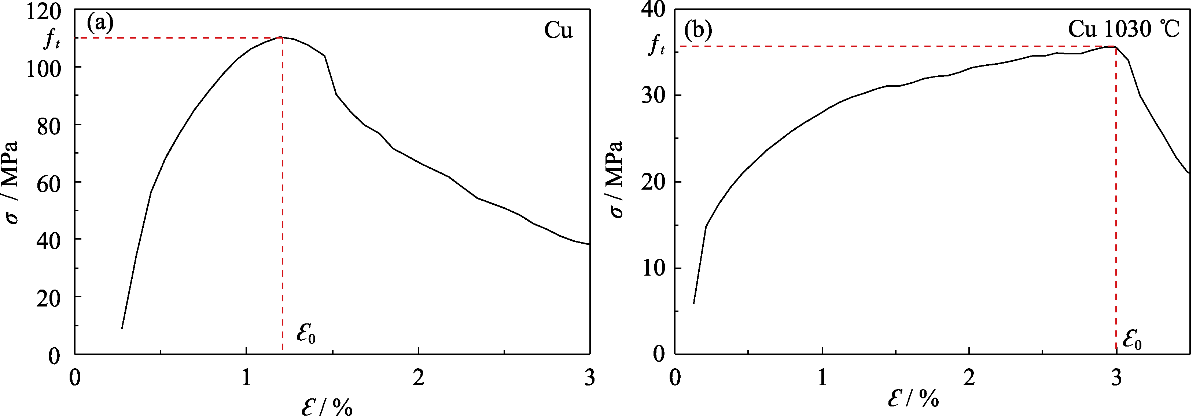
Fig. S3 Stress-strain curves of copper current collector (a) before and (b) after annealing
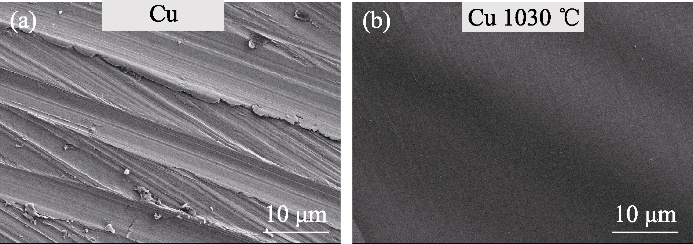
Fig. S4 SEM images of copper current collector surface (a) before and (b) after annealing
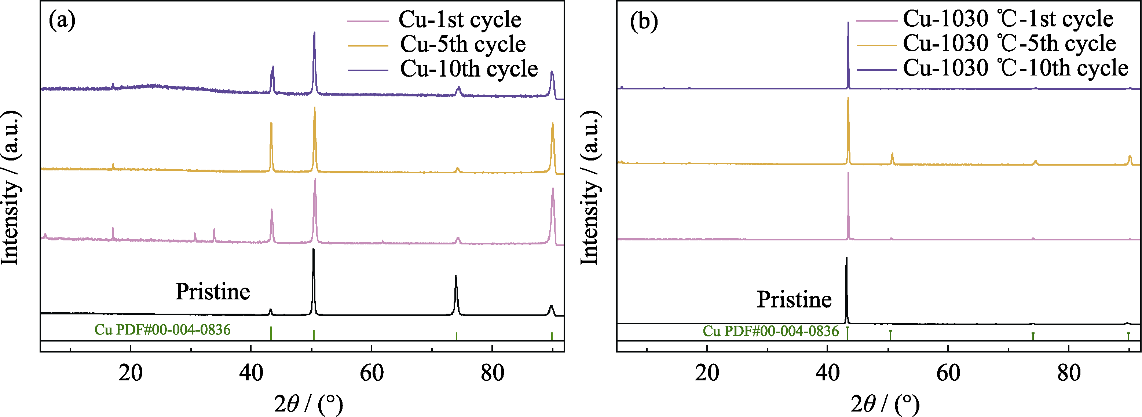
Fig. S5 Surface XRD patterns of copper current collector (a) before and (b) after annealing as positive electrode of zinc-copper asymmetric battery after one cycle, five cycles and ten cycles
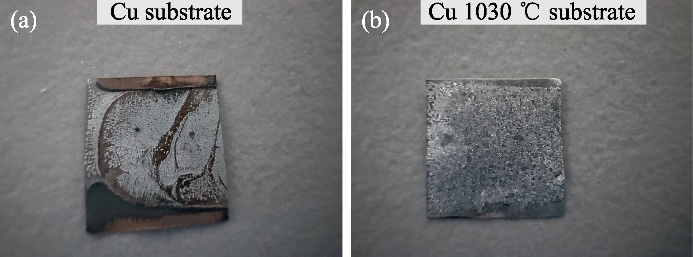
Fig. S6 Macroscopic morphology of electrodeposited zinc on the surface of copper current collector (a) before and (b) after annealing
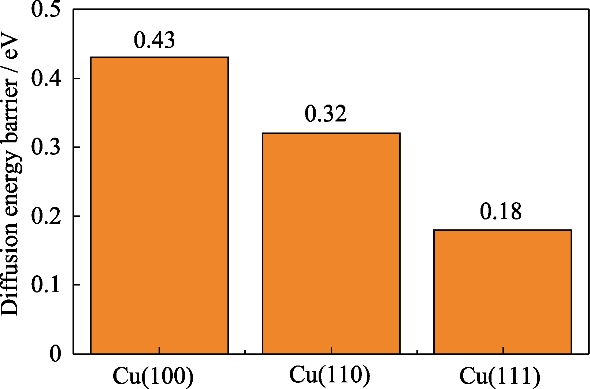
Fig. S7 Diffusion energy barriers of zinc atoms on Cu(100), (110) and (111) planes
| [1] | LI T, YANG H, DONG X, et al. Co-regulation of interface and bulk for enhanced localized high-concentration electrolytes in stable and practical zinc metal batteries. Angewandte Chemie International Edition, 2025, 64(29): e202501183. |
| [2] | GUO S J, YAN M Y, XU D M, et al. Anti-freezing hydrogel electrolyte with a regulated hydrogen bond network enables high-rate and long cycling zinc batteries. Energy & Environmental Science, 2025, 18(1): 418. |
| [3] | JIA X, LIU C, NEALE Z G, et al. Active materials for aqueous zinc ion batteries: synthesis, crystal structure, morphology, and electrochemistry. Chemical Reviews, 2020, 120(15): 7795. |
| [4] | SONG J, XU K, LIU N, et al. Crossroads in the renaissance of rechargeable aqueous zinc batteries. Materials Today, 2021, 45: 191. |
| [5] | ZHANG T, LI T, SHEN Y, et al. Enhanced kinetics and stability of Zn-MnO2 batteries with a multifunctional TiO2 coating. Advanced Materials, 2025, 37(34): 2505082. |
| [6] | ZHANG F, LIAO T, LIU C, et al. Biomineralization-inspired dendrite-free Zn-electrode for long-term stable aqueous Zn-ion battery. Nano Energy, 2022, 103: 107830. |
| [7] | LI T, DONG X, YANG H, et al. Defective 1T-VS2 with fibonacci pattern unlocking high mass-loading and self-charging cathodes for aqueous zinc-ion batteries. Energy & Environmental Science, 2025, 18(7): 3169. |
| [8] | CHENG Y, ZHANG N, WANG Q, et al. A long-life hybrid zinc flow battery achieved by dual redox couples at cathode. Nano Energy, 2019, 63: 103822. |
| [9] | ZHOU L F, DU T, LI J Y, et al. A strategy for anode modification for future zinc-based battery application. Materials Horizons, 2022, 9(11): 2722. |
| [10] | BAI Y, ZHANG H, LIANG W, et al. Advances of Zn metal-free “rocking-chair”-type zinc ion batteries: recent developments and future perspectives. Small, 2024, 20(8): 2306111. |
| [11] | WANG F, BORODIN O, GAO T, et al. Highly reversible zinc metal anode for aqueous batteries. Nature Materials, 2018, 17(6): 543. |
| [12] | HE P, QUAN Y, XU X, et al. High-performance aqueous zinc-ion battery based on layered H2V3O8 nanowire cathode. Small, 2017, 13(47): 1702551. |
| [13] | LI X, CHEN Z, RUAN P, et al. Inducing preferential growth of the Zn (002) plane by using a multifunctional chelator for achieving highly reversible Zn anodes. Nanoscale, 2024, 16(6): 2923. |
| [14] | XIA T, LIANG T, XIAO Z, et al. Nanograined copper foil as a high-performance collector for lithium-ion batteries. Journal of Alloys and Compounds, 2020, 831: 154801. |
| [15] | LI H, LI L, LIU W, et al. Recent advances in current collectors for aqueous zinc-ion batteries. Chemical Record, 2025, 25(3): e202400217. |
| [16] | ÇAMURCU T, DEMIRBAŞ E, ATEŞ M N. Achieving long cycle life of Zn-ion batteries through three-dimensional copper foam. ACS Applied Materials & Interfaces, 2024, 16(18): 23209. |
| [17] | WANG X, TIAN Y, YANG K, et al. Sandwich-structured anode enables high stability and enhanced zinc utilization for aqueous Zn-ion batteries. Energy Storage Materials, 2024, 64: 103078. |
| [18] | YANG T, CHEN X, LI W, et al. First-principles calculations to investigate the interfacial energy and electronic properties of Mg/AlN interface. Journal of Physics and Chemistry of Solids, 2022, 167: 110705. |
| [19] | KIDD T E, LUKASHEV P V, STUELKE L, et al. Diffusion energy barrier of Au on Bi2Se3: theory and experiment. Physica Scripta, 2021, 96(12): 125708. |
| [20] | XIAO X, GREENBURG L C, LI Y, et al. Epitaxial electrodeposition of zinc on different single crystal copper substrates for high performance aqueous batteries. Nano Letters, 2025, 25(4): 1305. |
| [21] | LI M, WU J, LI H, et al. Suppressing the shuttle effect of aqueous zinc-iodine batteries: progress and prospects. Materials, 2024, 17(7): 1646. |
| [22] | XU J, HUANG Z, ZHOU H, et al. Holistic optimization strategies for advanced aqueous zinc iodine batteries. Energy Storage Materials, 2024, 72: 103596. |
| [23] | CHEN H, LI X, FANG K, et al. Aqueous zinc-iodine batteries: from electrochemistry to energy storage mechanism. Advanced Energy Materials, 2023, 13(41): 2302187. |
| [24] | WANG D, ZHAO Y, LIANG G, et al. A zinc battery with ultra-flat discharge plateau through phase transition mechanism. Nano Energy, 2020, 71: 104583. |
| [25] | SUN Y, LIAN Z, REN Z, et al. Proton-dominated reversible aqueous zinc batteries with an ultraflat long discharge plateau. ACS Nano, 2021, 15(9): 14766. |
| [1] | WANG Yinyue,WANG Huiyao,WANG Jizheng,GUO Yongping,CHEN Guanghua. Effect of High-Temperature Annealing on the Structure of Reactive-Sputtering a-SiC:H Films [J]. Journal of Inorganic Materials, 1997, 12(3): 351-355. |
| Viewed | ||||||
|
Full text |
|
|||||
|
Abstract |
|
|||||
