无机材料学报 ›› 2026, Vol. 41 ›› Issue (10): 1387-1395.DOI: 10.15541/jim20260030
朱梦婷( ), 张瑞峰, 乔紫涵, 马汝广(), 吴正颖()
收稿日期:2026-01-19
修回日期:2026-03-19
出版日期:2026-10-20
网络出版日期:2026-04-20
通讯作者:
马汝广, 教授. E-mail: ruguangma@usts.edu.cn;作者简介:朱梦婷(1999-), 女, 硕士研究生. E-mail: zmt1501322726@163.com
基金资助:
ZHU Mengting(), ZHANG Ruifeng, QIAO Zihan, MA Ruguang(), WU Zhengying()
Received:2026-01-19
Revised:2026-03-19
Published:2026-10-20
Online:2026-04-20
Contact:
MA Ruguang, professor. E-mail: ruguangma@usts.edu.cn;About author:ZHU Mengting (1999-), female, Master candidate. E-mail: zmt1501322726@163.com
Supported by:摘要:
热电化学电池(Thermo-electrochemical cells, TECs)是一种新型低品位热富集系统, 对其开发利用将有利于提高整体能源效率并缓解城市热岛效应。金属铂(Pt)是TECs研究中常用的电极材料, 但Pt高昂的价格限制了TECs的推广应用。因此, 开发低成本且性能优异的替代电极成为TECs领域的研究热点。本研究以商用碳布(Carbon cloth, CC)为基底和结构导向剂, 将具有高催化活性的FeCoNiCuMn高熵合金(High-entropy alloys, HEAs)纳米粒子均匀生长在碳布上, 得到FeCoNiCuMn HEAs/CC复合材料, 并将其用作TECs电极。HEAs的高熵效应不仅赋予复合材料稳定的化学结构, 其多主元互相作用也提升了材料的催化活性和反应动力学。因此, FeCoNiCuMn HEAs/CC具有比CC、三元FeCoNi/CC和四元FeCoNiCu/CC更大的电化学活性表面积(2.52 cm2)以及更小的电荷转移电阻(2 Ω)。将HEAs/CC用作TECs电极, 在22.0 K温差下, 该电池具有0.35 mA·cm-2的电流密度和30.40 mW·m-2的输出功率密度, 远高于相同条件下以CC (0.17 mA·cm-2/14.55 mW·m-2)、FeCoNi/CC (0.27 mA·cm-2/19.00 mW·m-2)和FeCoNiCu/CC (0.30 mA·cm-2/24.44 mW·m-2)为电极的TECs体系。并且, 该电池体系循环7 d依然保持了91.5%的短路电流, 且电池可逆性良好。本研究所构建的高活性FeCoNiCuMn HEAs/CC复合材料为低成本、高性能TECs电极材料的开发应用提供了新的思路。
中图分类号:
朱梦婷, 张瑞峰, 乔紫涵, 马汝广, 吴正颖. 高活性FeCoNiCuMn高熵合金纳米粒子/碳布复合材料的合成及其在热电化学电池中的性能[J]. 无机材料学报, 2026, 41(10): 1387-1395.
ZHU Mengting, ZHANG Ruifeng, QIAO Zihan, MA Ruguang, WU Zhengying. Highly Active FeCoNiCuMn High-entropy Alloys/Carbon Cloth Composite: Synthesis and Its Performance in Thermo-electrochemical Cells[J]. Journal of Inorganic Materials, 2026, 41(10): 1387-1395.

图1 HEAs/CC的合成示意图和SEM和TEM表征
Fig. 1 Schematic illustration, SEM and TEM characterizations of HEAs/CC (a) Schematic illustration for the formation of HEAs/CC; SEM images of (b, c) HEAs/CC As and (d) HEAs/CC; (e) TEM image with inset showing the particle size distribution; (f, g) HRTEM images with insets in (f) showing fast Fourier transform (FFT) images of HEAs/CC; (h) EDS elemental mappings of Fe, Co, Ni, Cu, and Mn elements
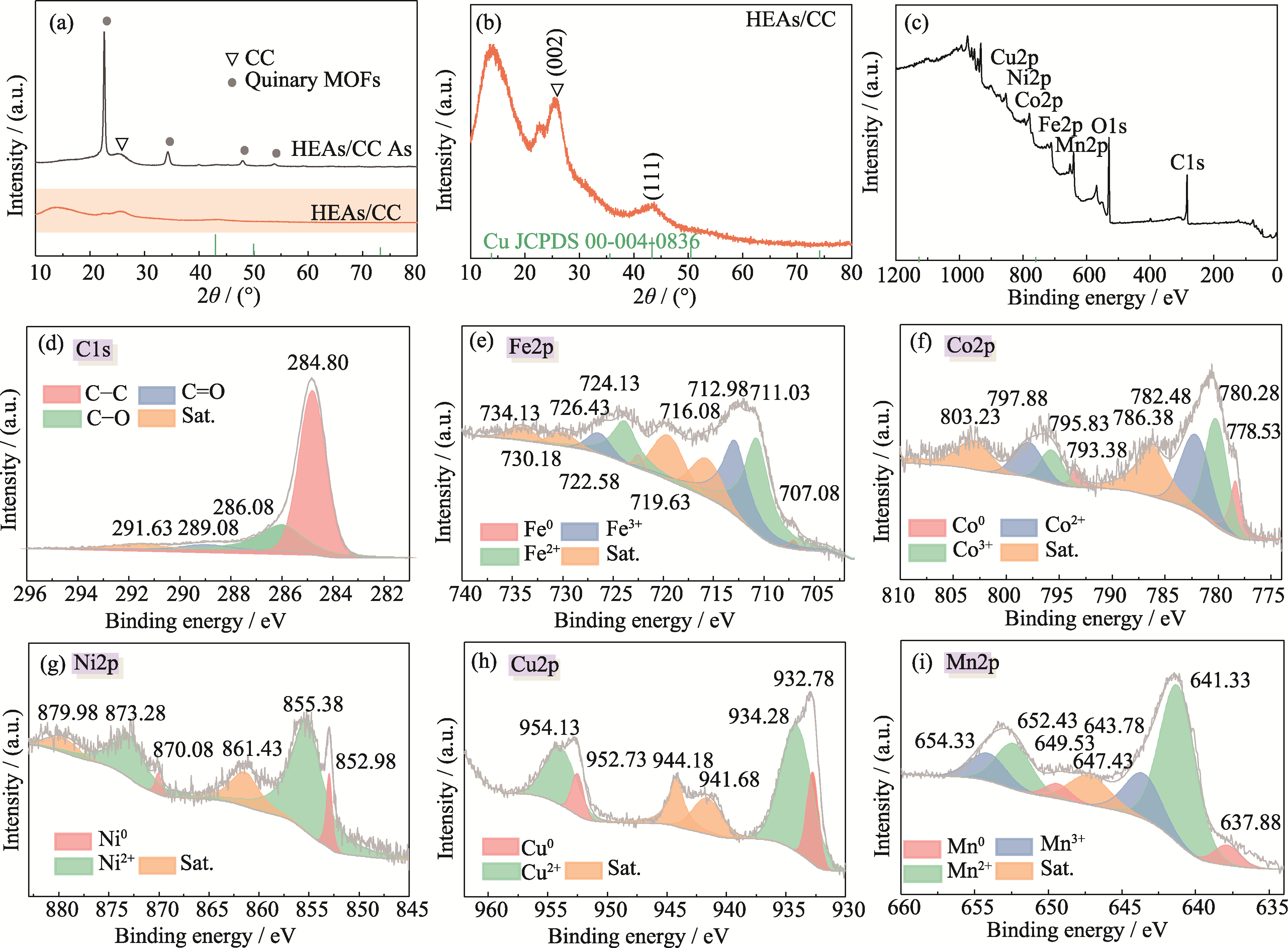
图2 HEAs/CC的XRD和XPS谱图
Fig. 2 XRD and XPS results of HEAs/CC (a) XRD patterns of HEAs/CC As and HEAs/CC; (b) Magnified XRD pattern of HEAs/CC; (c) Survey, (d) C1s, (e) Fe2p, (f) Co2p, (g) Ni2p, (h) Cu2p, and (i) Mn2p XPS spectra of HEAs/CC. Colorful figures are available on website
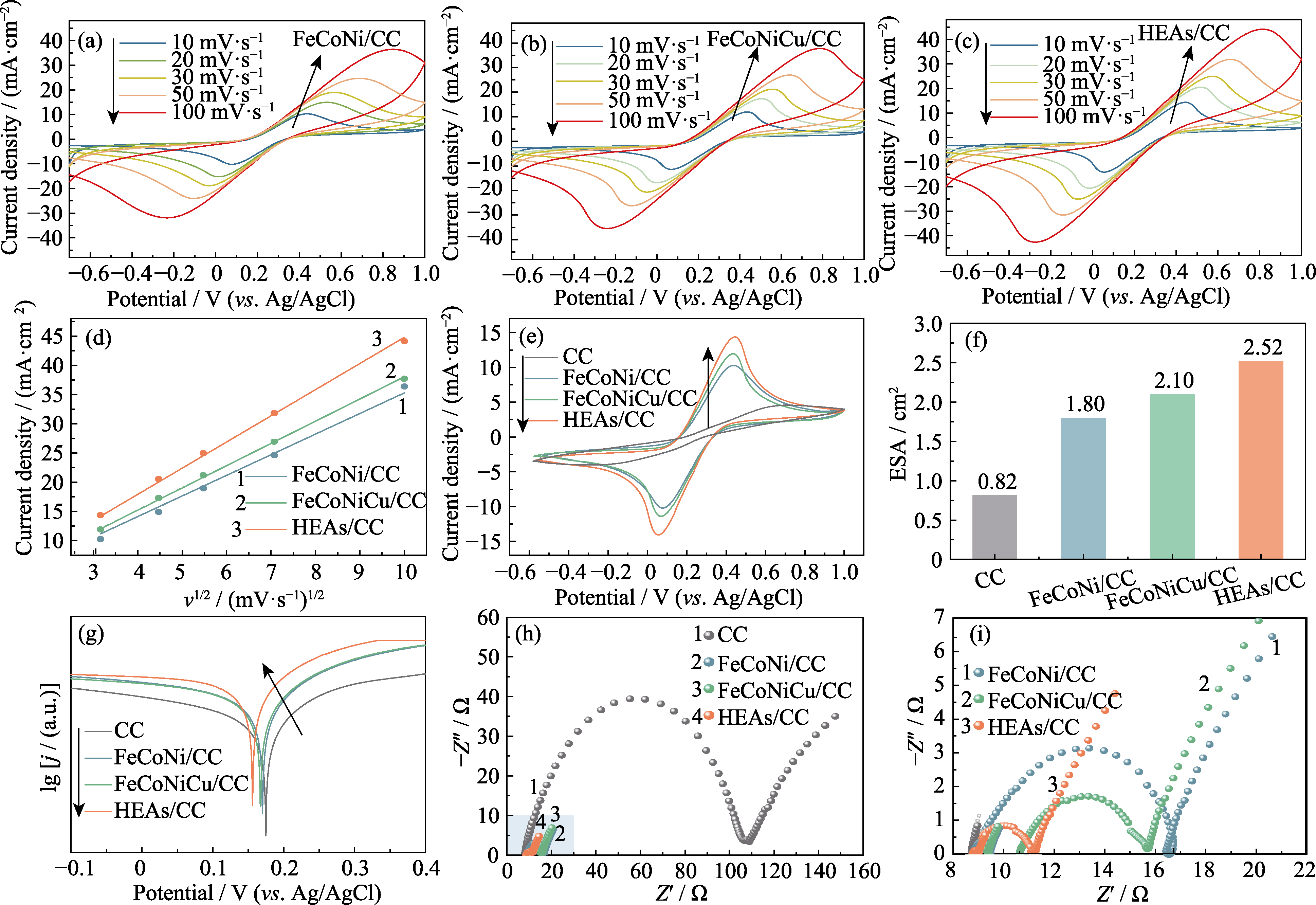
图3 CC、FeCoNi/CC、FeCoNiCu/CC和HEAs/CC的电化学性能
Fig. 3 Electrochemical performance of CC, FeCoNi/CC, FeCoNiCu/CC and HEAs/CC CV curves of (a) FeCoNi/CC, (b) FeCoNiCu/CC, and (c) HEAs/CC under different scan rates; (d) Fitting lines of peak current vs. v1/2; (e) CV curves at a scan rate of 10 mV·s-1; (f) ESA histogram; (g) LSV curves; (h) EIS spectra and (i) magnified area
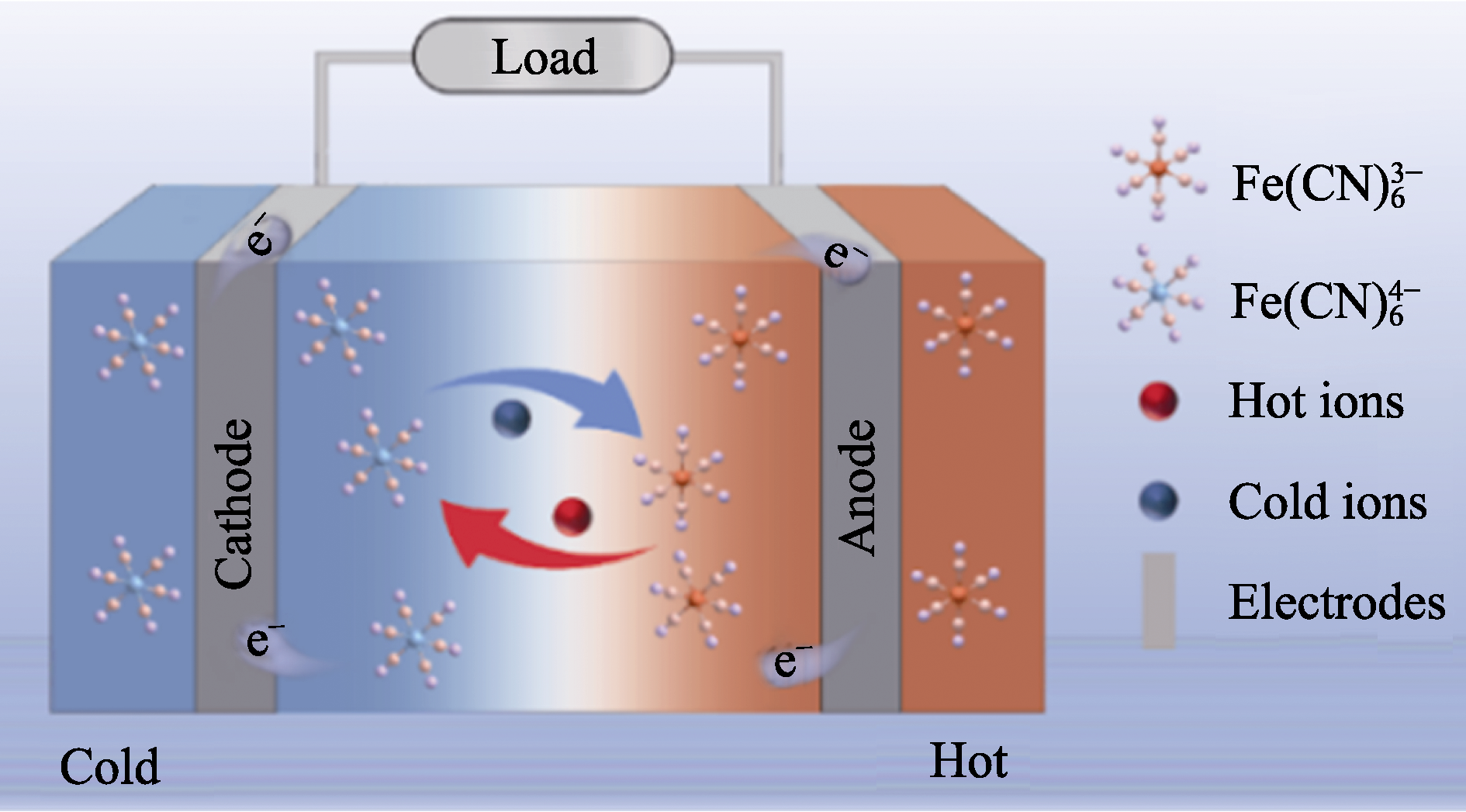
图4 TECs的示意图
Fig. 4 Schematic diagram of TECs
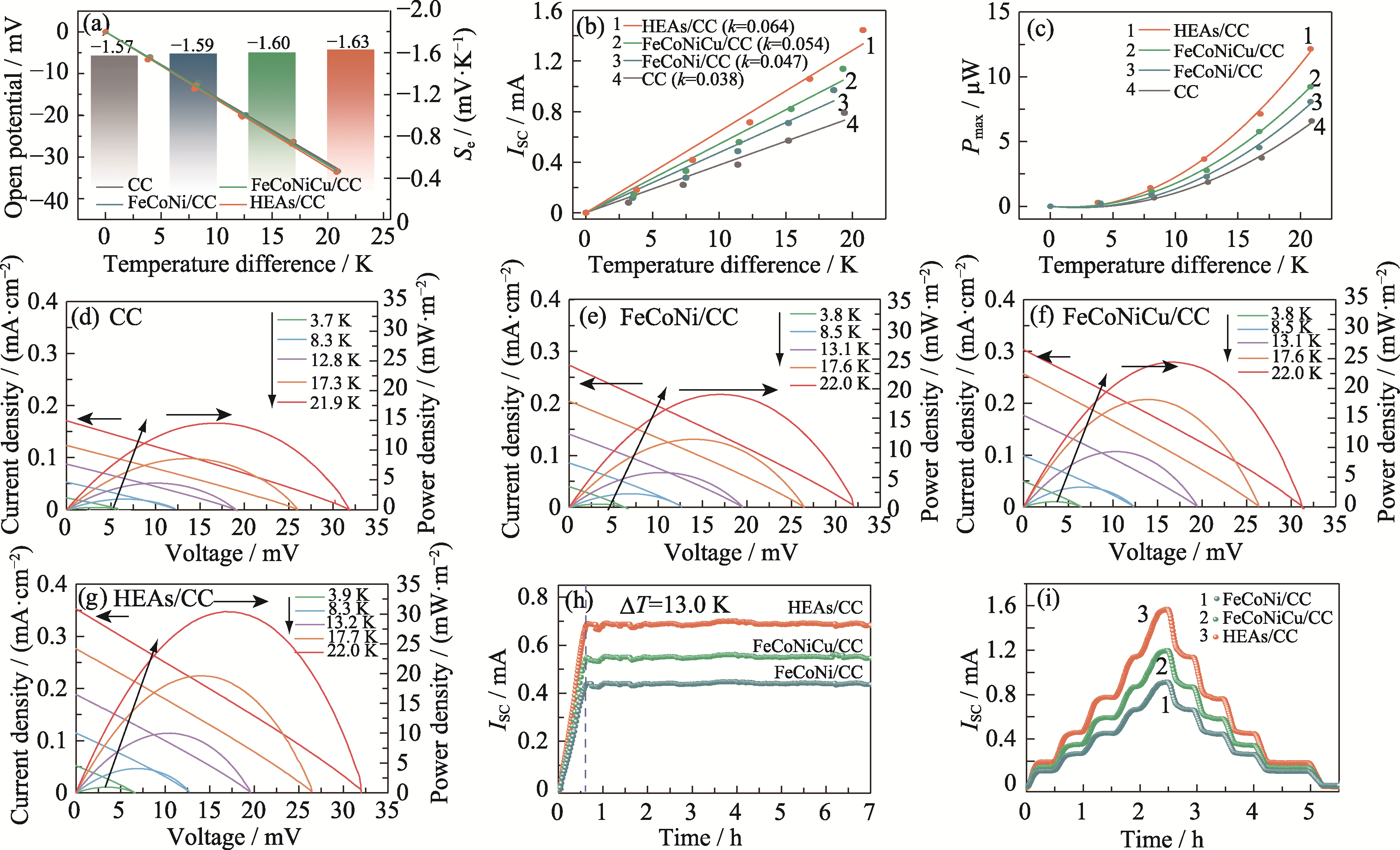
图5 CC、FeCoNi/CC、FeCoNiCu/CC和HEAs/CC的热电化学性能
Fig. 5 Thermo-electrochemical performance of CC, FeCoNi/CC, FeCoNiCu/CC and HEAs/CC (a) VOC-ΔT curves and histogram of Se; (b) ISC-ΔT fitting lines; (c) Pmax-ΔT curves; (d-g) JSC-V and P-V curves; (h) Cycling performance; (i) Reversibility in the ΔT range from 4.0 K to 20.8 K. Colorful figures are available on website
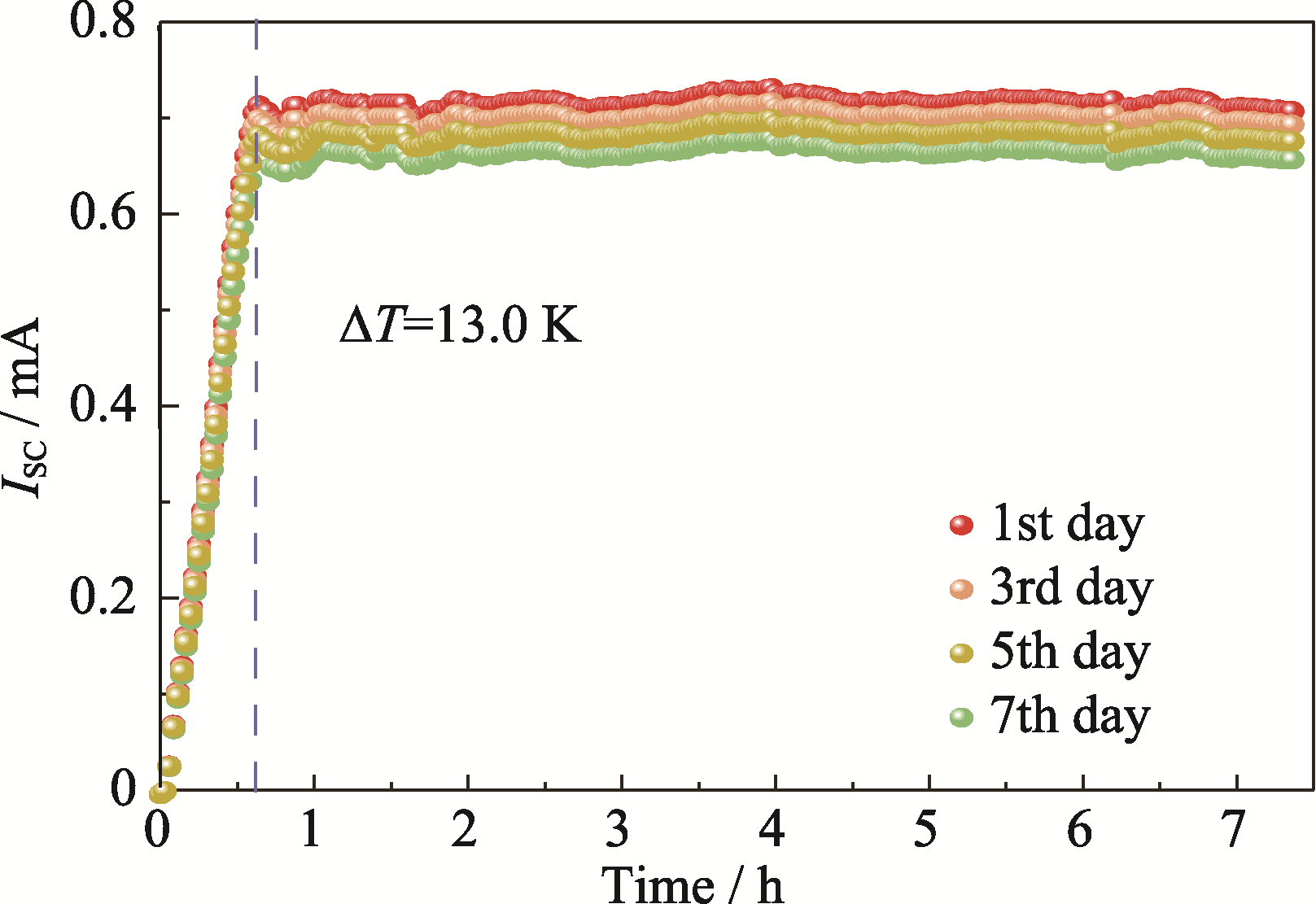
图6 HEAs/CC-TECs在ΔT=13.0 K运行7 d的稳定性
Fig. 6 Stability of HEAs/CC-TECs for over 7 d at ΔT=13.0 K Colorful figure is available on website
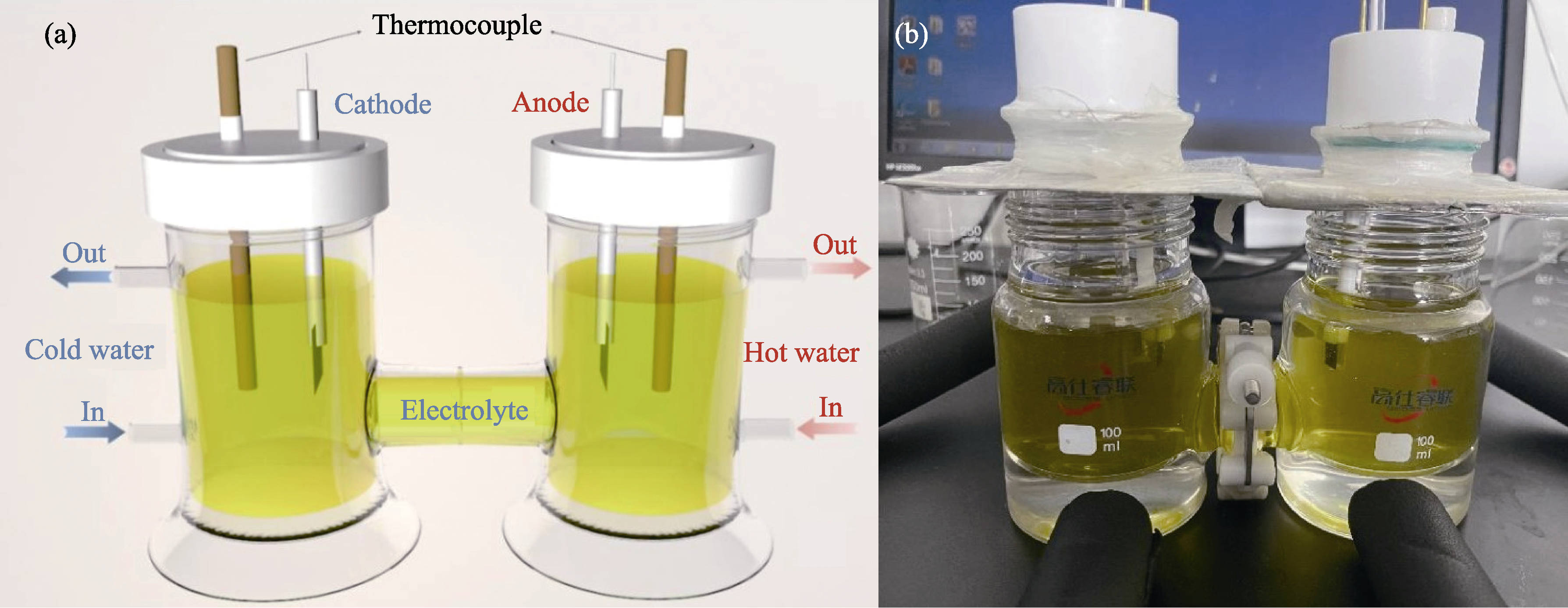
图S1 TECs装置的(a)示意图和(b)实物照片[S2]
Fig. S1 (a) Schematic diagram and (b) physical photo of the TECs device[S2]
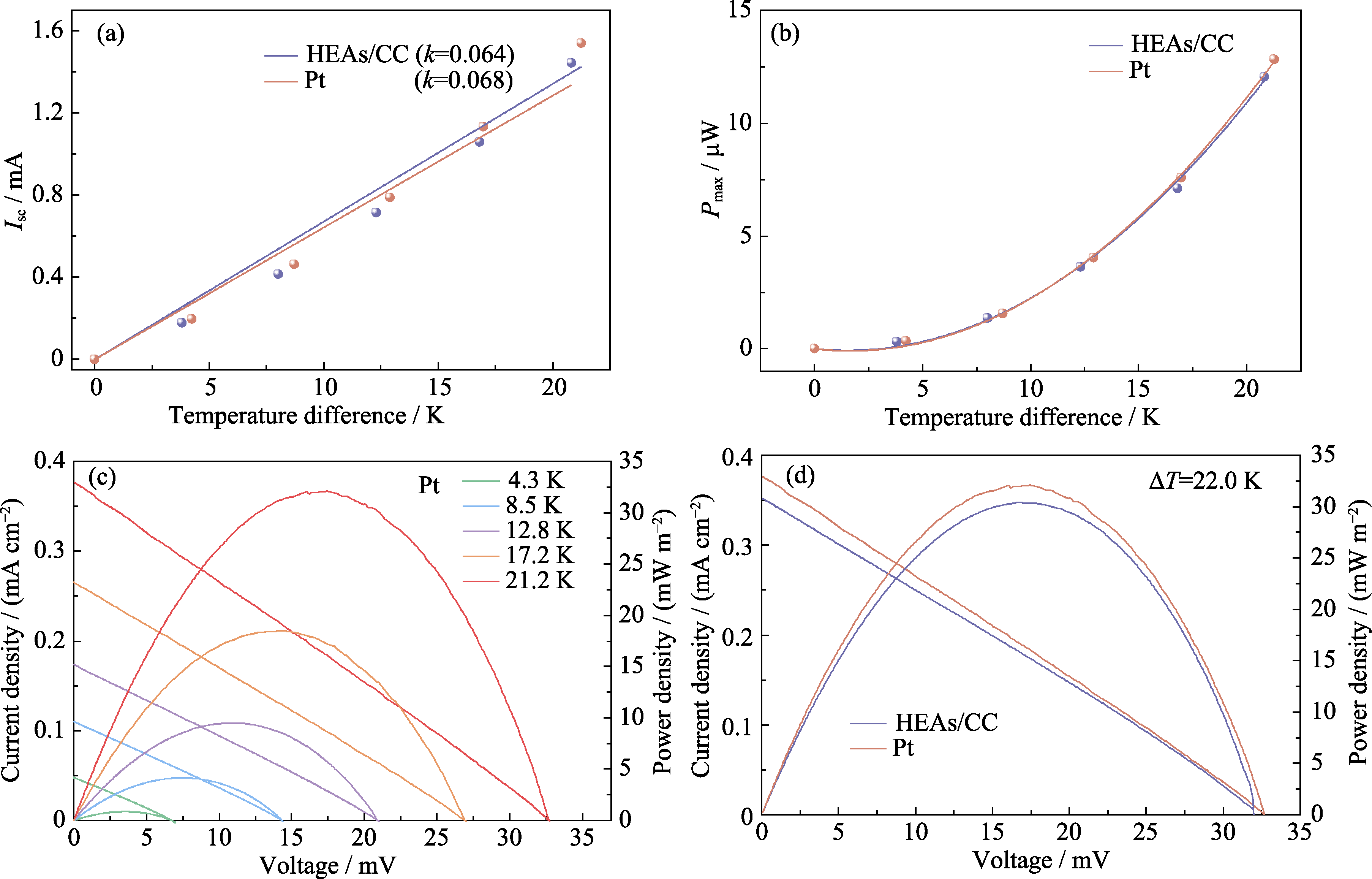
图S2 以HEAs/CC、Pt为电极的TECs体系的热电化学性能对比
Fig. S2 Comparison of thermo-electrochemical performance of TEC systems with HEAs/CC and Pt as electrodes (a) ISC-ΔT fitting lines; (b) Pmax-ΔT curves; (c, d) JSC-V and P-V curves
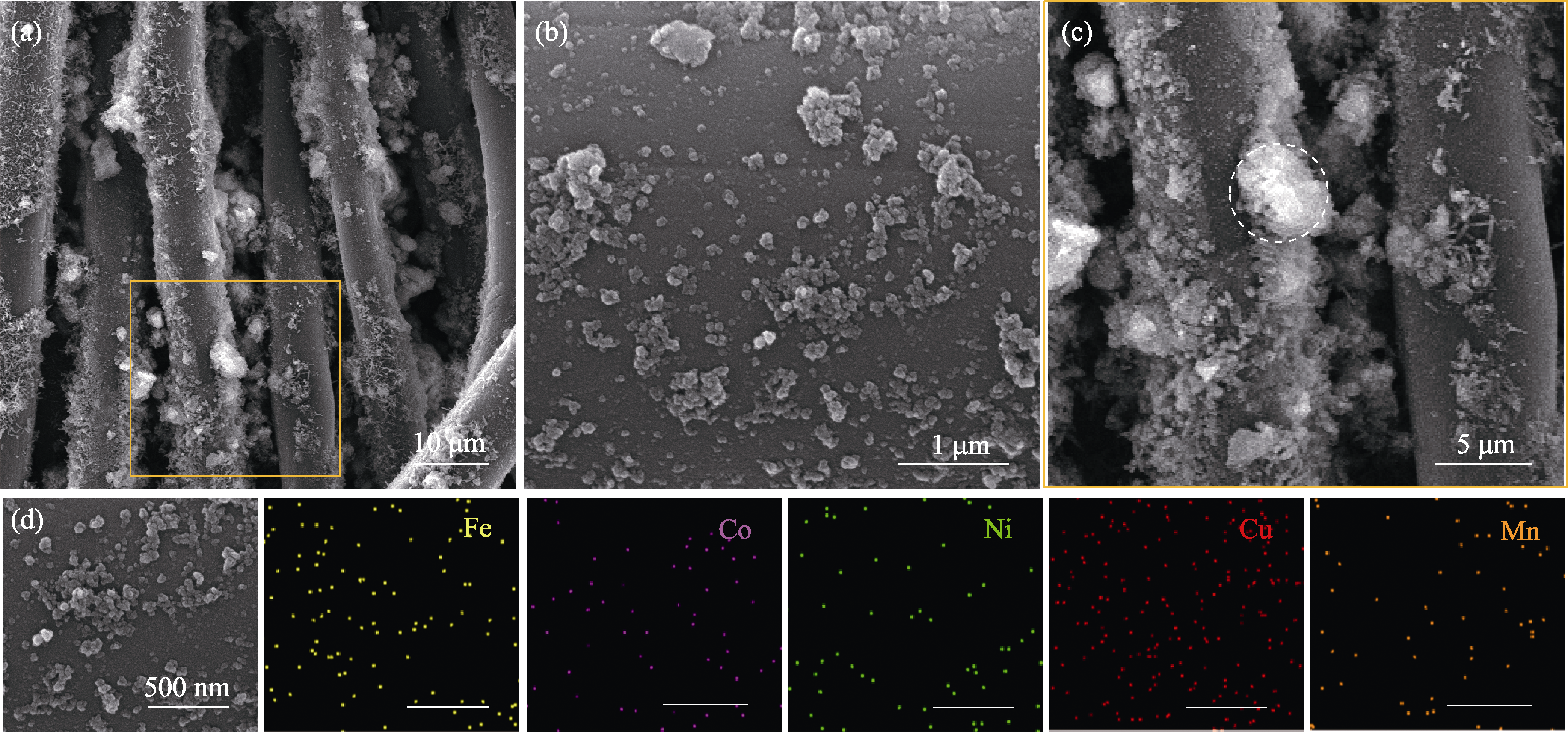
图S3 循环7 d后HEAs/CC的SEM表征
Fig. S3 SEM characterizations of HEAs/CC after the 7-day cycles (a, b) SEM images of HEAs/CC; (c) Magnified SEM image in the yellow line frame of (a); (d) EDS elemental mappings of Fe, Co, Ni, Cu, and Mn elements
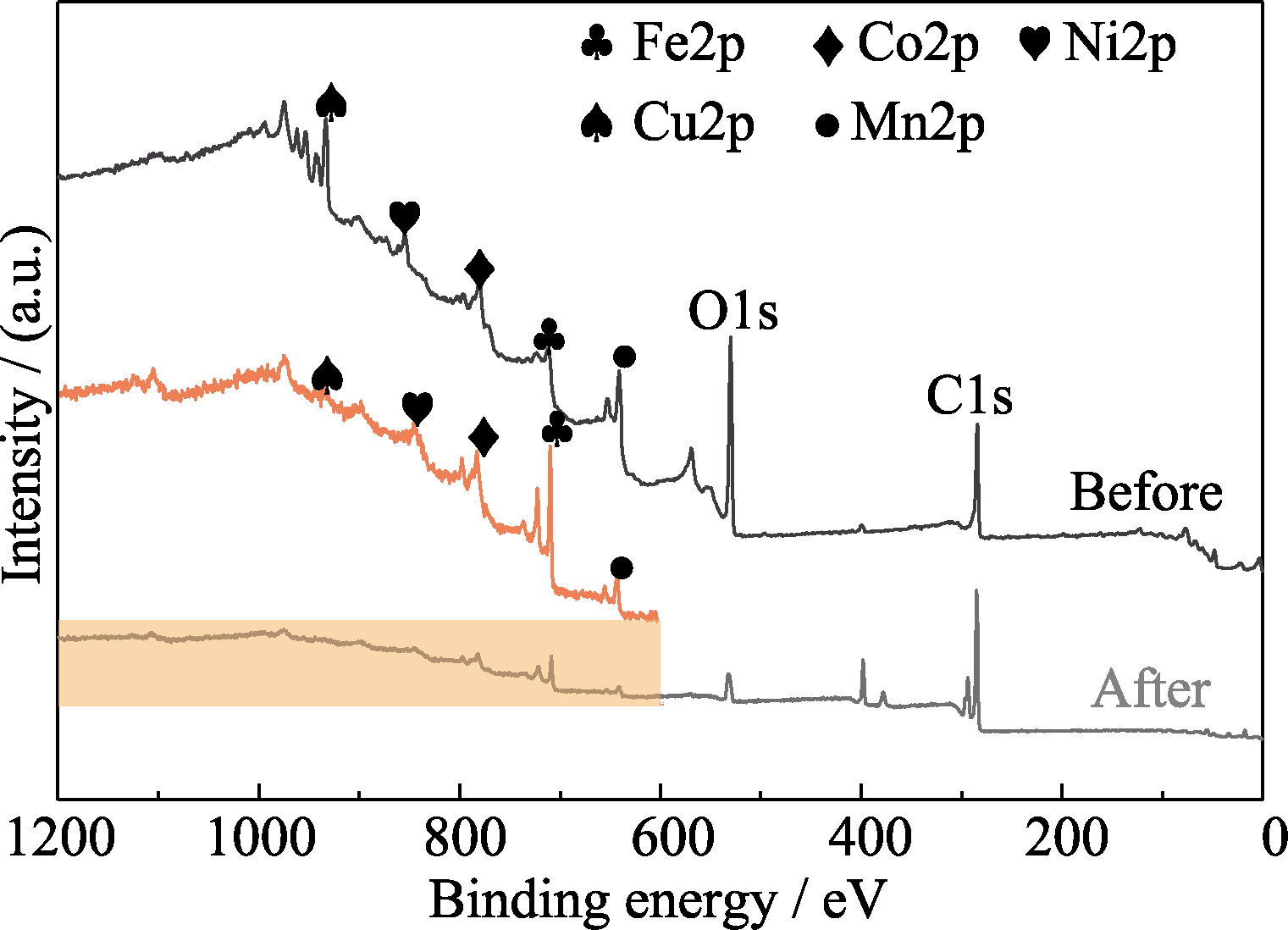
图S4 循环7 d前后HEAs/CC的XPS全谱图
Fig. S4 XPS survey spectra of HEAs/CC before and after the 7-day cycles
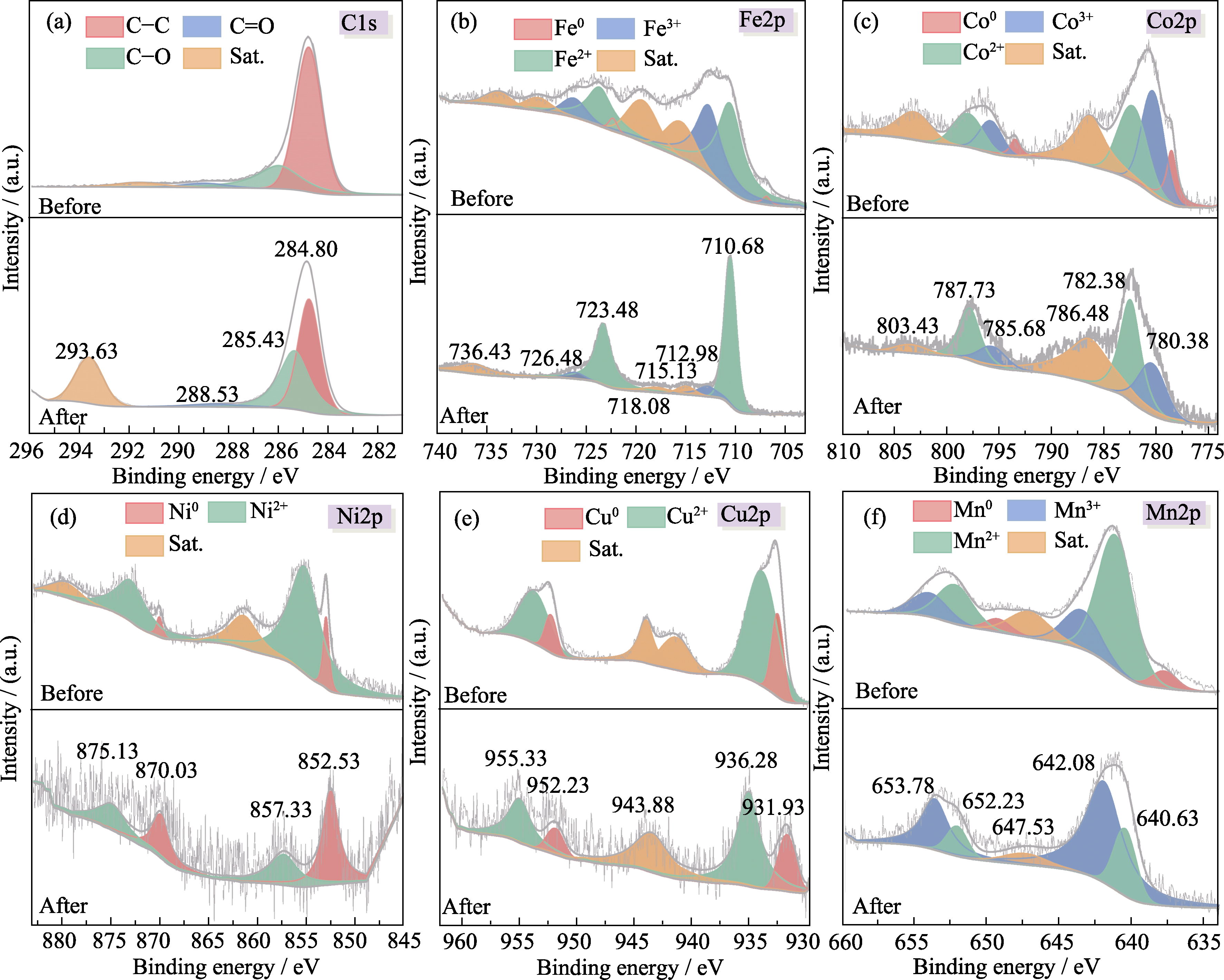
图S5 循环7 d前后HEAs/CC的XPS精细谱图
Fig. S5 High-resolution XPS spectra of HEAs/CC before and after the 7-day cycles (a) C1s; (b) Fe2p; (c) Co2p; (d) Ni2p; (e) Cu2p; (f) Mn2p
| [15] |
WAN Y, WEI W, HAIDER R, et al. Enabling Cr-induced efficient hydrogen evolution on high-entropy alloys via rapid thermal shock. Journal of Materials Chemistry A, 2025, 13(33): 27638.
DOI URL |
| [16] |
LU X, XIE D, ZHU K, et al. Swift assembly of adaptive thermocell arrays for device-level healable and energy-autonomous motion sensors. Nano-Micro Letters, 2023, 15(1): 196.
DOI PMID |
| [17] | XIE S, WANG C, XI Y, et al. Efficient synthesis and catalytic performance tuning of high-entropy alloys using a weaving strategy. Angewandte Chemie International Edition, 2025, 3(65): e22878. |
| [18] |
FAN L, JI Y, WANG G, et al. High entropy alloy electrocatalytic electrode toward alkaline glycerol valorization coupling with acidic hydrogen production. Journal of the American Chemical Society, 2022, 144(16): 7224.
DOI PMID |
| [19] |
ZHANG Y, HAI G, HUANG Z, et al. Ce-doping rather than CeO2 modification and their synergistic effect: promotion from Ce species in the electrocatalytic oxidation of 5-hydroxymethylfurfural over NiFe-LDH. Advanced Energy Materials, 2024, 14(38): 2401449.
DOI URL |
| [20] |
CUI X, LIU Y, WANG X, et al. Rapid high-temperature liquid shock synthesis of high-entropy alloys for hydrogen evolution reaction. ACS Nano, 2024, 18(4): 2948.
DOI PMID |
| [21] |
MAO Q, MU X, DENG K, et al. Multisite synergism-induced electron regulation of high-entropy alloy metallene for boosting alkaline hydrogen evolution reaction. Advanced Functional Materials, 2023, 33(42): 2304963.
DOI URL |
| [22] |
HAO J, ZHUANG Z, CAO K, et al. Unraveling the electronegativity- dominated intermediate adsorption on high-entropy alloy electrocatalysts. Nature Communications, 2022, 13: 2662.
DOI |
| [23] |
ZHANG J, WANG Y, LI Y, et al. A 2-volt aqueous battery enabled by synergistic effect of Cu2+/Cu+ redox and intercalation/ deintercalation in copper hexacyanoferrate cathodes. Energy Storage Materials, 2025, 75: 104088.
DOI URL |
| [24] | NANDAN R, RAJ G, NANDA K. FeCoNiMnCr high-entropy alloy nanoparticle-grafted NCNTs with promising performance in the ohmic polarization region of fuel cells. ACS Applied Materials & Interfaces, 2022, 14(14): 16108. |
| [25] |
FU Y, PAN Y, LUO R, et al. Rare-earth-metal-tuned local electronic structure of high-entropy alloys for Ampere-level electrochemical overall water splitting. ACS Catalysis, 2025, 15(17): 15509.
DOI URL |
| [26] |
CHEN X, JIN W, ZHONG X, et al. Optimized kinetic pathways of active hydrogen generation at Cu2O/Cu heterojunction interfaces to enhance nitrate electroreduction to ammonia. Chinese Journal of Catalysis, 2025, 79: 78.
DOI URL |
| [27] |
WANG H, XIAO X, ZHAI S, et al. Spontaneous orientation polarization of anisotropic equivalent dipoles harnessed by entropy engineering for ultra-thin electromagnetic wave absorber. Nano- Micro Letters, 2024, 17(1): 19.
DOI |
| [28] |
WANG B, YAO Y, YU X, et al. Understanding the enhanced catalytic activity of high entropy alloys: from theory to experiment. Journal of Materials Chemistry A, 2021, 9(35): 19410.
DOI URL |
| [29] |
LÖFFLER T, LUDWIG A, ROSSMEISL J, et al. What makes high-entropy alloys exceptional electrocatalysts? Angewandte Chemie International Edition, 2021, 60(52): 26894.
DOI URL |
| [30] |
XU T, LI W, MA Z, et al. High-power generation from a new semi- solid thermo-electrochemical cell. Nano Energy, 2022, 103: 107826.
DOI URL |
| [31] |
MINAMIHARA H, KUSADA K, WU D, et al. Continuous-flow reactor synthesis for homogeneous 1 nm-sized extremely small high-entropy alloy nanoparticles. Journal of the American Chemical Society, 2022, 144(26): 11525.
DOI URL |
| [32] | REN G, YANG W, BAO J, et al. Conductive polymer/multidimensional carbon composite on graphite felt electrodes for liquid thermo-electrochemical cells. ACS Sustainable Chemistry & Engineering, 2025, 13(16): 6021. |
| [33] |
XIN Y, ZHU M, ZHANG H, et al. High-entropy materials: a new paradigm in the design of advanced batteries. Nano-Micro Letters, 2026, 18(1): 1.
DOI |
| [34] |
GEORGE E P, RAABE D, RITCHIE R O. High-entropy alloys. Nature Reviews Materials, 2019, 4(8): 515.
DOI |
| [35] |
FENG D, DONG Y, NIE P, et al. CoNiCuMgZn high entropy alloy nanoparticles embedded onto graphene sheets via anchoring and alloying strategy as efficient electrocatalysts for hydrogen evolution reaction. Chemical Engineering Journal, 2022, 430: 132883.
DOI URL |
| [36] |
LUO J, SAM A, HU B, et al. Unraveling pH dependent cycling stability of ferricyanide/ferrocyanide in redox flow batteries. Nano Energy, 2017, 42: 215.
DOI URL |
| [1] | HE J, TRITT T M. Advances in thermoelectric materials research: looking back and moving forward. Science, 2017, 357(6358): 9997. |
| [2] |
NOSHEEN F, WASFI N, ASLAM S, et al. Ultrathin Pd-based nanosheets: syntheses, properties and applications. Nanoscale, 2020, 12(7): 4219.
DOI PMID |
| [3] |
BU Z, ZHANG X, HU Y, et al. A record thermoelectric efficiency in tellurium-free modules for low-grade waste heat recover. Nature Communications, 2022, 13: 2377.
DOI |
| [4] |
DING Z, DU C, LONG W, et al. Thermoelectrics and thermocells for fire warning applications. Science Bulletin, 2023, 68(24): 3261.
DOI PMID |
| [5] |
DUPONT M F, MACFARLANE D R, PRINGLE J M. Thermo- electrochemical cells for waste heat harvesting - progress and perspectives. Chemical Communications, 2017, 53(47): 6288.
DOI URL |
| [6] |
KAR N, SKRABALAK S E. Synthetic methods for high-entropy nanomaterials. Nature Reviews Materials, 2025, 10(38): 638.
DOI |
| [7] |
ZHANG W T, WANG X Q, ZHANG F Q, et al. Frontiers in high entropy alloys and high entropy functional materials. Rare Metals, 2024, 43(10): 4639.
DOI URL |
| [8] |
ZHOU Y, SHEN X, WANG M, et al. The understanding, rational design, and application of high-entropy alloys as excellent electrocatalysts: a review. Science China Materials, 2023, 66(7): 2527.
DOI |
| [9] |
LIU Y, YUE M, GUO Y, et al. Catalytic effect of carbon-supported NiCoFeCuMg high-entropy alloy nanocatalysts on hydrogen storage properties of MgH2. Journal of Magnesium and Alloys, 2025, 13(3): 1232.
DOI URL |
| [10] |
ZHANG T, ZHAO H F, CHEN Z J, et al. High-entropy alloy enables multi-path electron synergism and lattice oxygen activation for enhanced oxygen evolution activity. Nature Communications, 2025, 16: 3327.
DOI |
| [11] |
ZHANG L, CHU W, KUANG L, et al. Carbon-supported high- entropy alloys as highly stable nanocatalysts for oxygen reduction reaction. Journal of Alloys and Compounds, 2025, 1010: 178194.
DOI URL |
| [12] |
KIBSGAARD J, CHORKENDORFF I. Considerations for the scaling- up of water splitting catalysts. Nature Energy, 2019, 4(6): 430.
DOI |
| [13] |
DUAN Y, WEI L, CAI C, et al. RuO2/TiO2/MXene with multi- heterojunctions coating on carbon cloth for high-activity chlorine evolution reaction at large current densities. Nano Research, 2024, 17(6): 4764.
DOI |
| [14] |
XU J, LIU K, XUE T, et al. AlMnCoNiFe high-entropy alloy nanoparticles-embedded carbon cloth: structure stability and fast charging for lean/anode-free lithium metal batteries. Energy Storage Materials, 2025, 83: 104735.
DOI URL |
| [1] | 程节, 周月, 罗薪涛, 高美婷, 骆思妃, 蔡丹敏, 吴雪垠, 朱立才, 袁中直. 蛋黄壳结构FeF3·0.33H2O@N掺杂碳纳米笼正极材料的构筑及其电化学性能[J]. 无机材料学报, 2024, 39(3): 299-305. |
| [2] | 蔡剑锋, 王泓翔, 刘国强, 蒋俊. 热电材料中的高熵结构设计[J]. 无机材料学报, 2021, 36(4): 399-404. |
| [3] | 吕莎莎, 祖宇飞, 陈国清, 赵伯俊, 付雪松, 周文龙. 陶瓷颗粒增强Cr0.5MoNbWTi难熔高熵合金复合材料的制备及其力学性能[J]. 无机材料学报, 2021, 36(4): 386-392. |
| [4] | 王玥, 崔常松, 王士维, 占忠亮. LaxSr2-xFe1.5Ni0.1Mo0.4O6-δ对称电池电解CO2研究[J]. 无机材料学报, 2021, 36(12): 1323-1329. |
| [5] | 李泽晖,谭美娟,郑元昊,骆雨阳,经求是,蒋靖坤,李明杰. 导电金属有机骨架材料在超级电容器中的应用[J]. 无机材料学报, 2020, 35(7): 769-780. |
| [6] | 夏天, 孟燮, 骆婷, 占忠亮. Ca掺杂Sr2Fe1.5Mo0.5O6-δ材料的合成与作为对称固体氧化物燃料电池电极催化剂的性能研究[J]. 无机材料学报, 2019, 34(10): 1109-1114. |
| [7] | 王浩, 罗永春, 邓安强, 赵磊, 姜婉婷. 退火温度对无镁La-Y-Ni系A2B7型合金相结构和电化学性能的影响[J]. 无机材料学报, 2018, 33(4): 434-440. |
| [8] | 王玲玲, 黄 昊, Ramon Alberto Paredes Camacho, 吴爱民, 曹国忠. (Mn7C3, Ni)@C核壳型纳米粒子制备及超级电容器电化学特性[J]. 无机材料学报, 2017, 32(2): 135-140. |
| [9] | 常希望, 陈 宁, 王丽君, 李福燊, 卞刘振, 周国治. 固体氧化物燃料电池Sr系钙钛矿电极B位元素成分优化规律[J]. 无机材料学报, 2017, 32(10): 1055-1062. |
| [10] | 李金宏, 周岐雄, 米红宇, 李 显, 李惠萍. 基于煤萃取物的类石墨状多孔炭的制备及其电容性能研究[J]. 无机材料学报, 2016, 31(1): 39-46. |
| [11] | 陈 耿, 刘桃香, 唐新峰, 苏贤礼, 鄢永高. Mg-Si-Sn基热电器件电极材料的优化选择与连接工艺[J]. 无机材料学报, 2015, 30(6): 639-646. |
| [12] | 马 文, 韩鹏献, 孔庆山, 张克军, 毕彩丰, 崔光磊. MoN/氮化石墨烯复合物用作锂离子电容器电极材料的研究[J]. 无机材料学报, 2013, 28(7): 733-738. |
| [13] | 李兆龙, 孙华君, 徐 杰, 张晓艳, 黄胜男, 朱泉峣, 陈 文, Galina S. Zakharova. Mn2+掺杂对V2O5纳米材料结构与电化学性能的影响[J]. 无机材料学报, 2013, 28(11): 1200-1206. |
| [14] | 李强,李开喜,谷建宇,范慧,吕春祥. 电化学电容器复合电极材料铜氧化物/多孔炭的制备及电化学性[J]. 无机材料学报, 2007, 22(5): 894-900. |
| [15] | 张治安,杨邦朝,邓梅根,胡永达. 超级电容器氧化锰电极材料的研究进展[J]. 无机材料学报, 2005, 20(3): 529-536. |
| 阅读次数 | ||||||
|
全文 |
|
|||||
|
摘要 |
|
|||||