无机材料学报 ›› 2026, Vol. 41 ›› Issue (10): 1497-1506.DOI: 10.15541/jim20260033
王会文( ), 姚爱华(), 王德平()
收稿日期:2026-01-19
修回日期:2026-02-12
出版日期:2026-10-20
网络出版日期:2026-04-03
通讯作者:
姚爱华, 副教授. E-mail: 07182@tongji.edu.cn;作者简介:王会文(2001-), 女, 硕士研究生. E-mail: 2331517@tongji.edu.cn
基金资助:
WANG Huiwen(), YAO Aihua(), WANG Deping()
Received:2026-01-19
Revised:2026-02-12
Published:2026-10-20
Online:2026-04-03
Contact:
YAO Aihua, associate professor. E-mail: 07182@tongji.edu.cn;About author:WANG Huiwen (2001-), female, Master candidate. E-mail: 2331517@tongji.edu.cn
Supported by:摘要:
由糖尿病等代谢性疾病引发的难愈合慢性创面的治疗具有重要意义, 也是相关领域科技工作者关注的研究方向之一。形成难愈合慢性创面的主要原因是微环境失衡导致细菌感染、血管生成障碍及持续炎症反应。pH作为创面微环境的重要参数, 对症状调控和药物释放具有关键作用, 但是传统pH响应型水凝胶依赖创面内源性pH变化, 而慢性创面的pH往往长期偏离正常生理范围, 导致其治疗效果受到限制。本研究设计并制备了一种能够主动按需调控pH的多功能复合水凝胶(HPL-PDA@Cur-BG), 该水凝胶以锂离子导电的羟丙基甲基纤维素(HPMC)/聚丙烯酰胺(PAM)双网络水凝胶为基体, 负载载药聚多巴胺纳米颗粒(PDA@Cur NPs)和生物活性玻璃(BG)。在外加直流电刺激下, 该复合水凝胶能够实现pH动态调控, 并触发抗炎药物的智能释放; 同时, 聚多巴胺赋予其优异的光热抗菌性能, 而生物活性玻璃释放的功能离子还有利于促进血管生成和组织再生。实验结果表明, 该水凝胶具有良好的导电性能(1.87 S·m-1), 在电刺激和近红外光照射协同作用下, 实现了高抗菌率(约98%)及促血管生成效果。本工作为难愈合慢性感染性创面的治疗提供了一种新思路、新策略。
中图分类号:
王会文, 姚爱华, 王德平. 电场调控pH的导电复合水凝胶的制备及性能[J]. 无机材料学报, 2026, 41(10): 1497-1506.
WANG Huiwen, YAO Aihua, WANG Deping. Preparation and Properties of an Electrically Conductive Composite Hydrogel with Electric Field-regulated pH[J]. Journal of Inorganic Materials, 2026, 41(10): 1497-1506.
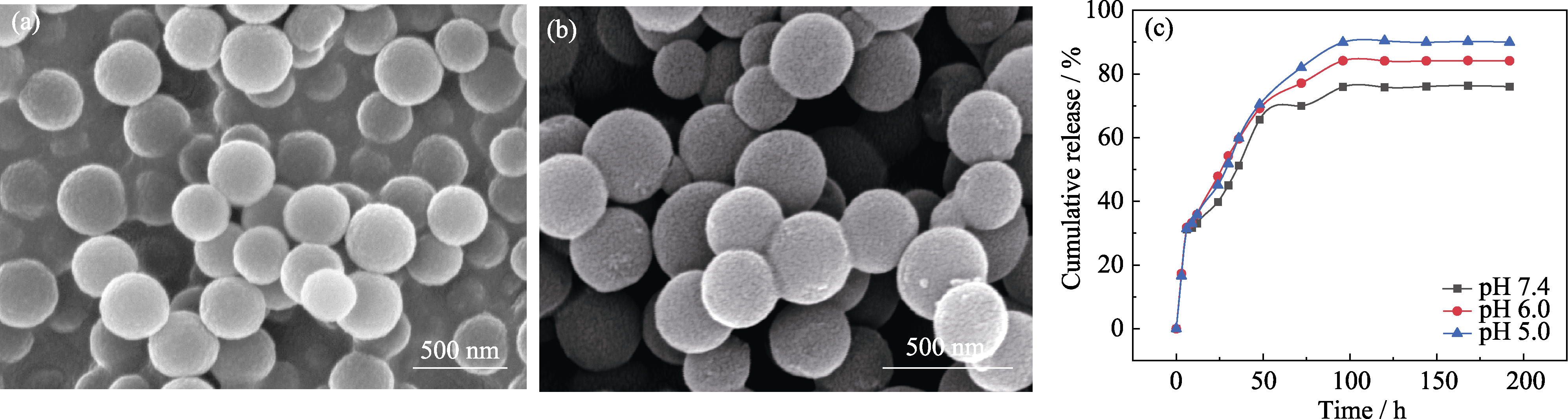
图1 PDA@Cur NPs的形貌及pH响应性药物释放
Fig. 1 Morphology and pH-responsive drug release of PDA@Cur NPs (a, b) SEM images of (a) PDA NPs and (b) PDA@Cur NPs; (c) Cumulative release of Cur from PDA@Cur NPs at different pH
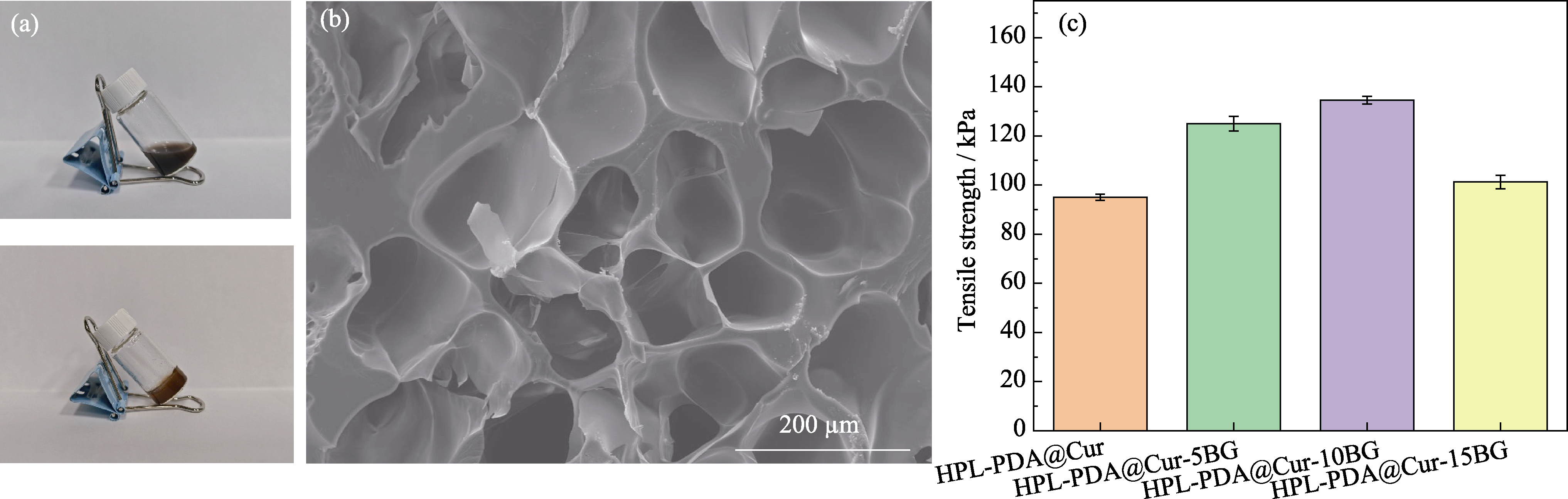
图2 复合水凝胶的数码照片、微观形貌及拉伸强度
Fig. 2 Digital photographs, microstructure, and tensile strength of the composite hydrogels (a) Digital photographs of HPL-PDA@Cur-5BG; (b) SEM image of HPL-PDA@Cur-5BG; (c) Tensile strength of the composite hydrogels
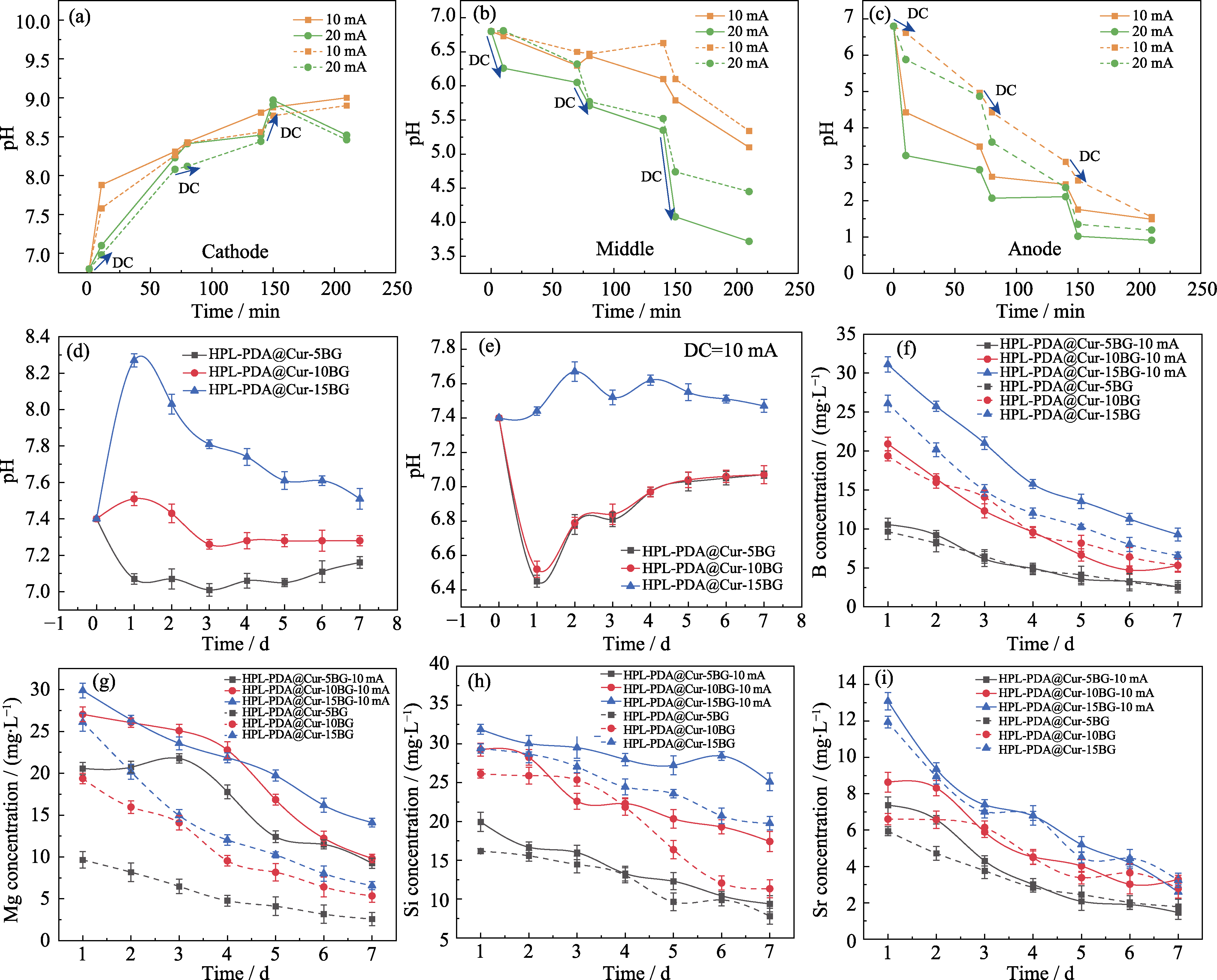
图3 导电复合水凝胶在电刺激下的pH变化与离子释放
Fig. 3 pH changes and ion releases of the conductive composite hydrogels under electrical stimulation (a-c) Interfacial pH under intermittent stimulation; (d) pH variation in PBS; (e) pH variation in PBS under direct current (DC) stimulation; (f-i) Cumulative release of (f) B, (g) Mg, (h) Si, and (i) Sr ions with and without 10 mA stimulation
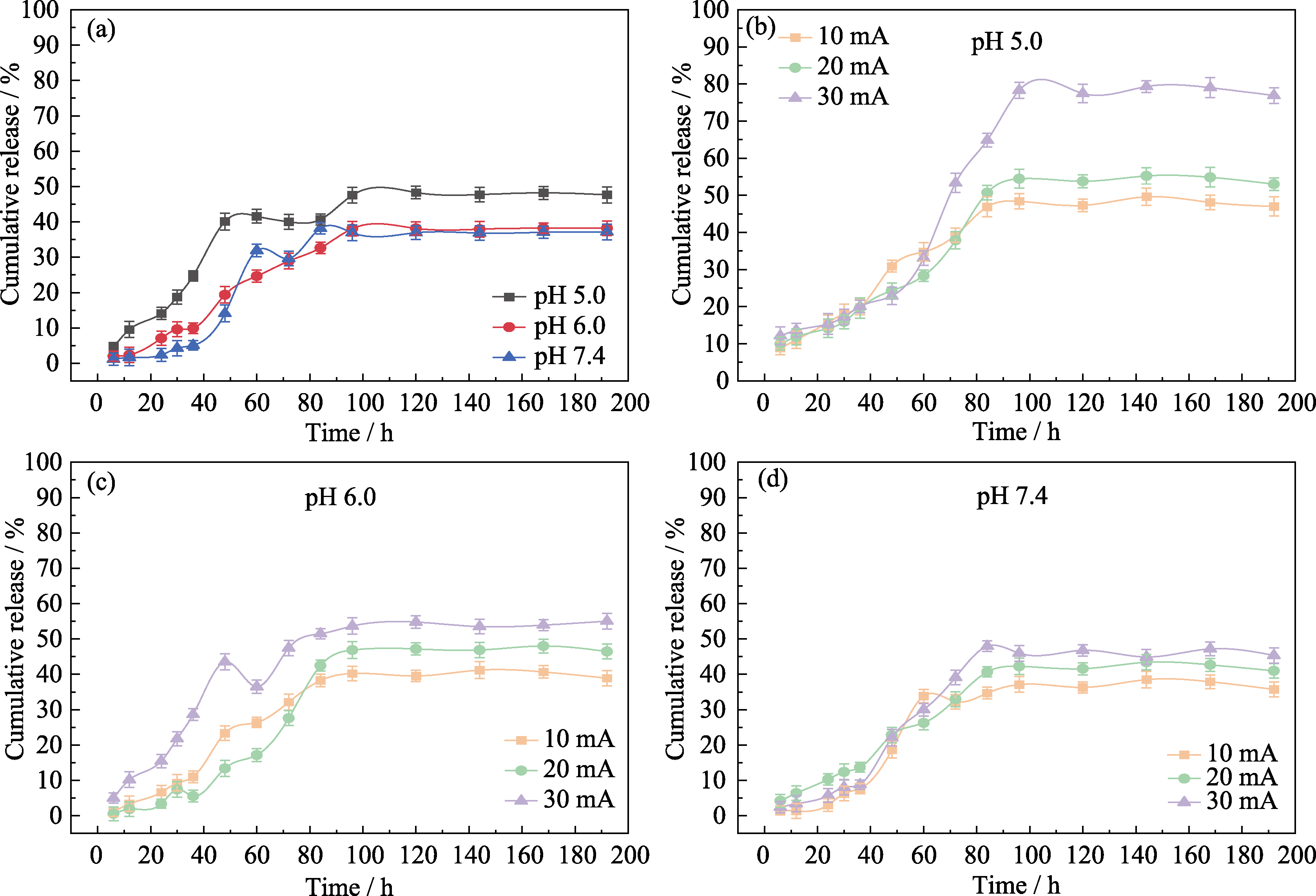
图4 复合水凝胶的药物释放行为
Fig. 4 Drug release behaviors of the composite hydrogels (a) pH-responsive release of Cur from the composite hydrogels; (b-d) Release profiles under different applied currents in PBS at (b) pH 5.0, (c) pH 6.0 and (d) pH 7.4
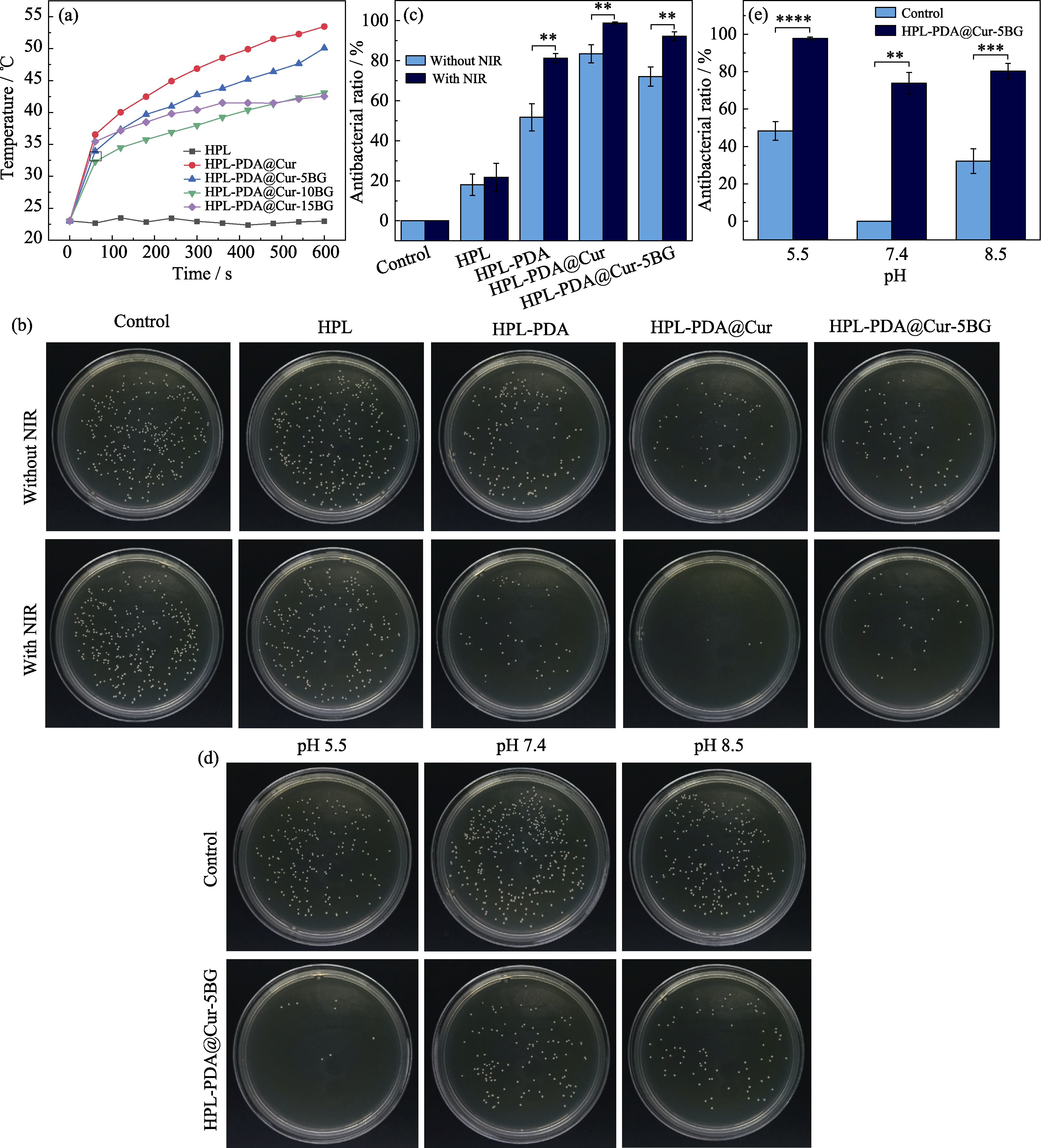
图5 HPL-PDA@Cur-5BG复合水凝胶的光热性能与pH依赖性抗菌活性
Fig. 5 Photothermal performance and pH-dependent antibacterial activity of the HPL-PDA@Cur-5BG composite hydrogel (a) Heating curves under 808 nm NIR irradiation (1.2 W·cm-2); (b) Photographs of antibacterial performance; (c) Antibacterial rates against E. coli; (d) Photographs of antibacterial performance under different pH conditions; (e) Antibacterial rates against E. coli under different pH conditions. Data are presented as mean±standard deviation (SD), n=3; **p<0.01, ***p<0.001, ****p<0.0001
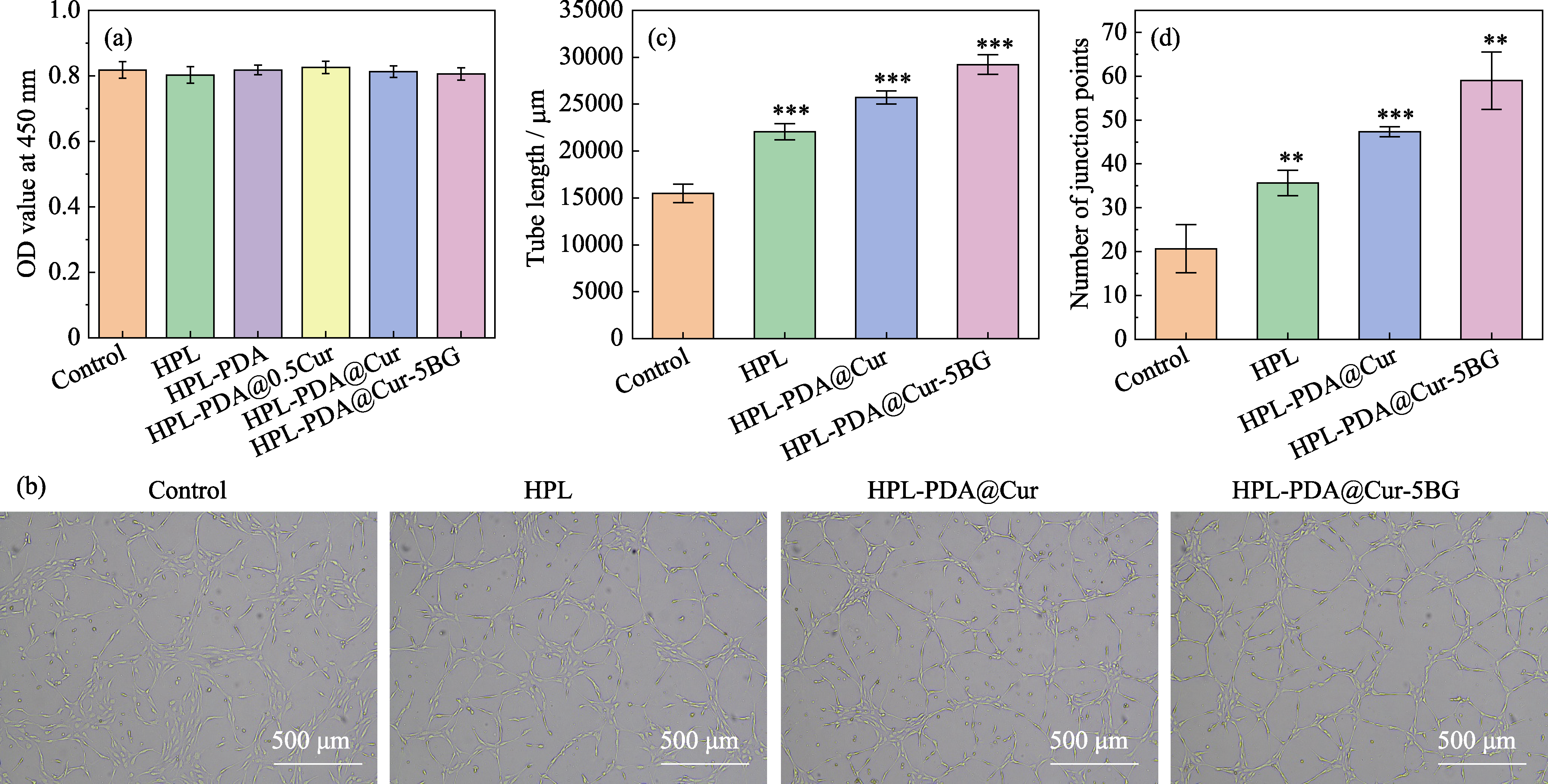
图6 复合水凝胶提取物对HUVECs活力与成血管功能的影响
Fig. 6 Effects of the composite hydrogel extracts on the viability and tube formation function of HUVECs (a) Cell viability after 24 h co-culture, assessed by CCK-8 assay; (b) Representative images of the tube formation assay; (c, d) Semi-quantitative results of the tube formation. Data are presented as mean±SD, n=3; **p<0.01, ***p<0.001
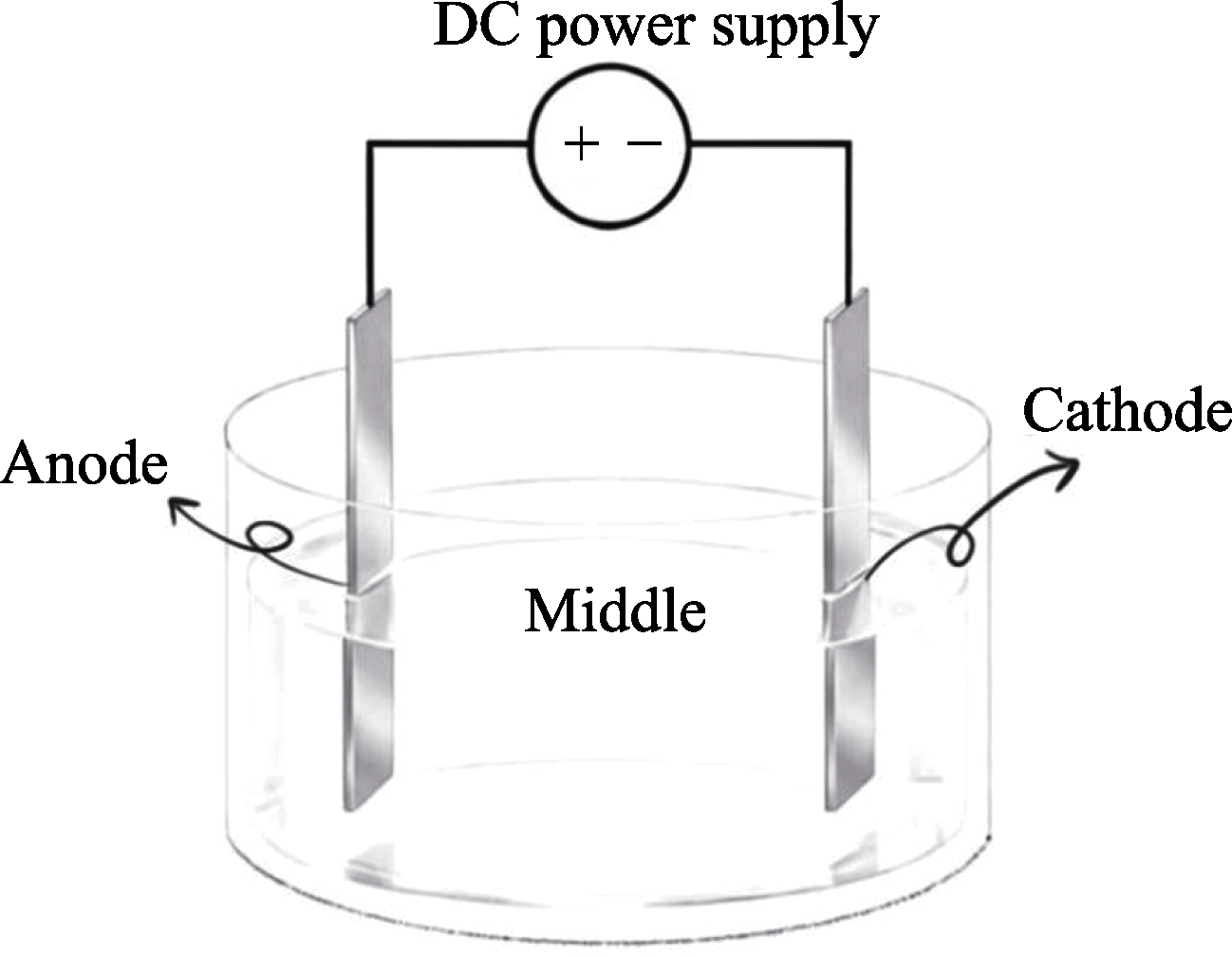
图S1 电刺激调控水凝胶局部pH的体外实验装置
Fig. S1 Schematic illustration of the in vitro experimental setup for evaluating the spatial regulation of hydrogel internal pH by electrical stimulation
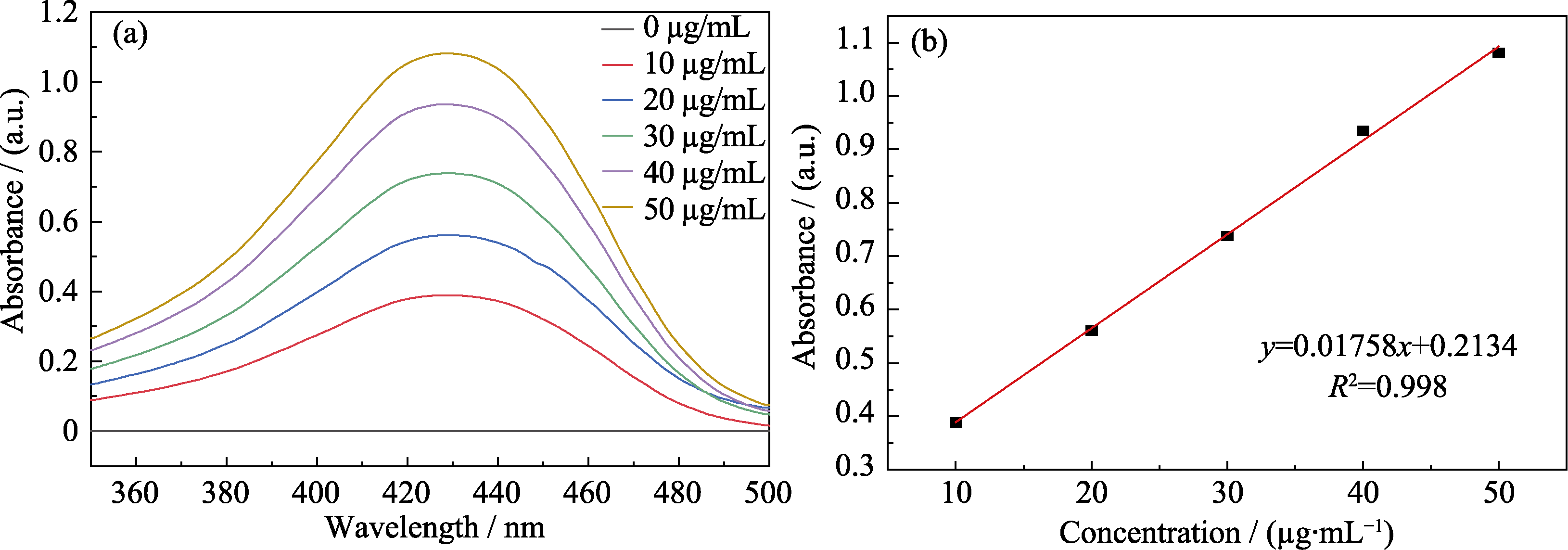
图S2 Cur的紫外-可见光谱及其标准曲线
Fig. S2 UV-Vis spectra and standard curve of Cur (a) UV-Vis spectra of Cur; (b) Linear fitting curve of absorbance vs. concentration
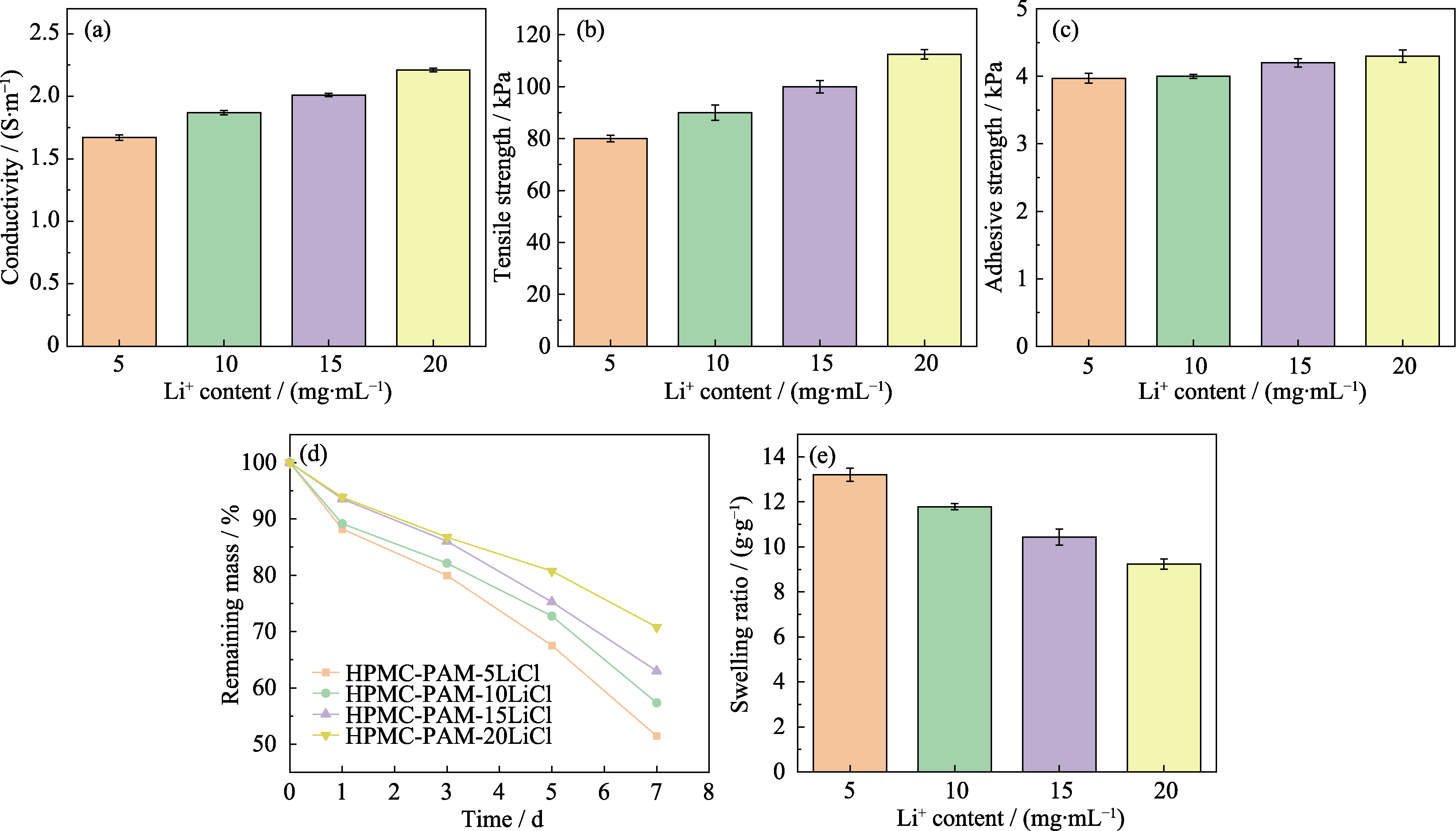
图S3 不同Li+含量复合水凝胶的多功能性能表征
Fig. S3 Multifunctional properties of the composite hydrogels with different Li+ contents (a) Electrical conductivity; (b) Tensile properties; (c) Adhesive properties; (d) Degradation properties; (e) Swelling properties
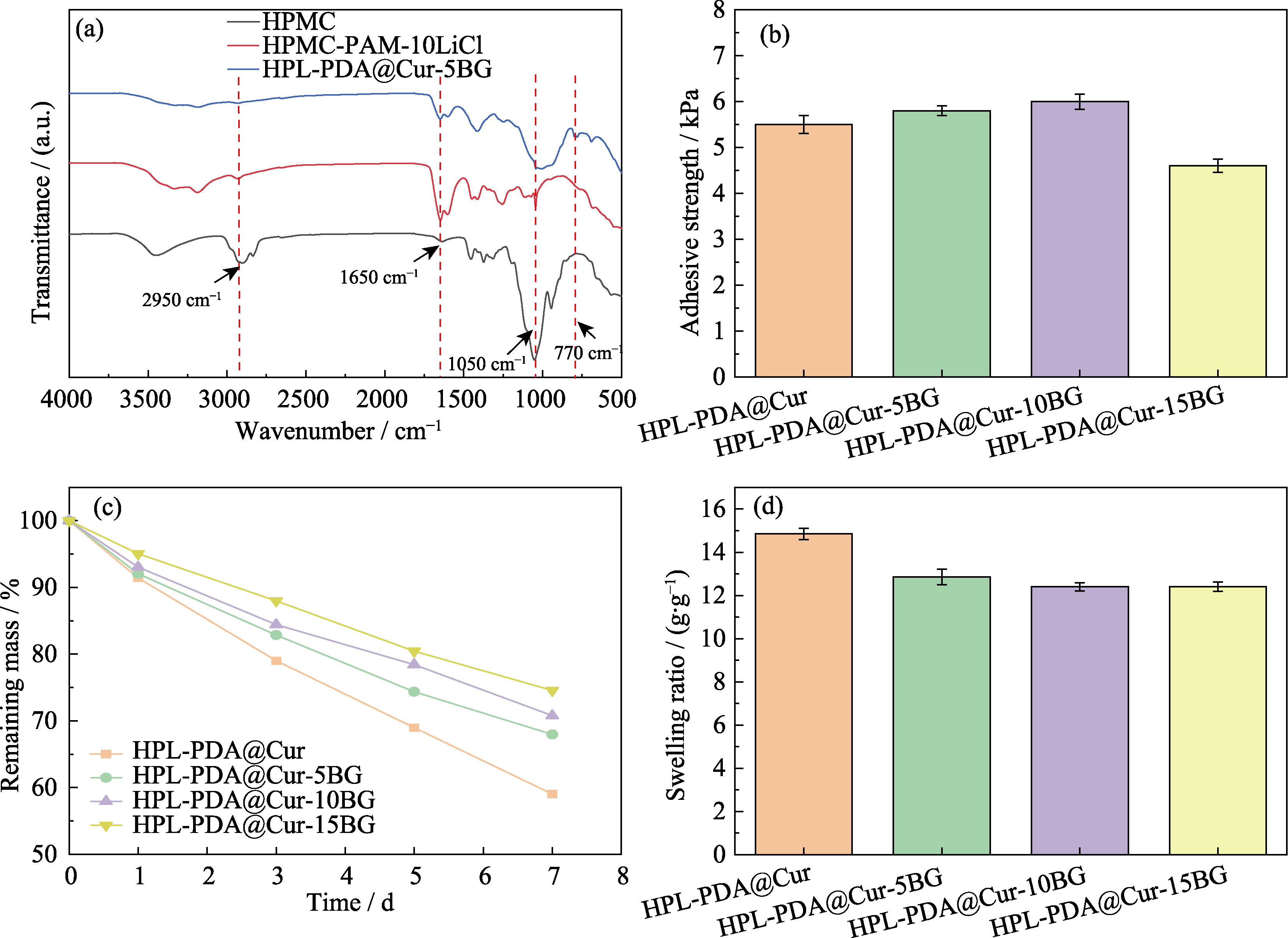
图S4 HPMC基复合水凝胶的化学结构与基础物化性能
Fig. S4 Chemical structure and basic physicochemical properties of the HPMC-based composite hydrogels (a) FT-IR spectra of HPMC, HPMC-PAM-10LiCl and HPL-PDA@Cur-5BG hydrogels; (b) Adhesive properties; (c) Degradation properties; (d) Swelling properties
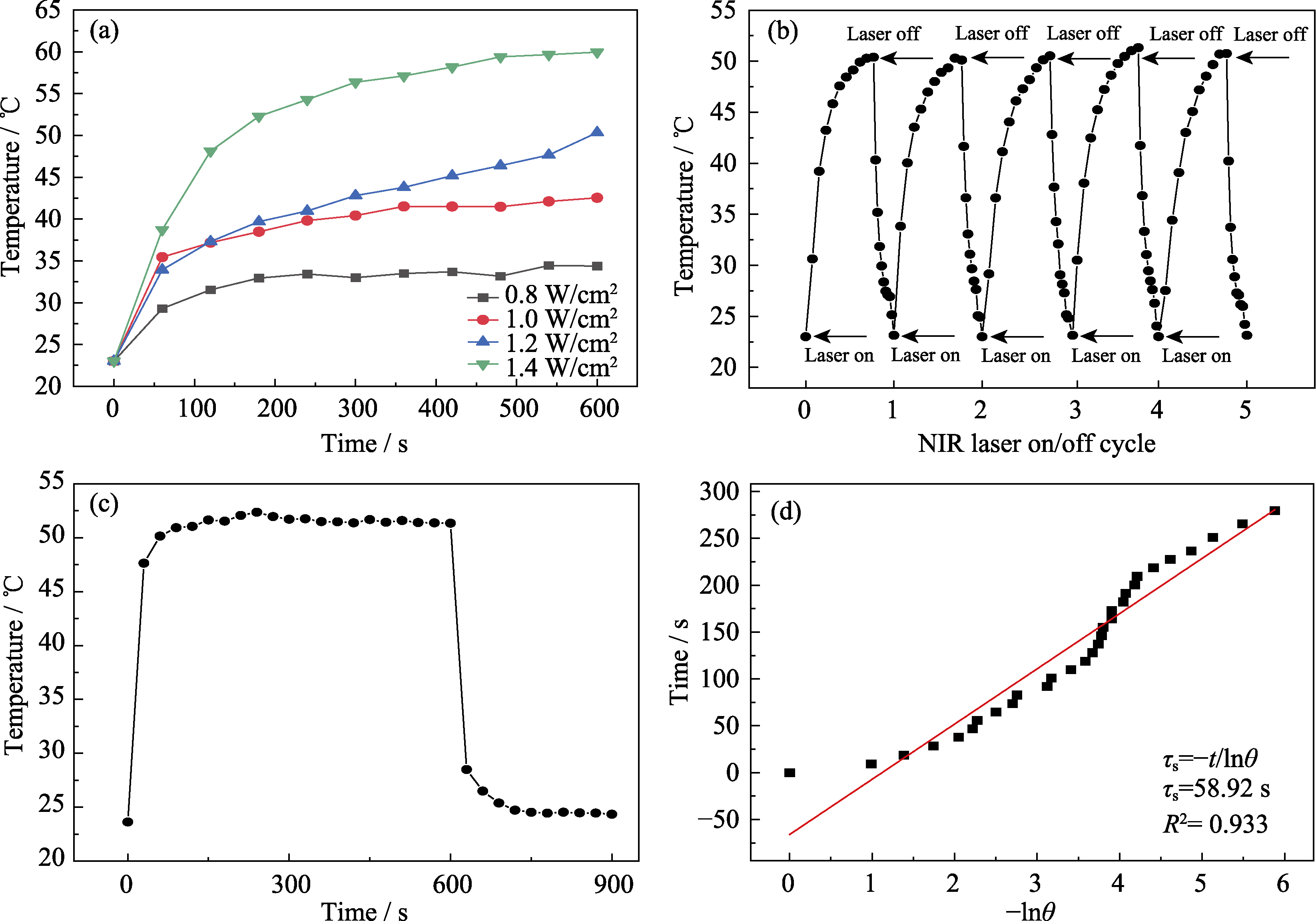
图S5 HPL-PDA@Cur-5BG复合水凝胶的光热性能与转换效率
Fig. S5 Photothermal performance and conversion efficiency of the HPL-PDA@Cur-5BG composite hydrogel (a) Temperature curves under different power densities; (b) Photothermal stability over five NIR irradiation cycles; (c) Temperature vs. time curves during heating and cooling phases; (d) Plots of cooling time vs. -lnθ derived from (c) (dimensionless driving force temperature θ: the ratio of the temperature difference between the system and the ambient temperature over time during the cooling phase)
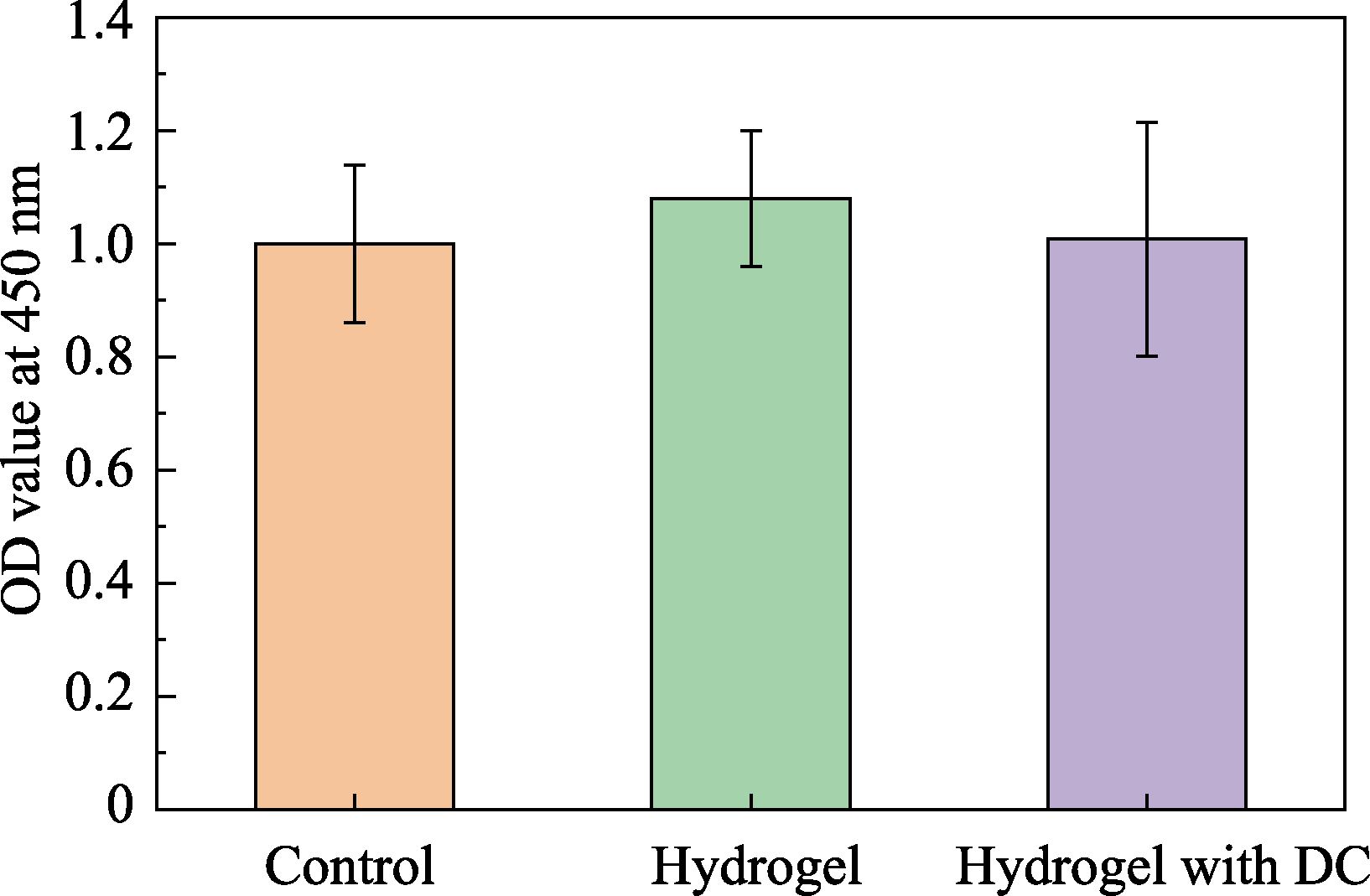
图S6 有/无电刺激条件下HPL-PDA@Cur-5BG复合水凝胶对HUVECs活力的影响
Fig. S6 Cell viability of HUVECs co-culture with HPL-PDA@Cur-5BG composite hydrogel in the presence or absence of electrical stimulation
| [1] |
TOMIC-CANIC M, BURGESS J L, O’NEILL K E, et al. Skin microbiota and its interplay with wound healing. American Journal of Clinical Dermatology, 2020, 21(1): 36.
DOI |
| [2] |
JÄRBRINK K, NI G, SÖNNERGREN H, et al. The humanistic and economic burden of chronic wounds: a protocol for a systematic review. Systematic Reviews, 2017, 6(1): 15.
DOI URL |
| [3] |
PASTAR I, NUSBAUM A G, GIL J, et al. Interactions of methicillin resistant staphylococcus aureus USA300 and pseudomonas aeruginosa in polymicrobial wound infection. PLoS One, 2013, 8(2): e56846.
DOI URL |
| [4] | GETHIN G. The significance of surface pH in chronic wounds. Wounds UK, 2007, 3(3): 52. |
| [5] |
PERCIVAL S L, MCCARTY S, HUNT J A, et al. The effects of pH on wound healing, biofilms, and antimicrobial efficacy. Wound Repair and Regeneration, 2014, 22(2): 174.
DOI PMID |
| [6] | HAIDARI H, VASILEV K, COWIN A J, et al. Bacteria-activated dual pH- and temperature-responsive hydrogel for targeted elimination of infection and improved wound healing. ACS Applied Materials & Interfaces, 2022, 14(46): 51744. |
| [7] |
KRUSE C R, SINGH M, TARGOSINSKI S, et al. The effect of pH on cell viability, cell migration, cell proliferation, wound closure, and wound reepithelialization: in vitro and in vivo study. Wound Repair and Regeneration, 2017, 25(2): 260.
DOI URL |
| [8] |
WANG X F, ZHONG B W, LOU Z, et al. The advancement of intelligent dressings for monitoring chronic wound infections. Chemical Engineering Journal, 2024, 484: 149643.
DOI URL |
| [9] |
LI Z Y, CRAGO M, SCHOFIELD T, et al. Synthesis and evaluation of functionalized polyurethanes for pH-responsive delivery of compounds in chronic wounds. Gels, 2023, 9(8): 611.
DOI URL |
| [10] |
WANG W, ZHANG S R, YUAN Z D, et al. pH responsive THPS crosslinked injectable hydrogel with Cu-metformin sustained- release for accelerating wound healing. Chemical Engineering Journal, 2024, 492: 152373.
DOI URL |
| [11] |
SÁNCHEZ-CID P, JIMÉNEZ-ROSADO M, ROMERO A, et al. Novel trends in hydrogel development for biomedical applications: a review. Polymers, 2022, 14(15): 3023.
DOI URL |
| [12] |
LIN Z Y, CHANG Y C, WU Z F, et al. Effect of different simulated body fluid on mineralization of borosilicate bioactive glass-based bone cement. Journal of Inorganic Materials, 2021, 36(7): 745.
DOI |
| [13] |
NI X S, LIN Z Y, QIN M Y, et al. Bioactivity and mechanical property of PMMA bone cement: effect of silanized mesoporous borosilicate bioglass microspheres. Journal of Inorganic Materials, 2023, 38(8): 971.
DOI URL |
| [14] |
GUAN B Y, YU L, LOU X W. Formation of asymmetric bowl-like mesoporous particles via emulsion-induced interface anisotropic assembly. Journal of the American Chemical Society, 2016, 138(35): 11306.
DOI URL |
| [15] |
ZHU K P, WANG D P, FAN H Y, et al. In-situ transformation of borate glass and its effect on pH of soaking-liquid. Journal of Inorganic Materials, 2015, 30(10): 1069.
DOI URL |
| [16] |
ZHU K P, SUN J, YE S, et al. A novel hollow hydroxyapatite microspheres/chitosan composite drug carrier for controlled release. Journal of Inorganic Materials, 2016, 31(4): 434.
DOI URL |
| [17] |
LI S S, GAN Y, LIN C, et al. NIR-/pH-responsive nanocarriers based on mesoporous hollow polydopamine for codelivery of hydrophilic/hydrophobic drugs and photothermal synergetic therapy. ACS Applied Bio Materials, 2021, 4(2): 1605.
DOI PMID |
| [18] |
HAN L, LU X, LIU K Z, et al. Mussel-inspired adhesive and tough hydrogel based on dual-crosslinked alginate hydrogel with self-healing and enhanced mechanical properties. ACS Nano, 2017, 11(3): 2561.
DOI URL |
| [19] |
GAN D L, XING W S, JIANG L L, et al. Plant-inspired adhesive and tough hydrogel based on Ag-lignin nanoparticles-triggered dynamic redox catechol chemistry. Nature Communications, 2019, 10: 1487.
DOI PMID |
| [20] |
AGMON N. The grotthuss mechanism. Chemical Physics Letters, 1995, 244(5/6): 456.
DOI URL |
| [21] |
LIU Y L, AI K L, LIU J H, et al. Dopamine-melanin colloidal nanospheres: an efficient near-infrared photothermal therapeutic agent for in vivo cancer therapy. Advanced Materials, 2013, 25(9): 1353.
DOI URL |
| [22] |
WANG F, BORODIN O, GAO T, et al. Highly reversible zinc metal anode for aqueous batteries. Nature Materials, 2018, 17(6): 543.
DOI PMID |
| [23] |
MEREDITH P, SARNA T. The physical and chemical properties of eumelanin. Pigment Cell Research, 2006, 19(6): 572.
DOI PMID |
| [24] |
LIU Y L, AI K L, LU L H. Polydopamine and its derivative materials: synthesis and promising applications in energy, environmental, and biomedical fields. Chemical Reviews, 2014, 114(9): 5057.
DOI PMID |
| [25] |
DEDIU V, GHITMAN J, PIRCALABIORU G G, et al. Trends in photothermal nanostructures for antimicrobial applications. International Journal of Molecular Sciences, 2023, 24(11): 9375.
DOI URL |
| [26] | DEMIDOVA-RICE T N, HAMBLIN M R, HERMAN I M. Acute and impaired wound healing: pathophysiology and current methods for drug delivery, part 1: normal and chronic wounds: biology, causes, and approaches to care. Advances in Skin & Wound Care, 2012, 25(7): 304. |
| [27] |
MUN S H, KIM S B, KONG R, et al. Curcumin reverse methicillin resistance in staphylococcus aureus. Molecules, 2014, 19(11): 18283.
DOI URL |
| [28] |
ZHOU Z Q, ZHANG L Y, QIN M Y, et al. A multifunctional hydrogel for infected chronic wounds management: integrated pH sensing, photothermal therapy, and ion release. Journal of Applied Polymer Science, 2025, 142(25): e57057.
DOI URL |
| [1] | 吴思,梅雷,胡孔球,柴之芳,聂长明,石伟群. pH调控合成U型配体介导的八核铀酰草酸网络[J]. 无机材料学报, 2020, 35(2): 243-249. |
| 阅读次数 | ||||||
|
全文 |
|
|||||
|
摘要 |
|
|||||